
DD
MM
YYYY

PAGES

DD
MM
YYYY

spot_img

PAGES

Home Blog Page 13

German Auto Sector Deteriorated Further in April, But Startups Recorded 6% Increase in VC Funding in Q1 2026

0

In April, expectations among German carmakers deteriorated further, signaling deepening unease within one of Europe’s most critical industrial sectors. Long regarded as the backbone of Germany’s export-driven economy, the automotive industry is now facing a convergence of structural and cyclical pressures that are eroding business confidence.

This decline in sentiment is not merely a short-term fluctuation; rather, it reflects a complex interplay of weakening global demand, geopolitical tensions, regulatory shifts, and the costly transition toward electrification. For decades, German automakers like Volkswagen Group, BMW, and Mercedes-Benz Group relied heavily on robust Chinese consumption to sustain growth.

However, China’s economic momentum has slowed, and domestic competitors have grown increasingly sophisticated, especially in the electric vehicle (EV) segment. This has intensified competition and reduced the pricing power that German brands once enjoyed. As a result, forward-looking indicators—such as business expectations indices—have trended downward, capturing industry pessimism about future orders and revenues.

Compounding the demand-side weakness are ongoing supply chain challenges. Although the acute semiconductor shortages that plagued production in previous years have somewhat eased, broader supply chain fragilities remain. Disruptions stemming from geopolitical conflicts, trade frictions, and shifting global alliances continue to introduce uncertainty into procurement and manufacturing processes. Rising input costs, particularly for energy and raw materials, have also squeezed margins.

For an industry already facing high capital expenditures, these cost pressures further dampen optimism. Perhaps the most profound challenge, however, lies in the transition from internal combustion engines to electric mobility. This transformation requires massive investment in new technologies, battery production, and digital infrastructure.

German automakers are effectively navigating a dual burden: maintaining profitability in their legacy combustion-engine business while simultaneously funding the development of EV platforms. This balancing act is financially and operationally demanding. Moreover, the competitive landscape in EVs is markedly different, with new entrants—especially from China and the United States—leveraging cost efficiencies and software capabilities to gain market share.

Policy and regulatory dynamics add another layer of complexity. The European Union’s stringent emissions targets and planned phase-out of combustion engines have accelerated the shift to EVs, but they have also introduced uncertainty regarding compliance costs and timelines. Meanwhile, protectionist measures in major markets, including subsidies tied to local production, are reshaping global trade flows.

German manufacturers must now reconsider supply chain localization and production strategies, often at significant expense. Labor market considerations further contribute to the sector’s cautious outlook. The transition to EVs typically requires fewer components and less labor-intensive assembly processes, raising concerns about employment and workforce restructuring.

Negotiations with labor unions and the need for reskilling programs introduce additional operational challenges, particularly in a country where industrial relations are highly structured. Financial markets have also responded to these pressures with increased scrutiny. Investors are closely monitoring profitability, capital allocation, and execution in EV strategies.

Any misstep—whether in technology deployment, cost control, or market positioning—can have immediate repercussions on valuations. This heightened accountability reinforces conservative guidance from management teams, which in turn feeds into the broader decline in expectations. Despite the prevailing pessimism, it is important to recognize that German carmakers retain significant strengths.

Their engineering expertise, global brand recognition, and established distribution networks provide a solid foundation for adaptation. Many are accelerating partnerships in battery technology, software development, and autonomous driving to remain competitive. However, these strategic initiatives will take time to translate into tangible financial performance.

The further decline in expectations among German carmakers in April reflects a sector at an inflection point. The challenges are multifaceted and deeply structural, extending beyond temporary economic cycles. While the industry is unlikely to lose its global relevance, its path forward will be marked by transformation, uncertainty, and intense competition.

German Start-ups Recorded 6% Increase in VC Funding in Q1 2026

Meanwhile, German start-ups have begun the year on a cautiously optimistic note, recording a 6% increase in venture capital funding in the first quarter. While modest in absolute terms, this uptick carries symbolic weight in a European innovation ecosystem that has faced persistent headwinds over the past two years.

Rising interest rates, geopolitical uncertainty, and tighter liquidity conditions had previously dampened investor appetite. Against this backdrop, even incremental growth signals a potential stabilization—and perhaps the early stages of recovery—in Germany’s start-up financing landscape.

The German start-up ecosystem, long regarded as one of Europe’s most robust, experienced a notable slowdown throughout 2023 and much of 2024. Venture capital firms became more risk-averse, prioritizing profitability and capital efficiency over aggressive growth strategies.

Valuations corrected downward, and late-stage funding rounds became particularly scarce. As a result, many start-ups were forced to restructure, cut costs, or delay expansion plans. The 6% rise in first-quarter funding suggests that investors are gradually regaining confidence, albeit selectively. One of the key drivers behind this renewed activity is the stabilization of macroeconomic conditions.

Inflation across the eurozone has begun to ease, and expectations that central banks may pause or even reverse rate hikes have improved the outlook for risk assets. Venture capital, which is highly sensitive to the cost of capital, tends to benefit from such shifts. Lower borrowing costs and improved liquidity conditions make it easier for funds to deploy capital and for start-ups to secure financing at more favorable terms.

Another contributing factor is the maturation of Germany’s start-up ecosystem itself. Over the past decade, the country has developed a deeper pool of experienced founders, skilled talent, and institutional investors. Berlin, Munich, and Hamburg have emerged as major innovation hubs, attracting both domestic and international capital.

This structural strength has helped cushion the ecosystem during downturns and positions it well for recovery. Investors are increasingly focusing on high-quality ventures with strong fundamentals, rather than speculative or hype-driven opportunities. Sectoral trends also shed light on where capital is flowing. In the first quarter, funding was particularly concentrated in areas such as artificial intelligence, climate technology, and enterprise software.

These sectors align with broader global priorities, including digital transformation and sustainability. German start-ups operating in these domains are benefiting from both private investment and public policy support. Government-backed initiatives aimed at promoting green innovation and technological sovereignty have created additional incentives for venture capital deployment.

Despite the positive momentum, challenges remain. A 6% increase does not fully offset the sharp declines seen in previous periods, and total funding levels are still below their peak. Moreover, the recovery is uneven across stages and sectors. Early-stage start-ups are finding it relatively easier to raise capital, as investors seek to enter promising ventures at lower valuations.

In contrast, growth-stage companies continue to face funding constraints, as larger rounds require greater risk tolerance and longer investment horizons. Exit opportunities also remain limited, which is a critical concern for venture capital firms. The market for initial public offerings (IPOs) has yet to fully reopen, and mergers and acquisitions activity remains subdued.

Without clear exit pathways, investors may remain cautious in committing large amounts of capital, particularly to later-stage companies. This dynamic could slow the pace of recovery unless broader capital markets conditions improve. Looking ahead, the trajectory of Germany’s start-up funding environment will depend on several interrelated factors. Continued macroeconomic stabilization, supportive monetary policy, and a revival in exit markets will be crucial.

Additionally, sustained government support and regulatory clarity—particularly in emerging sectors like AI and fintech—will play an important role in maintaining investor confidence. The 6% rise in venture capital funding for German start-ups in the first quarter is a meaningful, if tentative, sign of recovery. It reflects improving sentiment, stronger fundamentals, and targeted investment in high-growth sectors.

However, the path forward is likely to be gradual rather than explosive. For Germany’s start-up ecosystem, the current phase represents a transition from contraction to cautious rebuilding—one that will require resilience, discipline, and strategic alignment between founders and investors.
Aave Files Restraining Notice on $71M tied to Kelp DApp Exploit

0

The decentralized finance (DeFi) sector continues to grapple with the legal and operational complexities that arise when blockchain-based systems intersect with traditional judicial frameworks.

A recent development involving Aave highlights this tension, as the protocol has filed a motion to vacate a restraining notice placed on approximately $71 million in funds connected to the Kelp DApp exploit. The case underscores the evolving challenges of enforcing accountability, protecting users, and preserving the foundational principles of decentralization in a rapidly maturing financial ecosystem.

At the center of the dispute is an exploit involving Kelp DAO, a platform operating within the broader DeFi landscape. Following the incident, a restraining notice was issued against a substantial pool of funds believed to be linked to the exploit. Such legal instruments are traditionally used in centralized financial systems to freeze assets suspected of being involved in fraud or illicit activity.

However, their application in decentralized environments raises complex jurisdictional and technical questions, particularly when protocols like Aave operate without centralized custody or direct control over user assets. Aave’s motion to vacate the restraining notice is rooted in both legal and philosophical arguments.

From a legal standpoint, the protocol contends that it does not have unilateral authority over the funds in question. Unlike centralized exchanges or financial institutions, Aave functions through autonomous smart contracts that execute predefined rules without human intervention. As a result, the protocol argues that imposing a restraining order on it is fundamentally misplaced, as it lacks the capacity to comply in the same way a traditional entity would.

This argument touches on a broader issue within DeFi: the distinction between control and facilitation. Protocols like Aave facilitate lending, borrowing, and liquidity provision, but they do not own or directly manage the assets flowing through their systems. Users retain control of their funds via private keys, and transactions are executed transparently on public blockchains.

Therefore, attributing custodial responsibility to such protocols introduces a conceptual mismatch between legal expectations and technological realities. From a strategic perspective, Aave’s legal action may also be seen as an effort to set a precedent. As regulators and courts increasingly engage with DeFi, the outcomes of such cases will shape how liability is assigned and how compliance is enforced.

If the restraining notice were upheld, it could imply that decentralized protocols bear responsibilities to centralized intermediaries, potentially exposing them to increased legal risk and operational constraints. Conversely, vacating the notice would reinforce the notion that DeFi protocols are neutral infrastructure rather than accountable entities.

The implications extend beyond Aave and Kelp DAO. For developers and users across the DeFi ecosystem, the case raises important questions about risk management and legal exposure. Exploits remain a persistent threat, often resulting from vulnerabilities in smart contract code or economic design. While the transparency of blockchain technology enables rapid identification of suspicious transactions.

Moreover, the situation highlights the growing interplay between on-chain governance and off-chain legal systems. DeFi protocols increasingly rely on decentralized autonomous organizations to make decisions, yet these structures are not always recognized within existing legal frameworks. As a result, disputes like this one force courts to interpret novel organizational models and determine how traditional legal tools apply in a decentralized context.

Aave’s motion to vacate the restraining notice on $71 million tied to the Kelp DApp exploit represents more than a procedural legal step—it is a pivotal moment in the ongoing negotiation between decentralization and regulation. The outcome will likely influence how courts perceive the responsibilities of DeFi protocols and how these systems evolve to balance innovation with accountability.

CME Group to Launch Futures Contracts tied to Sui and AVAX

0

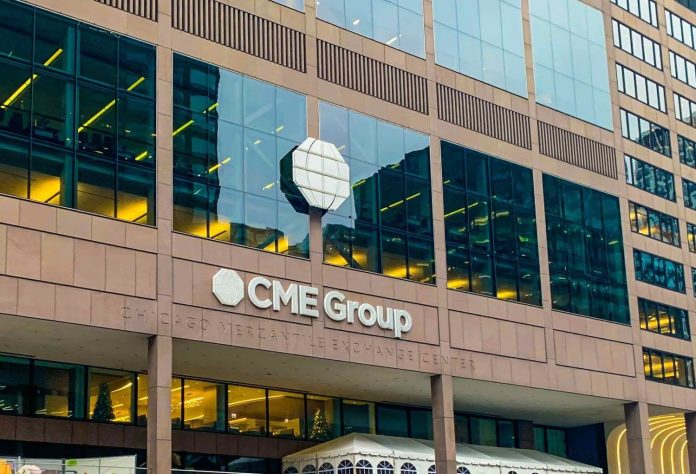
The decision by CME Group to launch futures contracts tied to Sui (SUI) and Avalanche (AVAX) marks another significant milestone in the institutionalization of digital assets. As one of the world’s largest and most influential derivatives marketplaces.

CME Group’s expansion into these newer blockchain ecosystems reflects both rising investor demand and the maturation of the broader crypto market beyond Bitcoin and Ethereum. Futures contracts serve as a critical financial instrument, allowing market participants to hedge risk, gain price exposure, and engage in price discovery without directly holding the underlying asset.

By introducing SUI and AVAX futures, CME is effectively signaling that these assets have reached a threshold of liquidity, credibility, and market interest sufficient to support regulated derivatives trading. This development is not merely symbolic—it enhances the accessibility of these tokens to institutional investors who often operate under strict compliance frameworks that favor regulated venues.

The inclusion of SUI futures is particularly noteworthy given the relatively recent emergence of the Sui blockchain. Developed with a focus on high throughput and low latency, Sui has positioned itself as a competitor in the layer-1 space by targeting use cases such as gaming, decentralized finance (DeFi), and digital asset ownership.

CME’s decision to list SUI futures suggests confidence in the network’s long-term viability and its ability to attract sustained developer and user activity. Similarly, AVAX futures build on the already established reputation of Avalanche as a high-performance blockchain known for its subnet architecture and rapid transaction finality. Avalanche has carved out a niche in enterprise blockchain solutions and DeFi infrastructure, making it a logical candidate for institutional-grade derivatives products.

By offering AVAX futures, CME provides investors with a regulated pathway to engage with a token that has demonstrated resilience and adoption across multiple market cycles. From a market structure perspective, the launch of these futures contracts is likely to improve price efficiency and reduce volatility over time.

Derivatives markets contribute to tighter bid-ask spreads and deeper liquidity, as arbitrage opportunities align prices across spot and futures markets. Additionally, the presence of institutional players often introduces more sophisticated trading strategies, which can stabilize price movements and mitigate extreme fluctuations. However, the move also introduces new dynamics.

Increased access to leverage through futures trading can amplify both gains and losses, potentially leading to heightened short-term volatility. Moreover, as more capital flows into derivatives markets, there is an ongoing debate about whether price discovery shifts away from spot markets, raising questions about the fundamental drivers of asset valuation.

Strategically, CME Group’s expansion into SUI and AVAX futures can be viewed as part of a broader effort to diversify its crypto product suite and maintain its competitive edge against both traditional exchanges and emerging crypto-native platforms. As regulatory clarity gradually improves in key jurisdictions, established financial institutions are positioning themselves to capture a larger share of the digital asset trading ecosystem.

The launch of SUI and AVAX futures by CME Group underscores a pivotal shift in the evolution of cryptocurrency markets. It reflects growing institutional confidence, enhances market infrastructure, and broadens the range of investable digital assets within a regulated framework. While challenges remain, particularly around volatility and regulatory alignment, this development reinforces the trajectory of crypto assets toward deeper integration with global financial systems.

Global Oil Price Thrust into Turmoil as Geopolitical Tensions in the Middle East Escalate

0

The global oil market has once again been thrust into turmoil as geopolitical tensions in the Middle East escalate sharply. Recent attacks by Iran targeting petroleum infrastructure in the United Arab Emirates (UAE) have triggered a significant surge in oil prices, underscoring the fragile nature of global energy supply chains.

These developments highlight how quickly regional conflicts can ripple through international markets, influencing everything from fuel prices to inflation expectations worldwide. At the center of the crisis is a series of coordinated drone and missile strikes attributed to Iran, aimed at critical UAE energy assets, including oil storage facilities and key export infrastructure.

One notable target has been the Fujairah oil hub, a strategically vital terminal that allows the UAE to export crude oil while bypassing the Strait of Hormuz—a narrow chokepoint through which a substantial portion of the world’s oil supply flows. The targeting of such infrastructure signals a deliberate attempt to disrupt alternative export routes and amplify pressure on global oil distribution networks.

The immediate market reaction has been swift and pronounced. Oil prices surged to over $110 per barrel, with some reports indicating spikes as high as $113, driven by fears of supply disruption and broader regional instability. Investors rapidly priced in a geopolitical risk premium, reflecting concerns that continued attacks could severely constrain output from one of the world’s most critical oil-producing regions.

In fact, oil prices jumped as much as 6% in a single trading session following intensified assaults on UAE facilities and Gulf shipping routes. This surge is not merely a reaction to immediate physical damage but also to the strategic implications of the attacks. By targeting infrastructure that bypasses the Strait of Hormuz, Iran is effectively challenging the redundancy mechanisms that Gulf producers have developed to safeguard exports.

The Strait itself handles roughly 20% of global oil trade, making any threat to its stability a matter of international concern. Disruptions—real or anticipated—can lead to significant volatility, as markets respond not just to current supply levels but to perceived future risks. Despite the sharp rise, oil markets have also demonstrated notable volatility. Prices briefly retreated from near four-year highs amid signals that a broader war might still be avoided, with U.S. officials downplaying the severity of the attacks.

However, such reassurances have done little to calm underlying anxieties, as continued skirmishes suggest that the conflict could persist or escalate further. Beyond immediate price movements, the broader economic implications are substantial. Elevated oil prices tend to feed directly into higher transportation and production costs, contributing to inflationary pressures globally.

For energy-importing countries, particularly in developing regions, sustained price increases can strain fiscal balances and weaken currencies. Meanwhile, even oil-producing nations are not immune; the UAE itself has experienced economic headwinds, with non-oil sector growth slowing as conflict-related disruptions impact trade, tourism, and business confidence.

Looking ahead, analysts warn that the energy market may face prolonged instability. Some projections suggest that oil supply conditions may not normalize for months, even if hostilities subside, due to the time required to repair infrastructure and restore secure shipping routes. This indicates that the current price surge could evolve into a more sustained period of elevated energy costs.

The surge in oil prices following Iran’s attacks on UAE petroleum facilities illustrates the deep interconnection between geopolitics and global energy markets. The deliberate targeting of critical infrastructure marks a significant escalation, raising concerns not only about immediate supply disruptions but also about the long-term resilience of the global energy system.

As tensions persist, markets are likely to remain highly sensitive to developments in the region, reinforcing the enduring influence of Middle Eastern geopolitics on the world economy.

Spot Bitcoin ETFs Recorded $1.15B over Two Trading Sessions

0

The recent surge in capital flowing into spot Bitcoin exchange-traded funds (ETFs), totaling $1.15 billion over just two trading sessions, marks a significant moment in the maturation of digital asset markets. This development underscores a growing institutional appetite for exposure to Bitcoin, while also reflecting broader macroeconomic and structural shifts that continue to reshape investor behavior.

The ETF structure offers a bridge between traditional finance and the crypto ecosystem. By allowing investors to gain exposure to Bitcoin without directly holding or managing the underlying asset, ETFs remove key barriers such as custody risks, regulatory uncertainty, and operational complexity. The scale of these inflows suggests that both institutional investors and wealth managers are increasingly comfortable allocating capital through regulated, familiar vehicles rather than navigating crypto-native platforms.

The timing of these inflows is not coincidental. Financial markets are currently navigating a complex landscape characterized by persistent inflation concerns, shifting interest rate expectations, and geopolitical tensions.

In such an environment, Bitcoin is increasingly being perceived not merely as a speculative asset, but as a potential store of value and portfolio diversifier. While the digital gold narrative has long been debated, sustained ETF inflows lend credibility to the argument that Bitcoin is gaining traction as a macro asset class.

Moreover, the concentration of $1.15 billion within just two sessions highlights the accelerating pace at which capital can move into the crypto market once structural access points are in place. Unlike earlier cycles, where inflows were fragmented across exchanges and retail-driven platforms, ETFs enable large-scale capital deployment in a coordinated and transparent manner.

This amplifies market impact, contributing to price momentum and reinforcing positive feedback loops that attract further investment. Another critical dimension is the role of institutional validation. The success of Bitcoin ETFs is not solely about inflows; it represents a broader endorsement from traditional financial infrastructure.

Asset managers, pension funds, and hedge funds are increasingly integrating Bitcoin exposure into their portfolios, often within defined allocation frameworks. This institutional participation tends to introduce longer investment horizons and more disciplined capital flows, potentially reducing volatility over time compared to retail-driven cycles.

However, it is important to contextualize these inflows within the broader lifecycle of ETF adoption. Early stages are often characterized by bursts of enthusiasm and rapid capital accumulation, followed by periods of consolidation.

The sustainability of these inflows will depend on several factors, including Bitcoin’s price stability, regulatory developments, and the performance of ETFs relative to other asset classes. If Bitcoin experiences sharp drawdowns, inflows could quickly reverse, highlighting the still-nascent nature of this market. Additionally, competition among ETF issuers may influence future dynamics.

As more products enter the market, fee compression and differentiation strategies will become increasingly important. Lower fees could attract additional capital, while innovations such as staking integration where applicable or enhanced liquidity features may further strengthen the appeal of ETF-based exposure.

From a market structure perspective, these inflows also have implications for Bitcoin’s supply-demand dynamics. ETFs typically require the acquisition of underlying Bitcoin to back shares, effectively removing supply from the open market. In a fixed-supply asset like Bitcoin, sustained inflows can exert upward pressure on prices, particularly when combined with other demand drivers such as retail participation or corporate treasury allocations.

The $1.15 billion inflow into Bitcoin ETFs over two sessions is more than a short-term headline—it is a signal of evolving market architecture and investor sentiment. As traditional finance continues to integrate digital assets, ETFs are emerging as a pivotal mechanism for capital formation in the crypto space. While risks remain, particularly volatility and regulatory shifts, the trajectory suggests that Bitcoin is steadily cementing its role within the global financial system.