DD
MM
YYYY

PAGES

DD
MM
YYYY

spot_img

PAGES

Home Blog Page 136

Google Unveils Gemini 3 as AI Race Intensifies With OpenAI

0

Google has rolled out Gemini 3, its newest artificial intelligence model, in a move that signals how aggressively the company is pushing to keep pace with OpenAI’s rapid advances in generative AI.

Sundar Pichai, CEO of Alphabet, said the upgraded model delivers stronger answers to complex queries and reduces the amount of prompting users need before getting accurate results. The rollout begins with select subscribers and will expand widely in the coming weeks. Gemini 3 is being baked directly into the Gemini app, Google’s AI search features such as AI Mode and AI Overviews, and a range of enterprise-facing tools.

This launch arrives only eight months after Gemini 2.5 and less than a year after Gemini 2.0—an unusually fast development cycle that underlines how quickly the major AI companies are iterating in response to one another. OpenAI introduced GPT-5 in August and updated the model again last week, adding a version the company said feels “warmer” and “more intelligent,” as well as another designed to work faster on simple tasks and stay focused on complex ones.

Pichai wrote that AI has evolved in two years from reading text and images to now understanding complex intent, tone, and context.

“Starting today, we’re shipping Gemini at the scale of Google,” he said, adding that the new model has been engineered to understand nuance at a deeper level and anticipate the meaning behind users’ requests.

Google said its ecosystem continues to expand at a rapid clip. The Gemini app now records 650 million monthly active users, while AI Overviews sees 2 billion monthly users. OpenAI reported in August that ChatGPT has 700 million weekly users, keeping the two companies neck-and-neck in overall reach.

Demis Hassabis, CEO of Google DeepMind, said Gemini 3 will aim for more direct and substantial answers. He added that the system is designed to avoid empty or flattering responses, instead prioritizing insight and clarity—an answer to long-running complaints that many chatbots tend to be overly agreeable.

The tech giants building these systems have been pouring unprecedented sums into the hardware and data-center capacity required to sustain them. Alphabet, Meta, Microsoft, and Amazon each raised their capital expenditure forecasts during their latest earnings calls and together expect to spend more than $380 billion this year.

Google is pairing the new model with an expanded developer ecosystem. It introduced “Google Antigravity,” a platform that lets developers code at a higher task-driven level. The company described Gemini 3 as its strongest model yet for vibe coding, a term referring to tools that let developers generate software through conversational prompts.

The company also showcased “generative interfaces,” a new experience where the model can produce answers that resemble a digital magazine, mixing images, stylized text, and structured layouts. In one demonstration, the model was asked to explain the Van Gogh Gallery with added life context, and the response produced a visually rich, mixed-media overview of each piece.

Paid subscribers will be the first to try these enhanced capabilities within AI Mode. Gemini 3 can analyze a user’s question and build tailored outputs such as interactive tables, grids, or custom tools. Google said the model can assemble a loan calculator on the fly or build simulations that help explain complicated physics problems.

Developers will gain access through the Gemini API, while companies can integrate the system through Vertex AI, Google’s cloud platform for deploying AI models. For corporate users, the company said Gemini 3 can be deployed for employee onboarding, procurement tasks, and industrial operations, including analyzing videos and images from factory floors with higher accuracy.

The unveiling positions Google for another round of head-to-head competition with OpenAI, with both companies racing to dominate consumer apps, enterprise tools, and developer ecosystems. The intensity has been rising throughout the year, and Gemini 3 gives Google another major step as the rivalry widens across search, productivity software, creative tools, and coding environments.

This latest launch signals that the speed of innovation in generative AI is unlikely to slow down soon. Each release from Google or OpenAI is now prompting near-immediate responses from the other, setting up a rivalry that continues to deepen across products, platforms, and user bases.
Intuit Strikes $100m-a-Year Deal With OpenAI, Bringing ChatGPT Deep Into Tax and Finance Services

0

Intuit has entered one of the most sweeping AI partnerships in the financial-software world, agreeing to pay OpenAI more than $100 million annually to embed the startup’s large language models across its most popular products.

The agreement instantly caught Wall Street’s attention, lifting Intuit shares by 2% in premarket trading.

The deal places OpenAI’s technology at the core of GenOS, Intuit’s internal AI system that fuels TurboTax, QuickBooks, Credit Karma, and Mailchimp. With the new arrangement, Intuit plans to deploy advanced AI agents capable of handling tax guidance, bookkeeping work, personal finance decisions, and marketing tasks. The ambition is to give millions of customers an intelligent assistant woven directly into the services they already use.

A standout element of the partnership is the integration of ChatGPT as a front door to Intuit’s ecosystem. TurboTax users will be able to link their Intuit accounts to ChatGPT, allowing them to carry out tax or financial actions through conversational prompts. ChatGPT will guide them step-by-step based on the information in their profiles, executing tasks without accessing the underlying documents. All interactions occur inside ChatGPT, while the sensitive data remains secured within Intuit’s environment.

Customers will also be able to authorize Intuit to pull specific information and provide tailored outcomes. Someone preparing their taxes can ask ChatGPT to estimate a refund. A business owner can ask for QuickBooks insights tied to real-time transactions. A user browsing credit options can request recommendations curated through Credit Karma. The companies say this setup will save time while preserving the privacy and control customers expect from financial platforms.

For OpenAI, the agreement is a major commercial milestone. The company has been searching for substantial industry partners to bring ChatGPT into sectors where task automation and decision support can generate recurring revenue. Its enormous $500 billion valuation and more than $1.4 trillion in long-term spending commitments have placed pressure on it to show clear paths to revenue expansion. A partner as large and data-intensive as Intuit provides a considerable boost.

The deal also reinforces OpenAI’s broader push to turn ChatGPT into a platform that powers purchases, transactions, and business operations. Recent agreements with PayPal, Shopify, and Walmart have allowed ChatGPT to handle payments, shopping, and commerce-related interactions. The addition of Intuit brings this strategy into a more tightly regulated arena, one where accuracy and security are crucial.

However, privacy sits at the heart of the collaboration. Intuit says all financial and tax information remains inside its own system, even when users engage entirely through ChatGPT. The companies designed the integration so that ChatGPT can issue instructions and receive results without absorbing or storing customers’ confidential documents.

The partnership marks a turning point for the financial software industry, showing how rapidly AI is becoming a foundational element of tax preparation, bookkeeping, and personal finance. Intuit gains a powerful technology upgrade that spans its product suite, while OpenAI secures a robust revenue stream and deepens its reach into another major industry.

Both companies are positioning the deal as a future-shaping step—one that blends convenience with secure automation, and signals that AI-powered financial tools are entering a new phase of mainstream adoption.

Jeff Bezos Returns as CEO — Launches $6.2B AI Startup Project Prometheus, Sparking Musk Rivalry

0

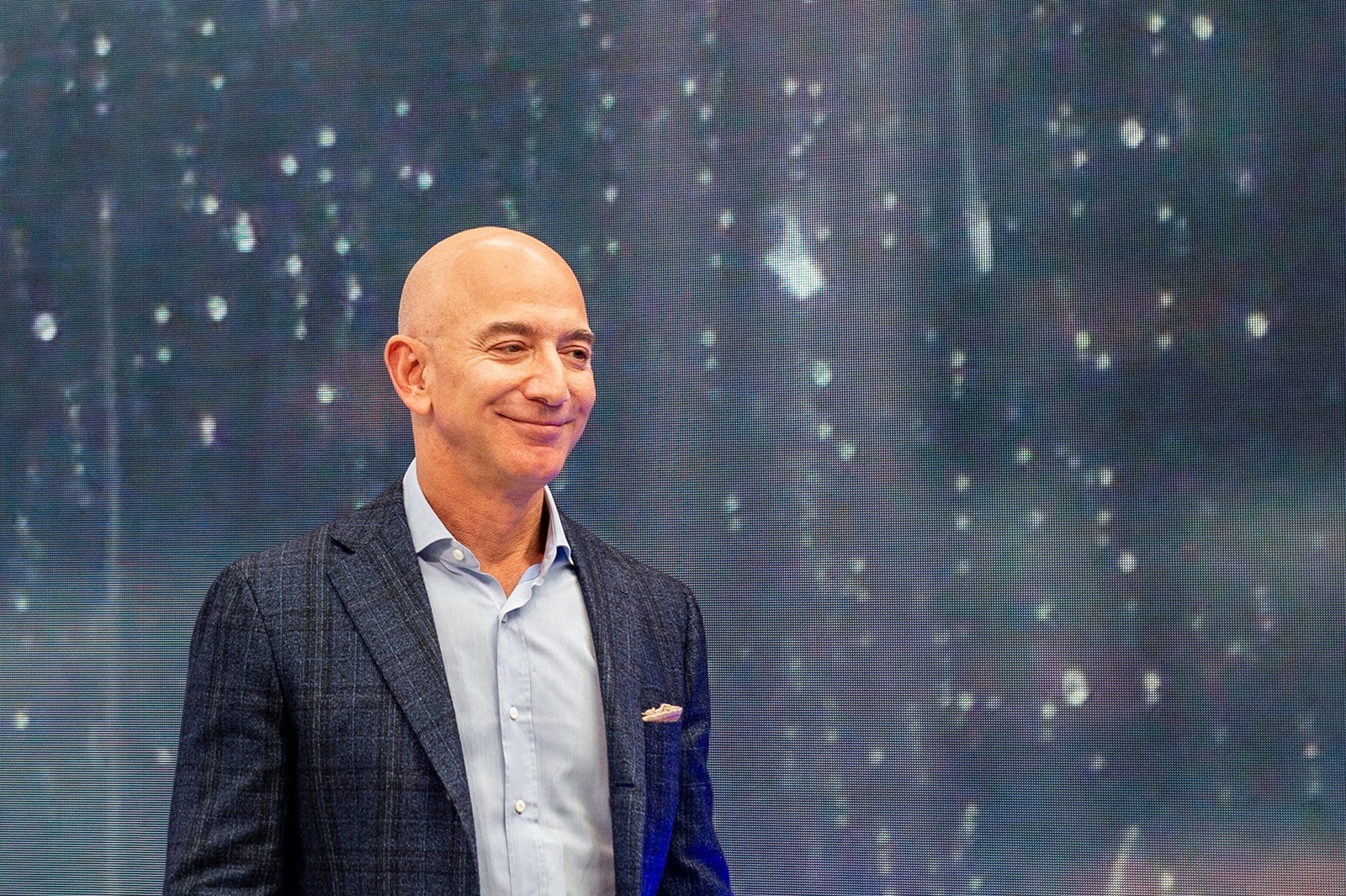
Jeff Bezos is stepping back into the spotlight as a chief executive for the first time since leaving Amazon four years ago, taking the helm of a new artificial intelligence venture called Project Prometheus.

The startup, which remains largely secretive, already commands an extraordinary $6.2 billion in funding and has hired about 100 employees, many of them poached from OpenAI, DeepMind, and Meta, according to the New York Times. Bezos will run the company as co-CEO alongside Vik Bajaj, a well-known physicist and chemist whose résumé spans Google’s X lab and the health-tech outfit Verily.

Project Prometheus is focused on applying advanced AI to engineering and manufacturing across multiple fields, including computing hardware, cars, aerospace, and other industries that depend on complex physical systems. Unlike the mainstream wave of consumer-facing AI products such as chatbots, the company is targeting the “physical economy,” betting that AI capable of design, simulation, and optimization in real-world manufacturing will become the next frontier of industrial technology.

The company has not disclosed where it is headquartered or how its models work, but Bezos has been directly involved in shaping the project. It is the first formal operating role he has taken on since handing Amazon’s leadership to Andy Jassy, though he has remained deeply engaged in his aerospace company Blue Origin as founder and sole shareholder. This new move places him back at the center of the tech industry’s highest-stakes competition.

His return also draws immediate comparisons to Elon Musk, who founded xAI in 2023 after falling out with OpenAI, the company he cofounded in 2015. Musk had long argued that OpenAI had drifted from its original nonprofit mission, particularly after accepting major commercial investments and forming a for-profit arm.

By 2023, he accused OpenAI of becoming too closely aligned with corporate interests, especially Microsoft. His frustration eventually led him to launch xAI, positioning it as a direct competitor to OpenAI with an emphasis on transparency, open systems, and what he described as “maximally truth-seeking” AI. xAI’s flagship product, Grok, became known for its real-time information access and its integration into Musk’s X platform.

The moment news broke about Bezos’s startup, Musk fired off a familiar jab on X, calling Bezos a “copycat.” Musk has used that taunt before, especially when Bezos ventures into fields Musk already occupies, including spaceflight through Blue Origin and now artificial intelligence. The barb underscores the rivalry between the two billionaires, which has spanned rockets, satellites, and now cutting-edge AI.

Bezos’s move comes at a time when immense amounts of capital are flowing into AI research companies. Tens of billions of dollars are being poured into building the next generation of foundation models, state-of-the-art data centers, and specialized hardware.

The heavy spending has fueled both optimism and anxiety in the market. Michael Burry, famous for predicting the 2008 mortgage crisis, recently placed a $1 billion bet against several AI-exposed companies, including Palantir and Nvidia. Days before, he accused some big tech firms of using accounting tactics to “artificially boost earnings,” questioning whether current AI valuations are sustainable.

Still, Bezos appears prepared to dig in for the long haul. The scope of Project Prometheus suggests a strategy aligned with his long-standing interests in engineering, robotics, and space technologies. The company’s recruitment drive and its enormous early funding signal an ambition to build a deeply technical enterprise rather than a consumer-layer AI tool.

And with Musk already publicly reacting, the stage is set for a fresh chapter in one of tech’s defining rivalries — now unfolding inside the global race to build the most powerful artificial intelligence systems on earth.

Grayscale’s Crypto Market Forecasts for End of 2025 and 2026

0

Grayscale Investments, a leading crypto asset manager, publishes regular research reports and market commentaries through its Grayscale Research division.

These often include forward-looking insights on cryptocurrency sectors, price trends, and regulatory developments rather than precise end-of-year price targets for individual assets like Bitcoin (BTC) or Ethereum (ETH).

Based on their most recent analyses as of Q3 2025, Grayscale remains broadly bullish on the crypto ecosystem, driven by institutional adoption, ETF inflows, and potential U.S. regulatory clarity. However, specific forecasts emphasize sector performance and macro catalysts over exact price predictions.

Grayscale’s Q3 2025 Crypto Sectors report notes positive price returns across all six tracked crypto sectors (e.g., Smart Contract Platforms, Layer 1 Protocols), despite mixed fundamentals like varying on-chain activity.

They anticipate continued momentum into Q4 2025, fueled by Bitcoin’s post-halving cycle and Ethereum’s ecosystem growth (e.g., Layer-2 scaling). Overall, Grayscale views 2025 as a year of consolidation and recovery, with the total crypto market cap potentially stabilizing above $2.5 trillion by year-end, assuming no major macroeconomic shocks.

Bitcoin (BTC): Implicitly optimistic, with expectations of BTC holding above $90,000–$100,000 amid ETF demand and corporate treasury adoption. No explicit end-2025 target, but their historical halving cycle analysis suggests 20–50% upside from mid-2025 levels.

Ethereum (ETH): Highlighted as a standout in the Smart Contract Platforms sector, with Grayscale forecasting ETH to benefit from deflationary mechanics and DeFi expansion. They project ETH trading in the $4,000–$5,000 range by December 2025, supported by spot ETH ETF approvals and staking yields.

Grayscale flags the U.S. government’s ongoing shutdown resolution and bipartisan crypto legislation progress as tailwinds, potentially unlocking $10–20 billion in new institutional inflows by year-end.

End of 2026 ForecastMarket Sentiment and Performance

Grayscale is particularly upbeat for 2026, predicting accelerated growth post-U.S. midterm elections, which could usher in pro-crypto policies. Their October 2025 commentary explicitly states optimism that “crypto market structure legislation can become law in 2026,” boosting liquidity and reducing regulatory uncertainty.

Sector-wise, they expect Layer 1s and AI-integrated tokens via Bittensor to lead, with the Crypto Sectors Market Index (CSMI) potentially up 30–60% year-over-year. Bitcoin forecast to enter a “supercycle” phase, with Grayscale eyeing $150,000+ by end-2026, driven by halvings’ supply constraints and global adoption.

Ethereum positioned for outperformance, with projections of $6,000–$8,000 by December 2026, thanks to upgrades like Dencun and rising dApp usage. Grayscale’s Q4 2024 preview extended into 2025–2026 outlooks lists ETH-adjacent assets like Optimism (OP) and Sui (SUI) as high-potential plays.

Emphasis on the 2026 midterms as a “landscape changer,” alongside Grayscale’s own potential IPO targeted for late 2025/early 2026, which could value the firm at $30–$33 billion and signal mainstream crypto integration.

Grayscale’s forecasts assume favorable macro conditions (e.g., Fed rate stability) and no escalation in geopolitical tensions. Downside risks include delayed regulations or equity market corrections spilling into crypto.

For comparison, third-party models aligned with Grayscale’s views per CoinCodex project similar trajectories: BTC ~$140,000 (2026 high) and ETH ~$4,000–$5,000 (mid-2026). These insights are derived from Grayscale’s proprietary Crypto Sectors framework and monthly commentaries.

To standardize the classification of crypto assets, enabling better portfolio diversification, risk assessment, and theme-based investing beyond dominant assets like Bitcoin and Ethereum. It addresses investor demand for clarity in a space with over 40 million tokens.

A market cap-weighted aggregate tracking the total investable crypto universe. Individual sector indices for targeted exposure. Assets qualify based on market cap, liquidity, and data availability.

Quarterly reviews add or remove tokens; for instance, Q1 2025 added 63 new assets, bringing the total to 283. Indices use market cap-weighting and incorporate fundamental metrics like on-chain activity users, transactions, fees alongside price returns to gauge sector health.

As of Q3 2025, the framework organizes assets into six sectors expanded from five with the addition of Artificial Intelligence in Q2 2025. Assets functioning as mediums of exchange, stores of value, or units of account—core to peer-to-peer transactions.

High liquidity; focus on stability and adoption for payments/reserves. Often includes stablecoins and BTC-like assets. Bitcoin (BTC), Litecoin (LTC), stablecoins like USDT/USDC. Baseline blockchains enabling self-executing smart contracts, dApps, and Layer-1/Layer-2 scaling.

Emphasis on throughput, security, and developer activity; hosts DeFi, NFTs, and more. Protocols and networks for decentralized finance (DeFi), lending, trading, and yield generation. Revenue from fees; tied to trading volume and liquidity provision.

Assets supporting consumption-driven activities like gaming, social media, NFTs, and entertainment. User-centric; driven by adoption in media, metaverses, and cultural trends. Render (RNDR) for rendering, gaming tokens like Immutable X (IMX).

Infrastructure tools for interoperability, data storage, oracles, and backend services. Enables ecosystem connectivity; often B2B-focused with steady utility. Tokens powering decentralized AI models, compute, and data marketplaces. Emerging; focuses on AI-blockchain integration for machine learning and inference.

The CSMI saw positive price returns across all six sectors in Q3 2025, with the total crypto market cap rising to ~$3 trillion up from $1T in Q1. However, fundamentals were mixed: Declines in users, transactions, and fees for Currencies and Smart Contract Platforms, offset by gains elsewhere.

Financials led returns, boosted by centralized exchange volumes and stablecoin adoption. Smart Contract Platforms benefited from Layer-2 growth and peer-to-peer payments. Bitcoin underperformed relative to “alt” sectors, signaling an “alt season.”

Q3 highlighted AI’s potential up 10% in Q2, with Grayscale’s “Top 20” list featuring high-potential assets like HYPE, ENA, and GRASS across sectors. The framework underscores ongoing adoption drivers like regulatory clarity and macro demand for scarce assets, despite risks like geopolitical tensions.

Sectors are reassessed quarterly; for example, Mantle joined in Q1 2025 after meeting liquidity criteria. Grayscale uses this framework in research reports, product development and the “Assets Under Consideration” list for future funds. It’s not static—future additions could include emerging themes like real-world assets.

Berkshire Hathaway’s Rare Leap Into Big Tech Sends Alphabet to a Record High

0

Berkshire Hathaway made a move that instantly reshaped market sentiment on Monday, taking a multibillion-dollar position in Alphabet and sending the Google parent’s shares up nearly 6% to a new record.

The purchase marks Berkshire’s first major entry into a large technology company built around artificial intelligence, a striking shift for a conglomerate long known for steering clear of Silicon Valley.

Filings released on Friday showed that Berkshire acquired 17.85 million Alphabet shares, valued at about $4.93 billion as of the previous session, according to Reuters. The investment is one of the last major additions to the portfolio under Warren Buffett before he hands the CEO role to Greg Abel at the end of 2025. It also breaks from Berkshire’s long-running caution toward high-growth tech firms, with Apple remaining the only major outlier Buffett had previously embraced because he saw it more as a consumer brand than a technology bet.

“The stake purchase of a tech company may represent a different type of mentality at Berkshire, though it’s not a total departure from its value-investing model,” Reuters quoted Steve Sosnick, chief strategist at Interactive Brokers, as saying.

The market’s reaction was swift. Alphabet was on track to gain roughly $180 billion in market value if the rally held through close, underscoring how powerful Berkshire’s endorsement remains. Alphabet also became one of the top-three trending names on Stocktwits as retail traders piled in.

The backing arrives at a moment when enthusiasm around artificial intelligence has started to cool. Business leaders and analysts have raised concerns about lofty valuations across tech, arguing that share prices have run ahead of earnings and that the timeline for returns on enormous data-center spending is still uncertain. The Roundhill Magnificent 7 ETF, which tracks giants such as Nvidia, Microsoft, and Alphabet, has been mostly flat since September after outperforming the broader market for much of the year.

Alphabet, however, has stood apart. The stock has climbed nearly 14% in the December quarter and is up 46% so far this year, the strongest performance among the Magnificent Seven. Its valuation has also remained comparatively moderate, trading near twenty-five times forward earnings versus roughly twenty-nine for Microsoft and close to thirty for Nvidia, based on LSEG data.

“Alphabet fits the value-investing theme better than some of the other names that are leading the AI charge right now,” Sosnick said.

Analysts say the company’s positioning in artificial intelligence is a key reason. Google has been accelerating infrastructure investments, rolling out AI-enhanced search tools, and using its immense advertising business to support a broad push into data-center expansion. CFRA analyst Angel Zino said the Berkshire purchase “validates Google’s strong fundamentals and provides Berkshire exposure to a leading AI provider through Google Cloud and Gemini expansion,” adding that Alphabet’s financial strength and valuation likely played a major role in the decision.

Alphabet’s most recent earnings report confirmed that AI investments are reshaping the company’s core businesses. Google Cloud, once trailing its larger rivals, has begun emerging as a major growth engine, driving a wave of investor interest over the past month.

There is also a personal angle tied to Berkshire’s leadership. Buffett and the late Charlie Munger have previously spoken about missing out on Google in its early years, even though Berkshire’s subsidiaries had been major users of its advertising platform. The timing of the Alphabet purchase gives the conglomerate long-sought exposure to a company both men had openly admired but never owned.

It is still unclear whether the investment was made directly by Buffett, by portfolio managers Todd Combs or Ted Weschler, or by Abel. Buffett generally oversees the largest positions, but Berkshire has not clarified the decision-maker.

The move comes as Berkshire continues to build an enormous cash reserve. The firm remained a net seller of equities in the September quarter, cutting back on Apple and Bank of America and pushing its cash pile to a record $381.7 billion. Many investors have interpreted the buildup as a sign that Buffett views valuations across the wider market as stretched. Even with the Alphabet purchase, financial services still make up 36.6% of Berkshire’s equity portfolio, based on Morningstar’s latest tally.

However, the decision to plunge into Alphabet signals a rare moment when valuation discipline, AI leadership, and long-term durability aligned with Berkshire’s investment instincts. And in an environment where investors have become increasingly cautious about AI-driven exuberance, the move from Omaha is seen as an indication that Alphabet continues to stand out not as a technology leader.