DD
MM
YYYY

PAGES

DD
MM
YYYY

spot_img

PAGES

Home Blog Page 14

Game Providers at the Core: How Innovative Studios Drive the Modern Online Gaming Industry

0

The online gaming ecosystem usually attracts attention through flashy platforms and blockbuster releases, yet the true engine of progress resides in the creative and technical teams that supply fresh content. Market growth, shifting player demographics, and relentless advances in hardware all place new pressures on studios to deliver experiences that feel both familiar and surprising.

A rising generation of specialized developers, including iconic21, illustrates how focused expertise converts abstract ideas into commercially viable products. Concept art, math models, sound design, and compliance checks now unfold in parallel rather than in sequence, reducing launch times while improving overall cohesion.

Value Added Beyond Pure Entertainment

Successful providers contribute far more than a catalog of titles. Robust backend frameworks, adaptable engines, and transparent certification pipelines shape the reputation of entire platforms. Service quality therefore hinges on technical depth as well as creative artistry.

Pillars of Provider Contribution:

  • Mathematical Integrity: Fair randomization algorithms, transparent return-to-player calculations, and independent audits protect user trust and regulatory standing.
  • Cross-Device Performance: Optimized code bases allow seamless shifts from desktop to mobile, preserving frame rates and touch responsiveness without bloated file sizes.
  • Localized Assets: Multilingual text, region-specific imagery, and culturally tuned narratives attract new segments while limiting friction for existing users.
  • Security Toolkits: Built-in anti-fraud modules, robust encryption, and real-time anomaly alerts reduce chargebacks and protect sensitive data.
  • Update Cadence: Regular content drops, seasonal events, and balance tweaks keep engagement metrics healthy long after the honeymoon phase.

Clear priorities in each area distinguish leading providers from studios that merely chase trends. Solid foundations simplify future integrations, whether through virtual reality peripherals or emerging payment rails.

Fresh mechanics also carry strategic weight. Innovations such as skill-based bonus rounds, cooperative progression, and narrative branching encourage repeat visits without relying solely on escalating jackpots. The result: extended session lengths and improved lifetime value.

Emerging Forces Reshaping Provider Roadmaps

Growing user sophistication increasingly drives studios to refine both form and function. Today’s audience expects cinematic polish, instantaneous feedback loops, and transparent reward structures. Providers able to anticipate these demands secure premium distribution deals and stronger brand visibility.

Trends That Influence Roadmaps:

  • Hybrid Monetization Models: Combining cosmetic microtransactions with fixed prizes reshapes revenue projections and broadens appeal.
  • Modular Engines: Swappable physics layers, animation packs, and UI skins accelerate white-label opportunities while maintaining brand differentiation.
  • Adaptive Difficulty: Real-time telemetry adjusts challenge curves to individual behavior patterns, lowering churn for casual participants and sustaining tension for veterans.
  • Environmental Responsibility: Energy-efficient server architecture and carbon-neutral hosting resonate with eco-conscious markets and forward-looking regulators.

Between those forces lies an ongoing balance of novelty and familiarity. Excessive experimentation risks alienating core audiences, yet stale mechanics fade quickly under social-media scrutiny. Providers that analyse telemetry, community feedback, and regional legislation in tandem craft releases capable of withstanding hype cycles.

Strategic partnerships further magnify reach. Collaboration with payment processors, esports organizers, and streaming influencers turns each launch into a multi-platform event rather than a quiet catalog addition. The provider thereby secures an expanded marketing funnel without shouldering every promotional cost alone.

Conclusion: A Quiet Powerhouse Behind Every Click

While spotlight narratives often celebrate front-end aggregators, the sustained health of the online gaming sector ultimately rests on provider innovation. Standardized security protocols, breathtaking art, and resilient code bases combine to form a virtuous loop that benefits operators and players alike. Continuous refinement remains essential, because audience taste evolves as quickly as underlying technology. Studios that treat each release as a living product rather than a static deliverable will define the next chapter of interactive entertainment.

From faster loading screens to ethical monetization, providers hold the keys to progress. Platforms that recognise and nurture such expertise position themselves for durable growth, and players gain richer experiences in return. The modern industry, therefore, is not merely shaped by providers; it is actively carried forward by them—one meticulously balanced title at a time.

Manufactured Fear in Osun 2026 Governorship Election

0

As the Osun State governorship election approaches, campaign communication is becoming increasingly emotional. While elections should ideally revolve around competing policy proposals and governance records, a growing pattern has emerged across social media. Political actors and their supporters are attempting to influence voters not only through promises and achievements but also through fear. This strategy, often described as manufactured fear, involves constructing narratives that portray political opponents as threats to communities, democracy and the future of the state.

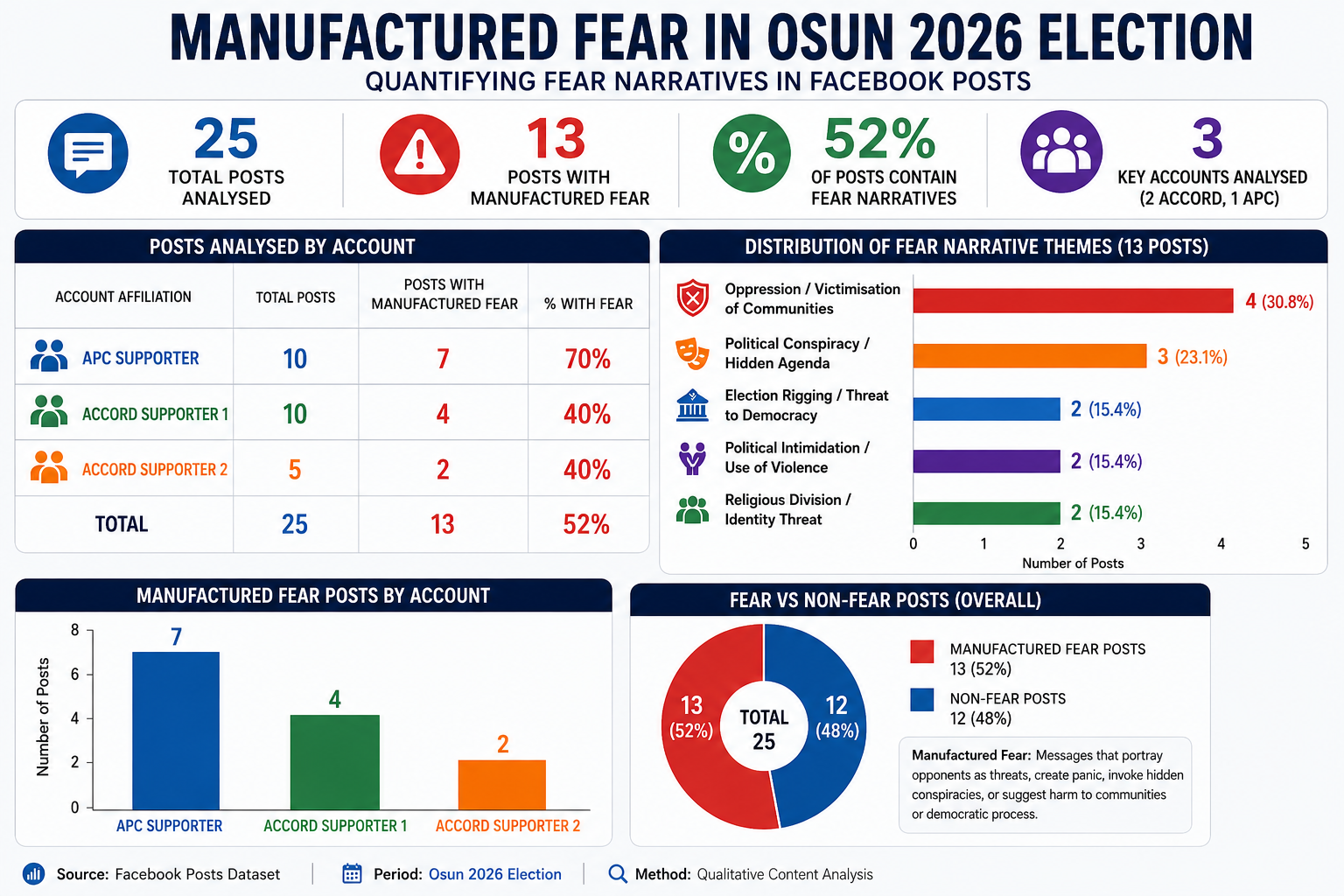
An analysis of Facebook posts from influential supporters of the All Progressives Congress (APC) and the Accord Party shows that manufactured fear has become an important feature of the online campaign. Although many posts focus on endorsements, campaign activities and development achievements, several messages go further by encouraging voters to believe that electing the opposing party would expose them to oppression, instability, deception or intimidation.

One prominent pattern is the portrayal of the incumbent administration as hostile to particular communities. Rather than presenting governance shortcomings as administrative failures, several posts attribute deliberate malice to the government. One message urges voters to support the opposition in order to “rescue the community” from oppression and injustice. Another questions why a particular community has become the target of government “hatred” while alleging deliberate neglect of infrastructure and public services. Such messages transform electoral competition into a struggle for survival by suggesting that communities are being punished because of their political identity. This framing encourages voters to perceive political change not as a democratic choice but as an urgent necessity.

Another recurring strategy is the construction of hidden political conspiracies. Posts alleging that political emissaries offered huge sums of money to induce defections or claiming that senior government officials were preparing to abandon the administration create an impression of widespread instability within government. Whether these allegations are substantiated is less important than their communicative effect. Repeated exposure to such claims encourages citizens to believe that government institutions are collapsing behind the scenes and that the administration is rapidly losing legitimacy.

Supporters of the governing party deploy manufactured fear differently. Rather than portraying the opposition as oppressive, they frame it as a threat to democratic stability and social cohesion. Some posts accuse opposition actors of promoting dangerous religious narratives in an attempt to divide voters. Given Nigeria’s history of religious tensions, such messages invite citizens to associate the opposition with social instability rather than democratic competition. Other posts introduce concerns about electoral manipulation by referring to claims that external political actors could influence the election. Even when such claims are dismissed, their repeated circulation keeps electoral insecurity within public discourse.

Another strand of communication portrays the opposition as increasingly desperate and willing to employ intimidation. Several posts allege the destruction of campaign materials and billboards after unsuccessful political rallies. These messages encourage supporters to interpret political setbacks as evidence that opponents may resort to coercion instead of democratic persuasion. Whether these allegations are ultimately verified is separate from the communication strategy itself. The intended effect is to portray political opponents as willing to undermine peaceful electoral competition.

The analysis also suggests that manufactured fear is not the dominant communication strategy employed by either political camp. Many posts focus on campaign momentum, endorsements by influential individuals, infrastructure projects and criticism of opponents’ performance. However, the fear narratives stand out because they redefine elections as contests between safety and danger rather than between competing policy alternatives. Voters are encouraged to believe that failure to support one candidate could expose their communities to oppression, corruption, violence or social division.

Perhaps the most significant finding is that both political camps construct different versions of fear while pursuing the same objective. Opposition-aligned messages depict the incumbent administration as vindictive, discriminatory and hostile to dissenting communities. Pro-government messages portray the opposition as deceptive, intolerant and prepared to undermine democratic norms through intimidation or divisive identity politics. In both cases, electoral choices are framed less around governance performance than around avoiding perceived threats posed by political opponents.

This communication strategy carries significant implications for democratic consolidation in Osun State. When political actors consistently present rivals as existential threats, public trust in democratic institutions begins to erode. Elections become less about evaluating policies and more about defeating perceived enemies. Such narratives deepen political polarisation, increase suspicion between supporters of rival parties and make post-election reconciliation more difficult.

As campaigning intensifies ahead of the Osun 2026 election, political parties, candidates and their supporters should recognise that every message shared online contributes to the broader democratic environment. Robust criticism and political competition are essential features of democracy, but campaigns that deliberately amplify fear risk weakening the very democratic institutions they seek to control. The long-term health of Osun’s democracy will depend not only on the credibility of the election itself but also on the quality of political communication that shapes citizens’ choices before they cast their votes.

Navigating the Information Storm in Osun 2026 Election

0

The upcoming Osun State governorship election, scheduled for August 15, 2026, has emerged as a critical barometer for the health of Nigeria’s democracy ahead of the 2027 general elections. Since the lifting of the ban on political campaigns, the state has become a primary theatre for Information Manipulation and Interference (IMI), where digital platforms are weaponised to distort public discourse and erode institutional trust. As “polluted messages”, ranging from AI-generated deepfakes to coordinated smear campaigns, intensify, a diverse array of actors is mounting a sophisticated, multi-layered response to safeguard the integrity of the vote.

The Anatomy of the Threat

The current campaign landscape in Osun is defined by high social media penetration and a troubling trust deficit in electoral institutions. Malign actors are exploiting these vulnerabilities through fabricated content, such as false claims of voter registration fraud by the Independent National Electoral Commission (INEC). Furthermore, the deployment of performance misinformation, such as unproven claims regarding the hiring of 5,000 teachers, and reputation manipulation targeting leading candidates has become commonplace. Perhaps most dangerous are the fear-based falsehoods, including social media reports of alleged bandit invasions in Inisa and Oyan, which were designed to suppress voter turnout before being debunked by the Nigeria Police Force.

Strategic Responses: Early Warning and Grassroots Monitoring

In a direct response to these security and information threats, the Kukah Centre and the European Union Support to the National Peace Committee (EU-NPC) have launched a 5-day intensive training programme for field observers across all 30 Local Government Areas (LGAs) in Osun. This initiative focuses on the implementation of Early Warning and Early Response (EWER) mechanisms, equipping actors with the skills to identify and report potential security flashpoints and information interference in real-time. By decentralising monitoring, these organisations aim to create a “human shield” of credible data collection that can outpace the viral spread of disinformation. This project, implemented via the STEP-G project in partnership with the Swiss Federal Department of Foreign Affairs, represents a shift toward proactive conflict-sensitive observation.

Institutional Resilience and Digital Literacy

Recognising that the integrity of the election is inextricably linked to the capacity of the electoral umpire, the International Press Centre (IPC) has initiated fact-checking and digital literacy workshops specifically for INEC officials in Osun. This institutional approach is vital; research suggests that when electoral technology, such as the Bimodal Voter Accreditation System (BVAS), is supported by well-trained personnel, it significantly reduces “non-issues” like allegations of manual rigging and ethnoreligious biases. By empowering officials to navigate the digital communication space, actors are effectively “pre-bunking” potential claims of institutional sabotage.

The Ecosystem-Based Response: A Path Forward

Evidence has pointed towards an ecosystem-based response that moves beyond reactive fact-checking. Actors are now looking toward the “building blocks for success” identified in broader African contexts: understanding the local digital threat landscape, investing in diverse coalitions, and taking a hybrid approach that bridges online and offline spaces. In Osun, this means connecting digital forensics labs with community leaders and traditional media to ensure that verified narratives reach rural and peri-urban voters who may be less digitally literate.

In this case, there is a growing call to institutionalise electoral technology as Critical National Digital Infrastructure. By formalising the protection of result transmission portals and accreditation systems, the state can prioritise these assets for cybersecurity coordination and disaster response. Actors are also advocating for a Joint Electoral Cybersecurity Task Force (JECyTF), comprising INEC, the Nigerian Communications Commission (NCC), and security agencies to mitigate algorithmic bias and coordinated sabotage.

Beyond Ballot Boxes

Protecting Osun 2026 requires more than just securing physical ballot boxes; it demands the protection of the information environment itself. The responses from the Kukah Centre, the EU, and the IPC demonstrate recognition that democratic resilience is built on verified facts. As campaigns evolve into the era of synthetic media and deepfakes, the success of these actors in building digital resilience will determine not just the outcome of the Osun governorship, but the stability of Nigeria’s democratic future. The goal is to ensure that the will of the people is driven by informed choice rather than manufactured fear.

Bitcoin and Ethereum Rally Signals New Crypto Market Cycle

0

Bitcoin’s resurgence above the $66,000 mark for the first time since June 15 signals a renewed wave of optimism across the digital asset market.

The move comes after weeks of volatility and cautious sentiment that had dominated cryptocurrency trading. Investors are once again showing confidence in risk assets, driven by improving macroeconomic conditions, increasing institutional participation, and growing demand for digital investment products.

The return of Bitcoin above $66,000 is significant because it demonstrates the resilience of the leading cryptocurrency.

Over the past month, Bitcoin faced pressure from profit-taking activities, concerns surrounding monetary policy, and geopolitical uncertainties. The latest rally suggests that market participants continue to view Bitcoin as a long-term store of value and a key asset in diversified investment portfolios.

Institutional interest remains one of the strongest catalysts behind Bitcoin’s recovery. Since the approval of spot Bitcoin exchange-traded funds (ETFs), traditional investors have gained easier access to cryptocurrency exposure without directly holding digital assets.

These products have attracted billions of dollars in capital and have significantly changed the structure of the crypto market. The increasing integration of digital assets into traditional finance is gradually reducing skepticism and encouraging broader adoption among institutional investors.

While Bitcoin’s rise has captured headlines, Ethereum has also emerged as a major beneficiary of renewed market enthusiasm. In a notable development, Bitmine announced the addition of approximately $14 million worth of Ethereum to its holdings.

This move reflects growing confidence in Ethereum’s long-term prospects, particularly as the network continues to dominate decentralized finance, tokenization initiatives, and smart contract applications.

The decision by Bitmine to increase its Ethereum exposure highlights a broader trend among institutional players. Ethereum is increasingly being viewed not only as a cryptocurrency but also as a foundational infrastructure layer for the future digital economy.

Its ecosystem supports thousands of decentralized applications, stablecoins, tokenized assets, and emerging financial products.

Many investors see Ethereum as a strategic asset capable of benefiting from the continued expansion of blockchain-based services. Perhaps even more noteworthy is the strong performance of spot Ethereum ETFs.

During the latest trading week, spot ETH ETFs led all cryptocurrency investment products in net inflows, surpassing even Bitcoin-focused funds. This development suggests that investor appetite is expanding beyond Bitcoin and that Ethereum is increasingly being recognized as a critical component of institutional crypto portfolios.

The surge in inflows into Ethereum ETFs may also reflect expectations surrounding future network developments and increased usage across the blockchain industry. Tokenization of real-world assets, stablecoin growth, and decentralized financial services continue to rely heavily on Ethereum’s infrastructure.

Consequently, institutional investors may be positioning themselves early to benefit from these long-term trends. The simultaneous rise of Bitcoin and Ethereum demonstrates the growing maturity of the digital asset market.

Rather than competing directly, the two largest cryptocurrencies are increasingly serving complementary roles. Bitcoin continues to function as digital gold and a macroeconomic hedge, while Ethereum is becoming the technological backbone of blockchain innovation.

As capital flows back into the cryptocurrency sector, market sentiment appears to be shifting from caution to renewed optimism. Bitcoin reclaiming $66,000 and Ethereum attracting record ETF inflows indicate that institutional confidence remains strong despite previous market setbacks.

If these trends continue, the coming months could mark another important chapter in the evolution of digital assets, further accelerating mainstream adoption and reinforcing the role of cryptocurrencies within the global financial system.

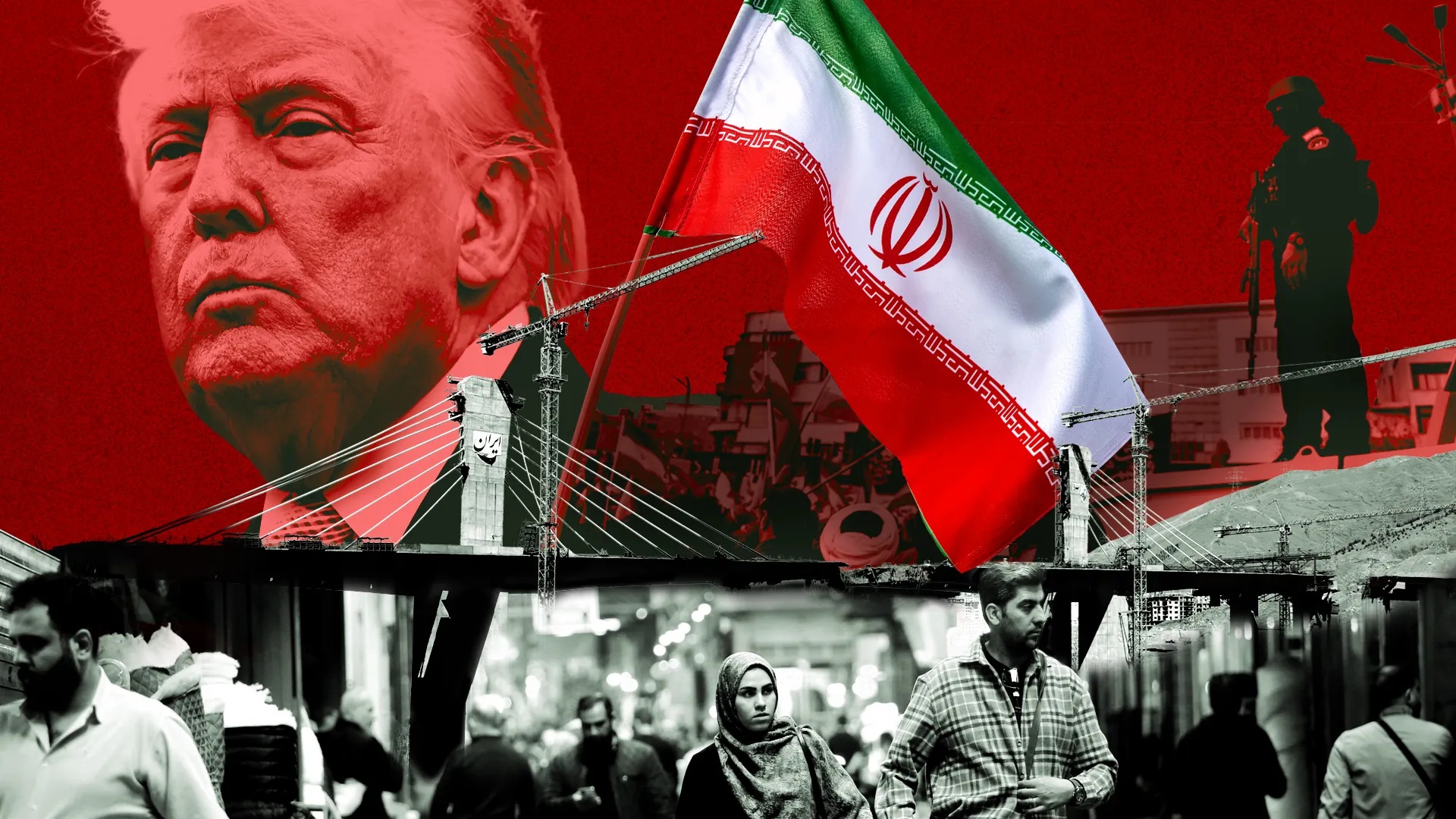
The Economic and Security Impact of a Temporary US-Iran Ceasefire

0

The prospect of a 10-day ceasefire between the United States and Iran has emerged as a significant diplomatic development, offering a rare opportunity to de-escalate one of the world’s most volatile geopolitical confrontations.

Mediators from regional and international powers are reportedly working behind the scenes to establish a temporary halt in hostilities, aiming to create space for dialogue and prevent a broader conflict that could destabilize the Middle East and the global economy.

The tensions between Washington and Tehran have intensified in recent months following military strikes, retaliatory actions, and growing concerns over maritime security in the Persian Gulf and the Strait of Hormuz.

The strategic waterway, through which a significant portion of the world’s oil supply passes, has become a focal point of international concern. Any prolonged military confrontation in this region carries the risk of disrupting global energy markets, triggering inflationary pressures, and increasing uncertainty across financial systems.

A 10-day ceasefire, though temporary, could serve several important purposes. First, it would allow both nations to reassess their military positions and reduce the immediate risk of miscalculation.

History has shown that conflicts often escalate not only because of deliberate actions but also due to misunderstandings, accidental engagements, and the pressure of rapid retaliatory cycles. By creating a short period of calm, diplomats may be able to prevent a dangerous spiral into a larger regional war.

Secondly, the ceasefire could open channels for humanitarian efforts and confidence-building measures. Regional allies and international organizations may use this period to facilitate prisoner exchanges, provide aid to affected populations, and establish frameworks for future negotiations.

Such measures, although modest, often play a crucial role in laying the groundwork for more comprehensive peace discussions.

The involvement of mediators highlights the growing concern among global powers regarding the consequences of continued hostilities.

Nations across Europe, the Gulf region, and Asia have substantial economic and security interests tied to stability in the Middle East. Energy-importing countries are particularly sensitive to disruptions in oil supply, while neighboring states fear that an expanded conflict could spill across borders and threaten regional security architectures.

Financial markets are also closely monitoring the situation. Escalating tensions between the United States and Iran have historically resulted in spikes in oil prices, increased market volatility, and a flight toward safe-haven assets such as gold and government bonds.

Investors are likely to view a successful ceasefire as a positive signal that could temporarily reduce geopolitical risk premiums and stabilize commodity markets.

The challenges facing negotiators remain considerable. Deep-rooted mistrust, conflicting strategic objectives, and domestic political pressures in both countries could undermine the sustainability of any agreement.

A temporary ceasefire does not automatically resolve the underlying issues that have defined U.S.-Iran relations for decades, including disputes over regional influence, security concerns, sanctions, and nuclear ambitions.

Even a brief pause in hostilities would represent an important diplomatic achievement. It would demonstrate that dialogue remains possible despite heightened tensions and could provide a foundation for broader negotiations in the future.

The coming days will therefore be critical in determining whether this proposed 10-day ceasefire becomes merely a short-lived reprieve or the beginning of a more meaningful effort toward reducing one of the world’s most persistent geopolitical rivalries.

As mediators continue their efforts, the international community will be watching closely, hopeful that diplomacy can prevail over escalation and that a temporary ceasefire may pave the way for longer-term regional stability.