DD
MM
YYYY

PAGES

DD
MM
YYYY

spot_img

PAGES

Home Blog Page 14

Anthropic Bets $45bn on AI Infrastructure in Massive Nscale Computing Deal

0

Anthropic has signed a roughly $45 billion cloud infrastructure agreement with UK-based Nscale, securing about 460 megawatts of computing capacity in one of the clearest signs yet that the AI industry’s next competitive battle will be fought as much over access to power and chips as over the quality of its models.

Under the agreement, Anthropic will rent computing capacity at Nscale’s planned data-center development in West Virginia, according to two people familiar with the deal, who spoke to Bloomberg. The facility is expected to come online by the end of 2027 and will use Nvidia’s next-generation Vera Rubin chips.

The agreement, first reported by Bloomberg, comes as Anthropic races to expand the infrastructure behind its Claude models and enterprise AI products. The company has acknowledged that surging demand has already placed significant pressure on its computing resources, causing reliability and performance problems during periods of heavy usage.

The size and duration of the Nscale commitment show how aggressively Anthropic is preparing for that demand to continue growing. Rather than waiting for computing capacity to become available, Anthropic is effectively reserving a large portion of future infrastructure years in advance. That strategy could give the company greater certainty over its ability to train and serve increasingly demanding AI models, at a time when leading AI developers are competing for access to advanced processors, data centers and electricity.

But the deal also introduces a substantial financial commitment at a crucial point in Anthropic’s development. The company is reportedly seeking to support a valuation of about $965 billion as it moves toward a potential public offering. Anthropic confidentially filed an IPO prospectus with the U.S. Securities and Exchange Commission in June and has begun preliminary discussions with prospective investors.

That makes its infrastructure spending important to the company’s future equity story. Investors will want to see that the billions being committed to computing translate into proportionately faster revenue growth, rather than simply allowing Anthropic to keep pace with competitors.

Anthropic has been expanding its infrastructure relationships rapidly. It has announced agreements involving Advanced Micro Devices, SpaceX, Google and Broadcom, reflecting a strategy that combines multiple sources of computing capacity and technology rather than relying on a single supplier.

The Nscale agreement adds another important layer to that strategy. The planned West Virginia facility will be built around Nvidia’s Vera Rubin architecture, tying Anthropic to Nvidia’s latest generation of AI accelerators as the company prepares for a new phase of model development and deployment.

For Nvidia, the deal is another indication of the scale of infrastructure spending that AI companies are willing to undertake. Demand for advanced accelerators has moved beyond the initial wave of model training and includes the enormous computing requirements associated with inference, as companies deploy AI assistants and agents to millions of users.

The economics are challenging, however. Training a frontier model requires enormous upfront computing investment, while serving models at scale creates recurring inference costs. Anthropic therefore needs to increase the amount of revenue generated from each unit of computing capacity while simultaneously bringing down the cost of delivering AI services.

That issue could become more important as AI competition intensifies. OpenAI and Google are also investing heavily in infrastructure, while companies across the sector are developing proprietary chips and alternative computing architectures in an effort to reduce dependence on Nvidia and improve costs.

Anthropic’s approach suggests that access to compute is becoming a long-term strategic asset. Securing capacity through 2027 could protect the company from supply constraints and give it room to expand Claude without having to negotiate for large blocks of infrastructure every time demand increases.

The risk is that AI demand may not grow quickly enough to absorb all the capacity being contracted today.

The 2027 delivery date also means Anthropic is making a major infrastructure bet on a market that is still evolving. The capabilities, pricing and economics of AI models could change substantially before the West Virginia facility becomes operational. A technological shift toward more efficient models or specialized processors could alter the amount of computing power required to generate a given level of AI output.

Anthropic is nevertheless betting that the bigger risk is underinvestment.

The company has already experienced the consequences of insufficient infrastructure as Claude usage has surged. If enterprise adoption, AI agents and complex workloads continue to expand, securing capacity years ahead could prove more valuable than maintaining maximum flexibility.

The Nscale agreement consequently marks a shift in the AI race from simply building better models to building the industrial capacity required to run them. Anthropic’s challenge now is to ensure that its infrastructure expansion does not outrun its commercial growth.

Australia’s Fleetpartners Draws Fourth Bidder As Sumitomo-Led Consortium Offers $582.3 Million

0

FleetPartners has become the center of a competitive takeover battle after a consortium led by Japan’s Sumitomo Corp offered A$813.1 million ($582.3 million) for the Australian vehicle leasing company, marking the fourth approach in less than a month.

The wave of bids points to growing strategic interest in FleetPartners’ vehicle leasing platform, particularly its fast-growing novated leasing business, and raises the prospect of a higher offer as international fleet operators and private equity investors compete for control.

The Sumitomo-led consortium, comprising Sumitomo Corp and Sumitomo Mitsui Auto Service, offered A$3.85 in cash for each FleetPartners share. The proposal represents a 34% premium to the company’s July 31 closing price, before SG Fleet launched the takeover contest.

The offer is above the A$3.80-a-share proposals from Japan’s ORIX and Canada’s Element Fleet, but falls short of the A$4-a-share bid from SG Fleet, which is backed by private equity firm Pacific Equity Partners.

FleetPartners said it has given the Sumitomo consortium limited initial access to commercial and financial information as part of due diligence while continuing discussions with the other potential buyers.

The emergence of four bidders in such a short period suggests FleetPartners is being valued for more than the earnings generated by its existing fleet. Buyers are also competing for access to its novated leasing franchise, which has benefited from tax incentives for eligible electric vehicles and accounted for nearly one-fifth of the company’s operating earnings in fiscal 2025.

Novated leasing allows employees to finance vehicles through their employers, potentially reducing their taxable income. The model has become attractive as Australian consumers and businesses shift toward electric vehicles.

“Four separate international bidders indicate FleetPartners has genuine franchise value that matches global fleet consolidation trends,” said Emanuel Ajay Datt, managing director at Datt Capital.

The bidding war has also created a significant gap between the price at which the takeover process began and the level at which FleetPartners now trades. Its shares have risen nearly 50% in just over three weeks since SG Fleet made its initial approach on August 3.

That rapid appreciation increases pressure on prospective buyers. A bidder offering materially less than A$4 a share would risk appearing uncompetitive after SG Fleet established that level, while FleetPartners shareholders have a stronger incentive to reject lower proposals as more bidders enter the process.

Datt expects the competition to push the eventual price beyond A$4 a share, arguing that strategic buyers can justify a higher valuation through cost savings, scale and other synergies.

“With four bidders now circling, we expect the process to clear A$4.00 driven by strategic synergies rather than pure financial arbitrage,” he said.

The composition of the bidders is significant. ORIX and Sumitomo bring deep experience in vehicle financing and fleet management, while Element Fleet is a major international fleet management company. SG Fleet, meanwhile, has the advantage of being an established Australian competitor and is backed by PEP.

That mix makes the contest less dependent on financial-market conditions and more about strategic positioning. For industry buyers, acquiring FleetPartners could provide additional scale, customers and fleet assets while strengthening their position in Australia’s increasingly competitive vehicle leasing market.

The takeover battle also comes amid sustained interest from overseas investors and private equity firms in Australian-listed companies. Businesses with recurring revenues and exposure to long-term structural trends have remained attractive acquisition targets.

FleetPartners’ exposure to electric vehicles adds another potential source of value. Government incentives have helped support demand for eligible EVs through the novated leasing channel, giving fleet operators an opportunity to participate in the transition away from conventional vehicles without relying solely on direct consumer purchases.

Still, bidders must weigh the premium already embedded in FleetPartners’ share price against the potential growth and synergies they can extract. The nearly 50% surge since the first approach means the market is already pricing in a substantial probability of a successful takeover at a higher valuation.

FleetPartners shares were trading nearly 1% lower as of 0517 GMT on Wednesday, suggesting investors were waiting for evidence that the latest offer would trigger another round of bidding rather than immediately pushing the stock toward SG Fleet’s A$4 proposal.

The next move by SG Fleet may therefore be critical. If it raises its offer, the other strategic bidders could be forced to respond, potentially turning the A$4 proposal into a floor rather than a ceiling for the takeover valuation.

Hong Kong Court Keeps PwC International in $8.5 Billion Evergrande Liquidators’ Lawsuit

0
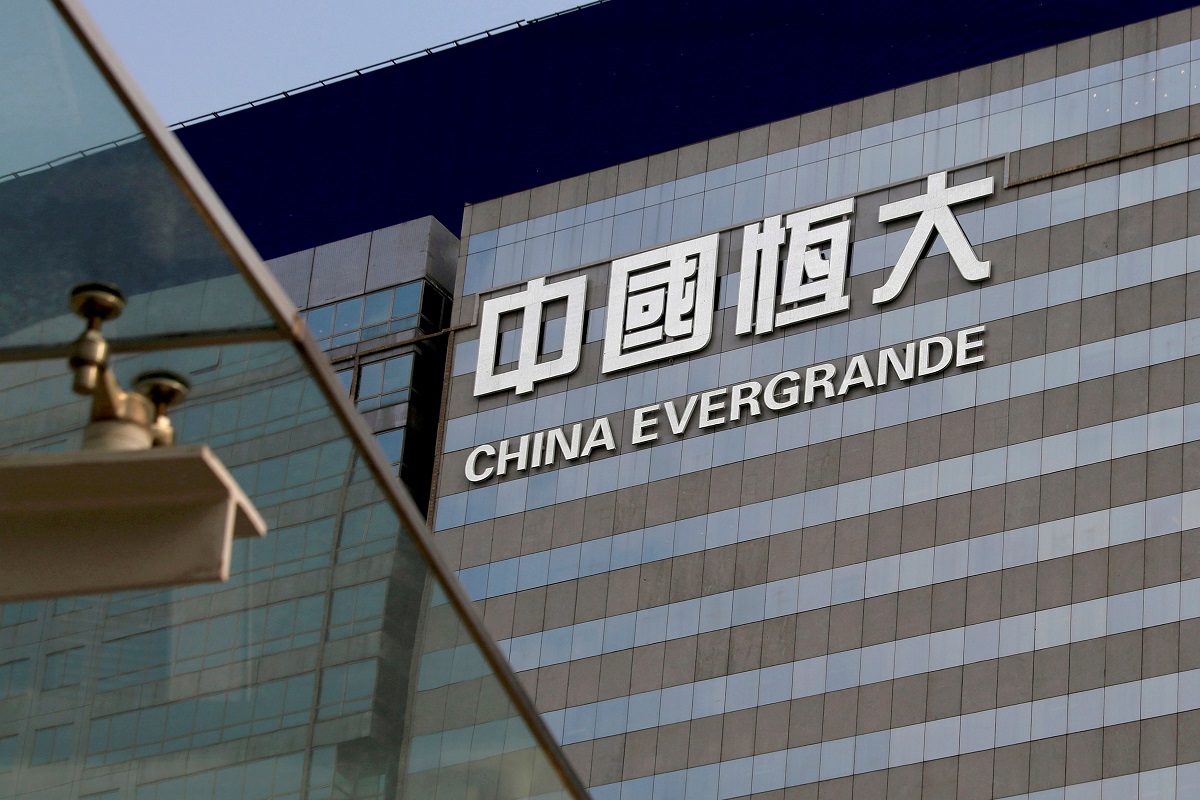
FILE PHOTO: An exterior view of China Evergrande Centre in Hong Kong, China March 26, 2018. REUTERS/Bobby Yip/File Photo/File Photo/File Photo

A Hong Kong court has rejected PwC International’s bid to be removed from a $8.5 billion lawsuit brought by the liquidators of China Evergrande Group, allowing claims over the auditing of the failed property developer to proceed against the global PwC coordinating entity.

The liquidators are seeking 57 billion yuan ($8.48 billion) in damages from PwC International, PwC Hong Kong and PwC’s China practice, alleging negligence in their audit work for Evergrande. PwC International’s maximum potential liability is estimated at 38 billion yuan.

The ruling does not determine whether PwC is ultimately liable. Instead, Deputy High Court Judge Patrick Fung said there were sufficient issues requiring further examination and that the liquidators should be allowed to proceed to trial and obtain documents and other evidence.

“I take the view that not all the facts are known and, hence, it is crucial that there should be discovery of documents and interrogatories administered, which I believe will throw more light on the case,” Fung wrote in Wednesday’s judgment.

“In such circumstances, the Plaintiff should not be driven from the judgment seat without a trial,” he added.

The decision represents an important procedural victory for Evergrande’s liquidators because it keeps PwC International within the proceedings and allows them to pursue evidence concerning the relationship between the global PwC organization and its Hong Kong and China operations.

In 2024, Chinese authorities handed down an unprecedented six-month suspension and imposed a hefty RMB 441 million ($62 million) fine on PwC China, after revelations that its auditors turned a blind eye to widespread financial misreporting at Evergrande. According to the Ministry of Finance, PwC China and its Guangzhou branch, which oversaw Evergrande’s mainland subsidiary, Hengda Real Estate, not only failed to flag “major mistakes” in the audit between 2018 and 2020 but also participated in distorting financial records, which significantly inflated Evergrande’s profits and obscured the company’s spiraling debt.

PwC International had argued during a May hearing that it should not be a defendant because PwC Hong Kong and PwC China were not its subsidiaries and because PwC International had never communicated with Evergrande.

The court nevertheless found at this stage that PwC International owed Evergrande “a duty of care.” That finding does not establish negligence or determine the damages ultimately recoverable, but it means the claim cannot be dismissed before a full examination of the evidence.

The liquidators welcomed the ruling while stressing that the court had not yet ruled on the substance of their allegations.

They said they would continue investigating Evergrande’s affairs and pursuing recoveries for creditors.

PwC International said it disagreed with the decision.

“PwCIL is the coordinating entity within the PwC network and has never provided any services to Evergrande or had any relationship with the company,” a spokesperson said. “PwCIL is confident that the claims against it have no merit. We are reviewing the Court’s decision and evaluating our legal options.”

The case is part of the wider fallout from Evergrande’s collapse, one of the most consequential failures in China’s property sector. The developer defaulted on most of its roughly $300 billion in liabilities before the Hong Kong High Court ordered it into liquidation in 2024.

Edward Middleton and Tiffany Wong of Alvarez & Marsal were appointed as liquidators and have been pursuing assets and potential claims as they seek to recover money for creditors.

The scale of the damages claim against PwC is significant. If successful, it could become one of the largest accounting-related liability cases to emerge from China’s property crisis and could have implications beyond the individual dispute, particularly for how responsibility is allocated within global professional-services networks.

The case also puts renewed attention on the role of auditors in Evergrande’s years of rapid expansion and mounting financial liabilities. The liquidators are effectively seeking to establish whether audit failures contributed to losses suffered by creditors and, if so, whether the PwC entities involved should compensate them.

For PwC International, the central issue is different: whether a global coordinating entity can be held responsible for alleged conduct involving legally separate member firms operating in Hong Kong and mainland China.

That question could make the eventual proceedings significant for the structure of multinational professional-services networks, which commonly operate through separate local partnerships or entities linked through a global organization.

The court’s decision means those questions will now be examined through further evidence rather than being resolved at the preliminary stage.

The ruling comes amid another major development in the Evergrande saga. Last week, founder Hui Ka Yan, once regarded as Asia’s richest man, was sentenced to life in prison by a Chinese court, which also ordered the confiscation of his personal property.

Hui’s conviction and the continuing liquidation proceedings underline the extraordinary scale of Evergrande’s collapse. The company expanded rapidly during China’s property boom before its debt burden became unsustainable, leaving creditors facing substantial losses.

The PwC case adds another potential avenue for recovery. But the liquidators still face the much harder task of proving their allegations at trial and establishing the extent of any financial responsibility.

Huawei, HP Sign Multi-Year Wi-Fi Patent Deal As Chinese Tech Giant Expands Licensing Business

0

Huawei Technologies has signed a multi-year cross-licensing agreement with HP covering patents used in Wi-Fi technology, including the latest Wi-Fi 7 standard, in a deal that highlights the Chinese technology company’s growing role as a holder and licensor of essential wireless patents despite years of U.S. restrictions.

Under the agreement, HP will gain access to Huawei’s patents while Huawei will receive access to HP’s intellectual property. The companies did not disclose financial terms or specify the patents Huawei will license from HP.

HP sought to limit the significance of the agreement, describing it as a standard licensing arrangement rather than the beginning of a broader commercial relationship between the two companies.

“This is a standard-essential patent license covering Wi-Fi technology,” an HP spokesperson said. “It is not new, and does not represent a broader strategic or commercial relationship, partnership, or collaboration with Huawei.”

Standard-essential patents are technologies that manufacturers may need to use to ensure their products comply with an industry standard and remain interoperable with products made by other companies. Licensing such patents is common across the technology industry, including among manufacturers of computers, smartphones, printers and networking equipment.

The agreement nevertheless carries significance for Huawei because it demonstrates the value of its intellectual-property portfolio at a time when the company remains subject to extensive U.S. technology restrictions.

Washington has restricted Huawei’s access to certain U.S.-origin technologies since 2019, when the company was placed on a U.S. trade blacklist that generally requires suppliers to obtain government approval before providing it with certain technologies. Those restrictions have complicated Huawei’s access to advanced semiconductors and critical software. They do not, however, automatically prevent the company from licensing patents to international technology companies.

Huawei has increasingly sought to turn its intellectual property into a source of revenue, expanding its patent portfolio and licensing operations and reaching agreements or settlements with companies including Amazon.

The HP agreement also follows a legal dispute between the two companies.

Huawei sued HP at Europe’s Unified Patent Court in August 2025, alleging that the U.S. company had used one of its Wi-Fi 6 patents without authorization, according to intellectual-property publication IAM.

HP subsequently joined the Sisvel Wi-Fi 6 patent pool in November 2025, resolving legal actions brought against it by Huawei and Philips. The pool provides companies with access through a single licensing agreement to roughly 2,000 patents regarded as essential to Wi-Fi 6 products.

Huawei’s latest agreement with HP goes beyond that arrangement, covering a wider group of Huawei Wi-Fi patents, including technology associated with Wi-Fi 7.

The development is important to Huawei’s licensing strategy because Wi-Fi standards are embedded in a vast range of connected consumer and business products. A successful licensing business allows Huawei to monetize technology developed in areas where it may no longer be able to compete as freely as it once did in global hardware markets.

Huawei has previously said it is one of the leading holders of patents essential to implementing Wi-Fi 6. The company has set a licensing fee of 50 cents for each consumer device using its Wi-Fi 6 technology. Huawei said more than 1.6 billion consumer electronic devices, excluding mobile phones, had used its Wi-Fi-related inventions by the end of 2025.

That installed base gives Huawei a potentially significant source of recurring intellectual-property revenue as manufacturers continue adopting newer wireless standards.

The move also reveals an important distinction in the U.S.-China technology conflict. Washington’s restrictions have targeted Huawei’s access to strategic technologies such as advanced chips and software, but they have not eliminated Huawei’s ability to earn revenue from patents that form part of international technology standards. That makes intellectual property one of the areas where Huawei can continue participating in the global technology ecosystem even as geopolitical restrictions constrain other parts of its business.

Meanwhile, the agreement provides HP access to Huawei’s relevant patents and reduces the risk of further disputes over the use of standardized Wi-Fi technology in its products.

The deal, however, is relevant for the PC industry as wireless connectivity becomes important to computers and other connected devices. Wi-Fi 7 offers improvements in throughput, latency, and reliability over previous generations, increasing the importance of access to patents covering technologies incorporated into the standard.

HP remains one of the world’s largest PC manufacturers. Gartner data puts the Palo Alto, California-based company at a 21.3% global PC market share, behind Lenovo. The agreement therefore links two major technology companies through intellectual property even as broader U.S.-China technology relations remain constrained by trade and national-security restrictions.

The agreement does not indicate a broader strategic partnership between the companies, as HP made clear. But it does bolster Huawei’s position as a significant owner of technology essential to global wireless standards.

6 Essential Features to Look for in Digital Signage Solutions

0

A business may start with a few screens and simple announcements, but its communication needs can expand quickly. More locations, frequent promotions, and different audiences require software that keeps screen management organized. The features behind the platform therefore matter as much as the displays themselves.

Retail stores, restaurants, offices, schools, and other organizations use screens for different purposes. A suitable platform should support those daily requirements without making routine updates complicated. The six features below can help businesses identify what to prioritize when comparing signage options.

1. Centralized Management

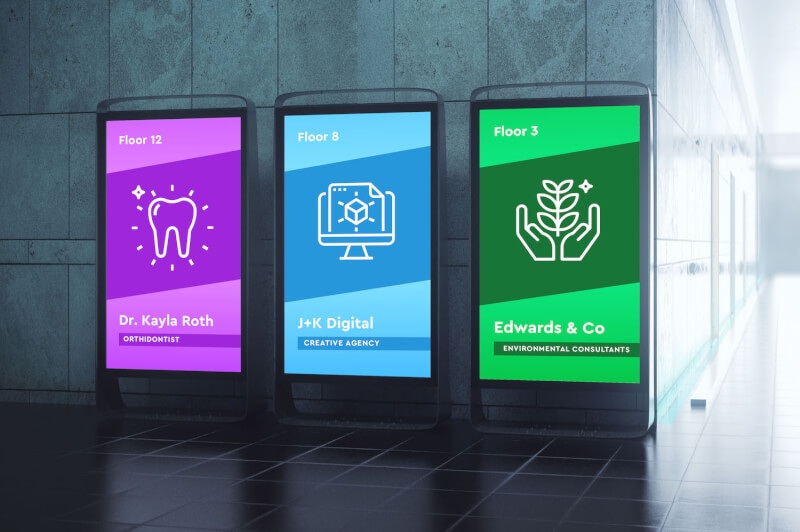
Managing displays individually can become inefficient once a business adds more screens or locations. Digital signage solutions with centralized management allow authorized staff to oversee connected displays through one management portal. Teams can update material remotely and maintain greater control over what appears across the network.

Screen Groups Help Direct Content to the Right Locations

Screen grouping adds another level of control for businesses with different audiences. A retailer could group displays by store, while a company could separate lobby screens from employee communication displays. Staff can then assign suitable material to the intended group without changing every screen separately.

2. Scheduling Tools

Promotions, menus, announcements, and event notices do not always need to appear throughout the entire day. Scheduling tools allow teams to decide when particular material starts and stops, which makes planning easier.

A restaurant could schedule breakfast and lunch menus for their respective service periods. Retail staff could prepare a holiday promotion before its launch date, while an office could arrange reminders for an upcoming company event. Scheduled publishing helps the screen match the organization’s actual calendar.

3. Media Support and Integrations

Businesses usually have information stored across several file types and applications. A capable platform should support common media formats and useful integrations so teams can bring those resources onto their screens.

Important capabilities may include:

  • Images and videos for promotions, announcements, and visual messages
  • PDFs and presentations for existing company materials
  • Playlists that place several assets into an organized rotation
  • Business dashboards that present metrics and operational data
  • App integrations for calendars, weather, social feeds, and other information

Broad support gives organizations more options for creating displays suited to different communication goals.

4. Screen Zones

Some locations need to communicate more than one type of information at the same time. Screen zones divide a display into designated sections, allowing separate pieces of material to share the available space.

A workplace display, for example, could place an important announcement beside a calendar and business dashboard. Support for portrait and landscape orientation also helps teams adapt layouts to different screen positions. These layout features make digital signage solutions more practical for businesses that need to present several information sources clearly.

5. Multi-User Permissions

A growing screen network may involve marketing staff, administrators, local managers, and other contributors. Giving every person the same level of access may not suit the way those teams work. Multi-user permissions allow organizations to assign access according to individual responsibilities.

A central marketing department might manage company-wide promotions while branch managers handle material intended for their own locations. Defined permissions create a more structured workflow and give each contributor access to the areas relevant to their role.

6. Offline Playback

Internet connectivity may occasionally vary across business locations, but previously prepared material can remain important. Offline playback allows downloaded assets to continue playing on supported devices when an internet connection becomes unavailable.

Check How Content Behaves Without a Connection

Businesses should consider what happens to scheduled material when connectivity drops. A platform with offline capability can keep downloaded content available on the screen until the connection returns. This feature can be especially useful for organizations that depend on displays throughout their operating hours.

The right signage platform should solve practical communication needs rather than simply provide a long feature list. Businesses should consider how staff will control displays, schedule messages, organize access, present information, and maintain playback across their locations. A platform that fits those everyday requirements can support a well-organized screen network as communication needs expand.