DD
MM
YYYY

PAGES

DD
MM
YYYY

spot_img

PAGES

Home Blog Page 14

Understanding the Current Altcoin Market Dynamics

0

The phrase “Altseason on Hold as Capital Concentrates in BTC and ETH” refers to a recent analysis highlighting why a broad rally in altcoins non-Bitcoin cryptocurrencies isn’t materializing despite Bitcoin’s recovery to around $92,000.

In crypto cycles, “altseason” typically occurs when capital rotates from BTC and ETH into riskier, higher-beta assets like mid- and small-cap tokens, leading to explosive gains. However, as of December 2025, this rotation isn’t happening—instead, liquidity is pooling in the majors amid economic uncertainty and selective risk-taking.

Steady at 59.11% of the total market cap among top 125 coins. This elevated level shows BTC absorbing most inflows, leaving little for alts. Historically, altseason kicks off when BTC dominance drops below 55-50%, signaling capital outflow.

Ethereum dominance is Hovering at 12.80% tight range: 12.78-12.81%. ETH is seeing rare simultaneous retail and institutional inflows alongside BTC, per Wintermute’s update, but it’s not yet outperforming BTC enough to trigger downstream flows.

BTC endured a $4,000 intraday drop last Friday, sparking $2B in liquidations, but it rebounded without broader selling. Open interest is declining, and basis rates are compressed—signs of consolidation, not capitulation.

Institutional players via ETFs and retail are favoring “reputable” assets. Spot BTC ETFs now hold over $120B AUM, with minimal spillover to alts. ETH is holding $3,000+ support, but without a confirmed BTC bottom, alts lack momentum.

This setup reflects a “flight to quality”: Traders prefer delta-neutral strategies over leveraged alt bets, delaying broad rallies.

Why Altseason Is Delayed

Unlike past cycles like in 2017-2018, where BTC dom peaked at 70% before alt surges, institutions are stacking BTC as a hedge. ETF approvals— 130+ alt filings, 30+ greenlit are rebuilding flows, but they’re starting with majors.

Liquidity fragmentation—11M+ tokens competing—dilutes pumps; thin order books mean even good news doesn’t move prices like in 2021. Ongoing uncertainty keeps risk appetite low. Alts need BTC stabilization above key resistance and ETH breaking $5K for real ignition.

Current ALT/BTC ratio near 0.25 signals capitulation, not reversal—similar to 2019’s 450-day bleed. $3B monthly token unlocks are eroding prices by ~18% post-event. Without $1B+ weekly alt ETF inflows to absorb this, dominance could crash below 10%, leaving only BTC/ETH viable.

Many see altseason as “delayed, not canceled,” but warn of a tougher cycle requiring selective picks over blanket bets. Some argue it’s quietly underway in fragments, but not the euphoric blow-off top yet. BTC holds $90K support; ETH/BTC pair strengthens (e.g., ETH >$3,500).

A BTC dom rejection from its macro downtrend could dump it to 55%, sparking rotation. Late 2025/early 2026 if macro clears (e.g., QE resumption) and alt ETFs hit $50B inflows. ETH upgrades or regulatory wins could lead, pulling in large-caps first, then mid-caps.

If unlocks outpace adoption, alts enter a “long tail” extinction—97% memecoins already dead this year. Focus on 100-500 viable projects with real utility. The market’s in a majors-led consolidation phase, prioritizing stability over speculation. Altseason isn’t dead—it’s waiting for the liquidity dam to break.

Every major altseason began only after BTC dom fell decisively below 55–50%. We are currently at 59.1% and have not even tested 55% yet. We are in the exact same setup as late 2020 / early 2021 — BTC dominance stuck 58–62% for months, alts bleeding vs BTC, institutions buying only BTC/ETH.

In 2021, the dam finally broke in February–March when BTC dom cracked below 55% and stayed there. Most likely path forward based purely on historical precedent: Another 1–4 months of alt underperformance and capitulation

Real altseason ignition only after BTC dominance breaks and holds below 54–55%.  When it starts, it will be violent and fast (2021-style 3–6 month window of 10–100x in quality mid-caps). Until BTC dominance decisively cracks, history says altseason remains on hold — exactly as the market is behaving right now.

The NFT Market’s November 2025 Slump is A Death Knell or Just Another Cycle?

0

The phrase “November Might Have Killed NFTs For Good” has been circulating widely in crypto circles this month, echoing headlines from outlets like BeInCrypto and BitcoinLinux.

It’s a dramatic take on a brutal month for non-fungible tokens, where sales volumes cratered and market cap evaporated. But is this the final curtain call for NFTs, or merely the latest chapter in their volatile saga?

November 2025 was unequivocally a bloodbath for NFT trading. According to aggregated data from CryptoSlam and CoinGecko, global NFT sales volume plunged to $320 million—a staggering 50% drop from October’s $629 million and the lowest monthly total of the year.

This isn’t just a blip; it’s a callback to September 2024’s dismal $312 million, signaling a multi-year downward trend that’s erased much of the hype-fueled gains from 2021-2022. From a January 2025 peak of around $9.2 billion, the total NFT market cap has shrunk by 66% to $3.1 billion as of early December.

Even blue-chip collections like Bored Ape Yacht Club and CryptoPunks saw floor prices slide 10-20% in the last quarter, with weekly sales in early December hitting a 2025 low of just $62 million.

Active traders have dwindled to about 19,600 per week—a 96% drop from the 2022 peak of 529,000—while 90-95% of collections now trade at near-zero liquidity.

Art NFTs, once the poster child of the boom, have fared worst: trading volume fell 93% from 2021’s $2.9 billion to a measly $23.8 million in Q1 2025 alone. This isn’t isolated—it’s tied to broader crypto woes. Bitcoin dipped below $90K amid ETF outflows totaling $3.79 billion in late November, dragging alt assets like NFTs into the red.

Meme coins shed $5 billion in value during the same drawdown, underscoring how speculative sectors are hypersensitive to liquidity squeezes. The November nosedive isn’t some mysterious curse—it’s the culmination of interlocking forces that have been brewing since the 2022 crypto winter.

High interest rates, quantitative tightening (QT), and reduced risk appetite have starved speculative plays like NFTs of “disposable capital.” As one analyst put it, NFTs behave like “luxury watches in TradFi”—premium but illiquid assets that tank when money gets tight.

Institutional caution, amplified by regulatory probes like the now-closed SEC case against OpenSea, kept big money sidelined. The 2021 frenzy was a bubble fueled by FOMO and celebrity flips think Justin Bieber’s Bored Apes losing 97% of value.

What followed was a “multi-year rebalancing,” where NFTs shed their “broad cultural phenomenon” status to become a “specialized digital-asset niche.” Legacy PFP collections lost steam as utility-driven sectors like gaming now 25-38% of transactions and real-world assets (RWAs) took over.

Over 90% of projects are now “dead and illiquid,” victims of low-effort founders and zero-sum speculation. Marketplaces like OpenSea are pivoting to “on-chain museums” for culturally significant NFTs, signaling a shift from flips to preservation.

On X, the sentiment mirrors this gloom—with posts lamenting the “definitive end” and sharing screenshots of crashing charts. One viral thread called it a “zero-sum game of speculation” that’s “long gone.”

But Wait—NFTs Aren’t Dead, They’re Evolving

For all the obituaries, plenty of voices and data push back hard. As Spaace.io’s CEO Buzz Russo argued in a widely shared post, “What died wasn’t the technology… it was the old playbook.” NFTs have quietly been rebuilding as the “social layer of crypto”—fostering tribes, identity, and utility that tokens or chains can’t match.

While overall volumes dipped 4.6% year-over-year, NFT sales count surged 77%, active users hit 11.6 million, and institutional inflows reached 15% of volume. Gaming and RWA NFTs are thriving—Franklin Templeton’s tokenization of bonds and equities is bridging TradFi to Web3.

Emerging platforms like Spaace.io clocked $5.5 million in weekly volume in November, outpacing Blur and closing in on OpenSea. Analysts forecast a turnaround in 2026 as rate cuts end QT and flood the market with liquidity—potentially pushing NFT market cap to $34 billion by year-end 2025 and $245 billion by 2029.

AI integrations like iNFTs for agent ownership and brand plays (Nike, Gucci building utility) are laying the groundwork. NFTs aren’t dead—they’re becoming the settlement layer for culture, assets, and identity.

Even skeptics admit the tech endures: Ordinals on Bitcoin cleared $500 million, and on-chain identity protocols are turning PFPs into “reputation badges.” As one builder put it, “Nobody is doing revenue + relatable art at the same time… which is why you see 0 growth”—implying opportunity for those who adapt.

November 2025 didn’t “kill” NFTs—it exposed the rot in a market bloated by speculation and starved by macro forces. The $320 million sales floor and 66% cap wipeout are brutal, but they’re symptoms of maturation, not mortality. The speculative meta is toast, replaced by utility in gaming, RWAs, and identity.

With liquidity on the horizon and builders like Spaace proving demand persists, 2026 could flip the script—turning this “winter” into a renaissance.If you’re an investor or creator: Focus on utility over hype. Diversify into sub-sectors like tokenized assets, track engagement metrics, and ignore the noise.

NFTs aren’t going extinct; they’re just shedding their skin. The believers know: Culture doesn’t die—it evolves.

South Korea Weighs $3.06bn Chip Foundry in Bid to Fortify Its Position in Intensifying Global Semiconductor Battle

0

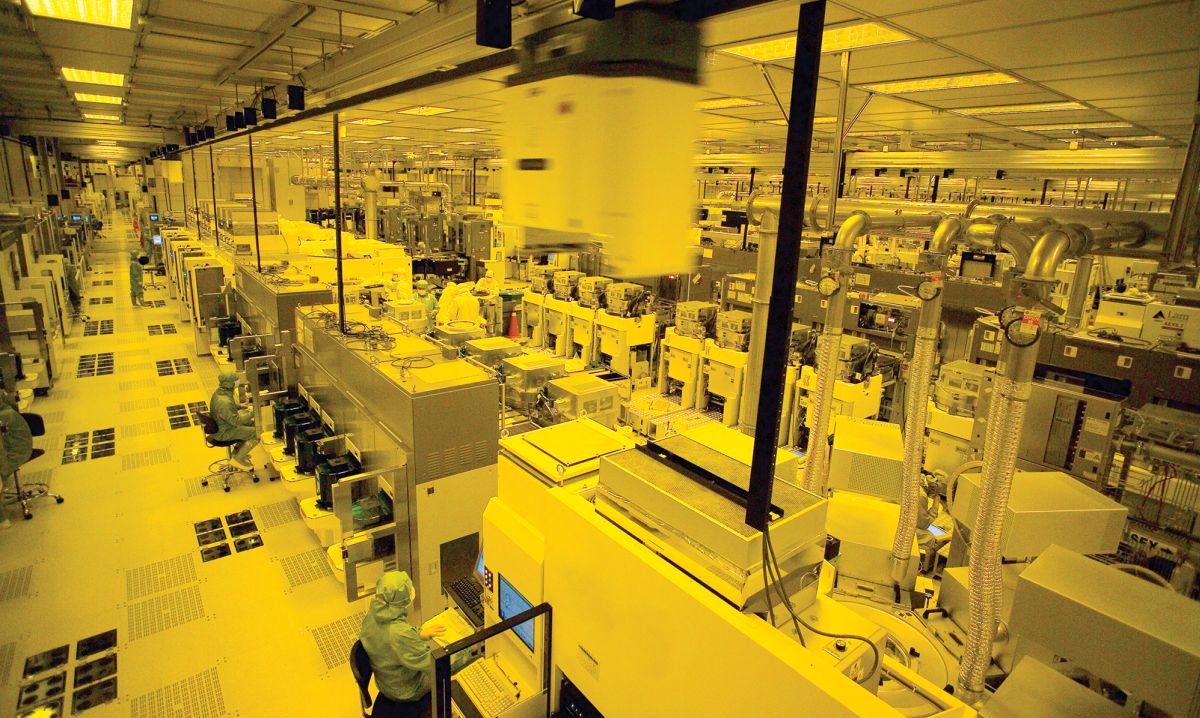
South Korea is considering the construction of a ?4.5 trillion ($3.06 billion) semiconductor foundry funded through a mix of state and private investment, a move aimed at strengthening its standing in the fast-evolving race to build essential chips for artificial intelligence and national security infrastructure.

President Lee Jae Myung chaired a high-level meeting on Wednesday with top executives from Samsung Electronics, SK Hynix, and DB HiTek, alongside policymakers and industry experts, to chart a coordinated strategy that would help South Korea reinforce its lead in memory chips while bolstering the country’s weaker areas: the foundry business and fabless chip design.

“South Korea needs to take a new leap forward, and… the semiconductor sector is an area where we are very competitive,” Lee said, underscoring Seoul’s push to capture more of the value chain at a time when AI demand is rapidly expanding.

The country is home to the world’s two largest memory chip producers — Samsung Electronics and SK Hynix — but has long lagged behind Taiwan Semiconductor Manufacturing Co (TSMC) in logic chip manufacturing, as well as companies like Nvidia and Qualcomm that dominate high-performance chip design. Officials said the proposed 12-inch, 40-nanometre foundry would serve as a testbed for fabless firms working on legacy chips used in cars, data centers, telecommunications, and other critical applications.

According to the industry ministry, the facility would be developed in consultation with local foundry players, including Samsung Electronics and DB HiTek. The ministry described the joint public-private funding model as essential for accelerating domestic production capacity that smaller developers cannot afford to build alone.

Industry Minister Kim Jung-kwan warned that the semiconductor landscape has shifted beyond commercial rivalry.

“We face a very serious crisis and challenge. The semiconductor industry has already escalated from competition between companies to war between nations,” he said, pointing to major subsidy pushes underway in China, the United States, Europe, and Japan as they race to secure supply chains and avoid dependence on foreign suppliers.

South Korea’s plans extend beyond commercial chips. The government said it will pursue domestic production of defense-related semiconductors at a time when the country relies on imports for 99% of its military chip supplies. Authorities are weighing provisions that would require national security facilities to prioritize the purchase of locally produced semiconductors, a measure that could reshape procurement rules in defense, infrastructure, and energy systems.

To coordinate the country’s broader semiconductor policies, the government will set up a special committee under President Lee to act as the central control tower, bringing together agencies and industry stakeholders to oversee strategy, regulation, investment, and long-term planning.

The initiative reflects a deeper recalibration of South Korea’s semiconductor model. For decades, its strength rested on memory chips, where Samsung and SK Hynix dominate global supply. But AI-driven demand has shifted the spotlight to logic chips, specialized accelerators, and advanced packaging — areas that require different capabilities, capital structures, and long-term partnerships. Seoul is now trying to ensure that local fabless firms have the infrastructure needed to scale, innovate, and eventually compete on a global stage.

How The Foundry Fits Into The Global “Chips Act” Arms Race

The proposal also points to a broader strategic realignment, where South Korea is positioning semiconductors as a national-security asset, not just an export engine. The rise of AI, the hardening of U.S.-China tech tensions, and the surge in global subsidy competition have pushed countries to treat chips as geopolitical currency.

The U.S. CHIPS and Science Act rewired the market by offering large, targeted financial incentives to attract foundries, fabs, and R&D to U.S. soil. It created a sizable manufacturing fund and carve-outs for legacy nodes and advanced packaging, while attaching strings — including restrictions on expanding capacity in certain foreign jurisdictions.

That mix of grants, tax credits, and conditionality has changed corporate calculus: public incentives now routinely tip where companies site new plants, and the law has made “on-shoring” a financially viable option for cap-intensive fabs. For countries like South Korea, that matters because capital and strategic partnerships increasingly follow subsidy envelopes.

Europe’s Chips Act pursues a similar goal from a different starting point: it aims to bolster supply-chain resilience and expand the EU’s chip market share through coordination, funding instruments, and state-aid flexibility. The EU approach is more distributed (national and EU layers), with ambitions to mobilize large amounts of public and private investment into a fragmented European ecosystem.

Both the U.S. and EU packages signal a new normal of governments subsidizing capacity, talent, and design to keep strategic semiconductor capabilities onshore. That normative shift puts pressure on South Korea to respond if it wants to avoid losing mindshare and upstream business to subsidized overseas investments.

Where Seoul’s foundry plan dovetails with these global programs is threefold. First, it protects national priorities: the proposed facility would reduce Korea’s reliance on imports for defense and legacy chips, an explicit policy objective in the government statement. Second, it aims to keep the country competitive in an era when fabless and system-chip design matter as much as memory manufacturing. Third, a jointly funded, domestic foundry can serve as leverage when negotiating partnerships with global suppliers and integrators that are chasing CHIPS/EU grants and negotiating plant siting decisions.

Put plainly: if the U.S. and EU can lure capacity with public money, Korea needs its own fiscal and policy toolkit to keep certain layers of the value chain at home.

But the subsidy era also creates strategic trade-offs. Generous incentives worldwide raise the risk of overcapacity in some nodes and geographic duplication of like capacity — a costly outcome for an industry where utilization drives profitability. Conditionalities in U.S. funding (e.g., restrictions on expanding in certain countries) can reshape alliance patterns and push firms to bifurcate supply chains by customer geography or security classification.

That creates both opportunity and complexity for Seoul: attracting foreign partners may require matching or complementing incentives, and Korea must decide how tightly it will tie state support to national-security procurement and local sourcing rules.

Nvidia Responds to Report of DeepSeek Using Smuggled Blackwell Chips

0

Nvidia on Wednesday pushed back against a claim that Chinese AI startup DeepSeek has been training its next model on smuggled Blackwell chips, the company’s most advanced hardware, and the centerpiece of Washington’s effort to slow China’s progress in artificial intelligence.

The quick denial offered a glimpse into a larger and far more consequential story: the United States is preparing for the most aggressive global hardware-control regime since the Cold War, and Nvidia sits at the very center of it.

The original report, published by The Information, said DeepSeek had managed to acquire Nvidia’s Blackwell chips despite a U.S. export ban designed to keep China away from the world’s most advanced AI compute. The suggestion was explosive. Washington imposed sweeping restrictions on Blackwell precisely because the GPU family represents the tip of the technological spear: the fastest, most efficient system for building the next generation of large models.

In its response, Nvidia said: “We haven’t seen any substantiation or received tips of ‘phantom data centers’ constructed to deceive us and our [original equipment manufacturer] partners, then deconstructed, smuggled and reconstructed somewhere else. While such smuggling seems far-fetched, we pursue any tip we receive.”

The response was meant to be both firm and reassuring, a signal that the company has not lost sight of hardware, leaving its supply chain.

But the fact that such a claim is even plausible enough to warrant such a statement shows how drastically the geopolitical climate around computing has hardened. Nvidia is not just a technology supplier anymore. It has become the single most strategically sensitive company in the U.S. semiconductor and AI ecosystem, the choke point in a global race where access to chips is increasingly treated as a national destiny.

The U.S. government’s latest move underscored that shifting dynamic. President Donald Trump said Nvidia will be allowed to ship its H200 chips to “approved customers” in China and elsewhere, but only if the U.S. receives 25% of those sale proceeds. The reaction from some Republicans was immediate resistance, illustrating the political fragmentation now surrounding AI hardware. One faction wants to keep China away from all high-end computing at any cost; another prefers controlled engagement that keeps American companies commercially relevant. Nvidia is stuck between them.

DeepSeek’s rise compounds the pressure. Its reasoning model, R1, shocked Silicon Valley in January when it climbed to the top of app stores and posted benchmark scores that embarrassed older U.S. models — all while being built at a cost analysts say was drastically lower than the budgets of American labs. In August, the startup hinted that China is close to fielding its own generation of high-end chips, part of Beijing’s push to end its dependence on U.S. suppliers altogether.

Against that backdrop, even an unverified allegation about smuggled hardware becomes a combustible issue. For Washington, any sign that Blackwell has entered China illicitly is not simply a trade violation; it is a direct challenge to U.S. national-security doctrine. And it is the kind of headline that can attract audits, congressional hearings, and tighter oversight of Nvidia’s distributors.

The stakes extend beyond China as governments in Europe, the Middle East, and Southeast Asia are now weighing tougher rules on advanced computing, including disclosure mandates on GPU procurement, requirements to register large clusters, and new powers for states to intervene if they believe AI hardware is being diverted for military or dual-use purposes. Washington is already building a global coalition to monitor GPU purchases more closely, particularly in jurisdictions where U.S. chips are often re-exported.

This emerging regime presents a new level of operational and political risk for Nvidia. The company must satisfy U.S. officials that it can track shipments through complex, multi-layered supply chains while also keeping global customers happy in a market where demand still exceeds supply. Investors love Nvidia for its growth, but the company now faces the kind of regulatory exposure more common in defense contractors than in Silicon Valley.

The deeper problem for Nvidia is that hardware is becoming inseparable from geopolitics. Advanced GPUs are now viewed as leverage in diplomatic negotiations, bargaining chips in sanctions policy, and strategic currency in alliances. Export approvals, once routine, are becoming geopolitical events. Every new restriction invites retaliation. Every new exception triggers partisan backlash.

The controversy around DeepSeek highlights the uncomfortable reality that the U.S. can control who Nvidia sells to, but it cannot fully control what happens after a shipment leaves American borders. Washington knows this and is preparing to close loopholes with more aggressive enforcement, more monitoring, and tighter pressure on partners. That means Nvidia’s regulatory load is almost guaranteed to increase.

Meanwhile, China is racing to eliminate its dependence on Nvidia entirely. Domestic labs are accelerating chip-development programs. Large tech firms are redesigning models to run on less powerful hardware. And startups like DeepSeek are showing they can deliver performance breakthroughs even without top-tier U.S. GPUs.

So when Nvidia says it has seen “no substantiation” of smuggled Blackwells, it is speaking not only to a news report but to a swelling strategic anxiety. The company knows its position as the world’s most important AI hardware provider gives it unprecedented power — and unprecedented vulnerability.

The coming years will determine whether Nvidia can remain a high-growth technology giant or whether it will evolve into something more like a regulated infrastructure supplier, bound by layers of political oversight and international compliance rules.

Either way, the era when GPUs were simply components is over. They are now instruments of national policy, tools of geopolitical competition, and the core of a global contest where economic advantage, technological leadership, and security strategy are all colliding. And Nvidia, more than any other company, is the one being asked to stand in the middle.

Trump’s Gold and Platinum Card Program is a Fast-Track to U.S. Residency and Citizenship

0

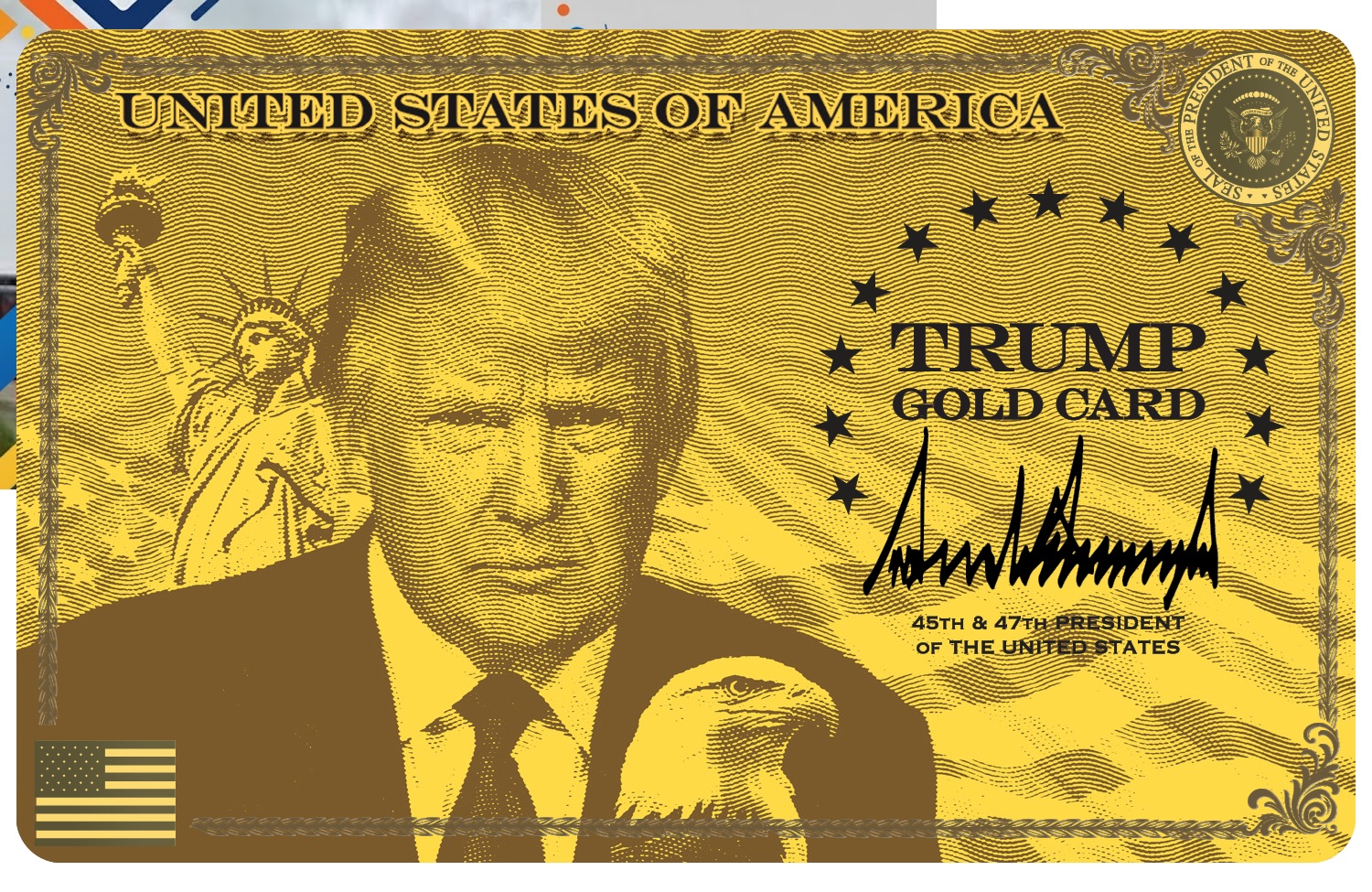
President Donald Trump officially launched the “Trump Gold Card” program through a new government website, offering wealthy foreign nationals an expedited pathway to U.S. residency and eventual citizenship in exchange for substantial financial contributions to the U.S. Treasury.

Trump promoted the initiative on Truth Social, calling it “A direct path to Citizenship for all qualified and vetted people. SO EXCITING! Our Great American Companies can finally keep their invaluable Talent.”

He described it during a White House roundtable with business leaders as a way to attract top talent and generate billions in revenue for the government. This program builds on Trump’s earlier proposals from February 2025 and aligns with his broader immigration strategy, which has included crackdowns on other entry pathways amid recent security concerns, such as the shooting of National Guard members in Washington, D.C.

While it emphasizes vetting for “qualified” applicants, it has drawn criticism for potentially favoring the ultra-wealthy over merit-based immigration. $1 million contribution to the U.S. Treasury, plus a non-refundable $15,000 Department of Homeland Security (DHS) processing fee.

Additional small fees may apply via the U.S. Department of State. Grants immediate U.S. residency equivalent to an EB-1 or EB-2 visa for individuals with “extraordinary abilities,” such as top researchers, artists, or business leaders. This includes the right to live, work, and study in the U.S., with a streamlined path to permanent residency and full citizenship after standard naturalization requirements.

A $2 million “Corporate Gold Card” allows businesses to sponsor employees, with transferable benefits. Foreign nationals who pass a thorough background check by U.S. Citizenship and Immigration Services (USCIS). U.S. citizens or those previously taxed on non-U.S. income are ineligible for certain tiers.

Submit an online application via trumpcard.gov to join the queue; processing aims for “record time.” Allows holders to spend up to 270 days per year in the U.S. without being subject to U.S. taxes on foreign (non-U.S.) income. It also provides a direct route to citizenship, bypassing some traditional visa hurdles.

Not yet launched; applicants can sign up for the waitlist now to secure priority processing. Trump first floated the idea of “gold cards” during his 2024 campaign and reiterated it in early 2025 executive actions, positioning it as a “golden visa” to rival programs in countries like Portugal or Spain but tailored to U.S. interests.

Commerce Secretary Howard Lutnick has championed it, citing demand from corporations needing to retain global talent. The program is expected to raise significant funds—Trump claimed “billions” for the Treasury—while limiting issuance to vetted high-net-worth individuals.

Public reaction on X has been mixed, with excitement from pro-business users and skepticism from others questioning its equity. For instance, one post highlighted the cards as “unlocking life in America” for the wealthy, while another quipped, “ANYONE EVEN HAVE MONEY LEFT?” after the launch.

Earlier posts from April and September 2025 show the program was teased for months, with Trump even showing off a sample card. For the latest updates or to apply, visit the official site at trumpcard.gov.

Note that full details on processing times and exact citizenship timelines are still emerging, and applicants should consult USCIS for legal advice.