DD
MM
YYYY

PAGES

DD
MM
YYYY

spot_img

PAGES

Home Blog Page 1429

Regulatory Hurdles Tied to Binance’s Past Could Complicate Its VanEck BNBETF Approval

0

VanEck has taken a significant step toward launching the first Binance Coin (BNB) exchange-traded fund (ETF) in the United States. On March 31, 2025, the investment management firm registered a trust entity named the “VanEck BNB ETF” in Delaware under filing number 10148820, according to public records on the official Delaware state website. This registration marks the initial move in the process of creating a BNB ETF, with the next step being a formal application to the U.S. Securities and Exchange Commission (SEC) for approval. If approved, it would be the first U.S.-based ETF to track the price of BNB, the native cryptocurrency of the BNB Chain, which is currently the fifth-largest cryptocurrency by market capitalization.

VanEck, managing nearly $115 billion in assets globally, has previously launched spot Bitcoin and Ethereum ETFs and has also filed for ETFs tied to Solana and Avalanche, positioning BNB as its fifth crypto ETF endeavor in Delaware. While BNB-related products like the 21Shares Binance BNB ETP exist internationally, no such ETF has been available in the U.S. market until this filing. The registration of the first Binance Coin (BNB) ETF by VanEck in the United States carries several potential implications for the cryptocurrency market, institutional adoption, and BNB’s role in the financial ecosystem.

A U.S.-based ETF would signal a significant step toward mainstream acceptance of BNB, the native token of the BNB Chain. As the fifth-largest cryptocurrency by market capitalization, BNB gaining regulated exposure through an ETF could enhance its credibility, distancing it from purely speculative perceptions and aligning it more closely with established assets like Bitcoin and Ethereum, which already have spot ETFs. ETFs are a familiar vehicle for institutional investors, offering a regulated and straightforward way to gain exposure to an asset without directly holding it. VanEck’s move could open the floodgates for “smart money” to flow into BNB, potentially increasing demand and liquidity.

This aligns with the growing trend of institutional interest in crypto, as seen with the $44 billion in assets drawn to crypto-based ETFs in 2024 alone. If approved by the SEC, the ETF could drive a surge in BNB’s trading volume and price stability—or even growth—similar to the effects observed with Bitcoin ETFs in 2024. Early reports indicate BNB’s trading volume spiked by 40-42% following the announcement, suggesting immediate market excitement. Long-term, approval might push BNB toward new highs by improving liquidity and attracting both retail and institutional capital.

VanEck’s filing adds BNB to a growing list of altcoin ETFs, following its efforts with Bitcoin, Ethereum, Solana, and Avalanche. Success here could pave the way for other altcoins to enter the ETF space, diversifying investment options beyond the dominant BTC and ETH offerings. This reflects a broader shift toward integrating digital assets into traditional finance, potentially reshaping portfolio strategies. The SEC’s decision will be pivotal. Binance, closely tied to BNB, has faced regulatory scrutiny in the U.S. over compliance and operational issues. Approval would suggest a softening stance toward BNB and Binance-related assets, possibly indicating a clearer regulatory path for other altcoins.

Conversely, rejection could slow altcoin ETF momentum, especially for tokens with controversial histories. A BNB ETF could bolster the BNB Chain’s decentralized finance (DeFi) and dApp ecosystem by increasing visibility and capital inflows. With popular platforms like PancakeSwap already thriving, regulated exposure might accelerate user growth and development activity, mirroring Ethereum’s post-ETF ecosystem boost. VanEck’s move intensifies competition among asset managers like Grayscale, which has its own multi-asset ETF plans. If approved, VanEck could solidify its position as a leader in crypto ETFs, pressuring rivals to innovate further.

TreasureDAO Restructuring Will Impact Many Native Web3 Gaming Infrastructures

0

Treasure DAO, a decentralized gaming ecosystem, has indeed announced a significant restructuring that involves shutting down its game publishing operations and the Treasure Chain, its Layer-2 network. This decision, driven by severe financial challenges, was outlined by John Patten, the DAO’s chief contributor, in early April 2025. The organization faced an unsustainable annual burn rate exceeding $8 million, with only $2.4 million in stablecoins left in its treasury. Without these drastic measures, the treasury was projected to be depleted by mid-2025.

As part of the restructuring, Treasure DAO is discontinuing support for third-party game publishing and terminating the Treasure Chain, which had been launched in December 2024 on zkSync technology. The focus is shifting to four core products: the NFT marketplace (previously hacked in 2022), Bridgeworld, Smolworld, and AI agent scaling technology. This pivot aims to extend the DAO’s financial runway to at least February 2026, with efforts to recover $785,000 in idle funds from market maker Flowdesk to bolster liquidity.

By slashing its $8 million annual burn rate and focusing on core products, Treasure DAO extends its runway to at least February 2026. However, this hinges on recovering $785,000 from Flowdesk and maintaining a leaner operation, leaving little margin for error if additional costs arise or revenue falters. The 18% drop in the MAGIC token’s value post-announcement (on top of a 91.4% decline since its 2022 peak) signals a loss of investor confidence. This devaluation could hinder future fundraising or partnerships, as the token’s utility and market perception weaken.

The exit of third-party games reduces revenue streams tied to publishing and chain activity, forcing reliance on the NFT marketplace, Bridgeworld, Smolworld, and AI agents—areas with uncertain profitability in a bearish crypto market. Pivoting to a narrower set of products simplifies operations but abandons the broader vision of a decentralized gaming empire. The termination of Treasure Chain, launched just months ago, suggests a retreat from infrastructure ambitions, potentially ceding ground to competitors like zkSync or other Layer-2 solutions. With game publishing discontinued, talent and resources tied to those efforts (e.g., developers, marketers) may be repurposed or lost, impacting morale and capacity.

Games like The Beacon and Calamity migrating to other platforms could strain relationships with developers and signal to potential partners that Treasure DAO is an unstable collaborator, reducing its appeal in the Web3 space. Community backlash over perceived mismanagement—highlighted by the rapid depletion of a once-robust treasury—could erode loyalty among players, developers, and token holders. Criticism of leadership decisions, like the late pivot, may linger. Treasure DAO’s branding as a “decentralized Nintendo” is effectively dead, replaced by a survivalist narrative. This could alienate enthusiasts drawn to its original mission, while attracting scrutiny from skeptics of Web3’s sustainability.

The departure of high-profile games risks a domino effect, where remaining developers question the ecosystem’s viability, potentially leading to further attrition. Treasure DAO’s struggles underscore the volatility of Web3 gaming, where high burn rates, speculative tokenomics, and reliance on NFT hype can lead to rapid collapse. This may prompt other projects to prioritize profitability over ambition. The failure of Treasure Chain so soon after launch raises questions about the scalability and adoption of bespoke Layer-2 networks for gaming, potentially slowing investment in similar ventures.

Combined with broader crypto market challenges, this shutdown could dampen enthusiasm for blockchain gaming, reinforcing narratives of overpromise and under delivery in the sector. In essence, Treasure DAO’s retreat is a microcosm of Web3’s growing pains—highlighting the tension between decentralized ideals and financial realities. Its survival now depends on executing a leaner vision, but the damage to its ecosystem and reputation may limit its influence moving forward.

The announcement has impacted the ecosystem significantly. The native token, MAGIC, dropped 18% within 24 hours of the news, reflecting a broader decline—down 91.4% over the past year from its peak of $6.32 in February 2022. Community reactions have been mixed, with some expressing shock and frustration over perceived mismanagement, while others see it as a necessary adaptation. Notable games like The Beacon and Calamity have already left the network, seeking new platforms, signaling a contraction of Treasure DAO’s once-ambitious vision as a “decentralized Nintendo” for Web3 gaming.

Tariffs and the Global Information Hunt

0
USC experts talk about the importance of U.S.-China trade and how it affects the economy. (Illustration/iStock)

International trade has always been anchored on mutual benefits for two or more parties. However, when one party feels the need to amend the rules and conditions of engagement based on perceived greater benefits to itself, other parties often feel dissatisfied. This analogy has been echoed and discussed frequently by individuals and organizations around the world in recent days. It stems from the sweeping tariffs the United States government imposes on other countries in both the Global South and the Global North.

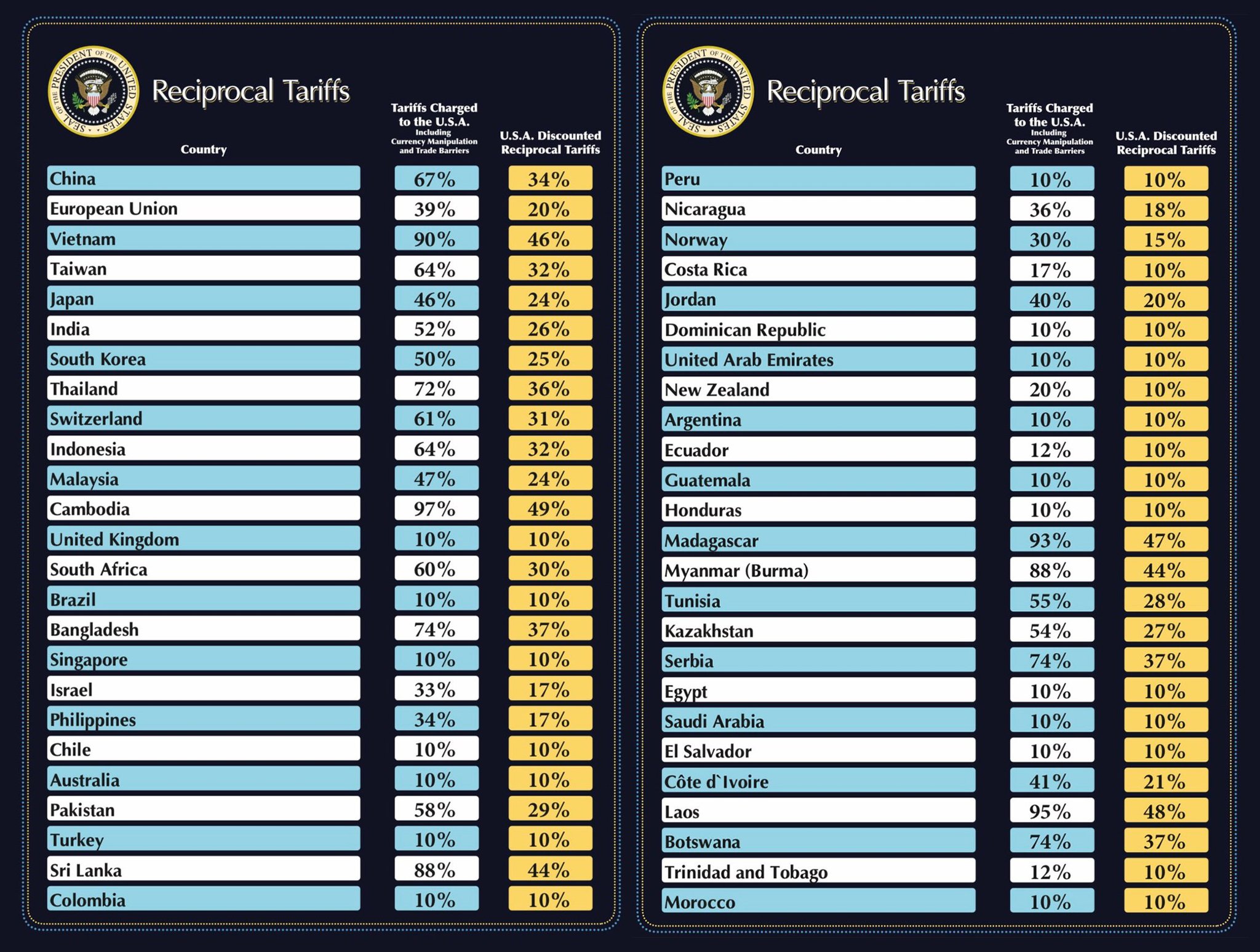
Several sources reveal that President Trump is imposing tariffs on other countries for the second time. Reports indicate that during his first term, similar tariffs, at varying percentages, were imposed on some nations. This second wave of tariffs, announced a few weeks ago, has sent ripples across the world. As the conversation on the tariff continues, our analyst examines a possible link between tariffs above 20% and increased public information-seeking from affected countries.

To gain deeper insights into the quantitative analysis of information-seeking patterns, views from Twitter (X) were also considered. Our analysis shows that the linkage between information-seeking behavior and tariff percentages offers a fascinating lens for understanding global digital curiosity. From countries with slightly above 20% to those with the highest percentages, the analysis reveals a snapshot of online engagement, indicating opportunities to understand how policy decisions may translate into increased online inquiries.

The most striking takeaway from our analysis is the sheer variability in search interest. While one might expect a direct correlation between tariff percentages and online inquiries, a higher tariff equating to greater concern and, thus, more searches, the reality is far more complex. Countries with steep tariffs often exhibit surprisingly low search volumes, and vice versa. This dissonance forces us to delve deeper to consider the factors that transcend mere percentages and truly drive information-seeking behavior.

One central factor is the perceived impact of the tariffs. It’s not the raw numbers that ignite digital curiosity, but the perceived threat to local economies, industries, and livelihoods. Consider Fiji, a clear outlier with exceptionally high search interest despite mid-range tariffs. This surge in digital inquiry likely stems from a heightened sense of vulnerability and the perception that the tariffs could significantly disrupt its economic landscape. In contrast, larger economies, while facing substantial tariffs, may exhibit lower search volumes due to perceived resilience or the breadth of their economic activities.

Source: White House / US Census Bureau, 2025; Infoprations Analysis, 2025

Media attention also plays a pivotal role. The degree to which local media outlets amplify and interpret the tariff announcements directly influences public awareness and, consequently, online search activity. Countries with robust and politically engaged media landscapes are more likely to see spikes in search interest, as citizens seek to understand the ramifications of these policies. Also, political awareness within a nation is a huge driver of searches. A population that actively follows and engages in political discourse is more likely to turn to online search engines for answers, even if the tariff is small.

From the X space, the views expressed by some individuals in these countries revealed varying levels of dissatisfaction. For example, an X user from India noted that the tariff would have a neutral effect on the textiles and jewelry sectors. This may be linked to the relatively moderate level of information-seeking observed in the country. The tweet reads: “From an Indian perspective, these #tariffs are neutral to positive, except for two sectors: textiles and jewelry.”

A mix of fear about price increases and optimism about domestic market opportunities in agriculture and industry was the focus of another user from the United States. This suggests a complex pattern of information-seeking, with people searching for both negative and positive impacts.

No Deposit Bonuses: Best Australian Online Casinos Offering Free Play

0

What Are No Deposit Bonuses?

No deposit bonuses are one of the most popular incentives offered by online casinos in Australia. These promotions allow players to try out real-money casino games without having to make an initial deposit. Whether it’s free spins or free credits, no deposit bonuses provide a risk-free way to explore various games and potentially win real money.

How Do No Deposit Bonuses Work?

Claiming a no deposit bonus is simple. After registering at an online casino Australia, players receive free credits or spins that can be used to play specific games. While winnings from these bonuses are often subject to wagering requirements, they provide a great opportunity to experience a casino before committing any funds.

Types of No Deposit Bonuses

  1. Free Spins – Players receive a set number of free spins for slot games.
  2. Free Credits – Casinos offer free credits that can be used on multiple games.
  3. Cashback Bonuses – Some casinos refund a percentage of losses as free credits.
  4. Bonus Cash – A small amount of bonus money is credited to a player’s account.

Best Australian Online Casinos Offering No Deposit Bonuses

To help you find the best offers, we have compiled a list of trusted Australian online casinos that provide generous no deposit bonuses:

1. Gluck33 Casino Australia

  • Bonus: No Deposit Sign-Up Bonus up to $50 AUD
  • Wagering Requirement: 35x
  • Games Available: Pokies, Table Games, Live Casino
  • Why Choose It? Gluck33 offers one of the biggest no deposit bonuses in Australia, along with exciting promotions and a seamless gaming experience.
  • More Promotions: Check out Gluck33’s Free $50 Pokies No Deposit Sign-Up Bonus.

How to Claim a No Deposit Bonus

  1. Choose a Casino – Select a reputable Australian online casino from our list.
  2. Sign Up – Complete the registration process.
  3. Enter a Bonus Code (if required) – Some casinos require a promo code.
  4. Claim the Bonus – The bonus should automatically be credited.
  5. Start Playing – Enjoy your free spins or credits.

Terms & Conditions to Consider

Before claiming any no deposit bonus, always check the following terms:

  • Wagering Requirements: The number of times you must play through winnings before withdrawal.
  • Game Restrictions: Some bonuses are only available for specific games.
  • Maximum Withdrawal Limits: Some casinos cap the amount you can cash out.
  • Expiration Date: No deposit bonuses usually have a time limit.

Why Choose No Deposit Bonuses?

  • Risk-Free Gaming: Play real-money games without depositing funds.
  • Try New Casinos: Explore new gaming platforms before committing.
  • Win Real Money: Some players have turned free bonuses into big wins.

Conclusion

If you’re looking for the best no deposit casino experience in Australia, Gluck33 Australia online casino is the perfect choice. With a no deposit sign-up bonus of up to $50 AUD, players can enjoy pokies online, table games, live casino games and sports betting without any initial investment. Plus, Gluck33 offers exciting ongoing promotions that give you even more chances to win big.

Sign up today at Gluck33 Casino and claim your free bonus now!

Nigeria’s Financial Markets Rattled as Trump Tariff Shock Spurs Global Selloff, Pressures Naira and Bonds

0

The global backlash triggered by U.S. President Donald Trump’s sweeping tariffs is hitting Nigerian financial markets harder than many anticipated, setting off fresh volatility in both the currency and debt markets while exposing the deep vulnerabilities in Nigeria’s export structure.

By Monday morning, as trading opened across the globe, the tremors were already visible in Nigeria. The naira came under renewed pressure, weakening sharply even as the Central Bank of Nigeria (CBN) tried to contain the situation with back-to-back dollar sales. In an early intervention that appeared coordinated and urgent, the CBN sold $124 million into the market at exchange rates ranging between N1,595 and N1,611 to the dollar. This followed a similar intervention of $197 million on Friday, taking the central bank’s total FX injection in just three trading sessions to a staggering $321 million.

However, the naira failed to hold its ground, a reflection of how thin liquidity and swelling demand are colliding with global uncertainty to overwhelm the central bank’s short-term defenses. Market participants reported heightened anxiety, with many buyers scrambling to cover obligations as rates rose further across multiple FX windows. The offshore market, which often signals broader investor sentiment, turned even more bearish, suggesting that local authorities may need more than cash to steady the tide.

While pressure on the naira has become a familiar storyline, the real shock came from the bond market. Prices of Nigeria’s Eurobonds plunged by as much as $5 on Monday, pushing yields as high as 12 percent.

Traders and analysts blamed the selloff not on any deterioration in Nigeria’s economic data, but on a sweeping wave of investor risk-aversion spurred by Trump’s revived trade-war rhetoric. The announcement of new U.S. tariffs, an across-the-board 10 percent levy on all imports, along with targeted hikes on Chinese and Mexican goods, sent global markets into freefall.

From Hong Kong to Frankfurt to Wall Street, investors dumped risk, triggering one of the worst global corrections since the early months of the COVID-19 pandemic. The Hang Seng in Hong Kong suffered a historic 13 percent plunge, the worst single-day loss this century. In Europe, the Stoxx 600 shed nearly 6 percent, while Germany’s DAX and the U.K.’s FTSE 100 were down 6.4 and 5.1 percent, respectively. In the U.S., futures tracking the S&P 500 and Nasdaq fell more than 3 percent each, pointing to a bruising open. For emerging markets like Nigeria, which are already contending with rising debt costs, currency instability, and weak investor confidence, the timing couldn’t be worse.

But beyond market gyrations, Nigeria is also coming to terms with the structural impact of the new tariffs on its trade relationship with the United States. In a statement released on Sunday, the Federal Government acknowledged the severity of the situation. Signed by the Honourable Minister of Industry, Trade and Investment, Dr. Jumoke Oduwole, the statement confirmed that the administration views the new tariff regime as a serious challenge, particularly for Nigeria’s nascent non-oil exports.

Dr. Oduwole pointed out that while crude oil continues to dominate Nigeria’s export profile to the U.S., making up more than 90 percent of the total trade value, the new tariff policy threatens to roll back gains made under the African Growth and Opportunity Act (AGOA), a U.S. trade preference program designed to support African countries by granting duty-free access for a wide range of goods.

Nigeria’s non-oil exports to the U.S., including fertilizers, urea, processed agricultural goods, and metals like lead, account for less than 5 percent of total trade, but have been crucial to the government’s diversification drive.

According to Dr. Oduwole, the Tinubu administration is treating the development with pragmatism rather than panic. She said government officials are exploring how to turn the disruption into an opportunity to rethink Nigeria’s place in global trade, expand partnerships beyond the West, and strengthen economic fundamentals to make exporters more competitive. The administration, she added, is “fully aware of the challenges but focused on long-term resilience rather than short-term fixes.”

However, economists say the pace and scale of the disruption far outstrip the government’s ability to respond in real-time. The immediate effects are already cascading through Nigeria’s trade corridors. For small and medium-sized enterprises (SMEs) that had tailored their production to meet AGOA standards, the new tariffs amount to a sudden shutout from a market they had worked hard to access.

The frustration among exporters is growing. Many feel blindsided by a global decision made in Washington, which they say leaves them without recourse.

Even more concerning is Nigeria’s continued reliance on crude oil. Although the product remains largely shielded from the new tariff structure, that protection is far from permanent. If global crude oil prices fall, something that is not inconceivable amid slowing global demand and jittery markets, Nigeria’s already precarious fiscal position could become untenable. Oil revenues remain the mainstay of both government financing and foreign exchange inflows. Any sustained dip in crude prices would make it harder for Nigeria to service its rising external debts or fund its ambitious infrastructure plans.

Already, Nigeria is battling with the consequences of an ambitious budget predicated on external borrowing. With Eurobond yields surging, the cost of raising funds from the international market could rise beyond what is economically feasible, forcing the government to either shelve key projects or turn to more expensive domestic borrowing. Neither option is attractive.

As the pressure builds, market analysts warn that a more comprehensive policy response will be needed. While the CBN’s dollar sales are buying time, they are no substitute for a coordinated trade, fiscal, and industrial strategy that positions Nigeria to weather global headwinds.