DD
MM
YYYY

PAGES

DD
MM
YYYY

spot_img

PAGES

Home Blog Page 1431

Bill Ackman Warns of “Economic Nuclear Winter” as Trump’s Tariff Blitz Rattles Global Markets, Enrages Supporters

0

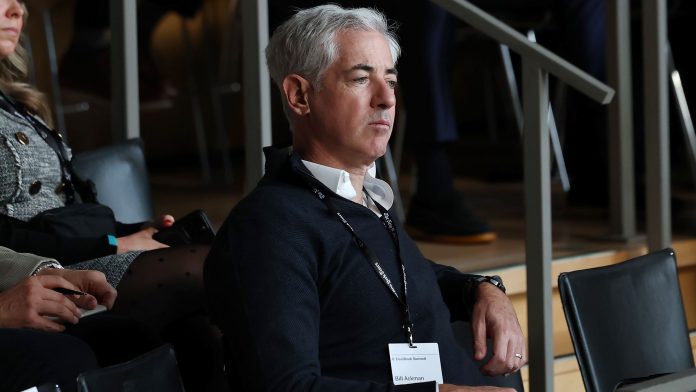
Billionaire investor Bill Ackman, who once backed U.S. President Donald Trump’s economic vision, has issued a scathing warning over the administration’s sweeping new tariff policy, calling it a “self-induced, economic nuclear winter” and accusing the president of destroying global confidence in the U.S. as a trading partner.

Trump’s latest executive order, signed Wednesday, slaps a flat 10 percent levy on all imports from over 180 countries, regardless of their economic standing or trade relationship with the United States. The blanket approach has jolted global financial markets, worsened recession fears, and sparked outrage not just from longtime critics, but from some of Trump’s most vocal supporters and economic allies.

Ackman took to social media platform X to express alarm, writing: “By placing massive and disproportionate tariffs on our friends and our enemies alike, and thereby launching a global economic war against the whole world at once, we are in the process of destroying confidence in our country as a trading partner.”

The hedge fund manager, who previously applauded Trump’s America-first rhetoric, said the decision will end up hurting the very voters who helped bring Trump to power.

“The consequences for our country and the millions of our citizens who have supported the president — in particular low-income consumers who are already under a huge amount of economic stress — are going to be severely negative. This is not what we voted for,” he said.

Ackman’s warning follows a brutal week for investors. The S&P 500 fell more than 9% last week, and J.P. Morgan hiked the probability of a U.S. and global recession to 60% by year-end, up from 40%.

“Business is a confidence game,” Ackman said. “The president is losing the confidence of business leaders around the globe.”

No Diligence, No Discretion

Beyond the global market reaction, economists say the rollout was haphazard and lacked critical due diligence. In one striking example, the Trump administration imposed a 50 percent tariff, one of the highest levies in the package, on imports from Lesotho, a small, landlocked African nation where the average citizen earns less than $5 a day.

Lesotho exports about $237 million in goods to the U.S. annually, primarily diamonds and textiles. Yet it imports very little from the U.S., meaning that its citizens, already among the world’s poorest, will see their key exports taxed heavily with no real retaliatory capacity.

Supporters Now Sound the Alarm

The discontent isn’t just coming from elite financiers. Shay Boloor, a conservative financial commentator and host of Boys Invest, posted an open letter addressed to Trump on Sunday, expressing deep frustration over what he called the president’s “scattershot retaliation” and lack of a coherent economic strategy.

“We couldn’t keep pretending that a consumption-led economy held together by zero-interest rates and global fragility was a long-term solution,” Boloor wrote. “I welcomed the idea of a harder, smarter America-first policy that pushed for fair treatment, reciprocal agreements, and a real industrial strategy rooted in technological superiority, national security, and capital formation.”

“But that’s not what this is,” he said. “What you’ve rolled out isn’t detox — it’s whiplash.”

Boloor criticized the administration’s failure to produce a roadmap or operational framework, saying the policy appears to be improvised and reactionary.

“You can’t replace a fragile supply chain with chaos and call it resilience. You talk about bringing jobs home, but the U.S. doesn’t have the labor force, permitting structure, or wage flexibility to stand up full-scale manufacturing at speed.”

He warned that investors and CEOs are now more likely to hold off on major projects. “Capital isn’t going to rush to fill that void just because you raised tariffs,” he said. “It’s going to sit on the sidelines and preserve optionality.”

Boloor concluded by accusing the administration of launching a campaign of brute-force disruption with no viable alternatives in place. “And in the absence of credible structure, capital is retreating — not realigning.”

Lutnick Not Spared By Ackman

Ackman also leveled criticism at Commerce Secretary Howard Lutnick, alleging a glaring conflict of interest.

“He profits when our economy implodes. It’s a bad idea to pick a Secretary of Commerce whose firm is levered long fixed income,” Ackman said, referencing Lutnick’s role at Cantor Fitzgerald. “It’s an irreconcilable conflict of interest.”

Lutnick, appearing on CBS’s Face the Nation, defended the administration’s approach, insisting that reciprocal tariffs were necessary to rebalance decades of trade imbalances.

“We’re not backing down,” he said.

Trump Not Backing Down

Despite the growing opposition, Trump has remained defiant. The president, sources say, believes that the early signs of foreign capitulation are vindication enough. Vietnam and Taiwan have both agreed to zero tariffs on U.S. imports following the new policy rollout. India, too, has signaled its intention to lower tariffs to zero on a range of American goods.

These developments appear to have emboldened the Trump administration, which now believes that other nations, including EU member states, will be forced to follow suit. However, critics believe that Trump’s administration is conflating short-term diplomatic concessions with long-term economic stability, and confusing coercion for negotiation.

“Correct Your Mistakes”: Richard Branson Urges President Trump to “Reverse Tariffs And Lead With Courage”

0

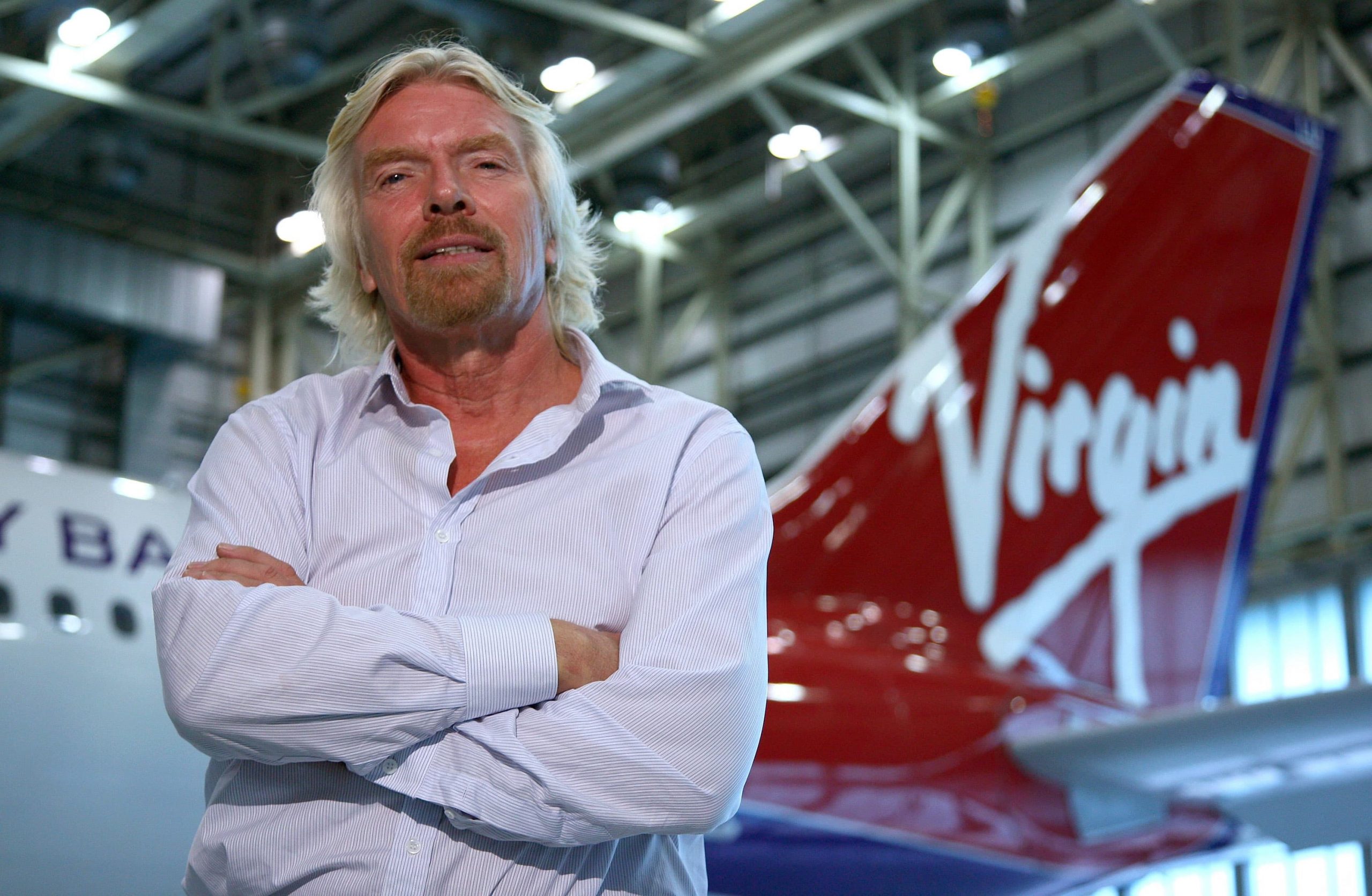
In the wake of Trump’s controversial tariff policy that has seen the global stock market experience a historic downturn, erasing approximately $6.6 trillion in market capitalization in two days, co-founder of the Virgin Group, Richard Branson, has urged the U.S. president to reconsider the sweeping tariffs.

The billionaire business magnate has warned that such tariffs imposed by the U.S. government are steering the global economy toward a dangerous path. He argues that these tariffs will harm people worldwide, particularly Americans, by undermining economic prosperity.

On his LinkedIn page, he wrote,

“Strong leadership means taking risks and trying things but when it doesn’t work, realizing your mistake and correcting it. Quickly. One of the most important lessons I’ve learned from 60 years of business is to accept when I’m wrong and change course. The US government’s sweeping tariffs are taking the world’s economy in a dangerous direction. They will make people everywhere worse off, especially in America.

“It’s not just about the economy. Countries that trade fairly and healthily prosper and flourish. They reduce poverty, improve health and education, and decrease the likelihood of war. Courage and self-awareness are cornerstones of true leadership. That includes quickly acknowledging errors and making corrections. With a swift reversal back to sensible economic policy, America and the rest of the world can still avoid the catastrophic fallout these tariffs will inflict.”

Branson has therefore called for a swift reversal to sensible economic policies to avert the catastrophic consequences he believes the tariffs will cause.

His warning comes after President Donald Trump on Wednesday last week, announced that the U.S would impose a flat 10% tariff on every country in the world, with higher rates for many of America’s largest trading partners including China, U.K., India, Japan, South Korea and the European Union.

Trump’s announcement included a 32% tariff rate on Taiwan, a 26% rate on India, and an increase on China that brings its total rate to 54% on imported goods. The news sent shock waves across stock markets across the globe. The S&P 500 index was down 5% and the tech-focused Nasdaq composite was down 6%. Stock markets in Europe, Russia, Japan, and China’s capital Hong Kong, also suffered losses.

Notably, the tariffs roll out, erased a collective $270 billion from the fortunes of the world’s 3,000 billionaires. Mark Zuckerberg, Jeff Bezos, and Elon Musk each lost more than $23 billion. According to Bloomberg’s Billionaires Index, collectively, the two-day drop wiped out $30.9 billion in net worth for Elon Musk, $23.49 billion for Jeff Bezos, and $27.34 billion for Mark Zuckerberg the world’s three richest people, in that order.

Meanwhile, according to a CNBC report, not all billionaires lost money immediately after the tariffs were announced. Bloomberg’s index revealed that Mexican businessman Carlos Slim got $2.9 billion richer on Thursday before eventually losing $5.48 billion on Friday.

Slim noted that the Trump administration’s tariffs will be temporary, and primarily used as a negotiation tactic, he said in a Bloomberg interview. “The U.S. doesn’t have any other alternative other than changing how it does things,” Slim said.

Amidst the tariffs chaos, Trump said that his tariffs are the only way to solve “financial Deficits with China, the European Union, and many others.”

“Some day people will realize that Tariffs, for the United States of America, are a very beautiful thing,” Trump wrote in a post on his Truth Social platform, adding that the tariffs are bringing “Tens of Billions of Dollars” into the U.S.

Part of his post reads,

“We have massive Financial Deficits with China, the European Union, and many others. The only way this problem can be cured is with TARIFFS, which are now bringing Tens of Billions of Dollars into the U.S.A. They are already in effect and a beautiful thing to behold. The Surplus with these Countries has grown during the “Presidency” of Sleepy Joe Biden. We are going to reverse it and reverse it QUICKLY. Some day people will realize that Tariffs, for the United States of America, are a very beautiful thing!”

However, last week Thursday, Trump disclosed that he’d be open to negotiating tariff rates with other countries, despite White House aides insisting the opposite.

Hidden Amazon Prime Benefits That Save You Money

0

While most subscribers join Amazon Prime for faster shipping, the $139 annual membership includes dozens of money-saving features that remain largely undiscovered. Many members don’t realize their subscription extends beyond free delivery, offering financial advantages across shopping, entertainment, healthcare, and more. Though Amazon doesn’t offer an official amazon price match policy like some competitors, these hidden benefits often provide greater savings through exclusive discounts. Most members utilize less than 20% of available perks, leaving substantial value untapped. This guide reveals overlooked Prime benefits that can help recoup your membership fee several times over.

No-Rush Shipping Rewards: Free Credits for Patience

Selecting “no-rush shipping” at checkout unlocks immediate rewards while your package arrives just a few days later than standard Prime delivery. These digital incentives typically include:

  • $1-2 credits for Prime Video rentals and digital purchases.
  • $3-5 discounts on future household essentials.
  • $10 credits toward specific product categories.
  • $5-10 off Amazon Home Services bookings.

The credits usually appear immediately but expire within 30 days. To maximize value, check your credit balance in the “Your Account” section before making purchases. During major shopping events, strategically choosing no-rush shipping on non-urgent items can accumulate $20-30 in credits.

Prime-Exclusive Grocery Savings

Prime membership transforms everyday grocery shopping through multiple channels of savings. At Whole Foods, your membership delivers 10% off already-discounted yellow tag items, plus rotating weekly deals that reduce premium products by up to 20%. Simply scan the QR code in your Amazon app at checkout.

Amazon Fresh delivery now comes with no additional fees on orders over $35 in eligible areas, saving $9.99 per order compared to non-Prime customers. Members also receive exclusive pricing on select daily essentials, with rotating deals offering 20-30% discounts on produce, meat, and pantry staples.

For households that place just two grocery orders monthly, these benefits translate to approximately $240 in annual savings, not counting the item-specific discounts that typically reduce grocery bills by an additional $15-25 per order.

Entertainment Benefits Beyond Prime Video

Most members know about Prime Video but overlook additional entertainment value. Prime Gaming provides 3-5 free PC games monthly ($60-100 value) that remain in your library permanently. Recent offerings included major titles like Fallout 76 and Star Wars: Knights of the Old Republic.

The free Twitch channel subscription ($4.99 monthly value) allows you to support your favorite creator at no cost while removing ads from their stream. Prime Reading grants access to over 3,000 rotating books, magazines, and comics, with no monthly reading limits or special devices required.

Try Before You Buy and Returns Benefits

The Prime Try Before You Buy program eliminates uncertainty of online clothing purchases by allowing you to:

  1. Order up to six eligible clothing items without payment.
  2. Try everything at home for seven days.
  3. Return unwanted items for free, paying only for what you keep.
  4. Schedule free pickups from your doorstep.

This service applies to thousands of eligible items from both Amazon’s own fashion lines and major brands like Calvin Klein, Adidas, and Levi’s.

Amazon Day Delivery

The Amazon Day feature lets you designate a specific delivery day each week. All eligible orders placed throughout the week arrive together, reducing packaging waste by up to 30% and ensuring you’re home to receive deliveries.

In-Garage Delivery Protection

Amazon Key’s in-garage delivery service protects packages from theft without granting access to your living space. The system works with most major smart garage door openers including Chamberlain and myQ devices. After setup, delivery drivers receive temporary access to place packages inside your garage.

Reading and Photo Storage Benefits

Prime Reading offers unrestricted access to a rotating library of over 3,000 books, magazines, and comics. Amazon First Reads gives members one free pre-release book monthly from editor-selected titles.

The unlimited photo storage benefit preserves original-resolution images without compression, including RAW files from professional cameras. This service alone rivals dedicated photo storage platforms that typically charge $60-120 annually.

Health and Wellness Savings

Prime’s healthcare benefits deliver substantial savings through One Medical membership discounts that reduce the annual fee from $199 to $99. RxPass provides eligible members generic medications for over 80 common conditions at just $5 monthly, regardless of how many prescriptions you need.

Amazon Pharmacy’s Prime discount card provides up to 80% savings at over 60,000 participating pharmacies nationwide, including major chains like CVS and Walgreens.

Prime members save 10¢ per gallon at over 7,000 BP, Amoco, and AM/PM stations nationwide. For someone who drives 15,000 miles annually in a 25 MPG vehicle, this translates to approximately $60 yearly savings.

Membership Sharing Through Amazon Household

Amazon Household allows sharing select Prime benefits with up to two adults, four teens, and four children living under one roof. Shared benefits include:

  • Free shipping on eligible items.
  • Prime Video streaming access.
  • Prime Reading and First Reads selections.
  • Prime exclusive discounts and deals.

Each adult maintains separate accounts with private purchase histories and payment methods. By effectively dividing the $139 annual fee between two adults, Amazon Household reduces the per-person cost to less than $6 monthly while maintaining most key benefits.

Special Pricing for Students and Assistance Recipients

Qualifying customers receive substantial Prime membership discounts:

College students with valid .edu email addresses pay just $69 annually ($7.49 monthly) after a six-month free trial through Prime Student—half the standard membership cost.

Young adults aged 18-24 qualify for similar pricing without college enrollment requirements.

Recipients of government assistance programs like SNAP, Medicaid, or TANF can join Prime Access for $6.99 monthly, saving nearly 50% while receiving identical benefits.

The verification process takes minutes through Amazon’s secure portal and requires minimal documentation.

Conclusion: Maximizing Your Prime Membership Value

The combined value of these hidden Prime benefits easily exceeds $1,000 annually for members who strategically utilize them. Rather than viewing Prime as simply a shipping service, approach it as a comprehensive savings platform spanning retail, entertainment, healthcare, and essential services. Prioritize benefits that align with your existing spending patterns—grocery shoppers should emphasize Whole Foods and Fresh discounts, while families might focus on shared memberships and entertainment options. By accessing just three or four of these overlooked features, most members can recover their subscription cost within months while discovering genuinely useful services they’d otherwise pay for separately.

Ethereum’s DEX Volumes Surpassed Solana in March

0

In March 2025, Ethereum surpassed Solana in monthly decentralized exchange (DEX) trading volume for the first time since September 2024. According to data from DefiLlama, Ethereum-based DEXs recorded approximately $63 billion in trading volume, outpacing Solana’s $51 billion during the same period. This shift highlights Ethereum’s resurgence in the decentralized finance (DeFi) space, driven largely by the performance of platforms like Uniswap, which alone accounted for over $30 billion in volume. Meanwhile, Solana’s activity appears to have cooled, particularly in the memecoin sector, which had previously fueled its dominance.

Ethereum topping Solana in monthly DEX trading volume for the first time since September carries several implications for the crypto ecosystem, particularly in the DeFi space. This resurgence underscores Ethereum’s enduring appeal as the foundational blockchain for DeFi. Despite competition from faster, cheaper alternatives like Solana, Ethereum’s deep liquidity, established infrastructure, and vast developer community continue to give it an edge. The high trading volume suggests users and liquidity providers still trust Ethereum’s ecosystem, even with its higher gas fees and slower transaction speeds compared to Solana.

Solana’s earlier dominance was partly driven by speculative memecoin trading and its scalability advantages. Ethereum reclaiming the lead might indicate a cooling of that hype or a return to fundamentals, with users prioritizing battle-tested protocols e.g., Uniswap, Curve over newer, riskier platforms. It could signal a maturing market where reliability trumps short-term cost efficiency. Ethereum’s volume boost may also reflect growing adoption of its Layer 2 (L2) scaling solutions like Arbitrum and Optimism, which reduce costs while leveraging Ethereum’s security. If L2s are driving this uptick, it strengthens the narrative that Ethereum’s multi-layered ecosystem can compete with monolithic high-throughput chains like Solana.

For Solana, this could be a temporary dip rather than a long-term decline. Its lower fees and high speed still make it attractive, especially for retail traders and niche DeFi applications. However, it might need to diversify beyond memecoin-driven activity to maintain consistent volume leadership, especially if Ethereum continues to improve scalability via upgrades like sharding in the future. This shift could influence investor perceptions and capital flows.

Solana’s network can process 65,000 transactions per second, making it one of the fastest blockchains available. Developer interest in Solana has more than doubled since last year, with over 1,000 projects building on the platform, including DeFi protocols, NFTs, and gaming applications. Solana projects have raised significant funding, with $173 million raised in Q3 2024 and $245 million in one quarter, demonstrating growing investor confidence. Collaborations with companies like Jump Crypto and Coinbase Ventures provide resources and support for Solana’s growth, while integrations with bridges like Wormhole expand its reach.

Major DeFi projects like Solend and Francium, and NFT collections like DeGods and SolPunks, are driving user adoption and investment. Solana’s GameShift initiative and enterprise solutions are further expanding its ecosystem. Solana’s community is active and engaged, with over 500,000 new wallets created monthly and $10 billion in quarterly transactions. Solana’s ecosystem is poised for continued growth, driven by its innovative technology, increasing user adoption, and strong developer activity. With its focus on scalability, speed, and usability, Solana is well-positioned to remain a key player in the blockchain space

Ethereum’s outperformance might bolster confidence in ETH as a store of value and utility token, potentially impacting its price relative to SOL. Developers and projects may also double down on Ethereum compatibility, reinforcing its dominance in smart contract platforms. In short, Ethereum’s edge here signals its staying power, but Solana’s still in the game—competition between the two is likely to heat up as both ecosystems evolve.

Ripple CTO Drops Shocking Prediction About XRP’s Price, Here’s What’s Coming Next

0

Ripple CTO David Schwartz has made a bold prediction about XRP’s future price trajectory, capturing the attention of the entire crypto world. The statement comes amid growing market optimism and renewed interest in blockchain-based financial solutions, including Ripple.

Ripple CTO’s Eye-Opening XRP Forecast

In an X (formerly Twitter) post shared by user Brett Crypto, Ripple CTO David Schwartz “dropped the bomb” about XRP’s price potentially exceeding $10,000. The post includes an image with a breakdown of how the price of XRP impacts the amount of XRP needed for large-scale transactions in US dollars.

For example, at $1 per XRP, 1 billion XRP is needed to transfer $1 billion, but if XRP were $10,000, only 100,000 XRP would be required for the same transfer. The post interprets this as a prediction of XRP reaching $10,000 or more.

A $10,000 price for XRP would represent an astronomical increase of 5,000x from its current $2.04 price tag. At $10,000 per XRP, the market cap would be $560 trillion, an unrealistic figure given that the global wealth cap is around $500 trillion. This suggests the $10,000 price point is more speculative hype than a grounded prediction.

Meanwhile, XRP continues facing price instability amid Ripple’s uphill battle against the regulatory order of the day. Ripple lawyer Stuart Alderoty emphasized how Ripple’s ongoing legal battle with the SEC negatively impacts XRP’s value.

While recent rulings have been somewhat favorable, the outcome will be crucial in shaping XRP’s future. He emphasized that clearing the current legal uncertainty could lead to XRP being listed on more U.S. exchanges, boosting liquidity and attracting greater investor participation.

WallitIQ (WLTQ): The AI Coin Taking The Market By Storm

Unlike conventional crypto assets that rely only on speculative trading, WallitIQ (WLTQ) incorporates artificial intelligence to improve blockchain scalability, security, and efficiency.

WallitIQ (WLTQ) unveiled the MVP build of its Crypto Wallet Management Mobile App. It uses simulated transfer to send ETH and USDT to external addresses. This innovative wallet provides real-time cryptocurrency price tracking with the CoinGecko API, interactive candlestick charts for market analysis, and simple wallet management.

The MVP app was designed with future-proofing in mind, incorporating placeholders within its settings to integrate upcoming features in the future. The project also recently launched its beta platform for digital asset trading, enabling investors and traders to experience its innovative AI-powered features and tools.

Leading analysts are convinced that WallitIQ’s (WLTQ) native token is on track to surpass well-known cryptocurrencies as it becomes more popular and gains wider adoption.

Following a recent audit of one of its platform’s smart contracts, SolidProof, a smart contract auditing firm, awarded it a badge of credibility and stability. This top security credential and the excitement surrounding its beta platform launch have prompted several investors to join the token presale.

With its current presale price of $0.0420, WallitIQ (WLTQ) native altcoin offers investors a great opportunity, particularly given the general bullish mood in the cryptocurrency market. Investors who join the presale at this affordable price could earn more than 55x returns in the next bull run.

WallitIQ (WLTQ) altcoin token holders will enjoy community rewards like airdrops, exclusive NFTs, and priority access to new features. Long-term investors can earn additional incentives by holding the altcoin and engaging with the platform. Further, owning the token enables smooth, cost-effective transactions with reduced fees across swaps, smart contracts, and DeFi services.

What’s Coming Next For XRP And WallitIQ (WLTQ)?

The recent statement from the Ripple CTO has brought a fresh wave of excitement and speculation to the XRP community. With institutional use cases gaining momentum and legal clarity on the horizon, the stage could be set for a major rally.

As investors shift toward more promising opportunities, AI-driven tokens are rapidly gaining traction. WallitIQ (WLTQ) is especially well-positioned for success. Interested investors must not pass up the chance to join this AI-powered revolution at the best price possible and earn maximum profits soon.

Join the WallitIQ (WLTQ) presale and community:


Website: https://wallitiq.io/

Whitepaper: https://wallitiq.gitbook.io/wallitiq

Telegram: https://t.me/wallitiqofficial

Twitter/X:https://x.com/wiqnetwork

Instagram:https://www.instagram.com/wallitiqnetwork