DD
MM
YYYY

PAGES

DD
MM
YYYY

spot_img

PAGES

Home Blog Page 1432

Ripple CTO Drops Shocking Prediction About XRP’s Price, Here’s What’s Coming Next

0

Ripple CTO David Schwartz has made a bold prediction about XRP’s future price trajectory, capturing the attention of the entire crypto world. The statement comes amid growing market optimism and renewed interest in blockchain-based financial solutions, including Ripple.

Ripple CTO’s Eye-Opening XRP Forecast

In an X (formerly Twitter) post shared by user Brett Crypto, Ripple CTO David Schwartz “dropped the bomb” about XRP’s price potentially exceeding $10,000. The post includes an image with a breakdown of how the price of XRP impacts the amount of XRP needed for large-scale transactions in US dollars.

For example, at $1 per XRP, 1 billion XRP is needed to transfer $1 billion, but if XRP were $10,000, only 100,000 XRP would be required for the same transfer. The post interprets this as a prediction of XRP reaching $10,000 or more.

A $10,000 price for XRP would represent an astronomical increase of 5,000x from its current $2.04 price tag. At $10,000 per XRP, the market cap would be $560 trillion, an unrealistic figure given that the global wealth cap is around $500 trillion. This suggests the $10,000 price point is more speculative hype than a grounded prediction.

Meanwhile, XRP continues facing price instability amid Ripple’s uphill battle against the regulatory order of the day. Ripple lawyer Stuart Alderoty emphasized how Ripple’s ongoing legal battle with the SEC negatively impacts XRP’s value.

While recent rulings have been somewhat favorable, the outcome will be crucial in shaping XRP’s future. He emphasized that clearing the current legal uncertainty could lead to XRP being listed on more U.S. exchanges, boosting liquidity and attracting greater investor participation.

WallitIQ (WLTQ): The AI Coin Taking The Market By Storm

Unlike conventional crypto assets that rely only on speculative trading, WallitIQ (WLTQ) incorporates artificial intelligence to improve blockchain scalability, security, and efficiency.

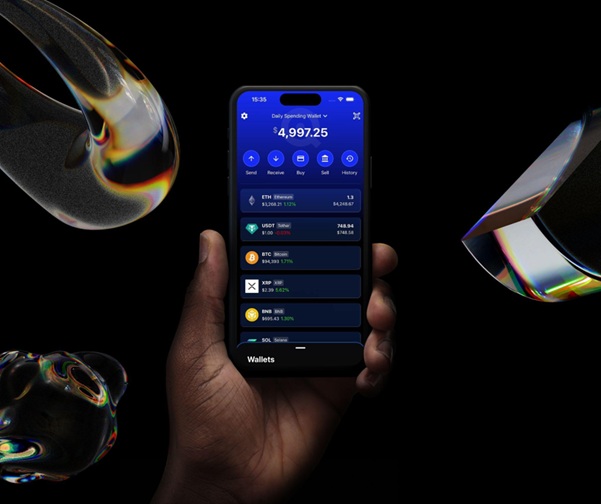
WallitIQ (WLTQ) unveiled the MVP build of its Crypto Wallet Management Mobile App. It uses simulated transfer to send ETH and USDT to external addresses. This innovative wallet provides real-time cryptocurrency price tracking with the CoinGecko API, interactive candlestick charts for market analysis, and simple wallet management.

The MVP app was designed with future-proofing in mind, incorporating placeholders within its settings to integrate upcoming features in the future. The project also recently launched its beta platform for digital asset trading, enabling investors and traders to experience its innovative AI-powered features and tools.

Leading analysts are convinced that WallitIQ’s (WLTQ) native token is on track to surpass well-known cryptocurrencies as it becomes more popular and gains wider adoption.
Following a recent audit of one of its platform’s smart contracts, SolidProof, a smart contract auditing firm, awarded it a badge of credibility and stability. This top security credential and the excitement surrounding its beta platform launch have prompted several investors to join the token presale.

With its current presale price of $0.0420, WallitIQ (WLTQ) native altcoin offers investors a great opportunity, particularly given the general bullish mood in the cryptocurrency market. Investors who join the presale at this affordable price could earn more than 55x returns in the next bull run.

WallitIQ (WLTQ) altcoin token holders will enjoy community rewards like airdrops, exclusive NFTs, and priority access to new features. Long-term investors can earn additional incentives by holding the altcoin and engaging with the platform. Further, owning the token enables smooth, cost-effective transactions with reduced fees across swaps, smart contracts, and DeFi services.

What’s Coming Next For XRP And WallitIQ (WLTQ)?

The recent statement from the Ripple CTO has brought a fresh wave of excitement and speculation to the XRP community. With institutional use cases gaining momentum and legal clarity on the horizon, the stage could be set for a major rally.

As investors shift toward more promising opportunities, AI-driven tokens are rapidly gaining traction. WallitIQ (WLTQ) is especially well-positioned for success. Interested investors must not pass up the chance to join this AI-powered revolution at the best price possible and earn maximum profits soon.

Join the WallitIQ (WLTQ) presale and community:


Website: https://wallitiq.io/

Whitepaper: https://wallitiq.gitbook.io/wallitiq

Telegram: https://t.me/wallitiqofficial

Twitter/X:https://x.com/wiqnetwork
Instagram:https://www.instagram.com/wallitiqnetwork

Cardano’s Latest Dip Might Be a Warning, But This Coin Is Moving the Other Way

0

Cardano has entered April with bearish momentum, triggering fears among its holders. Many Cardano investors are now searching for alternatives that can turn low investments into parabolic returns.

One such option that has stolen the spotlight is RCO Finance, a new AI-backed project that helps today’s investors maximize returns via automated trading and institutional-grade trading strategies. Read on to see experts say RCO Finance could become one of the top crypto coins to buy.

Cardano Succumbs to a Double-Digit Fall in Late April

Cardano investors are in low spirits as the mega altcoin has continued its recent decline. Like other altcoins, Cardano entered 2025 with high bullishness.

Unfortunately, its momentum was cut short due to the market-wide price crash that affected many tokens. While some altcoins have since rebounded, Cardano has struggled to regain strength, with selling pressure keeping prices down.

Market charts show that Cardano is now trading at $0.6676 following an 11.07% drop over the past week. Its 30-day charts also show a 34.6% decline.

Following Cardano’s recent drop, many experts are adjusting their predictions for the token. With many investors now anticipating further losses—some predicting a drop below $0.50 in early April—many are seeking safer, high-potential alternatives.

RCO Finance, a rising altcoin that leverages artificial intelligence for smarter investing, has garnered significant attention for its potential to outperform in these volatile market conditions.

RCO Finance: Transforming Market Opportunity to Secure Returns with AI Trading

Managing investments today requires time, expertise, and constant market monitoring—something most traders struggle with.

Enter RCO Finance, an AI-powered altcoin platform that automates trading, optimizes portfolios, and maximizes returns while you focus on other priorities. This platform finds solutions to problems that today’s traders face. Even better, these solutions are easily accessible to both novice and expert traders.

RCO Finance starts by granting access to over 120,000 assets spread across over 12,500 financial categories. The platform’s multi-asset trading allows investors to expand their portfolio with investments in stocks, bonds, ETFs, mutual funds, tokenized real estate assets, and commodities.

Investors can build the right mix of risky and stable assets, thus diversifying against volatility. Additionally, they won’t need a separate platform when trading across diverse markets.

Traders can also take advantage of up to 1000x leverage, while AI-driven risk management ensures strategic decision-making. This leverage allows them to increase their trading positions and maximize returns across traditional and DeFi markets.

Beyond the freedom to trade multiple assets, RCO Finance investors also enjoy access to Robo Advisor, an adaptive, intelligent trading bot designed to take the burden off your shoulders while increasing profitability.

Robo Advisor uses live data feeds from reliable outlets like Bloomberg and Reuters to find investing opportunities on your behalf. It also tailored trading strategies to your risk tolerance and investing goals, further boosting your profit potential. Another advantage of having Robo Advisor at your disposal is automatic asset rebalancing.

Market conditions are unpredictable, and sudden geopolitical tensions can cause a price crash. An example of this scenario is the early February market crash triggered by Donald Trump’s tariffs.

In times like this, Robo Advisor ensures your investments stay optimized by moving capital away from bearish cryptocurrencies to high-performing alternatives like gold ETFs. By continuously monitoring and adjusting your portfolio in real time, RCO Finance guarantees the optimization of your investments.

In addition to AI-based trading, RCO Finance users can amplify gains by participating in the platform’s yield-earning mechanisms. For instance, investors can stake their tokens, contributing to liquidity for trading in RCO Finance.

The network rewards these coin stakers with up to 86% APY. Additionally, token holders can also enjoy trading fee discounts, which are proportional to the size of their RCOF reserves.

Finally, RCO Finance complements its trading experience with top-tier security & a seamless setup. RCO Finance guarantees secure transactions and data privacy thanks to SolidProof-audited smart contracts.

Furthermore, RCO Finance’s streamlined onboarding removes unnecessary KYC processes, allowing you to start investing without sharing personal information.

RCO Finance Grants Users Early Access with its Beta Launch

You can now be among the first to experience AI-powered investing by signing up for RCO Finance’s beta platform launch. Like other traders, you can test out its functionalities, which are undergoing upgrades ahead of the platform’s full launch.

Top Crypto Coins to Buy: RCO Finance Vs Cardano

Crypto investors have expressed support for RCO Finance, saying its ability to streamline trading with AI-based tools gives it more appeal than Cardano. Already, over 10,000 new users have joined the platform, buying over $12 million worth of tokens from its presale.

One RCOF token now costs $0.100 in round 5 of its presale. By round 6, RCOF’s value will grow to $0.130. Its anticipated listing will come after it enters the $0.4-$0.6 range. RCOF is also poised to record a 9,000% increase over the next few months.

This could see a $1,000 investment balloon to over $90,000 by year’s end. Don’t miss out on AI-powered investing—secure your spot in the RCO Finance’s ecosystem today and start growing your wealth effortlessly!

For more information about the RCO Finance (RCOF) Presale:

Visit RCO Finance Presale

Join The RCO Finance Community

Rocket of Abundance Lifted early hours of today As Tekedia Capital Investment Cycle Begins

0

The rocket of abundance lifted early hours of today to deliver to the unbounded value of entrepreneurial capitalism across communities, cities and nations, fixing frictions at scale. In senior secondary school, I memorized Prof Lionel Robbins’ definition of economics – a social science which studies human behaviour as a relationship between ends and scarce means which have alternative uses.

Going deeper in that course, Adam Smith postulated the concept of the invisible hand, encapsulating the power of the free market, in advancing communities. Taking both together, you can see the need of Firms in improving societies. Yes, that unalloyed interest by entrepreneurs is how communities, cities, nations are built and rebuilt.

In this video, we provide an overview of the 18 startups in the current Tekedia Capital investment cycle. These companies cover biotech, fintech, AI, exchange, real estate, space tech, transportation, cybersecurity, ecommerce, food tech, gaming, robotics, microelectronics, AI-age private equity, etc. The cycle has started and will end on May 15, 2025.

We invite you to join us to improve communities through the markets and unlock abundance for all; begin here.

Morgan Stanley Downgrades Goldman Sachs as Recession Fears, Apple Card Risks Cast Shadow Over Revenue Outlook

0

On Monday, Morgan Stanley downgraded Goldman Sachs’ stock from Overweight to Equal-weight and reduced the price target from $659 to $558, citing significant concerns over the bank’s reliance on investment banking revenues, which are highly vulnerable to a downturn.

This downgrade comes as Goldman’s stock has dropped nearly 14% in the past week, with analysts expressing caution over its future performance amid ongoing economic instability caused by President Trump’s escalating tariff war.

The analysts raised concerns that over 60% of Goldman Sachs’s revenues come from its Global Banking & Markets segment, which is particularly exposed to recession risks and market volatility. Investment banking, in particular, has already shown signs of strain, with the tariffs playing a significant role in the mounting uncertainty.

In the wake of President Trump’s global tariff policy, which has led to widespread market concerns, analysts fear that American companies, including major financial institutions like Goldman Sachs, could be severely impacted by rising costs, diminished consumer confidence, and potential market contractions.

As noted by Wedbush analyst Dan Ives, if the tariffs hold at their current levels, they could have devastating effects on the U.S. tech sector, which is a critical driver of the broader economy. Ives stated: “If these tariffs (in current form/rates) hold… it would set the US tech world back a decade in our opinion while China is the clear winner… the US tech supply chain turned upside down overnight and the cost structure will be untenable. Investors know math and the sad reality.”

This statement underscores the growing concerns that Trump’s tariffs will cause severe damage to the U.S. technology sector, a key contributor to the country’s economic strength. As tensions rise between the U.S. and major trading partners, including China, analysts predict that American companies, especially those in high-tech industries, will find it increasingly difficult to maintain profitability. Goldman Sachs, with its exposure to global markets and its reliance on investment banking and trading, is seen as especially vulnerable.

In a research note, Morgan Stanley’s analysts also forecast that Goldman Sachs would fail to meet its internal medium-term return on equity target of 14-16%, projecting only a 12% return on equity (ROE) for 2025 and 13% in 2026. These figures fall below the bank’s targets and suggest potential trouble ahead. Moreover, concerns about the value of Goldman Sachs’s Apple Card portfolio, particularly its exposure to customers with lower FICO scores, have added to the overall sense of unease.

But analysts stopped short of downgrading Goldman Sachs to Underweight, believing that the bank’s Markets division could still benefit from prolonged market volatility, which may drive higher revenues. However, the long-term picture remains uncertain, and the broader risks posed by Trump’s trade war continue to weigh heavily on market sentiment.

The Recession Fears

Trump’s tariffs have sparked fears of a global recession, with analysts warning that the negative impact on trade and global supply chains could push the U.S. economy into a slowdown. The U.S. stock market, which has already been facing volatility, is expected to remain under pressure as companies brace for higher costs and shrinking profit margins.

Experts such as Dan Ives argue that the tariff war is not only undermining the competitiveness of U.S. companies but also disrupting the global supply chain. The overall uncertainty is prompting both investors and corporations to reconsider their long-term strategies, with many now waiting for signs of stabilization before committing to new investments.

“Capital isn’t going to rush to fill that void just because you raised tariffs. It’s going to wait,” Ives added, further underlining the cautious stance taken by the market.

Presently, the U.S. Federal Reserve faces its own challenges in balancing monetary policy, particularly with inflation concerns mounting. This means the impact of the tariffs is expected to be felt in various sectors of the economy. Analysts, including those from J.P. Morgan, have raised the likelihood of a U.S. recession to 60% by the end of the year, with further risks to global economic stability.

Trump Tariff Policy: America Heading Towards A Self-Inflicted “Economic Nuclear Winter”, Says Billionaire Investor Bill Ackman

0

American billionaire investor and founder of Pershing Square Capital Management, Bill Ackman, has voiced strong concerns about the tariff policy implemented by U.S. President Donald Trump, last week Wednesday.

The billionaire investor warned that such a tariffs policy could plunge America and the global economy into what he calls a “self-inflicted economic nuclear winter”.

He wrote on X,

“By placing massive and disproportionate tariffs on our friends and our enemies alike and thereby launching a global economic war against the whole world at once, we are in the process of destroying confidence in our country as a trading partner.

“To state the obvious, it does not help our country’s and our president’s negotiating position to be trying to strike deals while our market is collapsing. Whoever is recommending that idea to the President should be fired now.”

He also added that with these controversial tariffs implemented, Trump is losing the confidence of business leaders across the globe.

“Business is a confidence game. The president is losing the confidence of business leaders around the globe. The consequences for our country and the millions of our citizens who have supported the president in particular low-income consumers who are already under a huge amount of economic stress are going to be severely negative. This is not what we voted for,” he added.

Ackman’s warning resonates with broader economic critiques, echoing sentiments like those from Richard Branson who talked about Trump recognizing mistakes and correcting course swiftly. The Virgin Group co-founder doesn’t view Trump as infallible, emphasizing that advisors bear responsibility for misguiding the president with faulty data.

Also, while President Trump has acknowledged his aggressive tariff plan may result in “little pain” in the short term, billionaire “Shark Tank” star and American billionaire businessman, Mark Cuban, sees a greater risk of long-term economic harm.

In a series of posts made on Bluesky, Cuban expanded on his previous critiques of Trump’s trade policies. He suggested that the extensive tariffs announced by the Trump administration on Wednesday, combined with cuts to the federal workforce spearheaded by the White House DOGE office, could result in a worse financial crisis than the Great Recession of 2008.

He wrote,

“If the new tariffs stay in place for multiple years and are enforced and inflationary, and DOGE continues to cut and fire, we will be in a far worse situation than 2008”.

Notably, JPMorgan Chase CEO Jamie Dimon said Monday that tariffs announced by President Donald Trump last week will likely boost prices on both domestic and imported goods, weighing down a U.S. economy that had already been slowing. “Whether or not the menu of tariffs causes a recession remains in question, but it will slow down growth,” he said.

Trump’s controversial tariff policy, rolled out last week Wednesday, imposes sweeping levies on imports, including a baseline 10% tariff on goods from over 180 countries and significantly higher rates of up to 54% on imports from China. This approach builds on Trump’s long-standing belief that tariffs can address trade imbalances, protect American industries, and bring jobs back to the U.S.

The policy, dubbed by some as part of a “Liberation Day” economic agenda, aims to restore manufacturing and reduce reliance on foreign goods. Trump has however defended the tariffs as a necessary “medicine” to fix economic disadvantages, claiming they’ve already generated billions in revenue and lowered inflation, oil prices, and interest rates.