DD
MM
YYYY

PAGES

DD
MM
YYYY

spot_img

PAGES

Home Blog Page 1439

NATO’s Unwavering Supports for Ukraine Applauded by Baerbock

0

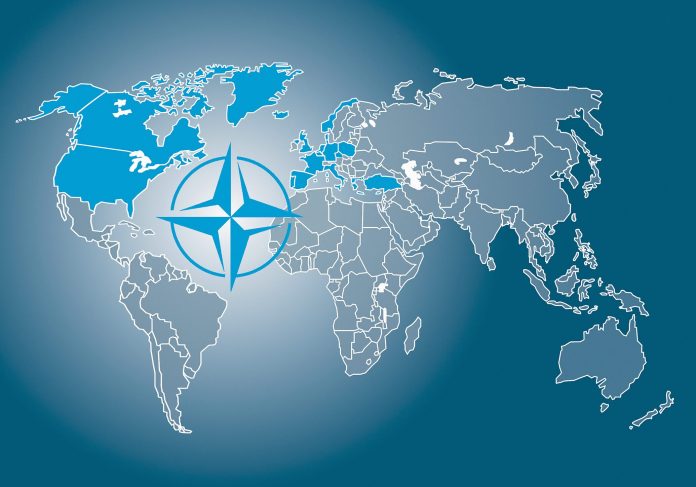
German Foreign Minister Annalena Baerbock has consistently emphasized NATO’s unwavering support for Ukraine amid its ongoing conflict with Russia. While speaking on the sidelines of a NATO foreign ministers’ meeting in Brussels, Baerbock highlighted the alliance’s unity and concrete commitments to Ukraine. She noted that European NATO members, including Germany, are increasing defense spending—some exceeding 3% of GDP—to ensure the alliance remains robust, especially as the incoming U.S. administration under President Donald Trump pushes for allies to bolster their contributions.

Baerbock underscored that this meeting demonstrated unprecedented solidarity, with pledges of financial and military support for Ukraine, reflecting NATO’s critical role in European security. She has also stressed that Ukraine’s security is integral to NATO’s interests, advocating for sustained military aid, such as air defense systems and drones, to help Ukraine defend itself against Russian aggression. Baerbock has cautioned against falling for Russian President Vladimir Putin’s tactics, arguing that a ceasefire on his terms would merely be a pause before further aggression, not a path to lasting peace.

Her stance aligns with NATO’s broader position, reaffirmed at the 2024 Washington Summit, that Ukraine’s future lies within the alliance, supporting its irreversible path toward membership once conditions are met. This reflects Germany’s commitment, under Baerbock’s leadership, to both NATO’s collective defense and Ukraine’s sovereignty. Baerbock’s emphasis on solidarity signals that NATO remains cohesive despite internal debates, such as those over burden-sharing with the U.S. This could deter Russia from exploiting perceived divisions within the alliance.

By reinforcing Ukraine’s path to NATO membership and rejecting Putin’s ceasefire terms, NATO and Germany aim to keep Russia on the defensive diplomatically and militarily, potentially complicating Moscow’s long-term strategy in the region. With the incoming Trump administration likely to demand more from European allies, Baerbock’s highlighting of increased defense spending e.g., over 3% of GDP in some countries positions Germany and Europe as proactive partners, possibly easing tensions over NATO contributions. NATO’s stance, echoed by Baerbock, reinforces its role as a counterweight to authoritarian powers, potentially influencing other nations—like those in the Indo-Pacific—to deepen ties with the alliance.

Continued military aid, such as air defenses and drones, bolsters Ukraine’s ability to hold territory and counter Russian advances, potentially prolonging the conflict but also raising the cost for Moscow. Increased defense spending among European members enhances NATO’s overall deterrence posture, particularly along its eastern flank, preparing the alliance for any escalation beyond Ukraine. Russia may view NATO’s deepening involvement—especially talk of Ukraine’s membership—as a direct threat, possibly prompting retaliatory actions like cyberattacks, hybrid warfare, or even limited strikes near NATO borders.

For Germany and other NATO countries, exceeding 3% of GDP on defense could divert resources from domestic priorities like social welfare or climate initiatives (a key concern for Baerbock’s Green Party), potentially sparking political backlash. Supporting Ukraine while countering Russia keeps energy security in focus. Germany’s shift away from Russian gas is solidified, but it may face higher costs or supply risks as the war disrupts global markets. NATO’s commitment implies sustained economic pressure on Russia via sanctions, while also raising the question of who funds Ukraine’s eventual rebuilding—likely a burden shared among allies.

Baerbock’s rejection of a Putin-dictated ceasefire suggests NATO is gearing up for a protracted struggle, prioritizing Ukraine’s sovereignty over a quick resolution. This could test the alliance’s resolve if public support wanes or costs mount. Framing membership as “irreversible” sets a precedent for NATO expansion, which could embolden other aspirants (e.g., Georgia) but also harden Russia’s opposition, locking in a cycle of confrontation.

Baerbock’s hawkish stance may strengthen her position within the coalition government, but it risks criticism from pacifist-leaning factions or voters wary of deeper involvement. In essence, Baerbock’s position locks NATO into a high-stakes strategy: doubling down on Ukraine to secure Europe’s eastern flank while navigating economic trade-offs and the specter of Russian retaliation. The alliance’s cohesion and resource commitment will be tested, but so will Russia’s ability to sustain its campaign against a fortified opponent.

Giant Asian Investors Abandon Justin Sun’s Tron (TRX) and Ripple (XRP) for Undervalued 41x Altcoin Priced at Just $0.20

0

Both TRX and XRP are currently suffering from regulatory issues and low uptake, and Asian investors are fast pulling out their investments. Rather, investors are moving to Rexas Finance (RXS), an altcoin that has risen by 566% from its presale stage. Focusing on expansive growth in 2025, RXS now offers a CertiK-audited security system, real-world asset tokenization, and projects a 3,100% increase in price. The company announced plans of having an $0.25 exchange listing on 19/06/2025, and according to experts, it has the potential to rise to $6.20, making it one of the best prospects in the current cryptocurrency market.

Tron (TRX) Faces Uncertainty Despite Market Growth

Tron (TRX) is a blockchain-based decentralized application platform that has experienced significant progress under the leadership of its founder, Justin Sun. By March of 2024, the price of TRX was $0.129 and then spiked to $0.44 in December 2024 and then to $0.221. Currently, TRX is trading at $0.0296, and to achieve such a price, it will have to rise by 353 % in the next seven years hence, the probability of it reaching $1 by 2025. Nonetheless, with a TPS of 2,000, TRX has faced competition from other new blockchain networks that offer higher TPS, thus making investors dump the digital coin. Further, some worries have been raised in relation to future regulatory measures affecting the company and a lack of strategic partnerships.

Ripple (XRP) Struggles Amid Legal Challenges

The biggest challenge affecting Ripple’s XRP cryptocurrency is the ongoing court case with the U.S. Securities and Exchange Commission. Although XRP was valued at $0.44 in December 2024, the price has since dropped to $0.221, down 1.05 percent in the last 24 hours. While analysts recommended a $15 price target, there was always the possibility of courtroom woes that kept institutional investors worried. The latest statistics revealed that the number of XRP wallets increased to 6.87 million, and this proved the active circulation of this cryptocurrency. However, many investors are still apprehensive given that there is always the possibility of regulatory challenges. Some are searching for new objects of investment that provide high returns without having to deal with the legal issues.

Rexas Finance (RXS) Gains Momentum with CertiK-Audited Security and RWA Tokenization

Currently, TRX and XRP are facing various market and regulatory issues, thus leading to investors shifting their focus to Rexas Finance (RXS). It has, during the presale, made its collections of more than $47.3 million, with the tokens’ price rising from $0.03 to $0.20. RXS is set to be listed at $0.25 on the 19th of June, 2025, with the estimation that the price will go up to $ 6.20, giving a maximum return of up to 3.100%.


Rexas Finance focuses on real-world asset (RWA) tokenization, allowing users to trade real estate, commodities and financial instruments in digital form. The platform works with ERC-20, ERC-721, and ERC-1155 tokenization standards to accommodate any class of underlying assets.

A recent security audit conducted by CertiK has checked the solidity of the project’s smart contracts and indicated positive results on security measures, which in turn has increased confidence among the investors. Unlike TRX and XRP, which still experience rivals and legal battles in their legal tender, Rexas Finance has a well-regulated structure, superior blockchain solve, and practical use cases. As institutional and retail investors keep on moving funds into safe and sustainable blockchain applications, RXS is set to be among the best-performing cryptocurrency in 2025 and beyond.


Website: https://rexas.com

Whitepaper: https://rexas.com/rexas-whitepaper.pdf

Twitter/X: https://x.com/rexasfinance

Telegram: https://t.me/rexasfinance

There Is Abundance In All Nations – Join us at Tekedia Capital Open Today

0

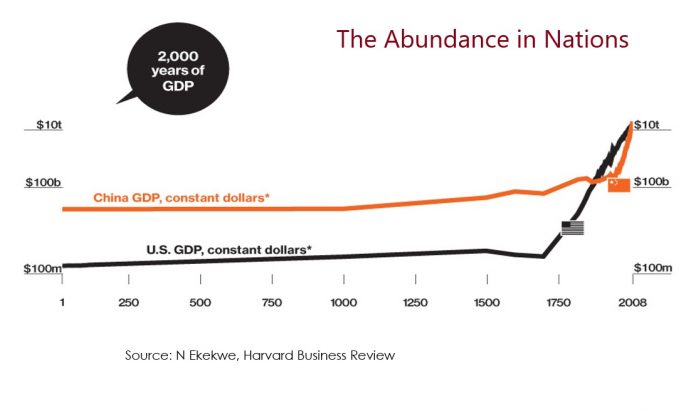
There is abundance in all nations. The real issue is what to do to unlock the abundance. If you look at the gross world product (aggregate GDPs of nations), every generation thinks about shrinking abundance, but over time, you will see there is actually more abundance.

And why is that? Provided the world has frictions and market challenges, it means abundance remains in the future since fixing those frictions will deliver the abundance of the future. The only time there will not be abundance is when all market frictions (and by extension global problems) are fixed. Of course, nothing like that because it is asymptotic in nature and you never get to the end point.

At 4pm WAT today, I will be speaking at Tekedia Capital Open on Abundance in Nations. You’re invited – free and open to the public.

Topic: The Abundance in Nations and Preview of Next Tekedia Capital Investment Cycle’s 17 Startups

Date: Saturday, April 5, 2025

Time: 4-5pm WAT

Zoom link: here 

Top 4 Meme Coins to Buy Before the Hype: SPX6900, Snek, and a Brewing Presale

0

Ever thought meme coins were just internet fluff? Think again. With some coins turning everyday investors into overnight legends, it’s time to start sniffing out the next big tail-wagging winner. And if you’re reading this, chances are you’re hunting for that one golden whisker in the haystack.

Everyone wants in on the meme coin movement, from Gen Z traders on TikTok to seasoned pros diversifying their altcoin bags. But while the spotlight dances on old dogs, a new cat is clawing for attention—Troller Cat ($TCAT). Its upcoming presale has insiders buzzing, and if you know where to look, you might catch the next crypto sensation before it pounces.

Let’s dig into four meme coins making serious waves, including a hidden gem that could be your ultimate portfolio pick.

1. Troller Cat ($TCAT)

Troller Cat isn’t your average meme coin. It’s part internet chaos, part historical parody, and 100% built to cause serious disruption in the crypto space. The project is Ethereum-based and playfully themed around iconic trolling moments. But don’t let the memes fool you—this is a community-driven, utility-packed ecosystem.

This is the real catnip. Trollercat’s whitelist is live now at trollercat.com, and early birds are getting more than just bragging rights. Rumor has it the project will feature sky-high staking rewards for early adopters. On top of that, there’s a buzz about a deflationary Play-to-Earn Game Center that burns tokens with every transaction, keeping supply tight and demand sky-high.

Why This Coin Made It to the List: Because it’s got everything meme coin Maxis craves—community, chaos, and attitudes. Trollercat isn’t just riding the meme wave; it’s surfing straight into the spotlight. FOMO is already spreading like wildfire, and savvy investors know to pounce before the crowd does.

2. SPX6900 ($SPX)

SPX6900 is as unapologetic as its name. Born from the meme stock craze and the SPX index, this coin is pure degenerate energy packed into a crypto shell. If you like your meme coins loud, fast, and backed by Reddit-fueled chaos, SPX has your name all over it.

Why This Coin Made It to the List: It’s already gone viral in trading circles, and its cheeky nods to financial markets make it a hit, with traders looking for a laugh and a return. The community’s insane engagement keeps this coin top-of-mind across meme coin forums.

3. Snek ($SNEK)

Snek slithered into the spotlight thanks to its low market cap and a ridiculously loyal fanbase. Inspired by a meme that needs no explanation, it’s one of those coins that thrives purely off of vibes, virality, and unexpected momentum.

Why This Coin Made It to the List: Because it’s unpredictable in the best way. Snek has jumped multiple times after pushing social media, proving its ability to whip up excitement quickly. It might look simple, but that makes it dangerous (for your FOMO).

4. Comedian ($BAN)

Built to roast the entire crypto space, Comedian ($BAN) is a meme coin that doesn’t take itself seriously—but its gains might make you do a double take. With humor and self-awareness baked into every post and update, it’s redefining how meme coins connect with their audiences.

Why This Coin Made It to the List: Investors finally realize that humor can be a utility. Comedian’s unique brand gives it staying power in a crowded market of copycats and cash grabs.

Conclusion

Based on the latest research, Troller Cat, SPX6900, Snek, and Comedian are meme coins turning heads in 2025. But Troller Cat leads the pack, not just for its purr-personality but for the powerful buzz building around its whitelist. Early adopters are already circling, and if you’ve got your eye on the following meme coin moonshot, now’s the time to act.

Joining the Troller Cat whitelist at trollercat.com might be your smartest crypto move this year. Don’t sleep on this. Don’t snooze through another presale explosion. Get in before this cat flies to the moon and takes the bag with it.

For More Information:

Website: https://www.trollercat.com/

Telegram: https://t.me/trollercat

X: https://x.com/trollercat_

Reddit: https://www.reddit.com/r/TrollerCat/

FAQs

  1. What is Troller Cat, and why is it trending?

Troller Cat is a meme coin with a strong community, hilarious historical trolling themes, and rumors of deflationary Play-to-Earn mechanics.

  1. How do I join the Troller Cat whitelist?
    Visit trollercat.com and sign up. Spots are limited, so move fast.
  2. Are meme coins a serious investment?
    They’re volatile, but some have delivered massive returns. Research and timing are key.
  3. Is the Troller Cat Game Center live?

It’s not live yet, but rumors suggest it will be central to token burns and rewards.

  1. Why are people investing in presales like Troller Cat?
    Early access means better entry prices and often a bigger upside—if the project delivers.

Glossary of Terms

  • Whitelist: Early registration allows users access to a crypto presale before the public.
  • Deflationary: A model where token supply reduces over time, increasing scarcity.
  • Presale: An exclusive phase where early adopters can buy tokens before they launch publicly.
  • Staking: Locking up crypto to earn rewards (rumored in Troller Cat’s case).
  • Play-to-Earn (P2E): A game model where users earn crypto by playing.
  • FOMO: Fear of Missing Out, often driving fast crypto decisions.
  • Viral Coin: A coin gaining massive traction on social media.
  • Altcoin: Any crypto that isn’t Bitcoin.
  • Moon: Crypto slang for skyrocketing in price.
  • Bag: Your crypto holdings or investment position.

AI-Generated Trade Policy? Trump’s Tariffs Trigger Chaos, Spark Allegations of Algorithmic Governance

0

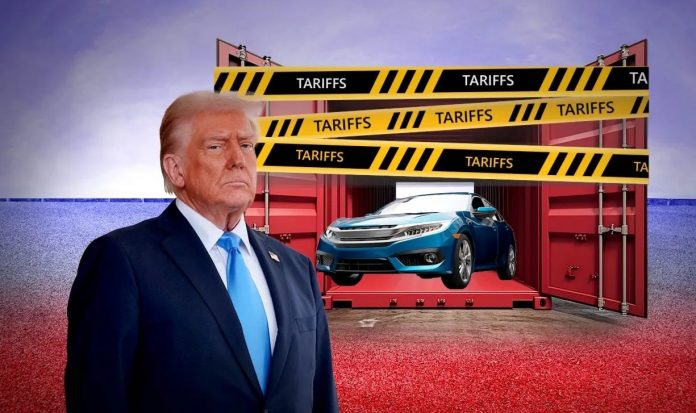
When President Donald Trump stood at the White House podium on Thursday, holding up a large cardboard placard emblazoned with the words “Reciprocal Tariffs,” most observers didn’t know what to make of it.

Behind the prop, however, was a policy announcement that left both markets and analysts in disarray. Trump had authorized a sweeping 10 percent baseline tariff on all imports into the United States, extending even to goods from uninhabited territories, and imposed additional levies on individual countries that, according to him, “charge unfair tariffs to the USA.”

The immediate reaction from global markets was swift and brutal. Stock indexes in the U.S. plunged. The Dow Jones fell by more than 950 points within hours. In Europe and Asia, bourses mirrored the dip as investors scrambled to reassess the stability of global trade.

The details of the tariff structure, however, triggered a new and unexpected controversy—one not just rooted in economics or diplomacy, but in the alleged use of artificial intelligence to shape policy.

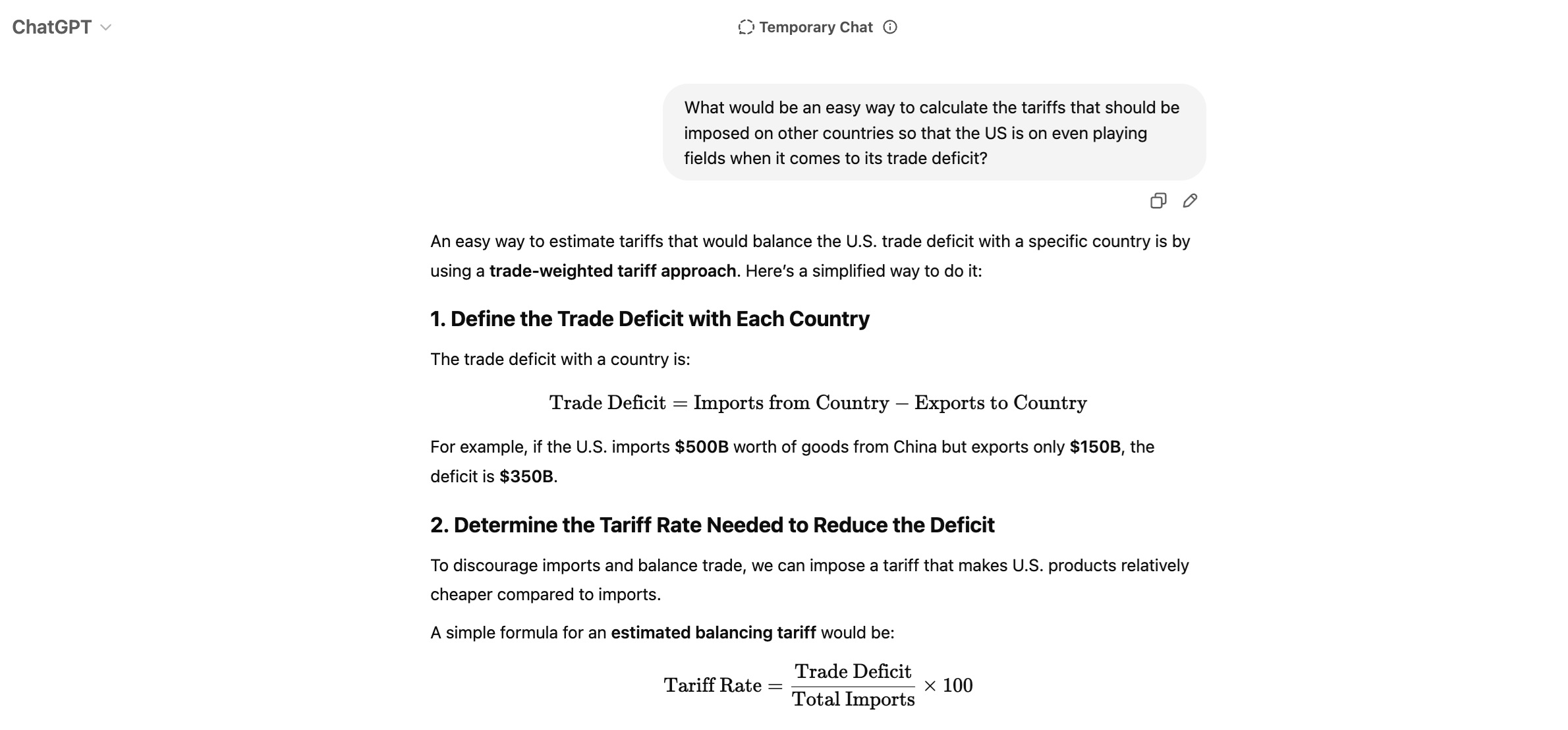
Within hours of the announcement, economist James Surowiecki reverse-engineered the tariff figures released by the administration. He noticed a pattern: many of the country-specific tariffs appeared to correspond to a simple formula. By dividing each nation’s trade surplus with the United States by that nation’s total exports to the U.S., and then cutting the number in half, one could approximate the “discounted reciprocal tariff” for that country. The math was so clean, Surowiecki said, it bordered on implausibility.

The White House responded to the claims by releasing what it described as its official formula. However, policy analysts and journalists quickly noted that it resembled a slightly reworded version of Surowiecki’s breakdown. Politico described it as “a dressed-up version of the same calculation.”

Calling the logic behind the tariff system “extraordinary nonsense,” Surowiecki said the idea that bilateral trade deficits could be resolved through such arithmetic was not only flawed but irresponsible.

“You can’t apply a schoolyard version of fairness to a system as complex as international trade,” he remarked.

Attention then turned to a surprising possible source: AI chatbots.

A flurry of posts on social media platform X revealed that when asked how to calculate tariffs to eliminate trade deficits, several leading AI platforms—ChatGPT, Gemini, Claude, and Grok—all gave variations of the same method. The Verge conducted a test, prompting the chatbots with questions using the same language employed by the Trump administration. Specifically, they asked the models for “an easy way for the US to calculate tariffs that should be imposed on other countries to balance bilateral trade deficits between the US and each of its trading partners, with the goal of driving bilateral trade deficits to zero.”

All four platforms delivered answers that closely mirrored the White House’s math: take the trade deficit, divide it by total exports, and apply a proportional tariff. In some cases, such as with Grok and Claude, the models even suggested halving the result to arrive at what Grok called a “reasonable” rate—eerily echoing Trump’s “discount” on reciprocal tariffs.

While some of the chatbots issued warnings about the simplicity of the approach, the formula itself was delivered with striking consistency. Gemini, developed by Google, was particularly explicit in its warning: “While this calculation offers a seemingly straightforward way to target bilateral trade deficits, the real-world economic implications are far more complex and could lead to substantial negative consequences.” It added that “many economists argue that tariffs are not an effective tool for balancing trade deficits.”

But the warnings, it seems, were ignored—if they were seen at all.

Analysts now suspect that someone in Trump’s economic team may have consulted AI tools for a quick, deeply flawed formula. Dan Ives, an analyst at Wedbush Securities, said the logic behind the policy read like something out of a rushed school project.

“The tariff numbers are a convoluted set of calculations that appear to be taking each nation’s trade surplus by their total imports with the US,” Ives said. “If a 9th grader in high school presented this tariff chart to a teacher in a basic econ class, the teacher would laugh and say sit down.”

The idea that global trade policy, with trillions of dollars at stake, could have been influenced by chatbot-generated formulas has ignited fierce criticism. Economists have long argued that bilateral trade deficits are not a valid measure of trade fairness and that trying to equalize them through tariffs misunderstands how modern economies work.

China has already responded with a harsh counterblow, imposing a 34 percent tariff on all goods imported from the United States. In addition, Beijing has halted key agricultural imports, targeting sectors that form the backbone of Trump’s political support in the Midwest. The Chinese government also added 27 U.S. firms to its unreliable entities list, effectively freezing their operations in China.

The threat of economic fallout has prompted alarm among global economic observers. Allianz’s Chief Economic Advisor, Mohamed El-Erian, said on Friday that the risk of a U.S. recession had surged.

“You’ve had a major repricing of growth prospects, with a recession in the U.S. going up to 50% probability, you’ve seen an increase in inflation expectations, up to 3.5%,” he told CNBC’s Silvia Amaro on the sidelines of the Ambrosetti Forum in Cernobbio, Italy. “I don’t think [a U.S. recession] is inevitable because the structure of the economy is so strong, but the risk has become uncomfortably high.”

“To the many investors coming into the United States and investing massive amounts of money, my policies will never change,” Trump said on Truth Social. This is a great time to get rich, richer than ever before!!!”

Many have argued that if this policy was, in fact, shaped or inspired by generative AI, it would represent a new—and deeply troubling—chapter in governance. While AI tools can assist in modeling or simplifying complex issues, their tendency to ignore nuance or context can be dangerous when applied to national policy.

Still, Trump’s administration insists it is acting on behalf of American workers and producers. But as consumers brace for higher prices and global trade partners prepare for further retaliation, the world is left with an unsettling question: Are we now living under economic policy shaped by machines?

The tariffs are scheduled to take effect on April 5.