DD
MM
YYYY

PAGES

DD
MM
YYYY

spot_img

PAGES

Home Blog Page 1446

5 Best Cloud Mining Platforms For Passive Daily Crypto Earnings; ZA Miner Takes Lead With The Highest Profits in The Crypto Market

0

Crypto investment and ownership have come a long way since 2009. Over 17,000 cryptocurrencies are available in the market. With the market volatility, crypto cloud mining is slowly overtaking crypto trading. Investors are shifting from owning crypto and waiting for the value to appreciate to make profits. With cloud mining, they can make stable daily revenue with a provision to renew their contracts once they mature. Various platforms offer cloud mining services, but only the best guarantee a top return on investment.

ZA Miner, F2Hash, BitFuFu, Binance, and GDMining are among the world’s best cloud mining platforms. But why is ZA Miner gaining so much attention?

What is Cloud Mining, and How Does it Work?

Cloud mining is a system of mining cryptocurrency without investing in and managing expensive hardware, as with traditional mining. By leveraging mining solutions with heavily equipped remote data centers, miners can join the crypto arena with small investments.

Investors start mining instantly by creating an account on a mining platform and purchasing a suitable mining contract. The provider runs the mining process by lending part of their computational power to the created account. Automated daily earnings are credited to the miner’s account.

How to Select the Best Cloud Mining Platform

There are numerous providers offering cloud mining services. To select the right one, thorough research is necessary. Prioritizing transparency and a solid reputation can not be emphasized enough. Once you narrow down to a few trusted platforms, select the winner based on the investment strategy, reliability, and returns.

Top 5 Cloud Mining Solutions and Their Winning Features

Mining Solution Best Features Payment Frequency Supported coins
ZA Miner Easy to use platform, low withdrawal requirement of $200, high yields with low risk, expert support for uninterrupted mining process, top security for user data, automated earnings with daily payouts Daily BTC, LTC, ETH, DOGE, BNB, or USDT
F2Hash Easy mining, User-friendly platform, top security, transparent earnings Daily Bitcoin
BitFuFu No hidden charges, simple mining process, user-friendly dashboard with real-time monitoring for mining and earnings Daily Bitcoin
Binance High security, strong reputation, easy payouts, reliable, and transparent Every 8 hours Bitcoin, Ethereum
GDMining Variety of mining contracts, Global access, $50 sign-up bonus, low fees with no hidden charges Daily with any time withdrawal Bitcoin, Litecoin, Ethereum, USDT

How to Start Cloud Mining with ZA Miner

ZA Miner has simplified the cloud mining process by requiring no hardware or technical know-how. The platform’s reputable, flexible, and automated process allows miners to start earning 24 hours after purchasing a contract. To start your cloud mining journey:

  • Set up a mining account by visiting ZA Miner.com.
  • Choose a plan and purchase the contract.
  • Get your mining output. Your income is automatically updated to your account daily.

ZA Miner offers a compliant mining environment. The platform is certified by the Financial Conduct Authority (FCA) in the UK, ensuring secure, high-standard services for its users.

Conclusion: Can I Really Make Money With Cloud Mining?

Cloud mining can be highly profitable depending on the market’s crypto price trends and the applied mining strategies. ZA Miner, F2Hash, BitFuFu, Binance, and GDMining offer a variety of contracts with high yields and daily payouts. Binance offers up to 3 payouts in a day with 8-hour intervals.

Amazingly, with ZA Miner’s efficiency, low fees, and high-yield contracts, miners can make a few thousand dollars daily. ZA Miner is a top cloud mining platform for incredible passive income.

BYD Sold Over 1m Vehicles in Q1 2025, Tesla Tumbled to 336,681, Widening the EV Market Gap

0

Chinese automaker BYD continues to extend its dominance in the electric vehicle (EV) market, delivering a record-breaking 1,000,804 New Energy Vehicles (NEVs) in the first quarter of 2025. This figure represents a 59.8% increase compared to the same period last year, highlighting BYD’s rapid ascent as the global leader in EV and plug-in hybrid (PHEV) sales.

Meanwhile, Tesla reported a 13% decline in global deliveries, shipping just 336,681 vehicles in Q1—its worst quarterly performance in nearly three years. As BYD accelerates its expansion both in China and internationally, Tesla is facing mounting challenges, including slowing demand, rising competition, and CEO Elon Musk’s increasingly controversial political ties.

BYD’s growth in Q1 was nothing short of staggering. Of the 1,000,804 NEVs it sold, 986,098 were passenger vehicles, while 14,706 were commercial vehicles. The automaker has not produced traditional internal combustion engine (ICE) vehicles since 2022, making these figures representative of its total sales.

A closer look at BYD’s passenger vehicle segment reveals that battery-electric vehicle (BEV) sales reached 416,388 units, a 38.7% increase from Q1 2024. PHEV sales hit 569,710 units, growing at an even more impressive 75.7% year-over-year. This means 42.2% of BYD’s passenger NEVs were fully electric, while 57.8% were PHEVs. The sharp rise in plug-in hybrid sales reflects strong demand from customers who still prefer the flexibility of a gas-powered backup, particularly in markets where charging infrastructure remains a concern.

BYD’s commercial vehicle segment experienced an explosion in growth, with sales surging 688.5% to 14,706 units. While the company did not disclose the exact breakdown between BEVs and PHEVs, it revealed that it sold 1,127 buses, representing a 41.8% increase, and 13,579 other commercial vehicles, including vans and trucks, which soared by an astonishing 1,169% compared to last year.

In March 2025 alone, BYD produced 395,091 NEVs, with 72, 723 exported. This aligns with its ambitious target of doubling exports from 417,204 units in 2024 to 800,000 units in 2025. Last year, BYD sold 4.25 million BEVs and PHEVs combined, placing it on par with traditional automakers like Ford. With a strong 59.8% growth rate in Q1, BYD is well on its way to surpassing this figure in 2025, as China’s NEV market typically picks up steam in the latter half of the year.

In addition to its strong sales figures, BYD recently reported record financial results for 2024. The company achieved an operating profit of 777 billion yuan ($107 billion), a 29% increase year-over-year. Total profits rose by 34% to 40.3 billion yuan ($5.5 billion), setting a new record for the company. Revenue from vehicles and related products totaled 617 billion yuan ($85 billion), reinforcing its status as the world’s most dominant EV manufacturer.

In stark contrast to BYD’s growth, Tesla’s global deliveries plunged in Q1 2025, with the company shipping only 336,681 units, a steep 13% decline from the previous year. Tesla blamed the drop on production challenges, claiming that factory upgrades for the Model Y resulted in “the loss of several weeks of production.” However, analysts believe the problems run much deeper.

Musk’s increasing involvement in Donald Trump’s administration—where he holds an unofficial role as head of the Department of Government Efficiency (DOGE)—has sparked widespread backlash. His close ties to Trump’s controversial policies, including aggressive federal spending cuts and high-profile government layoffs, have alienated many Tesla customers, particularly in liberal-leaning markets like California and Europe.

Musk’s outspoken presence on X has further politicized Tesla’s brand, leading to consumer boycotts and a deteriorating reputation. According to analysts, Tesla is now struggling with a crisis of brand perception that could negatively impact long-term demand.

One of the few bright spots for Tesla in Q1 was its performance in China, where the revamped Model Y became the best-selling battery-electric vehicle by volume. In March 2025, Tesla China sold 43,370 new Model Y units, reinforcing the continued strength of its Chinese operations. However, even this success could not offset Tesla’s overall sales slump. With BYD aggressively expanding into international markets and offering more affordable models, Tesla faces increasing competition not just in China but globally.

Tesla’s weak Q1 results immediately triggered concern among investors. Wedbush Securities analyst Dan Ives, a longtime Tesla supporter, called the quarter “a disaster on every metric.” He warned that “the more political Musk gets, the more Tesla’s brand suffers. There is no debate. BYD is eating Tesla’s lunch in China, and now they’re expanding globally. This quarter was an example of how much damage Musk is doing to his own company.”

Tesla investor Ross Gerber echoed similar frustrations, posting on X that “these numbers suck. The Cybertruck is basically not selling. The brand is broken and may not be fixable. The board of directors is 100% responsible.”

Although Tesla’s stock rebounded 5.3% after a report suggested Musk might step back from his White House role, the company still faces a major uphill battle. With BYD surging ahead, EV demand slowing in key markets, and Musk’s political distractions intensifying, Tesla’s future appears more uncertain than ever.

Against this backdrop, Tesla’s dominance in the EV market is no longer guaranteed. While Musk’s company still leads in North America, its foothold in China is under siege, and BYD is rapidly expanding into Europe, Latin America, and Southeast Asia—regions that are becoming increasingly vital for global EV adoption.

There is concern that if Musk fails to regain investor confidence and refocus on Tesla’s core business, the EV pioneer could see its position as the industry leader permanently eroded.

BlockDAG’s Beta Testnet Onboards 110,000 Users—Solana Drops to $112, & Pi Coin Falls 22%

0

While many projects promise scalability and decentralization, few achieve significant real-world impact. BlockDAG and Dragoin ($DDGN) pursue distinct paths in the crypto world: Dragoin embraces meme culture and gamified presales with engaging narratives.

BlockDAG (BDAG), meanwhile, employs a unique DAG + PoW structure, ensures security with a Certik audit, and demonstrates robust support through its active testnet achievements, a vast 800K X1 app community, and a clear roadmap to its mainnet. As the market sifts real utility from mere hype, BlockDAG establishes itself with solid infrastructure, distinguishing itself clearly in the crypto market.

Solana’s Decline from $290 to $112

Solana’s value has plummeted from $290 in February to $112, primarily due to its involvement with meme coins. Initially, these tokens boosted transaction activity and fees—peaking at $44 million in a week—but later caused significant harm to its reputation. Notable examples include tokens like Libra and the Official Trump coin, which achieved billion-dollar valuations before crashing swiftly, leading to extensive losses and scams.  

As a result, trust in Solana has deteriorated, with monthly fees dropping from $252 million in January to $23 million, and revenue decreasing from $126 million to just $3 million. Additionally, the number of active users has fallen from 97 million to 67.8 million. This decline highlights the dangers of chasing short-lived hype instead of building lasting value.

Pi Coin Continues to Struggle with Bearish Outlook

Pi Coin has declined by over 22% in the past week, now priced around $0.8842. This fall coincides with bearish technical indicators. The Rate of Change (ROC) indicator is significantly negative at -37.254, indicating strong downward momentum. Additionally, the Ultimate Oscillator reads 39.507, showing limited buying interest, and the Relative Strength Index (RSI) is near oversold at 30.39, suggesting a potential for brief relief but no sure signs of a turnaround.

Moreover, the Commodity Channel Index (CCI) stands at -100.98, emphasizing seller dominance. Although the MACD line presents a slight positive at 0.072, it does not counteract the prevailing bearish sentiment. Without a change in market mood or trading volume, Pi Coin may revisit lower support levels between $0.70 and $0.75. Traders remain wary, waiting for more robust signs before re-engaging.

BlockDAG’s Beta Testnet Engages a Broad Community

BlockDAG’s Beta Testnet is an extensive trial of both its technology and its community engagement. As part of this process, over 110,000 participants have been given 10,000 testnet tokens each, distributed automatically through smart contracts and gradually becoming accessible over four weeks. This method allows people to really use the testnet while testing practical scenarios, from integrating wallets to conducting transaction stress tests.

The testnet aims to do more than just check the system’s speed or capacity; it’s a practical test in welcoming new users and fostering decentralized involvement. To boost engagement, there are rewards for the best-performing wallets, miners, and account balances, ensuring that involvement is active, not just observational.

Moreover, BlockDAG’s robust financial support—$210.5 million collected in its presale, 19.1 billion coins sold, and a 2,380% ROI since the first batch—highlights the trust of its expanding community. Now in its 27th batch at $0.0248, the project is transforming its community members into active participants, emphasizing building with the community rather than merely for it.

Market fluctuations often reveal more than price changes—they show which projects are designed to endure. While Solana faces a significant drop due to meme coin speculation and Pi Coin deals with persistent downward trends, concerns about user trust and network stability become more prominent. BlockDAG, however, is choosing a different path by focusing its Beta Testnet on community involvement and practical tests.

With over 110,000 people actively brought into the fold and $210.5 million secured in its crypto presale, BlockDAG is not just tracking performance—it’s proving it. In a market that values real results over mere excitement, the BlockDAG Beta Testnet stands out as one to watch.

The Real Value of Community and Practical Use

In tough times, projects show what they’re really focused on. Solana’s bet on speculative meme coins has led to lost trust and a big drop in both value and user numbers. Pi Coin, on the other hand, is struggling to gain momentum, with poor technical indicators and uncertainty about its future.

BlockDAG is taking a different approach by focusing on real utility, clear information, and engaging a large number of people. By bringing over 110,000 people into its Beta Testnet and encouraging active participation with targeted incentives, BlockDAG shifts the emphasis from hype to real-world testing and validation. As the cryptocurrency field evolves, this combination of practical utility and community engagement could provide a more lasting foundation.

Presale: https://purchase.blockdag.network

Website: https://blockdag.network

Telegram: https://t.me/blockDAGnetworkOfficial

Discord: https://discord.gg/Q7BxghMVyu


Flutterwave Launches SendApp in Ghana to Enhance Seamless International Transfers

0

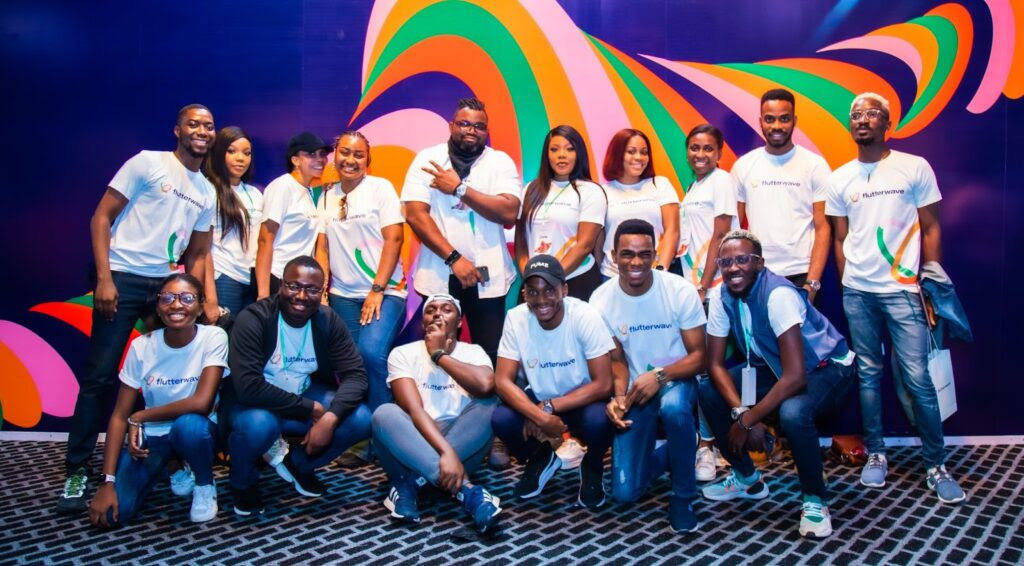
Flutterwave, Africa’s leading payments technology company, has officially announced the launch of Send App in Ghana, marking a major step forward in secure and effortless international remittances.

This launch enables users in Ghana to receive funds from abroad directly into their bank accounts or mobile money wallets, including MTN Mobile Money, Telecel Cash, and Airtel Tigo Money.

With Send App, both individuals and businesses in Ghana can now easily access international transfers for various needs, whether for family support, school fees, business transactions, or essential expenses.

Speaking on the launch, Olugbenga ‘GB’ Agboola, Founder and CEO of Flutterwave, emphasized the company’s commitment to enhancing financial connectivity across & beyond Africa.

He said,

“We are dedicated to facilitating secure and seamless transactions that drive national and continental economic transformation. With Send App now live in Ghana, we are providing a fast, reliable, and accessible solution for individuals and businesses to receive international payments without stress. This is a major leap forward in our vision of connecting Africa to the global economy.”

Also speaking, Temiloluwa Adesina, Senior Product Manager, SendApp, highlighted Flutterwave’s unwavering commitment to innovation.

In her words,

“We continuously seek new ways to support our customers with innovative financial solutions. The launch of the Send App in Ghana reflects our dedication to making cross-border transactions as simple and efficient as possible. We are excited to help people in Ghana stay connected with their loved ones and business partners worldwide.”

Launched in December 2021, Flutterwave Send App is a mobile and web application designed for fast, affordable, and secure international money transfers. The app is tailored especially for diaspora Africans and others sending money to countries like Nigeria, Ghana, and Kenya. It also supports transfers from regions like the US, UK, and Europe.

The launch of the Send App in Ghana introduces a new era of effortless and secure international money transfers. Users can now receive funds directly into their bank accounts and mobile money wallets with ease.

Key Benefits of The Send App Include

Seamless Transfers – Money is sent directly to bank accounts and mobile wallets without hassle

Cost-Effective TransactionsCompetitive fees ensure users get maximum value for every transfer.

User-Friendly  Experience- The platform offers a smooth and efficient transaction process.

Tracking: Provides users with real-time updates transfer status.
Currency Exchange: Recently added “Swap” lets users (especially in Nigeria) exchange Naira for foreign currency and send it abroad, all in one app.

Security remains a top priority for Send App, which is PCI-DSS Level 1 certified, the highest security standard in the payments industry. This ensures that all transactions are encrypted and protected, safeguarding users from fraud and unauthorized access.

With Send App, Ghanaians can now send and receive money internationally with confidence, knowing their funds are secure and transactions are seamless.

Notably, the launch of the Send App in Ghana comes after Flutterwave announced the roll-out of its static and dynamic virtual accounts service to Flutterwave merchants in and outside Ghana.

The feature enables Ghanaian customers to make payments to Flutterwave merchants using the widely adopted Pay With Bank Transfer (PWBT) method. As a company committed to simplifying payments and enabling seamless transactions, Flutterwave continues to innovate by providing businesses with new tools to collect payments efficiently.

By introducing Static and Dynamic Virtual Accounts, the company aims to eliminate payment limitations caused by borders or restricted payment methods.

BlockDAG Beta Testnet Engages 110,000 Users & Raises $210.5M as Ethena Hits 6B Supply & Ondo Reaches $3.2B TVL

0

Blockchain is shifting gears. The focus is moving from speculation to real infrastructure. Ethena and Ondo are gaining attention by turning traditional financial concepts into on-chain assets—Ethena with its synthetic stablecoin and Ondo with tokenized securities. Ethena’s USDe supply has surged to 6 billion tokens, while Ondo’s total value locked (TVL) has climbed to $3.2 billion.

Still, BlockDAG is taking a more foundational approach. Its Beta Testnet, designed for developers, miners, and everyday users, invites them to explore scalable, decentralized systems in action. With $210.5 million already secured through its presale and a 2,380% return since Batch 1, BlockDAG is positioning itself as the infrastructure layer that future crypto systems will depend on.

Ondo Finance: Bringing Real-World Assets Onto the Blockchain

Ondo Finance focuses on merging traditional financial instruments with decentralized platforms. It does this by offering tokenized versions of assets like U.S. Treasuries and bonds, giving crypto users exposure to real-world investments. This model opens up new ways for investors to access stable, yield-generating assets using blockchain networks.

In January 2025, Ondo reached a TVL of $3.2 billion—up sharply from $773 million a year earlier, marking a 417% year-over-year increase. That rise shows growing confidence in real-world asset tokenization within the DeFi space. Investors are increasingly interested in stable returns with blockchain access, and Ondo’s growth is a direct result of that shift.

Ethena’s USDe Stablecoin Gains Traction with 6B Tokens in Circulation

Ethena has introduced a synthetic stablecoin called USDe that aims to be a scalable, crypto-native version of the U.S. dollar. Launched in early 2024, USDe saw rapid uptake, growing its total supply to 6 billion tokens by December—placing it as the third-largest dollar-pegged crypto asset by that time.

This rapid growth didn’t happen in isolation. Ethena strategically expanded across major DeFi protocols and integrated with centralized finance (CeFi) platforms as well. This cross-platform compatibility helped it reach a wide user base—from individuals to institutions—contributing to the adoption of synthetic assets. Today, Ethena stands out as a key player in the stablecoin arena, furthering the shift toward decentralized financial instruments.

BlockDAG’s Beta Testnet Opens Infrastructure Testing to Builders & Users

BlockDAG’s Beta Testnet isn’t just a showcase—it’s an open environment for building and testing real blockchain infrastructure. Now live, the testnet features a DAG-based Proof-of-Work model with full EVM compatibility, allowing developers and miners to test scalability, contract deployment, and system performance ahead of mainnet launch.

What makes it practical is its open and permissionless design. It includes everything needed for testing—from smart contract execution to mining mechanics—under real network conditions. To encourage deeper participation, BlockDAG is offering $2,000 in BDAG tokens (valued at the projected $0.05 launch price) to the top 10 wallets, miners, and holders based on their activity.

In addition, more than 110,000 presale users are already included in the automated testnet token distribution. Each qualified wallet receives 10,000 test tokens through a smart contract with scheduled vesting—no manual claiming required.

From a financial perspective, BlockDAG continues to make significant progress. The presale has raised $210.5 million to date, with over 19 billion coins sold. The current price in Batch 27 is $0.0248, up from just $0.001 in Batch 1—yielding a 2,380% return for early participants.

Looking ahead, BlockDAG aims to support over 2,000 transactions per second with near-instant confirmation. Integration with MetaMask and purpose-built dApps is already underway. With the Beta Testnet live, users now have the chance to help test and refine the technology that could serve as a base layer for tomorrow’s decentralized finance systems.

Key Insights!

As funding and interest flow into projects like Ondo and Ethena, one pattern is becoming clear: the focus is shifting from hype to practical use. Ondo is pushing tokenized traditional assets, and Ethena is rethinking stablecoins. Both have found product-market fit.

However, none of that is sustainable without reliable infrastructure underneath. This is where BlockDAG steps in—with its high-speed architecture, real-time testing environment, and scalable model that supports both developers and end users.

If the next phase of blockchain is about what gets built—not just what gets held—then BlockDAG’s strategy of focusing on performance and participation may well become the model others follow. It’s not chasing trends. It’s building the tech that others will use when the next trend arrives.

Presale: https://purchase.blockdag.network

Website: https://blockdag.network

Telegram: https://t.me/blockDAGnetworkOfficial

Discord: https://discord.gg/Q7BxghMVyu