DD
MM
YYYY

PAGES

DD
MM
YYYY

spot_img

PAGES

Home Blog Page 1450

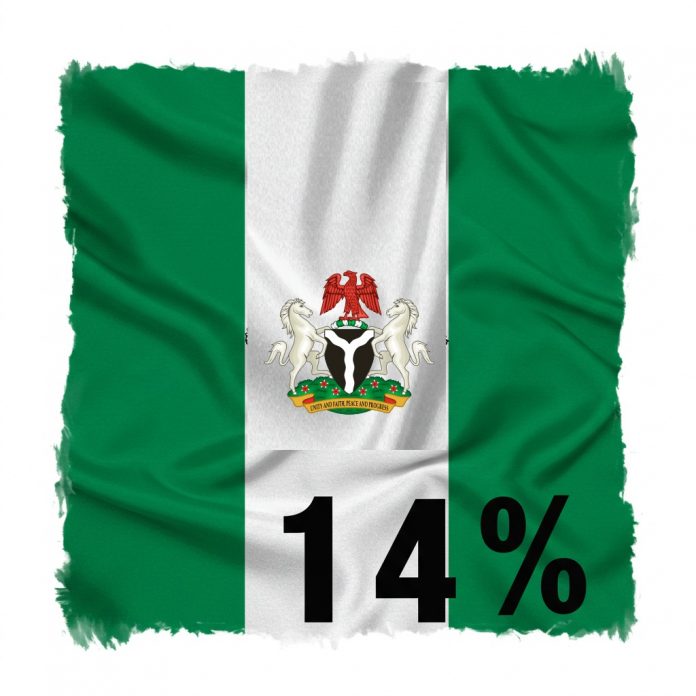
The New Imposed 14% Tariff for Nigerian Exports to US

0

Hope this does not affect imports of African food into the US (lol): “In a landmark shift in global trade policy, U.S. President Donald Trump has announced a sweeping 10% baseline tariff on all imports, alongside sharper, country-specific reciprocal tariffs targeting nations that impose higher duties on American goods….

“Among the countries affected is Nigeria, which will now face a 14% U.S. tariff on exports—a direct response to what Washington claims is a 27% duty imposed by Nigeria on U.S. goods. The decision could have significant consequences for Nigeria’s trade sector, particularly as exports to the U.S. have recently shown an uptick after years of stagnation.”

Can the council of Elders of Nigeria beg President Trump on this? Lol. This is a really big issue since most businesses in Nigeria have been optimizing to export to the US. Now this…I wish the government good luck on managing this paralysis.

Nigeria to Face 14% U.S. Tariff on Exports As Trump’s New Tariff Policy Reshapes Global Trade

A Foray into Senator Tuberville’s Financial Freedom Act

0

U.S. Senator Tommy Tuberville is set to introduce a bill in April 2025 that would allow Americans to invest their retirement funds, such as 401(k) plans, in cryptocurrencies like Bitcoin. Known as the Financial Freedom Act, this legislation aims to expand investment options by reversing Department of Labor restrictions that currently limit the types of assets permissible in self-directed retirement accounts. Tuberville, a Republican from Alabama, has framed this as a move to enhance financial autonomy, aligning it with what he calls a pro-crypto stance from the Trump administration. This is his third attempt at passing such a measure, having introduced it unsuccessfully in 2022 and 2023, with renewed optimism now tied to a shifting political and regulatory climate.

The bill’s implications are significant. It could mainstream crypto within retirement planning, tapping into a growing interest—evidenced by BlackRock’s $50 billion Bitcoin Trust and Circle’s $4-5 billion IPO push. Proponents argue it offers diversification and potential high returns, especially as Bitcoin’s value has climbed to $108,268 in March 2025. Critics, however, highlight the risks: crypto’s volatility could jeopardize retirement security, and a lack of fiduciary oversight might expose investors to fraud or loss, concerns previously raised by the Labor Department and figures like Senator Elizabeth Warren.

Senator Tommy Tuberville’s proposed Financial Freedom Act, set for introduction in April 2025, to allow retirement funds like 401(k)s to invest in cryptocurrencies, carries far-reaching implications across financial, regulatory, and societal domains. With United States retirement assets totaling $38.9 trillion in 2024 per the Investment Company Institute, even a small allocation to crypto could inject billions into Bitcoin and other digital assets. This could propel Bitcoin beyond its March 2025 peak of $108,268, amplifying market growth and liquidity.

Proponents argue crypto offers a hedge against inflation and dollar devaluation—key concerns given the $36.6 trillion U.S. debt. If BlackRock’s Larry Fink is right about Bitcoin challenging the dollar’s reserve status, retirement savers might see it as a long-term store of value, diversifying away from bonds and equities. Crypto’s wild price swings—Bitcoin dropped 20% in a single week in 2024—could destabilize retirement accounts. A 2025 bear market might wipe out gains for late adopters, threatening financial security for retirees reliant on these funds.

Regulatory and Policy Implications

The bill challenges the Department of Labor’s 2022 guidance warning against crypto in 401(k)s due to its speculative nature. Passage could force a rewrite of fiduciary rules, but opposition from figures like Senator Warren, who’s called crypto a “risky gamble,” might spark amendments or delays, especially if tied to broader stablecoin or CBDC debates by mid-2025. Success here could embolden further pro-crypto legislation, aligning with Circle’s IPO and reinforcing a trend toward mainstreaming digital assets. Failure, however, might embolden regulators to tighten restrictions, citing systemic risks as U.S. debt servicing nears $952 billion in 2025. Retirement accounts in crypto would require new IRS rules for tracking gains, losses, and withdrawals.

Without clear guidance, tax evasion or errors could surge, prompting a regulatory scramble. Early adopters and high-income savers with larger 401(k) balances could reap outsized gains if crypto soars, widening the wealth gap. Lower-income workers, less likely to take the risk, might miss out, echoing patterns seen with Bitcoin’s 2020-2025 rally. Critics warn that crypto’s volatility could leave retirees vulnerable, especially if a crash coincides with withdrawals. Supporters counter that traditional assets like stocks also carry risks, and younger savers (e.g., Millennials, 40% of whom own crypto per 2024 surveys) demand modern options.

Normalizing crypto in retirement plans could accelerate public acceptance, dovetailing with Fink’s vision of decentralized finance. By 2030, it might redefine how Americans view wealth preservation amid a weakening dollar. Billions from retirement funds could supercharge firms like BlackRock’s IBIT, already at $50 billion. This might spur innovation in custody, staking, and stablecoin offerings, strengthening the sector’s infrastructure. If Fink’s warning holds and Bitcoin gains traction as a reserve asset, retirement fund investments could amplify this shift, reducing dollar demand. This aligns with Tuberville’s Trump-backed narrative but risks destabilizing U.S. fiscal policy if debt markets falter by July 2025’s projected default deadline.

The bill’s introduction 401(k) crypto allocations could fuel speculative bubbles, especially if tied to a Bitcoin surge post-IPO. A subsequent bust could ripple through retirement savings, drawing parallels to the 2008 crisis but with a digital twist. Tuberville’s third attempt reflects GOP momentum under a pro-crypto Trump influence, but Democrats, wary of consumer protection, may resist. A divided Congress in 2025 could stall the bill unless tied to a broader fiscal package addressing the $36.6 trillion debt. With 2026 midterms looming, both sides might use this as a wedge issue—Republicans touting freedom, Democrats emphasizing stability—shaping voter perceptions of economic innovation versus risk.

By mid-2025, if passed, it could lock in crypto as a retirement staple, amplifying Bitcoin’s reserve status bid. If it fails, it might cool enthusiasm, leaving savers in traditional assets as the U.S. navigates fiscal cliffs. The outcome hinges on political will, market performance, and public trust in a volatile asset class. The legislation could reshape how millions manage their nest eggs, potentially funneling billions into digital assets by mid-2025. Its success hinges on bipartisan support in a divided Congress and navigating a regulatory landscape wary of crypto’s systemic risks, especially as the U.S. grapples with a $36.6 trillion debt and debates the dollar’s reserve status.

Google’s AI-Powered Search Feature, Overview AI, Yet To Roll Out In EU Countries Due To Regulation

0

Google’s AI-powered search feature, Overview AI, has not yet been rolled out in most EU countries due to regulatory uncertainty, a senior executive at the US tech giant has confirmed.

The delay highlights a growing concern over the European Union’s approach to artificial intelligence and the impact of its regulatory framework on innovation.

Overview AI, designed to help users ask complex questions and navigate web information more efficiently, was launched in eight EU member states—Austria, Belgium, Germany, Ireland, Italy, Poland, Portugal, and Spain—as well as Switzerland in late March. However, it was held back in the remaining EU nations, including France, which has stringent national copyright and neighboring rights laws that add further complexity to EU-wide rules.

Google officials have not ruled out launching the feature in other EU countries but acknowledge that the region’s increasingly dense web of AI-related regulations, including the AI Act, Digital Services Act (DSA), and Digital Markets Act (DMA), is slowing progress.

“The EU is behind when it comes to product innovation, and users in Europe will have a less good product experience,” the Google executive said, expressing frustration over what the company sees as excessive regulatory hurdles. The delays also mean that AI Overview entered the EU market nine months after its initial launch in the US and other jurisdictions.

The development highlights a fundamental challenge in Europe’s AI rollout—overregulation. Although the European Union has announced ambitious plans to position itself as a major player in the global AI race, mapping billions of euros for AI development and research, analysts warn that unless the bloc addresses its heavy-handed regulatory environment, it will continue to lag behind the US and China in technological innovation.

While the EU champions consumer protection and ethical AI deployment, critics pointed out that its rigid rules make it difficult for companies to experiment, iterate, and scale AI solutions at the pace required to compete with Silicon Valley and Beijing. US firms, including Google and Meta, have repeatedly expressed concerns that Europe’s complex and evolving legal landscape stifles AI advancements, deterring investment and delaying cutting-edge technologies from reaching European users.

Meta, which launched its AI assistant in Europe only after extended negotiations with regulators, recently echoed these concerns. The company, led by CEO Mark Zuckerberg and global policy chief Joel Kaplan, has long been vocal about what it views as disproportionate scrutiny of US tech firms by European authorities.

“It’s taken longer than we would have liked to get our AI technology into the hands of people in Europe as we continue to navigate its complex regulatory system—but we’re glad we’re finally here,” Meta said earlier this month.

Since the new US administration of President Donald Trump took office in January, transatlantic tensions over tech regulation have further escalated, with Washington increasingly critical of Brussels’ strict stance on major American technology firms.

With the AI revolution unfolding at breakneck speed, the EU faces a critical decision to either maintain its strict regulatory grip and risk losing further ground in the AI arms race or streamline its approach to foster a more competitive environment for AI development. Without addressing its overregulation problem, experts say, Europe may continue to play catch-up in the global tech industry.

Y Combinator-Backed Fintech Startup Djamo, Secures $17 Million to Expand Digital Banking in Francophone Africa

0

Djamo, an Ivorien-based Y Combinator-backed fintech startup, that provides digital banking services to the underbanked, has announced the raise of $17 million in an equity round.

The round was led by Janngo Capital, a pan-African gender-focused VC. Additional investors include Y Combinator, SANAD Fund for MSMEs, Oikocredit, Partech, and Enza Capital.

Speaking on the round, Janngo’s founder Fatoumata Bâ said,

“We are thrilled to lead Ivory Coast’s largest VC round and back Djamo’s transformative work in Francophone West Africa, where under 25% of adults have formal financial access, and women are twice as excluded. With a third of its users women, Djamo is closing gaps and driving economic opportunity.”

Djamo plans to use the funds to scale its services across Francophone Africa, betting on its unique positioning to capture a growing market. It further added that the funds will be used to enhance its offerings for over one million retail customers and thousands of small businesses in Ivory Coast and Senegal.

With its recent expansion into Senegal, the fintech startup has entered a market dominated by Wave, one of Africa’s fintech unicorn, known for low-cost mobile money transfers, but Djamo differentiates itself with a broader digital banking suite of savings, investments, and credit rather than competing solely on transfers.

Notably, unlike several African fintechs that are focusing on various markets across the African continent, Djamo has carved a niche in Francophone West Africa, where it aims to cater to the underbanked population.

Founded in 2020 by Bourgi and Chief Product and Technical Officer Régis Bamba, Djamo aims to bridge the financial access gap in French-speaking Africa, where traditional banks often serve only the wealthy, leaving most reliant on mobile money.

The fintech positions itself as a hybrid, blending mobile money’s accessibility with banking depth, targeting a younger demographic outgrowing mobile money but is wary of costly, outdated banks.

Its objective is to give hundreds of millions of people access to simple, inexpensive, mobile-first banking. To achieve this goal, Djamo has teamed up with local banks to provide frictionless mobile-first services.

The startup serves both banked users who use it as a secondary account for seamless payments and the unbanked, who form over 55% of its base and often treat it as their primary financial tool. Nine in ten users relying on Djamo as their main account are from this group. To reach them, Djamo employs a hybrid model, pairing its app with offline agents for in-person transactions, a tactic echoing mobile money’s success.

Only 5–10% of users currently receive salaries via Djamo, but the fintech founder Bourgi, aims to raise that to 50%, a key focus for the next phase. For small businesses around 10,000, many evolving from retail users Djamo offers bulk payments, payment links, and QR code tools to streamline transactions.

Revenue and Growth Strategy

In terms of revenue, Djamo earns from merchant fees on card purchases and a premium tier subscribed to by 25% of users. It’s also pursuing lending and interest on deposits, awaiting licenses for interest-bearing savings and credit products. Djamo’s founders say the company has grown revenue 5x since 2022 and processed more than $4.5 billion in transactions since launch.

Looking Ahead

With the raise of $17 million in equity, Djamo taps into a critical need in Francophone West Africa, where mobile money dominates but lacks depth. By offering savings, investments, and credit, it’s not just facilitating transactions it’s fostering financial growth for a demographic traditional bank have overlooked.

Top Trending Cryptos: BlockDAG, Jito & Onyxcoin Catch Traders’ Eyes for 2025

0

As the cryptocurrency landscape transforms and new regulatory frameworks emerge, the search intensifies for top trending crypto that melds practical application with potential for significant growth. With the weekly introduction of new projects, identifying the best early opportunities is crucial for those looking to engage early and optimize potential gains.

Among these emerging projects, BlockDAG has marked its presence with a remarkably successful presale, distinguishing itself alongside Jito and Onyxcoin, which bring modern solutions in staking and blockchain technology. These projects are emerging as prime choices for those looking to engage in the market ahead of 2025.

Let’s delve into why BlockDAG could be a wise choice for early engagement.

BlockDAG – The High-Utility Crypto Gaining Early Momentum

BlockDAG (BDAG) has been capturing attention by securing over $210.5 million through its presale, with more than 19.1 billion BDAG coins distributed. From its initial price of $0.001 in Batch 1, BDAG’s price has escalated to $0.0248 by Batch 27, representing a 2,380% growth for early participants.

However, the excitement around BlockDAG isn’t solely due to its appreciating price. BlockDAG utilizes a Directed Acyclic Graph (DAG) architecture to enhance blockchain scalability. Unlike traditional systems like Ethereum or Solana that process transactions one at a time, BlockDAG’s structure supports simultaneous transaction processing, significantly boosting speed while reducing congestion and transaction costs.

Furthermore, BlockDAG supports both EVM and WASM, providing developers with the flexibility to create diverse decentralized applications. It also includes user-friendly development tools such as the Token & NFT Wizard, which simplifies the entry for new developers into the ecosystem.

With over 100 active testnet nodes, a planned beta testnet in March 2025, and upcoming listings on more than ten centralized exchanges, BlockDAG is poised to reach a $1 value per coin post-launch. It is already being recognized by analysts as a strong contender in the crypto space with substantial ecosystem potential.

Presale Summary:

  • Price: $0.0248 (Batch 27)
  • Total Raised: $210.5M+
  • Coins Sold: 19.1B+
  • Key Partnerships: Keynote 3, HackerEarth, SpaceDev
  • Development Support: $30M development grant fund

For those tracking the top trending crypto, BlockDAG’s impressive performance, functionality, and growing community support position it as a leading candidate as we approach 2025.

Jito – Advancing Solana’s Liquid Staking

Jito introduces a liquid staking and MEV (maximum extractable value) solution on the Solana network, allowing users to stake their SOL and receive JitoSOL, a yield-earning asset. This approach promotes Solana’s decentralization while increasing returns for committed holders.

In the evolving DeFi landscape, Jito’s enhancement of capital efficiency without sacrificing decentralization is attracting interest. Currently valued at $2.38 with a market capitalization of $735.44 million, Jito stands out as a leading staking initiative within the ecosystem.

With growing interest in passive income avenues and a surge in Solana’s development activities, Jito is poised for ongoing expansion as more seek yield-bearing assets.

Onyxcoin – Enabling Decentralized Cloud Services

Onyxcoin (XCN) is carving a niche in the decentralized cloud arena, facilitating data storage, financial applications, and secure transactions through blockchain technology. It aims to seamlessly connect conventional financial services with decentralized platforms.

XCN tokens enable users to participate in governance, pay for services, and enjoy discounts, enhancing the ecosystem’s functionality. Onyxcoin is particularly appealing to developers and businesses looking for compliant, decentralized solutions.

With its current price at $0.01 and a market cap of $371.5 million, Onyxcoin presents an accessible entry into the critical blockchain infrastructure market, which is poised for growth with increasing regulatory acceptance.

BlockDAG, Jito, and Onyxcoin – Top Trending Crypto Showdown

Here’s how they stack up:

Feature BlockDAG Jito Onyxcoin
Type Layer 1 + DAG Liquid Staking Blockchain Infrastructure
Market Cap N/A (Presale) $735M+ $371M+
Presale Raised $210.5M+ N/A N/A
Price $0.0248 $2.38 $0.01
Tech Edge DAG + WASM/EVM MEV Staking Cloud DeFi Layer
Utility dApps, Dev Tools Yield, Staking Infrastructure, Voting
ROI Potential High (Presale) Medium Medium

While Jito and Onyxcoin shine in their respective areas, BlockDAG’s extensive ecosystem capabilities make it a prominent player. Its successful presale, ongoing development efforts, and scalability solutions position it as a key influencer in the upcoming market uptrend.

The Quest for Top Trending Crypto Continues

The 2025 crypto market is looking to reward the early adopters. Jito’s staking innovations and Onyxcoin’s infrastructure offerings hold substantial long-term value, yet BlockDAG embodies the ideal mix of reach, functionality, and growth potential—particularly in its presale phase.

As the community gears up for the next crypto adoption wave, BlockDAG’s technology-centric strategy, backed by a $210.5M presale and robust developer engagement, positions it as the top trending crypto to engage with now—before it debuts on major exchanges and its value potentially escalates.