DD
MM
YYYY

PAGES

DD
MM
YYYY

spot_img

PAGES

Home Blog Page 1452

Y Combinator-Backed Fintech Startup Djamo, Secures $17 Million to Expand Digital Banking in Francophone Africa

0

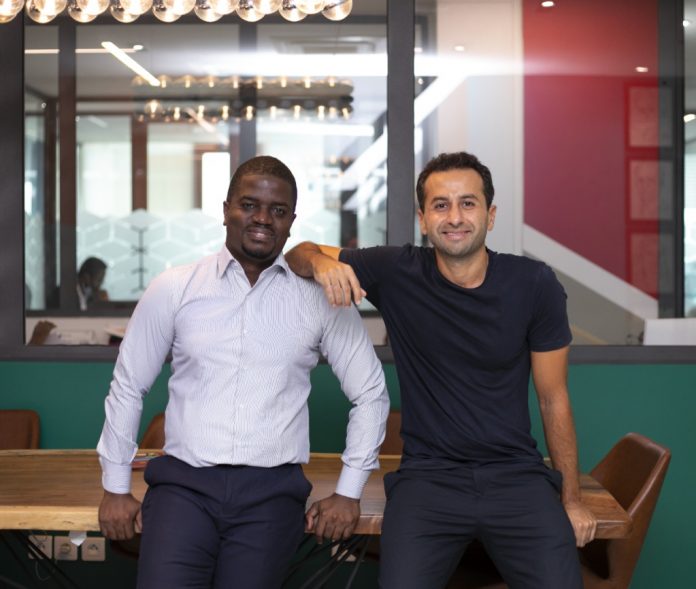
Djamo, an Ivorien-based Y Combinator-backed fintech startup, that provides digital banking services to the underbanked, has announced the raise of $17 million in an equity round.

The round was led by Janngo Capital, a pan-African gender-focused VC. Additional investors include Y Combinator, SANAD Fund for MSMEs, Oikocredit, Partech, and Enza Capital.

Speaking on the round, Janngo’s founder Fatoumata Bâ said,

“We are thrilled to lead Ivory Coast’s largest VC round and back Djamo’s transformative work in Francophone West Africa, where under 25% of adults have formal financial access, and women are twice as excluded. With a third of its users women, Djamo is closing gaps and driving economic opportunity.”

Djamo plans to use the funds to scale its services across Francophone Africa, betting on its unique positioning to capture a growing market. It further added that the funds will be used to enhance its offerings for over one million retail customers and thousands of small businesses in Ivory Coast and Senegal.

With its recent expansion into Senegal, the fintech startup has entered a market dominated by Wave, one of Africa’s fintech unicorn, known for low-cost mobile money transfers, but Djamo differentiates itself with a broader digital banking suite of savings, investments, and credit rather than competing solely on transfers.

Notably, unlike several African fintechs that are focusing on various markets across the African continent, Djamo has carved a niche in Francophone West Africa, where it aims to cater to the underbanked population.

Founded in 2020 by Bourgi and Chief Product and Technical Officer Régis Bamba, Djamo aims to bridge the financial access gap in French-speaking Africa, where traditional banks often serve only the wealthy, leaving most reliant on mobile money.

The fintech positions itself as a hybrid, blending mobile money’s accessibility with banking depth, targeting a younger demographic outgrowing mobile money but is wary of costly, outdated banks.

Its objective is to give hundreds of millions of people access to simple, inexpensive, mobile-first banking. To achieve this goal, Djamo has teamed up with local banks to provide frictionless mobile-first services.

The startup serves both banked users who use it as a secondary account for seamless payments and the unbanked, who form over 55% of its base and often treat it as their primary financial tool. Nine in ten users relying on Djamo as their main account are from this group. To reach them, Djamo employs a hybrid model, pairing its app with offline agents for in-person transactions, a tactic echoing mobile money’s success.

Only 5–10% of users currently receive salaries via Djamo, but the fintech founder Bourgi, aims to raise that to 50%, a key focus for the next phase. For small businesses around 10,000, many evolving from retail users Djamo offers bulk payments, payment links, and QR code tools to streamline transactions.

Revenue and Growth Strategy

In terms of revenue, Djamo earns from merchant fees on card purchases and a premium tier subscribed to by 25% of users. It’s also pursuing lending and interest on deposits, awaiting licenses for interest-bearing savings and credit products. Djamo’s founders say the company has grown revenue 5x since 2022 and processed more than $4.5 billion in transactions since launch.

Looking Ahead
With the raise of $17 million in equity, Djamo taps into a critical need in Francophone West Africa, where mobile money dominates but lacks depth. By offering savings, investments, and credit, it’s not just facilitating transactions it’s fostering financial growth for a demographic traditional bank have overlooked.

Top Trending Cryptos: BlockDAG, Jito & Onyxcoin Catch Traders’ Eyes for 2025

0

As the cryptocurrency landscape transforms and new regulatory frameworks emerge, the search intensifies for top trending crypto that melds practical application with potential for significant growth. With the weekly introduction of new projects, identifying the best early opportunities is crucial for those looking to engage early and optimize potential gains.

Among these emerging projects, BlockDAG has marked its presence with a remarkably successful presale, distinguishing itself alongside Jito and Onyxcoin, which bring modern solutions in staking and blockchain technology. These projects are emerging as prime choices for those looking to engage in the market ahead of 2025.

Let’s delve into why BlockDAG could be a wise choice for early engagement.

BlockDAG – The High-Utility Crypto Gaining Early Momentum

BlockDAG (BDAG) has been capturing attention by securing over $210.5 million through its presale, with more than 19.1 billion BDAG coins distributed. From its initial price of $0.001 in Batch 1, BDAG’s price has escalated to $0.0248 by Batch 27, representing a 2,380% growth for early participants.

However, the excitement around BlockDAG isn’t solely due to its appreciating price. BlockDAG utilizes a Directed Acyclic Graph (DAG) architecture to enhance blockchain scalability. Unlike traditional systems like Ethereum or Solana that process transactions one at a time, BlockDAG’s structure supports simultaneous transaction processing, significantly boosting speed while reducing congestion and transaction costs.

Furthermore, BlockDAG supports both EVM and WASM, providing developers with the flexibility to create diverse decentralized applications. It also includes user-friendly development tools such as the Token & NFT Wizard, which simplifies the entry for new developers into the ecosystem.

With over 100 active testnet nodes, a planned beta testnet in March 2025, and upcoming listings on more than ten centralized exchanges, BlockDAG is poised to reach a $1 value per coin post-launch. It is already being recognized by analysts as a strong contender in the crypto space with substantial ecosystem potential.

Presale Summary:

  • Price: $0.0248 (Batch 27)
  • Total Raised: $210.5M+
  • Coins Sold: 19.1B+
  • Key Partnerships: Keynote 3, HackerEarth, SpaceDev
  • Development Support: $30M development grant fund

For those tracking the top trending crypto, BlockDAG’s impressive performance, functionality, and growing community support position it as a leading candidate as we approach 2025.

Jito – Advancing Solana’s Liquid Staking

Jito introduces a liquid staking and MEV (maximum extractable value) solution on the Solana network, allowing users to stake their SOL and receive JitoSOL, a yield-earning asset. This approach promotes Solana’s decentralization while increasing returns for committed holders.

In the evolving DeFi landscape, Jito’s enhancement of capital efficiency without sacrificing decentralization is attracting interest. Currently valued at $2.38 with a market capitalization of $735.44 million, Jito stands out as a leading staking initiative within the ecosystem.

With growing interest in passive income avenues and a surge in Solana’s development activities, Jito is poised for ongoing expansion as more seek yield-bearing assets.

Onyxcoin – Enabling Decentralized Cloud Services

Onyxcoin (XCN) is carving a niche in the decentralized cloud arena, facilitating data storage, financial applications, and secure transactions through blockchain technology. It aims to seamlessly connect conventional financial services with decentralized platforms.

XCN tokens enable users to participate in governance, pay for services, and enjoy discounts, enhancing the ecosystem’s functionality. Onyxcoin is particularly appealing to developers and businesses looking for compliant, decentralized solutions.

With its current price at $0.01 and a market cap of $371.5 million, Onyxcoin presents an accessible entry into the critical blockchain infrastructure market, which is poised for growth with increasing regulatory acceptance.

BlockDAG, Jito, and Onyxcoin – Top Trending Crypto Showdown

Here’s how they stack up:

Feature BlockDAG Jito Onyxcoin
Type Layer 1 + DAG Liquid Staking Blockchain Infrastructure
Market Cap N/A (Presale) $735M+ $371M+
Presale Raised $210.5M+ N/A N/A
Price $0.0248 $2.38 $0.01
Tech Edge DAG + WASM/EVM MEV Staking Cloud DeFi Layer
Utility dApps, Dev Tools Yield, Staking Infrastructure, Voting
ROI Potential High (Presale) Medium Medium

While Jito and Onyxcoin shine in their respective areas, BlockDAG’s extensive ecosystem capabilities make it a prominent player. Its successful presale, ongoing development efforts, and scalability solutions position it as a key influencer in the upcoming market uptrend.

The Quest for Top Trending Crypto Continues

The 2025 crypto market is looking to reward the early adopters. Jito’s staking innovations and Onyxcoin’s infrastructure offerings hold substantial long-term value, yet BlockDAG embodies the ideal mix of reach, functionality, and growth potential—particularly in its presale phase.

As the community gears up for the next crypto adoption wave, BlockDAG’s technology-centric strategy, backed by a $210.5M presale and robust developer engagement, positions it as the top trending crypto to engage with now—before it debuts on major exchanges and its value potentially escalates.

The Next Big Thing: What Will Replace the Smartphone?

0

For over ten years, smartphones have been a key part of our lives. They act as our wallet, camera, entertainment center, and communication hub. However, one concern remains as technology advances at an accelerated rate: what will take the place of the smartphone? It’s hard to imagine life without our screens, but new technologies are on the rise. Some are still in their infancy and are subtly changing the way we engage with the digital world. Additionally, it’s evident that customer expectations are rapidly changing as sites like Slotsgem emphasize the value of engaging, mobile-friendly applications.

Past the Glass Screen

The design and functionality of smartphones as we know them are almost at their pinnacle. Each new version features better cameras, faster chips, and improved batteries. For years, the form factor hasn’t changed much. For this reason, big IT companies are spending money on novel interfaces that do not rely on displays at all.

Augmented reality (AR) glasses are one of the most promising options available. AR combines the digital with the actual world, in contrast to virtual reality, which transports users to a completely digital world. Think about using thin, light glasses. You can see social network updates, navigation arrows, or messages right in front of you. Apple, Meta, and Google want to make this technology stylish and easy to use, just like traditional eyewear.

Body Technology and Wearables

Fitness trackers and smartwatches have already demonstrated our willingness to wear technology. However, this is only the start. According to experts, next-generation wearables will go beyond the wrist. Examples include smart rings, ear devices (hearables), and implanted chips. These gadgets offer biometric authentication and health monitoring.

Voice interfaces, such as Google Assistant and Amazon Alexa, are likewise becoming more popular. In the future, we might use voice commands instead of taps and swipes. This change will happen as natural language processing improves. Most smartphone tasks, such as playing music, checking messages, and making payments, can be done with a wearable device that has an AI assistant. You won’t need to look at a screen at all.

Neural Interfaces’ Ascent

Brain-computer interfaces (BCIs) aim to connect your brain directly to digital systems. They are, without a doubt, the most sci-fi of all. One day, people may be able to think commands rather than speak or type them thanks to headgear or implants being developed by companies like Neuralink and Kernel.

Although BCIs are still in their infancy and present ethical questions, they offer a smooth link between the human mind and the digital world, making them the ideal smartphone substitute. Imagine having the ability to play a game, answer calls, or search the web simply by thinking about it.

Obstacles and Things to Think About

Of course, there are difficulties with every new technology. Data security and privacy are crucial, particularly with body-integrated technology. Additionally, how comfortable will people feel wearing implants or spectacles in public? This is a social consideration. And how can we make sure that these gadgets are available to everyone and aren’t only tech elite tools?

Furthermore, smartphones did not suddenly become indispensable. They were successful because they integrated several technologies into a single, slick, user-friendly solution. Any replacement must provide the same balance of price, usefulness, and ease of use.

What Comes Next?

The smartphone won’t likely be replaced by a single gadget in the near future. A multi-device ecosystem will likely develop. This may include AR glasses, smart rings, AI assistants, and even ambient interfaces. These interfaces could respond to presence or gestures.

Though slow, the change is unavoidable. Smartphones will eventually be replaced by devices that are more integrated, user-friendly, and undetectable. This change is similar to when smartphones took over flip phones, MP3 players, and digital cameras.

Right now, our screens continue to dominate. However, the future is already nagging us, and it may do it without a touchscreen.

Tesla’s Global Sales Plunge in Q1 2024, Despite Strong Model Y Sales in China

0

Tesla’s global sales tumbled in the first quarter of 2025, adding further pressure on CEO Elon Musk as he faces growing backlash over his role in President Donald Trump’s administration.

The electric vehicle giant delivered 336,681 units worldwide in the first three months of the year, marking a 13% decline compared to the same period in 2024. This sharp drop brought Tesla’s quarterly performance to its lowest level in nearly three years, falling short of Wall Street expectations.

The company attributed the decline to “the loss of several weeks of production” as it prepared to ramp up upgrades for the Model Y. However, the weak numbers intensified concerns among analysts and investors about Tesla’s long-term growth prospects—especially as Musk’s deepening involvement in US politics continues to overshadow his leadership at the automaker.

Since Trump returned to the White House, Musk’s leadership has drawn fierce criticism due to his role as head of the so-called “Department of Government Efficiency” (DOGE), which has spearheaded sweeping federal spending cuts. As an unelected figure, Musk’s influence has sparked concerns about transparency and accountability, while his aggressive layoffs in government agencies have made Tesla a target for consumer boycotts and public backlash.

Musk, who contributed more than $270 million to Trump’s re-election campaign, has also used his social media platform, X, to attack critics of the administration. This has further politicized Tesla’s brand, alienating some consumers and investors. The result has been a sharp drop in Tesla’s reputation, particularly in key markets like Europe, where Musk’s association with Trump has become a liability.

Tesla shares initially fell over 6% following the earnings report but later rebounded after Politico reported that Musk may soon step down from his formal role in the administration. Sources cited in the report said White House officials were growing frustrated with Musk’s unpredictability and viewed him as a political risk, particularly after a Musk-backed judicial candidate in Wisconsin suffered a significant defeat to a liberal opponent.

While Trump publicly praised Musk as “amazing,” he hinted at a possible transition, saying, “I also think he’s got a big company to run, and so at some point he’s going to be going back. He wants to.”

China’s Model Y Success Fails to Offset Global Decline

Despite Tesla’s global struggles, the company saw a strong performance from the Model Y in China, where demand for the all-electric crossover remained robust. In March 2025, Tesla China sold 43,370 new Model Y units, making it the best-selling battery electric vehicle by volume in the country. The success of the revamped Model Y highlights the continued importance of Tesla’s China operations, which remain a critical pillar of the company’s revenue.

However, analysts noted that even with China’s solid numbers, Tesla’s overall Q1 results reflect deeper challenges, including slowing EV demand in North America and Europe. The Cybertruck, which Musk once touted as a revolutionary product, has failed to gain traction, with weak sales contributing to Tesla’s disappointing quarter. The company did not break out Cybertruck deliveries in its report, but the figures suggest poor performance, further exacerbated by a mass recall in March due to an exterior panel defect.

Investor Concerns and Musk’s Leadership Under Fire

Wedbush Securities analyst Dan Ives, a longtime Tesla bull, described the Q1 results as “a disaster on every metric,” warning that Musk’s political entanglements were damaging Tesla’s brand and investor confidence.

“It’s a fork in the road moment,” Ives said. “The more political he gets… the more the brand suffers, there is no debate. This quarter was an example of the damage Musk is causing Tesla.”

Tesla shareholder Ross Gerber echoed similar sentiments, taking to X to criticize the company’s performance.

“These numbers suck,” he posted. “The Cybertruck is basically not selling. The brand is broken and may not be fixable. The board of directors is 100 percent responsible.”

Despite the weak results, Tesla’s stock finished the day up 5.3% as speculation swirled about Musk’s potential retreat from his government role as DOGE lead. However, questions remain about whether Musk can successfully navigate Tesla through its current challenges while balancing his political ambitions.

With rising competition from Chinese automakers, an increasingly skeptical investor base, and ongoing consumer backlash, Tesla faces what could be one of the most defining periods in its history.

Nigeria to Face 14% U.S. Tariff on Exports As Trump’s New Tariff Policy Reshapes Global Trade

0

In a landmark shift in global trade policy, U.S. President Donald Trump has announced a sweeping 10% baseline tariff on all imports, alongside sharper, country-specific reciprocal tariffs targeting nations that impose higher duties on American goods.

The move, described by Trump as a long-overdue correction to an “unfair” global trade system, has sent shockwaves across international markets, with developed economies vowing retaliation and developing nations scrambling to assess the impact.

Among the countries affected is Nigeria, which will now face a 14% U.S. tariff on exports—a direct response to what Washington claims is a 27% duty imposed by Nigeria on U.S. goods. The decision could have significant consequences for Nigeria’s trade sector, particularly as exports to the U.S. have recently shown an uptick after years of stagnation.

Data from the National Bureau of Statistics (NBS) shows that between 2015 and 2024, Nigeria’s total trade with the U.S. amounted to N31.1 trillion. Of this, N16.4 trillion represented Nigerian imports from the U.S., accounting for 8.7% of the country’s global exports. Over the past year, Nigeria has begun expanding its non-oil exports, with increased shipments of agricultural produce, textiles, and manufactured goods to the U.S. under preferential trade arrangements like the African Growth and Opportunity Act (AGOA).

However, the imposition of a 14% tariff threatens to reverse these gains, making Nigerian exports less competitive in the American market. Analysts warn that if the U.S. tariffs dampen demand for Nigerian goods, businesses that rely on U.S. trade could see declining revenue, forcing them to explore alternative markets that may not offer the same profitability.

Trump’s “Liberation Day” Speech Signals a New Era of Protectionism

During a Rose Garden event branded as “Liberation Day,” Trump declared an end to what he called America’s exploitation under unfair trade deals.

“This is one of the most important days in American history. We will supercharge our domestic industrial base, we will pry open foreign markets, and we will break down foreign trade barriers,” he proclaimed.

His administration’s reciprocal tariff policy applies to over 50 countries, including major economic powers like China, the European Union, India, and Japan, as well as several developing economies across Africa, Asia, and Latin America.

The White House justified Nigeria’s inclusion on the list by pointing to the country’s 27% tariff on U.S. goods, arguing that a 14% countermeasure was necessary to establish “fair trade.”

The move raises uncertainty for Nigerian policymakers, who did not appear to anticipate the tariff hike. While some affected countries—including Canada, the EU, and China—have vowed immediate retaliation, it remains unclear whether Nigeria will respond or attempt to renegotiate trade terms with Washington.

Global Retaliation Grows Against U.S. Tariffs

Many developed economies have reacted with fury to Trump’s announcement, branding it a reckless act of economic aggression. Canada, China, and the European Union have already signaled plans for countermeasures, with some officials warning of an impending global trade war.

The European Commission condemned the move as “an unjustifiable assault on multilateral trade” and vowed to impose retaliatory tariffs on American exports. Canadian Prime Minister Justin Trudeau dismissed Trump’s claims of unfair trade practices, stating that “Canada will defend its industries and workers with proportional measures.”

China, which is one of the largest targets of Trump’s tariff policy, has also promised harsh retaliation, with Beijing warning that it “will not tolerate U.S. economic bullying.”

These reactions suggest that Trump’s move could trigger a wave of retaliatory tariffs, creating instability in global supply chains and potentially harming American businesses that rely on international markets.

Africa’s Trade Preferences at Risk

For African economies, the situation is particularly delicate. Many countries, including Nigeria, Kenya, and Ethiopia, benefit from trade preferences under AGOA, which grants them duty-free access to the U.S. for certain goods. However, Trump’s new tariffs undermine these agreements, raising concerns that African exports may soon face further restrictions.

Mauritius, which the U.S. claims impose an 80% tariff on American goods, has been hit with a 40% U.S. tariff in return—one of the highest in Africa. Other affected nations include:

  • Algeria, which now faces a 30% U.S. tariff in response to its 59% tariff on American imports.
  • Namibia, where the U.S. will impose a 21% tariff to counter a 42% duty on U.S. goods.
  • Lesotho, which has been hit with a 50% U.S. tariff, the steepest in Africa.
  • Kenya, Ghana, and Ethiopia, all of which now face 10% reciprocal tariffs matching their own duties on U.S. imports.

The African Union has yet to respond, but analysts suggest that the continent’s trade bloc may need to push for urgent negotiations to prevent further disruptions to exports.

What This Means for Nigeria

For Nigeria, the decision to impose a 14% tariff on exports to the U.S. could have serious economic consequences. Key industries—especially those seeking to expand beyond crude oil—may struggle to maintain competitiveness.

While some experts suggest Nigeria should retaliate by imposing higher duties on U.S. imports, others warn that such a move could backfire, further complicating trade relations with Washington.

According to some analysts, Nigeria has a few difficult options:

  • Maintain its current tariff regime and absorb the new 14% U.S. duty, risking reduced exports.
  • Retaliate by imposing higher tariffs on American imports, potentially provoking trade tensions with Washington.
  • Seek to renegotiate trade terms in hopes of securing better arrangements.

The big question now is whether Nigeria will revise its tariffs to avoid these new trade barriers.

If Nigeria chooses to lower its tariffs on U.S. goods, it could prompt a policy shift that benefits American businesses but limits Nigeria’s revenue from import duties.

Alternatively, Nigeria could maintain its existing tariff structure, absorb the new 14% duty, and shift its export focus to other regions. However, given that the U.S. remains a key global market, ignoring the changes could be a costly decision.