DD
MM
YYYY

PAGES

DD
MM
YYYY

spot_img

PAGES

Home Blog Page 1455

Factors Driving High Surge in Liquidity on PumpSwap

0

PumpSwap, a decentralized exchange (DEX) tied to the Pump.fun ecosystem on Solana, has seen a surge in liquidity and trading volume, recently crossing $2.5 billion in total volume. PumpSwap’s design eliminates migration fees (previously 6 SOL) for tokens graduating from Pump.fun’s bonding curve model, allowing instant liquidity pool creation. This has made it a go-to platform for memecoin traders, who can now trade tokens without the friction of moving to other DEXs like Raydium. With over 729,000 wallets and 32.74 million swaps, the platform’s user base is driving significant liquidity inflows.

Solana’s blockchain, known for its fast processing (400ms block times) and near-zero fees, underpins PumpSwap’s appeal. This efficiency attracts traders, especially in a memecoin market where speed and cost matter, boosting liquidity as more participants join the ecosystem. PumpSwap has captured a growing slice of Solana’s DEX volume—hitting 20% per recent data. It’s eating into Raydium’s dominance, where Pump.fun token trading has flipped from 70% on Raydium to over 60% on PumpSwap. This shift reflects traders consolidating liquidity where it’s easiest to access, amplifying PumpSwap’s pools.

PumpSwap’s planned revenue-sharing model for token creators is a potential game-changer. By redistributing a portion of its 0.25% trading fees (0.20% to liquidity providers, 0.05% to the protocol), it’s luring projects to stay within its ecosystem, further locking in liquidity. Despite Trump tariffs—set to kick in on April 2, 2025, targeting Canada, Mexico, and China—creating uncertainty for Bitcoin and risk assets, PumpSwap’s focus on memecoins seems less tied to macro pressures. While Bitcoin’s price has wavered (around $82,000 recently), Solana’s ecosystem has shown resilience, with PumpSwap generating $5.16 million in fees even as memecoin hype cools slightly.

With PumpSwap hitting $2.5 billion in trading volume and capturing 20% of Solana’s DEX market share, it’s cementing Solana as a DeFi powerhouse. This could draw more developers and liquidity to Solana, especially if its low-cost, high-speed model outshines Ethereum or other chains amid economic uncertainty. The platform’s reliance on memecoin trading (e.g., 729,000 wallets tied to Pump.fun tokens) makes it vulnerable if the frenzy fades further. A 13% drop in the Official Trump token suggests sentiment could sour, potentially draining liquidity and slowing PumpSwap’s $5.16 million fee engine.

The planned revenue-sharing for token creators could lock in long-term liquidity, making PumpSwap a sticky platform. If successful, this might set a precedent for other DEXs, reshaping how DeFi platforms compete. While Bitcoin faces macro headwinds, PumpSwap’s rise suggests a decoupling within crypto. Solana-based platforms could gain traction as Bitcoin stumbles, highlighting a split between “store of value” and “utility-driven” ecosystems. PumpSwap’s 32.74 million swaps signal a hotbed for retail traders, offering high-volume opportunities. But the memecoin focus means high risk—liquidity could vanish fast if hype dies, leaving latecomers holding the bag.

Savvy investors might see Solana’s resilience as a hedge against Bitcoin’s tariff-related dips, funneling capital into PumpSwap’s liquidity pools or similar DeFi plays. Higher import costs from tariffs could weaken the U.S. dollar’s purchasing power, indirectly boosting crypto as an inflation hedge. Yet, if economic growth slows, risk assets—including PumpSwap’s memecoin-driven liquidity—might suffer alongside Bitcoin. PumpSwap’s success (e.g., $30 million in fees since launch) could attract scrutiny from regulators, especially if tied to speculative bubbles. The SEC or CFTC might step in if memecoin losses pile up, impacting its growth trajectory.

PumpSwap’s liquidity pump thrives on Solana’s efficiency and memecoin momentum, but tariffs and a cooling crypto market could test its staying power. If it diversifies beyond memecoins or solidifies its revenue-sharing model, it might outlast the hype cycle. This could signal a shift where niche ecosystems like Solana’s gain ground over Bitcoin dominance, especially if macro conditions favor agile, low-cost platforms. The big implication is a potential reordering of crypto priorities: PumpSwap’s cash flow highlights DeFi’s adaptability, but its fate—and Bitcoin’s—hinges on how tariffs reshape global risk appetite. What angle here interests you most?

The tariffs might indirectly help by pushing traders toward alternative ecosystems like Solana, where PumpSwap thrives, as Bitcoin faces potential selloffs from institutional caution. However, the cooling memecoin frenzy (e.g., Official Trump token down 13% in a week) could cap this liquidity surge if sentiment sours further. In short, PumpSwap’s liquidity pump is driven by its user-friendly mechanics, Solana’s technical edge, and a strategic pivot in the DEX landscape—though its staying power hinges on sustaining trader interest amid broader market volatility. What do you think—will this hold up as tariffs hit?


Mara Holdings Announced a $2B Stock Offering for Bitcoin Investments

0

Marathon Digital Holdings (now MARA Holdings Inc.) announced a $2 billion at-the-market (ATM) stock offering aimed at raising capital to purchase additional Bitcoin, among other general corporate purposes. This strategy involves selling shares incrementally through investment firms like Barclays, Cantor Fitzgerald, and others, with the proceeds intended to bolster its Bitcoin reserves and support operational needs. Marathon currently holds 46,376 BTC, making it the second largest publicly traded company in terms of Bitcoin ownership, behind MicroStrategy.

This move reflects a shift from relying solely on mining to direct market purchases, adapting to challenges like the 2024 Bitcoin halving, which reduced mining rewards, and rising operational costs. The company plans to allocate approximately 40% of the funds to acquire more Bitcoin, with the rest supporting working capital and corporate expenses. This follows a pattern of capital-raising efforts, including a prior $1.4 billion ATM offering and a $1 billion convertible notes issuance in November 2024, signaling Marathon’s aggressive “HODL” approach to amassing Bitcoin as a long-term asset.

Marathon Digital’s $2 billion stock offering to purchase additional Bitcoin carries several implications across financial, operational, and market dimensions. Issuing new shares via an at-the-market offering could dilute existing shareholders’ equity. The extent depends on the volume and price at which shares are sold, but with Marathon’s stock already up over 60% in 2025 (as of late March), the market seems to have absorbed prior dilution well. Still, this could pressure the stock price if investor confidence wavers. Adding roughly $800 million worth of Bitcoin (assuming 40% of the $2 billion is allocated as stated, at current prices around $90,000 per BTC) bolsters Marathon’s asset base.

This aligns with its treasury strategy, treating Bitcoin as a reserve asset, similar to MicroStrategy’s playbook. While Marathon has reduced debt (paying off $331 million in 2024), tying more of its capital to Bitcoin—a volatile asset—heightens exposure to price swings. A Bitcoin downturn could shrink its asset value faster than operational revenue can offset. The move underscores a pivot from Bitcoin mining as the primary growth driver to direct acquisition. Post-2024 halving, mining profitability has declined due to halved block rewards (from 6.25 to 3.125 BTC) and rising energy costs. Buying Bitcoin outright bypasses these constraints, signaling a long-term bet on price appreciation over mining yield.

Purchasing Bitcoin on the open market can be more cost-effective than mining it, especially with Marathon’s reported all-in energy cost of around $60,000-$70,000 per BTC (pre-halving estimates adjusted for current conditions). This could free up resources to optimize mining operations or diversify energy strategies. The remaining $1.2 billion for working capital and general purposes provides a buffer for operational expenses, potential acquisitions (e.g., more mining infrastructure), or weathering market downturns. Marathon’s aggressive Bitcoin accumulation reinforces its identity as a Bitcoin proxy stock, appealing to crypto bulls but potentially alienating traditional investors wary of crypto volatility.

It could drive further institutional interest in Bitcoin as a corporate treasury asset. An $800 million Bitcoin buy could add upward pressure to BTC prices, especially if executed in a compressed timeframe. While not massive relative to Bitcoin’s $1.9 trillion market cap (as of late March 2025), it contributes to demand in a market sensitive to large corporate moves. Marathon narrows the gap with MicroStrategy (holding over 250,000 BTC) in the race among public companies to amass Bitcoin. This could spark a trend among other crypto-adjacent firms to follow suit, intensifying competition for BTC supply.

Increased Bitcoin holdings might draw scrutiny from U.S. regulators, especially if crypto policies tighten under shifting political winds in 2025. With Bitcoin near all-time highs and speculation about a “supercycle” in 2025, Marathon’s timing could either pay off handsomely or expose it to a bubble burst if macroeconomic factors (e.g., interest rate hikes) shift sentiment. Marathon is doubling down on Bitcoin as a core strategy, betting on its long-term value while navigating short-term financial and operational trade-offs. The outcome hinges on Bitcoin’s trajectory and investor tolerance for this high-stakes pivot.

World Bank Approves $1.08bn for Education, Nutrition, and Economic Resilience in Nigeria

0

The World Bank has approved three financing operations totaling $1.08 billion to support education, nutrition, and economic resilience in Nigeria. The concessional loans, announced on Wednesday via the bank’s website, aim to improve the quality of education, enhance nutrition services, and build household and community resilience, particularly for underserved populations.

The approved financing includes $500 million in additional support for the Community Action for Resilience and Economic Stimulus Programme (NG-CARES), $80 million for the Accelerating Nutrition Results in Nigeria (ANRIN 2.0) initiative, and $500 million for the Hope for Quality Basic Education for All (HOPE-EDU) programme.

The NG-CARES Programme, initially launched to mitigate the economic impact of the COVID-19 pandemic, has evolved into a broader initiative providing social support services. According to the World Bank, the programme has already reached over 15 million Nigerians and will now expand its reach further, especially as the country navigates the economic consequences of the 2023 fuel subsidy removal and foreign exchange rate unification.

The new funding will enable the programme to provide additional livelihood support, food security services, and grants for poor and vulnerable households. The initiative will also sustain labor-intensive public works and support small businesses, key sectors impacted by Nigeria’s economic headwinds.

Nutrition Boost for Maternal and Child Health

The Accelerating Nutrition Results in Nigeria (ANRIN 2.0) initiative aims to improve access to nutrition services for pregnant women, lactating mothers, adolescent girls, and children under five. With Nigeria ranking among the countries with the highest rates of child malnutrition and food insecurity, the programme seeks to address critical health and nutritional deficiencies.

Building on the success of the first phase, which reached over 13 million children under five between 2018 and 2024, ANRIN 2.0 will focus on preventive and curative nutrition interventions, improved feeding practices, and increased access to micronutrient-rich foods. The initiative aligns with Nigeria’s National Development Plan (2021–2025) and the Multisectoral Plan of Action for Food and Nutrition.

Strengthening Education with HOPE-EDU

The HOPE-EDU initiative is designed to address Nigeria’s persistent education challenges, particularly in foundational literacy and numeracy. With over 20 million out-of-school children and a struggling education system, the programme seeks to enhance access to quality education and strengthen education delivery mechanisms across participating states.

The project is expected to directly benefit 29 million public primary school pupils, 500,000 teachers, and more than 65,000 public primary schools. HOPE-EDU aims to improve educational outcomes and equip Nigeria’s fast-growing youth population with essential skills for economic growth, by tackling issues such as school overcrowding and decentralized allocation of education funds.

In addition to the World Bank’s financing, HOPE-EDU will receive an extra $52.18 million from the Global Partnership for Education Fund, further supporting its objectives.

World Bank Country Director for Nigeria, Dr. Ndiamé Diop, emphasized the importance of investing in human capital to unlock Nigeria’s economic potential.

“These new programmes will help accelerate education quality and support vulnerable citizens. The HOPE-EDU programme will enable better education outcomes by implementing bold reforms and making the right investments to equip the fast-growing young population with foundational skills necessary for rapid and inclusive economic growth,” Diop stated.

He added that the ANRIN interventions would enhance access to micronutrient-rich foods and nutrition services at primary healthcare levels, while the NG-CARES funding would help Nigeria transition from pandemic response to long-term resilience amid ongoing economic challenges.

Concerns Over Nigeria’s Mounting Public Debt

While the World Bank’s latest funding package presents an opportunity to address some of Nigeria’s pressing socioeconomic challenges, it has also reignited concerns about the country’s rising public debt burden. Nigeria’s total debt has surged in recent years, significantly increasing its debt-servicing ratio. According to the Central Bank of Nigeria (CBN)’s Fourth Quarter 2024 Economic Report, released Monday, Nigeria’s external debt reached N66.14 trillion ($43.03 billion) by Q3 2024, a 0.30% uptick from $42.90 billion in Q2 and a 3.40% rise from $41.59 billion in Q3 2023.

With a large portion of government revenue now allocated to servicing existing debts, economic analysts warn that continued borrowing could further strain the nation’s finances and limit its ability to invest in critical sectors.

According to data from Nigeria’s Debt Management Office (DMO), debt servicing costs have risen significantly recently, with a significant portion of the national budget going towards repaying creditors. The CBN report noted that debt-servicing drained $1.34 billion by September 2024, split between $0.72 billion in principal repayments (53.73%) and $0.62 billion in interest (46.27%).

The situation has led to concerns about the long-term economic implications of continued external borrowing, particularly in the face of slow revenue growth and economic instability.

Corruption and Mismanagement Concerns

Another major concern surrounding the newly approved loans is the risk of mismanagement and corruption. Nigeria has a long history of funds designated for social development programmes being siphoned by government officials and politically connected individuals. Against this backdrop, many fear that a large portion of the borrowed funds may not reach the intended beneficiaries, undermining the impact of these initiatives.

Transparency advocates warn that without strict accountability measures, the funds could follow the pattern of previous international loans and grants that were either misappropriated or left unutilized due to bureaucratic inefficiencies. There are growing calls for the Nigerian government to put in place robust monitoring and evaluation frameworks to ensure that the World Bank funds are used effectively and transparently.

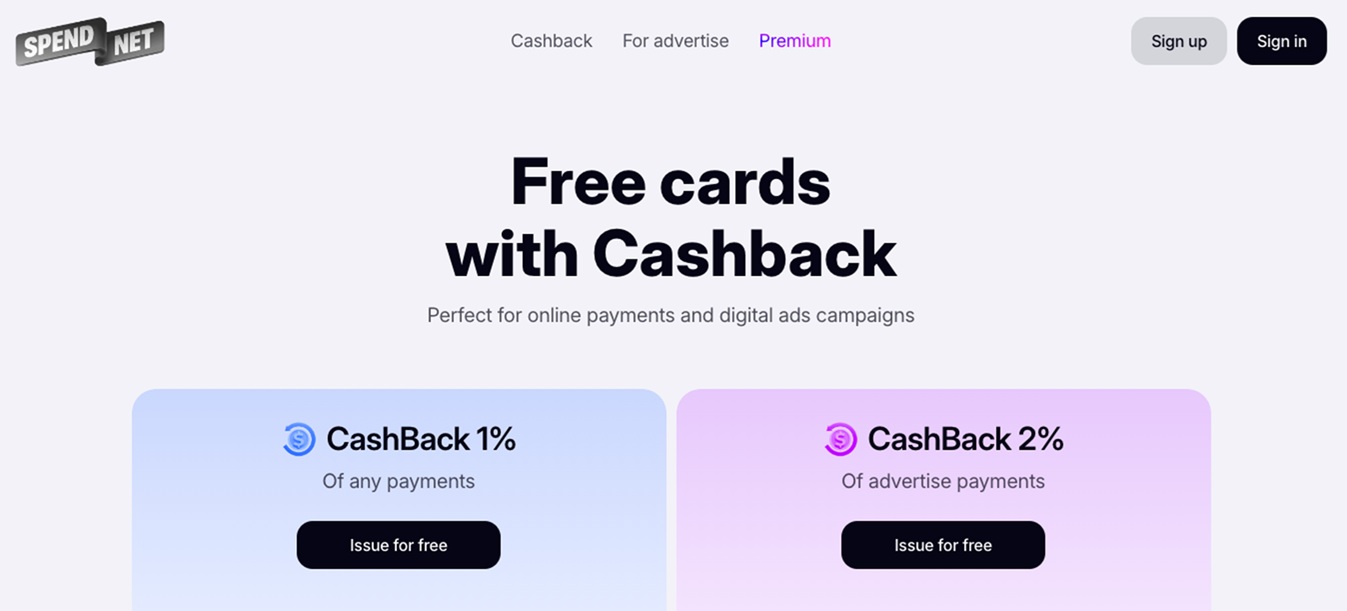
Advertising payments: free virtual cards for advertising with 2% cashback

0

Media buying requires stable payment tools. Virtual cards must be optimized for ad platforms, meaning they need to comply with anti-fraud systems on Meta, TikTok, and Google. They should come with 3D Secure, have the right BINs (Bank Identification Numbers), and support team workflows. This includes built-in tools for managing multiple cards, assigning tasks and roles, and tracking ad spend analytics.

The financial platform Spend.net issues virtual cards that not only meet all these requirements but also offer 2% cashback on advertising expenses. 

Key features of Spend.net advertising cards

  • 2% cashback on ad spend
  • Free card issuance
  • Zero fees on transactions, declines, withdrawals, and refunds
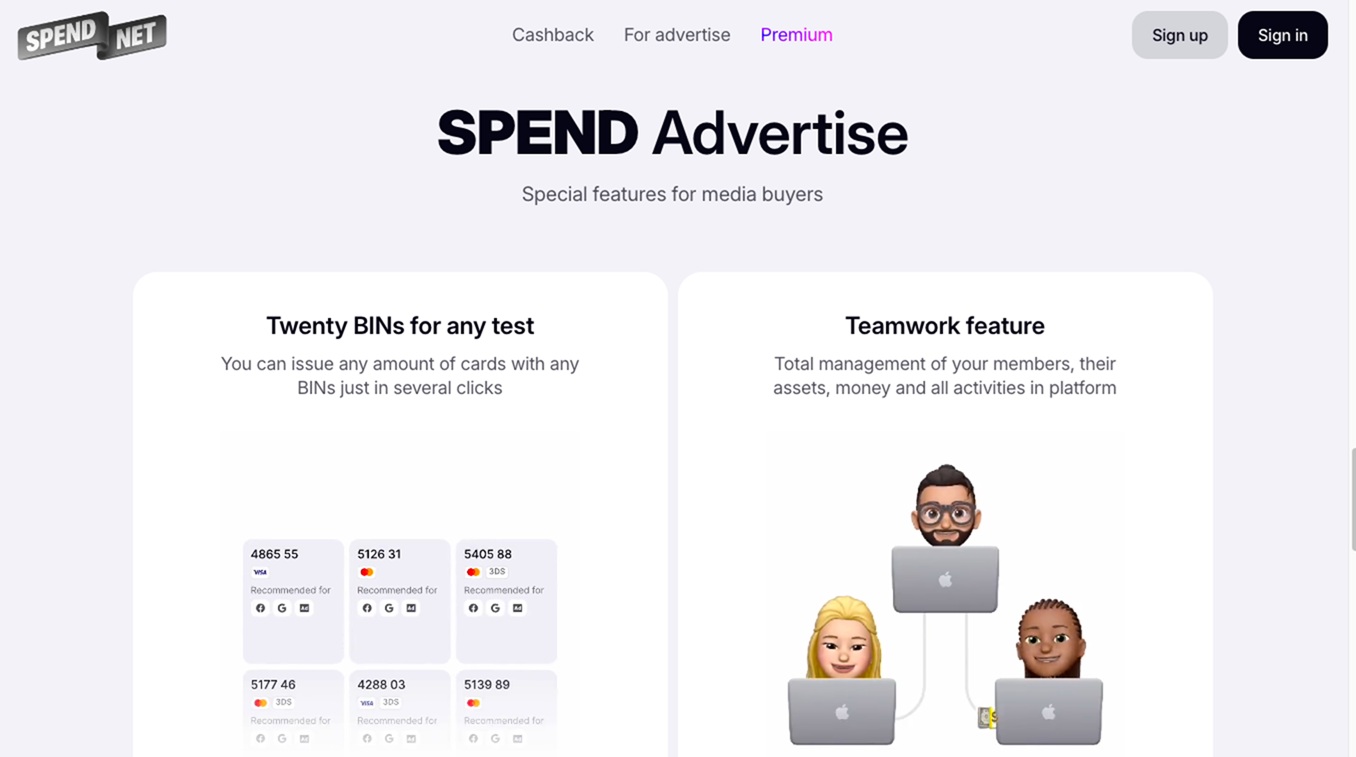
  • 20 BINs to minimize risk payments
  • Built-in team collaboration tools
  • Crypto top-up support 
  • Adjustable top-up fees
  • No fees for account top-ups of $50+
  • Instant card issuance after registration
  • Sign up via Google or email
  • 24/7 support via live chat

How cashback on ads works

Spend.net provides an automatic cashback system for ad spend: 

  • 2% cashback on payments to ad platforms

Cashback is tracked in real-time in the user dashboard

Payment optimization for ad platforms

Spend.net offers cards with BINs optimized for:

  • Google Ads
  • Facebook Ads
  • TikTok Ads
  • Other advertising platforms

Using verified BINs reduces the chances of payment declines. All Spend.net cards are universal and work seamlessly across major platforms.

Budget management tools

The Spend.net dashboard includes features designed for media buyers:

  • Team access with role assignments
  • Automated reports in CSV and XSL formats
  • Real-time transaction monitoring

Easy registration & Instant card issuance

  • Sign-up takes less than a minute via Google or email
  • Create unlimited cards in just a few clicks

Conclusion

Spend.net provides a convenient solution for ad payments with 2% cashback. Flexible top-up options, optimized BINs, zero transaction fees, and team management tools make these cards a valuable asset for media buyers.

AI Tipped as the Key Technology to Revolutionise New Zealand’s Economy

0

The news for a new, transformative, and massively advanced step forward in the world of artificial intelligence seems to come around too often to keep up. At one point, ChatGPT was changing everything, but all of a sudden, DeepSeek proved that a strong AI program can be made for a mere fraction of the touted Silicon Valley cost. Now, its growth has got several businesses, companies, and governments exploring how to utilize the tech.

In New Zealand, like many places in the world, the application of AI is being viewed as a way to revolutionize and streamline the economy. By 2030, it’s said in this report on the prospect of AI in New Zealand, the country wouldn’t face issues of a lack of skilled workers or productivity if AI is applied in force. Starting now at speed is what firms were told at the AI Blueprint for Aotearoa.

Immediate Boosts Offered by AI

Artificial intelligence can be applied across the board for many businesses, but one place where it can clearly show speedy results without altering entire systems is in website personalization. With its ability to take and analyze large amounts of different data points, AI can be applied to a website to enable it to produce personalized offers and even product showcases based on that user’s own purchases and website behaviors.

Many online businesses in the country already try to achieve something similar to this with their websites.

Dunder’s real money casino, for example, has a ‘recommended’ section that uses an AI recommendation system to show users games based on the pokies they play. Their ‘popular’ section dynamically displays New Zealand’s most played casino games, based on customer activity.

reported returning to a merchant that offered a customised shopping experience.

By offering accurate recommendations and promotions, customers can much more quickly and conveniently get to what they want, boosting conversion rates significantly.

Continually Developing the Tech

The idea of artificial intelligence has been around for decades – just look at a bunch of classic sci-fi movies from the 70s and 80s – but the way it’s evolved in the public eye over the last few years has been quite incredible. Yet, as it stands, AI isn’t being trusted by many New Zealanders. In fact, in a report from CFS, a survey revealed that only 45 percent of respondents completely or somewhat trust AI when used as an agent for financial services.

It’s a percentage that invites skepticism, especially when compared to the global average of 54 percent completely or somewhat trusting AI agents. A lot of this will be down to customers having the preference for speaking to trained professionals – especially when it concerns their money. However, the next frontier that’ll blur those lines is already in the works, being hailed by Nvidia as Agentic AI, which could solve complex problems of multiple steps.

As AI continues to develop and become more widely accepted, its applications will only grow. As it does, the tech will certainly offer a boost to productivity and, eventually, help to forge more skilled workers.