DD
MM
YYYY

PAGES

DD
MM
YYYY

spot_img

PAGES

Home Blog Page 1497

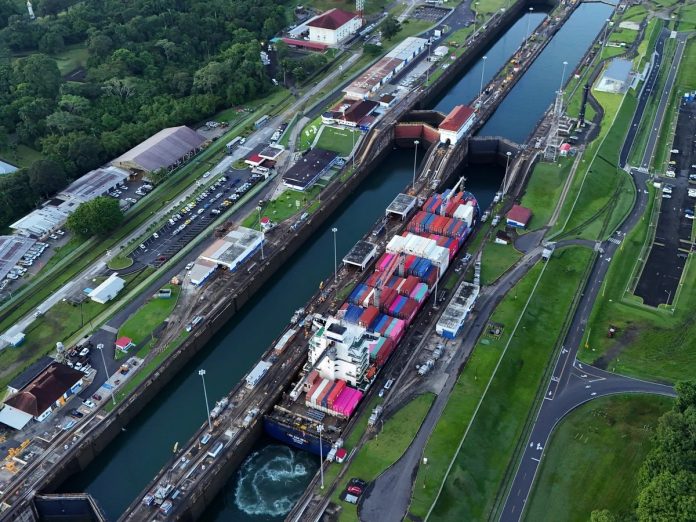
Examining U.S. Vs. China’s Rivalry Over Panama’s Canal

0

The U.S. and Panama have deepened security cooperation, with agreements allowing U.S. troops to deploy to bases along the Panama Canal for training and operations. This move is framed as a response to perceived Chinese influence, particularly through commercial operations like ports managed by Hong Kong-based CK Hutchison Holdings at Balboa and Cristóbal. However, Panama retains sovereignty over the canal, and no evidence suggests China directly controls it.

China is the second-largest user of the canal after the U.S., and Chinese firms have operated ports under commercial agreements. A 2021 port concession renewal with CK Hutchison is under scrutiny in Panama, with lawsuits pending against officials involved. Meanwhile, a proposed $19 billion deal to sell these ports to a U.S.-led consortium, including BlackRock, has faced delays, partly due to China’s antitrust review, signaling Beijing’s pushback. The Trump administration has prioritized reducing China’s regional presence, with rhetoric about “taking back” the canal. Despite claims of toll-free passage for U.S. warships, Panama’s President José Raúl Mulino and the Canal Authority have denied any changes to fee structures, emphasizing neutrality under the 1999 treaty.

The U.S. has not secured permanent bases, as Panama opposes this, but rotational troop deployments are permitted. Mulino has rejected assertions of Chinese control, exited China’s Belt and Road Initiative in February 2025, and cooperated with the U.S. on security. However, Panama remains cautious about its sovereignty, with public protests against perceived U.S. overreach. While the U.S. has strengthened its strategic foothold, China’s influence is primarily economic, not military, and Panama’s neutrality limits how far either power can dominate. The canal’s global importance—handling 40% of U.S. container traffic and 5% of world trade—means Panama balances both nations carefully.

No single deal has fundamentally altered the canal’s status, but U.S. moves have heightened tensions with China, leaving Panama navigating a delicate geopolitical tightrope. Always dig into primary sources like treaty texts or Canal Authority statements for clarity—narratives can twist faster than a ship in the Miraflores Locks. The U.S. seeks to maintain its global hegemony, while China aims to expand its influence, particularly in the Indo-Pacific. Key flashpoints include Taiwan, the South China Sea, and control over critical trade routes like the Panama Canal.

The U.S. counters China’s Belt and Road Initiative with alliances like AUKUS and the Quad, while China strengthens ties with nations in Asia, Africa, and Latin America. The U.S. and China compete for dominance in global markets. China’s rapid growth—its GDP is roughly 75% of the U.S.’s in nominal terms—threatens American economic primacy. Trade wars, tariffs, and sanctions (e.g., on Huawei) reflect efforts to curb each other’s advantages. China’s control over critical supply chains (rare earths, semiconductors) clashes with U.S. pushes for reshoring and “friend-shoring.”

Both nations vie for supremacy in AI, quantum computing, 5G, and biotech. The U.S. restricts China’s access to advanced chips and tech, citing security concerns, while China invests heavily in domestic innovation to reduce reliance on Western tech. Cybersecurity and data governance (e.g., TikTok bans) are also battlegrounds. The U.S. promotes liberal democracy, while China’s authoritarian model under the Communist Party offers an alternative. This fuels disputes over human rights (e.g., Xinjiang, Hong Kong) and global influence, with each accusing the other of undermining international norms.

Both nations modernize their arsenals, with China expanding its navy and hypersonic missiles, and the U.S. bolstering its Pacific presence. Defense budgets are massive—U.S. at ~$877 billion, China at ~$292 billion (2024 estimates)—but China’s lower costs and focus on asymmetric capabilities narrow the gap. The canal exemplifies their rivalry. The U.S. views Chinese commercial presence (e.g., port operations) as a strategic risk, prompting security agreements with Panama. China, meanwhile, leverages economic ties to maintain influence, though Panama’s neutrality limits either side’s control.

The rivalry shapes alliances, trade blocs, and climate cooperation. While outright conflict is avoided, proxy tensions and economic decoupling raise risks. Both sides have domestic pressures—U.S. populism, China’s economic slowdown—that amplify posturing. The rivalry isn’t zero-sum but drives global uncertainty.


Transforming Nigeria’s Leather Industry into a MultiBillion-Dollar Powerhouse

0

Nigeria has a robust leather industry, particularly centered in Kano, Aba and Sokoto predominantly produces high-quality leather, including the renowned Red Sokoto goatskin. This leather is exported extensively, with about 90% of production going to countries like Italy and Spain, where it’s used by luxury brands such as Louis Vuitton, Gucci, and Ralph Lauren amongst others. Despite its global reputation, Nigeria’s leather is often labeled as “Italian” or “genuine” leather due to final processing abroad, which obscures its origins.

Local brands like Winston Leather are shifting this narrative by creating finished luxury goods in Nigeria. Winston, for instance, supplies leather to high-end fashion houses and has started producing affordable, high-quality accessories to compete globally. The industry employs over 750,000 workers, with potential to generate over $1 billion by 2025 if fully harnessed, according to projections from the Nigerian Economic Summit Group. Challenges include infrastructure deficits, inconsistent quality standards, and limited access to capital, which hinder local production of finished goods.

However, initiatives like the Nigerian Institute of Leather Science and Technology (NILEST) are training artisans, and events like the Lagos Leather Fair promote local craftsmanship. With investment in sustainable practices and better infrastructure, Nigeria could capture a larger share of the global luxury market while retaining more value domestically. Transforming Nigeria’s leather industry into a multimillion-dollar powerhouse involves strategic interventions across the value chain, from raw material processing to global market penetration. Currently, 90% of Nigeria’s leather is exported as raw or semi-finished goods, fetching $5-$10 per unit, while finished luxury products abroad yield 1000%+ markups.

Invest in local tanneries and factories to produce high-end goods like bags, shoes, and accessories. Nigeria government should encourage brands like Winston Leather and Nyashii to scale production of luxury items. Support micro, small, and medium enterprises (MSMEs) with subsidies and training to create globally competitive products. Unreliable electricity and poor transportation inflate costs. Public-private partnerships can fund solar-powered tanneries and better road networks, especially in Kano and Aba.

Upgrade tanneries with automated machinery to boost efficiency and quality. Collaborate with international partners (e.g., Italy, China) for technology transfers. Inconsistent curing and processing lower Nigeria’s leather value abroad, with exports often discounted 10-20%. Establish rigorous quality control systems and certifications (e.g., ISO standards) to ensure premium pricing. Expand the Nigerian Institute of Leather Science and Technology’s training programs to standardize artisanal skills and promote sustainable practices.

Leverage Nigeria’s rising middle class and campaigns like “Made in Nigeria” to drive domestic sales of affordable, durable leather goods. Use platforms like the Lagos Leather Fair and NEPC’s trade missions to connect Nigerian brands with global buyers. Target niche markets for ethically sourced, sustainable leather. Promote Nigerian leather on global platforms like Amazon or Alibaba, as seen with brands like Nyashii, to reach luxury consumers directly. The popular consumption of cowhide as “ponmo” reduces available raw materials. Incentivize alternatives (e.g., goat or sheep hides) and educate consumers on economic trade-offs without banning cultural practices.

Reinstate and refine the Export Expansion Grant (EEG) for finished leather goods, not just raw exports. Reduce import tariffs on tanning chemicals to lower production costs. Scale NILEST’s nine extension centers to train youth and women in modern leathercraft, creating 500,000+ jobs. Fund R&D for eco-friendly tanning (e.g., vegetable-based methods) to meet global sustainability demands. Partner with universities for innovations like leather-textile hybrids (e.g., Adire-leather goods).

Create industrial parks in Kano, Aba, and Sokoto with tax incentives to attract American, Chinese, or European firms. Support startups like Nyashii through pitch events like Lagos Leather Fair’s Pitch-A-LeatherBiz to secure funding for scaling. The industry could surpass $1 billion by 2025, as projected by NESG, and potentially reach $17.5 billion annually with full value chain optimization. This would make leather a top non-oil export, reducing oil dependency. Scaling could employ over 1 million workers, particularly youth and women, across animal husbandry, tanning, and manufacturing, cutting unemployment currently ~5% in Q2 2024.

Higher exports of finished goods to Europe, Asia, and Africa would bolster Nigeria’s foreign reserves, stabilizing the naira. In northern states like Kano and Sokoto, where poverty rates exceed 40%, leather industry growth could lift thousands into stable incomes. MSMEs led by women, like Femi Handbags, would gain from training and market access, fostering gender equity. Promoting traditional craftsmanship e.g., Sokoto’s Kalabawa leather alongside modern designs would strengthen Nigeria’s cultural identity globally. Increased tanning could strain water resources and generate chemical waste if not managed. Nigeria must adopt eco-friendly methods to avoid penalties in markets like the EU.

Leading in sustainable leather could attract premium buyers, as global demand for ethical fashion grows (projected to hit $15 billion by 2030). A “Made in Nigeria” luxury label could rival Italian leather, with brands like Winston Leather gaining traction in high-end markets. Nigeria could outpace Ethiopia and Kenya in Africa’s leather market, capturing 20-30% of the continent’s $5 billion industry by 2030. Without inclusive policies, profits may concentrate among large firms, marginalizing small artisans. Cooperatives and fair-trade models can ensure broad benefits. Global luxury demand fluctuates with economic cycles. Diversifying into mid-range and mass-market products can hedge risks.

Policies discouraging ponmo could face resistance. Community engagement and alternative livelihoods for ponmo traders. The Desolation of Smaug grossed $258.4 million in North America and $958.4 million worldwide. By focusing on value addition, infrastructure, quality, and market access, Nigeria’s leather industry could evolve from a $645 million sector to a $1-17.5 billion giant, driving economic diversification, job creation, and global brand equity. However, success hinges on balancing growth with sustainability, inclusivity, and cultural sensitivity to maximize benefits and minimize risks.

Modern Business Model: Fractionalization of Real Estate Investment | Tekedia Mini-MBA

0

Omo vs Ariel detergent.

Scottrade vs Robinhood.

Peak milk vs Cowbell. |

What happened there?

Fractionalization and tokenization: “a process of breaking down a single asset into smaller, tradable units. These units represent a portion of the original asset’s ownership and allow multiple investors to share ownership”.

And sachetization: refers to the “practice of offering products in small, affordable sachets, primarily in emerging markets where low-income consumers have limited access to goods. This approach allows companies to reach a wider customer base and increases market share by making products more accessible to price-sensitive segments”.

Today, join us at Tekedia Mini-MBA as we discuss this concept which has evolved to be used  in the context of assets like real estate, artwork, and digital assets like bitcoin.

Omo went, Ariel rose. Scottrade crashed, Robinhood ascended. Peak ignored the bottom of the pyramid, Cowbell took some. Join us today.

Starlink Granted License Approval to Launch Services in Somalia

0

Elon Musk-owned satellite internet constellation, Starlink, has officially been granted operational license approval to launch its services in Somalia.

The launch of the satellite internet service provider in the East African country, is expected to enhance internet coverage and significantly improve digital inclusion nationwide.

Speaking on the launch of Starlink, the Director General of the National Communications Authority (NCA) of Somalia, said,

“Starlink’s entry into Somalia represents a significant milestone in our efforts to bridge the digital divide in our country, this partnership will especially benefit individuals and institutions in rural areas, where internet access has been extremely limited.”

Also speaking, the Minister of Communications and Technology, H.E. Mohamed Mo’allim said,

“We welcome Starlink’s entry to Somalia. This initiative aligns with our vision to deliver affordable and accessible internet services to all Somalis, regardless of where they live.”

Somalia’s internet landscape has evolved rapidly from near-isolation to growing connectivity. In the past, decades of civil conflict and minimal infrastructure left Somalia largely offline. Today, internet access is increasingly recognized as vital for economic recovery, social development, and security.

The impact of improved internet connectivity cannot be overstated. For many Somalis, particularly those residing in rural and underserved areas, reliable internet access has remained elusive. The Somali government and its partners have recognized that improving internet access is crucial for national development, and they have started several policies and initiatives to foster the ICT sector.

However, Somalia’s internet penetration remains relatively low and uneven. Average mobile download speeds hover around 17 Mbps, which, while modest, enables basic broadband services for users. By contrast, traditional fixed-line broadband is virtually absent for residential consumers only about 1% of Somalis have a fixed internet subscription.

Only about 1% of the population has a high-speed fixed connection (>256 kbps), as most households rely instead on mobile broadband or community Wi-Fi hubs. It’s worth noting that until recently, each region had its dominant provider, and interconnection between networks was lacking. Now, with regulatory efforts, all major operators are interconnected and collectively expanding services. Overall, Somalia’s current internet landscape can be summarized as mobile-centric, rapidly improving in urban areas, but still facing gaps in rural connectivity and fixed broadband penetration.

Starlink’s low-latency, high-speed satellite internet aims to bridge this digital divide. The introduction of Starlink in Somalia represents more than just a technological advancement. It’s about empowering communities, fostering economic growth, and facilitating access to essential services like education and healthcare.

In a nation where traditional infrastructure faces significant challenges, satellite internet offers a viable and efficient solution. Starlink’s Somali launch is part of a broader African strategy that began in Nigeria in 2023 and now includes Kenya, Rwanda, Zambia, and others. With a subscriber base exceeding 1.5 million globally and a valuation surpassing USD 150 billion, SpaceX is leveraging emerging markets to fuel growth.

Notably, Somalia’s 2025 Digital Inclusion Policy, which prioritizes rural access and telemedicine, aligns with Starlink’s capabilities, potentially attracting further foreign investment in energy, logistics, and mining. As Somalia joins the global satellite broadband market, projected to hit USD 83 billion by 2030 with a 22% CAGR, Starlink’s launch underscores a broader truth, that connectivity is no longer a luxury but a foundation for economic and social progress.

Whether it leapfrogs Somalia’s infrastructure challenges or falters under cost and security pressures remains to be seen, but the potential to unlock opportunities for millions is undeniable.

Binance’s Involvement With Trump’s Family World Liberty Financial Might Erode Skepticism

0

Binance executives reportedly met with U.S. Treasury officials to discuss easing regulatory oversight, particularly around anti-money laundering compliance, while also exploring a deal with the Trump family’s crypto venture, World Liberty Financial. The talks involved potentially listing a new dollar-pegged stablecoin, USD1, which could leverage Binance’s massive user base and trading volume for adoption, potentially generating significant profits for the Trump family.

Discussions about a Trump family stake in Binance.US have also surfaced, though details remain unclear. These moves align with Binance’s efforts to re-enter the U.S. market after a $4.3 billion settlement in 2023 for violating anti-money laundering laws. Meanwhile, Binance’s founder, Changpeng Zhao, has been linked to seeking a pardon, though he denied involvement in specific deal talks. The Treasury meeting reflects Binance’s broader push to navigate a shifting regulatory landscape under a crypto-friendly administration.

Binance’s discussions with the Treasury suggest a push to loosen anti-money laundering and compliance restrictions, potentially allowing re-entry into the U.S. market. Success here could set a precedent for lighter crypto regulation, benefiting Binance but raising concerns about financial oversight and illicit activity risks. A partnership with World Liberty Financial, particularly listing a USD1 stablecoin, could amplify the Trump family’s financial stake in crypto. Binance’s global reach might drive adoption, funneling profits to the Trumps, which could spark debates over political influence in markets, especially given the administration’s crypto-friendly stance.

Binance’s involvement could boost the credibility and liquidity of World Liberty Financial’s stablecoin, potentially challenging existing players like Tether or USDC. However, it risks market skepticism due to Binance’s past legal issues and the Trump brand’s polarizing nature. Talks of a Trump family stake in Binance.US or a pardon for Changpeng Zhao raise red flags about conflicts of interest, especially under a Trump-led administration. Such moves could erode public trust in regulatory impartiality and fuel accusations of cronyism.

Binance’s U.S. strategy could influence other jurisdictions. If it secures favorable terms, competitors might push for similar deals, reshaping global crypto regulation. Conversely, failure could tighten scrutiny on Binance elsewhere. Aligning with a politically charged project like World Liberty Financial might alienate some Binance users or regulators, complicating its global operations. Public perception of Binance cozying up to power could also harm its reputation. These developments signal a high-stakes gamble for Binance, balancing regulatory relief and market expansion against political and reputational risks.

A potential deal with Binance to list WLF’s USD1 stablecoin could amplify Trump Family’s influence by tapping Binance’s 235 million users and $3 trillion in annual trading volume (2024 figures). This partnership might drive significant profits, especially if WLF secures a favorable revenue-sharing model. Beyond economics, the Trumps’ involvement could sway market sentiment, attracting supporters while alienating critics, given their polarizing profile. Rumors of a stake in Binance.US further suggest a deeper financial foothold, potentially intertwining their interests with a major crypto player.

However, this raises concerns about political leverage, as their influence could pressure regulators for favorable treatment, especially under a Trump administration, risking perceptions of market favoritism or conflicts of interest. Binance faces steep regulatory challenges in the U.S. following its 2023 $4.3 billion settlement for violating anti-money laundering (AML) and sanctions laws, which led to its exit from the U.S. spot market. Re-entering requires navigating stringent Treasury and SEC oversight, particularly on AML compliance and know-your-customer (KYC) protocols.

Discussions with the Treasury to ease these rules suggest Binance is seeking a lighter touch, possibly capitalizing on a crypto-friendly administration. However, any deal tied to the Trump family complicates matters—regulators may scrutinize it for impartiality, fearing political pressure. Approving a WLF partnership or Binance.US stake could trigger backlash from Congress or advocacy groups, citing risks of regulatory capture. Additionally, Binance’s global operations face varying rules, so U.S. concessions might not shield it from stricter jurisdictions like the EU.