DD
MM
YYYY

PAGES

DD
MM
YYYY

spot_img

PAGES

Home Blog Page 15

Nuclear Stocks Rally as Meta Platforms Secures Up to 6.6 GW in Landmark Deals to Fuel AI Growth

0

Nuclear energy stocks experienced a significant surge on Friday following Meta Platforms’ announcement of sweeping agreements with three providers to secure up to 6.6 gigawatts of nuclear power by 2035, positioning the tech giant as one of the largest corporate buyers of nuclear energy in U.S. history.

The deals, aimed at powering Meta’s expansive artificial intelligence infrastructure, including the one-gigawatt Prometheus AI supercluster in New Albany, Ohio, highlight the escalating energy demands of AI development and Big Tech’s pivot toward reliable, low-carbon baseload power sources. The partnerships with Vistra Corp., Oklo Inc., and TerraPower LLC stem from Meta’s nuclear request-for-proposals (RFP) process initiated in December 2024, which sought 1 to 4 gigawatts of new nuclear capacity.

These agreements encompass long-term power purchase agreements (PPAs), uprates at existing reactors, and financial backing for advanced nuclear technologies, reflecting a comprehensive strategy to address both immediate and future energy needs. Under the 20-year PPA with Vistra, Meta will procure over 2.6 gigawatts from three operational plants: the Perry and Davis-Besse facilities in Ohio, and the Beaver Valley plant in Pennsylvania.

This includes funding for 433 megawatts of uprates—the largest such enhancements ever supported by a corporate entity—and license extensions to prolong operations.

Deliveries are slated to begin in late 2026, with additional capacity ramping up through 2034, providing Meta with stable pricing and reducing exposure to grid volatility.

Meta’s collaboration with Oklo, an advanced nuclear startup backed by OpenAI CEO Sam Altman—who stepped down as board chairman in August 2025—will support the development of a 1.2-gigawatt Aurora fast-reactor campus in Pike County, Ohio.

Through prepayments and development funding, Meta is enabling early procurement, site preparation, and phased deployment starting as early as 2030.

Oklo CEO Jacob DeWitte emphasized the deal’s role in realizing the company’s vision for next-generation nuclear powerhouses in Ohio, noting it as a “major step in moving advanced nuclear forward.”

The agreement with TerraPower, founded by Bill Gates, accelerates the rollout of up to eight Natrium reactors, delivering 2.8 gigawatts of baseload power integrated with 1.2 gigawatts of energy storage, potentially boosting output to 4 gigawatts.

Initial units, starting with two reactors generating up to 690 megawatts, are targeted for the early 2030s.

This modular design promises enhanced efficiency and flexibility for data center operations. These pacts build on Meta’s prior nuclear commitments, including a June 2025 deal with Constellation Energy to extend an Illinois reactor’s life for 20 years.

Combined, they underscore Meta’s strategy to mitigate the “primary bottleneck” of energy supply for AI advancement, as articulated by industry observers.

Market response was robust, with shares of directly involved companies leading the charge. Oklo surged as much as 20% in premarket trading, closing the day up 13%, while Vistra climbed 15% amid intraday highs reaching 18%.

The rally extended to peers: NuScale Power rose 6%, Constellation Energy gained 4%, and BWX Technologies advanced 5%. Broader nuclear exchange-traded funds, such as URA and URNM, also saw upward momentum.

Analysts viewed the news as “incrementally positive for the entire nuclear energy industry,” reaffirming hyperscalers’ commitment to new energy sources amid AI-driven power constraints.

The deals are projected to create thousands of construction jobs and hundreds of permanent positions, particularly in Ohio and Pennsylvania, while generating local tax revenues and bolstering clean energy workforces.

Urvi Parekh, Meta’s head of global energy, highlighted the agreements’ focus on preventing premature reactor closures and fostering early investments in new nuclear capacity. He said the deal enables the development of 1.2 gigawatts of nuclear energy in Southern Ohio, supporting Meta’s operations in the region—including our AI supercluster in New Albany.

Joel Kaplan, Meta’s chief global affairs officer, framed the initiatives as vital for U.S. AI leadership.

This move aligns with a broader industry trend, as AI’s energy-intensive nature—projected to drive substantial U.S. electricity demand growth—prompts tech firms to embrace nuclear for its 24/7 reliability and low emissions.

While financial terms remain undisclosed, the contracts could represent billions in revenue for providers, signaling a revival in nuclear investment amid competition from faster-to-build natural gas options.

Public reaction on social platforms echoed the enthusiasm, with traders and analysts noting the deals’ potential to cement Meta’s edge in AI while spurring nuclear sector growth.

German Exports Slide 2.5% as Trade Pressures Mount, Even as Factory Output Shows Tentative Stabilization

0

Germany’s export sector showed renewed signs of strain in November, with overseas shipments falling unexpectedly, even as domestic industrial output recorded a third straight monthly increase, highlighting the uneven and fragile nature of Europe’s largest economy’s recovery.

Official data released Friday by the federal statistics office showed German exports declined 2.5% in November from the previous month, defying expectations of flat growth in a Reuters poll of analysts. The drop was driven largely by weaker demand from key markets, including other European Union countries and the United States, underlining how external headwinds continue to weigh on what was once Germany’s primary growth engine.

“This once again underscores how much this former growth engine of the German economy has begun to sputter,” said Marc Schattenberg, an economist at Deutsche Bank Research, pointing to the structural challenges confronting exporters amid slowing global trade and shifting geopolitical alliances.

The weakness in exports contrasted with a modest but notable improvement in domestic industrial activity. Industrial production rose 0.8% in November, beating expectations for a 0.4% decline and marking the third consecutive month of growth. Economists have been watching the production data closely for signs that Germany’s prolonged manufacturing downturn may be bottoming out after months of contraction.

“The prolonged downturn appears to have come to an end,” Schattenberg said, adding that the view was supported by a recent rise in incoming orders.

That assessment gained support a day earlier when data showed German industrial orders jumped 5.6% month-on-month in November, buoyed by large-scale contracts. The rebound in orders has offered some relief to manufacturers struggling with high energy costs, weak foreign demand, and lingering uncertainty around global trade rules.

Still, the sustainability of any recovery remains in question. Economists cautioned that improving factory figures may prove short-lived given tougher trading conditions, particularly those stemming from U.S. tariff policies under President Donald Trump.

Exports to both the United States and EU member states fell 4.2% on the month in November, while overall exports to non-EU countries declined 0.2%. On an annual basis, the picture was even more stark. Exports to the U.S. plunged 22.9% compared with November 2024 on a calendar- and seasonally-adjusted basis, underscoring how sharply trade relations have cooled.

“The relationship with our most important export market, the U.S., also remains problematic in the new year,” said Volker Treier, head of foreign trade at the German Chamber of Commerce DIHK. “It is only scant consolation that China is once again taking over the role of our most important trading partner.”

A 15% tariff on most EU goods agreed with the Trump administration in July has weighed heavily on shipments to the U.S., curbing demand for German cars, machinery, and industrial equipment. At the same time, Washington’s tariffs on Chinese imports have had a knock-on effect in Europe, diverting Chinese exports toward EU markets.

Friday’s data showed German exports to China rose 3.4% in November, while imports from China surged 8.0%, reflecting that shift in global trade flows. The stronger inflow of goods contributed to a narrowing of Germany’s trade surplus, which fell to 13.1 billion euros ($15.26 billion) in November, down from 17.2 billion euros in October and 20.0 billion euros a year earlier. Overall imports increased 0.8% on a calendar- and seasonally-adjusted basis.

The narrowing surplus underscores how Germany’s traditional trade model has come under pressure, as export growth falters and imports remain resilient. For an economy long reliant on foreign demand, particularly from advanced industrial markets, the change marks a significant adjustment.

Skepticism remains widespread among economists about whether the recent uptick in production marks a turning point. Franziska Palmas, senior Europe economist at Capital Economics, said the improvement seen around the turn of the year may not last, given the broader trade backdrop and longer-term structural constraints.

“Given the significant structural headwinds facing the sector, we doubt this is the start of a sustained recovery and still expect German industrial output to decline in the medium term,” Palmas said.

Together, the figures paint a picture of an economy caught between tentative domestic stabilization and mounting external pressures. While factories may be showing early signs of life, Germany’s export-dependent model remains exposed to tariffs, geopolitical tensions, and shifting global demand patterns that continue to cloud the outlook for Europe’s biggest economy.

Zcash Entire Developer Team at Electric Coin Company (ECC) Exits Over Governance Disputes

0

The entire team at Electric Coin Company (ECC) — the primary organization responsible for developing and maintaining Zcash ($ZEC) — collectively resigned due to a severe governance dispute with the overseeing nonprofit, Bootstrap (a 501(c)(3) entity created to govern ECC and support the Zcash ecosystem).

Former ECC CEO Josh Swihart described the situation as a “constructive discharge,” alleging that a majority of the Bootstrap board specifically members Zaki Manian, Christina Garman, Alan Fairless, and Michelle Lai engaged in actions misaligned with Zcash’s mission of building privacy-preserving digital money.

These actions reportedly altered employment terms, making it impossible for the team to continue effectively. The team plans to form a new independent company to continue advancing privacy-focused technology, potentially still tied to Zcash’s goals described as “unstoppable private money”.

The Zcash protocol itself remains unaffected: it’s open-source, permissionless, and continues to operate normally. No immediate risks to network security, transactions, or user funds have been reported. Founder Zooko Wilcox also reassured the community that the blockchain is secure and private regardless of organizational drama.

This comes after a strong 2025 for ZEC surging over 800% in some reports, peaking above $600-$700 but amid ongoing challenges like regulatory scrutiny on privacy coins.

Market Impact

ZEC price reaction: Sharp sell-off, with drops reported between 7-20% in the first 24 hours varying by source and timeframe. As of reports it’s trading around $400-$460, down significantly from recent highs near $500+. Some sources note year-to-date 2026 declines around 18%, exacerbated by this event.

This highlights governance risks in hybrid nonprofit/corporate crypto structures. Possible outcomes include: Continued development via the new company. Community-driven maintenance. Or a potential hard fork if rifts deepen. The situation is still unfolding, with uncertainty around future funding, upgrades, and roadmap coordination. Privacy coins like ZEC remain volatile due to such internal and external pressures.

Zcash (ZEC) is a cryptocurrency designed with optional privacy as its core feature, making it distinct from fully transparent blockchains like Bitcoin. It uses advanced zero-knowledge cryptography to allow users to choose between private (“shielded”) and public (“transparent”) transactions.

Zcash employs zk-SNARKs (Zero-Knowledge Succinct Non-Interactive Arguments of Knowledge) initially, and now primarily the Halo 2 proving system introduced with the Orchard protocol in 2022 via Network Upgrade 5.

These proofs allow the network to verify that a transaction is valid no double-spending, correct amounts without revealing the sender, receiver, or amount. With Halo 2, Zcash eliminated the need for a “trusted setup” a ceremonial process in earlier versions that carried theoretical risks, making the system more secure and trustless.

Zcash has two main types of addresses and value pools. t-addresses (start with “t”). Sender, receiver, amount fully public (like Bitcoin). Compliance, audits, exchanges, z-addresses (older) or Unified Addresses (modern, supporting multiple pools). Sender, receiver, amount hidden. High (fully private if both sides shielded). Everyday private payments, personal security.

Fully shielded transactions— shielded to shielded: Completely private – only the existence of a transaction is visible on the blockchain. Mixed transactions like transparent to shielded: Partially private hides the shielded side.

Coins move between transparent and shielded pools. As of late 2025, about 30% of ZEC supply is shielded, with the majority in the modern Orchard pool. Zcash has upgraded its privacy protocols over time for better efficiency, security, and usability: Sprout (2016 launch): First shielded pool, used zk-SNARKs with trusted setup.

Sapling (2018): Faster proofs, mobile-friendly, larger anonymity sets. Orchard (2022, current default): Uses Halo 2, no trusted setup, supports recursive proofs for future scalability, unified addresses, and “shielded by default” in many wallets.

Encrypted memos: Attach private messages e.g., notes or invoices to shielded transactions – visible only to the recipient. Optional selective disclosure – share a key to reveal specific transaction details for audits, taxes, or trusted parties without exposing everything.

Unified addresses (post-2022): Single address that bundles transparent and shielded options, simplifying UX while prioritizing privacy. Many modern wallets, like Zashi, ECC’s official automatically move funds to shielded pools for better default privacy.

Strongest when fully shielded: Provides anonymity comparable to cash – transactions are untraceable on-chain. Optional nature: Allows regulatory compliance, exchanges often use transparent addresses, distinguishing it from always-private coins like Monero.

Privacy improves with more users shielding funds, larger pool hides individual transactions better. Ideal for personal financial privacy, donations, or sensitive payments, while still supporting transparency when needed.

Zcash remains one of the most advanced privacy coins, balancing strong cryptographic privacy with flexibility. For the best privacy, use shielded addresses exclusively and modern wallets supporting Orchard/Unified Addresses.

KPMG Flags Structural Flaws in Nigeria’s New Tax Laws, as Controversy Deepens Over Altered Assented Copy

0

KPMG has raised red flags over Nigeria’s newly enacted tax laws, warning that multiple drafting flaws could undermine their effectiveness and create avoidable disputes between taxpayers and the authorities.

In a detailed review of the New Tax Act (NTA) and the Nigeria Tax Administration Act (NTAA), both of 2025, the global professional services firm said it identified “errors, inconsistencies, gaps, omissions, and lacunae” that require urgent correction if the reforms are to meet their stated objectives of improving revenue mobilization while supporting economic growth.

KPMG’s critique of Nigeria’s new tax laws lands amid growing unease around the legitimacy and coherence of the reforms themselves, after recent revelations that the version of the Tax Act signed into law was not the same copy certified by the National Assembly.

In recent days, tax practitioners and lawmakers have drawn attention to discrepancies between the bill passed by the National Assembly and the version later assented to, raising questions about post-legislative alterations. The discovery has intensified scrutiny of the laws and amplified concerns about transparency, legislative procedure, and legal certainty, particularly for businesses expected to comply with the new regime.

Against this backdrop, KPMG said several provisions of the NTA require urgent reconsideration if the government’s stated goals of improving revenue mobilization, simplifying administration, and supporting economic growth are to be achieved.

One of the firm’s early concerns is definitional ambiguity. Section 3(b) and (c) of the NTA specifies the persons on whom taxes may be imposed, but omits the term “community, even though communities are included elsewhere in the Act’s definition of a person. KPMG warned that the omission creates uncertainty over tax liability and enforcement, recommending that communities be explicitly included or clearly exempted to avoid interpretative disputes.

The firm also flagged the risk of double taxation embedded in Section 6(2) of the NTA, which deals with controlled foreign companies. According to KPMG, the Act provides that undistributed foreign profits should be “construed as distributed” while also requiring those profits to be included in the taxable profits of a Nigerian company. The wording, it said, implies that the same income could be taxed twice at the 30 percent corporate income tax rate unless the treatment of foreign and local dividends is clarified.

Administrative burdens on non-resident companies also drew criticism. KPMG argued that Section 6(1) of the NTAA should be amended to exempt non-resident companies whose income is already subject to final withholding tax from tax registration requirements. Such a change, it said, would align the provision with Section 11(3) of the same Act, which already exempts those companies from filing tax returns, and would reduce unnecessary compliance costs.

On withholding tax, the firm took issue with Section 17(3)(c) of the NTA, which requires Nigerian residents to deduct withholding tax on insurance premiums paid to non-residents. KPMG warned that the requirement could discourage cross-border transactions, raise costs for Nigerian businesses, and weaken competitiveness, recommending an exemption to support economic activity.

Foreign exchange treatment under the new law was another pressure point. KPMG advised removing the condition in Section 20(4) of the NTA that limits foreign exchange expense deductions to Central Bank of Nigeria rates. Rather than imposing restrictive benchmarks, the firm said policymakers should prioritize improving market liquidity and strengthening reporting and disclosure requirements.

The firm also called for the removal of Section 21(p) of the NTA, which restricts the deductibility of expenses linked to unpaid value-added tax. KPMG argued that expenses incurred wholly and exclusively for business purposes should remain deductible, warning that the current provision could unfairly penalize businesses and complicate tax computations.

Capital gains taxation is another area where KPMG sees a lack of clarity. It said Section 27 of the NTA does not clearly specify how capital losses should be deducted, leaving room for inconsistent interpretation by taxpayers and tax authorities.

On personal income tax, KPMG said the reforms fall short of easing the burden on individuals. It is recommended that Section 30 of the NTA retain the former consolidated personal allowance under the Personal Income Tax Act, adjusted for inflation. The current N500,000 rent relief, the firm said, is insignificant in the context of rising living costs and does little to promote fairness or voluntary compliance.

Beyond these headline issues, KPMG identified gaps across several other provisions of the NTA, including Sections 39, 40, 47, 63(4), 72, 162, 196, and 201, as well as parts of the First and Second Schedules. According to the firm, these weaknesses affect the computation of chargeable gains, the treatment of indirect transfers, the scope of tax exemptions, and the effectiveness of sector-specific incentives.

The firm also urged a review of Paragraphs 5 and 9 of the Second Schedule, the Ninth Schedule on stamp duties, the Twelfth Schedule covering partnerships and pensions, Sections 13, 22(2) and 22(9) of the NTAA, and Section 5 of the Joint Revenue Board Establishment Act, arguing that inconsistencies across these provisions undermine coherence in the broader tax framework.

In practical terms, KPMG proposed introducing a simplified certification process through the Tax-Pro Max platform to allow small companies to easily verify their status to counterparties. This, it said, would address recurring challenges faced by larger companies in confirming whether their business partners qualify as small companies for tax purposes.

The firm’s recommendations come as confidence in the reform process is tested by the controversy surrounding the altered assented copy of the Tax Act. Legal experts warn that unresolved discrepancies between the version passed by lawmakers and the version signed into law could expose the government to litigation and complicate enforcement, particularly where taxpayers challenge provisions that may not have been properly enacted.

KPMG called on the government to urgently reconcile all inconsistencies in the new tax laws, stressing that credibility, clarity, and legal certainty are just as important as revenue generation. It also advised businesses to carefully assess the impact of the laws on their operations and strengthen compliance systems and documentation in anticipation of closer scrutiny.

Overall, the firm’s review underscores the broader concern that without swift corrections and transparency around the legislative process, Nigeria’s ambitious tax overhaul risks being defined as much by controversy and confusion as by reform.

Jensen Huang Shrugs Off California 5% Wealth Tax Threat, Says “I’m Perfectly Fine With It.”

0

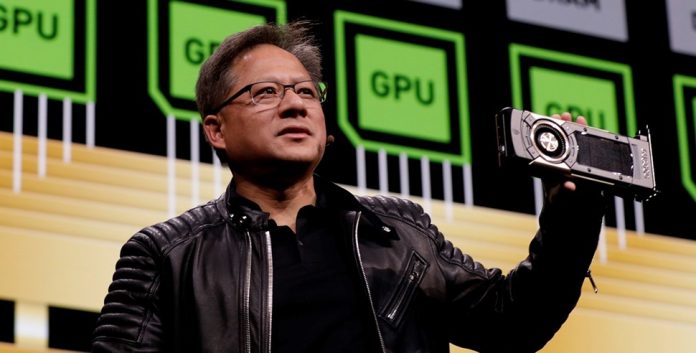
Jensen Huang is not losing sleep over the possibility of writing a multibillion-dollar cheque to California.

The Nvidia chief executive, whose personal fortune has ballooned alongside the artificial intelligence boom, says he is unfazed by a proposed ballot initiative that could saddle the state’s wealthiest residents with a one-time 5% tax on their assets.

The proposed ballot initiative could cost Huang an estimated $7.75 billion if voters approve a one-time 5% tax on the assets of California residents worth more than $1.1 billion. Yet Huang says the idea has not troubled him.

“We chose to live in Silicon Valley, and whatever taxes they would like to apply, so be it,” he said this week. “I’m perfectly fine with it.”

Those remarks landed at a moment when California’s relationship with its wealthiest residents is under renewed strain, shaped by fiscal pressure, political ambition, and the extraordinary concentration of wealth generated by the artificial intelligence boom. Huang, whose net worth Bloomberg puts at about $155 billion, sits at the center of that transformation. Nvidia’s rise from a niche graphics chipmaker to the most valuable company in the world has turned its co-founder into one of the richest individuals alive, almost entirely on the back of paper wealth tied to stock ownership.

The ballot initiative, introduced by a healthcare workers’ union and backed by lawmakers including Representative Ro Khanna and Senator Bernie Sanders, is designed to tap that concentration of wealth directly. It would apply to anyone worth more than $1.1 billion who resides in California as of early 2026, taxing their total assets, excluding real estate, regardless of whether those assets are liquid. Proceeds would be directed toward healthcare, public education, and food assistance at a time when California faces widening budget gaps following federal spending cuts.

Supporters estimate the tax could raise around $100 billion from roughly 200 individuals. In political terms, the argument is straightforward: a small group has benefited enormously from California’s ecosystem, and the state now wants a share large enough to materially shore up public services. In economic terms, the proposal is far more radical, cutting into unrealized gains and tying tax obligations to volatile asset values rather than income.

This is where the pushback from business leaders has been fiercest. Critics warn that founders and investors would be forced to sell large stakes in their companies to raise cash, potentially weakening corporate control and destabilizing firms whose valuations fluctuate wildly. Anduril co-founder Palmer Luckey has framed the proposal as a direct threat to founder-led companies. Venture capitalist Vinod Khosla has suggested it would accelerate an exodus of capital and talent.

The spectre of billionaire flight has long haunted wealth tax debates, and California’s proposal is no exception. Reports that figures such as Larry Page and Peter Thiel had considered leaving the state before the tax could take effect have only sharpened those fears, even as proponents point to studies suggesting that high-net-worth individuals are far less mobile than assumed.

Governor Gavin Newsom has already distanced himself from the idea, signaling opposition to state-level wealth taxes. If the initiative gathers the required 870,000 signatures to appear on the November 2026 ballot, Newsom and the legislature could still attempt to block it through the courts. Even if it survives those hurdles, it would almost certainly face years of legal challenges.

Against that backdrop, Huang’s stance reads less like complacency and more like a calculated signal. Nvidia’s success is inseparable from California’s talent ecosystem, particularly Silicon Valley’s dense concentration of engineers, researchers, and startup networks. Huang has repeatedly said that access to talent, not tax policy, drives where Nvidia operates.

“We work in Silicon Valley because that’s where the talent pool is,” he said, adding that the company establishes offices wherever skilled workers are available.

That view highlights a quiet fault line in the debate. For founders whose companies are deeply rooted in California’s innovation infrastructure, relocation is not a simple matter of changing addresses. For Nvidia, whose dominance in AI chips rests on decades of accumulated expertise and close ties to research institutions, Silicon Valley remains a strategic asset. A tax bill, even one running into billions, may be less consequential than weakening that advantage.

It also underscores how the AI boom has changed the politics of wealth. Much of the fortune accumulated by figures such as Huang exists on balance sheets rather than in cash. Taxing that wealth forces a reckoning over how societies value innovation, risk-taking, and the public goods that underpin private success. The proposal is for supporters, a corrective to an economy that has allowed extreme wealth to grow faster than public capacity. For opponents, it is a blunt instrument that threatens to punish success and introduce uncertainty into long-term investment decisions.

Huang has avoided that ideological framing. Instead, his comments suggest a pragmatic acceptance of California’s social contract: the same environment that enabled Nvidia’s rise may now demand a higher price of admission. And he appears content to let that debate play out.