
DD
MM
YYYY

PAGES

DD
MM
YYYY

spot_img

PAGES

Home Blog Page 15

Snap Announces Major Workforce Reduction of 1,000 Employees as it Pushes Toward Profitability And AI-Driven Efficiency

0

Snap Inc., the parent company of Snapchat, has announced a significant restructuring effort that will impact approximately 1,000 employees, representing about 16% of its full-time workforce, alongside the closure of more than 300 unfilled roles.

The decision, described as difficult by CEO Evan Spiegel via a company-wide memo, is part of a broader strategy to reposition the company for long-term growth and financial sustainability. He further pointed to rapid advancements in artificial intelligence as a key driver behind the restructuring.

Part of the Memo reads,

“Today, we are announcing changes that will impact approximately 1,000 team members at Snap, including 16% of our full-time employees, in addition to closing more than 300 open roles. This is an incredibly difficult decision, and I am deeply sorry to the colleagues who will be leaving us. You have made important contributions to Snap, and we are committed to supporting you through this transition.

“Last fall, I described Snap as facing a crucible moment, requiring a new way of working that is faster and more efficient, while pivoting towards profitable growth. Over the past several months, we have carefully reviewed the work required to best serve our community and partners, and made tough choices to prioritize the investments we believe are most likely to create long-term value. As a result of these changes, we expect to reduce our annualized cost base by more than $500 million by the second half of 2026, helping to establish a clearer path to net-income profitability.

“While these changes are necessary to realize Snap’s long-term potential, we believe that rapid advancements in artificial intelligence enable our teams to reduce repetitive work, increase velocity, and better support our community, partners, and advertisers. We have already witnessed small squads leveraging AI tools to drive meaningful progress across several important initiatives, including Snapchat+, enhanced ad platform performance, and efficiency improvements in our Snap Lite infrastructure.”

In communicating the changes, the company acknowledged the contributions of departing employees and expressed commitment to supporting them through the transition. This includes severance packages, healthcare coverage, equity vesting, and career support—particularly for U.S.-based staff, with equivalent measures to be applied in other regions based on local standards.

Snap restructuring follows what the company previously described as a “crucible moment,” signaling the need for a faster, more efficient operating model. Over recent months, the company has undertaken a comprehensive review of its priorities, ultimately choosing to focus resources on areas most likely to generate sustainable value.

A central pillar of Snap’s forward strategy is the integration of artificial intelligence. The company highlighted how AI is already helping teams reduce repetitive tasks, accelerate execution, and improve performance across key initiatives.

Notable areas of impact include the growth of Snapchat+, enhancements to its advertising platform, and infrastructure efficiencies within Snap Lite.

Snap’s restructuring reflects a broader shift happening across the global tech industry, where companies are rethinking operations around speed, efficiency, and profitability—largely powered by artificial intelligence. What Snap is doing is not in isolation; it is joining a growing league of major firms embedding AI at the core of their business models.

Companies like Microsoft have aggressively integrated AI into their ecosystem, particularly through Copilot across products like Word, Excel, and Azure. This has transformed how users interact with software, automating tasks that once required manual effort. Similarly, Google has infused AI into search, advertising, and productivity tools, using models like Gemini to enhance everything from content generation to ad targeting efficiency.

In the social media space, Meta Platforms has leaned heavily into AI to optimize ad delivery, personalize user feeds, and power recommendation engines across Facebook and Instagram. AI has also become central to content moderation and the development of immersive experiences, especially as the company builds toward its metaverse ambitions.

Notably, Snap’s pivot signals its alignment with an industry-wide evolution. By leveraging AI to reduce repetitive work, increase execution speed, and improve product performance, the company is positioning itself alongside these tech leaders who are using AI not just as a tool, but as a foundational driver of growth.

The company’s leadership underscored its commitment to building a stronger, more agile organization capable of adapting to rapid technological shifts while continuing to serve its global community and partners effectively.

CoW Swap Experiences a Frontend Compromise via DNS Hijacking

0

CoW Swap, a popular DeFi DEX aggregator on Cow Protocol, experienced a frontend compromise via DNS hijacking. Blockchain security firm Blockaid first flagged the main domain as malicious around 14:54 UTC, detecting suspicious activity consistent with a frontend attack.

The CoW DAO quickly confirmed the issue, paused the protocol’s backend and APIs as a precaution, and urged users to avoid the site entirely while they investigated. Attackers hijacked the DNS records, redirecting traffic from the legitimate CoW Swap frontend to a malicious page that mimicked the real interface.

This is a classic frontend and DNS hijack not a smart contract exploit. The on-chain Cow Protocol contracts and settlement logic remained secure and uncompromised. The fake frontend could trick users into signing malicious transactions that drain wallets, even though the underlying protocol was fine. Such attacks exploit trust in the familiar UI.

Reports indicate some funds were stolen shortly after the hijack estimates around $1M in early reports, including one case of 219 ETH from a single wallet, though exact totals vary and the incident is still unfolding. The primary domain was locked and remained inaccessible into day two.

CoW Swap deployed a temporary safe UI instance at an alternative URL. Use only official channels to verify any new links—scammers are likely impersonating them. The team is working with security experts to regain control. They do not expect the original domain to return quickly. Do not visit cow.fi, swap.cow.fi, or any CoW Swap links unless confirmed safe via official updates.

Revoke any token approvals granted to CoW Swap contracts especially after ~14:54 UTC on April 14. Use tools like: revoke.cash. Or built-in wallet approval managers. If you connected your wallet or signed anything during the incident window, consider moving remaining funds to a fresh wallet as an extra precaution. Treat any unexpected transaction prompts as suspicious.

This highlights a growing trend in 2026: frontend and infrastructure attacks (DNS, domain, UI compromises) are becoming more common than pure smart contract bugs, as protocols harden on-chain code but web-facing layers remain vulnerable.

CoW Swap is one of the leading DEX aggregators using solver competition for better execution and user protection via CoW Protocol, so the pause affects trading volume temporarily, but the core protocol itself was not drained or exploited at the contract level.

Other platforms like Aave confirmed no direct impact on their liquidity. Stay safe: Always verify URLs, use hardware wallets where possible, limit approvals, and monitor official CoW Swap communications for recovery updates. If you’re a user who interacted recently, prioritize revoking approvals right away.

Anyone who visited swap.cow.fi after ~14:54 UTC on April 14 and signed transactions especially approvals and permits may have had funds drained via malicious prompts. Early estimates suggested losses around $500k–$1M, including isolated cases like 219 ETH from one wallet, though exact totals remain unconfirmed and not systemic.

Revoke all CoW Swap-related token approvals granted in that window using tools like revoke.cash. Consider moving remaining assets to a new wallet if you interacted. No on-chain compromise: Smart contracts, settlement logic, and core infrastructure stayed secure. The attack was limited to the web frontend.

Backend and APIs paused as precaution ? temporary trading halt and liquidity freeze for the aggregator. A new interface mitigates this, but full normal operations are delayed. As a leading DEX aggregator known for solver competition and user protection, trust in its frontend has been damaged short-term. Some users may shift volume to competitors.

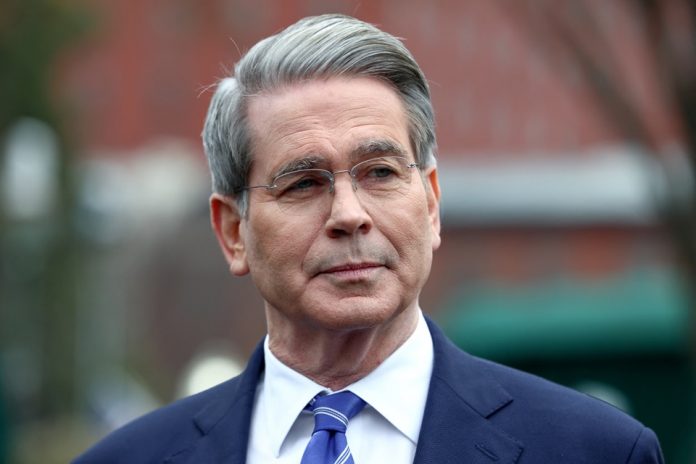
U.S. Economy Shows Resilience Despite Iran Conflict, Treasury Secretary Bessent Asserts, While Eyeing Tariff Restoration by July

0

Treasury Secretary Scott Bessent projected confidence in America’s economic foundations on Tuesday, insisting that the underlying U.S. economy remains strong and that annual growth could still surpass 3 percent or even reach 3.5 percent this year, even as the U.S.-Israeli war with Iran continues to roil energy markets and unsettle global forecasts.

Speaking at the WSJ Opinion Live event in Washington, Bessent pushed back against recent downgrades from international institutions, framing them as an overreaction to temporary shocks stemming from elevated oil prices and supply disruptions.

“I think the underlying economy remains strong,” Bessent said. “I do think that the growth could easily exceed 3%, 3.5% this year, still.”

His remarks come amid fresh turbulence triggered by the conflict that erupted in late February. The fighting has driven oil prices sharply higher, with Brent crude trading above $100 per barrel, prompting the United States to enforce a blockade of Iranian ports and shipping routes through the Strait of Hormuz. That narrow waterway, through which roughly 20 percent of global oil and natural gas exports flowed before the war, has become a focal point of volatility, tightening supplies, and amplifying inflationary pressures worldwide.

Bessent cast the International Monetary Fund’s decision on Tuesday to cut its 2026 global growth outlook—now pegged at 3.1 percent in its baseline scenario, assuming a relatively short-lived conflict—as overly pessimistic. The IMF cited energy price spikes and Hormuz-related disruptions as key factors, warning that a more adverse scenario could see world growth slow to 2.5 percent or lower, potentially pushing the global economy toward recession if hostilities drag on.

The World Bank has similarly revised its projections upward for inflation risks. Bessent, however, maintained that such adjustments underestimate the durability of U.S. domestic momentum and the market’s capacity to adapt, pointing to a well-supplied oil environment beyond the immediate Gulf disruptions.

The administration has already signaled pragmatic steps to ease price pressures, including earlier considerations of lifting sanctions on Iranian oil already at sea, potentially releasing up to 140 million barrels, or roughly 10 to 14 days of global supply, to prevent excessive tightening.

Bessent has emphasized that the oil market itself is adequately supplied when accounting for floating cargoes and alternative sources, suggesting that any short-term volatility will give way to longer-term stability once the conflict resolves.

On the trade front, Bessent addressed the future of U.S. tariffs following the Supreme Court’s February ruling that President Donald Trump had overstepped his authority by imposing sweeping duties under the International Emergency Economic Powers Act (IEEPA). The decision struck down those emergency-based tariffs, forcing a reset in the administration’s trade toolkit. Bessent indicated that equivalent measures could soon return through alternative legal avenues, such as investigations under Section 301 of the Trade Act of 1974.

“The tariff could be back in place at the previous level by beginning of July,” he said, referring to options the Trump administration is actively pursuing.

This timeline would allow the White House to reimpose targeted or broader duties after completing required probes, restoring leverage in ongoing negotiations with trading partners while sidestepping the legal constraints highlighted by the Court. The move fits into a broader strategy of using trade policy to address perceived imbalances, even as the Iran conflict adds another layer of complexity to global supply chains and inflation dynamics.

Bessent’s upbeat assessment contrasts with the cautionary tone from multilateral bodies, yet it aligns with the administration’s emphasis on American economic strength as a buffer against external shocks. Domestic indicators, ranging from steady consumer spending to a resilient labor market, provide some support for his view that the United States can weather the energy-driven headwinds better than more import-dependent economies.

Still, prolonged closure or restricted access through the Strait of Hormuz risks feeding higher gasoline prices and broader cost pressures that could eventually test consumer confidence and corporate margins.

By downplaying the IMF’s revisions and reaffirming a path to solid growth, Bessent sought to project steadiness at a moment when markets remain sensitive to developments in the Middle East. His comments also preview a more assertive trade posture later this year, blending fiscal optimism with a determination to reassert tariff tools as a core element of economic statecraft.

Six Group Partners with Chainlink for Real Time and Historical Equities Market Data Onchain

0

SIX Group has partnered with Chainlink to bring real-time and historical equities market data from its exchanges onchain. SIX Group operates two major European exchanges: SIX Swiss Exchange (Switzerland) and BME Exchange (Spain).

The partnership uses Chainlink’s DataLink, an institutional-grade data publishing service to make equities data directly accessible to smart contracts on blockchain networks. This covers a combined market value of approximately €2 trillion in listed equities, including major blue-chip names like Nestlé, Novartis, Roche (Swiss), and Santander, Inditex (Spanish), plus key indices.

Real-time and historical pricing data for equities and indices listed on these exchanges. The data is now available onchain across 75+ public and private blockchain networks. This is not (yet) full tokenization of the stocks themselves—it’s primarily market data infrastructure. Reliable, regulated onchain data feeds are a foundational step for building things like tokenized equities, onchain derivatives, structured products, or automated trading strategies without relying on offchain oracles that could introduce trust issues.

Traditional finance institutions increasingly need trustworthy data rails to interact with blockchain-based applications. SIX, as a regulated European exchange operator, choosing Chainlink signals growing institutional comfort with decentralized infrastructure for premium market data. This follows Chainlink’s similar deals with other major data providers.

It strengthens Chainlink’s position in bridging traditional capital markets with onchain finance. This is another incremental but meaningful step in bringing high-quality traditional market data onchain, which could accelerate the development of hybrid TradFi-DeFi products in Europe and beyond.

This serves as foundation for tokenized European equities and products — Reliable, regulated real-time + historical pricing data from ~€2T in Swiss and Spanish blue-chip stocks and indices is now directly accessible to smart contracts. This removes a major trust barrier for building tokenized stock indices, structured products, onchain derivatives, and automated strategies without relying on centralized or unverified oracles.

Accelerates RWA adoption in Europe — It bridges traditional capital markets with DeFi and hybrid finance. Developers and institutions can now create compliant onchain applications using premium European market data across 75+ blockchains, potentially unlocking new liquidity and 24/7 use cases for these assets.

Strengthens Chainlink’s dominance in institutional data — This adds another major regulated exchange operator following Deutsche Börse, FTSE Russell, S&P Global, etc. to Chainlink’s DataLink network. It reinforces Chainlink as the go-to infrastructure for high-quality TradFi data onchain, expanding its reach into European equities and supporting broader tokenization efforts.

Signals growing institutional comfort — A regulated European exchange group choosing decentralized oracle rails for its flagship data shows increasing acceptance of blockchain infrastructure by traditional finance players. It lowers technical barriers for other data providers and could encourage more exchanges to follow.

Not full tokenization yet — This is primarily market data infrastructure, not the actual issuance or trading of tokenized shares. However, it’s a critical enabling step—accurate pricing is essential before meaningful onchain equity products can scale with institutional standards.

Overall, it’s an incremental but high-signal move that advances the convergence of TradFi and onchain finance, particularly in Europe. It benefits builders of RWA and DeFi products and bolsters Chainlink’s positioning in the evolving tokenized asset ecosystem.

Chinese Robotaxi Firms Accelerate Middle East Expansion Despite Iran War, Underscoring UAE’s Rise as Global AV Hub

0

Even as the war in Iran continues to cast a shadow over regional markets and cross-border logistics, Chinese autonomous driving companies are pressing ahead with aggressive expansion plans in the Middle East, signaling strong confidence in the Gulf’s regulatory stability and long-term smart mobility ambitions.

The latest move comes from Didi, which plans to begin its first overseas robotaxi test in the United Arab Emirates later this year, marking a significant milestone in its international expansion strategy. The company disclosed the plan on Wednesday, shortly after co-founder Zhang Bo, who heads its autonomous driving unit, addressed a UAE-China business cooperation forum in Beijing.

The announcement coincided with a high-level state visit by Abu Dhabi Crown Prince Sheikh Khaled bin Mohamed bin Zayed Al Nahyan, who met Chinese President Xi Jinping in Beijing on Tuesday. That diplomatic backdrop adds weight to the commercial announcement, suggesting that autonomous mobility is becoming part of the broader economic and technology partnership between China and the UAE.

Besides Didi, at least three other major Chinese robotaxi players are already advancing commercial deployments in the emirate, transforming Dubai and the wider UAE into one of the most active international launch markets for autonomous driving technology outside China.

Leading the charge is WeRide, which earlier this month launched a fully driverless, fare-charging robotaxi service in Dubai’s Jumeirah and Umm Suqeim districts, two of the city’s busiest coastal and tourist corridors. Riders can book the service directly through Uber’s app, marking one of the first large-scale commercial Level 4 deployments in the region.

The scale of WeRide’s ambitions in the Gulf is weighing heavily. In February, the company and Uber announced plans to deploy at least 1,200 robotaxis across Dubai, Abu Dhabi, and Riyadh by 2027, building on existing fully driverless operations and pilots already underway. WeRide said it already has more than 200 robotaxis in the region.

This expansion has continued despite regional instability, including the ongoing Iran conflict. In fact, the company explicitly noted that it remained committed to long-term operations in Dubai “in challenging times,” underscoring how Gulf markets are increasingly being treated as strategic long-term growth regions rather than opportunistic tests.

Pony.ai is also moving forward. In late March, chief executive James Peng said the war had not affected the company’s application for a commercial license in Dubai, describing the conflict as a short-term issue. The company had already secured testing approval from Dubai’s Roads and Transport Authority in September and is now pursuing commercial operations in the emirate.

For robotaxi companies, regulatory approvals, fleet deployment, and local partnerships are capital-intensive and long-dated decisions. The willingness to proceed amid geopolitical tension suggests these firms view the UAE as sufficiently insulated from broader regional risk.

Baidu’s robotaxi arm, Apollo Go, has also joined the push. On April 1, the company announced that residents and visitors in Dubai could begin hailing fully driverless rides through its app, with the initial rollout starting with 50 vehicles and plans to scale to more than 1,000 robotaxis over the next few years, according to Dubai’s media office. This means Dubai now hosts parallel commercial deployments from multiple Chinese AV firms, a development that is rare even among major global cities.

The broader significance is that the Middle East, particularly the UAE, is rapidly emerging as the preferred overseas proving ground for Chinese autonomous vehicle companies.

Analysts believe there are several reasons for this. First, the region offers comparatively faster regulatory pathways and strong state backing for smart-city initiatives. Second, governments in the Gulf are actively integrating autonomous transport into long-term urban mobility strategies. Dubai, for example, has publicly targeted 25% of all journeys to be autonomous by 2030. Third, the geography and infrastructure are highly favorable.

Wide roads, modern city planning, newer transport systems, and government-led digital infrastructure make Gulf cities ideal testing grounds compared with the regulatory fragmentation often seen in Europe and North America.

This expansion trend also reflects China’s growing lead in autonomous driving commercialization. While Waymo continues expanding in the United States and testing in London and Japan, Chinese firms are increasingly building international scale through the Middle East and Europe.

The larger insight is that the global robotaxi race is becoming geographically bifurcated. U.S. companies dominate North America, while Chinese firms are rapidly locking in early-mover advantage across the Gulf, parts of Europe, and select Asian markets.

In that context, Didi’s UAE test is more than an isolated pilot. It is another sign that the Middle East is fast becoming the first major overseas battleground in the global commercialization race for autonomous mobility.