DD
MM
YYYY

PAGES

DD
MM
YYYY

spot_img

PAGES

Home Blog Page 15

Trump Moves to Make Tech Companies Pay for Power Plants as Data Centers Strain America’s Largest Grid

0

The Trump administration is moving to redraw the balance of power costs in the U.S. electricity market, pressing the nation’s largest grid operator to make technology companies shoulder a greater share of the burden created by the AI boom.

At the center of the push is PJM Interconnection. This vast regional grid supplies electricity to more than 65 million people across 13 states and Washington, D.C. PJM also happens to sit at the heart of the global data center industry, with northern Virginia alone hosting the largest concentration of facilities anywhere in the world. Those data centers, built to train and run artificial intelligence models, are now reshaping the economics — and the politics — of power.

According to a White House official cited by CNBC, President Donald Trump wants PJM to hold an emergency auction that would force large technology companies to bid directly on contracts for new power plants. The administration is seeking roughly $15 billion in new baseload generation, capacity designed to run around the clock, not just when the sun shines or the wind blows. At the same time, Trump wants limits placed on what existing power plants can charge in PJM’s capacity market, a move aimed at protecting households already grappling with rising utility bills.

Energy Secretary Chris Wright, Interior Secretary Doug Burgum, and governors from the mid-Atlantic region are expected to announce a joint agreement on Friday, urging PJM to adopt these measures. The White House framed the effort as a corrective to years of underinvestment and policy drift.

“Under President Trump’s leadership, the administration is leading an unprecedented bipartisan effort urging PJM to fix the energy subtraction failures of the past, prevent price increases, and reduce the risk of blackouts,” spokeswoman Taylor Rogers said.

But behind the rhetoric sits a stark reality. Electricity prices across the PJM region have surged in recent years, and watchdogs say data centers are a major driver. Monitoring Analytics, which oversees PJM’s markets, estimates that about $23 billion in capacity costs can be traced directly to the explosion of data center demand. Those costs are ultimately passed through to consumers, a dynamic the watchdog has described as a “massive wealth transfer” from households to large power users.

In its most recent capacity auction, PJM came up six gigawatts short of its reliability requirement for 2027. That shortfall is equivalent to the output of six large nuclear plants. Without a new generation, the margin for error shrinks dramatically.

“Instead of a blackout happening every one in 10 years, we’re looking at something more often,” said Abe Silverman, a researcher at Johns Hopkins University and former general counsel to New Jersey’s public utility board.

The political stakes are rising alongside the technical risks. Trump campaigned on a promise to lower energy costs, yet utility bills have continued to climb in many parts of the country. High power prices were a major undercurrent in the landslide victories of Democrats Mikie Sherrill and Abigail Spanberger in the recent governors’ races in New Jersey and Virginia, two states deeply tied to the PJM grid.

By pushing PJM to make tech companies pay directly for new generation, the administration is signaling a shift in how it views the AI economy’s infrastructure needs. For years, data centers have been welcomed as engines of investment and tax revenue, often receiving favorable treatment from states and local governments. Now, as their electricity consumption rivals that of entire cities, the question has become who pays to keep the lights on.

Capping capacity prices would also mark a significant intervention in PJM’s market design, one that power producers are likely to resist. Generators argue that high prices are necessary to attract investment, especially as older coal and gas plants retire and new projects face regulatory and supply-chain hurdles. The administration, however, appears willing to test those arguments as it seeks to blunt the impact on consumers.

The outcome will shape not just PJM but the broader U.S. power system, as grids nationwide confront the same challenge: an AI-driven surge in demand colliding with aging infrastructure and years of underbuilding. Whether emergency auctions and price caps can deliver new power quickly enough — without triggering unintended consequences — remains an open question.

What is clear though, is that electricity, once a quiet background issue, has become a frontline political and economic battleground. And in Trump’s view, the era of ordinary ratepayers quietly subsidizing Big Tech’s power hunger may be coming to an end.

ASML hits record high on AI boost — Shows Who Really Holds the Keys to the AI Chip Boom

0

Dutch semiconductor equipment company ASML shares climb to fresh record highs following TSMC’s blockbuster earnings, underlining a quiet but powerful truth in the global semiconductor race that no matter how fierce the competition among chip designers and manufacturers becomes, the real bottleneck — and leverage point — sits with the companies that control the tools.

Shares in the Dutch semiconductor equipment maker have risen about 7% since TSMC reported earnings on Thursday, pushing ASML’s market value above the $500 billion mark and making it only the third European company ever to cross that threshold. The stock is now up roughly 25% in 2026, extending a rally that has increasingly been driven less by hype around artificial intelligence and more by hard spending commitments from the world’s biggest chipmakers.

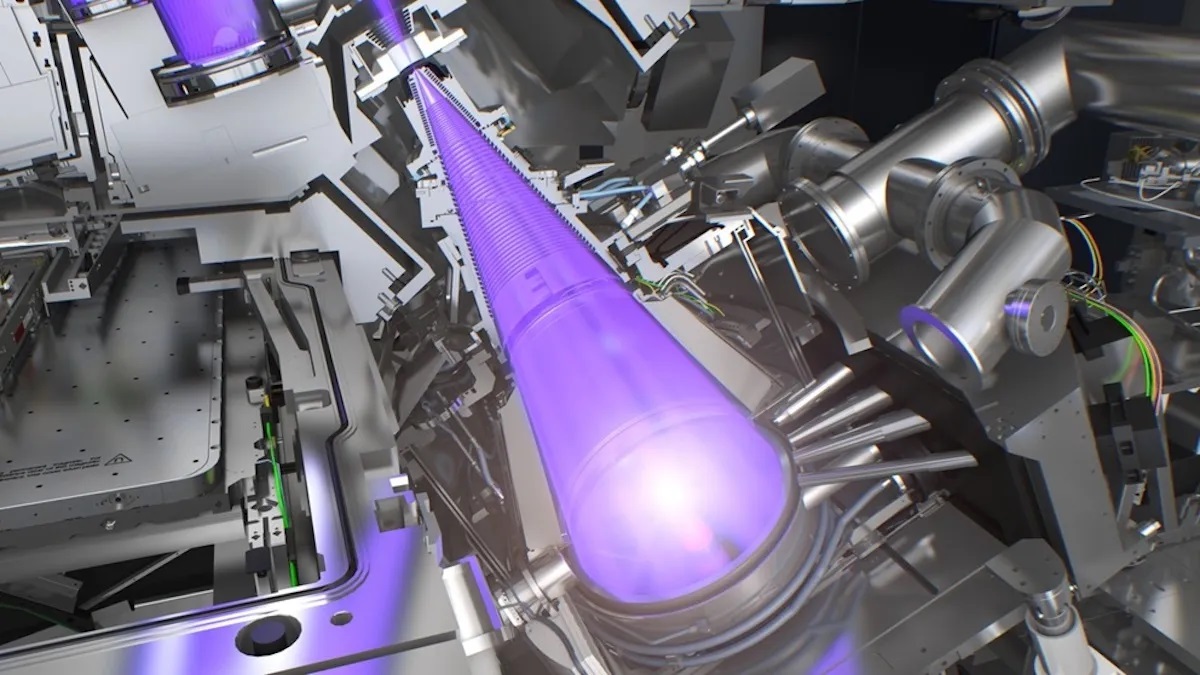
At the center of ASML’s appeal is not growth alone, but scarcity. The company remains the world’s only supplier of extreme ultraviolet lithography machines, the tools required to manufacture the most advanced semiconductors used in AI accelerators, data centers, and high-performance computing. No viable alternative exists at scale, and replicating ASML’s technology would take years, if not decades, even for well-funded rivals.

That monopoly is becoming more consequential as the AI race shifts from experimentation to infrastructure. TSMC’s capital expenditure guidance, which significantly exceeded expectations, sent a clear signal that demand for advanced chips is not peaking. Instead, it is spreading across industries and regions, forcing manufacturers to lock in long-term investment plans. Bank of America said this dynamic underpins near-term upside for ASML, as EUV and other advanced tools become essential for improving yields and energy efficiency at cutting-edge process nodes.

Morgan Stanley took the argument further, saying ASML shares could rise as much as 70% in a bullish scenario. The bank expects higher spending by foundries and memory producers into 2027, combined with better-than-feared demand from China, to drive earnings upgrades. Its base case price target sits at 1,400 euros, but its bull case envisions shares approaching 2,000 euros if tech valuations continue to expand and margins surprise to the upside.

The memory segment is a critical part of that story. AI chips rely heavily on fast, high-density memory, and demand for Dynamic Random Access Memory has surged alongside Nvidia and AMD’s most advanced processors. Counterpoint Research expects memory prices to rise by another 40% to 50% in the first quarter of 2026, adding urgency to capacity expansion plans. JPMorgan said Samsung, the only major DRAM producer with available clean room capacity, is likely to increase orders for equipment most aggressively, with TSMC also expected to place strong orders.

What makes ASML’s position even stronger is that this wave of investment is increasingly being shaped by geopolitics. Governments are no longer passive observers of the semiconductor cycle. The United States, Europe, and key Asian economies are actively steering where chips are made, how supply chains are structured, and which technologies are prioritized. TSMC received another boost this week after Washington said tariffs on Taiwan would be limited to 15%, following commitments by Taiwanese chip and technology firms to invest at least $250 billion in U.S. production capacity.

That policy push aligns neatly with ASML’s business model. Whether new fabs are built in Arizona, Texas, Germany, or Japan, they all require the same high-end lithography systems. For ASML, the location of production matters less than the scale and urgency of it. In effect, industrial policy has become an indirect demand engine for its machines.

Recent signals from the broader AI ecosystem reinforce the momentum. Foxconn, a key Nvidia partner and the world’s largest contract electronics manufacturer, reported a 22% surge in revenue in the final quarter of 2025, reflecting strong demand for AI servers used in data centers. Those servers ultimately house chips produced using ASML’s tools, tying the company’s fortunes to every layer of the AI buildout.

Yet the rally also comes with longer-term questions. ASML’s dependence on a small number of very large customers, particularly TSMC, means its outlook remains closely tied to the investment discipline of a handful of players. Export controls, especially those affecting sales to China, remain a risk, even as analysts note that demand has held up better than expected. At the same time, valuations across the AI supply chain are rising rapidly, raising the stakes for upcoming earnings reports.

ASML is due to report fourth-quarter results on Jan. 28, with investors expected to focus less on near-term revenue and more on order intake, backlog strength, and management’s view of customer spending beyond 2026. Confirmation that capital expenditure plans remain intact could reinforce the view that the current rally is not speculative, but structural.

What ASML’s ascent ultimately highlights is a shift in where strategic power sits in the AI economy. While attention often gravitates toward chip designers, cloud providers, and software breakthroughs, the constraints are increasingly physical. The ability to manufacture at the most advanced nodes has become the limiting factor, and ASML sits squarely at that choke point.

In a global race defined by speed, scale, and sovereignty, ASML is not just supplying machines. It is shaping the pace at which the AI future can be built.

Nigeria’s 2025 Inflation was on Decline – But It’s The NBS Revised Method, Not Prices Falling

0

Nigeria’s inflation picture for 2025 looks markedly different after the National Bureau of Statistics’ December overhaul of its Consumer Price Index methodology, even though the broad direction of travel remains downward.

What has changed is not the reality of prices Nigerians faced throughout the year, but how that reality is measured, compared, and interpreted.

A close comparison of the CPI year-on-year series released with the November 2025 report and the revised series published in December shows a clear pattern: inflation was higher in every single month from January to November than earlier figures suggested. The revisions are not the result of new price shocks or late-arriving data. Instead, they stem from a fundamental statistical re-anchoring of Nigeria’s inflation base.

According to the comparison first reported by NairaMetrics, until November, Nigeria’s year-on-year inflation readings for 2025 were calculated using a single-month reference base under the old 2009 CPI structure. In December, the NBS rebased the index and moved to a 12-month average reference period for 2024, setting that annual average CPI to 100.

The bureau explained that keeping a single-month base would have distorted inflation readings through strong base effects, particularly toward the end of 2025, when comparisons with a volatile prior month could exaggerate apparent declines. The new approach, which spreads the base across an entire year, is designed to improve stability, smooth volatility, and align Nigeria’s inflation framework with international best practice.

Crucially, the change was not prospective. It forced a full recalibration of the already published inflation path for January to November 2025, effectively rewriting the narrative of how quickly price pressures eased during the year.

The revised month-by-month data show just how material the adjustment was. In January 2025, inflation previously reported at 24.48% was lifted to 27.61%, an upward revision of more than three percentage points. February followed a similar pattern, moving from 23.18% to 26.27%. March and April were also pushed higher, from 24.23% to 27.35% and from 23.71% to 26.82%, respectively.

Through the second quarter, the same story held. May inflation was revised from 22.97% to 26.06%, while June moved from 22.22% to 25.29%. By mid-year, the gap began to narrow, but it did not disappear. July was adjusted from 21.88% to 24.94%, and August from 20.12% to 23.14%.

Even as inflation edged lower into the final quarter, the recalibration remained significant. September’s rate increased from 18.02% to 20.98%, October’s from 16.05% to 18.97%, and November’s from 14.45% to 17.33%. In effect, inflation stayed above 20% until August and above 18% until October, a much stickier profile than earlier data implied.

December’s reading, however, still confirms that disinflation was real. Headline inflation eased further to 15.15% in December 2025, down from the revised 17.33% in November. The downward momentum remains intact. What has changed is the starting point and the slope of the descent. Inflation did not fall as quickly as previously believed, meaning households and businesses endured higher underlying price pressure for longer.

That distinction matters because, under the old series, 2025 appeared to be a year of rapid cooling, strengthening the case for aggressive easing of monetary policy. The revised data paint a more cautious picture of gradual disinflation, one that supports restraint when assessing real interest rates and inflation expectations.

For the Federal Government, the recalibrated numbers still offer some validation. By December, inflation had moved closer to the 15% target embedded in the 2025 Appropriation Bill submitted to the National Assembly in 2024. The destination has not changed, but the journey now looks slower and more uneven.

Markets and analysts also gain a clearer baseline. The revised CPI series improves comparability with regional peers and historical trends, reducing the risk of misreading Nigeria’s inflation performance due to statistical distortions rather than genuine economic shifts.

International institutions have taken a similar view. The International Monetary Fund endorsed both Nigeria’s December 2025 inflation outcome and the revised CPI methodology, describing the changes as consistent with global best practice and supportive of macroeconomic stability.

But beyond the endorsement and statistical debates, public sentiment tells a harsher story. Across major cities and rural communities, Nigerians say the lived experience of inflation has not eased in a way that matches the data. Food prices remain the dominant pressure point, driven by supply disruptions, insecurity in farming regions, transport costs, and currency weakness. Rents, electricity tariffs, fuel-related expenses, and basic services continue to strain household budgets.

Market traders and salaried workers lament that purchasing power has eroded sharply. Wages have not kept pace with prices, and any marginal slowdown in inflation has yet to translate into relief at the checkout. For many families, consumption has been cut to essentials, with protein intake reduced and healthcare deferred. Small businesses report thinning margins as customers trade down or delay purchases.

This disconnect between statistical easing and everyday hardship has reinforced skepticism about headline inflation numbers. Some analysts note that disinflation, even when genuine, does not mean prices are falling. It means prices are rising more slowly, from a very high base. After years of double-digit inflation, the price level is already elevated, and a slowdown does little to reverse that accumulated burden.

In practical terms, the revision underscores a simple point. Nigeria’s inflation problem in 2025 was never as benign as earlier data suggested, nor is the recent easing a statistical illusion. The direction of travel remains downward, but the recalibrated figures denote that the path to price stability has been longer and more demanding than it first appeared.

ZKP Outshines Dogecoin and Bittensor as New Data Points Toward a Historic $1.7 Billion Capital Event

0

Market activity is picking up as traders continue to track the Dogecoin price and the Bittensor Tao price closely. These assets still dominate daily discussions, but many analysts agree their biggest growth phase may already be behind them. Large market caps often limit upside, making extreme gains harder to achieve. Experienced investors know that major returns usually come from early entry, not from chasing trends after they peak.

This shift has pushed attention toward Zero Knowledge Proof, a project built around privacy-focused blockchain design. Analysts believe it offers a rare early-stage opportunity that is becoming harder to find in today’s market. With growing interest from data experts and long-term investors, many now see it as the best crypto to buy for those seeking exposure before broader adoption begins.

Why Zero Knowledge Proof Stands Apart in the Market

Zero Knowledge Proof is not positioned as just another blockchain. It focuses on privacy and performance at a level older networks struggle to reach. While many chains sacrifice speed or confidentiality, ZKP is designed to manage both efficiently. This balance has caught the attention of analysts who track emerging infrastructure projects.

What truly stands out is how researchers are comparing ZKP’s early presale auction data with Ethereum’s initial coin offering. When these charts are placed side by side, the growth patterns show striking similarities. Data scientists note that the slope of participation is unusually steep. Veteran investors from past cycles recognize this type of pattern as rare. This has led many to list ZKP among the top crypto to buy before wider market awareness sets in.

Independent analysts are focusing on participation rates rather than speculation. Their models suggest ZKP is entering a phase driven by market structure, not hype. Based on current trends, projections indicate a possible $1.7 billion capital event tied to ongoing presale auction activity.

This figure is not a goal set by the project team. Analysts describe it as a natural outcome of accelerating participation and limited access. As more capital flows in, the effect compounds. Early inflows appear small when compared to what models predict could arrive later. This is why some investors believe current activity represents only the beginning. Many now consider Zero Knowledge Proof the best crypto to buy for those positioning ahead of large-scale liquidity entering the ecosystem.

Dogecoin Price After ETF Approval

Dogecoin reached an important moment on January 12 when regulators approved the 21Shares spot ETF. Normally, such news sparks immediate price movement. Instead, the dogecoin price remained steady near $0.137. This reaction suggests traders are waiting for confirmed capital inflows rather than reacting to headlines.

Despite flat price action, deeper market data tells a different story. On January 13, futures activity jumped by more than 650 percent. This signals that large players are preparing for volatility. Technical analysts are watching the $0.155 resistance level closely. A move above it could shift sentiment quickly. For now, the dogecoin price remains stable as the market waits for a clear direction.

Bittensor TAO Price and Institutional Interest

Bittensor gained attention after Grayscale filed to convert its trust into a spot ETF on January 12. This move signals growing institutional confidence in the project’s role within the artificial intelligence sector. Currently, the Bittensor TAO price is trading in a narrow range between $280 and $286. This calm price action suggests steady accumulation rather than speculation.

From a technical view, TAO recently exited a falling wedge pattern and is holding above key support levels. Traders are closely watching the $300 mark. A confirmed break above this level could open the door toward higher targets. Even so, many analysts note that much of the early explosive growth may already be priced in.

Why Investors Are Looking Beyond Established Coins

The Dogecoin price remains flat despite ETF progress, while the Bittensor TAO price continues to consolidate. Both assets remain important within their sectors, but analysts agree the chances of extreme returns are shrinking. Large market caps often limit upside, especially for investors entering late.

This is why attention is shifting toward Zero Knowledge Proof. With its early-stage position and strong participation metrics, many analysts now describe it as the top crypto to buy in the current market cycle. The project’s structure suggests that broader awareness could drive significant capital movement over time.

Final Thoughts

While established assets hold their ground, market history shows that major wealth is created before momentum becomes obvious. Dogecoin and Bittensor continue to serve their roles, but their largest gains may already be realized. In contrast, Zero Knowledge Proof is showing signs of early acceleration that analysts rarely see.

With models pointing toward a potential $1.7 billion capital event, ZKP stands out as a project driven by structure rather than noise. This is why many now consider it the best crypto to buy for investors seeking early exposure. As participation increases, today’s activity may later be viewed as the calm before a much larger shift.

Find Out More About Zero Knowledge Proof

Presale Auction: https://auction.zkp.com/

Website: https://zkp.com/

X: https://x.com/ZKPofficial

Telegram: https://t.me/ZKPofficial


Shiba Inu and NEAR Lose Attention as Zero Knowledge Proof Sparks $1.7 Billion Institutional Surge

0

The global cryptocurrency market has reached a total value of $3.15 trillion. Yet, Shiba Inu coin news today shows the token is struggling to overcome major resistance. Similarly, Near Protocol Price has investors worried that the era of massive profits for these projects might be over.

Market experts argue that Zero Knowledge Proof (ZKP) is the solution. Analysts describe it as a privacy-focused blockchain with cutting-edge technology. Compared to older tokens, ZKP is seen as having far higher growth potential.

Industry whispers suggest that “Smart Money” is preparing to enter, which could push the total raise over $1.7 billion. Reports indicate that Sovereign Wealth Funds are completing deals behind the scenes. This anticipated institutional influx positions ZKP as the best crypto to buy before a major supply shock hits.

Zero Knowledge Proof Sparks Massive Institutional Interest With $1.7B Projection

Zero Knowledge Proof (ZKP) has shaken the market with its live Layer-1 blockchain. The development team has already invested more than $100 million of its own funds into building the network. With infrastructure operational and hardware being deployed, analysts are highlighting ZKP as the best crypto to buy for practical use.

The daily presale auction is growing steadily, and insiders are noticing the trend. This increase is not just driven by retail investors. Macro-strategists suggest that what we are seeing is an early “pre-game” phase. Market data points to a significant shift in liquidity coming soon.

From Dubai to Singapore, industry insiders report that “Smart Money” has not fully entered yet. While traders react, Sovereign Wealth Funds are completing final checks. These large institutions are preparing to step in. Experts warn that the current calm is merely the prelude to a major financial wave in the market.

Specialists estimate the total raise could reach $1.7 billion once institutional cash flows into the presale auction. These entities invest millions at a time, not small amounts. Such a move will create a strong buy wall. The opportunity to enter before this capital hits the presale auction is rapidly closing.

Being ahead of this institutional influx is key to potential gains. Once millions arrive, prices could surge sharply. With large-scale inflows expected, analysts agree ZKP is the best crypto to buy today. The moment to act is fast approaching, and missing it could mean losing out on significant upside.

Shiba Inu Coin Faces Strong Resistance Today

Shiba Inu is currently trading at $0.00002845 but is struggling to climb higher. The Shiba Inu coin news today points to a strong resistance level that is capping profits for holders. While the broader market enjoys gains, this dog-themed token is falling behind. Investors watch the charts hoping for a breakout, yet momentum remains flat. The $0.00002845 mark has become a frustrating ceiling for long-term holders.

Analysts note that trading volume is dropping as liquidity flows elsewhere. Shiba Inu coin news today shows that traders are losing patience. Instead of seeing the explosive moves from the past, the price is moving sideways. This stagnation raises concerns that the token may miss the current market upswing. With new opportunities emerging, holding this coin is increasingly seen as a cost.

Near Protocol Price Momentum Shows Significant Weakness

Near Protocol is struggling to keep up with market gains. Currently trading at $7.15, the token is failing to generate upward momentum. Near Protocol Price has flattened, ignoring rallies in other assets. Traders are frustrated by the lack of breakout signals. While other coins move higher, this one remains static. The $7.15 level acts as a strong barrier, and without a sudden surge in volume, bullish momentum seems absent.

Investors are realizing that easy profits may be over. Near Protocol Price offers less growth potential compared to newer opportunities. Smart money is rotating out, seeking higher returns elsewhere. Holding a coin at $7.15 feels like dead weight. The lack of movement suggests that the most exciting growth is happening in other sectors of the crypto market.

Investors Shift Towards Higher Potential Crypto Opportunities

The market is changing, and older tokens are slowing down. Shiba Inu coin news today confirms the token is stuck at a ceiling, unable to break upward. Near Protocol Price shows a similar plateau. Traditional choices are stalling as the market heats up.

Meanwhile, reports from Dubai indicate that “Smart Money” is quietly observing Zero Knowledge Proof (ZKP). Analysts suggest current activity is just a warm-up before Sovereign Wealth Funds enter. Experts predict these institutional inflows could push the total raise past $1.7 billion soon.

With millions in institutional cash waiting to enter, specialists label ZKP as the best crypto to buy now. The window to join before this major money hits the presale auction is closing fast.


Explore Zero Knowledge Proof:


Website: https://zkp.com/

Auction: https://auction.zkp.com/

X: https://x.com/ZKPofficial

Telegram: https://t.me/ZKPofficial