DD
MM
YYYY

PAGES

DD
MM
YYYY

spot_img

PAGES

Home Blog Page 15

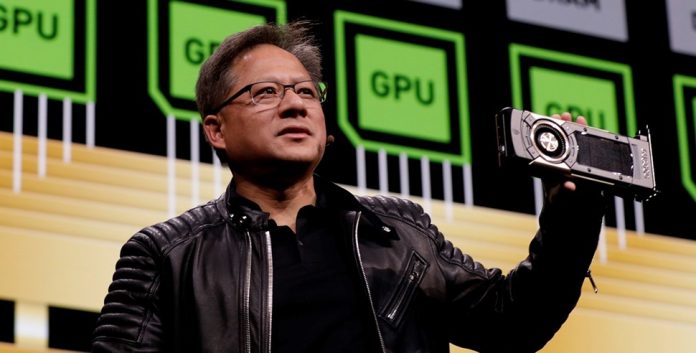
Jensen Huang Shrugs Off California 5% Wealth Tax Threat, Says “I’m Perfectly Fine With It.”

0

Jensen Huang is not losing sleep over the possibility of writing a multibillion-dollar cheque to California.

The Nvidia chief executive, whose personal fortune has ballooned alongside the artificial intelligence boom, says he is unfazed by a proposed ballot initiative that could saddle the state’s wealthiest residents with a one-time 5% tax on their assets.

The proposed ballot initiative could cost Huang an estimated $7.75 billion if voters approve a one-time 5% tax on the assets of California residents worth more than $1.1 billion. Yet Huang says the idea has not troubled him.

“We chose to live in Silicon Valley, and whatever taxes they would like to apply, so be it,” he said this week. “I’m perfectly fine with it.”

Those remarks landed at a moment when California’s relationship with its wealthiest residents is under renewed strain, shaped by fiscal pressure, political ambition, and the extraordinary concentration of wealth generated by the artificial intelligence boom. Huang, whose net worth Bloomberg puts at about $155 billion, sits at the center of that transformation. Nvidia’s rise from a niche graphics chipmaker to the most valuable company in the world has turned its co-founder into one of the richest individuals alive, almost entirely on the back of paper wealth tied to stock ownership.

The ballot initiative, introduced by a healthcare workers’ union and backed by lawmakers including Representative Ro Khanna and Senator Bernie Sanders, is designed to tap that concentration of wealth directly. It would apply to anyone worth more than $1.1 billion who resides in California as of early 2026, taxing their total assets, excluding real estate, regardless of whether those assets are liquid. Proceeds would be directed toward healthcare, public education, and food assistance at a time when California faces widening budget gaps following federal spending cuts.

Supporters estimate the tax could raise around $100 billion from roughly 200 individuals. In political terms, the argument is straightforward: a small group has benefited enormously from California’s ecosystem, and the state now wants a share large enough to materially shore up public services. In economic terms, the proposal is far more radical, cutting into unrealized gains and tying tax obligations to volatile asset values rather than income.

This is where the pushback from business leaders has been fiercest. Critics warn that founders and investors would be forced to sell large stakes in their companies to raise cash, potentially weakening corporate control and destabilizing firms whose valuations fluctuate wildly. Anduril co-founder Palmer Luckey has framed the proposal as a direct threat to founder-led companies. Venture capitalist Vinod Khosla has suggested it would accelerate an exodus of capital and talent.

The spectre of billionaire flight has long haunted wealth tax debates, and California’s proposal is no exception. Reports that figures such as Larry Page and Peter Thiel had considered leaving the state before the tax could take effect have only sharpened those fears, even as proponents point to studies suggesting that high-net-worth individuals are far less mobile than assumed.

Governor Gavin Newsom has already distanced himself from the idea, signaling opposition to state-level wealth taxes. If the initiative gathers the required 870,000 signatures to appear on the November 2026 ballot, Newsom and the legislature could still attempt to block it through the courts. Even if it survives those hurdles, it would almost certainly face years of legal challenges.

Against that backdrop, Huang’s stance reads less like complacency and more like a calculated signal. Nvidia’s success is inseparable from California’s talent ecosystem, particularly Silicon Valley’s dense concentration of engineers, researchers, and startup networks. Huang has repeatedly said that access to talent, not tax policy, drives where Nvidia operates.

“We work in Silicon Valley because that’s where the talent pool is,” he said, adding that the company establishes offices wherever skilled workers are available.

That view highlights a quiet fault line in the debate. For founders whose companies are deeply rooted in California’s innovation infrastructure, relocation is not a simple matter of changing addresses. For Nvidia, whose dominance in AI chips rests on decades of accumulated expertise and close ties to research institutions, Silicon Valley remains a strategic asset. A tax bill, even one running into billions, may be less consequential than weakening that advantage.

It also underscores how the AI boom has changed the politics of wealth. Much of the fortune accumulated by figures such as Huang exists on balance sheets rather than in cash. Taxing that wealth forces a reckoning over how societies value innovation, risk-taking, and the public goods that underpin private success. The proposal is for supporters, a corrective to an economy that has allowed extreme wealth to grow faster than public capacity. For opponents, it is a blunt instrument that threatens to punish success and introduce uncertainty into long-term investment decisions.

Huang has avoided that ideological framing. Instead, his comments suggest a pragmatic acceptance of California’s social contract: the same environment that enabled Nvidia’s rise may now demand a higher price of admission. And he appears content to let that debate play out.

Intel Shares Extend Rally to 6% After CEO’s White House Meeting Signals Deepening U.S. Backing

0

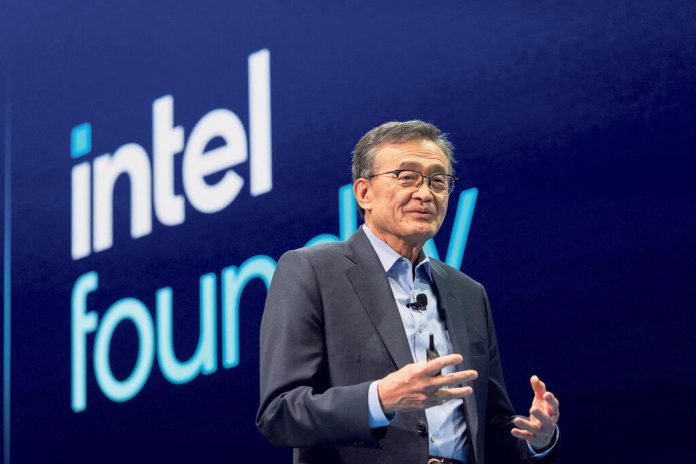
Intel shares extended their sharp rally on Friday, climbing 6% after Chief Executive Officer Lip-Bu Tan met with U.S. President Donald Trump. This meeting underscored how central the struggling chipmaker has become to Washington’s industrial strategy.

The stock’s move adds to a dramatic turnaround that has seen Intel’s market value more than double since the U.S. government took an equity stake in the company in August, an intervention that signaled a far more assertive approach to reshaping America’s semiconductor supply chain.

“The United States Government is proud to be a Shareholder of Intel,” Trump said in a Truth Social post following the meeting, a statement that captured the unusual nature of the relationship.

Sitting U.S. presidents rarely celebrate direct ownership in publicly traded firms, but Intel’s role in advanced chip production has placed it in a different category altogether.

Trump praised Tan as “very successful” and pointed to Intel’s latest chip as evidence of domestic manufacturing momentum, saying it was “designed, built, and packaged right here in the U.S.A.” The remarks served both as political messaging and as reassurance to investors watching closely for signs that Intel’s long-awaited manufacturing turnaround is gaining traction.

Tan, who took the helm amid mounting pressure to stabilize the company, responded on X that he was honored and “delighted to have the full support and encouragement” of Trump and U.S. Secretary of Commerce Howard Lutnick. He also confirmed that Intel’s Core Ultra Series 3 processors, the company’s first major product built on its Intel 18A manufacturing process, are now shipping.

Intel 18A is widely viewed as a make-or-break node for the company after years of delays and missed targets that allowed rivals to pull ahead. Success would strengthen Intel’s push to rebuild its foundry business, attract external customers, and justify the tens of billions of dollars being poured into new fabrication plants across the United States.

The market reaction suggests investors see the White House meeting as more than a courtesy call. It reinforces the idea that Intel now sits at the intersection of national security, economic policy, and technological leadership, giving it a degree of political insulation rarely enjoyed by private-sector manufacturers.

The government’s stake was negotiated last August, when the White House invested $8.9 billion for 433.3 million shares at $20.47 each. That position is now valued at roughly $19 billion, turning the deal into a paper gain and strengthening the administration’s case that direct intervention can deliver both strategic and financial returns.

Intel shares are up nearly 20% so far this year, adding to gains driven by optimism that government backing, tighter cost controls, and progress on next-generation chips could stabilize a company that has spent years losing ground to overseas rivals.

The broader backdrop remains one of intense global competition. Advanced chips underpin artificial intelligence systems, military hardware, data centers, and consumer electronics, making control over production capacity a strategic priority for major powers. U.S. policymakers have grown increasingly uneasy about reliance on foreign manufacturers, particularly in East Asia, and Intel is seen as a key domestic counterweight.

Trump’s comments also align with his broader push to frame manufacturing revival as a national achievement, with Intel positioned as proof that high-end industrial capacity can be rebuilt on U.S. soil. For the company, that narrative offers tangible benefits, including policy support, access to capital, and long-term government alignment.

Still, the road ahead remains demanding as Intel must execute flawlessly on its manufacturing roadmap, scale production efficiently, and compete in fast-moving markets where rivals continue to innovate aggressively. Investor enthusiasm rests heavily on the assumption that the latest technical milestones can be sustained and translated into commercial success.

However, the White House meeting has reinforced a simple message to markets that Intel is no longer just another chipmaker fighting for relevance. It has become a strategic asset, backed at the highest levels of government, with its future tied closely to America’s ambitions in advanced technology and industrial renewal.

As Alphabet Overtake Apple on Marketcap its Highlights How AI Momentum Shapes Valuations

0

Alphabet Inc. Google’s parent company, ticker $GOOG / $GOOGL has officially surpassed Apple Inc. ($AAPL) to become the second-most valuable publicly traded company in the world by market capitalization.

This milestone occurred during trading sessions around January 7-8, 2026, marking the first time Alphabet has overtaken Apple since 2019. As of the latest data: NVIDIA ($NVDA) — ~$4.5 trillion remains the undisputed #1, powered by AI chip dominance.

Alphabet (Google) ($GOOG / $GOOGL) — ~$3.93–3.94 trillion. Apple ($AAPL) — ~$3.84 trillion. Microsoft ($MSFT) — ~$3.55 trillion Alphabet closed Wednesday’s session (January 7/8, 2026) at approximately $3.89 trillion, edging past Apple’s $3.85 trillion.

The lead widened further on Thursday, with Alphabet reaching around $3.94 trillion while Apple slipped slightly. This shift reflects a broader market rotation toward companies leading in artificial intelligence.

Alphabet has surged thanks to strong AI advancements, including the highly praised Gemini 3 model which outperformed rivals in benchmarks for reasoning, coding, and multimodal tasks, custom TPU (Tensor Processing Unit) chips positioning it as a challenger to NVIDIA, booming Google Cloud deals, and resilient core advertising revenue.

In 2025, Alphabet was the top performer among the “Magnificent Seven” Big Tech stocks, gaining ~65% — far outpacing Apple’s more modest gains. Apple, meanwhile, has faced headwinds including criticism for lagging in generative AI integration with delays in advanced Siri features pushed to 2026, a recent stock slump, and investor concerns over its AI roadmap compared to more aggressive AI-focused peers.

This is a dynamic situation — market caps fluctuate daily with stock prices — but as of now, Alphabet holds the #2 spot behind NVIDIA, highlighting how AI momentum is reshaping Big Tech valuations in 2026. Investors are watching closely to see if Alphabet can sustain this lead through continued AI monetization and ROI on its massive data-center investments.

Alphabet officially surpassing Apple ($AAPL) to become the second-most valuable company in the world behind only NVIDIA carries significant implications for investors, the tech sector, and the broader market in 2026.

This shift, which occurred around January 7-8, 2026, with Alphabet’s market cap reaching approximately $3.89–3.94 trillion while Apple’s hovered around $3.84–3.85 trillion, symbolizes a major re-rating driven by AI momentum. The overtake highlights how investors are rewarding companies with proven AI execution and monetization over traditional hardware dominance.

Alphabet has surged thanks to: Strong performance from the Gemini 3 model widely praised for outperforming rivals in reasoning, coding, and multimodal capabilities. Custom TPU (Tensor Processing Unit) chips, including the seventh-generation “Ironwood,” positioning Google as a serious challenger to NVIDIA in AI infrastructure.

Resilient core advertising revenue combined with booming Google Cloud growth from AI demand. In contrast, Apple has faced criticism for delays in its generative AI features, the advanced “more personal Siri” pushed to 2026, slower integration of AI into devices, and a perceived “hardware plateau” in a saturated smartphone market.

This event marks a realignment in the “Magnificent Seven” hierarchy, with the market prioritizing “AI utility” and compute efficiency over Apple’s once-dominant “walled garden” ecosystem. Alphabet was the top performer among the group in 2025 up ~65%, while Apple’s gains were more modest amid AI skepticism.

Analysts note this as a symbolic passing of the torch, reflecting investor preference for diversified AI exposure— search, cloud, advertising over device-centric growth. The lead is fragile—investors will scrutinize ROI on massive data-center investments and whether AI drives sustained revenue growth via AI Overviews in search or cloud deals.

Many expect it to remain a top performer, with potential to approach or challenge NVIDIA if AI monetization accelerates. Pressure mounts for the Spring 2026 Siri overhaul possibly leveraging Gemini tech. A successful launch could spark an upgrade cycle and premium AI subscriptions, potentially reclaiming ground. However, recent downgrades and executive changes signal near-term headwinds.

This reinforces AI as the dominant narrative reshaping tech valuations. The Magnificent Seven still dominate ~34% of the S&P 500, but rotations like this show how quickly sentiment can shift based on execution. Charts highlight Alphabet’s strong 2025-2026 performance relative to the market.

Market caps fluctuate daily, so this could reverse quickly—especially if Apple’s AI features impress. But right now, it underscores 2026’s theme: AI winners are pulling ahead, while laggards risk being left behind.

Bitcoin $100k Delay Sparks Debate, But Analysts See no Fear Factor

0

Bitcoin’s repeated inability to sustain a breakout above the $100,000 mark has reignited a debate across the crypto community.

The crypto asset has traded within the $80,000 to $95,000 range since approximately November 21, 2025, a period of nearly 50 days. On Monday BTC surged as high as $94,764 reigniting hopes of a continued bullish momentum, before it retraced to $90,000 zone.

The price is currently trading at $90,052 at the time of reporting, with recent price action characterized by back-and-forth movement.

While many interpret the delay as a psychological hurdle, analysts suggest deeper market mechanics such as liquidity shifts, macroeconomic pressures, and institutional positioning are the real forces at play

Bitcoin could rally toward the $103,000–$105,000 range within the next few weeks, according to the latest market analysis, as a key technical indicator continues to flash bullish signals. Despite price action remaining rangebound, analysts point to a breakout on Bitcoin’s weekly Relative Strength Index (RSI) as a strong leading indicator of potential upside.

Trader BitBull noted in a post on X that Bitcoin’s weekly RSI broke out of a three-month downtrend in December and has continued to hold above its breakout level. The RSI, which measures whether an asset is overbought or oversold, had been in a downtrend since September before reversing direction near the close of 2025.

“This breakout mirrors a similar setup from earlier last year, which led to several months of gains following Bitcoin’s local low near $75,000,” BitBull said, adding that BTC could reach between $103,000 and $105,000 within three to four weeks.

On lower timeframes, data from TradingView suggests additional bullish signals. The four-hour chart shows a potential hidden bullish divergence, where RSI prints lower lows while price forms higher lows. This typically indicates weakening sell-side pressure and could support Bitcoin’s attempt to turn the $90,000 zone into a strong base.

However, not all analysts are convinced that BTC bearish move is over. Some continue to warn that Bitcoin may revisit lower levels as it searches for a more durable support structure. Among the more bearish scenarios is a potential return to April’s lows near $75,000, with some even predicting a dip below the 2026 yearly open.

Analysts say the next major catalyst could come from U.S. macroeconomic data, particularly the jobs report. Weak labor numbers could strengthen the case for further Federal Reserve rate cuts, which tend to benefit risk assets like cryptocurrencies. Lower interest rates make Bitcoin more attractive relative to low-yield assets such as bonds.

While Bitcoin has climbed close to $95,000 earlier this week, its highest level since November, analysts warn that this rebound may prove temporary. Bitcoin remains up more than 2% in 2026 but is still 29% below its all-time high above $126,000 recorded in early October.

Key Resistance and Support Levels in Focus

Bitcoin’s near-term outlook remains finely balanced between bullish technical signals and lingering macroeconomic uncertainty. While weekly and lower-timeframe RSI breakouts suggest momentum could soon tilt in favor of buyers, price action must still overcome key resistance levels to confirm a sustained trend reversal.

If bulls can successfully defend the $90,000 zone and reclaim the $93,000–$95,000 resistance band with strong volume, a move toward the $103,000–$105,000 range becomes increasingly likely. Such a breakout could attract sidelined capital and reignite broader market optimism, potentially setting the stage for a renewed test of all-time highs later in the quarter.

Outlook

Bitcoin’s next decisive move will likely be shaped by a combination of technical confirmation and macroeconomic catalysts, particularly U.S. inflation data, labor market trends, and signals from the Federal Reserve.

Until clearer direction emerges, traders should expect continued volatility, with both breakout and breakdown scenarios firmly on the table

9ja Cosmos recalls 2025 and peeks through a thin crack at the future.

0

The Changing Face of The Changing of the Guard

The passage from the old year to the new, is a period when some people tend to reflect on the year just past, and think about how they can ‘do’ the next year a bit better.  More expand it further, reflecting all that has passed, and thinking about how that can inform what is yet to come.

Normally I offer an End of Year, and New Year message focusing on the places that make me. That’s generally Trinidad, where I spent some childhood and as a youth, Ireland, where I was born, and Nigeria, which shaped close to the last 30 years.

There are common threads with all places pursuing an emergence from Colonial control and dealing with the normal ills and challenges of a young independent nation.

Ireland had been in ‘servitude’ the longest, though ‘The Republic’, had full autonomy about 20 years earlier, and later benefited from one of the earliest admission support models of the EU.

Neither ECOWAS nor CARICOM had the same ‘uplift’ capacity.

But I remember a ‘challenging’ Ireland which shared ‘emergence’ features with both Nigeria and Trinidad.

Where is home? Well less than being about a place, for me, it’s more about being in a type of sunrise, or perhaps moon rise.  A place where there is this 360 ° ecosystem in flux which is far beyond the insular thing you are mandated to do, or, the business you are in.

Anticipating that flux, and acting from that informed position is where the holy grail is. That decides what succeeds and what fails.

Ireland has lost most of it, Trinidad has lost a lot of it, Nigeria has probably accumulated a bit more of it than is ideal. There is the concept of ‘too much of a good thing’.

With nation emergence comes a certain degree of savagery. But remembering from early years, with it comes a sense of unified moral conduct. There are lines that would not be crossed, and places people would not go in their heads. Brutality and Amorality aren’t the same thing. In some ways these chaotic, mal-regulated environments with patchy and counter-intuitive policing, exhale some sense of societal innocence and an almost unified will to preserve certain values.

Single Acts of mass violence that began with Barnett Davenport in 1790, through Anders Behring Breivik in 2011 and on to Stephen Paddock in 2017, didn’t happen in any part of the ‘Global South’.

This raises questions about the development of amorality in countries considered to be ‘developed’ and asks real questions about where exactly is ‘safe’. Feeling ‘safe’ is a significant ingredient in where people call ‘home’.

From reflecting on me to focusing on 9ja Cosmos

And so, we move on from the established style of a New Year message to where we are with the work of 9ja Cosmos.

We were established as an ‘Extra-Sovereign’ DNO (Decentralized Non Profit Organisation) in 2022.

 

Our mission works to level the playing field for youth of the ‘Global South’ through generating Web 3 products which are approachable, affordable, and can make solutions, such as highly programmable Web 3 ‘tokens’ available to be leveraged as doorways for completely new things.

Doorways were always there since the original emergence of Bitcoin, but historically it was only the geo-privileged could walk through them. 9ja Cosmos doesn’t try to stop anybody or provide a pipe where some people have been deselected.  We simply widen the door!

The pivot gives a nod to legacy announcements at this time though the name ‘9ja Cosmos’ which says everything.

Our Project List Since 2022:

  1. 9jacom
  2. 9javerse
  3. Qatar 2002
  4. Dinos
  5. Sino Amazons/Sinosignia
  6.  .det0x names
  7. Incorporating 9jaCosmos as ‘extra-sovereign’ using Programmable Handshake Tokens as Shares (Internal Project)
  8. Det0xant Portfolio
    >8.1 Original Det0xants Series
    >8.2 Det0xant (overflow merch)
    >8.3 Det0xants 3
    >8.4 Det0xants – Fiendyard Fruit & Veg
    >8.5 Det0xants – Banshee Baby Beauterin
  9. Opaque Emotion Pathways
  10. MiddelWorld GhostDancers
  11. Sino Amazon Active

Det0xant Extensions

Recall while we were promoting the Web 3 names ‘.det0x’, we began giving away tokenized artwork which we named ‘Det0xants’.  Det0x names have their backend and ‘root’ on Handshake. Handshake is a fork/copy of Bitcoin, the most secure blockchain in the world. The pioneering of Handshake was led by Joseph Poon, an original core-dev in pre-2008 Bitcoin development, also led on the ‘Lightning’ network, and later, co-developed Plasma with Vitalik Buterin.

We created the ‘front-end’ on the Optimism Network, which is EVM (Ethereum Virtual Machine) compatible. The EVM environment is known for being fairly ubiquitous but not the most secure environment out there. As a sense of identity and the ‘Web3’ successor to internet domains, Det0x names are safety and security in an unsafe ‘place’.
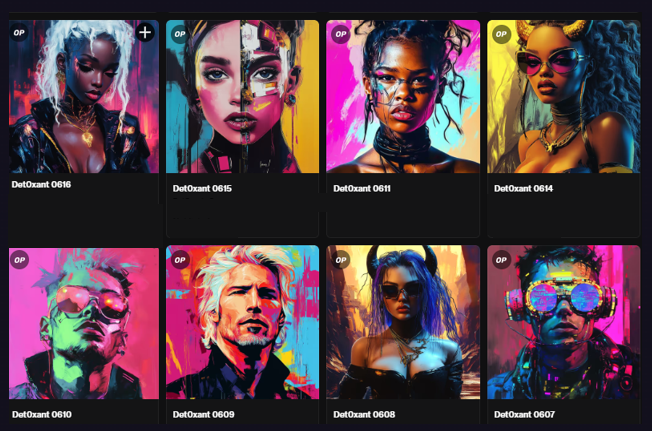
We got a lot of approaches, especially on X, making ‘proposals’ on the Det0xants, though they were not for sale, and had been given free to Det0x name owners and supporters of 9ja Cosmos.

We made several extensions to the Det0xant promotional work, keeping art fundamentals consistent, though deviating somewhat on theme. As always, all tokenized works have a supply of 1 (unique) and were manually laboured upon rather than being an ‘algo’ product.
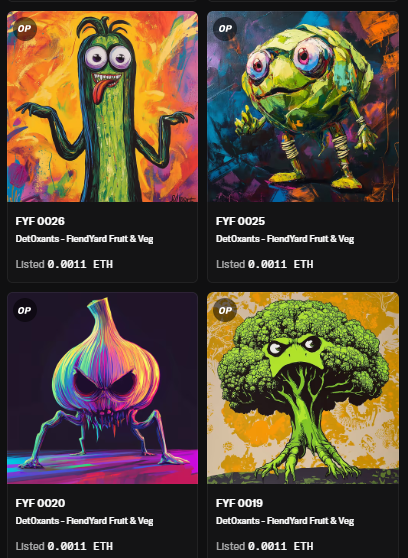
They were also minted to Optimism in order to maintain interoperability with Det0x names and any future developments.

They were also released ultra-affordable in keeping with the raison d’être of 9ja Cosmos.

MiddleWorld Ghost Dancers

MiddleWord Ghost Dancers is a series of tokenized art (stills).. They are our second excursion into the surreal and abstract following the ‘Opaque Emotion Pathways’ series, but involve a loose interpretation of human form.

The series was first given public viewing in online platforms and the title ‘MiddleWorld Ghost Dancers’ was arrived at on LinkedIn.

Using the Optimism Chain continues with the technical theme of interoperability with the Det0x names.

Internal Project – 9ja Cosmos ‘Extra Sovereign’ Share System

The Share System of 9ja Cosmos allows full privacy and decentralized exchange of shares using ZKP (Zero Knowledge Proof) rather than KYC (Know Your Customer) methodology for shares to exchange, and to execute on shareholder decisions and entitlements.

It leverages the powerful programmability of Handshake Tokens (Handshake Names). They are embedded in the Handshake Blockchain in a manner similar to Bitcoin. Smart Contracts are not needed to create them.

Bitcoin Blockchain and Handshake Blockchain are so similar that BIPs (Bitcoin Improvement Protocols) can, and have been made to work on Handshake.

Right now, most of the ownership is with founding elements of 9ja Cosmos. Over time, that is expected to change.

As this fragments and devolves we expect to see ownership change more frequently, and shareholder activity to rise dramatically.

Aspects of the technical architecture which makes many things possible will have to change as activities scale.

This is an ongoing activity that needs to grow as the shareholding devolves.

Sino Amazon Active.

Beginning towards the end of 2022 and going right on to early 2024, we developed the Sino Amazon/Sinosignia series.

Based around ‘notional’ female sea pirates named ‘Sino Amazons’ . Sino Amazons are deemed to have roamed the East Asia seas between about 1100 and 1700 AD.
They are represented as a high-quality layered artwork which is then blockchain tokenized.

These were high quality ‘stills’ paired with a ‘Sinosignia’.

The Sinosignia is a unique character with an Asian appearance. Each Sino Amazon has one unique to them, which they use as an identity in bonds and oaths.
The Sinosignia is a fully working Web3 Top Level Domain (TLD) off the Handshake Blockchain. It’s on a completely different chain to the Sino Amazon related to it.

The original Sino Amazon/Sinosignia dual product is minted to order. Creator cost is very high so displaying them on a retail platform is a financial risk. Instead, customers buy privately and choose the blockchain home for the Sino Amazon component themselves.

Moving on, we’ve developed ‘Sino Amazon Active’

These are animated versions of Sino Amazon originals – around 5 seconds long (in MP4 format) and then ‘tokenized’.

Again, we mint to the Optimism Chain. Sino Amazon Active are compatible with the Ethereum Ecosystem and with .det0x names.

No ‘Sinosignia’ accompanies a ‘Sino Amazon Active’ however they are fully traceable to the Sino Amazon ‘stills’ from which they originate, and their Sinosignia companion.

They can be checked against Explorers for the Handshake Blockchain and the Optimism Chain.

Development Challenges

9ja Cosmos experimented with different retail video output platforms.
Examples: Runway (Gen 3 Alpha Turbo), Google Veo, Image Studio, Sora 2, Luma, Pixverse, (non exhaustive list).

It made sense for us to keep with many of the strategies that worked fine with Web 3 domains, leveraging existing third party architectures rather than getting bogged down in creating our own. In this field it didn’t work.

Free plans pointless, only produced one or two results a day
Paid plans prohibitive. When tokenized, the cost the market would bear for the completed series wouldn’t pay a fraction of the cost of making them.
Almost impossible to get the cut down to a size exactly right for tokenizing/minting purposes > created lots of extra work.
Provider often insisted upon embedding their own logo
Video generating content providers generally work better from text prompts rather than by ‘animating’ existing stills.
The original Sino Amazons are a multi-layered work in themselves, and represent a sunk cost. Pricing is modelled on all input data being worth zero.

Overall, these programs only make sense for individual fun, illustrating social media posts, or for single use in advertising campaigns for something else. They retail GPU service, and trying to ‘retail’ retail won’t work. Margin can’t be realized
We finally found an upstream GPU services provider where we could scale usage fairly flexibly without breaking the bank.

Societal and Moral Value Challenges

Sino Amazon Active product is highly visual. From a moral standpoint we found difficulty in arriving at some kind of ‘universal right’, which encompassed valuing diversity, NSFW (Not Suitable for Work), violation threshold and various other socio-political notions.

On the one hand some lobbying comments suggesting the product was weighted towards false physique ideals and we would do better to include more subject variations. What should a ‘REAL’ female warrior of the ages ‘LOOK LIKE’?  The phrases ‘fuller figure’ and ‘plus model’ were used. However, frequently, the censoring software bundled with the GPU service false flagged attempts to animate subjects more in keeping with the lobbyists requests.

Unlike stills, animations generate many frames, and frame analysis by censoring software may flag an instance the eye can’t see. Though generally, the stills of a ‘lobbyist friendly’ image appeared a more ‘compliant’ animation starting point, than some of the more athletic physique specimens.

The use of ‘traits’

Sino Amazon Active sees our first excursion into the use of ‘traits’ although they don’t resemble the model used by ‘pfp’ series with prescribed components (typically called NFTs). The hierarchy includes Trainees, Probies, (Asscendant) Battle Mages or Sea Mages, and then Grand Mage. Trainees and Probies have no traits yet. Rank and File carry organically grown traits. (Asscendant) Battle Mages or Sea Mages absorb traits of those they lead and mentor. A Grand Mage has all traits.

Trait List : Blade Doctor; Blur; Brutal; Chameleon; Cybernetical; Demonic; Dream Maker; Earth Quake; Firestorm; Force Field; Ice Storm; Junglist; Law Code; Light Path; Mechanic; Mind Warp; Necromancer; Sea Rage; Shape Shifter; Sorcerer; Sultre; Tempest; Time Nomad; Vanish; Vixen and Vortex.

Human impression shapes traits and not an algorithm. We don’t define trait influence on the subject, preferring to leave interpretation up to buyers.

2026 and Beyond

The direction of 9ja Cosmos 26 is intended to consolidate on existing product and see where we can bring improved workability, alignment, interoperability, value and quality. But more important, we want to touch people with what we do, and bring smiles to people.

With the devolution of activists they are just intentions. But the smiles are bankable.

9ja Cosmos is here…

.det0x Domains

Detoxant 3 Tokenized Artworks

Detoxants – FiendYard Fruit & Veg

Opaque Emotion Pathways Tokenized Artworks

Preview our Sino Amazon/Sinosignia releases (Ente)

Visit 9ja Cosmos LinkedIn Page

Visit 9ja Cosmos Website