DD
MM
YYYY

PAGES

DD
MM
YYYY

spot_img

PAGES

Home Blog Page 1617

Stock Market Carnage Wipes Out $6 Trillion, With Apple, Tesla And Nvidia Taking The Biggest Hits

0

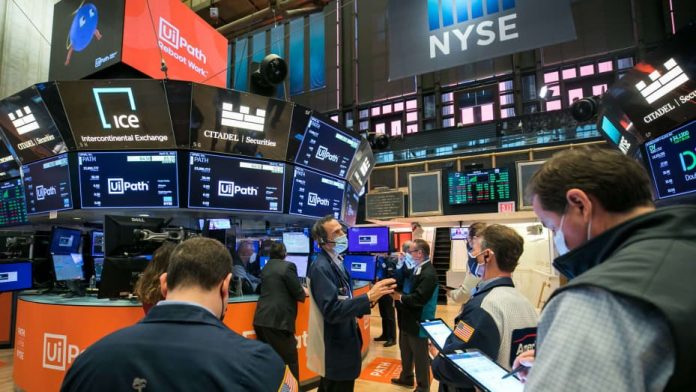
In early April 2025, the global stock market experienced a historic downturn, erasing approximately $6.6 trillion in market capitalization over two days.

This unprecedented sell-off was primarily triggered by the announcement of significant tariffs by U.S. President Donald Trump, leading to widespread investor panic and fears of a global recession.

The Dow Jones Industrial Average plunged 2,230 points, or 5.5%, marking a 14% drop from its December peak. The S&P 500’s total market capitalization fell to $45.1 trillion. Since its recent peak on February 19, the index has lost $9.5 trillion down 17.4% overall.

Technology stocks led the bleeding on Friday, as Apple, Tesla, and Nvidia took the biggest hits. Apple slumped 7%, bringing its loss for the week to 13%. Nvidia pulled back 7% during the session, while Tesla fell 10%. All three companies have large exposure to China and are among the hardest hit by Beijing’s retaliatory duties.

The implementation of international tariffs has also taken a heavy toll on Russia’s already weakened economy, which has been reeling from three years of conflict in Ukraine. During the week, Russia’s MOEX stock market suffered a sharp 8.09% drop in market capitalization, a plunge not seen since September 2022. Major Russian companies such as Gazprom and Sberbank also saw their shares tumble by 5%.

Economists’ estimates have been far grimmer, with most predicting that President Trump’s sweeping tariffs and likely retaliation will slow U.S. economic growth, push up costs for consumers, and make life difficult for businesses that depend on international supply chains.

Speaking on the bloodbath experienced in the stock market, Emily Bowersock Hill, CEO and founding partner at Bowersock Capital Partners said,

“The bull market is dead, and it was destroyed by ideologues and self-inflicted wounds. While the market may be close to the bottom in the short term, we are concerned about the impact of a global trade war on long-term economic growth”.

Jay Woods, Chief global strategist at Freedom Capital Markets said,

“The fear now as we go into the weekend is the trade war escapers, and the US doesn’t back down”.

Also commenting on Trump’s tariff, business magnate and co-founder of Virgin Group Richard Branson on his LinkedIn page, pleaded with President Trump to realize the mistake of his tariff chaos and correct it.

He wrote,

“Strong leadership means taking risks and trying things but when it doesn’t work, realizing your mistake and correcting it. Quickly. One of the most important lessons I’ve learned from 60 years of business is to accept when I’m wrong and change course. The US government’s sweeping tariffs are taking the world’s economy in a dangerous direction. They will make people everywhere worse off especially in America.

“It’s not just about the economy. Countries that trade fairly and healthily prosper and flourish. They reduce poverty, improve health and education, and decrease the likelihood of war.  Courage and self-awareness are cornerstones of true leadership. That includes quickly acknowledging errors and making corrections. With a swift reversal back to sensible economic policy, America and the rest of the world can still avoid the catastrophic fallout these tariffs will inflict.”

Amidst a backlash to his tariff implementation, Trump appears to the unshaken posting on his Truth Social that his “policies will never change”.

He said the tariffs would reverse decades of what he called unfair treatment by the rest of the world and result in factories and jobs moving back to the United States.

“The markets are going to boom” and “the country is going to boom,” he added.

In the wake of this, investors are reportedly upping their bets on an economic downturn, as JPMorgan boosts the odds of a global recession to 60%. Traders have now priced in four interest rate cuts for this year.

The tariff-fueled stock market selloff intensified on Friday, capping a tumultuous two-day rout that erased a record $6.4 trillion in value. Selling accelerated as China vowed to impose new tariffs on U.S. goods, overshadowing a stronger-than-expected jobs report. The Dow Jones Industrial Average plunged 2,230 points, or 5.5%, marking a 14% drop from its December peak. Friday’s 6% decline in the S&P 500 brings the index down by 10% in the past two days. The technology-focused Nasdaq tumbled 5.8%, entering what Wall Street calls a bear market.

  • Apple, Tesla and Nvidia were among the hardest hit, given their presence in China. Nike and Lululemon, which have manufacturing facilities in Vietnam, surged after President Trump said the country would remove its tariffs to prevent additional U.S. duties.

  • “The bull market is dead,” one analyst told CNBC. “We are concerned about the impact of a global trade war on long-term economic growth.”

  • Investors are upping their bets on an economic downturn, as JPMorgan boosts the odds of a global recession to 60%. Traders have now priced in four interest-rate cuts for this year, Bloomberg noted.
Why Are Ripple (XRP), Dogecoin (DOGE) and Solana (SOL) Investors All Going In on Rexas Finance (RXS) in 2025?

0

As Dogecoin shows declining interest and Ripple and Solana see market swings, many investors are looking for the next great idea. Drawing great interest among XRP, DOGE, and SOL investors, Rexas Finance has swiftly become a prominent choice. Reinventing real-world asset (RWA) tokenization, this new blockchain initiative lets users easily tokenize and trade goods such as fine art, commodities, and real estate. With its outstanding presale success and increasing institutional interest in RWA tokenization, Rexas Finance is among the most discussed initiatives of 2025.

Rexas Finance (RXS): A Game-Changer in Asset Tokenization

Rexas Finance (RXS) is revolutionarily approaching asset tokenizing. The platform makes financial markets more accessible to people and companies by streamlining and lowering the expenses of changing real-world assets into digital tokens. This invention opens once illiquid marketplaces by allowing users to exchange tokenized real estate, commodities, and collectibles on the blockchain. Analysts estimate the fast-expanding RWA tokenizing market to reach $16 trillion by 2030. With the ability to fundamentally transform world financial markets, Rexas Finance is among the most exciting blockchain companies of the decade. Rexas Finance is positioned to profit from established financial institutions and blockchain pioneers adopting tokenized finance since it offers investors a compelling alternative to volatile cryptocurrencies like DOGE while giving more tangible utility than XRP and SOL.

Why XRP, DOGE, and SOL Investors Are Moving to Rexas Finance (RXS)

Rexas Finance’s varied and valuable ecosystem is the fundamental reason for the great flood of XRP, DOGE, and SOL investors into it. Unlike many speculative currencies, RXS offers actual financial tools and applications that appeal to both institutional and ordinary investors. Users of the Rexas Token Builder can generate NFTs and ERC-20 tokens without technical knowledge. This capability interests startups and companies looking to tokenize assets or create Web3 apps. The Rexas QuickMint Bot provides immediate token production through Telegram and Discord, enabling asset tokenization more efficiently than ever. The Rexas Treasury lets investors stake their RXS tokens and generate passive income through automatic yield optimization over several blockchain networks. While early investors get access to high-potential tokens before they reach the open market, the Rexas Launchpad assists emerging blockchain companies with funding, marketing, and advising services. The Rexas Estate platform’s expertise is in real estate tokenizing, which lets investors hold fractional shares of highly valuable real estate worldwide. This raises liquidity and accessibility, hence transforming real estate investment. Combining blockchain technologies with traditional finance, the Rexas DeFi ecosystem offers high-return possibilities for staking, yield farming, and liquidity pools. Given its wide utility-driven platform, it is not surprising that investors from XRP, DOGE, and SOL are shifting their money into Rexas Finance, which offers a more steady and profitable investment.

Large Investments in RXS Forecasts a 20,000% Rally to $40

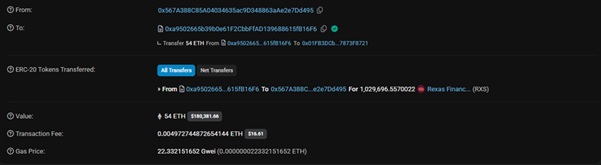
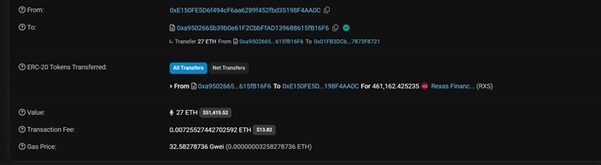
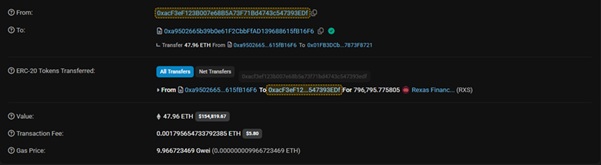
According to blockchain statistics, major XRP, DOGE, and SOL investors have accumulated significant RXS coins. An XRP investor just bought $154,819 worth of RXS, and separate Dogecoin and Solana investors have scooped up $180,381 and $51,415, respectively.

Source: Etherscan

Source: Etherscan

Source: Etherscan

This excellent investor demand has driven Rexas Finance’s presale performance. Currently, in Stage 12, 91.51% of the allocated tokens have already been sold. Initially $0.03 per RXS in Stage 1, the presale price suddenly jumped to $0.20—a 567% rise.

Therefore, sales of 457,547,539 RXS tokens have raised $47,509,966 overall. This outstanding accomplishment guarantees Rexas Finance’s ranking as one of the most successful crypto presales of 2025. Unlike many other crypto tokens, RXS has not drawn venture capital, eliminating the early investor risk of token dumping after launch. The effort also guarantees early listings on CoinGecko and CoinMarketCap, strengthening its profile and visibility. Furthermore, a good CertiK audit has increased investor confidence by confirming the dependability and security of the smart contract infrastructure.

RXS Exchange Debut: Could a 20,000% surge bring $40?

Launching on June 19, 2025, Rexas Finance has listings on at least three of the top ten worldwide crypto exchanges. This much-awaited listing is projected to generate massive trading activity and liquidity inflows. High-profile exchange listings have historically caused explosive price increases. Based on Rexas Finance’s strong presale demand and practical use cases, analysts estimate a possible 20,000% increase post-launch, elevating the token’s price to $40. Rexas Finance is positioned to be one of the most significant breakthrough initiatives of the year as institutional investors join the RWA tokenizing market and distributed finance (DeFi) keeps momentum. Rexas Finance is becoming one of the finest choices for high-growth potential in 2025 as XRP, DOGE, and SOL investors seek more steady and profitable prospects.


For more information about Rexas Finance (RXS) visit the links below:

Website: https://rexas.com

Win $1 Million Giveaway: https://bit.ly/Rexas1M

Whitepaper: https://rexas.com/rexas-whitepaper.pdf

Twitter/X: https://x.com/rexasfinance

Telegram: https://t.me/rexasfinance

Trump Delays TikTok Ban Again By 75 Days, Amid Tariff Fallout and Stalled Buyout Talks

0

On Friday, President Donald Trump announced a 75-day extension of the deadline for TikTok’s forced divestment or ban, throwing a lifeline to the app just hours before it was set to go dark in the United States.

The decision follows the unraveling of a planned deal that would have shifted TikTok’s U.S. operations into American hands — a breakdown many are blaming on Trump’s sudden imposition of a 34% tariff on Chinese goods, including digital services.

But while the White House has attributed the missed April 5 deadline to China’s abrupt withdrawal from the deal talks in protest of the tariffs, others close to the negotiations say the entire schedule was overly ambitious to begin with. Even without the trade shock, few believed that any of the potential American investors were close enough to finalize a takeover by the deadline, raising questions about whether the delay was always inevitable.

In a post on Truth Social, Trump said his administration had been “working very hard” to secure a deal to “SAVE TIKTOK” and emphasized that “tremendous progress” had been made. Still, he conceded that more time was needed to finalize all necessary approvals. A source familiar with the matter confirmed that Trump signed an executive order formalizing the delay.

The ban had been scheduled to take effect on Saturday. It stemmed from a law passed during the Biden administration, which required TikTok’s Chinese parent company, ByteDance, to divest the app or face an outright ban in the U.S. over national security concerns. The law was to be enforced beginning in January, but Trump delayed implementation when he took office, first by 75 days, and now by an additional 75, while pursuing a deal that would keep the app available to its 170 million U.S. users under new ownership.

According to a source familiar with the negotiations, a framework agreement had been reached earlier this week. The deal would have transferred ownership of TikTok’s U.S. operations to a new entity backed by American private equity firms, venture capital groups, and tech companies. ByteDance was expected to retain a minority stake, capped at 20%, in compliance with the divestment law. The arrangement would also prohibit TikTok’s U.S. entity from sharing data or algorithm development with ByteDance.

However, after Trump unveiled the sweeping tariff hike on China, raising import duties to 34%, Beijing balked. ByteDance representatives informed the White House on Thursday that China would no longer approve the deal under the current conditions. That left the administration scrambling to reassess its options.

While the collapse is being pinned largely on the tariff move, insiders involved in the deal say the timeline was already under severe strain. Multiple investors had expressed interest in acquiring TikTok’s U.S. assets, but none had reached the final stages of due diligence or secured the financing needed to close such a large and complex deal. Some had barely progressed beyond exploratory talks, sources said, and several were waiting for clearer regulatory guidance, particularly regarding Chinese law governing the export of tech-related intellectual property.

In Washington, the political calculus continues to shift. Although Trump and Vice President JD Vance, who is overseeing the TikTok deal, were both confident earlier this week that a deal would be in place by April 5, the latest setback has left the White House in a holding pattern.

“We hope to continue working in Good Faith with China, who I understand are not very happy about our Reciprocal Tariffs,” Trump said in his post, adding, “We do not want TikTok to ‘go dark.’”

“We look forward to working with TikTok and China to close the Deal,” he said.

With the Chinese government now insisting that no deal will move forward without renewed negotiations on the tariffs, the administration had little choice but to delay enforcement again.

TikTok, for its part, remained silent in the hours after the announcement. ByteDance issued a brief statement acknowledging that it was in talks with the U.S. government but stressed that “key matters remain unresolved” and that any agreement would require Beijing’s approval. “An agreement has not been executed,” a spokesperson said, noting that everything is still subject to Chinese law.

In the days leading up to the deadline, TikTok CEO Shou Chew attended Trump’s inauguration ceremony, seated alongside cabinet officials and major tech CEOs — an appearance many interpreted as a signal of how seriously the company was treating the negotiations.

The app also briefly went offline in the U.S. a day before Inauguration Day, displaying a thank-you message when it came back online that read: “We will work with President Trump on a long-term solution that keeps TikTok in the United States.”

Still, the extended limbo continues to provoke concern on Capitol Hill. While Congress overwhelmingly backed the TikTok law last year, citing fears over data privacy, surveillance, and Chinese influence, the latest delay pushes the enforcement window far beyond what lawmakers originally envisioned. The law allows for only one 90-day extension, which can be granted if the president certifies to Congress that “significant progress” is being made toward a sale.

Some lawmakers and legal scholars quoted by CNN argue that Trump is testing the limits of that provision. “The first extension was already shaky, and this second one just compounds the legal and constitutional issues,” said Carl Tobias, a law professor at the University of Richmond. “If Congress doesn’t push back, then what was the point of passing the law in the first place?”

Jeremy Goldman, principal analyst at Emarketer, said Trump’s delay follows a familiar playbook: stall the process, increase leverage, and use the ongoing uncertainty as a geopolitical bargaining chip.

“Drag out the clock, extract leverage, keep the drama simmering, and above all, make sure TikTok stays just visible enough to keep the dealmaking sharks circling,” Goldman said in a note Friday. “As long as TikTok is in limbo, Trump can keep using it as a pressure point in his broader trade war strategy with China.”

UN Warns AI Boom May Affect 40% of Global Jobs, Deepen Global Inequality, as Market Set to Hit $4.8tn by 2033

0

Artificial intelligence is forecast to become a $4.8 trillion global industry by 2033 — a figure that nearly equals the size of Germany’s economy. But according to a new report from the United Nations Conference on Trade and Development (UNCTAD), the economic rewards of AI are not being evenly distributed.

The agency warns that the rapid acceleration of AI risks compounding inequality both within and between countries, while also raising red flags about job losses, creative ownership, and technological domination by a handful of wealthy nations and corporations.

UNCTAD says AI has already begun transforming economies by delivering massive productivity gains and catalyzing digital innovation. But its benefits, the agency notes, remain “highly concentrated.”

“The benefits of AI-driven automation often favor capital over labor, which could widen inequality and reduce the competitive advantage of low-cost labor in developing economies,” it said.

Most of the value is accruing to developed countries, particularly the United States and China, as well as a small group of powerful tech companies. The UN body says this concentration threatens to widen existing inequalities, particularly for developing nations that already struggle with limited digital infrastructure, inadequate investment in education and research, and exclusion from key policy discussions.

Beyond inequality, the UN also highlighted growing anxieties around job displacement. The report says 40% of global jobs could be affected by AI-driven automation, echoing previous warnings from the International Monetary Fund.

In January, the World Economic Forum released a survey showing that 41% of employers were considering reducing their workforce in areas where AI tools could take over, particularly administrative, clerical, and data-related functions. This pattern, UNCTAD warns, may hit developing countries especially hard, as many of them depend on labor-intensive sectors and a youthful workforce.

In addition to the impact on labor, UNCTAD flags that AI-driven automation tends to reward capital over labor as the deeper structural risk. This means the gains flow largely to owners of technology rather than workers. That shift, it said, could undermine the traditional comparative advantage of low-wage economies and accelerate a global race to the bottom where only the richest countries can compete in AI development, while others fall further behind.

But a newer concern has been rapidly gaining traction among artists, writers, musicians, journalists, and digital creators — the issue of copyright infringement in the age of AI.

Several reports underscore that as AI tools grow more powerful, they are increasingly being trained on vast datasets sourced from publicly available human-made content — everything from books and articles to images, music, and films. These materials, often copyrighted, are used without obtaining permission from creators or providing compensation, raising legal and ethical questions that have yet to be resolved.

Creators around the world have begun to push back with the argument that their intellectual property is being used to train systems that can then mimic or even replace their work, all without recognition or financial return. Lawsuits have already been filed against some major AI developers, with plaintiffs claiming copyright violation and unfair commercial use.

The UN report underpins this tension, warning that unchecked AI development could strip value from creative labor and undermine the already precarious livelihoods of many working in the arts and content industries.

UNCTAD also points to the fact that only a handful of companies, such as Apple, Nvidia, and Microsoft — are controlling vast swaths of the AI landscape. These firms now hold market valuations comparable to the GDP of the entire African continent. More than 40% of global corporate spending on AI research and development is concentrated among just 100 companies, most of them headquartered in the U.S. and China. This corporate consolidation is not just a matter of economics; it gives these companies outsized influence in setting the rules, deciding how AI is built, and determining who gets access.

What worries the UN is that 118 countries, most of them in the Global South — are effectively shut out of ongoing global conversations about AI governance, regulation, and ethics. Without a seat at the table, these countries risk being permanently sidelined in shaping how AI unfolds, despite standing to suffer the most if inequalities worsen.

Still, the report acknowledges that AI does not have to be a zero-sum game. It says the technology has the potential to create new industries, empower workers, and lift productivity across sectors — but only if countries invest deliberately in reskilling, education, and inclusive infrastructure.

UNCTAD called for a multilateral effort to prevent the AI boom from becoming another chapter in global economic exclusion. It recommended that governments and international institutions promote open-source AI tools to allow broader access, push for transparency around how AI models are trained and used, and establish mechanisms to ensure the fair use of intellectual property, particularly in how AI tools are trained on human-created content.

According to the report, the international community must also prioritize governance frameworks that allow all nations, not just the most technologically advanced, to participate in decision-making. That includes shared investment in AI infrastructure, data access, and regulation that protects both workers and creators.

“AI can be a catalyst for progress, innovation, and shared prosperity — but only if countries actively shape its trajectory,” the report concludes. “Strategic investments, inclusive governance, and international cooperation are key to ensuring that AI benefits all, rather than reinforcing existing divides.”

Egoras, Backed by Tekedia Capital: A Journey of Growth [video]

0

Tenacity. Unalloyed Vision. Innovation. Flawless Execution. These are words I describe Egoras, Africa’s #1 layer 1 blockchain startup, and the only company I know in Africa that links its digital assets to manufacturing output. As the firm begins the construction of Egoras GigaFactory near Aba, Abia State, to host 3000 workers, I want the world to know how it started. Hundreds of jobs have been created already and more on the way. 

If you know how to use soldering iron and can read a datasheet, there is going to be work. And if you can do industrial welding well, there is going to be a job. 

Ugoji Harry, Egoras CEO, has served his country and continent. And to Tekedia Capital members who funded this vision: big gboza. You are the best investors in the continent. 

My hobby is investing in young people and I have come to respect Nigeria’s young people.