DD
MM
YYYY

PAGES

DD
MM
YYYY

spot_img

PAGES

Home Blog Page 1643

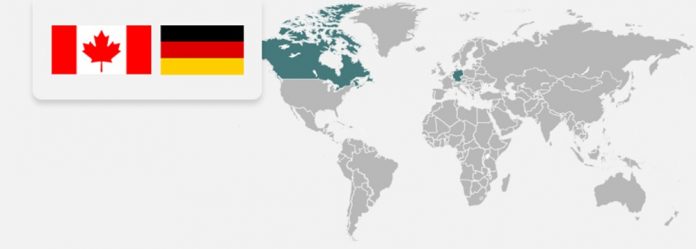
Implications of Germany Seeking Stronger Ties with Canada amid U.S. Tariff Pressures

0

Germany has expressed interest in strengthening ties with Canada as a response to the escalating trade tensions caused by U.S. tariffs, which German Vice Chancellor Robert Habeck has described as “madness.” This sentiment emerged prominently during Habeck’s visit to the Hannover Messe trade fair in 2025, where Canada was featured as the partner country. At the event, Habeck highlighted the potential for enhanced EU-Canada collaboration, especially in light of the U.S. imposing steep tariffs on imports, including a 25% levy on Canadian goods and additional tariffs on steel and aluminum.

He suggested that the European Union could serve as an alternative partner for Canada, particularly as both regions face the economic uncertainty brought by U.S. protectionist policies under President Donald Trump. This perspective aligns with broader efforts by both Germany and Canada to diversify trade relationships and reduce reliance on the U.S. market amidst ongoing tariff disputes. Both Germany and Canada could reduce their dependence on the U.S. market by deepening bilateral trade. The EU-Canada Comprehensive Economic and Trade Agreement (CETA), already in place, provides a framework for tariff-free access to most goods, which could be leveraged further.

This might lead to increased exports of German machinery, vehicles, and chemicals to Canada, and Canadian energy resources, critical minerals, and agricultural products to the EU. U.S. tariffs disrupt North American and transatlantic supply chains, particularly in industries like automotive and steel. Closer Germany-Canada collaboration could foster alternative supply networks, ensuring stability for manufacturers and reducing costs passed onto consumers. German firms, facing uncertainty in the U.S., might redirect investments to Canada, which offers a stable, resource-rich economy. Conversely, Canadian companies could see the EU as a larger market to offset losses from U.S. tariffs.

Pressure on U.S. Economy: If this shift gains momentum, it could weaken U.S. economic leverage, as two of its major trading partners pivot away. This might force a reevaluation of U.S. tariff policies, though it risks escalating trade wars in the short term. A closer Germany-Canada relationship could bolster the broader EU-Canada partnership, reinforcing a bloc of like-minded nations committed to free trade and multilateralism in contrast to U.S. unilateralism. This move might strain U.S.-Germany and U.S.-Canada relations further, especially under a Trump administration prioritizing “America First.” It could widen the rift in NATO and G7 dynamics, where economic cooperation underpins political unity.

A successful Germany-Canada pivot could inspire other nations to seek alternatives to U.S.-centric trade, potentially undermining the dominance of the U.S. dollar and its economic influence. Canada’s vast reserves of critical minerals (like lithium and rare earths) and energy resources (natural gas, hydrogen potential) align with Germany’s green transition goals. This could accelerate joint projects in sustainable tech, reducing Europe’s reliance on Russian or Chinese supplies. Amid rising global uncertainty—U.S. isolationism, China’s assertiveness, and Russia’s aggression—Germany and Canada could position themselves as reliable middle powers, fostering a rules-based international order.

This partnership might serve as a model for resisting protectionist trends, encouraging other nations to double down on open markets rather than retreating into economic nationalism. Stronger Germany-Canada ties could provoke harsher U.S. measures, like additional tariffs or diplomatic pushback, complicating the calculus for both nations. Building new trade frameworks or redirecting supply chains takes time, leaving both economies vulnerable to immediate tariff impacts. In Germany, industries tied to U.S. markets might resist; in Canada, proximity and economic integration with the U.S. could limit how far Ottawa pivots.


Tesla Poised For Tough Q1 Report Amidst Plethora of Challenges

0

Tesla, an American manufacturer of electric vehicles is facing a challenging start for 2025, as the EV giant is poised for a tough first quarter, as it prepares to release its Q1 report.

The company is currently confronting a plethora of challenges which include plunging demand in Europe, reflecting both operational and market difficulties, rising competition in China, and a backlash against CEO Elon Musk’s political role in Trump’s administration.

Tesla and its dealerships have been targeted in a string of attacks across the country as infuriated liberals’ protests Musk’s drastic cuts to the federal government. With its showrooms vandalized, which has seen production lines pause, the automaker is currently confronting a significant problem. Escalating reports of vandalism at Tesla dealerships and charging stations across the US have prompted the FBI to create a task force to target the perpetrators.

Musk has unveiled his plan to fight what he calls ‘domestic terrorists’ targeting Tesla cars and showrooms. Also, the US President Donald Trump declared last month that anybody caught engaging in the vandalism would be considered domestic terrorists, a claim Musk reiterated.

Following these challenges, analysts anticipate 390,000 deliveries for the period, down from 460,000 projected in January. Also, Wall Street analysts have lowered their expectations as Musk’s political maneuvering has fueled a consumer backlash that is eroding global demand for the US top-selling electric vehicles.

Tesla is currently battling with profitability, as sales in California, its main market in the U.S., plummeted 31% in January from a year ago. European numbers are worse, dropping 43% in the first two months of 2025. In Europe, sales plunged by roughly half during the first two months of the year, even as industrywide EV sales grew 28%. Sales figures in France showed a 37% decline in March, marking the third straight monthly decline and the weakest Q1 in the country since 2021.

In China, one of its most important markets, Tesla is grappling with intensified competition, where domestic EV makers like BYD are gaining ground. The company has resorted to price cuts to maintain market share, which, while boosting sales volume in some instances (such as a record 196,902 deliveries in China in Q4 2024), has squeezed automotive margins. Margins hit a low in Q4 2024 and are expected to face further pressure in Q1 2025 due to idle capacity and ongoing price reductions. Sales of its vehicles crashed 29% through February.

This decline in the numbers of sales will set the tone for the rest of the year, as Tesla aims to return to growth after logging its first annual sales drop in over a decade last year.  The first quarter is typically Tesla’s slowest in terms of sales, in line with broader industry trends. On top of that, its four factories underwent weeks of planned downtime to retool a refreshed Model Y SUV.

“There’s supply disruption because of the herculean task that they did,” said Ben Kallo, a senior research analyst at Baird. “They’re ramping down four factories and then re-ramping them across three different supply chains. I think that it also will spill” into the second quarter, he said in an interview.

Another layer of complexity comes from external perceptions tied to CEO Elon Musk’s political involvement. Musk’s role in the Trump administration’s Department of Government Efficiency (DOGE) has sparked controversy, with some analysts and investors pointing to potential “brand damage” as a factor in declining demand. Protests and vandalism targeting Tesla in the U.S. and abroad, alongside a reported $15 billion drop in brand value in 2024, highlight this sentiment.

However, the extent to which this affects sales remains debated, with some arguing that supply-side issues, like the Model Y transition, outweigh these concerns.

[You’re Invited] The Abundance in Nations – April 5, 2025

0

Pythagoras postulated that the universe is numbers. And across human history, we have been trying to understand the numbers which make up the universe. When you understand the numbers, you understand the “universe” in what you do.

Join Tekedia Capital on Saturday for another edition of Tekedia Capital OPEN on a topic titled “The Abundance of Nations”. How do you unlock the abundance? You need to understand numbers because the wealth and abundance of nations are in the numbers. The impossibility is only possible because we do not understand the numbers on that thing that is impossible!

Event: Tekedia Capital Open

Topic: The Abundance in Nations and Preview of Next Tekedia Capital Investment Cycle’s 17 Startups

Speaker: Ndubuisi Ekekwe, PhD

Date: Saturday, April 5, 2025

Time: 4-5pm WAT

Zoom link: here https://www.tekedia.com/the-abundance-of-nations-and-preview-of-next-investment-cycles-17-startups/

The OPEN is free for the public; you’re invited.

Tinubu Overhauls NNPC Limited Board, Appoints New Leadership to Drive Ambitious Oil and Gas Goals

0
NNPC HQs in Abuja (credit: Guardian)

In a decisive move, President Bola Ahmed Tinubu has approved a sweeping reconstitution of the Nigerian National Petroleum Company (NNPC) Limited board, effective immediately, replacing Chairman Chief Pius Akinyelure, Group Chief Executive Officer Mallam Mele Kolo Kyari, and all other board members appointed in November 2023.

The announcement, made by Bayo Onanuga, Special Adviser to the President on Information and Strategy, marks a significant shift for Nigeria’s state-owned oil giant, which has faced persistent accusations of malfeasance, underperformance, and financial inefficiency.

The overhaul introduces Engineer Bashir Bayo Ojulari as Group CEO and Ahmadu Musa Kida as non-executive chairman, alongside a new 11-member board tasked with reversing decades of criticism and meeting ambitious sectoral goals.

The reconstituted board includes Adedapo Segun, who assumed the role of Chief Financial Officer in November 2024, replacing Umaru Isa Ajiya. Representing Nigeria’s six geopolitical zones, non-executive directors include Bello Rabiu (North West), Yusuf Usman (North East), and Babs Omotowa, a former Managing Director of the Nigerian Liquefied Natural Gas (NLNG), for North Central. From the southern zones, Austin Avuru (South-South), David Ige (South West), and Henry Obih (South East) join the board. Mrs. Lydia Shehu Jafiya, Permanent Secretary of the Federal Ministry of Finance, and Aminu Said Ahmed, representing the Ministry of Petroleum Resources, round out the lineup.

Exercising his powers under Section 59(2) of the Petroleum Industry Act (PIA) 2021, President Tinubu underscored that the restructuring aims to enhance operational efficiency, restore investor confidence, boost local content, and drive economic growth through gas commercialization and diversification.

For years, the NNPC has been a lightning rod for criticism, with successive boards and management teams accused of mismanagement, corruption, and failing to deliver value despite Nigeria’s status as Africa’s largest oil producer. Calls for its dissolution or radical reform have grown louder, with energy experts and citizens pointing to chronic underperformance.

“For Nigeria to make progress, the President will need to fire the entire executive management and board of NNPC and approve for its unbundling,” energy expert Kelvin Emmanuel argued last month.

He also called for overhauls of the Nigerian Midstream and Downstream Petroleum Regulatory Authority (NMDPRA) and the Nigerian Upstream Petroleum Regulatory Commission (NUPRC), adding, “The oil and gas sector needs a state of emergency more than any Nigerian state.”

Emmanuel’s critique reflects a broader sentiment that the NNPC’s entrenched inefficiencies have stymied national development.

Financially, the NNPC has long struggled to justify its existence as a profit-making entity. Despite billions of naira allocated annually for operational costs, the company reported consistent losses for years. In 2023, the NNPC posted a profit of $1.5 billion, its first significant positive result in years, following reforms under the PIA. However, this figure was widely dismissed as inadequate given Nigeria’s oil wealth.

“Saudi Aramco did $163 billion in profits for 2022. But a clown will come here and tell me that the miserable $1.5 billion NNPC did in profits is commendable! Fire the board and management of NNPC and appoint professionals with cognate experience,” Emmanuel declared last year.

Others have noted that the NNPC’s profits pale in comparison to global peers like Saudi Aramco or even regional players like Angola’s Sonangol, which have leveraged their resources more effectively.

The Tinubu administration has responded to these concerns with a reform agenda since taking office in 2023. Last year, the NNPC reported $17 billion in new investments, a milestone the government hopes to build upon, targeting $30 billion by 2027 and $60 billion by 2030. Production goals are equally ambitious: oil output is slated to reach two million barrels per day by 2027 and three million by 2030, while gas production is expected to hit 8 billion cubic feet daily by 2027 and 10 billion by 2030.

To reduce Nigeria’s dependence on imported petroleum products, Tinubu has directed the new board to increase NNPC’s crude oil refining output to 200,000 barrels per day by 2027 and 500,000 by 2030. An immediate action plan mandates a strategic portfolio review of NNPC-operated and Joint Venture assets to ensure alignment with value maximization objectives.

Tinubu acknowledged the outgoing board’s contributions, particularly their role in rehabilitating the Port Harcourt and Warri refineries, which resumed production after prolonged shutdowns.
“Their dedicated service has laid a foundation for progress, and I wish them success in their future endeavors,” he said.

However, the scale of the challenges ahead—aging infrastructure, Niger Delta insecurity, and global energy transitions—will test the new board’s ability to deliver. Public skepticism remains high, with many Nigerians viewing the NNPC as a symbol of systemic failure. Whether Ojulari, Kida and their team can break from the past and meet the administration’s lofty targets will determine if this overhaul marks a turning point or merely another chapter in the NNPC’s troubled history.

Newsmax Shares Skyrocket Over 700% in IPO Frenzy, but Concerns Linger It Will Suffer Truth Social’s Fate

0

Shares of Newsmax, the conservative cable television channel, experienced a dramatic surge in early trading on Tuesday, climbing more than 100% just a day after an already explosive debut on the New York Stock Exchange.

The stock, which closed at $83.51 per share on Monday after spiking over 700% from its opening price of $14, continued its upward trajectory, pushing the company’s valuation above $10 billion. The meteoric rise has propelled founder and CEO Christopher Ruddy, who holds approximately 39.2 million Class A shares and 81.4% of the company’s voting stock, into the billionaire ranks, with his stake now valued at over $6 billion.

The stunning performance follows Newsmax’s initial public offering (IPO) on Monday, marking a significant milestone for the right-wing media outlet. In an email to investors on Tuesday, the company highlighted its blockbuster first day of trading, signaling confidence in its growth trajectory.

Newsmax, which began as a digital media platform before transitioning into a cable channel, has positioned itself as a competitor to Fox News, the dominant player in conservative television. Ruddy, appearing on CNBC’s Squawk Box on Monday, emphasized his strategy to capture market share from Fox by leveraging Newsmax’s growing audience and its appeal during President Donald Trump’s second term.

According to Nielsen data, Newsmax ranks as the fourth most-watched cable news channel, trailing Fox News, MSNBC, and CNN. Between December 30, 2024, and March 20, 2025, the channel averaged 309,000 primetime viewers and 211,000 daytime viewers. While these figures reflect steady growth, they remain a fraction of Fox News’s audience, which averaged nearly 3.1 million primetime viewers and roughly 2 million daytime viewers over the same period. Despite the disparity, Newsmax’s traction among conservative viewers, bolstered by its alignment with Trump’s political resurgence, is considered significant.

Ruddy has been vocal about his disdain for the traditional cable bundle model, which he argues harms both the industry and consumers.

“We hate the bundle. The bundle is terrible for the cable industry. It’s terrible for consumers,” he told CNBC.

Historically reliant on advertising revenue, Newsmax has recently begun securing fees from pay-TV distributors to carry its network, a shift that has helped fuel its expansion as it builds its audience base. This hybrid revenue model, combined with its focus on a niche conservative demographic, has contributed to the company’s rapid ascent in a challenging media industry where cable TV has struggled against the rise of streaming services.

However, the euphoria surrounding Newsmax’s stock surge has raised concerns among analysts and investors, who warn that the channel’s trajectory could mirror that of Truth Social, another conservative-backed media venture that experienced a similar boom-and-bust cycle.

Truth Social, launched in 2022 by Trump Media & Technology Group, aimed to provide a “free speech” alternative to mainstream social media platforms like Twitter (now X). Following its debut, Truth Social’s stock soared amid intense hype from Trump supporters and speculative investors, reaching a peak valuation of over $10 billion in early trading sessions. The platform initially attracted millions of users eager for an uncensored conservative space, and its stock price reflected that enthusiasm, climbing more than 800% within weeks of its IPO.

Yet, Truth Social’s fortunes quickly unraveled. By mid-2023, the platform faced significant challenges, including technical glitches, a limited user base, and an inability to compete with established social media giants. Engagement plummeted as the initial frenzy faded, and advertisers grew wary of associating with a politically polarizing brand. The stock, which once traded at over $100 per share, crashed to below $5 by late 2024, wiping out billions in market value and leaving investors with substantial losses.

The decline was attributed to a lack of sustainable growth, overreliance on a narrow ideological audience, and failure to adapt to broader market demands—a cautionary tale for ventures banking on conservative momentum alone.

Analysts now question whether Newsmax could face a similar fate. While the channel benefits from a more established presence in cable television and a growing viewership, its valuation—exceeding $10 billion—appears inflated relative to its audience size and revenue potential. The cable industry itself remains under pressure as consumers increasingly abandon traditional bundles for streaming platforms like Netflix, YouTube, and Disney+.

Newsmax’s reliance on distributor fees and advertising in a shrinking market could prove unsustainable if its growth stalls or if it fails to broaden its appeal beyond its core conservative base. Moreover, competition from Fox News, which commands a vastly larger and more loyal audience, poses a formidable challenge to Newsmax’s ambitions.