DD
MM
YYYY

PAGES

DD
MM
YYYY

spot_img

PAGES

Home Blog Page 1661

Onafriq Partners Circle to Expand Access to Cross-Border Payments Across Africa With USDC

0

Onafriq, a pan-African payments company that enables interoperable cross-border and domestic digital payments, has partnered with Circle a global financial technology company, to expand access to cross-border payments across Africa with USDC.

By integrating USDC-powered settlement solutions into its network, Onafriq is making intra-African payments faster and more efficient for individuals and organizations.

Today, over 80% of intra-African payments take a costly detour through foreign banks, settling in dollars or euros and draining a jaw-dropping US$5 billion annually in transaction fees. This clunky system stifles Africa’s economic dreams.

This partnership marks a significant step in leveraging stablecoins and blockchain infrastructure to build a more affordable and inclusive cross-border payment system that lowers costs, simplifies transactions, and strengthens trust.

Speaking on the partnership, Dare Okoudjou, Onafriq’s founder and CEO, said,

“Our partnership with Circle is an important milestone, reinforcing Onafriq’s commitment to harnessing technology to remove complexity from cross-border payments. By integrating USDC, we aim to simplify financial transactions for institutions and individuals, reduce costs, and strengthen trust. This collaboration underscores our vision to democratize access to payments and drive financial inclusion across the globe. We’re not just envisioning the future of payments we’re actively building it.”

Also speaking, Miriam Kiwan, vice president, of Middle East & Africa at Circle, said,

“The emerging markets that Onafriq serves hold tremendous potential for digital asset innovation, particularly in the adoption of stablecoins for cross-border payments. Our partnership with Onafriq aligns perfectly with Circle’s mission to promote financial inclusion and improve efficiency in areas where traditional banking has often been costly and inaccessible. Together, we aim to transform how money moves across borders, offering secure and transparent digital payment rails that enhance economic empowerment and connectivity.”

Over the past year, there has been a major leap forward in the growth and maturation of the USDC economy. Around the world, there is significant momentum as more people and businesses tap the power of digital dollars on blockchain networks. Developers continue to discover the power of USDC and Circle’s technologies as a platform for building apps that can make global commerce and finance better, faster, and more inclusive. Stablecoins and blockchain are the keys, to unlocking faster, cheaper, and more inclusive transactions that empower individuals and businesses alike.

Onafriq, a pan-African payments company that enables interoperable cross-border and domestic digital payments, has been driving the next step in this revolution. The company boasts a multi-cultural, multi-talented, agile team from over 30 different nations that is driven to create access to a borderless world for millions of Africans and African businesses.

By infusing Onafriq’s sprawling network connecting over 500 wallets and 200 million bank accounts across 40+ African markets with Circle’s USDC-powered settlement solutions, this partnership is turbocharging cross-border payments.

Notably, this collaboration is a giant leap toward a self-reliant, inclusive pan-African financial ecosystem, one where blockchain and stablecoins pave the way for a future that’s faster, fairer, and fiercely connected.

Impact of the Collaboration

• Cost Reduction and Economic Efficiency

The collaboration tackles the US$5 billion in annual transaction fees drained by foreign bank routing. Using USDC for settlements significantly lowers costs for individuals, businesses, and institutions. Cheaper transactions free up capital for investment, consumption, and growth, boosting Africa’s economic integration and competitiveness.

• Faster Transactions

Blockchain-based USDC settlements enable near-instantaneous cross-border payments, unlike the delays of traditional systems. Speed enhances business agility, supports real-time commerce, and improves cash flow for millions of users, from small entrepreneurs to large enterprises.

• Enhanced Financial Inclusion

By simplifying access to cross-border payments, particularly through mobile money platforms, the partnership reaches underserved populations, including those without traditional bank accounts. This democratizes financial services, empowering millions of Africans to participate in the global economy, fostering entrepreneurship, and reducing poverty.

• Strengthened Trust and Transparency

Blockchain’s transparent, secure ledger ensures reliable transactions, while USDC’s stability mitigates currency volatility risks. Increased trust encourages adoption by individuals, businesses, and regulators, paving the way for broader acceptance of digital currencies in Africa.

• Advancement of a Pan-African Financial Ecosystem

The partnership reduces reliance on foreign currencies and banks, promoting a self-reliant financial infrastructure tailored to Africa’s needs. This supports regional integration efforts, such as the African Continental Free Trade Area (AfCFTA), by enabling seamless trade and investment across borders.

Looking Ahead

The Onafriq-Circle collaboration is a pivotal moment in Africa’s financial evolution, signaling a shift toward a modern, inclusive, and efficient payment infrastructure. It challenges the dominance of legacy systems, empowers local economies, and sets a global benchmark for how emerging markets can leverage digital assets responsibly.

By reducing costs, enhancing access, and fostering trust, this partnership not only transforms how money moves within Africa but also strengthens the continent’s role in the global financial landscape, paving the way for a more connected and prosperous future.
U.S. Concluded Its Investigation into PayPal’s PYUSD Stablecoin Without Taking Enforcement Action

0

U.S. Securities and Exchange Commission (SEC) concluded its investigation into PayPal’s PYUSD stablecoin without taking enforcement action, as disclosed in PayPal’s Form 10-Q filing on April 29, 2025. The probe, which began in November 2023 with a subpoena requesting documents related to PYUSD’s launch and operations, ended in February 2025.

PayPal cooperated fully, and the SEC’s decision aligns with a broader regulatory shift, including softened stances under new leadership and advancing stablecoin legislation like the STABLE and GENIUS Acts. PYUSD, launched in August 2023, is backed by U.S. dollar deposits, short-term Treasuries, and cash equivalents, with a market cap of approximately $880 million as of April 2025.

PayPal is boosting adoption through initiatives like a 3.7% annual yield program for U.S. users and a partnership with Coinbase to waive PYUSD trading fees. The SEC ended its investigation into PayPal’s PYUSD stablecoin without enforcement action, as noted in PayPal’s April 29, 2025, Form 10-Q filing, likely due to a combination of factors. PayPal’s full cooperation, providing requested documents following the November 2023 subpoena, may have demonstrated compliance with regulatory standards.

PYUSD’s structure—fully backed by U.S. dollar deposits, short-term Treasuries, and cash equivalents—likely aligned with expectations for transparency and stability. Additionally, a shifting regulatory landscape, including new SEC leadership appointed in February 2025 and advancing stablecoin legislation like the STABLE and GENIUS Acts, may have softened the agency’s stance. The SEC’s decision reflects a broader trend of regulatory clarity for stablecoins, especially as market leaders like Tether and Circle face similar scrutiny.

The SEC’s decision to end its investigation into PayPal’s PYUSD stablecoin without enforcement action has several implications. The closure signals that PYUSD’s structure and operations meet current regulatory expectations, boosting confidence in its compliance and stability. This could set a precedent for other stablecoin issuers navigating SEC scrutiny.

With regulatory uncertainty lifted, PayPal can accelerate PYUSD adoption. Initiatives like the 3.7% yield program and Coinbase partnership may gain traction, potentially increasing PYUSD’s $880 million market cap and challenging competitors like USDT and USDC. The outcome may encourage other firms to launch or expand stablecoin offerings, especially as U.S. stablecoin legislation (e.g., STABLE and GENIUS Acts) progresses, fostering a clearer regulatory framework.

The SEC’s decision enhances PYUSD’s credibility, likely attracting institutional and retail users seeking regulated digital assets amid growing stablecoin demand (global market cap ~$150 billion in 2025). The resolution aligns with a softening SEC stance under new leadership and reflects broader regulatory shifts, potentially reducing adversarial oversight and promoting innovation in the stablecoin sector.

Coinbase added support for PayPal’s PYUSD stablecoin, with trading starting on August 31, 2023, on the Ethereum network as an ERC-20 token, provided liquidity conditions were met. Initially listed with an “experimental” label due to its newness and low trading volume, Coinbase has since expanded its partnership with PayPal, announced on April 24, 2025, to boost PYUSD adoption.

This includes offering fee-free 1:1 PYUSD-USD conversions for retail and institutional users and enabling direct redemptions for USD on Coinbase platforms. The collaboration also aims to explore new on-chain use cases, such as payments and DeFi applications, and extend PYUSD support to PayPal’s merchant network to enhance stablecoin utility in commerce. This strengthens PayPal’s position in the digital asset market and supports the broader stablecoin ecosystem’s growth under evolving U.S. regulations.

Solana Policy Institute Alongside Others Submitted A Proposal For ‘Project Open’ to U.S. SEC

0

Solana Policy Institute, alongside Superstate Inc., Orca Creative, and Lowenstein Sandler LLP, submitted a proposal to the U.S. Securities and Exchange Commission named “Project Open.” This initiative seeks to establish a pilot program for issuing and trading equity securities on public blockchain networks, specifically leveraging Solana’s high-performance blockchain. The proposal aims to innovate financial markets by enabling instant settlements, greater transparency, and lower costs through tokenizing securities, allowing programmable compliance and efficient settlement mechanisms.

The filing requests exemptive relief to operate under existing regulatory frameworks, proposing that issuers register token shares while blockchain networks avoid SEC registration. If approved, Project Open could mark a significant step toward SEC-sanctioned securities trading on decentralized platforms, with Solana as a key infrastructure.

Blockchain enables near-instantaneous transaction finality, reducing settlement times from days (e.g., T+2 in traditional markets) to seconds. This minimizes counterparty risk and frees up capital. By automating processes like clearing, settlement, and compliance through smart contracts, tokenization reduces intermediary fees, lowering transaction and operational costs for issuers and investors.

Blockchain’s immutable ledger ensures all transactions are publicly verifiable, enhancing trust and auditability while reducing fraud and errors. Tokens can embed regulatory rules (e.g., KYC/AML, trading restrictions) into smart contracts, ensuring automated compliance and reducing manual oversight costs.

Tokenized equities can be fractionalized, allowing smaller investors to own portions of high-value assets, democratizing access to markets.Blockchain operates 24/7 across borders, enabling seamless trading and investment worldwide without traditional market hour limitations.

Tokens on Solana can integrate with DeFi protocols, enabling new financial products like automated lending or yield farming with equities as collateral. These benefits align with Project Open’s goal to modernize securities markets, leveraging Solana’s high throughput (65,000+ transactions per second) and low fees (sub-$0.01 per transaction) to scale efficiently. However, regulatory approval and adoption hurdles remain critical challenges.

Fractional ownership on tokenized equities on a blockchain like Solana refers to dividing ownership of an asset, such as a share of stock, into smaller, more affordable portions represented as digital tokens. This enables multiple investors to hold a fraction of the asset, rather than requiring purchase of a whole unit. An equity (e.g., a share of a company) is converted into digital tokens on a blockchain. Each token represents a fraction of the underlying asset.

A single share, which might traditionally cost $100, can be split into, say, 100 tokens, each worth $1, making it accessible to smaller investors. The blockchain’s transparent ledger records who owns each token, ensuring clear, verifiable ownership without intermediaries. These tokens can be bought, sold, or traded on blockchain-based platforms, often with instant settlement and low fees.

Lowers the financial barrier, allowing retail investors to participate in high-value assets (e.g., owning 0.01 of a share in a $1,000 stock). Fractional tokens can be traded easily on decentralized exchanges, increasing market participation and liquidity. Investors can spread capital across multiple assets by buying fractions of various equities, reducing portfolio risk.

It enables investors from diverse economic backgrounds or regions to access markets traditionally limited to high-net-worth individuals. Tokens can embed rights like dividends or voting, distributed proportionally to fractional owners via smart contracts. In the Solana Policy Institute’s proposal to the SEC, fractional ownership is a key feature of tokenized equities. By leveraging Solana’s scalable blockchain, issuers can offer fractionalized shares with automated compliance (e.g., KYC/AML checks) and low-cost trading, democratizing access to securities markets.

For example, an investor could buy a $5 token representing a fraction of a company’s stock, receiving proportional dividends and benefits, all settled instantly on-chain. Fractionalized securities must adhere to securities laws, requiring clear SEC guidance, as sought in Project Open.

Traditional investors may hesitate to embrace tokenized assets due to unfamiliarity or trust concerns. Blockchain security and smart contract vulnerabilities must be addressed to protect fractional owners. Fractional ownership, enabled by tokenization, aligns with the goal of modernizing financial markets by making them more inclusive, efficient, and transparent, as envisioned in the Project Open proposal.

Bloomberg ETFs Analysts Updated Their Approval Odds on Several ETFs

0

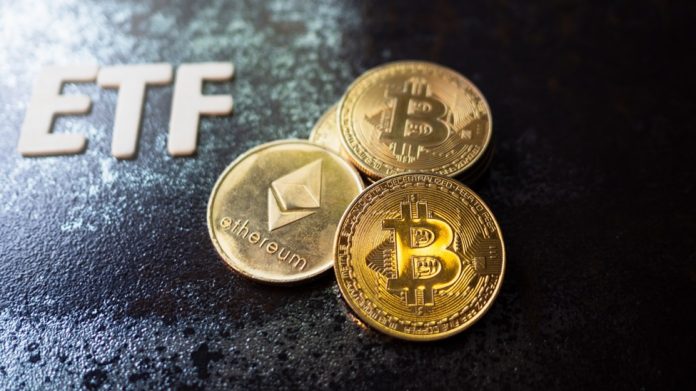
Bloomberg ETF analysts Eric Balchunas and James Seyffart have recently updated their approval odds for various spot crypto ETFs, focusing on altcoins like XRP, Solana, Litecoin, and Dogecoin. As of April 30, 2025, their latest estimates.

XRP ETF: 85% chance of approval in 2025, up from 65% in February, driven by multiple filings from asset managers like Grayscale, Bitwise, and WisdomTree, though the SEC has not yet acknowledged 19b-4 filings.

Solana ETF: 90% approval odds, increased from 70%, supported by institutional interest and filings from firms like VanEck and 21Shares, with a potential timeline extending to 2026 due to SEC review processes.

Litecoin ETF: 90% approval odds, the highest among altcoins, bolstered by the CFTC’s classification of Litecoin as a commodity and SEC acknowledgment of 19b-4 filings.

Dogecoin ETF: 80% approval odds, up from 75%, despite the SEC not yet acknowledging 19b-4 filings, with the asset viewed as a commodity. Other ETFs (e.g., Hedera, Avalanche, Polkadot): Approval odds range from 75% to 80%, with decisions expected between Q3 and Q4 2025.

These estimates reflect a more favorable regulatory outlook, influenced by legal developments, bipartisan crypto support, and market momentum. However, the SEC’s final decisions hinge on factors like market manipulation concerns and the resolution of security vs. commodity classifications, expected by late 2025.

Bloomberg analysts previously raised Bitcoin ETF approval odds to 95% by January 2024 (achieved) and Ethereum ETF odds to 75% in May 2024, reflecting their track record of adjusting predictions based on regulatory shifts. Always cross-check with primary sources like SEC filings or platforms like Polymarket for market sentiment, as analyst predictions aren’t definitive.

Approval of these ETFs, particularly for altcoins like XRP (85% odds), Solana (90%), Litecoin (90%), and Dogecoin (80%), could drive substantial price increases due to increased institutional investment and retail FOMO. For example, Bitcoin surged 60% post-ETF approval in 2024, and Ethereum gained 30% after its ETF launch.

ETFs signal regulatory acceptance, potentially reducing volatility and attracting conservative investors, further integrating crypto into traditional finance. ETFs would enhance liquidity for these altcoins, narrowing bid-ask spreads and improving market efficiency, especially for smaller-cap assets like Dogecoin.

ETFs allow retail and institutional investors to gain exposure to altcoins without managing wallets or navigating exchanges, lowering barriers to entry. Investors can diversify beyond Bitcoin and Ethereum, potentially hedging against sector-specific risks while tapping into altcoin growth.

ETFs typically have lower fees than direct crypto purchases on exchanges, though expense ratios (e.g., 0.25%–0.65% for Bitcoin ETFs) should be monitored. Approvals would reinforce the CFTC’s commodity classification for these assets, reducing SEC scrutiny over security status and setting precedents for other altcoins (e.g., Hedera, Avalanche).

Asset managers like Grayscale, BlackRock, and VanEck filing for these ETFs signal confidence, likely spurring more institutional products (e.g., futures, staking ETFs). Increased capital inflows could fund blockchain development, particularly for Solana’s DeFi ecosystem or XRP’s cross-border payment solutions.

Despite high odds, SEC concerns over market manipulation or investor protection could delay approvals, especially for Dogecoin, where 19b-4 filings are unacknowledged. Speculative rallies post-approval may lead to corrections, as seen with Ethereum’s 15% dip weeks after its ETF launch in 2024. Heavy ETF inflows could centralize ownership, potentially impacting decentralized networks’ governance.

Approvals could trigger an “altcoin season,” where smaller cryptocurrencies outperform Bitcoin, shifting market dynamics. Projects without ETF prospects may struggle to attract capital, widening the gap between top altcoins and smaller tokens. U.S. ETF approvals could pressure other jurisdictions (e.g., EU, Asia) to fast-track similar products, accelerating global crypto adoption.

Investors should monitor SEC announcements, 19b-4 filing statuses, and Polymarket odds for real-time sentiment. Diversifying across ETF-eligible altcoins may mitigate risk, but beware of post-approval volatility. Long-term, approvals could solidify crypto’s role in portfolios, but short-term regulatory hiccups remain a wildcard. Always verify updates via primary sources like SEC.gov or asset managers’ filings.

Circle Rejected Ripple’s Acquisition Offer Amid Growing Interest on Circle’s IPO

0

Ripple, the blockchain payments firm behind XRP and the RLUSD stablecoin, reportedly offered $4 billion to $5 billion to acquire Circle, the issuer of the USDC stablecoin, according to a Bloomberg report on April 30, 2025. Circle rejected the bid, deeming it too low, as it focuses on its upcoming initial public offering (IPO) filed in April 2025, aiming to list on the NYSE under the ticker “CRCL” with a valuation estimated between $4 billion and $6 billion.

Sources suggest Ripple’s offer may have included illiquid equity rather than full cash, which Circle, backed by strong investors like BlackRock and Fidelity, found unappealing given its IPO plans and USDC’s $61.7 billion market cap compared to RLUSD’s $316.9 million. Ripple remains interested but hasn’t decided on a new bid, while Circle prioritizes independence and regulatory compliance. The rejection highlights strategic differences, with Ripple aiming to fast-track its stablecoin market presence and Circle betting on its IPO and established USDC network.

The rejection of Ripple’s $4B-$5B bid to acquire Circle carries significant implications for both companies, the stablecoin market, and the broader crypto ecosystem. Acquiring Circle would have given Ripple control of USDC, the second-largest stablecoin with a $61.7B market cap, significantly boosting its market share against Tether’s USDT ($216.7B). This could have accelerated Ripple’s RLUSD ($316.9M market cap) adoption by leveraging Circle’s established infrastructure and partnerships.

Ripple now faces a tougher path to grow RLUSD organically, competing with USDC’s entrenched network of 800+ partners, including Visa and MoneyGram, and its regulatory clarity in the U.S. Ripple’s continued interest suggests it may return with a higher offer or explore other acquisitions, but its reliance on illiquid equity could limit appeal to premium targets like Circle.

Circle’s IPO and Independence

Circle’s rejection signals confidence in its $4B-$6B IPO valuation and its ability to thrive independently. A successful NYSE listing could attract institutional investors, further solidifying USDC’s dominance. Circle’s focus on compliance and its U.S.-based operations position it favorably in a tightening regulatory environment, especially compared to Ripple, which has faced SEC scrutiny over XRP. If the IPO underperforms or market conditions sour, rejecting Ripple’s bid could be seen as a misstep, especially if Circle’s valuation fails to meet expectations.

The bid reflects growing consolidation interest in the stablecoin sector as firms seek scale to compete with USDT. Circle’s rejection may deter similar deals in the short term, encouraging standalone growth. Ripple’s aggressive expansion contrasts with Circle’s conservative, compliance-driven approach, highlighting divergent strategies in a market where trust and regulatory alignment are critical. Without a deal, USDC and RLUSD will continue competing, potentially fragmenting liquidity and adoption, which could benefit USDT or emerging stablecoins.

Circle’s IPO success could boost confidence in crypto markets, signaling maturity and institutional acceptance. Conversely, failure could dampen enthusiasm for crypto IPOs. A Ripple-Circle merger would have drawn intense regulatory attention, especially given Ripple’s SEC history. Circle’s independence avoids this but keeps it under the spotlight as a major U.S. crypto player.

Ripple’s acquisition aim was tied to enhancing its cross-border payment solutions. Its failure to acquire Circle may push it to innovate internally or seek other partners, impacting its rivalry with traditional systems like SWIFT. Posts on X indicate mixed views: some see Circle’s rejection as a bold move to maintain control and capitalize on its IPO, while others argue it missed a chance to align with Ripple’s blockchain expertise.

Critics of Ripple highlight its weaker negotiating position due to legal baggage, while Circle’s strong backing from BlackRock and Fidelity is viewed as a stabilizing factor. Circle’s rejection prioritizes its IPO and independence, betting on USDC’s market strength and regulatory positioning, while Ripple must now recalibrate its stablecoin ambitions. The outcome reinforces competitive tensions in the stablecoin space and could shape investor and regulatory perspectives as Circle’s IPO looms.