DD
MM
YYYY

PAGES

DD
MM
YYYY

spot_img

PAGES

Home Blog Page 1695

A Foray into MegaETH’s Public Testnet

0

MegaETH’s public testnet officially went live on March 6, 2025, marking a significant step forward for this high-performance Ethereum Layer 2 scaling solution. The rollout has been phased: from March 6 to March 10, the focus was on onboarding applications and infrastructure teams, allowing developers to integrate and adapt to MegaETH’s architecture. Starting March 10, broader user onboarding began, giving the public access to test the network’s capabilities. As of the latest updates, MegaETH’s testnet is delivering impressive performance—20,000 transactions per second (TPS) with 10-millisecond block times and up to 1.7 gigagas per second of single-threaded compute power.

This was demonstrated vividly on March 20, 2025, when MegaETH airdropped testnet ETH to over 190,000 wallets in just 15 seconds, showcasing its real-time processing potential. The network aims to eventually scale to 100,000 TPS with sub-millisecond latency, positioning it as a competitor to high throughput blockchains like Solana while leveraging Ethereum’s security. MegaETH diverges from traditional rollup-based Layer 2 solutions (like Arbitrum or Optimism) by acting as a standalone execution engine. It uses specialized nodes—sequencers for transaction processing, provers for validation, and replica nodes for state updates—alongside innovations like parallel EVM execution and integration with EigenDA for data availability.

This architecture targets real-time applications, such as gaming or high-frequency trading, where low latency is critical. The public can now explore the testnet, where they can interact with applications, claim testnet ETH via a faucet (or receive it directly during onboarding), and use native MetaMask integration. Posts on X from MegaETH Labs confirm the launch and emphasize its purpose: battle-testing the infrastructure, enabling builders to explore new tech, and letting users experience real-time apps—no airdrop incentives, just pure tech focus.

MegaETH, an Ethereum Layer 2 scaling solution developed by MegaLabs, has raised significant capital to fuel its ambitious goal of achieving real-time blockchain performance with over 100,000 transactions per second (TPS). Dragonfly Capital leads the VC table with notable participants including Ethereum co-founder Vitalik Buterin, ConsenSys CEO Joseph Lubin, EigenLayer founder Sreeram Kannan, Figment Capital, Robot Ventures, Folius Ventures, Tangent, Big Brain Holdings, and Credibly Neutral, along with angel investors like Cobie (Jordan Fish), Santiago Santos, Kartik Talwar, Hasu, and Mert Mumtaz.

The round was structured as equity plus token warrants, with a fully diluted token valuation reported at a “nine-figure” amount, estimated to be at least $100 million. Funds were earmarked to develop the MegaETH protocol, with a mainnet launch planned for later in 2025. Community Round via Echo (December 13, 2024) raising $10 million. Conducted on the Echo platform, this round allowed over 3,300 crypto-native investors to participate in a private funding event. It was completed in just three minutes, marking Echo’s largest investment volume week at the time. This round emphasized community involvement, aligning with MegaETH’s ethos of giving users “skin in the game” rather than relying solely on traditional VC funding.

MegaETH launched “The Fluffle,” a collection of 10,000 soulbound NFTs (SBTs), sold at 1 ETH each. The sale occurred in two phases: Day 1 for guaranteed whitelist addresses, and Day 2 for remaining whitelisted participants on a first-come, first-served basis. NFT holders are promised a 5% token allocation, with 50% unlocking at the Token Generation Event (TGE) and the rest vesting over six months. The sale implied a fully diluted valuation (FDV) ranging from $540 million to $1.14 billion, depending on token supply assumptions, competitive with other Ethereum scaling solutions. Combining the Seed round ($20M), Echo round ($10M), and NFT sale ($27.73M), MegaETH has secured approximately $57.73 million in total funding by March 25, 2025.

MegaETH reportedly turned down a $1 billion VC offer to prioritize broader token distribution via community-focused methods like the Echo round and NFT sale. This aligns with sentiments from supporters like BMAN of ABCDE Venture, who praised the project for favoring community ownership over higher VC valuations. The funding has supported key milestones, including the public testnet launch on March 6, 2025, which achieved 20,000 TPS and 10-millisecond block times in initial testing. This mix of institutional backing, community participation, and innovative fundraising (via NFTs) reflects MegaETH’s strategy to blend strong financial support with a decentralized ethos, positioning it as a contender in Ethereum’s scaling race.

Despite early hiccups, like RPC memory issues reported shortly after launch, the team has been refining the network, with full public access solidified by March 21, 2025. This launch, backed by $30 million in funding from heavyweights like Vitalik Buterin and Dragonfly Capital, NFT sales, underscores MegaETH’s ambition to push Ethereum’s boundaries. Whether it can sustain these metrics, and scale further will be key as it progresses toward a mainnet release later in 2025. For now, it’s live, operational, and open for testing—bridging Web2-like performance with Web3 potential.
Fidelity Solana Fund Registered as Statutory Trust in Delaware

0

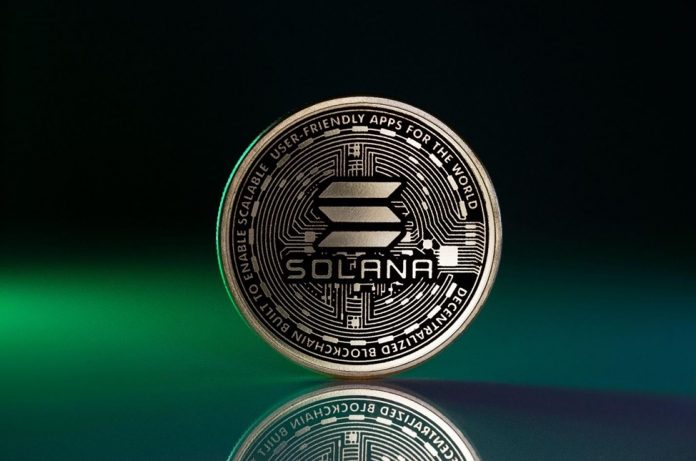
Fidelity Investments officially registered the “Fidelity Solana Fund” as a statutory trust in Delaware on March 20, 2025. This move has sparked speculation about a potential spot Solana exchange-traded fund (ETF), though Fidelity has not confirmed an imminent ETF launch. The registration, filed under Delaware filing #10138042 by CSC Delaware Trust Company (a subsidiary of CSC, a business formation specialist), aligns with steps Fidelity took before launching its successful Fidelity Wise Origin Bitcoin Fund (FBTC), which now manages over $16.5 billion in assets.

The filing signals Fidelity’s intent to expand its cryptocurrency offerings beyond Bitcoin and Ethereum, targeting Solana—a blockchain known for its high transaction speeds and growing ecosystem. While a Fidelity spokesperson confirmed the registration’s authenticity, they declined to elaborate on whether it’s a definitive precursor to an ETF proposal. Reports from outlets like The Block and Crypto News Flash corroborate the registration date and its potential implications, though details remain sparse.

Delaware’s business-friendly environment makes it a common choice for such registrations, as seen with other asset managers like Bitwise and Franklin Templeton, who also filed Solana-related trusts there. The Fidelity Solana Fund’s registration reflects growing institutional interest in Solana, but any ETF launch would require SEC approval, which remains uncertain given the agency’s cautious stance on altcoin ETFs beyond Bitcoin and Ethereum. For now, it’s a concrete step, but its full scope is still unfolding as of March 25, 2025.

Fidelity’s registration of the “Fidelity Solana Fund” in Delaware on March 20, 2025, has sparked widespread discussion about the implications of a potential spot Solana exchange-traded fund (ETF). While no formal ETF application has been filed with the SEC yet, this move—mirroring steps Fidelity took before launching its successful Bitcoin ETF (FBTC)—suggests a strategic intent to bring Solana into mainstream finance. Here’s a breakdown of the potential implications based on current trends, market dynamics, and regulatory context as of March 25, 2025.

Historically, ETF filings and approvals have driven price surges in cryptocurrencies. For instance, Bitcoin rallied over 60% in the months following the first U.S. spot Bitcoin ETF approval in January 2024, and BlackRock’s Bitcoin ETF filing alone triggered a 20% spike within two weeks. Solana, with a market cap of around $66 billion and trading near $188 as of late March 2025, could see similar speculative momentum. Analysts reports suggest SOL could break $200 if a filing is confirmed, potentially nearing its all-time high of $260 if approved, especially given its lower market cap and higher growth potential compared to Bitcoin or Ethereum.

Institutional inflows could be substantial. Estimates from financial firms like JPMorgan project a spot Solana ETF could attract $3 billion to $6 billion in its first year, boosting liquidity and visibility. This influx would likely amplify SOL’s price, though it could also increase volatility, as seen with Bitcoin post-ETF launch. However, Solana’s price stability—holding above $190 despite regulatory uncertainty—indicates underlying investor confidence that could be supercharged by ETF hype.

Fidelity’s entry, managing over $15 trillion in assets, signals a shift in institutional interest beyond Bitcoin and Ethereum. A Solana ETF would open doors for traditional investors—retirement funds, hedge funds, and wealth managers—to gain exposure without navigating crypto exchanges or custody risks. This legitimization could position Solana as a mainstream asset, akin to how Bitcoin ETFs bridged Wall Street and crypto in 2024. Posts on X highlight this as a “power move” enhancing Solana’s credibility, potentially spurring further adoption in decentralized finance (DeFi) and real-time applications where Solana excels due to its high throughput (currently 20,000 TPS on MegaETH’s testnet).

An ETF could fuel Solana’s ecosystem by increasing capital availability. More liquidity might inspire developers to build new projects, leveraging Solana’s low-cost, high-speed blockchain—already a hub for NFTs and DeFi. The MegaETH testnet’s success (1.7 gigagas/second compute power) underscores Solana’s technical edge, which could be amplified by institutional backing. Web sources suggest this could drive broader blockchain innovation, positioning Solana as a leader in mass-adoption use cases like gaming or tokenized assets.

The biggest wildcard is the U.S. Securities and Exchange Commission (SEC). The SEC has yet to approve a spot ETF for any altcoin beyond Bitcoin and Ethereum, partly due to concerns over market manipulation and asset classification. Solana has been flagged as a potential security in SEC lawsuits against Binance and Coinbase, creating uncertainty. While a Trump administration (inaugurated January 20, 2025) and a crypto-friendly SEC chair nominee, Paul Atkins, might ease this stance, approval isn’t guaranteed. Bloomberg’s James Seyffart estimates a 2026 timeline due to the SEC’s 240–260-day review process, though others, like VanEck’s Matthew Sigel, peg odds at “overwhelmingly high” for 2025.

A futures-based Solana ETF launched by Volatility Shares (SOLZ and SOLT) on March 20, 2025, could bolster the case for a spot ETF by establishing a regulated futures market—a precedent the SEC used for Bitcoin. Yet, weak futures demand might signal to regulators that Solana lacks broad appeal, slowing approval. Technical risks, like Solana’s past network congestion (70% transaction failure rates in early 2024), could also resurface as concerns, though recent upgrades suggest improvement.

Fidelity isn’t alone. Bitwise, Franklin Templeton, VanEck, 21Shares, and Grayscale have also registered Solana trusts or filed ETF proposals, intensifying the race. Fidelity’s regulatory savvy—evidenced by FBTC’s $16.5 billion AUM—gives it an edge, but competition could fragment inflows or pressure fees, impacting investor returns. Franklin Templeton’s proposal to include staking rewards as income adds a unique twist, potentially setting a precedent for yield-bearing crypto ETFs.

A Solana ETF could open floodgates for other altcoin ETFs (XRP, Dogecoin, etc.), diversifying crypto investment options. It might also shift market share from Ethereum, given Solana’s efficiency advantages, though Ethereum’s entrenched ecosystem remains a formidable rival. The crypto industry’s push for regulated products under a more favorable U.S. administration suggests 2025 could mark a turning point, with Solana at the forefront.
a Fidelity Solana ETF could drive price gains, institutional adoption, and ecosystem growth, cementing Solana’s role in finance.

The Role of Tech Innovation in the Development of Lesbian Dating

0

Technology has totally flipped the dating game, and for lesbians in particular. Think secret meetups in shady bars morphing into quick swipes on apps. Things have changed big time. We want to walk you through how tech has messed with lesbian dating, from way back when to what’s popping up next. We’ll hit the history, the slick new gadgets, how they’ve screwed things up or made them better, and what’s coming down the pipe.

The Evolution of Lesbian Dating in the Digital Age

Pre-Internet Era

Back before the internet was a thing, snagging a date as a lesbian was like hunting for a ghost in a fog. You had to lean on whispers from friends, gay events, or those rare bars where you wouldn’t get glared at. It sucked… society was judgy as hell (as if now it’s different), and safe spots were basically unicorns.

The Advent of Online Dating

Then the internet crashed the party, and we could ping someone across the globe without leaving our home. Chat rooms and forums sprang up, letting people spill their guts without showing their faces, smashing through distance like it was nothing.

The Mobile App Revolution

Smartphones kicked it up a notch, and dating apps turned everything nuts. Platforms built just for queer women started popping up, making it dead simple to find someone who syncs with you. Even the big dogs like Tinder tossed in same-sex options. And yeah, these apps made it a breeze for lesbians to hook up because of no more sweaty bar chats or praying you’d stumble into someone cute at a random shindig.

Key Technological Innovations Shaping Lesbian Dating

So, what’s tech tossed into the mix for lesbian dating? A ton, that’s what. First off, there are apps carved out just for queer gals. These aren’t only about sliding into DMs eh, they’re lively places with events, groups, and buddies to shoot the breeze with. It’s less about picking left or right and more about finding your crew now. These spots have been clutch for tons of lesbians, especially if mainstream apps leave you feeling like a fish outta water. They zero in on what queer women want.

Then we’ve got brainy algorithms playing matchmakers. None of that old-school things. They dig into what you’re into, what you stand for, and what you’re chasing to hook you up with someone who fits.

Safety need became huge too, ‘cause queer folks often sweat privacy or creeps. Apps have beefed up with stuff like verification, locked-down chats, and creep-reporting buttons. It isn’t flawless, but it’s something. There’s a social twist too as some apps let you jump into groups or post things, so you can bond over random likes before even thinking about a date.

The tech industry’s wild drive for new ideas has flipped online dating on its head. Cooking up platforms for niche crowds and tweaking algorithms to get you has made it so lesbians can snag real things that were off the table years back. That push for smooth, easy-to-use setups keeps these apps from being a drag.

The Impact on Lesbian Dating Experiences

 Increased Accessibility and Visibility

Tech’s cracked open doors for lesbian dating, but it’s not all roses. On the bright side, it’s made things way more accesible. Stuck in a tiny town or a judgey hood? You can still track down your people online. It’s also shoved queer women into the spotlight, which feels damn good for knowing you’re not invisible.

Challenges in the Online Dating Landscape

The flip side is there’s crap to deal with. Online jerks are a thing, and fakers can leave you pissed. Plus, too many choices can trap you in a loop of shallow chats that fizzle out. It’s like browsing a dating catalog cool ‘til you realize it’s all just pretty pictures.

Shifting Relationship

Tech’s also jumbled up how relationships roll. Long-distance hookups are easier with video and texts flying around. But it muddies the line between screen life and real life, leaving you wondering what’s legit. Plenty of lesbian pairs have figured out tech can smooth out talks and fix fights. Whether it’s texting to chill after a blowout or using apps to sync up goals, it’s a solid way to keep things tight.

The Future of Lesbian Dating: Emerging Technologies and Trends

Artificial Intelligence and Hyper-Personalization

What’s next for lesbian dating? It’s looking pretty rad. Picture AI that knows you inside out, tossing out matches that are damn near perfect. Making your photos look better, saving your day with some coaching. The possibilities are endless.

Virtual and Augmented Reality in Dating

Or how about virtual reality dates? Even sex… You could chill in a fake world with someone before ever meeting up for real. Learned them better close enough.

Prioritizing Inclusivity and Ethical Considerations

But with all these shiny toys, it’s gotta stay real and fair. The lesbian crew’s got its own things and secrets, and new tech better keep that in mind. It’s not just about cool tricks but making sure nobody’s left out or freaked out.

Conclusion

And here we are. Tech’s flipped lesbian dating upside down, making it a snap to link up, find your squad, or snag a quick date. From sketchy old forums to today’s slick apps, new ideas have been the spark. But it’s a mixed bag of pros and cons as usually everything. Sure, it’s opened doors, but it’s also dragged in headaches like nosy creeps and fake profiles. Peeking ahead, the future’s got some good stuff brewing. With tech promising even crazier ways to click. Point is, at the end of the day, its about nailing down real bonds not just flicking through faces.


What Are Event Logs and Tuples?

0
The Bluesky social media app logo is seen on a mobile device in this photo illustration in Warsaw, Poland on 21 April, 2023. Founder Jack Dorsey of twitter has released the Bluesky application on Android. (Photo by Jaap Arriens / Sipa USA)(Sipa via AP Images)

Decoded tuples in event logs refer to the structured data extracted from Ethereum blockchain events, which are emitted by smart contracts during transaction execution. In the context of something like the Bybit hack or Fidelity’s OnChain Treasury Fund on Ethereum, understanding decoded tuples is key to analyzing what happened on-chain—whether it’s tracking stolen funds or verifying tokenized share transactions. Let’s break this down clearly, assuming a technical interest but keeping it digestible.

On Ethereum, smart contracts emit events to log significant actions (e.g., a token transfer, a trade, or a hack-related withdrawal). These logs are stored in a special data structure outside the contract’s state, making them cheaper to record and accessible via transaction receipts. They’re not directly readable by contracts but are invaluable for off-chain analysis. In programming, a tuple is an ordered, immutable collection of elements—like a list that can’t change. In Ethereum event logs, tuples represent the structured output of an event’s parameters, combining multiple data types (e.g., addresses, integers, strings) into a single unit.

When an event is emitted, its data is initially encoded in a raw, hexadecimal format (per the Ethereum Virtual Machine’s ABI—Application Binary Interface). “Decoding” transforms this into human-readable tuples, revealing the event’s meaning. How Event Logs Work on Ethereum. A smart contract defines an event using the event. For example: solidity event Transfer (address indexed from, address indexed to, uint256 amount); Here, Transfer logs a token movement with three parameters: from, to, and amount. The indexed keyword flags from and to for efficient filtering. When triggered (e.g., emit Transfer (msg.sender, recipient, 100) ;), the event is recorded in the transaction’s log.

Event filtering on Ethereum is the process of selectively retrieving specific event logs from the blockchain based on predefined criteria, such as event type, parameter values, or block range. It’s a critical tool for developers, analysts, and applications to efficiently monitor and analyze on-chain activity—like tracking token transfers in the Bybit hack or share issuances in Fidelity’s OnChain Treasury Fund—without sifting through the entire blockchain. Here’s a clear explanation of how it works, why it’s useful, and its mechanics. Ethereum smart contracts emit events (e.g., Transfer, IssueShares) that are stored in transaction logs.

These logs pile up quickly—millions daily across Ethereum and its Layer 2s (L2s). Filtering lets you query only the logs that match your needs, leveraging the structure of Ethereum’s event logs (topics and data) to avoid scanning irrelevant data. Ethereum’s blockchain is massive (terabytes of data). Filtering avoids downloading everything, targeting only relevant logs. DApps (e.g., wallets, DeFi protocols) use filters to watch for events like deposits or trades instantly. In the Bybit hack, filtering helped trace funds to 54 wallets by focusing on Transfer events from the compromised address.

Only three parameters can be indexed per event, limiting filter granularity. For Transfer, you can’t filter on amount directly post-decode analysis is needed. Filtering requires access to an Ethereum node (e.g., Infura, Alchemy). Archive nodes, which store historical logs, are costlier than full nodes. On L2s like Arbitrum, filtering works similarly but depends on rollup-specific APIs, adding a layer of nuance.

In the Bybit hack (February 21, 2025), hackers drained 401,000 ETH via a compromised multisig wallet. Event logs from involved contracts (e.g., ERC-20 token transfers) would reveal the theft’s footprint. Indexed vs. Non-Indexed: Up to three parameters can be indexed for filtering (stored in topics); others go to the data field. This limits searchable fields but optimizes gas costs. Logs cost less than state storage (375 gas base vs. 20,000+ for state writes), making them ideal for tracking. Logs are static contracts can’t read them, so they’re for external tools only.

Decoded tuples in event logs are the bridge between Ethereum’s raw blockchain data and actionable insights. They’re how we know the Bybit hacker moved 401,000 ETH or how Fidelity’s OnChain shares are tracked—unlocking transparency in a system that’s otherwise a sea of hex. Whether debugging a hack or auditing a fund, these tuples are the decoded heartbeat of Ethereum’s activity.

Nigeria Needs to Advance on a Pragmatic Blockchain Strategy

0

Nigeria’s crypto strategy has evolved significantly in recent years, positioning the country to leverage cryptocurrencies and blockchain technology for economic growth and development. As of March 24, 2025, this strategy reflects a pragmatic balance between fostering innovation and ensuring regulatory oversight, driven by Nigeria’s status as one of the world’s leading adopters of digital assets. Below is an exploration of how this strategy could boost growth and development, drawing from current trends and initiatives.

After years of oscillation—marked by the Central Bank of Nigeria’s (CBN) 2017 warnings and 2021 ban on banks facilitating crypto transactions—Nigeria has shifted toward a more structured approach. The CBN lifted the banking ban in December 2023, allowing financial institutions to engage with virtual asset service providers (VASPs) under guidelines. The Securities and Exchange Commission (SEC) followed with its Accelerated Regulatory Incubation Program (ARIP) in June 2024, mandating VASPs to register and comply with oversight. This pivot, as emphasized by Information Minister Mohammed Idris in early 2025, aims to regulate rather than restrict, fostering a predictable environment for crypto businesses while protecting consumers.

Approved in May 2023, the National Blockchain Policy, spearheaded by the National Information Technology Development Agency (NITDA), seeks to integrate blockchain into public administration and economic sectors. It includes forming a Nigerian Blockchain Consortium to drive research, education, and implementation, targeting transparency, efficiency, and innovation. The “Nigerium” initiative, announced in 2024, is a homegrown blockchain to secure national data, enhancing sovereignty and cybersecurity while supporting local tech development.

eNaira and CBDC Leadership

Launched in October 2021, the eNaira was Africa’s first central bank digital currency (CBDC). It aims to enhance financial inclusion, streamline cross-border payments, and reduce cash dependency. While adoption has been gradual, its integration with blockchain technology positions Nigeria as a pioneer in state-backed digital finance. Nigeria’s fintech boom—highlighted by Moniepoint’s unicorn status in October 2024—intersects with crypto growth. Partnerships like the Nigeria Inter-Bank Settlement System (NIBSS) with Zone’s blockchain network in August 2024 showcase how traditional finance is adopting decentralized solutions for faster, cheaper settlements.

With over 350 million unbanked adults in Sub-Saharan Africa (World Bank estimate), Nigeria’s 25.86 million crypto users (projected for 2025 by Statista) reflect a workaround to traditional banking barriers. Crypto offers low-cost, accessible financial services, especially in rural areas where 43.5% broadband penetration (as of March 2024) meets a 219 million-strong mobile market. The eNaira and stablecoin adoption (noted by Chainalysis as growing amid Naira volatility) further bridge this gap, empowering the underbanked to save, transact, and invest.

Nigeria’s economy faces high inflation (28.9% in December 2023, per IMF) and Naira depreciation (50% drop in 2023). Crypto, particularly Bitcoin and stablecoins, has become a hedge, with Chainalysis reporting a 9% transaction volume growth in 2023-2024 despite global market dips. This resilience could stabilize household finances and encourage savings in digital assets over a weakening fiat currency. Nigerians in the diaspora sent $205.7 million via peer-to-peer crypto trades in H1 2021 alone (CoinDesk), bypassing high traditional remittance fees (often 6-10%). A regulated crypto framework could formalize this, boosting foreign exchange inflows—critical as oil exports falter—and supporting small businesses in global markets.

The crypto sector creates jobs in blockchain development, smart contract auditing, and fintech entrepreneurship. The National Blockchain Policy’s focus on talent development and the “Nigerium” project could nurture a local tech workforce, reducing youth unemployment (33.3% in 2021) and positioning Nigeria as Africa’s “Silicon Valley,” as speculated in Medium posts from January 2025. Over $500 million in Bitcoin traded in Nigeria over five years (Lexavier Partners, 2021) signals a thriving ecosystem ripe for scaling. Nigeria’s 2025 regulatory amendments to tax crypto trading and digitized transactions (Bloomberg Africa, February 2025) aim to bolster fiscal space.

With a projected crypto market revenue of $1.555 billion in 2025 (Statista), this could fund infrastructure and social programs, complementing reforms like gasoline subsidy cuts. Beyond finance, the National Blockchain Policy targets agriculture (e.g., supply chain tracking), education (e.g., credential verification), and governance (e.g., transparent voting). Blockchain’s use by NAFDAC for product verification or SON for quality assurance could cut fraud, boost exports, and attract investment. While progress is evident, inconsistent enforcement (e.g., Binance’s $81.5 billion lawsuit in 2025) risks deterring investors. A cohesive legal framework is essential.

Low financial literacy and infrastructure gaps (e.g., unreliable power) could slow uptake, requiring digital upskilling and investment. Nigeria’s crypto strategy could propel it to the forefront of Africa’s digital economy if executed well. By 2030, integrating blockchain with its 163 million internet users (March 2024) and youthful, tech-savvy population could yield a diversified, resilient economy. The IMF’s 3.3% GDP growth forecast for 2024 might climb higher with crypto-driven productivity gains. Success hinges on sustaining reforms, fostering public-private collaboration (e.g., NITDA’s consortium), and learning from global peers—potentially mirroring Singapore’s crypto-friendly yet regulated model.