DD
MM
YYYY

PAGES

DD
MM
YYYY

spot_img

PAGES

Home Blog Page 1700

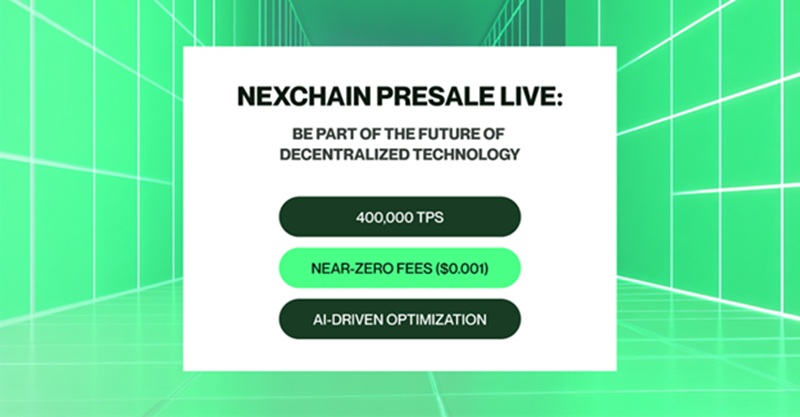
Nexchain: A Closer Look at the Tech Behind This AI-Driven Blockchain Project

0

Blockchain technology is at an exciting point in its development. While cryptocurrencies like Bitcoin and Ethereum have gained popularity, decentralized applications (dApps) are becoming increasingly important as well. One of the standout projects in this field is Nexchain.ai. This innovative project uses artificial intelligence (AI) to change and improve how blockchain works. In this article, we will take a closer look at the technology behind Nexchain and what makes it unique.

Nexchain’s Unique Structure

Nexchain is built on a special framework that combines traditional blockchain elements with advanced AI features. Here are the main components of its structure:

Layered Architecture

Nexchain uses a layered architecture that separates different functions:

  • Base Layer: This is a secure blockchain that keeps data safe and unchangeable.
  • Application Layer: This layer hosts smart contracts and dApps, making them more powerful with AI features.

Smart Contract Framework

Nexchain has a new way of creating smart contracts. Unlike standard smart contracts, those on Nexchain have machine learning models that allow them to change and adapt over time. This means they can respond quickly to new data and changing situations.

Interoperability Protocol

Nexchain includes interoperability protocols that allow it to communicate easily with other blockchains. This means users can transfer assets and information between different platforms without worrying about security or slow speeds.

Decentralized AI Marketplace

One of the key elements of Nexchain is its decentralized AI marketplace. Here, developers can share their AI algorithms and data sets. This marketplace encourages teamwork, allowing developers to innovate and learn from each other.

Key Features of Nexchain’s AI Integration

Nexchain’s use of AI greatly enhances its offerings. Here are some important features:

  • Real-Time Decision Making. Nexchain uses machine learning algorithms to make decisions based on complex data in real-time. This is very helpful in fields like finance, where quick decisions can make a big difference.
  • Automated Compliance Monitoring. The platform uses AI to keep track of changing regulations. This means smart contracts and dApps on Nexchain automatically follow the latest rules, making it easier for developers to stay compliant.
  • Enhanced Security. Security is a top priority in blockchain. Nexchain uses AI to monitor transactions and activities on its platform continuously. This helps detect and prevent potentially harmful activities before they become serious problems.
  • User-Centric Services. Nexchain can provide personalized experiences to its users by analyzing their behavior and preferences. For example, dApps can suggest actions or content based on what users like, making interactions smoother and more relevant.

Supporting Developers

Nexchain aims to empower developers within its ecosystem. Here’s how it does that:

  • Comprehensive Documentation. Nexchain offers easy-to-follow guides and tutorials to help developers understand how the platform works. This makes it easier for new users to get started.
  • Developer Grants and Incentives. To encourage innovation, Nexchain gives financial support to developers working on meaningful projects. This funding motivates them to try new ideas and technologies.
  • Collaborative Environment. Nexchain promotes collaboration among developers. The platform hosts events like hackathons and forums where developers can share their experiences and ideas, fostering a strong developer community.
Looking Ahead

The world of blockchain is always changing, and Nexchain.ai understands the need to stay ahead of the curve. In the future, it plans to:

  • Improve Scalability: Make the platform capable of handling more transactions quickly.
  • Refine AI Features: Enhance its AI capabilities to better serve users and developers.
  • Adapt to Regulations: Adjust compliance measures to meet new rules and advocate for clearer blockchain regulations.

Nexchain showcases the exciting possibilities that arise from combining blockchain technology with artificial intelligence. By creating a decentralized ecosystem with advanced features, Nexchain aims to lead the next wave of blockchain innovation.

With its focus on empowering developers, engaging the community, and continuously improving, Nexchain is reshaping how we see blockchain technology. As it progresses, Nexchain promises to transform the landscape of blockchain, pushing the limits of what decentralized applications and AI can achieve together.

Best Crypto Coins to Buy Now: Smart Picks for Traders Seeking Big Potential — BDAG, Monero, Immutable X & Terra Classic

0

As 2025 unfolds, the crypto market continues to shift quickly. For investors looking to stay ahead, keeping an eye on the best crypto coins to buy now is more important than ever. With blockchain technology advancing, projects are working to fix long-standing issues like scalability, security, and mainstream appeal.

Among the standouts are Monero (XMR), BlockDAG (BDAG), Immutable X (IMX), and Terra Classic (LUNC). These projects are drawing attention for their growing influence and potential future returns.

If you’re trying to choose your next move, it helps to understand which cryptos are showing real strength. These four are making headlines for all the right reasons. But one of them, in particular, is building momentum faster than the rest. Here’s why these coins are worth considering.

1. BlockDAG (BDAG) — An Emerging Contender with Massive Growth Ahead

BlockDAG (BDAG) is quickly becoming one of the most talked-about crypto assets this year. Though still in its presale phase, BDAG is preparing to hit the markets, backed by its powerful Layer 1 blockchain. Running on a Proof-of-Work consensus, BlockDAG recently introduced WebAssembly (WASM) support. This makes it easier for developers to build dApps and smart contracts with widely-used programming languages.

Security is also at the forefront. BlockDAG recently completed a thorough audit by blockchain security leader Halborn. A dedicated security engineer spent three days rigorously analyzing BDAG’s smart contracts, and the project passed with flying colors.

Buyer confidence is already strong. BlockDAG’s presale has raised over $205.5 million, selling more than 18.8 billion BDAG coins. At its current price of $0.0248, early adopters have secured a return of 2,380%. With 10 centralized exchange (CEX) listings on the horizon, BDAG is generating excitement. As it moves closer to its full launch, BlockDAG stands out as one of the best crypto coins to buy now for those seeking long-term upside.

2. Monero (XMR) — The Standard for Privacy in Crypto Transactions

Monero (XMR) continues to be a go-to choice for users who value privacy. Unlike most public blockchains, Monero provides full anonymity. It ensures that wallet balances and transaction details remain hidden, which appeals to privacy-conscious individuals and businesses alike.

Looking ahead to 2025, Monero’s price forecasts range from $194.86 to $316.82, with an average projection of $255.84. As privacy becomes a more pressing concern in crypto, XMR could see increased adoption. For investors prioritizing security and anonymity, Monero remains one of the best crypto coins to buy now.

3. Immutable X (IMX) — Leading the Charge in NFT Scalability

Immutable X (IMX) is reshaping how NFTs are traded by offering a gas-free, scalable Layer 2 platform on Ethereum. It enables fast, secure transactions without the heavy fees that typically weigh down blockchain-based marketplaces. This makes it an ideal choice for NFT enthusiasts and developers looking for a more efficient solution.

With key partnerships across the gaming sector, Immutable X is expanding its influence. As NFTs become more integrated with blockchain gaming and other digital assets, IMX is likely to remain a major player. For those focused on next-generation blockchain use cases, Immutable X earns its spot among the best crypto coins to buy now.

4. Terra Classic (LUNC) — A Comeback Driven by Community Support

Terra Classic (LUNC) has had a rough history, but its community continues to push for a turnaround. Supporters are working hard to burn tokens and reduce the circulating supply, hoping this will lead to a price recovery.

Despite its challenges, the Terra ecosystem is slowly rebuilding. New dApps and projects are beginning to launch on its network, adding fresh momentum. While there are risks, traders searching for comeback opportunities might find LUNC an interesting bet. This persistence makes Terra Classic one of the best crypto coins to buy now for those watching potential recovery plays.

Which Is the Best Crypto Coin to Buy Now?

So, which coin claims the title of the best crypto coin to buy now? Each of these projects brings something unique to the table. Immutable X (IMX) is advancing NFT trading, Monero (XMR) keeps privacy a priority, and Terra Classic (LUNC) fights for redemption.

However, BlockDAG has the edge. Its innovative hybrid blockchain model, successful Halborn audit, and presale momentum—raising over $205.5 million with 18.8 billion BDAG sold—are hard to ignore. With a current price of $0.0248 and early buyers already gaining a 2,380% return, the upcoming 10 CEX listings could trigger an even bigger surge.

For traders seeking a project with strong fundamentals and exciting growth prospects, BlockDAG is shaping up to be the best crypto coin to buy now. Its expanding ecosystem and robust community support only add to its appeal for 2025 and beyond.

BYD Hits Record $107bn Annual Revenue for 2024, Cementing Its Position Ahead of Tesla

0

Chinese electric vehicle giant BYD has widened its lead over Tesla, reporting record-breaking annual revenue of 777 billion yuan ($107 billion) for 2024.

This figure eclipsed Tesla’s $97.7 billion revenue from the previous year, further cementing BYD’s dominance in the electric vehicle industry. With soaring sales, cutting-edge technology, and strategic expansion, BYD has positioned itself as the world’s top EV manufacturer while Tesla faces mounting challenges, declining sales, and an increasingly distracted CEO.

In its earnings report released on Monday, BYD disclosed a net profit surge of 34% year-over-year to just over 40 billion yuan ($5.55 billion). This exceeded analysts’ expectations of $5.44 billion but remained below Tesla’s $7.1 billion net profit for 2024. BYD’s aggressive growth strategy and government-backed support have helped it outmaneuver Tesla in key markets, leaving Elon Musk’s company struggling to maintain its position in the EV race.

BYD’s sales dominance has been evident for months. In January, it sold nearly twice as many EVs as Tesla, which suffered an 11% year-over-year decline. By early December, BYD had already exceeded its annual target, selling more than 3.7 million cars in 11 months and surpassing its 3.6 million goal with time to spare. By year-end, the Chinese automaker had delivered an astonishing 4.27 million electric vehicles, a record-breaking feat that has solidified its place at the top of the EV industry.

Meanwhile, Tesla’s trajectory took a sharp downturn. The company delivered 1.79 million vehicles in 2024, marking its first annual sales decline in over a decade. This was a 1% drop from the 1.81 million cars sold in 2023, a worrying signal for a company that once prided itself on exponential growth. Even a record-breaking fourth quarter—where Tesla delivered 495,570 vehicles—was not enough to reverse the downward trend.

Tesla’s struggles can largely be attributed to a combination of increased competition, supply chain disruptions, high interest rates that have made car financing more expensive, and Musk’s own divided focus. The company has also faced slowing demand for its vehicles, even after engaging in aggressive price cuts throughout 2023 and 2024. While these price reductions helped boost sales in some quarters, they also squeezed Tesla’s profit margins.

BYD Outpaces Tesla in Charging Innovation

While Tesla has historically led the EV industry in innovation, BYD is now challenging its technological supremacy. Last week, the Chinese automaker introduced a groundbreaking 1,000 kW fast charger that can add nearly 250 miles of range to an electric vehicle in just five minutes. This is four times more powerful than Tesla’s current 250 kW Superchargers, which require 15 minutes to add 200 miles of range.

Tesla has responded by announcing plans to roll out 500 kW chargers later this year, but it remains a step behind BYD’s advancements. The charging speed gap underscores how BYD is pushing the boundaries of EV technology, while Tesla appears to be playing catch-up.

Tesla’s Troubles Deepen: Backlash Against Musk, Stock Crash, and Production Woes

Beyond competition with BYD, Tesla has been battling internal turmoil, financial losses, and growing dissatisfaction with Musk’s leadership.

At the start of 2025, Tesla found itself embroiled in controversy as Musk’s deepening tie with the far-right wing led to massive backlash. The billionaire was appointed by U.S. President Donald Trump, to lead the Department of Government Efficiency (DOGE), designed to cut government waste. Musk’s politics, especially his support for Trump, has spilled over into Tesla’s reputation, with facilities across the United States and Europe facing vandalism, arson attacks, and calls for boycotts. Investors, once confident in Musk’s vision, have grown increasingly skeptical of his leadership.

Tesla’s stock has plummeted by more than 50% over the past three months, with JPMorgan analysts slashing their price target to $135. While the stock saw a brief 10% surge on Monday after Musk called an emergency all-hands meeting with Tesla employees, there is little clarity on how the company plans to regain its footing.

Adding to its troubles, Tesla’s production capabilities have been hindered by supply chain disruptions and a slowdown at its Gigafactories. The company has struggled to ramp up production of its long-promised Cybertruck, which has faced delays, technical issues, and underwhelming demand. Meanwhile, its once-dominant Model 3 and Model Y are now facing increasing competition from cheaper, high-quality Chinese EVs, particularly from BYD.

No Clear Strategy Yet for Tesla’s Comeback

While Tesla is in dire need of strategic redirection, Musk appears increasingly occupied with his other ventures—particularly X and his ambitious but troubled AI project, xAI. Rather than focusing on Tesla’s competitive decline, Musk is devoting much time to DOGE.

This has left Tesla without a clear roadmap for reclaiming its position as the top EV manufacturer. Unlike in past crises, where Musk took an active role in reshaping Tesla’s future—such as the aggressive push for mass production at Gigafactories or the rapid expansion of Supercharger networks—he has yet to present a compelling plan to counter BYD’s dominance.

BYD’s Expansion and the Threat of Trade Barriers

Despite BYD’s impressive growth, the company still faces hurdles in its global expansion efforts. Governments in various markets have taken steps to curb Chinese EV imports, with Russia imposing import taxes, the United States maintaining high tariffs, and the European Union considering similar protective measures.

BYD’s Executive Vice President, Stella Li, dismissed concerns over these trade barriers, arguing that such policies would ultimately backfire. Speaking to The Sunday Times of London, she stated: “The tariffs will have the opposite effect and weaken local industries.”

She also pushed back against allegations that BYD has benefitted from excessive state subsidies, shifting the focus instead to what she described as the failure of European automakers to keep pace with Chinese brands.

“Our car is more stylish than any European-designed cars,” she said. “Our car is more intelligent.”

BYD’s rise coincides with the collapse of European EV battery maker Northvolt, which filed for bankruptcy earlier this month. Once seen as Europe’s best hope for competing with Asian battery manufacturers, Northvolt cited rising capital costs, geopolitical instability, supply chain disruptions, and fluctuating demand as the primary reasons for its downfall.

African Fintech enza Secures $6.75M Seed Funding to Drive Payment Innovations Across Africa

0
Fund, money cash dollar

enza, an African fintech platform, has successfully secured a $6.75 million seed equity investment co-led by Algebra Ventures and Quona Capital.

This funding marks enza’s first external funding and is set to accelerate its mission to “liberate the world of payments for more inclusive, opportunity-led commerce across the African continent.

enza’s comprehensive solutions empower banks and fintech to provide seamless, locally relevant payment capabilities, including cards, wallets, and real-time payments. The capital infusion will enable enza to strengthen its presence across key markets in Africa, fostering deeper partnerships, and improving responsiveness to the localized needs of its growing client base.

Speaking on the investment, Hany Fekry, CEO of enza said,

“We are thrilled to partner with Algebra Ventures and Quona Capital, who share our vision of the potential to transform financial services in Africa through the digitization of payments. This investment is a strong endorsement of our team, our market-leading services, and our commitment to empowering banks and fintechs to drive financial inclusion across the continent”.

Also commenting, Tarek Assaad, Managing Partner at Algebra Ventures said,

“enza is exceptionally well-positioned to transform Africa’s payments ecosystem by delivering the essential infrastructure that banks and fintechs require for success. The enza leadership team has an impressive track record of starting, growing, and exiting fintech businesses across the continent. enza was uniquely capable of hitting the ground running as a pan-African payments player from the outset and is experiencing remarkable growth across its product offering. We are delighted to support the team on their exciting journey.”

Founded by a team of seasoned experts, enza is committed to delivering agile, innovative, and secure payment solutions designed specifically for Africa’s unique challenges. The platform is on a mission to liberate payments across the African continent, for a more prosperous, financially inclusive Africa.

enza currently operates in South Africa, and Egypt, and plans to launch in Nigeria soon. The platform believes that the right payment capability has the power to free the fast-changing world of commerce, for a more intelligent, insightful, and inclusive future. The platform partners with giant payments brands such as Visa, terrapay, and Compass Plus Technologies.

Last month, enza announced a partnership with Entersekt, a global leader in financial authentication. This collaboration strengthens its commitment to enhancing payment security and fraud prevention, ensuring seamless digital banking experiences.

By integrating Entersekt’s Context Aware™ Authentication into the enza technology suite, it enables the fintech to empower banks to combat fraud with advanced, multi-factor authentication including OTP, biometrics, and risk-based authentication all within the 3-D Secure ecosystem.

Its recent partnership with Algebra Ventures and Quona Capital reinforces the company’s goal to address the challenges and opportunities presented by Africa’s fast-growing, digitally connected population.

With over 60 million underserved SMEs across the continent and a largely underbanked population, enza is already making a significant impact by enabling financial institutions to differentiate themselves and to profitably attract new customers with market-relevant products. The enza platform provides the foundation for these clients to then cross-sell other financial services products by leveraging the intelligence generated by the underlying data.

Existing client use cases include the enablement of digital payment options such as domestic schemes, real-time payment services, mobile money, and BNPL, alongside the international payment schemes, unlocking value for enza’s customers and Consumers and Businesses in multiple African countries.

Top 5 Crypto Calculators to Maximize Your Investments

0

The goal of any investment is to make the most profits. Profit & loss calculators give an insight into the profitability of your investments, depending on the variation of the asset price. Some alternatives even connect to crypto wallets and track the portfolio automatically.

There are calculators to help you get price equivalences between two cryptos or from crypto to fiat, while other tools calculate the potential revenue of staking or mining — two profitable activities in PoS and PoW blockchains. Some calculators can even help you file tax reports on crypto gains.

Let’s take a look at these tools that help you get the most out of your investments.

1. Crypto Profit & Loss Calculator

Profit & loss calculators are one of the most used tools by crypto investors. They help traders determine their earnings or losses in specific investments by calculating price variations during a specific timeframe. For example, you bought BTC at $63 thousand in April 2024 and sold at $100 thousand in January 2025. The calculator will determine your profit percentage and, based on your investment amount, calculate your net profit. These tools also take into account fees that reduce the profit made.

Active traders can benefit from profit & loss calculators by tracking their different investments and shaping their strategies accordingly. But even for long-term holders who aren’t trading constantly, it can also be useful. Most options can be integrated into crypto wallets, so it’s important to double-check that it’s legitimate and secure software. That way, you’re not risking your funds.

2. Crypto Conversion Calculator

Crypto conversion calculators are also very popular in crypto markets. Some exchanges include conversion calculators for their available pairs and tokens, for example, the Bitcoin calculator on Paybis. The task is simple: these tools determine the conversion rate between two tokens or the equivalence between fiat and cryptocurrencies.

For example, if you want to know how much your SHIB balance is in fiat currencies, you will need a Shiba Inu calculator. It also works for planning your next investment by calculating how much of the token you can get with the money you’re allocating for the trade.

The purpose of this calculator is to help you keep track of a dynamic market like crypto. While coin aggregators tell the price of each token, this tool lets you determine the exchange rate with other assets.

https://www.goodfon.com/hi-tech/wallpaper-calculator-money-dollars-bitcoin.html

3. Crypto Mining Profitability Calculator

Mining is a profitable activity in the crypto ecosystem. However, it involves a lot of factors that you must take into account to realize if it’s worth it in your particular case. Mining profitability calculators let you know just that.

These instruments need information, such as the cost of electricity in your region, the cost of the hardware you’re using, and on what blockchain you’re going to mine. Other metrics required are the fees charged by the mining pool, the current hash rate, and the mining difficulty.

Mining profitability calculators are crucial for any person who wants to start mining operations. Before investing in any device or setup, the first step is to determine which blockchain is more profitable. Besides Bitcoin, which requires heavy equipment, other options may offer more rewards to new miners.

4. Crypto Staking Rewards Calculator

Besides mining, PoS blockchains allow users to stake their tokens for rewards. This activity is less resource intensive, but stakers still must allocate a certain amount of money to get substantial profits.

Staking rewards calculators gather data like the APY of the token you’re staking and the provider. They are useful for long-term investors who aren’t looking to get involved in day trading. Using it, it’s possible to get insights on the potential gains of staking a specific amount. And it’s worth noting that staking rewards are paid with varying frequency, either daily or weekly.

5. Crypto Tax Calculator

Cryptocurrencies are taxed like any other income in the US and other jurisdictions. However, the specific characteristics of BTC and cryptoassets make it hard to calculate taxes. Tax reports should include events like buying, selling, getting paid in crypto, and even getting tokens as a result of hard forks.

In general, taxes are complicated to calculate accurately, and mistakes can be really expensive. That’s why crypto tax calculators are necessary at the end of every fiscal year. They calculate all taxable events and track gains and losses to generate the reports.

It’s also important to be accurate in the calculations because, for example, losses due to price drops can allow you to make deductions on your payments.

Find the Best Crypto Calculator for You!

There are crypto calculators for every type of investor. Day traders can use profit and conversion calculators to plan their investments and adapt their strategies. Long-term holders can leverage profit & loss tools to track price movements during long periods.

Some investors may want to get involved in securing the network and get rewarded for it, either through mining or staking. In that case, they can use calculators to determine which token or blockchain is more profitable. It can also guide them toward the most appropriate setup, whether it’s a mining rig or a specific provider.

Crypto tax calculators are useful for any investor, no matter what activities they usually perform, to avoid future headaches related to tax audits. For any of these tools, there are dozens of options available. So you should check them out and optimize your investment strategies.