DD
MM
YYYY

PAGES

DD
MM
YYYY

spot_img

PAGES

Home Blog Page 18

Honda Targets $9.4bn Cost Cuts as Chinese EV Competition Reshapes Markets

0

Honda Motor Co. is targeting more than $9 billion in cost savings over the next four years and has instructed suppliers to make steep price reductions, as the Japanese automaker accelerates efforts to restore competitiveness in a car business increasingly squeezed by Chinese electric-vehicle manufacturers.

The cost-cutting drive, revealed by a Reuters review of internal Honda documents and interviews with people familiar with the matter, calls for the automaker to save 1.5 trillion yen ($9.4 billion) by 2030. The scale of the programme makes it one of the clearest signs yet of the pressure facing Japanese automakers as Chinese rivals expand rapidly across international markets.

Honda has asked suppliers to reduce costs by as much as 30% in three major categories: pressed and forged components, electrical parts, and equipment and components associated with software-defined vehicles, according to the documents.

The push comes as companies such as BYD and other Chinese EV makers gain market share in Southeast Asia, Latin America and Europe by combining lower prices with sophisticated batteries, software and vehicle electronics.

For Honda, the challenge is acute because its electric-vehicle strategy has already come at a substantial cost.

The world’s largest motorcycle manufacturer expects losses related to its EV business to eventually exceed $12 billion, putting it among the global automakers that have suffered the largest financial setbacks from the transition to electric vehicles. In May, Honda reported its first annual loss as a publicly traded company.

The company is now recalibrating its strategy, placing greater emphasis on gasoline-electric hybrids while attempting to make its conventional vehicle operations substantially more efficient.

Suppliers Face Aggressive Targets

Honda executives met major suppliers at a convention center in Utsunomiya, north of Tokyo, during the spring to outline the new cost-reduction strategy, according to the documents and people familiar with the meeting.

Suppliers were subsequently given individual targets for reducing their costs. Honda also told them it intended to increase sourcing from Chinese suppliers, one of the people said.

The automaker is asking first-tier suppliers to examine their own procurement practices and make greater use of standardized components purchased from second- and third-tier suppliers.

Honda managers also encouraged suppliers to increase their use of Chinese-made components where economically viable, according to the documents.

The strategy effectively puts pressure on Honda’s supply chain to close part of the cost gap with Chinese automakers, whose competitive advantage extends beyond vehicle assembly to batteries, electronics, software and supply-chain integration.

One person familiar with the discussions described Honda’s cost-reduction targets as “extremely large” and questioned whether they could be achieved. Another said the company had not appeared to be preparing for such aggressive reductions until the spring meeting, but that the urgency had since changed, leaving “no room for delay.”

Honda said in a written response that it was working with suppliers globally to improve competitiveness and reduce costs, including through greater standardization of parts. A spokesperson declined to comment on specific cost-reduction targets or supplier negotiations.

China Is Changing The Economics Of The Global Car Industry

Honda’s move illustrates a wider structural shift in the automotive industry.

Japanese automakers historically built competitive advantages around manufacturing quality, production efficiency, engineering expertise and tightly integrated supplier networks. Chinese EV manufacturers are now challenging that model by competing on several fronts simultaneously, particularly battery costs, software, vehicle electronics and speed of product development.

That creates a problem that cannot be solved simply by cutting manufacturing expenses.

Lower component prices can improve Honda’s margins and give it more flexibility on vehicle pricing, but Chinese manufacturers have developed cost advantages across the entire EV value chain. The competitive gap therefore extends from batteries and semiconductors to software architectures and procurement.

Honda’s decision to encourage suppliers to source more Chinese components is consequently significant. Analysts believe it’s an indication that Japanese manufacturers are increasingly willing to tap China’s cost-efficient supply base even as they seek to compete against Chinese vehicle brands.

Software Becomes A Cost Battleground

The inclusion of software-defined vehicle components among the categories targeted for a 30% reduction also points to the changing economics of vehicle manufacturing.

Modern vehicles depend on centralized computing, electronic control units, sensors, connectivity and software that can be updated after a vehicle is sold. These technologies can increase the value of a vehicle, but they also raise development and component costs.

Honda and Nissan are moving toward greater standardization in this area. The companies said on Monday that they would jointly develop standardized electronic control units for software-defined vehicles and aim to introduce an architecture based on them from the 2029 financial year.

That initiative could allow the companies to share development costs and reduce duplication, while potentially giving suppliers larger production volumes over which to spread investment.

Pressure Extends Beyond China

Honda’s problems are not solely the result of Chinese competition.

Japanese and other global automakers are also facing higher labor expenses, increased research and development costs, and trade barriers. U.S. President Donald Trump’s import tariffs have added another layer of pressure to manufacturers with international supply chains and significant exposure to the U.S. market.

At the same time, the technological transition is forcing automakers to invest heavily in batteries, autonomous-driving systems, software, artificial intelligence and advanced electronics while many traditional vehicle businesses remain dependent on internal-combustion engines and hybrids. This creates a difficult capital-allocation problem: automakers must fund the technologies needed for the next generation of vehicles while maintaining profitability in the products that generate most of their current cash flow.

Honda’s shares fell 2.5% in afternoon trading on Wednesday following the report. Shares of several Honda-affiliated suppliers also declined, including seat maker TS Tech, which fell 1.3%, frame manufacturer H-One, down 2.3%, and auto-body parts maker G-Tekt, which dropped 2%.

The market reaction reflects concerns that Honda’s restructuring could shift a significant portion of the adjustment burden onto its supplier network. Aggressive price reductions could improve Honda’s competitiveness, but they could also compress supplier margins and potentially force smaller companies to restructure their operations or consolidate.

The pressure comes at a sensitive time for Honda Chief Executive Toshihiro Mibe. Shareholders backed his reappointment to the board in June, despite pressure from former executives who had called for him to step down over the company’s performance.

Honda and Nissan also abandoned merger talks last year that could have created one of the world’s largest automakers. The failure of that combination leaves both companies facing the cost and technological pressures of the global transition largely on their own, although their new cooperation on vehicle electronics suggests some of the logic behind the proposed tie-up may still survive through selective partnerships.

The $9.4 billion target is therefore more than a conventional efficiency programme for Honda. Many see it as an attempt to reset the company’s cost structure at a time when the economics of the global automotive industry are changing rapidly.


Meta Disables Cameras on Thousands of AI Glasses After Users Tamper With Recording Lights

0

Meta has disabled the camera functions on thousands of its AI-powered glasses after detecting that users were physically tampering with the devices’ recording indicator lights, in an escalation of the company’s efforts to prevent people from secretly recording others in public.

The company confirmed on Tuesday that it had shut down the cameras on a small number of devices following a software update designed to detect attempts to circumvent the glasses’ privacy safeguards. Meta said the affected devices represented less than 0.1% of all Meta AI glasses sold.

Meta has not disclosed total lifetime sales of the glasses, which it launched in 2021. However, the company sold about 7 million pairs in 2025 alone, meaning an affected rate of 0.1% would translate to roughly 7,000 devices based on that year’s sales.

The enforcement action, first reported by Semafor, highlights a growing privacy challenge for wearable cameras: unlike smartphones, glasses can capture images from roughly eye level while appearing to the people around the wearer like an ordinary pair of eyewear.

Meta has long equipped its glasses with a small LED that illuminates when the camera is recording, providing a visible signal to bystanders. But some users have drilled out, covered, or otherwise interfered with the indicator, allowing them to record without the normal visual warning.

The issue has become contentious as Meta’s glasses have gained popularity. Critics have derisively referred to them as “pervert glasses”, while reports have documented attempts to use footage recorded with the devices to harass or embarrass people in public.

The controversy has forced Meta to defend not only the technology but also the privacy architecture built around it.

Meta CTO Andrew Bosworth said Monday in an Instagram question-and-answer post that the glasses were “the most privacy-forward camera” available to consumers.

“You haven’t had a camera that put a light on when it took a photo or video of somebody since you had like a VHS tape recorder in the 90s,” Bosworth said, pointing to the recording indicator.

He contrasted the feature with smartphones, which generally do not provide bystanders with a comparable external signal when their cameras are being used.

Meta has also launched a public-relations campaign to reinforce the privacy message. Billboards in Los Angeles describe the glasses as “designed for everyone” and “not just the people wearing them.”

But the company’s response goes beyond advertising.

A previous software update was designed to prevent recording when the indicator light had been tampered with. Users, however, discovered a loophole: the system checked for interference only when recording began. A person could therefore start recording normally, wait several seconds, and then cover the light without immediately triggering the restriction.

Meta’s latest update is designed to close that loophole by continuing to monitor the indicator during recording.

The consequences depend on how the indicator was disabled. Users who physically drilled out the LED will permanently lose camera functionality, according to Meta. Those who simply covered the light with a removable sticker can regain camera functionality after removing the obstruction.

Meta’s vice president of wearables, Alex Himel, said in a Thursday Threads post that only a “tiny minority of people” were attempting to tamper with the hardware. He said Meta would continue releasing software updates to ensure the recording LED can “reliably alert bystanders when photos or videos are being captured.”

The distinction between hardware tampering and temporary obstruction is important for Meta because the company is trying to preserve the glasses’ usefulness while establishing a credible privacy boundary. Permanently disabling cameras on modified devices may deter deliberate circumvention, but it also creates a more aggressive enforcement model than simply warning users or restricting individual recording sessions.

The broader issue is becoming more important as AI glasses evolve from novelty devices into mainstream consumer electronics. Meta’s glasses can capture photos and video hands-free, while AI capabilities allow users to interact with digital assistants and process information without reaching for a phone.

That convenience also changes the privacy equation. A smartphone being raised to eye level is usually an obvious indication that someone may be taking a picture. A camera embedded in glasses can be much less conspicuous, making the recording indicator one of the few mechanisms available to people nearby.

The challenge for Meta is therefore not simply preventing users from disabling a light. It is maintaining public trust in a category of devices designed to make cameras less visible and easier to operate.

The latest software intervention shows the company is prepared to treat attempts to circumvent that safeguard as a violation serious enough to result in loss of camera functionality. As wearable cameras become more common, the effectiveness of such safeguards could become a defining factor in consumers’ and regulators’ acceptability of them as ordinary consumer technology rather than intrusive surveillance devices.

Bank of England’s Private Credit Collateral List Raises Questions Over Market Liquidity

0

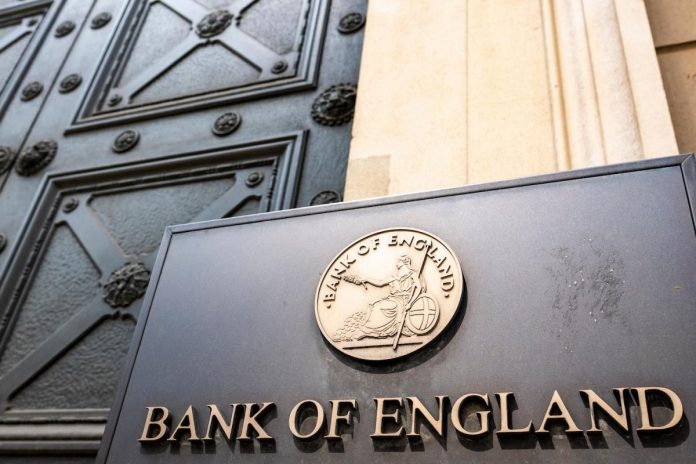
The Bank of England’s decision to accept a wider range of private and structured credit assets as collateral in its lending operations is raising questions over how readily those securities can be traded outside the central bank, as tighter credit conditions and mounting losses put pressure on the rapidly expanding private credit market.

“It is possible that the non-BoE market for these assets might not be as active as it was because there’s a lower appetite for credit in private markets,” said Moyeen Islam, a fixed-income analyst at Barclays.

The issue highlights a potential tension in the Bank of England’s collateral framework: assets that are acceptable for central-bank funding may not necessarily have deep or reliable secondary markets when investors become more risk-averse.

The global private credit industry, now worth about $3.5 trillion, has expanded rapidly over the past several years as investors have sought higher yields than those available in traditional fixed-income markets. The sector has increasingly financed borrowers that may have limited access to conventional bank lending.

That growth, however, has brought greater scrutiny from regulators and investors, particularly as a series of negative headlines, valuation concerns and high-profile losses have raised questions about credit quality and the ability of private-market lenders to absorb a downturn.

Riskier Assets Enter The Collateral Pool

The Bank of England’s Level C collateral list includes securities linked to a range of consumer, vehicle and small-business loans, some of which carry higher levels of credit or residual-value risk.

Among them are loan notes issued by Temese Funding, linked to Investec, which S&P Global says are backed by heavy-equipment and vehicle leases. The leases feature large final instalments, commonly known as balloon payments, which can leave lenders exposed to the value of the underlying assets when borrowers reach the end of their contracts.

The treatment of such assets is becoming an increasingly important issue across Europe.

The European Central Bank effectively removed similar products from its eligible collateral pool in January following a change in its approach to residual-value risk, according to an analysis by law firm Jones Day.

The contrast between the ECB and Bank of England approaches illustrates the difficulty central banks face in determining which private-market assets can provide dependable liquidity during periods of market stress. The BoE does not disclose which individual securities on its Level C list have actually been pledged as collateral in its Indexed Long-Term Repo operation, or ILTR.

Mortgage-Backed Assets Also Face Scrutiny

The list also includes securities issued by Harben Finance, which public filings show is controlled by Barclays. The company owns payment streams from buy-to-let mortgages originated by former UK lender Bradford & Bingley before the bank was rescued by the UK government during the 2008 financial crisis.

Some tranches of Harben Finance debt have experienced multiple rating downgrades over the past year, with Fitch Ratings downgrading some securities twice and S&P Global lowering its rating once.

The presence of such assets on the BoE’s collateral list does not necessarily mean the central bank considers them high-risk or expects losses. Rather, eligibility allows financial institutions to use qualifying securities to obtain central-bank liquidity subject to the Bank’s collateral and risk-management framework.

The distinction is nevertheless important because collateral eligibility can provide liquidity to assets that might become difficult to finance privately during periods of market stress.

Other securities eligible for the BoE’s lending operations include loan notes backed by credit-card receivables from NewDay, the KKR-backed consumer finance company.

Fitch has said the underlying credit-card portfolio was aimed at higher-risk borrowers, adding another layer of consumer-credit exposure to the pool of securities eligible for central-bank financing.

The BoE list also includes debt issued in 2024 by the Small Business Origination Loan Trust, which packages repayments from business owners who obtained financing through Funding Circle’s lending platform.

S&P Global said in an August 21 note that almost one-fifth of the loans in that Funding Circle pool were likely to default. Funding Circle declined to comment.

The potential default rate matters because small businesses are generally more vulnerable to higher borrowing costs, weaker consumer demand and deteriorating cash flows than larger companies with greater access to diversified sources of funding.

Why The Collateral Issue Matters

The developments point to a broader question confronting central banks as private credit becomes an increasingly important part of the financial system: how liquid are these assets when liquidity is most needed?

Traditional government bonds and highly traded corporate securities generally have established markets and transparent pricing. Private credit and securitized loan assets can be harder to value and trade, particularly when investors simultaneously seek to reduce risk.

That situation becomes crucial during periods of financial stress. If private-market demand weakens, borrowers and lenders may find it harder to sell or refinance assets without accepting substantially lower prices. Central-bank collateral operations can provide an alternative source of liquidity, but they do not eliminate the underlying credit risk.

For the Bank of England, the challenge is therefore not simply determining whether an asset is eligible as collateral. It is ensuring that the valuation, haircuts and other safeguards adequately protect the central bank if market liquidity deteriorates and defaults rise.

The issue also has implications beyond the UK. The $3.5 trillion private credit market has become increasingly interconnected with banks, insurers, asset managers and securitization markets. A deterioration in private-credit portfolios could therefore transmit losses beyond the funds and lenders that originated the loans.

While the BoE’s framework provides an important liquidity backstop for eligible assets for now, the widening scrutiny of the collateral pool suggests that investors are becoming more focused on a critical distinction: an asset can be acceptable to a central bank for funding purposes without necessarily being easy to sell in the market when confidence disappears.

Bank of England Takes on More Risk as UK Banks Pledge £17.8 Billion in Higher-Risk Assets

0

British banks are increasingly turning to the Bank of England’s funding facilities to pledge higher-risk and potentially less liquid assets as collateral, exposing the central bank to a growing pool of loans and securities tied to areas such as vehicle leasing, store-card lending and buy-to-let mortgages.

A Reuters review of Bank of England filings shows that banks pledged £1.9 billion of the central bank’s highest-risk category of collateral, known as “Level C”, at its weekly auction for six-month funds on August 18. That was the largest amount since March 2020 and roughly three times the £600 million pledged a week earlier.

The increase has pushed the total value of Level C collateral held by the BoE through its Indexed Long-Term Repo facility to about £17.8 billion, according to Reuters calculations. That compares with £8.7 billion a year earlier and less than £1 billion in mid-2024.

The figures provide a window into an unintended risk that can emerge as central banks unwind years of extraordinary monetary stimulus. By accepting a broad range of collateral, the BoE can provide banks with access to central-bank liquidity while reducing the amount of cash circulating in the financial system following the reversal of its £895 billion quantitative-easing programme.

But the growing use of riskier assets raises questions about the quality and liquidity of collateral ultimately sitting on the central bank’s balance sheet, particularly if private markets become less willing to finance such assets during a period of financial stress.

The BoE said the ILTR was specifically designed to allow financial institutions to use a broad range of assets as collateral. At the same time, its risk-management framework protects the central bank from potential losses.

The facility has become so relevant since the BoE began reversing quantitative easing in 2022. Commercial banks use reserves held at the central bank to settle wholesale transactions, and the ILTR provides a mechanism for banks to obtain term funding against eligible assets as the stock of excess reserves in the financial system declines.

Level C collateral has represented roughly one-fifth to one-quarter of collateral accepted through the ILTR over the past year. Its share has not changed dramatically, but the absolute amount has more than doubled as banks have made greater use of the facility.

“The BoE has got good reasons for wanting to buy grade C assets but there’s a risk that if they do too much then that can encourage bad lending. I think they probably understand that already,” said William Allen, a visiting fellow at the National Institute of Economic and Social Research and a former head of the BoE’s money markets division.

The BoE said it continually reviews its collateral framework to ensure that it remains consistent with its risk-tolerance objectives.

The central bank also protects itself by applying larger “haircuts” to riskier assets. That means banks receive less funding than the face value of the securities they pledge, providing the BoE with a buffer if the collateral loses value. Banks also pay a higher interest rate when using riskier collateral.

Still, the composition of the eligible assets underpins the tension between providing liquidity to the banking system and maintaining strict standards around what a central bank is willing to accept.

Reuters’ analysis of the BoE’s Level C collateral list found several types of assets that are no longer accepted under tighter European Central Bank rules. These include securitized debt linked to mortgages and other loans, as well as assets backed by vehicle leases and higher-risk consumer credit.

This has gained attention because securitization played a central role in the build-up to the 2008 global financial crisis. Packaging loans into securities enabled lenders to transfer credit risk and generate new lending, but the process also helped obscure the underlying risks in some parts of the financial system.

The ECB has tightened its collateral rules in recent years amid concerns that eligibility for central-bank operations can effectively create an additional source of demand for assets that may become difficult to sell during a market shock.

The BoE’s broader framework therefore gives British banks greater flexibility in accessing central-bank liquidity, but potentially leaves the institution more exposed to assets whose market liquidity could deteriorate sharply in stressed conditions.

“It is possible that the non-BoE market for these assets might not be as active as it was because there’s a lower appetite for credit in private markets,” said Moyeen Islam, a fixed-income analyst at Barclays.

That concern comes as private credit has expanded into a roughly $3.5 trillion global industry. The sector has attracted investors with the prospect of higher yields than traditional fixed-income markets, while regulators have increasingly scrutinised underwriting standards, valuation practices and the ability of borrowers to withstand higher financing costs.

The assets eligible for the BoE facility provide examples of the types of credit exposure involved.

Investec-linked Temese Funding has loan notes backed by heavy-equipment and vehicle leases, according to S&P Global. The leases include large payments due toward the end of their terms, commonly known as balloon payments. The ECB effectively excluded such products from its eligible collateral pool in January following changes to its rules, according to an analysis by law firm Jones Day.

The BoE does not disclose which specific securities from its Level C list are actually pledged by banks through the ILTR.

Among the eligible securities are also notes issued by Harben Finance, which public filings show is controlled by Barclays and holds payments from buy-to-let mortgages originated by Bradford & Bingley, the former UK lender that was rescued by the British government during the 2008 financial crisis. Some tranches of the debt have been downgraded twice by Fitch Ratings and once by S&P Global over the past year.

Other eligible assets include loan notes backed by credit-card receivables from KKR-backed NewDay, whose lending has included higher-risk borrowers, according to Fitch.

The BoE’s collateral list also includes debt issued in 2024 by the Small Business Origination Loan Trust, which packages repayments from business owners who obtained financing through Funding Circle’s lending platform.

S&P Global said in an August 21 note that almost one-fifth of the loans in that Funding Circle pool were likely to default. Funding Circle declined to comment.

The immediate risk to the BoE is mitigated by its haircuts, pricing and other safeguards. The larger issue is what the expanding use of Level C collateral says about the underlying credit market.

If banks increasingly need the central bank as a source of liquidity for assets that private investors are reluctant to finance, the ILTR could become an important backstop for segments of the credit market. That would strengthen the BoE’s role as a liquidity provider, but could also increase pressure on the central bank to distinguish between temporary liquidity problems and deterioration in the underlying quality of bank assets.

For now, the rise in Level C collateral does not by itself indicate that British banks are facing a systemic liquidity crisis. It does, however, show that the BoE is accepting exposure to parts of the credit market that European regulators have moved to treat more cautiously, making the quality of its collateral pool a crucial issue for financial stability.

CryptoQuant Analyst Suggests Bitcoin’s Downtrend May Be Nearing Its End as Cycle Momentum Turns Positive

0

Bitcoin’s prolonged downtrend may be approaching a turning point, with CryptoQuant analyst Gaah, pointing to improving cycle momentum as a potential sign that the market’s bearish phase is losing strength.

In a chart on X, Gaah noted that the shift, currently reading just above zero at approximately 0.4, raises the probability that Bitcoin is breaking out of its prolonged downtrend and beginning a reversal of the recent bear phase.

The Bitcoin Cycle momentum indicator posted, tracks the strength and direction of Bitcoin’s longer-term cycle momentum, distinguishing broader bullish and bearish regimes against the asset’s price history.

Historical charts spanning 2013 to the present show these momentum phases aligning with major market expansions and contractions.

After remaining negative for roughly eight months, coinciding with a period of price weakness following the October 2025 all-time high near $126,000, the metric has now crossed into positive ground.

However, the analyst emphasized that full confirmation of a reversal requires the indicator to advance into the 20–30 range in the coming weeks, supported by continued upward price recovery. Without that follow-through, the current reading could prove temporary, he noted.

At the time of writing this report, Bitcoin was trading below the $77,000 range, reflecting recent volatility after climbing above the $80,000 level in late August.

The reversal posed a direct test whether August rally was a durable shift in Bitcoin’s macro positioning or simply a byproduct of falling yields that has now gone into reverse.

Bitcoin has struggled to reclaim its all-time high of around $126,000 reached in October 2025, despite staging several recovery attempts in 2026.

The cryptocurrency has remained well below the record level as investors continue to navigate weaker momentum, macroeconomic uncertainty and changing market sentiment.

One of the major factors behind Bitcoin’s inability to return to its peak has been a lack of sustained buying pressure. While institutional investors and spot Bitcoin exchange-traded funds remain important sources of demand, periods of ETF outflows have limited the strength of Bitcoin’s recovery.

Macroeconomic conditions have also continued to influence investor appetite. Uncertainty surrounding U.S. interest rates, inflation and broader financial conditions has encouraged investors to remain cautious toward risk assets, including cryptocurrencies.

Despite these challenges, Bitcoin’s recovery from its 2026 lows suggests that demand has not disappeared. Crypto analyst Willy Woo highlighted on Monday that Bitcoin has higher global adoption than the S&P 500 and Gold.

He stated in a post on X that roughly 5% of the world population owns Bitcoin, comparable to 4% for the S&P 500 and approximately 4.5% for Gold.

For now, Bitcoin’s return to positive territory marks a notable change after months of bearish readings and provides a data-driven point of optimism for those monitoring Bitcoin’s position within its multi-year cycles.

Market participants will likely watch whether the indicator builds further strength in the weeks ahead as price action unfolds.

Outlook

The outlook for Bitcoin remains cautiously optimistic as the Cycle Momentum indicator moves back into positive territory.

While the shift suggests that the prolonged bearish phase may be losing strength, it does not yet provide sufficient confirmation of a sustained trend reversal.

However, a failure to maintain positive momentum could leave Bitcoin vulnerable to further consolidation or another wave of selling pressure.

With the cryptocurrency still trading significantly below its October 2025 record, the coming weeks could prove critical in determining whether the recent recovery represents the beginning of a new bullish cycle or merely a temporary rebound.