DD
MM
YYYY

PAGES

DD
MM
YYYY

spot_img

PAGES

Home Blog Page 19

China’s Exports Surge to Nearly Four-Year High in June as AI Boom and Tariff Rush Mask Weak Domestic Economy

0

China’s trade growth accelerated sharply in June, as the global artificial intelligence investment boom and a rush to beat looming U.S. tariffs power the country’s export engine even as its domestic economy continues to struggle with weak consumption, falling investment and a prolonged property downturn.

Exports posted their strongest growth in nearly four years, driven by soaring shipments of semiconductors, AI-related hardware, electric vehicles and ships, highlighting China’s central role in supplying the infrastructure behind the global AI race. The latest figures also bolster a widening imbalance in the world’s second-largest economy, where manufacturing and exports remain resilient while household spending and private-sector confidence remain subdued.

The robust trade data come just one day before China releases second-quarter gross domestic product figures, which are expected to show economic growth slowing from the previous quarter despite the export boom.

China’s exports rose 27% year-on-year in June in U.S. dollar terms, customs data released Tuesday showed, accelerating from a 19.4% increase in May and comfortably exceeding economists’ expectations for an 18.2% gain. It was the fastest pace of export growth since October 2021, according to Reuters.

Imports also surprised to the upside, climbing 36% from a year earlier after increasing 27.4% in May. Economists had expected imports to rise around 24%. The stronger-than-expected performance left China with a trade surplus of $125.6 billion for the month.

AI Supply Chain Drives Export Engine

The standout feature of June’s trade data was the dominance of AI-related manufacturing.

Semiconductors ranked among China’s fastest-growing export categories during the first half of the year, alongside rare earth products, automobiles, and ships. Those sectors have benefited directly from unprecedented global investment in artificial intelligence infrastructure, as technology companies continue spending heavily on servers, data centers and advanced computing equipment.

The surge indicates that China’s industrial sector has become deeply integrated into the global AI supply chain. Although the United States continues to restrict exports of its most advanced semiconductor technologies to China, Chinese manufacturers remain major suppliers of components, electronics, industrial equipment and critical minerals used throughout the AI ecosystem.

The export boom also reflects robust overseas demand extending beyond AI hardware, including electric vehicles, batteries and industrial machinery, sectors where Chinese manufacturers have significantly expanded global market share.

By contrast, more traditional labor-intensive exports such as toys, footwear, furniture, and steel continued to lag, reflecting structural shifts in China’s manufacturing economy toward higher-value industrial production.

Exporters Race Ahead Of New U.S. Tariffs

Another major driver behind June’s trade strength was a wave of front-loading by exporters seeking to beat anticipated U.S. tariff increases.

Factory activity accelerated during June as manufacturers rushed shipments before additional duties linked to President Donald Trump’s Section 301 trade investigations potentially take effect. The current 10% broad-based tariff is scheduled to expire on July 24, creating strong incentives for exporters and importers to move goods ahead of any policy changes.

According to China Beige Book, orders destined for the U.S. increased sharply during the month, contributing to higher factory output and pushing freight rates higher.

The strategy appears to be paying off. China’s exports to the United States rose approximately 14% in June, while imports from the U.S. climbed 26%, according to CNBC calculations based on official customs data.

More significantly, China has now returned to positive export growth to the United States during the first half of 2026 after experiencing double-digit declines through much of last year, suggesting bilateral trade has proven more resilient than many analysts expected.

Despite the impressive trade figures, the composition of China’s imports points to an economy that remains heavily dependent on external demand.

Much like exports, import growth was concentrated in high-technology products, while purchases across many consumer-oriented sectors remained subdued, indicating that domestic demand continues to lag.

Beijing continues to face a deepening supply-demand imbalance.

Industrial production has remained relatively strong thanks to manufacturing exports and AI-related investment, but household consumption has struggled to recover amid falling property prices, weak wage growth and subdued consumer confidence.

Private-sector investment also remains under pressure as developers continue dealing with the fallout from the country’s prolonged real estate downturn.

Against that backdrop, economists believe that China’s export strength is masking underlying weaknesses rather than signaling a broad-based economic recovery.

Goldman Sachs recently noted that while exports continue supporting headline growth, the benefits have not translated into stronger employment, higher corporate profitability, or significantly improved domestic demand.

Europe Emerges As Next Trade Battleground

The strength of China’s exports may also intensify trade tensions with key economic partners. Exports to the European Union rose 18.5% in June, while shipments to the Association of Southeast Asian Nations (ASEAN) surged 35%, highlighting China’s continued expansion into markets beyond the United States.

Imports from those regions also strengthened, rising 9% and 27%, respectively.

However, the growing trade imbalance with Europe has become an increasing source of political friction. Last month, Beijing and Brussels established a new trade and investment consultation mechanism aimed at addressing concerns over industrial overcapacity and market access. European officials have said they hope to achieve tangible progress by October.

Zhiwei Zhang, president and chief economist at Pinpoint Asset Management, said exports are likely to remain robust during the second half of the year, but warned that sustained strength could provoke additional trade measures from Europe and other major economies.

Russia Sanctions Add Uncertainty as Oil Imports Fall to Decade Low

Another emerging risk stems from proposed U.S. sanctions targeting buyers of Russian energy. Legislation originally introduced by the late Senator Lindsey Graham proposed imposing secondary tariffs of up to 500% on imports from countries purchasing Russian oil and natural gas. While the proposal remains under consideration, China, as Russia’s largest crude oil customer, would be particularly exposed if such measures were implemented.

“These factors could potentially throw a wrench in the excellent export performance so far,” said Lynn Song, chief economist for Greater China at ING.

One of the more surprising aspects of the June trade report was a sharp decline in crude oil imports. China imported just 29.3 million tons of crude during the month, down 41% from a year earlier and reportedly the lowest monthly volume in nearly a decade.

For the first half of 2026, crude import volumes fell 11% compared with the same period last year. The decline comes even as global oil prices remain elevated following the conflict in the Middle East and renewed supply concerns surrounding the Strait of Hormuz.

Julian Evans-Pritchard, head of China economics at Capital Economics, said the weakness likely reflects inventory drawdowns rather than collapsing energy demand. The explanation is consistent with China’s efforts to manage existing strategic and commercial stockpiles after building inventories during periods of lower oil prices.

Attention now turns to Wednesday’s release of second-quarter GDP data, which will provide the clearest picture yet of China’s broader economic health.

Economists surveyed by Reuters expect annual GDP growth to slow to 4.5% in the April-June quarter from 5% in the first quarter.

Additional data due Wednesday are also expected to paint a mixed picture. Industrial production is forecast to expand 4.7%, reflecting continued manufacturing resilience, while retail sales are projected to contract 0.1%, underscoring persistent weakness in consumer spending. Fixed-asset investment is expected to decline 4.9% during the first half of the year, worsening from a 4.1% fall during the first five months.

Investors are also closely watching a Politburo meeting expected later this month for signs of additional policy support.

Most economists believe Beijing is unlikely to unveil aggressive stimulus unless growth deteriorates more sharply. Policymakers remain reluctant to repeat large-scale stimulus measures, instead focusing on targeted fiscal support while attempting to curb excess industrial capacity and combat persistent deflationary pressures.

The Rising Risks of Consumer Debt in the Private Credit Market

0

Private credit has emerged as one of the fastest-growing segments of global finance, expanding far beyond its traditional role of lending to middle-market companies.

Increasingly, private credit firms are turning their attention to consumer debt, including credit card receivables, personal loans, auto loans, and buy-now-pay-later financing. This shift reflects investors’ search for higher yields in an environment where traditional fixed-income assets often struggle to deliver attractive returns.

The growing appetite for consumer debt comes at a particularly precarious moment for households and the broader economy.

Consumer finances in many developed economies are under mounting pressure. Inflation over the past several years has significantly eroded purchasing power, while elevated interest rates have increased borrowing costs for households.

Although labor markets remain relatively resilient in some regions, wage growth has not always kept pace with the rising cost of living. As a result, many consumers have increasingly relied on debt to maintain spending levels. This trend has created an opportunity for private credit firms.

Unlike traditional banks, private lenders often have greater flexibility in structuring transactions and can move quickly to acquire portfolios of consumer loans or finance specialty lending platforms. Institutional investors, including pension funds and insurance companies, are eager to allocate capital to these assets because they promise higher returns.

Yet the timing of these investments raises important concerns. Consumer delinquency rates have begun to climb in several markets, particularly among lower-income borrowers. Credit card balances have reached record highs in some economies, and missed payments on auto loans and unsecured personal debt are increasing.

If economic conditions weaken further, the credit quality of these assets could deteriorate rapidly. Private credit investors argue that sophisticated underwriting and diversification can mitigate these risks.

Many firms employ advanced data analytics to identify stronger borrowers and structure loans with protections against losses. Additionally, the fragmented nature of consumer lending offers opportunities to acquire assets at attractive valuations.

Consumer debt differs fundamentally from corporate lending. Household finances are highly sensitive to changes in employment, inflation, and interest rates. A sudden economic downturn can quickly trigger widespread defaults across millions of borrowers.

Unlike corporations, consumers generally possess limited financial flexibility and fewer avenues for restructuring debt obligations. There are also broader systemic considerations. The rapid growth of private credit has shifted significant lending activity outside the traditional banking sector and into less regulated areas of finance.

While this diversification may reduce some risks within banks, it can also create new vulnerabilities. Transparency in private markets is often limited, making it difficult for regulators and investors to fully assess the buildup of risks.

The increasing interconnection between private credit funds and institutional investors further amplifies these concerns. Pension funds and insurance companies depend on stable returns to meet long-term obligations. Significant losses in consumer debt portfolios could have repercussions that extend beyond individual investment vehicles.

Consumer spending remains a critical driver of economic growth. If households become overwhelmed by debt burdens, reduced spending could weaken economic activity, creating a negative feedback loop that further damages credit performance. In such a scenario, the very assets that currently appear attractive could become sources of considerable financial stress.

Private credit’s expansion into consumer lending illustrates both the innovation and the risks present in modern financial markets. The sector’s ability to provide alternative sources of capital is valuable, particularly as traditional banks become more constrained.

The decision to increase exposure to consumer debt at a time of elevated household leverage and economic uncertainty represents a significant gamble. Whether these investments ultimately prove profitable will depend largely on the resilience of consumers and the broader economy.

For now, private credit’s growing enthusiasm for consumer debt appears to be a high-yield opportunity carrying equally high levels of risk.

U.S. Chamber of Commerce, Business Groups Urge Senate to Scrap Pentagon Contractor Buyback Restrictions from Defense Bill

0

A broad coalition of U.S. business organizations is pressing Congress to remove a controversial provision from the Senate’s annual defense policy bill that would prohibit Pentagon contractors from conducting stock buybacks or paying dividends without approval from the Defense Department.

The proposal, known as Section 815, has emerged as one of the most contentious corporate governance measures in this year’s National Defense Authorization Act (NDAA), setting up a clash between lawmakers seeking tighter oversight of defense contractors and business groups warning that the federal government is overreaching into private-sector financial decisions.

The Senate is expected to begin considering the NDAA this week.

The U.S. Chamber of Commerce, joined by 40 other business organizations representing companies that supply goods and services to the Pentagon, sent a letter to Senate leaders on Tuesday urging them to strike the provision before the legislation reaches President Donald Trump’s desk.

The groups argued that Section 815 would represent an unprecedented expansion of federal authority over corporate finance by allowing the government to influence how companies allocate capital.

“By prohibiting dividends, share repurchases, and other capital distributions absent a government waiver, Section 815 would shift responsibility for ordinary capital allocation decisions from corporate leadership to Washington,” the letter said. “[W]e urge the Senate to strike Section 815 and oppose future efforts to use federal procurement policy to control otherwise lawful corporate governance and capital.”

Business groups contend the language is drafted so broadly that it could affect tens of thousands of companies doing business with the Department of Defense, extending well beyond major weapons manufacturers.

Unlike previous efforts aimed specifically at large defense contractors, the provision contains no explicit distinction between prime contractors producing military equipment and companies providing routine commercial services such as food, logistics, or maintenance.

Supporters argue the proposal is intended to ensure defense contractors reinvest profits into production capacity instead of rewarding shareholders while government contracts experience delays and cost overruns.

The measure was championed by Democratic Senator Elizabeth Warren and included in the Senate Armed Services Committee’s version of the NDAA with bipartisan support. Warren previously introduced similar legislation alongside Republican Senators Josh Hawley and Mike Lee, highlighting unusual cross-party agreement on increasing oversight of defense contractors.

Last month, Warren described the proposal as an effort to “Bring a small amount of discipline to these defense contractors who have been running wild for years.”

She reiterated that position in a statement, saying, “Time to stop these contractors from putting Wall Street over our national security.”

Warren accused large military suppliers of prioritizing investors over taxpayers.

“Giant military contractors are cheating our government out of billions in taxpayer dollars and lining their executives’ and shareholders’ pockets instead of investing in our national defense,” she said

The proposal also aligns with an executive order signed by President Donald Trump in January directing the administration to discourage stock buybacks and dividend payments by defense contractors that fail to meet Defense Department performance expectations.

Trump said the objective was to encourage companies to reinvest earnings into expanding defense production capacity as geopolitical tensions increase.

Industry Says Proposal Goes Far Beyond Trump’s Order

Business groups say the Senate legislation is significantly more restrictive than Trump’s executive order.

While the executive order has generally been viewed as giving the administration flexibility to influence contractor behavior on a case-by-case basis, Section 815 would establish a statutory prohibition requiring contractors to obtain formal Defense Department waivers before engaging in ordinary capital distributions.

Under the bill, the Defense Department would generally be prohibited from awarding contracts unless a contractor agrees in writing not to:

Purchase its own publicly traded shares or those of its parent company.
Pay dividends.
Make other capital distributions to shareholders.

The restrictions would take effect on June 15, 2027.

Companies could receive exemptions only if the Defense Secretary approves a “qualifying defense investment plan,” allowing capital distributions to proceed.

Business organizations warn that such a framework introduces significant uncertainty into corporate financial planning and could discourage companies from participating in the defense industrial base.

Will Anderson, Vice President of Corporate Governance at the Business Roundtable, said: “Section 815 would give the federal government an unprecedented role in companies’ routine financial decisions.”

He added: “The proposal is far-reaching and would create new uncertainty for companies across a wide range of industries at exactly the moment Congress should be removing barriers to participation in the defense industrial base — not creating new ones.”

The proposal underpins how attitudes toward corporate governance have evolved in Washington.

Historically, many Republicans opposed government involvement in decisions such as dividends and share repurchases. However, growing concern over supply-chain resilience, military preparedness, and industrial policy has led to broader bipartisan support for greater oversight of defense contractors.

The Senate Armed Services Committee approved the NDAA by an 18-9 vote, and committee records indicate Section 815 was incorporated into the base bill without a separate vote, suggesting relatively little opposition during committee deliberations.

Still, some Republican lawmakers have expressed reservations.

Senator Mike Rounds, a Republican member of the Armed Services Committee, questioned whether Congress should be directing companies’ financial decisions.

“I don’t like it when politicians are telling business people how to build their businesses necessarily,” he said. “Anytime you get into the middle of trying to tell businesses how to do business, I think you’re going farther than you should.”

Rounds also warned that restricting buybacks and dividends could ultimately reduce investment in the defense sector rather than encourage it.

“A benefit that they see for creating an opportunity for more investment that we can use to continue to rebuild the industrial complex that we need,” he said.

Business groups made a similar argument in their letter, stating: “Restricting capital distributions therefore does not create additional investment; it simply prevents capital from being allocated to its highest-value use.”

Legislative Outlook Remains Uncertain

Although Section 815 has advanced through committee, its future remains uncertain. This is because removing the provision during Senate floor consideration would require adoption of an amendment, a difficult task given the bipartisan support behind the measure and the Senate’s 60-vote threshold for most amendments.

However, the proposal faces another hurdle later in the legislative process. The House version of the NDAA does not contain comparable restrictions on buybacks or dividends. Once both chambers pass their respective bills, lawmakers will negotiate a compromise in a House-Senate conference committee.

That process could ultimately determine whether Section 815 survives in its current form, is substantially modified, or is removed entirely before the final defense authorization bill is sent to President Trump for signature.

Rounds acknowledged that the conference negotiations may offer the best opportunity for changes.

“That means there’s a good possibility that it’s either modified or changed,” he said.

SBI Funds Secures $279m Ahead Of $1.2bn IPO As Sovereign Wealth Funds Back India’s Largest Asset Manager

0

India’s largest asset manager, SBI Funds Management, has raised 26.63 billion rupees ($278.5 million) from anchor investors ahead of its $1.2 billion initial public offering (IPO), drawing support from major sovereign wealth funds and global institutional investors in one of India’s biggest equity listings of the year.

The strong anchor book, led by sovereign investors from Singapore, Abu Dhabi and Norway, signals robust institutional demand for India’s fast-growing asset management industry, which continues to benefit from rising household participation in mutual funds and long-term structural growth in domestic savings.

According to a regulatory filing released late Monday, SBI Funds allocated 46.4 million shares to anchor investors at 574 rupees each, the upper end of its IPO price range.

Several of the world’s largest institutional investors participated in the anchor allocation. The Government of Singapore Investment Corporation (GIC) received 2.7 million shares, representing approximately 5.72% of the anchor book.

The Monetary Authority of Singapore (MAS) was allocated an additional 1.04% of the anchor tranche.

Abu Dhabi Investment Authority (ADIA), one of the world’s largest sovereign wealth funds, Norway’s sovereign wealth fund, and investment funds managed by BlackRock each received approximately 1.6 million shares.

India’s state-owned insurance giant Life Insurance Corporation of India (LIC) and Canada’s Capital Group Global Equity Fund each acquired about 3.1 million shares, accounting for roughly 6.76% of the anchor allocation.

Domestic institutional investors also featured prominently.

Mutual funds managed by HDFC, ICICI, and Axis together received 37.2% of the anchor book, representing investments worth approximately 9.91 billion rupees.

The broad participation from domestic and international institutions suggests confidence in both SBI Funds’ market position and India’s long-term investment management sector.

One of India’s Largest IPOs This Year

SBI Funds is seeking a valuation of as much as 1.17 trillion rupees (approximately $12.2 billion), making the transaction one of the largest IPOs in India in 2026.

The public offering consists entirely of an offer for sale (OFS), meaning existing shareholders are selling shares while the company itself will not receive any proceeds or issue new equity.

The asset manager is jointly owned by State Bank of India (SBI), the country’s largest lender, and French asset management giant Amundi, Europe’s largest fund manager. Together, SBI and Amundi are selling a combined 203.7 million shares through the offering as they partially monetize their investments while retaining ownership stakes in the business.

The IPO will open to institutional and retail investors from July 14 to July 16, with shares priced between 545 rupees and 574 rupees. The company is expected to debut on Indian stock exchanges on July 21.

The anchor placement follows another transaction announced last week in which State Bank of India agreed to sell a further 1.42% stake in SBI Funds to 30 investors through a pre-IPO placement worth 16.55 billion rupees.

The pre-IPO sale reduced the number of shares available in the public offering while broadening the shareholder base ahead of listing.

The IPO comes as India’s asset management industry experiences sustained growth driven by increasing retail participation in mutual funds, expanding financial inclusion, and rising household savings flowing into capital markets.

Monthly systematic investment plans (SIPs) have become one of the primary engines of growth for India’s mutual fund industry, providing asset managers with recurring inflows and relatively stable fee income even during periods of market volatility.

India’s strong economic growth, expanding middle class and increasing financialization of savings have made the country one of the fastest-growing asset management markets globally, attracting interest from international investors seeking exposure to long-term domestic consumption and wealth creation trends.

The partial stake sale allows SBI to unlock value from one of its most profitable subsidiaries while maintaining strategic ownership of the country’s largest asset manager. For Amundi, the offering provides an opportunity to monetize part of its investment while retaining exposure to one of the world’s fastest-growing fund management businesses.

The strong participation by sovereign wealth funds, pension investors, and global asset managers also boosts international confidence in India’s capital markets at a time when global investors continue to increase allocations to the country’s financial sector.

Gulf Nations Are Building Alternate Oil Export Infrastructure Following Trump’s 20% Hormuz Transit Fee Threat

0

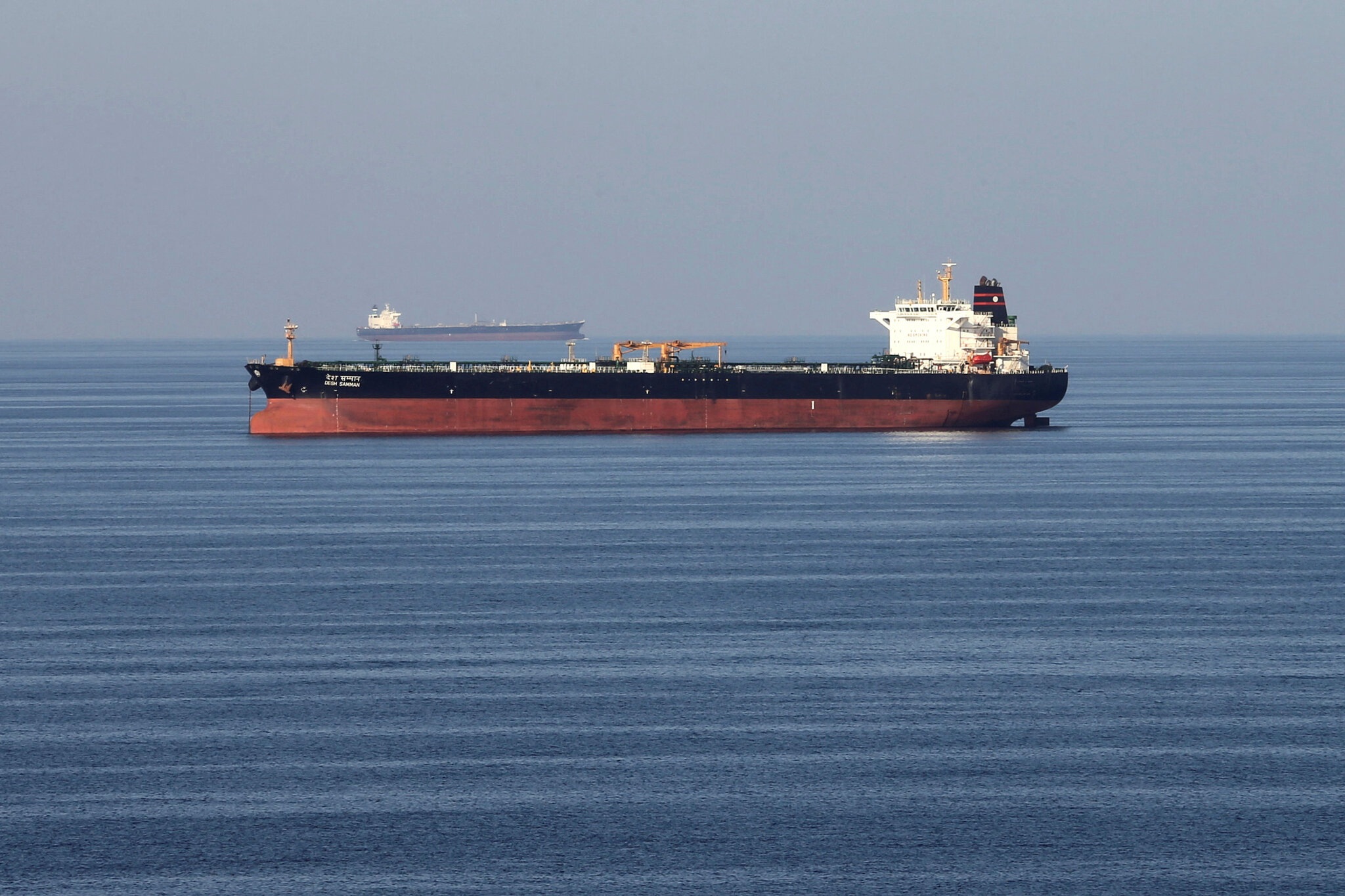
President Donald Trump’s proposal to impose a 20% fee on cargo transiting the Strait of Hormuz, combined with the collapse of the interim U.S.-Iran agreement, is accelerating one of the Gulf’s biggest strategic infrastructure shifts in decades as oil-producing nations race to reduce dependence on the world’s most important energy chokepoint.

The renewed conflict has transformed long-term diversification plans into an immediate strategic priority. With military strikes resuming, commercial shipping facing fresh attacks and insurance costs rising sharply, Gulf producers are increasingly investing in pipelines, ports and export terminals that bypass the Strait of Hormuz, aiming to shield oil exports from future geopolitical disruptions.

The renewed hostilities have already begun reverberating through global energy markets. Brent crude has climbed roughly 6% since Trump declared the interim agreement with Iran “over,” as traders price in the growing risk of supply disruptions, higher freight costs and tighter global crude availability. Analysts warn that a prolonged military confrontation could push prices substantially higher if exports from the Gulf face further constraints.

The latest developments are also revealing a broader shift in energy security strategy. For decades, Gulf producers prioritized expanding production capacity. Today, the ability to move crude reliably to international markets is becoming just as important as producing it, with export resilience emerging as a competitive advantage.

Among the clearest examples is the United Arab Emirates’ reported plan to construct a new deep-water port and container terminal in Fujairah on the Gulf of Oman, outside the Strait of Hormuz. According to the Financial Times, Dubai-based DP World is in discussions to develop both a new port and expand existing facilities in Fujairah.

If completed, the project would significantly strengthen the UAE’s ability to maintain trade even during periods of heightened military tension in the Gulf.

Ahmed bin Sulayem, chief executive of the Dubai Multi Commodities Centre, described the reported investment as both an emergency response and part of a broader long-term strategy.

“Until conditions in the Strait of Hormuz are safer, as of now, I don’t believe there will be much focus on shipping lines going there,” he told CNBC.

The UAE has also demonstrated unusual operational flexibility during the crisis by using shuttle tankers to transport crude from terminals inside the Strait of Hormuz to waters beyond the chokepoint, where cargoes are transferred to larger vessels destined for Asia. The strategy has enabled exports to continue even as commercial shipping faces elevated security risks.

Saudi Arabia has likewise benefited from years of investment in alternative infrastructure.

According to Andy Lipow, president of Lipow Oil Associates, the kingdom is currently diverting roughly 4 million barrels of crude per day through its East-West Pipeline, or Petroline, which links eastern oil fields with the Red Sea export terminal at Yanbu.

Stretching approximately 750 miles and capable of transporting as much as 7 million barrels per day following recent upgrades, the pipeline allows Saudi Arabia to bypass the Strait of Hormuz entirely, reducing its exposure to disruptions in the Gulf.

Bob McNally, president of Rapidan Energy Group, described the system as one of the biggest success stories to emerge from the conflict.

“What real master stroke was Saudi Arabia being able to put all that extra oil through the Yanbu pipeline,” he said, noting that Saudi exports have remained remarkably resilient despite the conflict.

Yet analysts quoted by CNBC caution that bypassing Hormuz merely relocates geopolitical risk rather than eliminating it.

Crude shipped from Yanbu must still transit the Red Sea and pass through the Bab el-Mandeb Strait, another strategic maritime corridor that has repeatedly come under attack from Yemen’s Houthi militants. Any disruption there could threaten millions of additional barrels of daily exports.

Carole Nakhle, chief executive of Crystol Energy, said the UAE’s investment in alternative export routes carries geopolitical as well as commercial significance.

“The second they reduce that kind of exposure to the Strait of Hormuz, the more bargaining power they will have in any potential deal with the Iranians, and that by itself is going to deflate some of the Iranians’ power and influence in the region,” she said.

The crisis is also exposing a widening divide among Gulf producers.

According to the International Energy Agency, Saudi Arabia and the UAE remain the only Gulf producers with operational pipeline systems capable of bypassing Hormuz, with available spare capacity estimated at between 3.5 million and 5.5 million barrels per day.

By contrast, Iraq, Kuwait, Qatar, Bahrain, and Iran continue to rely overwhelmingly on the strait for crude and liquefied natural gas exports, leaving them considerably more vulnerable to any prolonged disruption. That imbalance could reshape future investment decisions across the region. Countries lacking alternative export routes may now prioritize pipeline construction, storage facilities and new maritime infrastructure alongside upstream oil production.

The implications extend well beyond regional producers.

The Strait of Hormuz normally handles around one-fifth of global oil consumption and a substantial share of global LNG exports. Any sustained disruption not only tightens crude supplies but also raises shipping costs, insurance premiums and freight rates, feeding into higher transportation and manufacturing costs worldwide.

For central banks already grappling with persistent inflation, renewed energy price shocks complicate the outlook for interest rates. Higher oil prices increase input costs across industries and could delay monetary easing in major economies, particularly if geopolitical tensions remain elevated.

The infrastructure race also underpins a change within the global energy sector. Rather than focusing solely on increasing production, governments and national oil companies are increasingly investing in supply-chain resilience, strategic logistics and export flexibility. The ability to guarantee uninterrupted deliveries is becoming a valuable asset for attracting long-term buyers and maintaining market share.

However, meaningful diversification remains a long-term undertaking.

Adam Posen, president of the Peterson Institute for International Economics, estimates it could take between 18 and 24 months to develop sufficient pipelines, shipping infrastructure, and logistical alternatives capable of materially reducing dependence on the Strait of Hormuz.

Until then, every escalation between Washington and Tehran is likely to continue reverberating through global energy markets, with oil prices, inflation expectations, shipping costs and investor sentiment remaining highly sensitive to developments in the Strait.