DD
MM
YYYY

PAGES

DD
MM
YYYY

spot_img

PAGES

Home Blog Page 191

Crypto.com Receives OCC Approval for National Trust Bank Charter

0

Crypto.com has received conditional approval from the Office of the Comptroller of the Currency (OCC) to establish a national trust bank charter in the United States.

The approval applies to Foris Dax National Trust Bank, which will operate under the name Crypto.com National Trust Bank (d.b.a.). It’s a limited-purpose national trust bank focused on digital assets, not a full-service commercial bank.

Services enabled once fully approved: Federally regulated custody for digital assets, staking across blockchains including Crypto.com’s Cronos network, trade settlement, and related qualified custodian functions. This positions Crypto.com to serve institutional clients with a “one-stop-shop” under federal oversight.

It does not allow accepting cash deposits or issuing loans, distinguishing it from traditional banks. The bank would fall under direct OCC supervision, providing a uniform federal framework instead of patchwork state-level regulations. This aligns with broader trends, as other firms have secured similar conditional approvals in late 2025 and early 2026.

Crypto.com must meet additional OCC requirements, including capital adequacy, governance, risk management, anti-money laundering (AML) controls, and operational resilience, before final authorization.

Crypto.com’s CEO, Kris Marszalek, described it as a “major milestone” demonstrating their commitment to compliance and positioning the platform as a trusted qualified custodian for institutions. This development reflects increasing integration of crypto firms into the traditional financial system under federal regulation, potentially boosting institutional adoption while imposing stricter oversight.

Crypto.com’s official announcement and multiple reports explicitly highlight that the future federally regulated bank will support: Custody of digital assets.
Staking across various blockchains and protocols, including Cronos.
Trade settlement.

This means institutions using the bank as a qualified custodian could stake assets on Cronos; CRO or other tokens in the ecosystem under a federal oversight framework. This is a step up from Crypto.com’s current state-regulated custodian as federal regulation often appeals more to risk-averse institutional clients like asset managers, corporate treasuries, or ETF providers.

The approval does not immediately change anything—it’s conditional, requiring Crypto.com to meet further requirements like capital, governance, AML, risk management. Existing custody operations continue unchanged, and the bank won’t handle cash deposits or loans.

Federal regulation could attract more institutional capital to Cronos for staking and related activities. Institutions often prefer federally supervised custodians for compliance and security reasons, potentially boosting TVL (Total Value Locked) on Cronos through staked assets or DeFi protocols.

Cronos is positioned as a core part of Crypto.com’s “one-stop-shop” for institutions. Streamlined, compliant staking and settlement on Cronos could enhance its appeal for high-throughput use cases (Cronos supports up to tens of thousands of TPS).

Some analyses describe this as a potential driver for institutional liquidity flows into the broader Cronos ecosystem. While the bank charter is separate from CRO token operations, greater custody/staking volume on Cronos could indirectly support network activity, fees, and adoption.

The conditional nature means no operational changes yet. Cronos staking already exists via Crypto.com’s platforms and other providers. Any major uplift would come after final approval and institutional onboarding.

This fits a trend where crypto firms like Circle, Ripple, Paxos, BitGo, Stripe’s Bridge secure similar charters to bridge traditional finance and crypto under unified federal rules. For Cronos specifically, it strengthens Crypto.com’s narrative as a compliant, institution-friendly chain within its ecosystem.

It’s a bullish signal for Cronos’ long-term growth through better institutional access and staking utility, but expect impacts to materialize gradually as the charter finalizes and clients migrate.

Board of Peace Exploring Introduction of US-backed Stablecoin in Gaza

0

Officials associated with U.S. President Donald Trump’s “Board of Peace”—a body established to oversee the reconstruction and economic recovery of postwar Gaza—are exploring the introduction of a US dollar-backed stablecoin for the enclave.

This initiative is still in very preliminary stages, according to multiple sources including an article in the Financial Times, which cited five people familiar with the discussions. The stablecoin would not create a new “Gaza Coin” or replace any existing Palestinian currency.

Instead, it aims to enable digital transactions for everyday Gazans in a region where the traditional banking system, cash supply, and physical infrastructure like ATMs have been severely damaged or destroyed during the prolonged conflict.

It would be pegged to the US dollar to maintain stable value, facilitating payments for aid distribution, salaries, goods, and services without relying on scarce physical cash. Work on the idea is reportedly being led by Liran Tancman, an Israeli tech entrepreneur and former reservist, serving as an unpaid adviser to the Board.

There are discussions about involving Palestinian and Gulf Arab companies with expertise in digital currencies to help implement it. The Board of Peace and related entities such as any transitional administration in Gaza would likely decide on the regulatory framework, access controls, and implementation details—though nothing is finalized yet.

This fits into the Board’s larger efforts to rebuild Gaza’s economy after years of war. The Board itself was formalized in early 2026 following UN Security Council endorsement, with Trump pledging significant US funding of $10 billion and requiring member countries to contribute $1 billion each for participation.

Some see it as a pragmatic way to restore financial normalcy and potentially reduce reliance on unregulated cash flows which could limit channels for groups like Hamas, while others express concerns about surveillance, control over transactions, limited internet infrastructure in Gaza, or broader geopolitical implications.

Similar ideas have surfaced in past Trump-related postwar Gaza planning discussions; digital tokens for relocation or development incentives, but this stablecoin concept appears distinct and focused on payments rather than land or incentives.

President Donald Trump’s Gaza reconstruction plans center on his “Comprehensive Plan to End the Gaza Conflict,” a 20-point roadmap endorsed by UN Security Council Resolution 2803 in late 2025. This has transitioned into Phase Two (post-ceasefire), focusing on demilitarization, transitional governance, and large-scale rebuilding under the newly formed Board of Peace.

The Board of Peace, chaired by Trump himself, held its inaugural meeting on February 19, 2026, in Washington at the renamed Donald J. Trump United States Institute of Peace. It serves as an international body with a broader potential mandate beyond Gaza to oversee reconstruction, mobilize funds, and ensure accountability until the Palestinian Authority can assume control after reforms.

Trump pledged $10 billion from the U.S. toward the Board and Gaza efforts. Member countries over 40 nations, including Gulf states like UAE, Qatar, Saudi Arabia, plus others like Kazakhstan, Azerbaijan, Morocco, Bahrain, and more have committed at least $7 billion as an initial down payment for reconstruction and relief.

This is a fraction of estimates: the World Bank projects $50-53 billion needed, with some sources citing up to $70 billion due to extensive war damage. A National Committee for the Administration of Gaza (NCAG), comprising 15 Palestinian technocrats, handles restoration of public services, civil institutions, and daily stabilization.

An Office of the High Representative supports NCAG. A Gaza Executive Board (under the Board of Peace) oversees operations, excluding direct Palestinian or Israeli members initially. Full disarmament of Hamas remains a core goal but is ongoing and challenging.

An International Stabilization Force (ISF), potentially led by a U.S. general and involving troops from countries like Albania, Indonesia, Kazakhstan, Kosovo, and Morocco, would deploy in phases starting in areas like Rafah under Israeli control. Plans include a major 5,000-person multinational military base in southern Gaza to support operations.

Emphasis on modern, efficient governance to attract investment and create “thriving miracle cities” inspired by Gulf models. Proposals include building 100,000 housing units for ~500,000 residents, $5 billion in initial infrastructure, and transforming Gaza into an economic/investment hub.

Jared Kushner presented AI-generated concepts at Davos for high-rises, marinas, and redevelopment zones—though population transfers are explicitly ruled out in the plan. Gulf and Palestinian digital currency experts may assist, with the Board and NCAG setting regulations—still very preliminary.

The plans build on a 2025 ceasefire and hostage deal and aim for a “deradicalized, terror-free” Gaza with prosperity. Trump has touted it as a path to lasting peace, with some nominating him for the 2026 Nobel Peace Prize. However, skepticism persists: many Western allies have been wary or declined full involvement, fearing it rivals the UN or lacks Palestinian input.

Critics describe it as top-down, real-estate-focused (prioritizing “real estate over rights”), potentially fragmenting Gaza or sidelining political aspirations for statehood. Implementation faces hurdles like ongoing security issues, massive funding gaps, infrastructure collapse, and debates over control and surveillance in any digital systems.

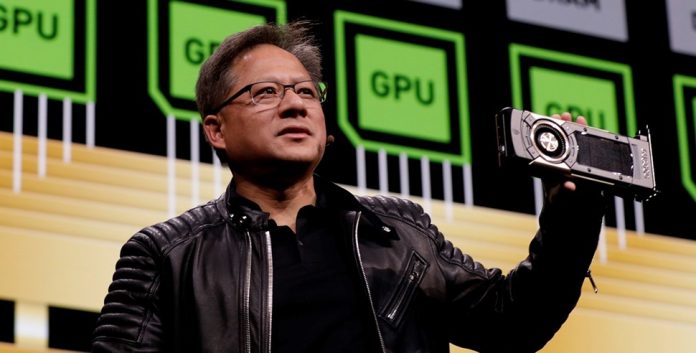
U.S. Says DeepSeek Trained New Model on Nvidia Blackwell Chips, Raising Export Control Alarm

0

U.S. officials say DeepSeek trained its upcoming model on Nvidia’s Blackwell chips in China, a claim that, if verified, would signal a breach of export controls and intensify the policy split in Washington over AI chip sales.


U.S. authorities have said that Chinese AI startup DeepSeek trained its upcoming artificial intelligence model using Nvidia’s most advanced AI processor, Blackwell.

The development could constitute a breach of U.S. export controls and deepen an already tense debate in Washington over Chinese access to cutting-edge AI technology.

According to a senior Trump administration official who spoke to Reuters, the chips were likely concentrated in DeepSeek’s data center in Inner Mongolia, where the company has reportedly removed technical indicators that might reveal their use. The official emphasized that U.S. policy prohibits shipments of Blackwell processors to China.

The official said U.S. authorities believe Blackwell chips were clustered at DeepSeek’s data center in Inner Mongolia and used to train a model expected to be released as soon as next week. The person declined to disclose how the U.S. obtained the information or how the chips reached China.

The Chinese embassy in Washington said Beijing opposes “drawing ideological lines, overstretching the concept of national security, expansive use of export controls and politicizing economic, trade, and technological issues.” At a regular briefing, foreign ministry spokesperson Mao Ning said she was not aware of the specific circumstances but reiterated China’s longstanding objections to U.S. restrictions on chip exports.

Confirmation by U.S. officials that DeepSeek obtained and used Blackwell chips, first reported by Reuters, is likely to deepen divisions in Washington over how tightly to restrict China’s access to cutting-edge AI hardware.

President Donald Trump has shifted positions over the past year. In August, he signaled openness to allowing Nvidia to sell a scaled-down version of Blackwell in China. He later reversed course, stating that the most advanced chips should be reserved for U.S. companies.

In December, the administration allowed Chinese firms to purchase Nvidia’s second-most advanced AI chip, the H200, drawing criticism from national security hawks. Shipments have since stalled over approval conditions and compliance guardrails.

White House AI adviser David Sacks and Nvidia CEO Jensen Huang have argued that permitting some advanced chip sales to China reduces incentives for Chinese firms such as Huawei to accelerate domestic alternatives that could eventually challenge U.S. technological leadership.

Others take the opposite view. Chris McGuire, who served on the National Security Council under former President Joe Biden, said the development demonstrates the risk of any advanced AI chip exports to China.

“Given China’s leading AI companies are brazenly violating U.S. export controls, we obviously cannot expect that they will comply with U.S. conditions that would prohibit them from using chips to support the Chinese military,” he said.

Blackwell represents Nvidia’s latest-generation AI architecture, designed to power large-scale model training and inference workloads. Its performance gains over prior chips significantly reduce training time for frontier models and lower energy consumption per computation — advantages that can accelerate iteration cycles and narrow competitive gaps.

If DeepSeek successfully trained a major new model on Blackwell hardware inside China, it would suggest either a breakdown in export enforcement, diversion through third countries, or access to previously shipped inventory before controls tightened.

The U.S. official said Washington believes DeepSeek may attempt to remove technical indicators that could reveal the use of American AI chips. Such indicators can include firmware signatures, performance characteristics, or configuration traces embedded in model training logs.

Distillation and model replication

The administration official added that the DeepSeek model likely relied in part on “distillation” of leading U.S. AI systems, echoing prior allegations from OpenAI and Anthropic.

Distillation involves using outputs from a larger, more advanced model to train a smaller or newer model, effectively transferring learned behavior without replicating the original training dataset or architecture from scratch. If combined with access to top-tier hardware like Blackwell, distillation can compress development timelines and reduce compute costs.

Hangzhou-based DeepSeek unsettled global markets last year with a series of AI releases that approached the performance of leading U.S. systems at lower reported training costs. The prospect that it may now have leveraged Blackwell chips — the same hardware underpinning frontier U.S. models — raises the stakes.

Export control credibility

At issue is not only competitive positioning but also enforcement credibility. U.S. export controls are designed to limit China’s ability to train or deploy frontier AI systems with potential military applications. Blackwell is among the most tightly controlled chips due to its capability to handle massive parallel workloads required for advanced AI.

If China-based firms can access such hardware despite restrictions, policymakers may push for tighter secondary sanctions, expanded entity listings, or broader licensing requirements for cloud-based compute services.

At the same time, stricter controls carry trade-offs. Nvidia derives significant revenue from international markets, and curtailing overseas sales can reduce scale advantages and funding for future research. Proponents of selective access argue that engagement preserves U.S. influence over standards and supply chains.

The immediate question is whether Washington adjusts its stance on H200 approvals or broadens enforcement mechanisms.

Trump’s Section 122 Tariffs Face Legal Scrutiny as Economists Dispute ‘Balance of Payments’ Claim

0

Trump’s new 10%–15% tariffs under Section 122 of the Trade Act are intended to address what he calls a U.S. balance of payments problem, but economists argue no such crisis exists, raising fresh legal and political risks.


President Donald Trump’s move to impose temporary tariffs of up to 15% under Section 122 of the Trade Act of 1974 has opened a new front in the legal and economic battle over U.S. trade policy, with critics questioning both the statutory basis and the economic rationale behind the action.

The tariffs were announced hours after the Supreme Court of the United States struck down a broad set of duties Trump had previously imposed under the International Emergency Economic Powers Act (IEEPA). In response, the administration turned to Section 122 — a rarely discussed and never-before-used provision that allows the president to impose tariffs of up to 15% for up to 150 days to address “large and serious” balance-of-payments deficits or “fundamental international payments problems.”

An initial 10% levy took effect shortly after midnight Tuesday, according to a customs notice. Although Trump has said the rate would rise to 15%, only the 10% tariff has been formalized through executive order.

The Economic Argument at the Core

The administration’s order argues that the United States faces a serious balance-of-payments problem, citing a $1.2 trillion annual goods trade deficit, a current account deficit equal to roughly 4% of GDP, and a recent reversal of the U.S. primary income surplus.

In classical economic terms, a balance-of-payments crisis typically refers to a situation in which a country struggles to finance imports or service foreign debt, often accompanied by soaring borrowing costs, currency instability, or capital flight.

Several economists dispute that the U.S. meets that threshold.

Gita Gopinath, former First Deputy Managing Director of the International Monetary Fund, told Reuters that “we can all agree that the U.S. is not facing a balance of payments crisis,” defining such crises as episodes in which countries lose access to financial markets or face sharply rising international borrowing costs.

Gopinath argued that the recent negative primary income balance — the first since 1960 — reflects strong foreign investment in U.S. equities and other risk assets that have outperformed global markets over the past decade. In this framing, the deficit reflects the attractiveness of U.S. capital markets rather than systemic financial stress.

Mark Sobel, a former U.S. Treasury and IMF official, emphasized that balance-of-payments crises are more common in countries with fixed exchange rates, where currency pegs can come under speculative pressure. The U.S., by contrast, operates under a floating exchange rate regime. The dollar has remained relatively steady, the 10-year Treasury yield has not exhibited crisis-level volatility, and U.S. equity markets have performed strongly.

Josh Lipsky of the Atlantic Council noted that a trade deficit — even a large one — is conceptually distinct from a balance-of-payments crisis. The former reflects net import flows of goods and services; the latter signals an inability to finance those flows.

Not all analysts dismiss the administration’s case. Brad Setser of the Council on Foreign Relations has argued that the magnitude of the U.S. current account deficit and the country’s deteriorating net international investment position could provide legal grounds under Section 122’s language.

He noted that the current account deficit is substantially larger than it was in 1971, when President Richard Nixon imposed tariffs amid a genuine balance-of-payments crisis. From this perspective, the statute’s reference to a “large and serious” deficit may give the administration a plausible legal argument, even if economists dispute whether the situation constitutes a crisis in macroeconomic terms.

The legal question may ultimately hinge less on economic orthodoxy and more on statutory interpretation: whether courts view the administration’s justification as within the broad discretion afforded by Section 122.

Refunds and Congressional Pushback

The Supreme Court’s decision invalidating the earlier IEEPA tariffs did not address the issue of refunds; instead, it remanded the case to a lower trade court for further proceedings. That omission has triggered political action on Capitol Hill.

A group of 22 Senate Democrats introduced legislation requiring the administration to refund, within 180 days, all revenue collected from the struck-down IEEPA tariffs, with interest. The bill would direct U.S. Customs and Border Protection to prioritize small businesses in processing repayments.

The co-sponsors include Senate Minority Leader Chuck Schumer, as well as Senators Ron Wyden, Edward Markey, and Jeanne Shaheen.

Wyden said in a statement that “a crucial first step is helping people who need it most, by putting money back into the pockets of small businesses and manufacturers as soon as possible.”

According to estimates by Penn-Wharton Budget Model economists cited by Reuters, more than $175 billion in IEEPA-based tariff collections could be subject to refund. The same analysis estimated that the invalidated tariffs were generating over $500 million per day in gross revenue.

House Speaker Mike Johnson indicated that the Republican-controlled House would not intervene at this stage, stating that the White House should be given time to address the issue. Treasury Secretary Scott Bessent said the administration would follow lower court determinations on refunds, though such rulings could take weeks or months.

Customs and Border Protection is set to halt collection of IEEPA-based tariffs at 12:01 a.m. EST Tuesday.

The shift from IEEPA to Section 122 underlines an effort by the administration to maintain tariff leverage while navigating judicial constraints. However, because Section 122 has never been used, it lacks a clear body of precedent, potentially making it vulnerable to fresh legal challenges.

If courts determine that the United States does not face a qualifying balance-of-payments emergency, the tariffs could again be invalidated. Conversely, a ruling upholding broad presidential discretion under Section 122 would expand executive authority over trade policy.

The uncertainty introduces volatility into trade flows and pricing decisions for markets. Importers face shifting duty rates, while exporters must adjust to potential retaliatory measures abroad.

Huawei Reports Record-Breaking $127bn 2025 Revenue, Demonstrating Resilience Amid U.S. Sanctions

0

Huawei Technologies recorded revenue exceeding 880 billion yuan (approximately $127 billion) in 2025, the second-highest figure in the company’s history, executive chairman Liang Hua disclosed Tuesday, at the Guangdong High-Quality Development Conference.

The result underpins Huawei’s sustained recovery and operational strength despite ongoing U.S. sanctions that have severely restricted its access to advanced semiconductors and global markets since 2019.

Liang, according to SCMP, emphasized that Huawei maintained steady operations throughout 2025, continuing to deliver globally competitive products and services. The 880+ billion yuan figure trails only the company’s all-time high of 891 billion yuan in 2020 — achieved just before the first major wave of U.S. restrictions crippled its smartphone and international businesses.

In 2024, revenue surpassed 860 billion yuan, marking consistent year-on-year growth and a return to near-peak performance.

Smartphone Market Leadership Regained

In the consumer segment, Huawei reclaimed the top position in mainland China’s smartphone market in 2025 with a 16.4% share, narrowly edging out Apple’s 16.2%, according to IDC data. This marked the first time Huawei led the domestic market for a full year since 2020, when U.S. sanctions cut off access to Google’s Android ecosystem and advanced chip manufacturing.

The comeback is powered by Huawei’s proprietary HarmonyOS operating system, which has rapidly gained traction. Liang reported that devices running HarmonyOS 5 and the newly released HarmonyOS 6 now exceed 40 million units, supported by more than 75,000 compatible apps and services. HarmonyOS has expanded far beyond smartphones into finance, power grids, energy, transportation, telecommunications, and other critical sectors, demonstrating broad ecosystem adoption.

HarmonyOS Ecosystem and Open-Source Push

Liang stressed that building a robust tech ecosystem requires more than isolated technological breakthroughs.

“It is not merely a competition between individual technologies or companies,” he said. “It requires empowering the industrial ecosystem through open-source collaboration and cooperative innovation.”

He called on developers and partners to join HarmonyOS, “pooling their industry-wide expertise to drive deep integration between technological and industrial innovation,” ultimately fostering convergence between the real and digital economies for global win-win outcomes.

Beyond consumer devices, Huawei has aggressively expanded its artificial intelligence infrastructure business, centered on its in-house Ascend AI chips. Liang revealed that at least 43 mainstream large AI models have been pre-trained on Ascend hardware, while over 200 open-source models are now compatible with the Ascend ecosystem. This progress positions Huawei as a leading domestic alternative in AI compute amid U.S. restrictions on Nvidia’s advanced GPUs.

Government Support and National Strategy Alignment

China’s Vice Minister of Industry and Information Technology Ke Jixin, also speaking at the conference, outlined nationwide efforts to deepen “informatisation and industrialization” integration. Key priorities include the “AI+Manufacturing” initiative, smart manufacturing upgrades, and industrial internet innovation — all areas where Huawei’s technologies play a central role.

Huawei’s recovery reflects strategic adaptation to U.S. sanctions imposed since 2019, which targeted its access to advanced chips, Google services, and global markets. The company shifted focus to domestic innovation (HarmonyOS, Ascend chips), enterprise solutions, and emerging markets, while leveraging China’s massive internal demand and government support.

The 2025 revenue milestone — achieved despite persistent external constraints — demonstrates Huawei’s ability to maintain scale and technological relevance. Liang’s emphasis on ecosystem collaboration and cost-effective, secure AI solutions aligns with China’s broader push for technological self-reliance and leadership in the “Intelligence Revolution.”

Huawei’s performance stands in contrast to challenges faced by some Western tech firms amid AI disruption concerns. The company’s focus on enterprise-grade, sovereign-capable solutions — particularly in regulated sectors — has helped insulate it from consumer-facing volatility while capitalizing on China’s domestic AI build-out.

The announcement reinforces Huawei’s position as a cornerstone of China’s AI and digital infrastructure ambitions, even as global competition intensifies. With HarmonyOS adoption accelerating and Ascend chips powering dozens of large models, Huawei is increasingly central to Beijing’s strategy of reducing dependence on foreign technology while expanding influence in emerging markets.

As China continues to host high-profile AI events (including the ongoing AI Impact Summit) and attract global partnerships, Huawei’s 2025 results signal that sanctions — while painful — have not derailed its long-term trajectory. The company’s ability to innovate under pressure and build domestic ecosystems has emboldened Beijing to push further for self-reliance and technological sovereignty.