South Korea and the United States are discussing semiconductor investments in the U.S. as part of broader bilateral negotiations, a Seoul presidential official said Friday, as Washington prepares a targeted tariff policy for imported chips that could affect two of Asia’s largest memory-chip manufacturers.
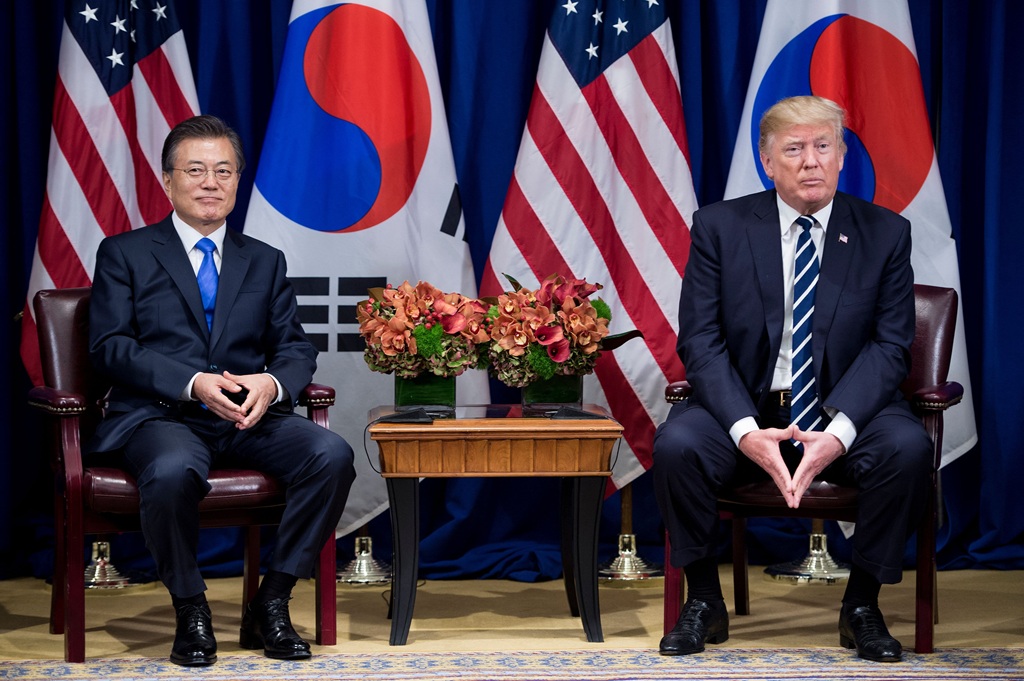
The discussions come as the administration of U.S. President Donald Trump seeks to encourage more semiconductor production on American soil while negotiating the terms of a broader investment and trade agreement with Seoul.
Asked whether planned U.S. tariffs on semiconductor imports were affecting South Korea’s investment negotiations with Washington, the official said the various issues under discussion were interconnected.
“There are various issues between South Korea and the United States, and they are sometimes affecting each other,” the official said, adding that semiconductors were among the investment-related matters being negotiated.
“We are making efforts to prevent them from hindering each other,” the official said.
The development highlights a delicate balancing act for Seoul. South Korea is seeking to protect the competitiveness of its semiconductor exporters while also encouraging its companies to expand manufacturing and investment in the United States.
U.S. Commerce Secretary Howard Lutnick said this week that Washington was preparing a “targeted, thoughtful tariff policy” for semiconductor imports, signaling that foreign chipmakers could face higher costs for accessing the U.S. market unless they expand domestic production.
“If you don’t build here, expect to pay to enter the greatest market in the world,” Lutnick said in a televised interview.
The threat comes as Washington attempts to reshape global semiconductor supply chains and reduce reliance on overseas manufacturing for strategically important technologies.
South Korea is particularly exposed because Samsung Electronics and SK Hynix are among the world’s largest semiconductor companies and major suppliers of memory chips used in servers, smartphones and artificial intelligence infrastructure.
Demand for high-bandwidth memory and other advanced memory products has surged as U.S. technology companies spend heavily on data centers and AI computing systems.
$350 Billion Investment Deal at Stake
The semiconductor discussions are linked to a broader agreement under which South Korea committed to $350 billion of investment in U.S. manufacturing.
Under the agreement reached by the two countries’ presidents last year, South Korean chipmakers are to receive U.S. tariff rates “no less favorable” than those offered to another competitor with an equal or larger volume of chip trade.
That provision could become important if Washington introduces new semiconductor tariffs.
The language gives Seoul a basis for seeking preferential treatment for Samsung and SK Hynix, particularly if competing semiconductor producers receive more favorable terms because of larger U.S. production footprints or investment commitments.
For Washington, however, the investment pledge provides an additional lever. The prospect of tariffs can be used to encourage South Korean manufacturers to accelerate the construction of factories and other semiconductor infrastructure in the United States.
The outcome could therefore determine not only the tariff burden facing Korean chip exports but also where the next generation of semiconductor manufacturing capacity is built.
The stakes are high because memory chips have become a critical bottleneck in the global AI infrastructure build-out. Advanced AI accelerators require large quantities of high-performance memory, especially high-bandwidth memory, to process the enormous volumes of data involved in training and running increasingly sophisticated models.
Samsung and SK Hynix are major suppliers to the AI industry, making their investment and production decisions strategically important to both Seoul and Washington.
For South Korean companies, shifting more production to the U.S. could reduce exposure to future trade barriers and strengthen access to American customers. But building semiconductor facilities in the United States is substantially more expensive than manufacturing in established Asian production hubs. Companies therefore need sufficient incentives, predictable tariff treatment and confidence that demand will justify the additional capital expenditure.
Industry analysts say it will create a negotiating space between Seoul’s desire to protect its exporters and Washington’s objective of bringing more semiconductor production inside the United States.
The semiconductor negotiations are taking place alongside unresolved national-security discussions. The South Korean official said talks with Washington on security issues had not been making progress, referring to Seoul’s plans to build a nuclear-powered submarine as part of last year’s agreement.
The lack of movement is an indication of how closely trade, investment and security issues have become intertwined in the U.S.-South Korea relationship. Washington wants stronger supply-chain resilience and greater domestic production of strategic technologies, while Seoul is seeking continued access to the U.S. market and favorable treatment for its companies as they expand their American operations.
The challenge for South Korea is to secure protection from potentially damaging semiconductor tariffs without committing its companies to investments that weaken their global cost competitiveness. For the United States, the objective is broader: use market access and trade policy to attract factories, technology, and capital while reducing dependence on foreign semiconductor supply chains.