DD
MM
YYYY

PAGES

DD
MM
YYYY

spot_img

PAGES

Home Blog Page 2

Nouriel Roubini Warns Investors Are Underpricing Iran War Risks, Sees Potential for Stagflation and Bear Market

0

Nouriel Roubini, the economist famous for accurately predicting the 2008 financial crisis and known as “Dr. Doom,” is cautioning that Wall Street may be far too optimistic about a swift resolution to the U.S.-Iran conflict, leaving markets vulnerable to a painful reckoning.

In a new op-ed for Project Syndicate, Roubini argues that investors are pricing in a higher probability of a peace deal than is realistically likely. Despite the major stock indexes already recovering to fresh record highs, he believes markets are underestimating the economic and financial risks if the conflict drags on or escalates.

“If you believe that, you could be in for a rude awakening,” Roubini wrote. “If we do end up with escalation, that would lead to even more economic and market volatility and downside risks even in the best-case scenario.”

Roubini laid out four plausible scenarios for how the conflict could unfold, ranging from cautious optimism to severe global economic disruption.

Scenario 1: A Peace Deal Reopens the Strait of Hormuz

In the most benign outcome, the U.S. and Iran reach a negotiated settlement that includes reopening the Strait of Hormuz, possibly tied to compromises on Iran’s nuclear program. However, Roubini views this as “not very likely,” noting that the Iranian regime can endure economic pain far longer than the Trump administration, especially with U.S. midterm elections approaching.

“Settling even one of these would require long, complicated talks by serious, seasoned negotiators,” he said.

Even in this case, oil prices would likely remain “permanently” elevated by 15-20% above pre-war levels due to lingering fears of future disruptions.

Scenario 2: Prolonged Ceasefire with Continued Closure

This is the current path, according to Roubini. Negotiations drag on for several more months while the Strait of Hormuz stays closed. Oil prices could surge past earlier peaks, global growth would slow, and inflation would rise — creating classic stagflationary pressures.

“This is basically where things stand today, and it is far from ideal,” he wrote. Roubini believes this unstable status quo cannot persist beyond three months without serious economic consequences.

Scenario 3: Escalation Aiming for Regime Change or Surrender

In this high-stakes scenario, the U.S. and its allies escalate militarily and economically with the goal of forcing Iran to unconditionally reopen the Strait and halt nuclear enrichment — or even toppling the regime. Roubini calls this “the best outcome for the U.S., Europe, Asia (including China), and the rest of the world,” but warns of significant risks if the regime survives the pressure.

Scenario 4: Worst-Case Escalation Triggers Global Recession

If Iran retaliates aggressively by attacking regional energy infrastructure while keeping the Strait closed, oil prices could spike to $200 per barrel or higher. This, Roubini warns, would trigger 1970s-style stagflation, a global recession, and a deep bear market for equities.

Markets Pricing in Optimism

Despite no concrete peace agreement, major U.S. stock indexes have already reclaimed record territory. Roubini attributes this to investors betting that any economic damage from the war will be temporary and ultimately offset by the powerful growth impulse from artificial intelligence.

He believes this view is dangerously complacent. Recent market moves, including positive reactions to unconfirmed reports of progress toward a deal, suggest many participants are not fully pricing in the possibility of prolonged disruption or outright escalation.

The situation remains highly fluid. President Trump has alternated between optimistic comments about an imminent deal and stern warnings of military action if Iran rejects U.S. proposals. Iranian officials, meanwhile, have dismissed some reports as unrealistic “wish lists.”

With oil prices still elevated and the Strait of Hormuz closed, the global economy faces real risks. Roubini’s warning carries extra weight given his track record, though his bearish views have often been early or overly pessimistic in the past.


Odyssey Therapeutics Raises $279m in Upsized IPO, Capitalizing on Biotech Sector Revival

0

Biopharmaceutical company Odyssey Therapeutics successfully priced its initial public offering at the top of its range, raising $279 million in a strong debut that highlights the returning appetite for high-quality immunology platforms in 2026.

The Boston-based company sold 15.5 million shares at $18 each on Thursday, above its marketed range of $16 to $18. The upsized offering reflects robust demand from institutional investors for Odyssey’s focused approach to treating autoimmune and inflammatory diseases.

This marks another notable success in what has become a meaningful revival of the U.S. biotech IPO market this year, buoyed by expectations of a more predictable and innovation-friendly regulatory environment under President Donald Trump and anticipated shifts at the U.S. Food and Drug Administration.

In recent weeks, several well-funded drug developers, including Seaport Therapeutics, Hemab Therapeutics, Alamar Biosciences, and weight-loss drug developer Kailera Therapeutics, have also gone public, signaling renewed access to public capital for promising biotech platforms.

Founded in 2021 by Dr. Gary D. Glick, Odyssey has rapidly established itself as one of the most heavily backed private biotech companies, raising approximately $726.5 million from more than 30 investors prior to its IPO. Glick, who serves as chairman and chief executive officer, brings significant credibility to the venture. He previously founded Scorpion Therapeutics, which was acquired by Eli Lilly in 2025 in a deal valued at up to $2.5 billion in cash, one of the largest takeouts in the targeted oncology space in recent memory.

Odyssey is developing novel therapies for autoimmune and inflammatory conditions, an area with substantial unmet medical need and strong commercial potential. Its lead candidate, OD-001, is currently in a mid-stage clinical trial for ulcerative colitis, one of the two primary forms of inflammatory bowel disease (IBD).

The company plans to use the IPO proceeds primarily to advance clinical development of OD-001 and support other general corporate purposes. IBD affects millions of patients worldwide and represents a multi-billion-dollar market, with significant room for new therapies that offer better efficacy, safety, or convenience than existing treatments.

Glick’s track record of building scientifically rigorous companies and successfully exiting them has clearly resonated with investors. Odyssey’s ability to attract substantial private capital and command a strong IPO valuation underscores confidence in both its science and leadership team.

J.P. Morgan, TD Cowen, and Cantor served as the lead underwriters for the offering. Odyssey is expected to begin trading on Nasdaq under the ticker symbol “ODTX” on Friday.

The strength of Odyssey’s debut adds to growing optimism that the biotech financing window is reopening after several challenging years. Improved sentiment around regulatory clarity, potential policy tailwinds for innovation, and strong performance by several recent IPOs have encouraged more companies to test the public markets.

Investors appear particularly interested in platforms with experienced founders, differentiated science, and assets already in clinical development. Odyssey fits this profile well, entering the market with a lead program in mid-stage trials and a seasoned management team.

However, the broader environment remains selective. Only companies with compelling data, strong balance sheets post-IPO, and clear paths to value inflection are likely to succeed. Odyssey’s substantial pre-IPO funding gives it a solid cash runway, reducing immediate financing risk and allowing management to focus on clinical execution.

The IPO also highlights continued investor appetite for immunology and inflammation plays. With growing understanding of disease pathways and advances in precision medicine, this sector has delivered several high-profile successes in recent years, attracting both specialist healthcare investors and generalist funds seeking growth opportunities.

Odyssey’s success in the ongoing Phase 2 trial of OD-001, combined with disciplined capital allocation, is expected to position the company for further upside. The IBD space remains competitive, but meaningful innovation continues to be rewarded. However, the offering values Odyssey at a significant premium, reflecting both excitement around its pipeline and confidence in Glick’s ability to deliver.

OCBC Flags Middle East War Risks as Southeast Asia’s Energy Exposure Clouds Banking Outlook

0

Oversea-Chinese Banking Corp delivered stronger-than-expected first-quarter earnings Friday, but the lender also sent one of the clearest warnings yet from a major Asian bank about the growing economic risks stemming from the Middle East conflict and its impact on energy markets.

Singapore’s second-largest bank reported net profit of S$1.97 billion for the January-to-March period, up 5% from S$1.88 billion a year earlier and ahead of analyst estimates of S$1.89 billion, according to LSEG data.

The more significant development may have been the bank’s decision to sharply increase precautionary buffers for potential future stress, even as executives emphasized that current credit quality remains stable. The bank emerged as the only major Singapore lender this earnings season to openly acknowledge the growing macroeconomic dangers tied to the conflict, while simultaneously increasing precautionary provisions despite no visible deterioration in its loan book.

That stance signals rising unease inside regional financial institutions that the impact of the war may spread far beyond oil markets and eventually weaken consumption, corporate activity, trade flows and credit quality across Asia’s export-driven economies.

OCBC reported net profit of S$1.97 billion for the January-to-March quarter, up 5% from S$1.88 billion a year earlier and ahead of analyst estimates of S$1.89 billion compiled by LSEG. The earnings beat was largely driven by record non-interest income and strong wealth-management performance, which helped offset pressure from falling interest margins as global monetary conditions began to ease.

But the bank’s decision to sharply increase allowances for non-impaired assets drew the strongest attention from investors and analysts.

OCBC set aside S$191 million in precautionary buffers during the quarter, compared with S$118 million a year earlier. The figure was especially striking because the bank had recorded a S$36 million write-back in the previous quarter, underscoring how rapidly its risk assessment has shifted.

CEO Tan Teck Long said the provisions were linked directly to concerns about the economic consequences of the Middle East war.

“We remain very concerned about what’s happening in the Middle East war because it’s a very direct impact in Southeast Asia in terms of energy supply and therefore the prices,” Tan told reporters.

“So to be prudent, although we don’t see credit quality issue in our portfolio… we have put in some general provisions for non-impaired loans, it’s really a third-order effect which we are being prudent about.”

The comments underline a growing concern among Asian lenders that the conflict could trigger a broader inflationary cycle at a time when many economies were expecting relief from high interest rates and slowing global demand.

Southeast Asia remains highly exposed to imported energy shocks. Countries across the region rely heavily on oil and gas imports for transportation, electricity generation, and industrial production. Sustained increases in crude prices could rapidly feed through to food costs, manufacturing expenses, and consumer inflation.

That risk is particularly sensitive now because many regional economies are already grappling with weaker exports, slowing Chinese demand, and softening manufacturing activity. A prolonged energy shock could force central banks across Asia to delay interest-rate cuts or even maintain tighter monetary conditions for longer than expected, adding further pressure to businesses and households.

OCBC executives stressed that direct exposure to the conflict remains limited for now. Chief Financial Officer Goh Chin Yee said direct Middle East-linked exposure, including petrochemical and refinery-related lending, represented less than 3% of total loans and around 1% of total assets.

However, she acknowledged the bank was increasingly focused on indirect fallout.

“The first-order impact is not material,” Goh said, adding that the lender was closely watching “second- and third-order effects” if the conflict drags on.

Those second-order risks include rising transportation costs, weakening consumer spending, margin pressure for manufacturers, disruptions to shipping routes, and increased volatility in commodity markets.

The cautious tone from OCBC is understood to mean there’s a wider shift taking place inside global banking. After years of focusing on inflation and aggressive central bank tightening, financial institutions are now confronting a more fragmented geopolitical environment where wars, sanctions, supply-chain disruptions, and energy security concerns are becoming persistent features of the global economy.

The quarter also highlighted the extent to which Singapore’s banking giants are increasingly relying on wealth management and fee-generating businesses to sustain earnings growth.

OCBC’s net interest margin fell to 1.76% from 2.04% a year earlier, while net interest income declined 5% to S$2.22 billion as lower rates began compressing lending profitability. That weakness was offset by a surge in non-interest income, which climbed 23% to a record S$1.61 billion. Fee income rose 24%, driven largely by wealth-management activity. Wealth fees jumped 34% to S$422 million, while net new money inflows reached S$5 billion during the quarter.

The results are a boost to Singapore’s growing role as one of Asia’s dominant private banking and wealth management centers, benefiting from capital inflows tied to rising affluence in Southeast Asia and continued global demand for politically stable financial hubs.

“Our wealth business is actually very diversified. We draw wealth from all over the world,” Tan said.

He added that the bank expects double-digit annual growth in wealth fees and assets under management going forward.

The earnings also come during a strategic transition period for OCBC. Earlier this week, the lender announced an agreement to acquire parts of HSBC’s wealth and premier banking operations in Indonesia, marking the first major transaction under Tan since he became chief executive in January.

Regional lenders increasingly see wealth management, cross-border banking, and treasury services as more resilient profit engines in an environment where loan growth is moderating and margins are narrowing.

OCBC’s results complete a relatively resilient earnings season for Singapore banks. Larger rival DBS Group recently posted stronger-than-expected quarterly profit, while United Overseas Bank also exceeded analyst forecasts despite softer overall earnings momentum.

Still, the tone from executives across the sector has become noticeably more cautious. The combination of geopolitical instability, energy volatility, slowing global trade, and uncertain monetary policy is increasingly forcing banks to prepare for a more difficult operating environment after years of unusually strong profitability.

Anthropic Eyes Near-$1tn Valuation in Historic Fundraising Push as AI Compute Arms Race Intensifies

0

Anthropic is exploring one of the largest private fundraising rounds in technology history, a move that could value the artificial intelligence company at nearly $1 trillion as the global battle for AI dominance increasingly shifts from software innovation to raw computing power.

According to a report by the Financial Times, Anthropic is discussing a potential fundraising round that could raise as much as $50 billion and value the company at roughly $900 billion before the new capital is added.

If completed, the transaction would place Anthropic among the most valuable private companies in the world and potentially ahead of OpenAI, whose valuation reached approximately $852 billion following its massive March funding round.

The proposed deal underscores how aggressively investors are pouring money into the infrastructure layer of artificial intelligence, where demand for advanced chips, data centers, and energy capacity has become the defining bottleneck of the industry. Unlike earlier phases of the AI boom that focused primarily on model capabilities and consumer adoption, the market is now entering a capital-intensive phase in which scale itself has become a strategic weapon.

Anthropic’s fundraising discussions reportedly involve major investment firms including Dragoneer Investment Group, General Catalyst, and Lightspeed Venture Partners. The company was last valued at approximately $380 billion in February, meaning the proposed transaction would represent one of the fastest valuation expansions ever recorded for a private technology firm.

Sources cited in the report said Anthropic’s annualized revenue could soon exceed $45 billion, a dramatic jump from roughly $9 billion at the end of last year. That pace of growth reflects surging enterprise demand for its AI systems, especially Claude, capable of coding, automation, research, cybersecurity analysis, and advanced reasoning tasks.

The rapid expansion also highlights how competition among frontier AI companies is becoming increasingly tied to their ability to secure massive amounts of computational infrastructure.

In recent months, Anthropic has aggressively locked in long-term compute agreements across the technology and semiconductor ecosystem. The company has entered major partnerships with SpaceX, Google, Broadcom, and Amazon Web Services.

These arrangements are designed to guarantee future access to the enormous computing resources needed to train and operate next-generation AI models.

Industry analysts increasingly describe compute capacity as the “new oil” of artificial intelligence, with access to semiconductors, cloud infrastructure, and electricity now determining which firms can remain competitive.

But the costs involved are staggering.

The Financial Times reported that Anthropic’s infrastructure commitments could add hundreds of billions of dollars in expenses over the coming years, illustrating how frontier AI development is rapidly evolving into one of the most capital-intensive industries in modern corporate history.

That spending race is also reshaping relationships across Silicon Valley. Technology giants that were once direct competitors are now deeply interconnected through AI infrastructure partnerships. Cloud providers are investing billions into AI startups, while semiconductor firms are racing to secure long-term supply contracts as demand for advanced chips outpaces manufacturing capacity.

Anthropic’s push comes amid mounting investor belief that the company could pursue an initial public offering sooner than expected. Sources cited in the report said some investors are eager to secure stakes ahead of a potential IPO that could arrive as early as the end of this year. Such a listing would likely rank among the largest and most closely watched public offerings in financial market history.

The fundraising discussions also arrive as concerns intensify over the sustainability of AI economics. Although revenues across the sector are rising rapidly, companies are spending unprecedented amounts on data centers, specialized chips, networking systems, and energy infrastructure.

Some analysts warn that the industry is entering an era where only a handful of firms with access to near-unlimited capital will be able to compete at the frontier. That dynamic is fueling consolidation fears while also strengthening the strategic importance of governments and sovereign wealth funds in future AI financing.

The scale of Anthropic’s ambitions, thus, pinpoints how dramatically expectations around artificial intelligence have expanded over the past two years. What began as a race to launch chatbots has evolved into a global industrial competition involving cloud computing, semiconductors, energy systems, and national security interests.

The company’s potential valuation leap also signals that investors increasingly view AI firms not merely as software providers, but as foundational infrastructure companies capable of reshaping entire sectors of the global economy. If Anthropic succeeds in securing the proposed funding round, it would further cement the view that the AI boom has entered a new phase defined less by experimentation and more by industrial-scale expansion.

US SEC’s Reliance on Misappropriation Theory Dramatically Expanded Scope of Liabilities on Insider Trading 

0

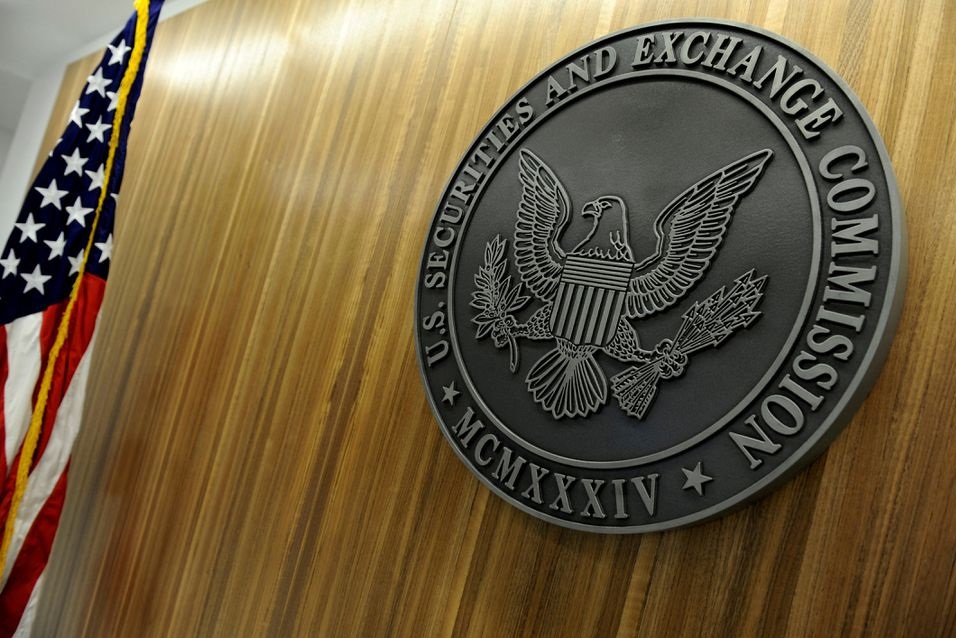
The U.S. Securities and Exchange Commission’s growing reliance on the misappropriation theory has dramatically expanded the scope of who can face liability. Increasingly, the theory is no longer confined to Wall Street bankers or CEOs. It is reaching consultants, political insiders, family members, journalists, and even lawyers themselves.

The misappropriation theory emerged as a powerful legal framework to address a loophole in traditional insider trading law. Under classical insider trading doctrine, liability usually depended on a corporate insider violating a fiduciary duty to shareholders by trading on material nonpublic information.

The misappropriation theory broadened this concept. Instead of focusing solely on duties owed to shareholders, it targets anyone who wrongfully obtains confidential information and trades on it — or tips others to trade — in breach of a duty of trust or confidence.

This expansion fundamentally changed the SEC’s enforcement strategy. Now the question is not simply whether someone works for the company whose stock is traded. The real issue is whether the individual improperly used information entrusted to them. That subtle but important shift has enormous implications for modern professional life.

Lawyers are particularly vulnerable under this framework. Attorneys routinely handle highly sensitive information involving mergers, bankruptcies, regulatory actions, litigation settlements, and strategic corporate decisions. Because lawyers owe strict duties of confidentiality to clients, the SEC can argue that any misuse of such information constitutes securities fraud under the misappropriation theory.

Several high-profile cases over the years have demonstrated this risk. Lawyers have faced allegations for tipping friends, spouses, or business associates about impending deals before public announcements. Even indirect benefits, such as maintaining relationships or exchanging favors, can become evidence of unlawful tipping.

In some cases, prosecutors do not even need proof that the lawyer personally traded securities. Simply sharing confidential information with someone who later profits can trigger liability. What makes the theory especially controversial is its broad and sometimes ambiguous reach.

Critics argue that the SEC’s interpretation effectively criminalizes conduct that may not clearly fit traditional notions of fraud. Unlike theft of physical property, information sharing often exists in gray areas shaped by personal relationships, workplace culture, and informal communications. Determining when a duty of trust exists can become highly subjective.

This uncertainty creates fear across professional industries. Consultants advising corporations, accountants reviewing confidential financials, government officials exposed to policy decisions, and journalists speaking with sources may all worry about crossing invisible legal lines.

The SEC’s increasingly aggressive stance suggests that almost anyone with access to market-moving information could become a target. The rise of digital communications intensifies the problem further. Text messages, encrypted chats, social media interactions, and metadata provide regulators with vast trails of evidence.

Casual conversations that once disappeared into memory can now become exhibits in federal court. In today’s environment, a poorly considered message or informal tip can carry life-altering legal consequences. Supporters of the misappropriation theory argue that strong enforcement is necessary to preserve market integrity.

Financial markets depend on fairness and investor confidence. If privileged actors can secretly profit from confidential information, ordinary investors lose trust in the system. Expanding liability beyond corporate insiders reflects the reality that sensitive information now flows through vast networks of lawyers, advisors, contractors, and intermediaries.

Yet the growing reach of the theory also raises deeper questions about legal predictability and prosecutorial power. As the SEC continues expanding its interpretation of insider trading laws, one message is becoming unmistakably clear: access to confidential information itself may now carry significant legal peril. And increasingly, nobody — not even the lawyers — is safely outside the SEC’s crosshairs.