DD
MM
YYYY

PAGES

DD
MM
YYYY

spot_img

PAGES

Home Blog Page 2

Startup Thinking Machines Launches Inkling To Challenge China’s Dominance In Open-Weight AI Models

0

Mira Murati’s AI startup Thinking Machines has unveiled its first general-purpose artificial intelligence model, marking a significant attempt by a Western company to narrow China’s growing lead in the open-weight AI ecosystem.

The release comes at a time when Chinese laboratories have emerged as the dominant force in open-source AI, while several leading U.S. developers have increasingly shifted toward proprietary models.

The San Francisco-based startup, founded last year by former OpenAI Chief Technology Officer Mira Murati, introduced Inkling, an open-weight large language model that developers can download, run and customize. Unlike closed-source systems from companies such as OpenAI and Anthropic, open-weight models give enterprises, researchers and governments greater control over deployment, security, data privacy and fine-tuning.

Inkling represents Thinking Machines’ first foundation model after the company debuted its AI customization platform, Tinker, in October last year. The new model is available through Tinker as well as other developer platforms.

With 975 billion parameters, Inkling ranks among the largest open-weight AI models released to date. Parameters are the mathematical variables that determine how an AI system processes information, learns patterns, and generates responses. Although parameter count alone no longer determines model quality, models of this scale typically require enormous computing resources and sophisticated training infrastructure.

The launch comes as competition in open-weight AI has shifted dramatically toward China.

Over the past year, Chinese developers, including Alibaba, DeepSeek, Baidu, and Tencent, have steadily gained market share by releasing capable open models that offer performance approaching proprietary U.S. systems at significantly lower operating costs. Their rapid progress has been aided by aggressive optimization techniques and a strategy centered on making advanced AI widely accessible rather than keeping it behind commercial APIs.

That momentum has accelerated after Meta largely retreated from its previous open-model strategy. Following the disappointing reception of Llama 4, Meta moved toward a more proprietary development approach, creating a gap among Western companies offering high-performance open models.

Thinking Machines is positioning Inkling as one of the few credible Western alternatives in that space.

The company published benchmark results comparing Inkling against proprietary models from Anthropic, Google and OpenAI, as well as leading open-weight models, many of which originate from Chinese AI laboratories. While Thinking Machines acknowledged that top proprietary systems continue to outperform Inkling overall, it said the model delivered competitive results, particularly in agent-related tasks that require AI systems to plan, reason and execute multi-step workflows.

The emphasis on AI agents reflects one of the industry’s fastest-growing areas. Enterprises are increasingly deploying autonomous AI systems capable of completing complex business processes with minimal human intervention, making agent performance an important competitive differentiator.

The launch also underscores the changing economics of enterprise AI adoption.

Many businesses have begun favoring open-weight models because they eliminate recurring API costs, allow deployment inside private data centers, and reduce dependence on a single vendor. Organizations operating in regulated industries often prefer open models because sensitive information never has to leave their own infrastructure.

Thinking Machines cited Bridgewater Associates as an example of that trend. The hedge fund used the company’s Tinker platform to build a customized version of Alibaba’s Qwen model, which it said outperformed leading proprietary systems while operating at lower cost.

Across the AI industry, many enterprises are increasingly adapting open models to specialized use cases, improving performance while reducing inference expenses rather than relying exclusively on frontier closed models from OpenAI, Anthropic or Google.

The release also comes amid intensifying geopolitical competition over AI.

Washington has tightened export restrictions on advanced AI chips and semiconductor equipment in an effort to slow China’s development of frontier AI systems. At the same time, Beijing has doubled down on open-source AI as a strategic tool to expand its global influence, particularly across emerging markets.

Chinese firms have recently accelerated the rollout of capable models and computing infrastructure, including Huawei-powered AI clusters designed to reduce reliance on Nvidia’s most advanced processors. Chinese officials have also promoted open AI as a public good capable of expanding access to artificial intelligence worldwide.

Against that backdrop, Inkling represents more than just another foundation model. It signals an effort by a new generation of U.S. startups to rebuild Western competitiveness in open AI after China’s rapid advances reshaped the landscape.

Whether Inkling can significantly slow China’s momentum remains uncertain. However, its release broadens the pool of high-end open-weight models available to enterprises and developers at a time when demand for customizable AI systems continues to grow rapidly.

China’s Rare Earth Export Curbs Could Put $6.5tn in Global Manufacturing at Risk, IEA Warns

0

China’s planned export restrictions on rare earth minerals could jeopardize as much as $6.5 trillion worth of industrial production outside the country, marking one of the biggest supply chain risks facing the global economy as geopolitical competition increasingly extends into critical minerals, according to the International Energy Agency (IEA).

In its latest Global Critical Minerals Outlook released Thursday, the Paris-based energy watchdog warned that if Beijing fully implements export controls announced last year, industries ranging from automotive manufacturing and consumer electronics to renewable energy and defense could face significant supply disruptions because of their overwhelming dependence on Chinese processing capacity.

The warning underpins the growing importance of critical minerals in the global AI, semiconductor and clean-energy race. While governments have spent years trying to diversify supplies of chips and batteries, the IEA said critical mineral processing remains one of the world’s most concentrated supply chains, leaving advanced economies particularly exposed to geopolitical shocks.

“Our latest analysis shows that vast amounts of economic value depend on relatively small volumes of critical minerals, whose supply chains remain highly concentrated and are therefore vulnerable,” IEA Executive Director Fatih Birol said.

A Small Group of Minerals With Outsized Economic Importance

Rare earth elements comprise a group of 17 metals that are used in relatively small quantities but are indispensable to modern manufacturing. They are critical components in electric vehicle motors, wind turbines, smartphones, advanced semiconductors, industrial robotics, military equipment, aerospace systems, medical devices and artificial intelligence infrastructure.

Although the physical quantities required are relatively small, their absence can halt production of high-value products, giving the minerals strategic importance far beyond their market size.

According to the IEA, full implementation of China’s export licensing regime could place approximately $6.5 trillion worth of downstream manufacturing outside China at risk, with the United States and Europe accounting for nearly half of the potential economic exposure.

China’s influence stems not only from mining but also from its overwhelming control of mineral processing. The country is the world’s largest producer and refiner of rare earth elements, giving it a commanding position across virtually every stage of the supply chain.

Last October, Beijing expanded export controls to cover additional rare earth materials and introduced new licensing requirements. Although implementation was later delayed by one year, the measures remain a source of uncertainty for manufacturers worldwide.

The restrictions are widely viewed as part of China’s broader strategy to strengthen control over critical technologies and strategic resources amid intensifying trade and technology tensions with the United States and its allies. For manufacturers, the concern extends beyond outright export bans. Licensing requirements can slow shipments, increase compliance costs and create uncertainty over future supplies, complicating production planning for industries that rely on just-in-time manufacturing.

The IEA also highlighted growing risks surrounding graphite, another mineral where China dominates global processing. Graphite is a key material used in lithium-ion battery anodes for electric vehicles and energy storage systems.

China accounts for more than 90% of global processed graphite production, making it another critical chokepoint in clean-energy supply chains.

Beijing announced export controls on graphite alongside its rare earth measures before postponing implementation. According to the IEA, if those controls eventually take full effect, they could put an additional $300 billion worth of downstream industrial production outside China at risk, further increasing vulnerabilities for global manufacturers.

AI And Defense Industries Face Rising Exposure

The report comes as demand for critical minerals continues to accelerate because of artificial intelligence, electrification and military modernization. The AI boom has sharply increased demand for advanced semiconductors, servers, networking equipment and data centers, all of which depend on sophisticated electronic components containing rare earth materials.

At the same time, defense spending has risen across many advanced economies, increasing demand for precision-guided weapons, radar systems, fighter aircraft, submarines and satellites that also rely heavily on rare earth magnets and specialized alloys.

The convergence of AI, electrification and defense spending is creating structural growth in critical mineral demand while supply remains geographically concentrated. That imbalance has prompted governments to increasingly classify critical minerals as strategic national security assets rather than ordinary industrial commodities.

Western Governments Accelerate Diversification

In response to growing geopolitical risks, governments across North America, Europe, and parts of Asia have substantially increased investment in alternative supply chains. According to the IEA, public financing commitments for new critical mineral projects increased more than fourfold between 2023 and 2025, reaching $65 billion.

The funding is supporting new mining operations, refining facilities, recycling technologies and processing infrastructure aimed at reducing dependence on Chinese supply chains.

Progress is beginning to emerge.

The IEA said new rare earth refining projects in the United States and Malaysia reduced China’s share of global rare earth refining capacity to 85% last year, down from 90% in 2023. If all currently planned projects are completed on schedule, China’s market share could decline further to around 70% by 2035.

While that would represent meaningful diversification, China would still retain a dominant position in the global supply chain, underscoring how difficult it will be for competing countries to replicate decades of investment, industrial expertise and integrated processing capacity.

Globally, governments are increasingly treating supply chains for semiconductors, batteries and critical minerals as strategic infrastructure, prompting industrial policies aimed at reshoring production and reducing geopolitical vulnerabilities.

The United States, European Union, Japan, South Korea, and several resource-rich countries have introduced subsidies, tax incentives and financing programs to accelerate domestic production and processing of critical minerals.

However, building alternative supply chains remains a long-term undertaking. Developing new mines typically takes years, while constructing refining facilities requires significant capital investment, technical expertise, and environmental approvals.

Analysts thus note that until those new projects become operational at scale, manufacturers around the world are likely to remain heavily dependent on Chinese supplies of rare earths and graphite. This will leave global industries exposed to potential disruptions as geopolitical competition over strategic resources intensifies.

Nvidia Partners With Japanese Robotics Firms On Physical AI Development As Huang Broadens Company’s Future Beyond Chips

0

Nvidia is accelerating its expansion into Japan’s industrial technology sector through new partnerships with some of the country’s biggest robotics manufacturers, as Chief Executive Jensen Huang broadens the company’s strategy beyond AI chips and cloud computing into what he describes as the next major growth frontier: physical AI.

Speaking at a media event in Tokyo on Thursday, Huang announced collaborations with industrial automation leaders Fanuc and Yaskawa Electric to advance robotics and artificial intelligence, underscoring Nvidia’s ambition to become the foundational technology provider for intelligent machines as factories worldwide become increasingly automated.

“With AI, robots will become smart, easily adaptable and accessible,” Huang said.

The partnerships represent an important step for Nvidia as it seeks to extend its dominance from training large language models to powering autonomous robots capable of operating in factories, warehouses, logistics centers and eventually homes. Rather than focusing solely on supplying graphics processors, Nvidia is positioning its hardware, software platforms, and AI models as the operating system for a new generation of intelligent industrial machines.

The announcement also aligns with Japan’s long-standing strengths in robotics. Fanuc and Yaskawa are among the world’s largest industrial robot manufacturers, supplying automation equipment to automotive, electronics, and manufacturing companies across the globe. Integrating Nvidia’s AI computing platforms into those systems could enable robots to move beyond repetitive programmed tasks toward machines capable of perception, reasoning, and real-time decision-making.

The collaborations come as governments and companies increasingly see “physical AI” as the next phase of artificial intelligence, where AI systems move from generating text and images to interacting directly with the physical world.

Separately, government-backed AI infrastructure company Noetra announced plans to purchase 27,500 Nvidia Rubin AI chips as it develops physical AI capabilities. The company counts Sony among its investors, highlighting growing public and private sector efforts to build domestic AI infrastructure in Japan.

The Rubin processors represent Nvidia’s next-generation AI architecture, succeeding its Blackwell platform, and are expected to power some of the world’s largest AI data centers and robotics applications. A deployment of 27,500 chips would constitute one of Japan’s largest announced AI hardware investments and would further strengthen Nvidia’s presence in one of Asia’s most technologically advanced markets.

Japan has emerged as a priority for Nvidia as countries race to establish sovereign AI capabilities. Rather than relying entirely on foreign cloud providers, governments are investing heavily in domestic computing infrastructure, advanced semiconductors and AI research to secure long-term technological competitiveness.

Huang’s visit also points to Nvidia’s broader effort to deepen relationships across Japan’s semiconductor ecosystem. Although Japan no longer dominates global chip manufacturing as it did during the 1980s, it remains indispensable to the semiconductor supply chain through its leadership in chipmaking equipment, specialty chemicals, precision materials and advanced manufacturing technologies.

During the trip, Huang met executives from several key suppliers, including the chief executives of memory chipmaker Kioxia and semiconductor equipment manufacturer Tokyo Electron, companies that play critical roles in producing advanced AI chips.

The visit comes as momentum across the global semiconductor industry continues to strengthen.

Dutch chip equipment maker ASML raised its sales forecast this week and announced further capacity expansion to meet growing demand from AI chip manufacturers. Meanwhile, Taiwan Semiconductor Manufacturing Co. reported record earnings on Thursday and increased its capital expenditure forecast, reflecting sustained investment by customers building AI infrastructure worldwide.

Together, those developments amplify expectations that the AI investment cycle remains robust despite concerns over supply constraints, valuations and geopolitical risks.

Huang also appeared alongside Japan’s Minister of Economy, Trade and Industry, Ryosei Akazawa, at a government AI event, marking what many believe to be a close coordination between Nvidia and Japanese policymakers.

The partnerships announced in Tokyo show that Nvidia’s strategy is evolving beyond selling AI accelerators to cloud providers. The company has been embedding its technology across the entire AI value chain, spanning data centers, robotics, industrial automation, autonomous systems and sovereign AI infrastructure.

Against the backdrop of the widening gap left by China’s robotics leadership, Japan sees collaborating with Nvidia as an opportunity to combine world-leading robotics expertise with cutting-edge AI computing, potentially strengthening the country’s competitiveness.

On the other hand, as manufacturers worldwide shift toward more autonomous, AI-driven production systems, Nvidia sees the alliances as an opportunity to deepen its presence in one of the world’s most sophisticated manufacturing economies. This will help the chipmaker to boost its ambition to become the foundational technology platform not only for generative AI but also for the emerging era of intelligent machines.

Xi to Unveil China’s Global AI Vision as Huawei Debuts Nvidia Alternative at Shanghai Summit

0
Most parts of the world have been pushing to cage Huwaei

Chinese President Xi Jinping is expected to use China’s flagship artificial intelligence conference this week to unveil a broader vision for global AI governance while showcasing the country’s rapid progress toward technological self-sufficiency, highlighting Beijing’s ambition to challenge U.S. leadership in both AI technology and the rules that govern it.

Xi’s appearance at the World Artificial Intelligence Conference (WAIC) in Shanghai on Friday, his first attendance at the annual event, underpins the importance China now places on AI. The conference comes as Washington and Beijing prepare for their first government-level AI talks under U.S. President Donald Trump’s administration and as both powers compete to shape the future of artificial intelligence.

The July 17-20 gathering is expected to combine major technology launches with diplomatic initiatives, boosting China’s dual strategy of reducing dependence on U.S. technology while positioning itself as a leading voice on global AI governance.

One of the conference’s biggest announcements will be Huawei’s public unveiling of the Atlas 950 SuperPoD, its most advanced large-scale AI computing system to date. The system is designed for training and deploying next-generation AI models and links thousands of Huawei’s Ascend AI processors through high-speed interconnects so they function as a unified computing cluster.

The launch represents one of the clearest demonstrations yet that Chinese companies are making progress in building AI infrastructure without relying on Nvidia’s most advanced processors, access to which has been increasingly restricted by U.S. export controls.

Huawei’s latest system is aimed squarely at one of China’s biggest strategic vulnerabilities: dependence on foreign AI hardware.

As Washington has tightened restrictions on advanced semiconductor exports, Beijing has accelerated investment across its domestic AI ecosystem, including chips, networking equipment, software frameworks and cloud infrastructure.

The Atlas 950 signals that Huawei is attempting to provide an end-to-end domestic alternative capable of supporting large foundation models and enterprise AI workloads.

Deepseek Highlights Growing Domestic AI Ecosystem

The conference will also showcase how China’s AI software ecosystem is increasingly adapting to domestically produced hardware. DeepSeek’s latest V4 foundation model has been optimized to run entirely on clusters powered by Huawei’s Ascend processors, demonstrating that Chinese developers are reducing reliance not only on Nvidia chips but also on software ecosystems built around U.S. hardware.

Several other Chinese semiconductor companies, including Biren and MetaX, are also expected to unveil new “supernode” AI computing clusters during the conference, underscoring Beijing’s push to develop multiple domestic suppliers rather than relying on a single national champion.

The rapid expansion of indigenous AI infrastructure underlines China’s long-term objective of creating a fully self-sufficient AI supply chain spanning chips, servers, operating software and large language models.

Beyond technology, WAIC has become an important diplomatic platform. The conference follows a United Nations AI dialogue last week, where the United States and China presented sharply contrasting approaches to regulating artificial intelligence.

Washington noted that excessive regulation risks slowing innovation and technological breakthroughs, while Beijing promoted affordable, open-source AI models as a means of reducing global inequality in access to advanced technologies.

Against that backdrop, analysts say WAIC is evolving from an industry conference into a forum where China seeks to shape international AI policy.

“Against this backdrop, WAIC has become more than a technology showcase; it is now a geopolitical stage where Beijing seeks to articulate its vision of AI as both a national priority and a diplomatic instrument,” said George Chen, chair of digital practice at the Asia Group.

All these are unfolding as Washington and Beijing are preparing for their first formal AI discussions under the Trump administration, making China’s messaging at WAIC an early indication of its negotiating priorities.

Xi Positions AI As China’s Next Industrial Revolution

Xi has repeatedly identified artificial intelligence as central to China’s long-term development strategy. In a January speech, he described AI as an “epoch-making, major technological transformation following the steam engine,” placing it alongside the defining technological revolutions that reshaped the global economy.

China has incorporated AI into its broader industrial policy, viewing the technology as critical to boosting productivity, modernizing manufacturing, strengthening national security and reducing dependence on foreign technologies. Rather than concentrating AI development within a handful of technology firms, Beijing has emphasized integrating AI throughout the economy, including industrial production, healthcare, education, finance, and public services.

That move aligns with China’s broader pursuit of technological self-reliance as geopolitical tensions with the United States continue to reshape global technology supply chains.

A major diplomatic focus at this year’s conference is expected to be China’s proposal for a World AI Cooperation Organization (WAICO). Beijing first proposed establishing the organization during last year’s WAIC, although no governments have formally announced membership.

The conference coincides with a High-Level Meeting on Global AI Governance in Shanghai, where officials are expected to provide updates on both WAICO and China’s broader Global AI Governance Initiative.

The proposed organization reflects Beijing’s effort to build international institutions that could influence global AI standards, particularly among emerging economies that may not fully align with U.S. or European regulatory approaches.

China is also expected to use the conference to promote its growing portfolio of open-source AI models as affordable alternatives to proprietary Western systems. Chinese policymakers believe that open-source models lower costs, expand access and allow developing countries to participate more fully in the AI economy.

A commentary published this week by the People’s Daily reinforced that message.

“The development of AI must never move toward a technological monopoly that walls itself in, but should always be anchored to the fundamental goal of serving humanity,” the newspaper wrote.

The strategy has gained traction in parts of Southeast Asia, Africa, Latin America and the Middle East, where lower-cost Chinese AI models are viewed as attractive alternatives for governments and businesses seeking to deploy AI without paying premium prices for Western platforms.

An Asian diplomat told Reuters that China has increasingly positioned itself as an advocate for countries seeking greater participation in the AI revolution.

“China has been making inroads with Southeast Asian countries in terms of AI capacity-building, and portrays itself as speaking up for developing countries who are being left behind in the AI race,” the diplomat said.

Global participation, limited U.S. presence

The conference is expected to attract senior political and scientific leaders from around the world. Attendees include United Nations Secretary-General António Guterres, Kazakhstan President Kassym-Jomart Tokayev and Thailand’s Prime Minister Anutin Charnvirakul. Nine recipients of the Turing Award and Nobel Prize, including deep learning pioneers Yoshua Bengio and Richard Sutton, are also scheduled to participate.

Notably, however, major U.S. technology companies are expected to have only limited representation, reflecting the increasingly fragmented nature of global AI cooperation as geopolitical competition intensifies.

Alongside Huawei’s AI infrastructure announcements, Chinese media report that several consumer AI products will debut during the conference, including AI agent smartphones developed by ZTE-owned Nubia and AI startup StepFun.

Together, the product launches and policy initiatives show that, rather than competing solely on large language models, China is simultaneously investing across the full AI value chain, from semiconductor design and computing infrastructure to consumer devices, open-source software and international governance.

OpenAI Reportedly Developing AI Home Companion Device As a Mobile Smart Speaker

0

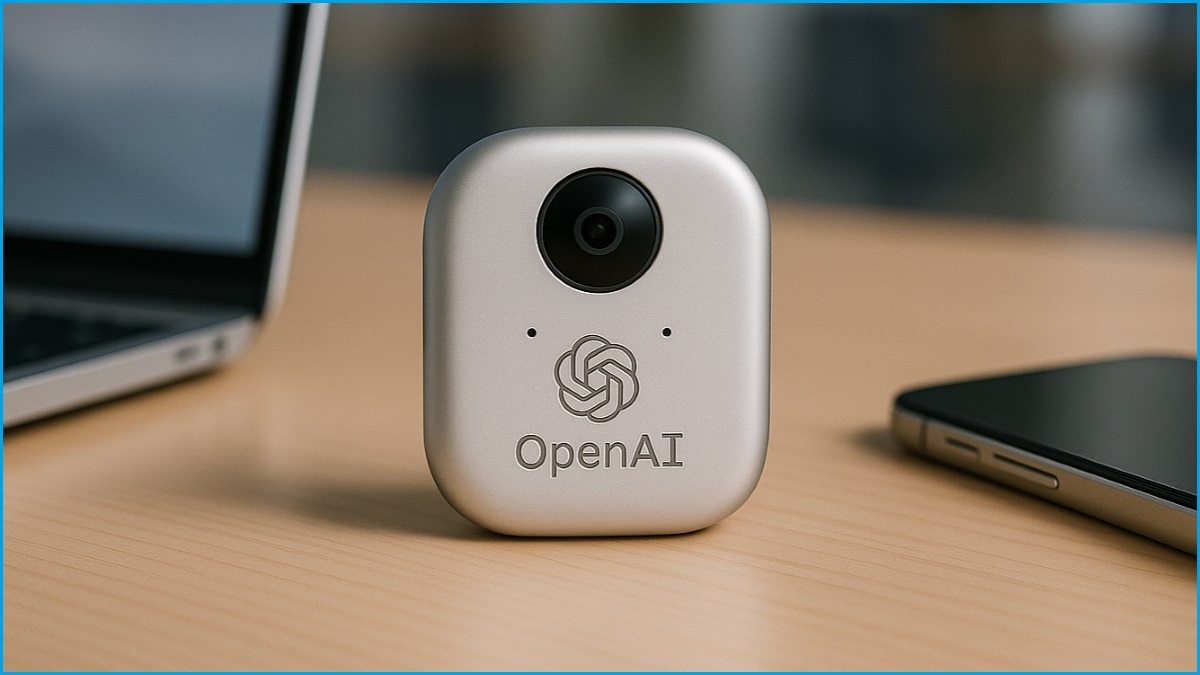
OpenAI is reportedly developing its first dedicated consumer hardware product, a screen-free artificial intelligence companion designed for the home that could mark the company’s biggest step yet beyond software and put it in position to compete in the emerging market for AI-native consumer devices.

According to a Bloomberg report, the device is being developed as a mobile smart speaker with deep ChatGPT integration. However, it is intended to be far more than a conventional voice assistant. Internally, OpenAI is said to describe it as a “humanlike AI companion that lives in the home,” capable of learning about its owner over time and becoming increasingly personalized through continuous interaction.

The project signals OpenAI’s ambition to build an integrated AI ecosystem where proprietary hardware, software and cloud-based models work together, echoing the strategy y that helped Apple dominate the smartphone era through tight integration between its devices and operating systems.

Unlike existing smart speakers from Amazon, Google and Apple, OpenAI’s reported device would be screen-free and designed around conversational AI rather than voice commands alone. Bloomberg said the product would have access to a user’s digital life, including emails and other personal information, enabling it to deliver highly contextual responses, anticipate user needs and automate everyday tasks.

The report also described the device as incorporating “mechanical elements that can move on their own,” suggesting OpenAI may be experimenting with a more expressive physical interface aimed at making interactions feel more natural. Rather than functioning as a passive speaker waiting for commands, the product is reportedly envisioned as a proactive assistant that develops a relationship with its owner over time.

That approach represents a significant shift in consumer AI. Today’s smart speakers generally operate as voice-controlled utilities that respond to explicit requests. OpenAI’s reported vision is closer to an always-present AI agent that continuously learns preferences, manages information, and acts autonomously on behalf of users.

Such capabilities could transform the device into a central hub for the connected home, integrating scheduling, communications, entertainment, shopping and smart-home controls while serving as a physical extension of ChatGPT.

The project indicates that OpenAI is pursuing a strategic goal of reducing its dependence on third-party hardware platforms.

For years, ChatGPT has primarily reached users through smartphones, computers, and web browsers controlled by companies such as Apple and Google. Building proprietary hardware would allow OpenAI to own the entire customer experience, gather richer contextual data and introduce new AI interaction models that are difficult to replicate through existing devices.

Industry analysts have described AI hardware as the next major battleground following the rapid adoption of generative AI software. While smartphones remain the dominant computing platform, technology companies are searching for new device categories that place artificial intelligence at the center of the user experience rather than treating it as another application.

The reported device is being developed with the assistance of several former Apple engineers who played key roles in creating products including the iPhone and Mac, according to Bloomberg. Their involvement suggests OpenAI is attempting to build a long-term consumer hardware business rather than launch a single experimental product.

The timing, however, is particularly sensitive.

Last week, Apple sued OpenAI in federal court, accusing the AI company of misappropriating confidential information and trade secrets related to consumer hardware development. Apple alleged the claims outlined in its complaint represented only “the tip of the iceberg” and said additional evidence would emerge during the discovery process.

OpenAI, in response, has denied the allegations.

Bloomberg reported that OpenAI believes its planned hardware product differs substantially from Apple’s existing products and does not infringe on Apple’s intellectual property. The legal dispute introduces an additional layer of uncertainty to OpenAI’s hardware ambitions, particularly if the company intends to launch multiple consumer devices over the coming years.

The reported home companion also enters an increasingly crowded race to define AI-native hardware. Technology companies have spent more than a decade developing smart speakers and voice assistants, yet products such as Amazon Echo, Google Nest, and Apple’s HomePod have generally remained secondary devices rather than replacing smartphones or computers.

Generative AI has renewed optimism that more capable conversational models could finally unlock broader consumer adoption by making digital assistants significantly more useful, proactive, and personalized.

That optimism has fueled substantial investor interest.

Hark, an AI startup founded by Brett Adcock, raised an oversubscribed $700 million Series A funding round in May at a $6 billion valuation to develop what it describes as “personal intelligence” through proprietary AI models paired with custom hardware. Although Hark has disclosed few details about its product, the financing illustrates the growing willingness of investors to fund AI hardware companies before commercial products reach the market.

The emergence of multiple well-funded startups suggests investors increasingly believe the next major computing platform could revolve around AI-first devices rather than incremental improvements to smartphones.

For OpenAI, launching dedicated hardware would create new revenue opportunities beyond subscriptions and enterprise software while strengthening customer engagement through continuous interaction. It would also give the company another avenue to distribute its AI models as competition intensifies among OpenAI, Google, Anthropic, Meta and other developers seeking to establish dominant consumer ecosystems.

The reported device remains under development, and OpenAI has not publicly confirmed its existence or provided a timeline for a commercial launch.

If successful, however, the product could represent an important milestone in the evolution of consumer artificial intelligence, shifting AI from an application users occasionally open to an always-available companion embedded in everyday life. Such a transition would also intensify competition among technology companies seeking to define the next generation of personal computing after the smartphone.