DD
MM
YYYY

PAGES

DD
MM
YYYY

spot_img

PAGES

Home Blog Page 2

China’s CXMT Says New DRAM Platform Enters Mass Production, Challenging Samsung and SK Hynix

0

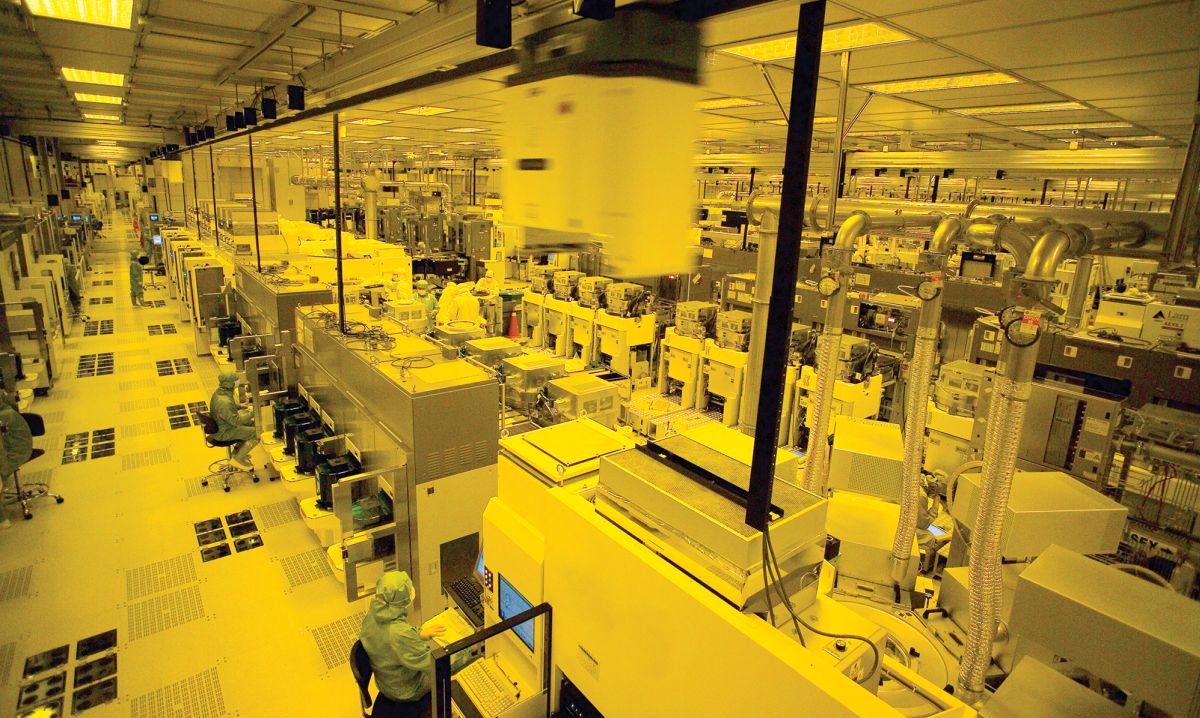
Chinese memory-chip maker CXMT said Sunday that its fifth-generation technology platform has entered mass production, marking a significant advance in Beijing’s effort to build a domestic competitor to Samsung Electronics, SK Hynix and Micron Technology in the global DRAM market.

The Hefei-based company said the new platform can produce more powerful memory chips at lower cost and with lower power consumption, giving Chinese electronics manufacturers another domestic source of DRAM for smartphones and other devices.

The announcement is particularly significant because DRAM is a foundational component of modern electronics. It provides the short-term working memory used by smartphones, computers, servers, and other devices to run applications and process data.

CXMT is China’s leading DRAM producer and has been expanding its technological capabilities as Beijing pushes to reduce the country’s dependence on foreign semiconductor suppliers. The company listed on Shanghai’s STAR Market this year, giving it access to domestic capital as it expands production.

The fifth-generation platform is designed to improve both chip density and manufacturing efficiency. CXMT said it has reduced the spacing of key features in the data-storage portion of its chips to 11.95 nanometers, allowing more memory to be packed into each chip and more individual dies to be produced from every silicon wafer.

The company said it achieved the advance using quadruple patterning, a manufacturing technique that repeats lithography steps to create fine circuit patterns.

“Our process capability is now on par with the most advanced mass-produced nodes out there in the industry,” Luo Xiaodong, CXMT’s vice president and head of its marketing center, said at the 2026 World Manufacturing Convention in Hefei.

That claim, if sustained in commercial production, would narrow an important technological gap between CXMT and the established global memory-chip leaders.

CXMT Targets Smartphone Memory Market

CXMT also unveiled two 24-gigabit LPDDR5X products manufactured using the new platform. LPDDR5X is a low-power form of DRAM widely used in smartphones and other portable electronics. The company said the new products can hold 50% more data than its previous equivalent products and have already entered mass production. They are available in two package formats intended for different smartphone and portable-device designs.

CXMT said the new manufacturing platform can generate at least 50% more gross chip dies per wafer than its fourth-generation technology, based on an 8-gigabit chip baseline. The figure is important because wafer productivity directly affects the economics of semiconductor manufacturing. Producing more dies from each wafer can lower the amount of silicon required for every chip and potentially improve manufacturing costs.

CXMT clarified that the 50% increase refers to the gross number of potential dies produced from a wafer before defective chips are removed. It therefore does not represent a 50% increase in the proportion of chips that successfully pass final testing.

The company said it developed the new platform through computer simulations and cooperation with Chinese semiconductor equipment manufacturers on critical production processes.

That approach is also considered bold and defiant in the context of U.S. restrictions on China’s semiconductor industry.

Since 2022, Washington has tightened export controls covering advanced semiconductor manufacturing equipment, software and other technologies that China can access. The restrictions have complicated Beijing’s efforts to develop cutting-edge chips using the same equipment and production ecosystems available to companies in South Korea, Taiwan and the United States.

CXMT’s progress therefore represents more than a commercial push into the memory market. Many see it also as a test of whether Chinese semiconductor manufacturers can continue advancing through domestic engineering, equipment development and manufacturing improvements while operating with more limited access to foreign technology.

A Bigger Challenge for Global Memory Makers

Samsung, SK Hynix and Micron currently dominate the global DRAM industry, making CXMT’s expansion a potential source of additional competition in a market where manufacturing scale and technological sophistication are critical.

But the emergence of a larger Chinese supplier could have implications for both prices and supply chains, particularly in lower-power memory used in consumer electronics.

CXMT’s latest products are initially focused on smartphones and other portable devices rather than demonstrating that the company has matched the leaders across every segment of the DRAM market. The company’s claim that its process capability is comparable with advanced mass-produced nodes is also a company statement rather than an independently verified assessment.

Still, moving a new technology platform into mass production is materially different from demonstrating a chip in a laboratory or announcing a prototype. It suggests CXMT has reached a stage where the technology can be incorporated into commercial manufacturing at scale.

The economics of that production will ultimately determine how significant the advance becomes.

China remains one of the world’s largest electronics manufacturing hubs, creating a large potential domestic market for locally produced memory. Chinese smartphone and electronics manufacturers could benefit from having an additional supplier, while CXMT can use domestic demand to increase production volumes and gather manufacturing experience.

The company is also entering the market at a time when memory has become increasingly important to the artificial intelligence industry. DRAM and higher-performance memory technologies are essential components of the computing systems used in data centers, although the requirements of AI accelerators are increasingly centered on high-bandwidth memory, or HBM, a more specialized segment where Samsung and SK Hynix remain major players.

CXMT’s progress does not immediately translate into a challenge across the entire memory industry. But a stronger domestic DRAM producer gives China a broader foundation from which to develop more advanced memory technologies.

That is precisely what makes the company’s fifth-generation platform important to Beijing’s wider semiconductor ambitions. China is not simply trying to replace individual imported chips. It is attempting to develop a complete domestic semiconductor ecosystem spanning chip design, manufacturing, equipment and materials.

CXMT’s ability to increase the number of dies produced from each wafer while reducing feature spacing points to progress on the manufacturing side of that effort.

However, industry analysts say the next test will be whether those gains can translate into reliable yields, competitive costs and sustained commercial volumes. If CXMT can achieve those targets, the company could become a more significant force in global DRAM supply and further reduce Chinese electronics manufacturers’ dependence on Samsung, SK Hynix and Micron.

This means for the established memory leaders, another competitive variable in an industry already undergoing a major investment cycle driven by smartphones, data centers and AI infrastructure.


The Quantum Threat to Bitcoin, Digital Assets and Modern Cryptography

0

The most unsettling part of the quantum-security problem is not that a sufficiently powerful quantum computer might eventually break today’s cryptography. It is that defenders have to prepare for an attack whose technological timetable remains uncertain while the information being protected is already moving through hostile networks.

The U.S. National Institute of Standards and Technology (NIST) has been pushing organizations toward post-quantum cryptography, with the broader U.S. government transition goal aimed at mitigating quantum risk by 2035.

NIST’s transition work calls for quantum-vulnerable algorithms to be deprecated and ultimately removed from its standards by 2035, with higher-risk systems moving earlier.

That deadline, however, should not be interpreted as a countdown clock for attackers. NIST itself warns about “harvest now, decrypt later”: adversaries can collect encrypted information today and retain it until technology capable of breaking the underlying cryptography becomes available.

For information whose value lasts for years—government records, intellectual property, financial data, military communications or sensitive corporate research—the attack can begin long before the encryption is actually defeated. This creates an uncomfortable asymmetry.

Defenders think in terms of migration schedules, software upgrades, procurement cycles and compliance deadlines. Attackers think in terms of opportunity.

That distinction matters when considering claims that adversaries are already combining artificial intelligence, quantum annealing and specialized computing hardware to break modern cryptographic keys today.

Such claims should be treated carefully. There is no public evidence establishing that existing AI systems, quantum annealers and post-halving ASIC mining machines can collectively defeat the cryptographic algorithms targeted by NIST’s post-quantum transition.

NIST continues to describe cryptographically relevant quantum computers as a future capability, with experts disagreeing substantially about when such machines could arrive. But dismissing the problem because a universal quantum computer has not arrived would also miss the larger security lesson.

Attackers do not need to reproduce a textbook attack exactly as cryptographers imagined it. They can combine weaknesses across systems. Poor key management, vulnerable implementations, stolen credentials, side-channel information, exposed infrastructure and conventional computing can all reduce the amount of cryptographic work an adversary actually needs to perform.

That is why the post-quantum transition is about more than quantum computers. NIST has already finalized three post-quantum standards—ML-KEM, ML-DSA and SLH-DSA—and explicitly encourages organizations to begin migration now.

The agency’s guidance recognizes that replacing cryptographic infrastructure is a long process involving hardware, software, protocols, vendors and inventories of where vulnerable algorithms are being used. For financial markets and digital assets, the stakes are particularly high. Public-key cryptography sits beneath authentication, secure communications and digital signatures.

A future ability to derive private keys from public information could transform an abstract cryptographic vulnerability into an ownership problem: accounts, certificates, wallets and other cryptographically secured assets could become targets. The critical question, therefore, is not whether someone has secretly built a machine capable of breaking everything today.

There is no verified public evidence for that claim. The more immediate question is whether organizations are migrating quickly enough that tomorrow’s breakthrough—whenever it arrives—does not turn today’s encrypted infrastructure into tomorrow’s exposed attack surface.

In cybersecurity, the deadline is rarely the moment the threat begins. It is usually the moment preparation can no longer be postponed.

OpenAI Projects $278 Billion Cash Burn Through 2030 as AI Infrastructure Costs Soar

0

OpenAI expects to burn through $278 billion in cash between 2026 and 2030 as it pours money into computing power and infrastructure, underscoring the extraordinary capital requirements behind the race to build and operate powerful artificial intelligence systems.

The projection, reported by the Financial Times on Friday based on a company presentation, highlights the scale of funding OpenAI will need to sustain its expansion even as it forecasts a tenfold increase in revenue over the same period.

The ChatGPT maker expects revenue to rise from $36 billion in 2026 to $350 billion in 2030, while generating cumulative revenue of about $840 billion through the end of the decade. But those gains would come alongside an enormous infrastructure bill.

OpenAI forecasts spending roughly $856 billion on computing power and infrastructure through 2030, making the category by far its largest expense, according to the FT. The company expects cumulative negative free cash flow of $278 billion over the five-year period as it invests heavily in the capacity required to train and run its AI models.

The figures illustrate the unusual economics of the current AI boom. OpenAI is projecting explosive revenue growth, but the computing infrastructure required to support that growth is expanding almost as aggressively. The company is effectively betting that demand for AI services will eventually scale fast enough to absorb the enormous cost of the servers, chips, data centers and energy needed to operate them.

That creates a substantial financing requirement.

OpenAI raised $122 billion in March at an $852 billion valuation. The company is nevertheless projected to exhaust that cash by 2028 if spending follows the trajectory outlined in its presentation.

The funding challenge comes as OpenAI explores additional capital at an even higher valuation. The FT reported earlier this week that the company has held discussions with investors that could value it at around $1.2 trillion ahead of a potential public listing.

OpenAI confidentially filed for an initial public offering in June, although CEO Sam Altman said on Saturday that the company would not go public in 2026, citing concerns about AI safety.

The projected cash burn also provides a clearer picture of why the AI industry’s infrastructure race has increasingly become a capital markets story. The largest AI developers are not simply competing on model performance. They are competing to secure long-term access to the computing capacity needed to serve rapidly growing numbers of users and enterprise customers.

The financial challenge is huge for OpenAI because much of the expected spending must occur before the corresponding revenue is realized. Building or securing data-center capacity, purchasing computing resources, and developing sophisticated AI models require substantial upfront commitments, while the commercial return depends on continued growth in usage and pricing.

The company’s forecast assumes that revenue will increase from $36 billion to $350 billion in just four years after 2026. That would represent an increase of more than ninefold, meaning OpenAI’s financial model depends on the AI market expanding rapidly enough to support both its own growth and the infrastructure investments required to deliver it.

The numbers also show why the economics of AI cannot be judged solely by headline revenue growth. A company can grow sales rapidly while still consuming enormous amounts of capital if computing and infrastructure costs rise faster than operating cash generation.

OpenAI’s projected $278 billion cumulative negative free cash flow therefore puts greater emphasis on its ability to convert AI adoption into durable cash generation. If demand grows as projected, the company’s infrastructure commitments could provide the capacity needed to support a much larger business. If growth falls short, the scale of those commitments could become a significant financial burden.

For now, OpenAI’s projections point to a business that is still in an investment-intensive phase. The company is forecasting hundreds of billions of dollars in future revenue, but it is also preparing to spend hundreds of billions more to build the computing foundation required to generate it.

Why Amazon’s Next Innovation Could Change Consumer Behavior

0

Amazon’s next move could reshape how America shops — all over again. The company has already transformed retail by making the internet feel like a shopping mall that never closes. Now, its next phase appears less about putting more products on a website and more about changing how consumers discover, evaluate and ultimately purchase them.

For two decades, Amazon trained Americans to expect convenience: search for almost anything, compare prices, read reviews and have the product delivered to the doorstep.

That model pressured traditional retailers to invest heavily in e-commerce while changing consumer expectations around speed, selection and price.

The next transformation could be driven by artificial intelligence. Instead of consumers opening Amazon and typing a product into a search bar, AI could increasingly anticipate what they need, compare alternatives and guide the purchase.

The difference is subtle but enormous. Traditional online shopping begins with a customer asking, “What should I buy?” An AI-powered shopping experience could begin with the system understanding the customer’s objective.

Someone planning a dinner party, for example, might not need to search separately for cookware, ingredients, drinks, tableware and decorations. An AI shopping assistant could potentially understand the occasion, budget and preferences and assemble recommendations across categories.

The retailer would no longer simply provide a marketplace. It would become an intermediary between consumer intent and commercial inventory. That shift matters because search has historically given consumers control over the shopping journey.

Whoever controls the search box controls an important gateway to commerce. Amazon built enormous economic power around that gateway. AI introduces the possibility of another interface — one in which consumers communicate with software conversationally rather than navigating thousands of product listings.

Amazon therefore faces a strategic question that extends beyond technology: how can it remain the place where consumers complete transactions if AI becomes the place where consumers make decisions?

The company has strong advantages. Its enormous product catalog, logistics network, fulfillment infrastructure, advertising business and vast customer base give it data and distribution capabilities that are difficult to replicate.

An AI shopping system connected to that infrastructure could potentially move from recommendation to transaction with very little friction. But the same transition could create new competition. Consumers may increasingly interact with AI assistants from multiple technology companies before reaching a retailer.

If an AI system becomes the primary shopping intermediary, Amazon could find itself competing not only with Walmart, Target and other retailers, but also with companies controlling the digital interfaces through which purchasing decisions are made.

There is another consequence: advertising. Amazon has developed a significant advertising business by placing sponsored products directly inside the shopping journey. AI could change how those commercial recommendations are presented.

If algorithms increasingly decide which products consumers see, questions about transparency, sponsored placement and conflicts between commercial incentives and genuinely useful recommendations will become harder to ignore.

For consumers, the promise is straightforward: less searching and potentially better decisions. The risk is that convenience could come with less visibility into why a particular product was recommended.

Amazon’s next move, therefore, may not simply be another expansion of online retail. It could represent a transition from a marketplace that responds to shoppers into an intelligent commerce system that helps shape what they consider buying in the first place.

That would mark another turning point in American retail — from the store, to the website, and potentially now to the AI assistant.

Gold’s Next Move Is About Demand, Not Round Numbers

0

Gold is no longer moving through this market as a quiet insurance policy. At roughly $4,390 an ounce, the metal remains dramatically above where it began its latest cycle, even after retreating from its January peak.

Yet the more important story is not the distance gold has already travelled. It is whether the forces behind the rally can generate another wave of demand.

J.P. Morgan remains constructive on that possibility. Its latest research expects gold to average around $6,000 an ounce during the fourth quarter of 2026, with the bank projecting prices could move toward $6,300 in 2027.

That outlook is not based on a single catalyst. It rests on a combination of central-bank accumulation, geopolitical fragmentation, inflation risks, fiscal concerns and continued diversification away from traditional reserve assets.

That distinction matters because gold’s next leg higher would require more than momentum. It would require capital. Central banks have already demonstrated how powerful structural demand can become.

According to J.P. Morgan, central banks accumulated gold at an average pace of roughly 225 metric tons per quarter between 2021 and 2025—about twice their average quarterly purchases during 2016–2020. Even though officially reported purchases slowed at the beginning of 2026.

Estimates based on broader market flows suggest underlying central-bank demand remained considerably stronger. The private-investor market presents another potential source of demand. Gold occupies a relatively small position in many conventional portfolios.

That means investors do not necessarily need to abandon stocks, bonds or cash for gold prices to receive a meaningful boost. A modest increase in portfolio allocations across millions of investors could translate into substantial additional demand.

This is where the supply equation becomes important. Gold production cannot respond instantly to higher prices. New mines require exploration, permitting, financing and years of development. Existing mines also face geological and operational constraints.

Consequently, when investment demand accelerates faster than physical supply can adjust, prices can become the mechanism through which the market balances itself. But the current environment also contains an important counterweight.

Gold does not generate income. When Treasury yields rise and the dollar strengthens, investors can become less willing to hold an asset whose return depends entirely on price appreciation.

Reuters reported on September 18 that the Federal Reserve had raised its policy rate to 3.75%-4%, while traders were pricing a meaningful possibility of another increase in October. Those conditions can create pressure on bullion.

That explains why gold’s path toward J.P. Morgan’s forecast is unlikely to be linear. The metal is effectively caught between two powerful forces: rising structural demand for a scarce monetary asset and tighter financial conditions that increase the opportunity cost of holding it.

The outcome will depend on which force becomes dominant. If central banks continue accumulating, geopolitical uncertainty remains elevated and private investors gradually increase their gold exposure, the demand equation could tighten considerably.

If yields remain high and the dollar strengthens, however, gold could face further periods of consolidation or correction. The $6,000 projection, therefore, should not be treated as a guaranteed destination. It is a scenario built around assumptions about monetary policy, institutional demand and global diversification.

What makes the market fascinating is that gold does not need every investor to become bullish. It only needs marginal capital to keep moving toward an asset whose supply cannot quickly expand. That is where the next repricing could begin.