DD
MM
YYYY

PAGES

DD
MM
YYYY

spot_img

PAGES

Home Blog Page 2

Dude Perfect CEO Exit, Chicken Shop Date Ending and Maria Bartiromo’s Fox Departure

0

The media and creator economy is entering another period of transition, with several high-profile departures and endings highlighting how quickly audiences, companies and entertainment brands are evolving.

From Dude Perfect to Chicken Shop Date and Fox Business anchor Maria Bartiromo, three very different stories point toward the same reality: even successful media institutions are being forced to reconsider what comes next.

At Dude Perfect, the departure of the company’s first chief executive represents a significant moment for one of YouTube’s most successful creator-led businesses.

The executive is reportedly leaving after disagreements with the board over the company’s next phase. That detail is important because Dude Perfect has grown far beyond the traditional YouTube channel model.

What began as a group of friends producing sports-trick videos developed into a major entertainment business built around sponsorships, merchandise, live events, television and digital media.

As creator companies mature, the priorities of founders, executives and investors can diverge. A business that once focused primarily on audience growth may eventually need to emphasize profitability, intellectual property, international expansion or new forms of entertainment.

Leadership changes can therefore reflect deeper strategic questions about how a creator brand should evolve without losing the authenticity that made it successful.

Meanwhile, the ending of Chicken Shop Date marks another emotional moment for digital entertainment. The YouTube series, known for its unusual combination of celebrity interviews, awkward humor and informal settings, became one of the platform’s most recognizable shows after more than a decade.

Its success demonstrated that YouTube could support distinctive formats that did not resemble traditional television. The show’s longevity is particularly notable in an industry obsessed with constant novelty.

Chicken Shop Date built a recognizable identity and loyal audience by remaining deliberately unconventional. Its ending therefore illustrates that even iconic digital formats eventually reach a natural conclusion.

For creators, the challenge is not simply producing something popular but knowing when a successful format has reached the end of its creative cycle. Then there is Maria Bartiromo, whose departure from Fox after more than 12 years represents a major change in the television news landscape.

Bartiromo became one of the most recognizable financial-news personalities on American television, building a reputation around markets, business and political coverage. Her exit closes another long chapter in the increasingly fluid world of broadcast media.

These developments reveal an industry experiencing a generational shift. Creator-led companies are becoming more corporate, established shows are reaching their natural endpoints, and veteran television personalities are leaving institutions where they built long careers.

The underlying lesson is that media success no longer guarantees permanence. Audiences move, platforms change, business models evolve and leadership strategies are constantly reassessed.

YouTube creators increasingly operate like traditional media companies, while traditional broadcasters face competition from personalities and formats born online.

Dude Perfect, Chicken Shop Date and Bartiromo occupy very different corners of the media ecosystem, but their stories converge around one idea: the next phase of media will be defined not only by who can build an audience, but by who can successfully reinvent what that audience expects.


African Startup Funding Rebounds to $455 Million in August, Driven by Mega-Deals

0

African startup funding staged a powerful rebound in August 2026, as a handful of mega-deals pushed the continent’s monthly funding total to its second-highest level in the past year.

The handful of large transactions was led by Moove’s $250 million Series C, driving the month’s impressive headline figure.

The round was led by Tiger Global, with participation from existing investors including Uber, Mubadala, BlackRock, and Prosus Ventures. The capital will be used to expand Moove’s autonomous vehicle business, strengthen its AI capabilities and grow its operations across more global markets.

According to report by Africa;The Big Deal, 31 African startups announced funding rounds of at least $100,000 in August, collectively raising $455 million, excluding exits.

The figure marked a significant rebound from the $102 million recorded in July and stood at more than twice the previous 12-month monthly average of $220 million.

August also recorded the second-highest monthly funding total of the past year, behind June 2026. However, the strong headline number masked a weaker level of overall fundraising activity. With only 31 startups securing $100,000 or more, August remained well below the previous 12-month average of 43 funded ventures per month.

The month’s funding was also highly concentrated among a small number of companies. The five largest transactions accounted for 84% of the total capital raised. Moove alone raised $250 million, representing approximately 55% of August’s entire funding haul.

Other major transactions included Jumia’s $50 million equity raise, Yellow Card’s $40 million round, Moment’s $22 million raise, and ValU’s $21 million corporate bond issuance.

The concentration became even more pronounced geographically. The so-called Big Four—Nigeria, Egypt, South Africa and Kenya accounted for 99.5% of the total capital raised and 94% of all $100,000+ deals, with 29 of the 31 funded startups based in those markets.

Nigeria was the dominant beneficiary, attracting approximately $364 million, or 80% of all funding raised across Africa during the month. Moove’s $250 million round was the biggest contributor to the country’s outsized share.

August also saw two notable startup exits. Tamweely was acquired by Egypt’s eFinance Group in a disclosed transaction valued at $95 million, while Kenya-based Chpter was acquired by Cloud9 for an undisclosed amount. The transactions brought the number of African startup exits recorded in 2026 to 30 year-to-date.

Despite August’s strong performance, the broader funding picture remains mixed. Between January and August 2026, African startups raised approximately $1.92 billion, putting the continent only 9% below the $2.1 billion raised during the same period in 2025.

Equity funding has performed particularly well. At $1.35 billion, equity investment is up 23% year-on-year, although that growth has been heavily influenced by a small number of mega-rounds, particularly those secured by Spiro and Moove.

The weakness becomes clearer when looking beyond total capital raised. Only 269 unique African ventures had secured at least $100,000 by the end of August, compared with 332 at the same point in 2025, representing a 19% decline.

Investor participation has also contracted. The number of named active investors fell from 368 in 2025 to 288 in 2026, a 22% year-on-year decline.

The August figures therefore point to a funding market that is recovering in value but not necessarily in breadth. Large, well-funded companies are attracting increasingly significant amounts of capital, while smaller startups continue to face a more challenging fundraising environment.

In effect, August strengthened Africa’s overall 2026 funding numbers, but it did little to reverse the underlying concentration of capital among a relatively small group of companies, countries and investors.

China’s Auto Exports Surge 77.5% Even as Domestic Sales Fall for 11th Straight Month

0

Chinese automakers are accelerating their overseas expansion as weak domestic demand pushes exports to a record pace, with BYD and Geely among the manufacturers posting fresh export highs.

China’s passenger-vehicle exports remained exceptionally strong in August, highlighting the growing importance of overseas markets for the country’s automakers as sales at home declined for an 11th consecutive month.

Passenger-vehicle exports jumped 77.5% from a year earlier to 894,000 units in August, according to data released Tuesday by the China Passenger Car Association (CPCA). The increase was slightly slower than the 88.2% year-on-year surge recorded in July but still represented a substantial expansion in overseas shipments.

The contrast with the domestic market was stark. Passenger-vehicle sales in China fell 23.7% from a year earlier to 1.55 million units in August, accelerating from a 21.1% decline in July.

Electric vehicles and plug-in hybrids accounted for 64.7% of domestic passenger-vehicle sales, but sales of those vehicles declined 10.1% year on year in August, compared with a 3.9% drop in July. By contrast, exports of new-energy vehicles surged 154.7%, accelerating from 147.8% growth a month earlier.

The widening gap between domestic and overseas performance is pushing Chinese automakers to intensify their international expansion. BYD and Geely Auto both reported record export volumes in August as manufacturers increasingly look abroad to offset fierce competition and weakening demand in China.

Chinese automakers have continued to gain ground in overseas markets despite rising trade barriers and regulatory scrutiny. Their combination of competitive pricing, sophisticated technology and expanding EV lineups has helped them attract customers in Europe and emerging markets.

The export push is also becoming a structural growth strategy rather than simply a response to weak domestic demand. CPCA Secretary-General Cui Dongshu expects China’s vehicle exports to reach 12 million units this year, with annual shipments potentially rising to between 18 million and 20 million vehicles by 2030.

Automakers that entered the international market later are increasingly under pressure to catch up. Xiaomi, which entered the EV market relatively recently, has signed agreements with German auto dealers ahead of its planned European launch next year as it seeks to establish an overseas distribution network.

Seres, which co-develops Aito vehicles with Huawei, illustrates the risks of falling behind in the export race. The company is facing intensifying competition in China’s crowded premium EV market, while its comparatively late overseas expansion has limited its ability to tap foreign demand. Its total vehicle sales plunged 44% last month.

The rapid growth in exports, however, is raising concerns that the intense price competition that has battered Chinese automakers, suppliers and dealers at home could spill into foreign markets. Chinese regulators last week issued new guidelines governing automakers’ overseas operations, warning manufacturers against frequent or steep price cuts and other practices that violate regulations, potentially harm consumers or damage Chinese brands’ reputations.

Major manufacturers including BYD, Chery and Geely Holding have pledged to comply with the new guidelines. Regulators have not yet specified penalties for violations.

The regulatory intervention comes as China’s auto industry undergoes a prolonged shakeout. Manufacturers are competing for market share in a saturated domestic market, while excess capacity and aggressive pricing have put pressure on profitability across the supply chain.

For the industry’s strongest exporters, overseas markets offer an important outlet for that capacity and a way to diversify revenue. But the faster Chinese automakers expand abroad, the greater the likelihood of additional trade restrictions and scrutiny from governments concerned about pricing, industrial competition and the impact of Chinese imports on domestic manufacturers.

That leaves China’s auto industry increasingly dependent on a delicate balance: finding new overseas customers quickly enough to compensate for weakness at home while avoiding the regulatory and trade backlash that could constrain its global expansion.

French President Macron Pushes EU-Wide Social Media Ban for Children Under 15

0

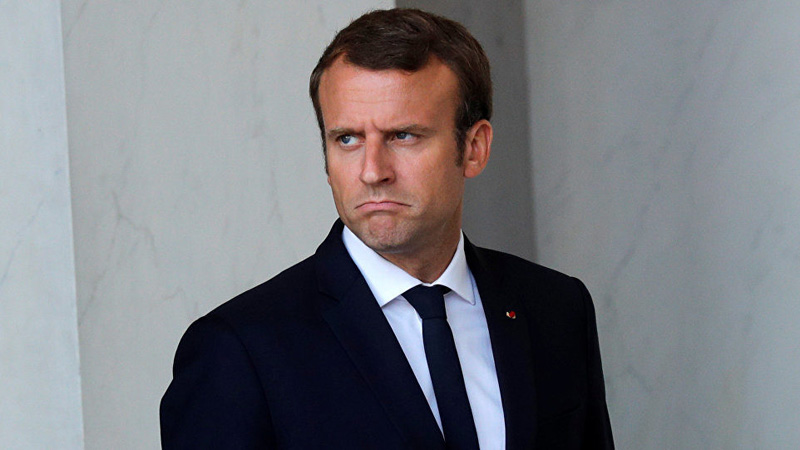
French President Emmanuel Macron has called on the European Commission to introduce an EU-wide ban on social media access for children under 15, seeking to revive a policy that failed to take effect in France and turn it into a bloc-wide rule.

In a letter dated Aug. 29 to European Commission President Ursula von der Leyen, Macron said the European Union needed new legislation to establish a common age threshold for social media access across its 27 member states.

“I believe it has now become essential to go further and, through a new European legislative text, harmonize a ban on access to social media platforms for children under the age of 15, in order to protect all children across the Union,” Macron wrote.

The intervention follows the French Constitutional Council’s decision this summer to strike down a national bill that would have restricted social media access for children before the legislation was scheduled to take effect in September.

Macron’s office said France would seek to rewrite the rejected legislation, but the president faces significant political obstacles at home. A fragmented parliament and difficult negotiations over the government’s budget could make it harder to secure support for another national law.

The situation has increased the importance of Macron’s push for action at the European level.

The debate has gained momentum since Australia adopted a landmark social media restriction for children last year. Several European governments are now considering tighter rules as concerns grow over the effects of social media on children’s mental health, exposure to harmful content, online exploitation and other safety risks.

European governments, however, remain divided over how far regulation should go.

Some countries, particularly in Scandinavia, have argued that decisions over children’s social media use should remain primarily with parents rather than being imposed through blanket government restrictions. A common EU rule would therefore require governments to reconcile significantly different approaches to parental responsibility, digital rights and child protection.

The European Commission has already signaled that it is considering restrictions on young children’s access to social media.

Von der Leyen said in July that the EU would move toward limiting access for younger children, citing recommendations from two experts that proposed a graduated system rather than an outright ban at a single age.

Under that approach, children below 13 could receive only limited and supervised access, with restrictions gradually eased as they grow older.

Macron is seeking a considerably tougher framework.

His proposed threshold would prohibit children under 15 from accessing social media platforms, creating a uniform minimum age across the EU rather than relying on graduated restrictions or individual national rules.

The approach could become an important part of the debate over the EU’s eventual legislation. A blanket age limit would require effective methods for verifying users’ ages while limiting the collection and processing of children’s personal data. It would also raise questions about which platforms would fall within the definition of “social media,” how age restrictions would be enforced across borders, and what obligations would be imposed on technology companies.

For social media companies, an EU-wide rule could be more consequential than a patchwork of national restrictions. A single framework would apply across one of the world’s largest digital markets, potentially forcing platforms to redesign age-verification systems and parental controls across their European operations.

Macron has made protecting children from social media a political priority as he enters the final year of his presidency ahead of France’s 2027 presidential election. His latest appeal to Brussels also allows France to pursue a common European solution after encountering constitutional and political barriers to its own legislation.

The timing gives the proposal additional political significance. Von der Leyen is due to deliver her flagship State of the Union address to the European Parliament later this month, when the Commission is expected to set out priorities for the bloc.

Macron’s proposed age-15 threshold could therefore become an early test of how far the European Commission is prepared to go in regulating children’s access to digital platforms. The broader issue is no longer simply whether children should face stronger safeguards online, but who should set those rules: national governments, parents or the European Union.

Macron is pushing for Brussels to settle that question with a common standard across the bloc, while the Commission appears to be weighing a more graduated approach. The outcome could shape Europe’s digital policy toward children and establish a regulatory model that other governments may consider as they confront growing concerns over social media’s impact on young users.

Jaguar Land Rover to Cut 4,000 Jobs as Chinese Rivals, Trump Tariffs and Cyberattack Bite

0

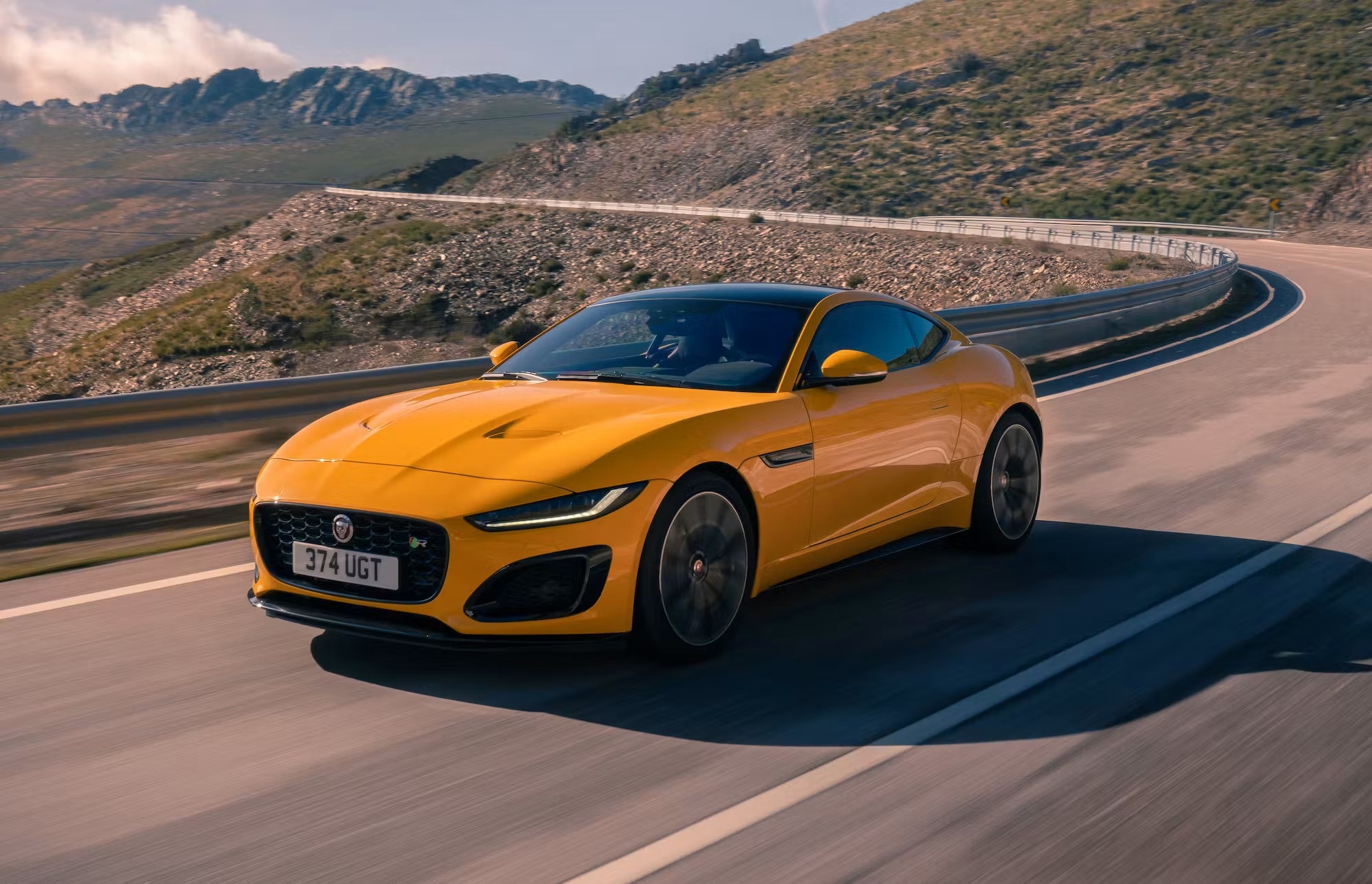
Jaguar Land Rover is cutting around 4,000 jobs over the next two years, or nearly 10% of its global workforce, as Britain’s largest carmaker launches a major cost-reduction drive to counter intensifying Chinese competition, U.S. tariffs, the fallout from a damaging cyberattack and the high cost of transforming its vehicle lineup.

The luxury automaker, owned by India’s Tata Motors, is targeting about £1.7 billion ($2.3 billion) in savings and aims to reduce the volume of vehicles it needs to sell to break even to around 300,000 units a year. The reductions are expected to focus largely on salaried and management positions, with JLR seeking to use voluntary redundancies where possible.

Chief Executive PB Balaji said JLR would also launch five new products over the next 12 months as it seeks to restore growth while lowering its cost base.

“The automotive industry faces significant challenges, with technological change amidst intense competition and ongoing geo-political uncertainty,” Balaji said.

“As part of this transformation, we will reduce our global workforce by around 4,000 roles over the next two years. We recognize this will be difficult news for colleagues affected, and are committed to supporting everyone with care, fairness and respect,” he added.

The restructuring marks one of the most significant tests yet for JLR as it attempts to balance the enormous capital requirements of electrification with weaker demand, geopolitical uncertainty and a rapidly changing competitive landscape.

JLR employs about 43,000 people globally, with roughly 34,000 based in the United Kingdom. The company plans to continue investing heavily in electrification, digital technology and advanced manufacturing even as it cuts costs, with planned investment of £15 billion to £18 billion over the next five years.

One of JLR’s biggest strategic problems is the changing competitive environment in China, once a crucial growth market for global luxury manufacturers.

Chinese Companies Disrupting Markets

Chinese automakers have rapidly improved the quality and technology of their electric vehicles while maintaining aggressive pricing. Companies such as BYD and other domestic manufacturers have gained ground with products that compete with established European and Japanese brands on battery technology, software and connectivity.

That puts pressure on JLR’s traditional premium positioning at precisely the time the company is investing heavily to transition its own brands toward electric vehicles.

The challenge is particularly acute because luxury automakers cannot compete solely on price. They must spend heavily on technology, design and brand development while preserving margins, making cost efficiency increasingly important as competition intensifies.

Trump Tariffs Add Pressure

JLR is also exposed to U.S. trade policy. The United States is one of the company’s most important markets, but its vehicles are largely manufactured outside the country, leaving the company vulnerable to tariffs imposed by President Donald Trump on imported automobiles.

The tariffs increase the cost of vehicles entering the U.S. market and threaten to squeeze margins unless the additional expense can be absorbed by JLR, passed on to customers, or offset through cost reductions elsewhere.

The U.S. exposure makes the issue particularly important for JLR because North America represents a significant portion of its global business.

The company therefore faces a difficult combination of higher trade costs and weaker demand in some markets at a time when it needs to finance a major product transition.

Cyberattack Compounds Financial Pressure

JLR’s restructuring also follows a major cyberattack that disrupted the company’s operations and production.

The attack caused significant disruption to manufacturing and supply chains, compounding an already difficult trading environment. The episode highlighted the growing operational risks facing automakers as factories become increasingly dependent on connected software systems, digital supply chains and automated production.

For JLR, the financial consequences came on top of declining sales, tariff costs and heavy investment requirements. The combination has increased pressure on management to reduce the company’s break-even point. Lowering that threshold to approximately 300,000 vehicles means JLR would need fewer annual sales to cover its fixed costs, theoretically making the business more resilient to fluctuations in demand.

The job cuts are also creating political pressure for Prime Minister Andy Burnham’s government, which has made industrial growth and manufacturing competitiveness important elements of its economic agenda.

Business and Trade Minister Jonathan Reynolds has ruled out a government bailout and is expected to meet JLR executives to discuss the redundancy programme and ways of mitigating the impact on workers.

“We understand that this will be an uncertain and concerning time for affected workers, their families and wider communities,” a government spokesperson said.

The government pointed to measures including lower electricity costs for manufacturers, £4 billion of capital and research-and-development funding for zero-emission vehicle manufacturing, and a £2 billion Electric Car Grant intended to stimulate consumer demand for electric vehicles.

The government faces a difficult balancing act: supporting strategic manufacturing without permanently subsidizing companies that are struggling to compete in an increasingly globalized automotive market.

JLR’s workforce reduction could also affect communities beyond the company itself because the automaker supports a large network of suppliers and related businesses across the UK.

JLR Cuts Costs While Continuing EV Investment

The restructuring does not represent a retreat from electrification. Instead, JLR is attempting to make its existing business financially leaner so it can continue funding the technology and products needed for the next phase of the automotive industry.

The company plans to launch five new products over the next year and continue substantial spending on electric vehicles, digital technologies and manufacturing. That creates a paradox facing much of the traditional automotive industry: companies must simultaneously spend billions to transform their businesses while cutting costs because the transition is occurring in a weaker and more competitive market.

JLR is not alone.

Germany’s Volkswagen has also announced further major job reductions as it restructures amid fierce competition from Chinese manufacturers, tariff pressures and the costly transition toward electric vehicles.

The broader industry shift suggests that the global automotive market is entering a period in which scale and brand strength alone are no longer sufficient. Established manufacturers must lower production costs, accelerate software and EV development, and respond to Chinese competitors that have moved rapidly up the technology curve.

JLR’s immediate goal is to make the company less dependent on high sales volumes while giving its luxury brands enough financial capacity to compete in the next generation of vehicles.