DD
MM
YYYY

PAGES

DD
MM
YYYY

spot_img

PAGES

Home Blog Page 20

Amazon Suspends 21 Air Operations After Fatal Prime Air Cargo Crash in Miami

0

Amazon’s decision to pause operations with 21 Air marks a significant moment in the aftermath of the fatal cargo-plane crash at Miami International Airport, bringing renewed attention to the safety responsibilities that come with the rapidly expanding logistics networks behind modern e-commerce.

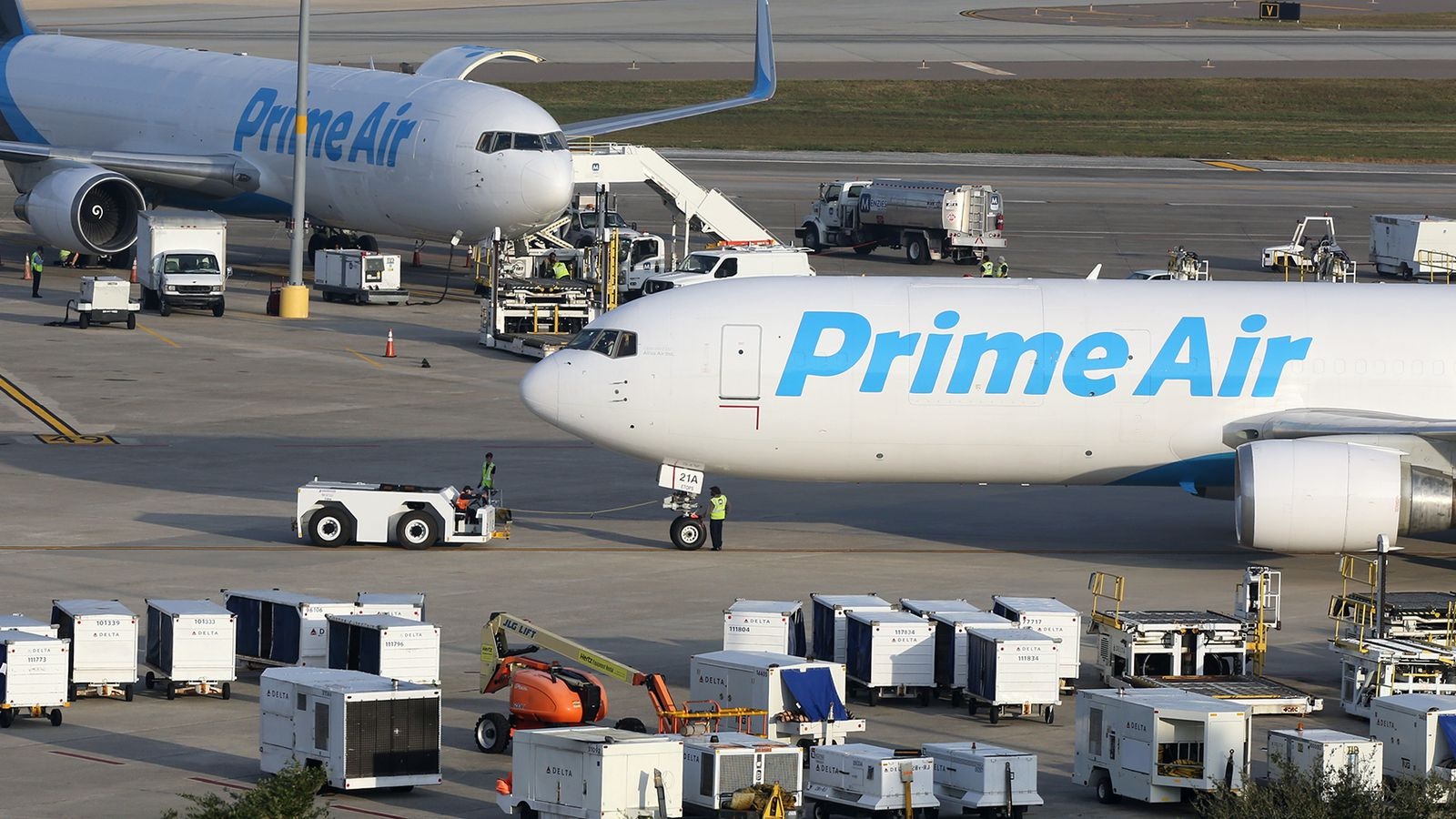
The decision followed the September 6 crash of an Amazon-branded Boeing 767-300 operated by 21 Air for Prime Air. The aircraft overran the runway while landing at Miami International Airport and struck vehicles beyond the runway, killing five people on the ground and injuring five others.

The National Transportation Safety Board (NTSB) is investigating the circumstances surrounding the accident. Amazon said it had spent time supporting the investigation and reviewing the circumstances surrounding the incident before deciding to pause its operations with 21 Air.

The company described safety as a priority both in its own operations and when working with external aviation partners.

The suspension does not necessarily represent a permanent termination of the relationship; Amazon’s language indicates that the current action is a pause while the investigation and internal review continue.

The crash has placed the operating relationship between Amazon and its contracted carriers under greater scrutiny. Unlike a traditional airline that controls its entire passenger or cargo operation, Amazon’s Prime Air network relies on multiple direct air-carrier partners.

Amazon has identified carriers including Air Transport International, ABX, 21 Air, Sun Country, Hawaiian Airlines, Cargojet, ASL and others as part of its cargo network. Early investigative information provides a clearer picture of the final moments of Flight 7598, although it does not establish a final cause.

NTSB investigators have reported that the aircraft was approaching the runway at excessive speed, with cockpit communications indicating that one pilot warned about the aircraft’s speed. Flight data also suggested that the crew briefly considered a go-around.

A standard procedure in which pilots discontinue a landing and attempt another approach. The aircraft nevertheless continued beyond the runway. Investigators are examining a broad range of possible contributing factors.

These include pilot actions, air-traffic-control communications, the aircraft’s maintenance history, operating procedures and weather conditions at the time of the accident. The presence of thunderstorms and gusty winds has been reported, but the investigation must determine whether and to what extent weather contributed to the crash.

The aircraft itself was an older Boeing 767 that had originally been built as a passenger aircraft before being converted for cargo operations. That fact alone does not establish that the aircraft was unsafe, but the age and maintenance history of the jet will form part of the broader investigation.

The accident has also intensified attention on 21 Air’s safety record. Reports have surfaced detailing previous safety complaints from former employees, including allegations concerning training and safety practices. Those claims remain separate from the official investigation into the Miami crash and should not be treated as proof of its cause.

For Amazon, the immediate suspension demonstrates how closely its logistics ambitions are tied to the performance of outside operators. The company has built a vast delivery ecosystem designed to move packages quickly across continents, but that speed depends on aviation partners operating under rigorous safety standards.

The NTSB investigation will determine what caused Flight 7598 to leave the runway and whether systemic factors contributed. Until those findings emerge, Amazon’s decision to pause its relationship with 21 Air represents an interim response to a tragedy that has placed aviation safety, contractor oversight and the infrastructure of fast e-commerce delivery under an intense spotlight.

Disney Return-to-Office Push Highlights the Future of Remote Work

0

Disney is once again pushing more of its remote workforce toward the office, reinforcing a broader corporate shift away from the flexibility that became common during the pandemic.

Some employees in Disney’s product and technology divisions who had previously been permitted to work remotely have now been told they will need to work from an office four days a week.

The change was communicated to some affected employees on September 14, according to reporting by Business Insider.

Many Disney employees already operate under a four-day in-person schedule, but certain technology teams had received exceptions. The latest move reduces those exceptions and brings more workers under the company’s established return-to-office framework.

The policy carries a significant employment consequence. Employees who fail to comply with Disney’s in-person requirements can face termination. At the same time, enforcement has reportedly varied across departments, with some employees saying managers closely monitor attendance while others have applied the rules more loosely.

The latest push therefore appears aimed not at creating an entirely new workplace model, but at applying an existing one more consistently. Disney’s position reflects a continuing debate across corporate America about what work should look like after the pandemic.

Remote employment demonstrated that many technology, administrative and digital roles could operate outside traditional offices. Yet major companies have increasingly argued that physical workplaces remain important for collaboration, organizational culture, mentorship and creative development.

For Disney, that argument carries particular significance because creativity sits at the center of its entertainment business. Former CEO Bob Iger introduced the company’s four-day office requirement in 2023, saying that physical interaction was important to collaboration and professional development.

The current policy enforcement can therefore be viewed as an extension of an approach established several years ago rather than a complete reversal of Disney’s workplace philosophy.

The timing also comes during a period of organizational change under CEO Josh D’Amaro. Disney has been pursuing a broader “One Disney” approach designed to bring teams and workflows closer together.

The company has also been reshaping parts of its business, including significant workforce reductions and changes at ESPN. D’Amaro has simultaneously focused on Disney’s streaming strategy, including the integration of Hulu features into Disney+.

Disney is not operating in isolation. NBCUniversal has maintained a four-day in-office expectation for most employees, while Paramount Skydance has introduced a generally stricter five-day requirement with exceptions. These policies illustrate how large media companies are moving toward greater physical presence even as remote and hybrid work remain available in selected roles.

Importantly, Disney’s workforce is not becoming entirely office-based. The company’s careers site continues to list roles classified as remote, including positions within its technology and entertainment operations. One Disney Entertainment and ESPN Technology position posted in August 2026, for example, explicitly described the role as permanently remote.

The evolving policy highlights a more complicated future for remote work. Rather than disappearing completely, remote employment is increasingly being treated as a role-specific arrangement determined by business needs, management policies and organizational structure.

For Disney, the immediate objective appears to be greater consistency in how employees work together. For its workforce, however, the shift represents a substantial adjustment for employees who had built their routines around remote flexibility.

The outcome will depend on how effectively Disney balances the benefits it associates with physical collaboration against the flexibility that remote work can provide. Disney’s decision is therefore part of a larger transformation in corporate work culture.

The pandemic-era experiment with widespread remote employment is giving way to a more selective model in which companies increasingly decide which jobs can remain remote and which require workers to be physically present.

South Korea Delays U.S. Investment Briefing as Nuclear Deal Talks Remain Unresolved

0

South Korea has asked to postpone a parliamentary briefing on its planned investment in the United States, delaying a key step in negotiations over a $350 billion package that could include a minority stake in Westinghouse and a major expansion of U.S. nuclear power capacity.

The country’s Industry Ministry said Wednesday that it had requested the postponement of a briefing scheduled for Thursday before a parliamentary committee. The ministry gave no further explanation.

The briefing had been viewed by lawmakers as one of the final steps before Seoul and Washington establish the terms governing South Korea’s large-scale investment commitment in the United States.

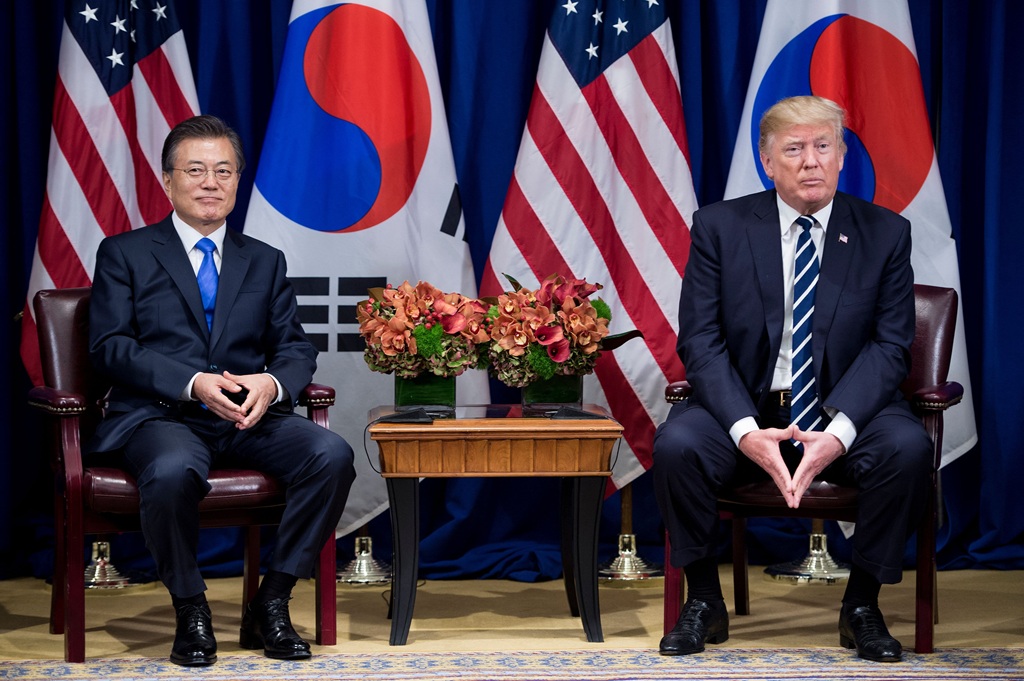
The two countries are still working through details of the package agreed by U.S. President Donald Trump and South Korean President Lee Jae-myung in October. Under the trade agreement, South Korea committed to invest $350 billion in U.S. manufacturing in exchange for Washington capping tariffs on Korean imports at 15%.

Of that amount, $150 billion has been earmarked for shipbuilding. Seoul and Washington are negotiating how to allocate the remaining $200 billion among projects under consideration.

The delay comes as nuclear power emerges as a potentially important component of those negotiations, with South Korean media reporting that Seoul is considering taking a minority stake in Westinghouse, the U.S. nuclear reactor technology company.

Westinghouse Stake Tied To Wider Nuclear Expansion

Reports in several South Korean outlets, including the Korea Economic Daily, said Seoul is considering financing a minority investment in Westinghouse through its broader U.S. strategic investment fund.

The proposal is reportedly linked to a package that could result in as many as eight new nuclear reactors being built in the United States. Six would use Westinghouse’s reactor design, while two would be based on a South Korean model.

Under the reported structure, South Korea would seek more than a purely financial interest in Westinghouse. Seoul wants a seat on the company’s board and a role in corporate decision-making, according to the reports.

Washington has been more cautious about those demands, particularly over whether South Korea should receive board representation or voting rights. That difference could be one reason negotiations have yet to produce a finalized structure, although neither government has directly linked the postponement of Thursday’s briefing to the Westinghouse discussions.

South Korea’s Industry Ministry said the two countries were holding consultations on investment in a U.S. nuclear power project but stressed that no specific details had been finalized.

The potential Westinghouse investment would place nuclear power alongside shipbuilding and other manufacturing projects at the center of South Korea’s effort to fulfill its U.S. investment commitment. It would also deepen industrial ties between two countries seeking to expand domestic supply chains for strategically important technologies.

Participation in the U.S. nuclear industry, for Seoul, could provide an opportunity to combine Korean nuclear engineering and manufacturing capabilities with Westinghouse’s established reactor technology and position in the American market. For Washington, the proposed investment could support plans to expand nuclear generation in the United States while bringing additional Korean capital and industrial capacity into the sector.

But ownership and governance rights are a more sensitive issue. A minority financial stake does not necessarily provide the influence Seoul appears to be seeking, while board representation and voting rights would give South Korea a more direct role in the company’s decisions.

Investment Talks Ahead Of High-Level Meeting

The negotiations are taking place shortly before broader discussions between South Korean Foreign Minister Cho Hyun and U.S. Secretary of State Marco Rubio, scheduled for Friday in the United States. The meeting provides an opportunity for the two governments to address unresolved issues surrounding the investment package as well as their wider economic relationship.

The postponement of the parliamentary briefing does not by itself indicate that the broader $350 billion commitment is in jeopardy. It does, however, show that important details remain unsettled even as Seoul and Washington approach a series of high-level diplomatic and economic discussions.

The October trade agreement created the headline size of the investment commitment, but allocating the money among specific projects has proved more complicated. The $150 billion shipbuilding component has been identified, leaving $200 billion for other investments that must satisfy both South Korea’s commercial interests and Washington’s industrial priorities.

The reported Westinghouse proposal illustrates the complexity of that process. The potential deal combines capital investment, nuclear technology, reactor construction and corporate governance, meaning that the negotiations extend well beyond a conventional investment transaction.

Until the two governments finalize the terms, the precise size, structure and governance arrangements of any South Korean investment in Westinghouse remain uncertain. Currently, Seoul’s decision to postpone the parliamentary briefing leaves the investment package without the expected final procedural step, while negotiations continue ahead of Friday’s meeting between the two countries’ top diplomats.

Google Expands Claude Access, Signaling a New Era of AI-Powered Software Development

0

Google’s decision to give engineers across the company access to Anthropic’s Claude marks a notable shift in how one of the world’s largest technology companies is approaching the rapidly changing AI coding race.

The company has historically encouraged its engineers to rely on Gemini, its own family of artificial-intelligence models, while restricting access to competing external coding systems.

That policy has now been loosened, with Claude becoming available through Google’s internal development environment.

The change is particularly significant because Anthropic is not an ordinary software supplier to Google. It is one of the company’s major competitors in frontier artificial intelligence.

Google has invested heavily in Anthropic, while simultaneously developing Gemini as a direct competitor to Claude and other advanced models. Allowing engineers to use Claude internally therefore creates an unusual situation in which Google is effectively giving its developers access to technology produced by a rival in the same AI market.

According to reports, Google engineers can access Anthropic’s Opus 5 through Antigravity, the company’s internal development platform. Previously, access to external coding tools such as Claude Code and OpenAI’s Codex was generally restricted, although exceptions existed for some Google DeepMind teams and high-priority engineering projects.

Google has emphasized that the decision does not mean Gemini has been displaced. The company says Gemini remains its primary and foundational model for internal development, while selected third-party models are available under per-user quotas for specialized applications.

In other words, Google is presenting Claude as a complementary tool rather than a replacement for its own AI technology. The distinction matters because software engineering is becoming one of the most important battlegrounds in the AI industry.

Coding models are no longer limited to autocomplete or generating short pieces of code. Modern AI systems can reason through large codebases, identify bugs, modify multiple files, write tests and assist with increasingly complex development workflows.

The model that helps engineers complete these tasks most effectively can influence the productivity of entire organizations.

That makes internal developer preference strategically important. If engineers consistently choose one model for particular programming tasks, their usage can reveal where different AI systems perform well or struggle.

Giving engineers access to multiple models can also create a more competitive internal environment, where tools are selected according to performance rather than corporate loyalty. The move illustrates the changing relationship between technology companies and their AI competitors.

Google, Amazon, Microsoft, OpenAI and Anthropic are simultaneously rivals, investors, infrastructure partners and customers in different parts of the AI ecosystem. Amazon has likewise allowed employees to use competing AI coding systems, while maintaining its own AI models.

The broader lesson is that AI development is becoming increasingly model-agnostic. The value of an engineering organization may depend less on using a single proprietary model and more on giving developers access to whichever tools are most effective for a particular task.

Claude’s arrival inside Google’s engineering workflow therefore represents more than a software-access policy change. It reflects a broader transformation in the AI industry: even companies building their own frontier models increasingly recognize that competition happens at the level of individual workflows, developers and results.

As AI coding becomes central to software production, access to the strongest available tools may become as important as owning the underlying model itself.

ByteDance AI Drugmaking Unit Raises $290 Million at $1.5 Billion Valuation

0

ByteDance has raised $290 million for its artificial intelligence drug-discovery business after spinning the unit out of the Chinese internet giant, giving the fledgling company a $1.5 billion valuation and providing fresh capital for its expansion.

Shanghai-based Anew Labs completed its first external fundraising round, two people familiar with the matter told Reuters. The financing was led by HSG, formerly known as Sequoia China, IDG Capital and Hillhouse Investment, alongside 5Y Capital as a co-lead investor.

Other investors included Gaorong Ventures, Primavera Venture Partners and Boyu Capital, as well as strategic investor SBP Group and the state-backed Shanghai Future Industries Fund, the sources said. They spoke on condition of anonymity because the information has not been made public.

The financing marks a significant step for a company that was only recently separated from one of China’s largest technology groups. Anew Labs uses AI in drug discovery, a field where technology companies and investors are increasingly betting that machine learning can accelerate the identification of drug candidates and reduce some of the time and cost associated with conventional pharmaceutical research.

Anew Labs’ $1.5 billion valuation gives the business a substantial standalone market value despite its short history as an externally financed company. The fundraising also provides a new ownership structure under which ByteDance will retain a 56% stake, according to one of the sources.

The decision to spin out the unit reflects the different economics and operating requirements of AI drug discovery compared with ByteDance’s core internet businesses.

One source said ByteDance separated the AI drugmaker to better support its long-term development because AI-driven drug discovery follows a different industry logic and requires a different management approach from the group’s core operations.

Consumer internet businesses can often scale software products rapidly once they gain users, while drug discovery operates on a much longer development cycle and requires significant investment before commercial returns can emerge.

AI drug discovery also sits at the intersection of two capital-intensive industries. The technology requires substantial computing resources and specialized scientific talent, while successful drug development ultimately requires laboratory research, validation and, depending on the program, lengthy clinical development.

The new funding therefore gives Anew Labs the financial runway to develop its technology independently while retaining ByteDance as a majority shareholder.

ByteDance Builds an AI Portfolio Beyond Consumer Internet

The deal illustrates how Chinese technology companies are increasingly exploring AI applications outside the consumer products that made them global businesses.

ByteDance remains best known for TikTok and its Chinese counterpart Douyin, but the company has invested heavily in artificial intelligence across areas including foundation models, applications and infrastructure. Spinning out Anew Labs allows it to maintain exposure to another potentially valuable AI market while giving the drug-discovery business access to outside investors with expertise and capital specific to the sector.

The investor lineup is notable because it combines major Chinese venture and private-equity firms with a state-backed fund and a strategic investor.

That mix could provide Anew Labs with access to both financial resources and industry networks as it develops its technology. It also highlights the broader interest in AI as China seeks applications that extend beyond consumer-facing chatbots and into scientific research and industrial sectors.

The $1.5 billion valuation, however, should not be interpreted as evidence that AI has already transformed the economics of drug development. Drug discovery remains a high-risk business in which technical advances do not necessarily translate into successful medicines.

The value of an AI drug-discovery company ultimately depends on whether its models can identify promising compounds more efficiently, improve the probability of successful development, and translate those discoveries into commercially viable treatments. That makes the distinction between AI capability and pharmaceutical outcomes particularly important.

Anew Labs is entering a market where the potential payoff from successful drug candidates can be substantial, but where timelines are measured in years rather than the rapid product cycles common in consumer technology. The company’s ability to turn its AI capabilities into validated drug candidates will therefore matter more than the size of its initial funding round.

For ByteDance, retaining 56% means the company continues to have significant exposure to that upside while sharing the financing burden and bringing external investors into the business.

The structure could also give Anew Labs greater independence in attracting talent and capital. AI drug discovery requires expertise spanning machine learning, computational biology, chemistry, and pharmaceutical development, making it different from the engineering and product-management structures associated with ByteDance’s core platforms.

The fundraising is therefore as much about corporate structure as it is about capital.

ByteDance has effectively created a standalone vehicle through which investors can finance an AI application with a distinct development cycle, while the parent company preserves majority control.

For the wider Chinese AI industry, the deal adds to evidence that investment is moving beyond general-purpose models toward specialized applications where AI can potentially create value in sectors with high research costs.