DD
MM
YYYY

PAGES

DD
MM
YYYY

spot_img

PAGES

Home Blog Page 21

India’s Tata Partners with Anthropic to Help Enterprises Deploy AI at Scale

0

India’s largest software services exporter, Tata Consultancy Services, has partnered with Anthropic to help enterprises deploy artificial intelligence at scale, marking another significant step in the transformation of India’s $315 billion IT services industry.

The alliance is notable not merely because of the technology involved, but because it highlights a shift among Indian outsourcing firms. The industry’s largest players are increasingly embracing the technology as a core component of their future business models rather than treating generative AI as a competitive threat.

Under the agreement, TCS will train 50,000 employees on Anthropic’s Claude AI models and jointly develop AI solutions targeted at heavily regulated industries such as banking, financial services, healthcare, insurance, telecommunications, and government services.

An industry confronting its biggest disruption in decades

For more than three decades, Indian technology companies built their global dominance on a labor-intensive outsourcing model, supplying millions of software engineers and technology professionals to corporations worldwide. The model generated enormous success for firms such as Tata Consultancy Services, Infosys, Wipro, and HCLTech.

Generative AI threatens to alter that equation. Tools capable of writing code, generating documentation, automating testing, handling customer support, and performing routine consulting tasks raise fundamental questions about the industry’s dependence on large workforces.

Investor concerns intensified earlier this year after Anthropic unveiled advanced AI-agent capabilities that demonstrated how software development and enterprise workflows could increasingly be automated. The announcement contributed to a sharp selloff across Indian IT stocks, wiping out tens of billions of dollars in market value as investors questioned whether traditional outsourcing revenues could come under pressure.

The comments made this week by TCS Chairman N Chandrasekaran underscore the scale of the transition. He suggested that the company is moving toward a future where the number of AI agents could eventually match the number of human employees, which would have been almost unimaginable for the industry a few years ago.

For years, revenue growth in Indian IT services was closely tied to workforce growth. Winning larger contracts generally meant hiring more engineers, consultants, and support staff.

AI changes that relationship.

Now, future growth may depend on productivity gains rather than employee additions. Companies could potentially deliver larger projects with fewer people by using AI systems to automate coding, testing, documentation, cybersecurity monitoring, and routine operational tasks.

The workforce data already points in that direction. TCS reduced more than 12,000 jobs last year, while net headcount declined by more than 23,000 during the fiscal year ended March 2026. Similar trends have emerged across much of the global technology industry as companies seek efficiency gains from AI deployment.

Why regulated industries matter

The focus on highly regulated sectors is particularly important. While AI adoption has accelerated rapidly, many large enterprises remain cautious about deploying models in industries where compliance, privacy, security, and auditability are critical.

Banks, insurers, healthcare providers, and government agencies often require stringent controls before introducing AI into customer-facing or mission-critical operations.

This creates an opportunity for firms such as TCS.

Instead of competing directly with AI companies, Indian IT providers can position themselves as implementation partners that help enterprises deploy AI safely, securely, and in compliance with regulatory requirements. In this model, AI companies provide the underlying technology while service providers supply consulting, integration, customization, governance, and ongoing support.

That could preserve a substantial role for large IT services firms even as automation expands.

TCS is not alone in pursuing this strategy. Earlier this year, rival Infosys also entered into a partnership with Anthropic, reflecting a growing recognition across the sector that collaboration may be more productive than competition.

The emergence of multiple alliances indicates India’s leading technology companies have reached a similar conclusion that enterprise customers are unlikely to abandon service providers overnight, but they increasingly expect those providers to incorporate AI into their offerings.

The winners may be firms capable of combining deep industry expertise with advanced AI capabilities.

However, building cutting-edge AI models requires enormous investments in computing infrastructure, data centers, and research talent. Most IT services firms lack the scale or financial resources to compete directly with AI leaders such as Anthropic, OpenAI, Google, and Microsoft.

Nevertheless, the TCS-Anthropic partnership may ultimately be remembered as part of a larger turning point for India’s technology sector. For decades, competitive advantage was measured largely by workforce scale and delivery capacity. Increasingly, it will be measured by how effectively companies combine human expertise with artificial intelligence.

Market watchers say that the transition is unlikely to eliminate the need for skilled technology professionals. Instead, it is likely to change the nature of their work, shifting emphasis from repetitive execution toward oversight, architecture, governance, consulting, and complex problem-solving.

The Trump’s Suggestion of Government Ownership Stakes in AI Companies

0

As artificial intelligence continues to reshape industries, economies, and national security strategies around the world, governments are increasingly seeking ways to ensure that they benefit from the technology’s growth.

U.S. President Donald Trump recently sparked discussion by suggesting that artificial intelligence companies could provide the U.S. government with an ownership stake in their businesses. The idea reflects growing concerns about the immense economic value being created by AI firms and the role government support plays in their development.

Artificial intelligence has become one of the most strategically important technologies of the 21st century. Companies developing advanced AI models are attracting billions of dollars in investment and achieving valuations that rival some of the largest corporations in the world. These firms often rely on public infrastructure, government-funded research, and regulatory support to advance their technologies.

Trump’s suggestion appears to stem from the belief that taxpayers should receive a direct financial benefit when government resources contribute to the success of private AI enterprises.

Supporters of the idea argue that AI development has been made possible in part through decades of publicly funded research. Universities, national laboratories, and federal agencies have played significant roles in advancing computer science, machine learning, and semiconductor technologies.

If AI companies generate extraordinary profits from innovations built upon this foundation, proponents believe it is reasonable for the government—and by extension, the public—to share in the financial rewards.

The proposal also reflects concerns about national competitiveness. The United States is currently engaged in a technological race with countries such as China to dominate the AI sector.

Policymakers increasingly view artificial intelligence as a critical component of economic strength, military capability, and geopolitical influence. By holding ownership stakes in leading AI companies, the U.S. government could potentially gain both financial returns and greater insight into technologies that have significant national security implications.

However, the concept raises important questions about the relationship between government and private enterprise. Critics argue that government ownership in AI companies could create conflicts of interest, discourage innovation, and reduce market competition.

Many technology leaders contend that private companies thrive because they can operate independently, respond quickly to market demands, and attract investment without excessive government involvement. A government equity stake could introduce additional bureaucracy and uncertainty into a rapidly evolving industry.

There are also practical challenges to implementing such a policy. Determining which companies should provide ownership stakes, how large those stakes should be, and under what conditions they would be granted would likely prove controversial.

Some firms may view mandatory government ownership as a deterrent to investment, potentially encouraging entrepreneurs and investors to relocate innovation efforts to more favorable jurisdictions.

Nevertheless, Trump’s comments highlight a broader debate that is emerging around the world. As AI companies become more valuable and influential, governments are exploring ways to ensure that the benefits of technological progress are distributed more broadly.

Some policymakers favor taxation, public-private partnerships, or sovereign investment funds rather than direct ownership stakes. Others believe stronger regulation is necessary to balance innovation with public accountability.

The discussion underscores the growing importance of artificial intelligence in shaping the future economy. Whether through ownership stakes, taxation, or other mechanisms, governments are increasingly seeking ways to capture some of the value generated by AI while maintaining an environment that encourages innovation.

Trump’s proposal may be controversial, but it reflects a larger conversation about who should benefit from one of the most transformative technologies of the modern era.

SpaceX IPO Becomes a High-Stakes Test of Investor Faith in Elon Musk

0

SpaceX’s long-awaited stock market debut is shaping up to be far more than a traditional initial public offering. With the company targeting a staggering $1.75 trillion valuation, investors are being asked to place a premium not only on the future of the space economy but also on Elon Musk’s ability to keep delivering transformative businesses at an unprecedented scale.

The blockbuster listing, expected to be the largest IPO in history, arrives at a pivotal moment for global capital markets. According to market watchers who spoke to CNBC, it will serve as a key test of investor appetite for mega-cap technology offerings following a prolonged period in which private companies remained outside public markets while accumulating enormous valuations.

Investors’ willingness to embrace a company whose valuation metrics sit far above those of some of the world’s most dominant technology firms has been a huge source of debate. Based on current projections, SpaceX is seeking a price-to-earnings multiple approaching 100 times earnings, compared with roughly 20 to 25 times for Nvidia and around 10 times for Apple.

That valuation gap highlights the extraordinary expectations embedded in SpaceX’s stock. Investors are not paying for today’s launch business or satellite operations alone. They are effectively betting on the emergence of entirely new industries ranging from global broadband and space logistics to orbital computing infrastructure and potentially interplanetary commerce.

The IPO also comes amid regulatory changes that have made it easier for giant newly listed companies to gain rapid inclusion in major equity benchmarks. Nasdaq recently adjusted listing rules that could accelerate SpaceX’s path into the Nasdaq-100, potentially triggering substantial institutional demand from index-tracking funds.

However, governance concerns remain a major point of contention.

Unlike most large public companies, SpaceX is expected to debut with Musk retaining approximately 80% to 85% of voting control. Such a structure would leave outside shareholders with limited influence over strategic decisions, board appointments, and long-term corporate direction.

For some investors, that concentration of power is precisely the attraction. Musk’s track record at companies such as Tesla and SpaceX has created a perception that founder control can enable long-term decision-making without the pressure of quarterly market expectations.

Yet others view it as a significant risk.

Matt Calkins, chief executive of Appian, described the IPO as essentially “a referendum on Elon and how much faith investors have in this individual entrepreneur.”

“I think they’ve got a lot, because he’s done a lot, and they’re betting on his ability to open up new markets, but that is highly speculative,” Calkins told CNBC’s “Squawk Box Europe” on Thursday.

“I wouldn’t want to invest [and] I wouldn’t want to guess either way on an IPO like this.”

“We’re at an early stage where there’s tremendous uncertainty, and a lot of the investments are going to be based on personal belief. It’s just too early to be financially wise about things like that.”

His comments capture a broader concern among market participants: SpaceX’s valuation may be driven as much by confidence in Musk’s vision as by conventional financial metrics.

Ben Ritchie, head of developed market equities at Aberdeen Investments, echoed that concern, describing the IPO as a test of investors’ “willingness to embrace a new model of public equity ownership: high valuation, limited governance rights, and faith in a founder-driven vision.”

“That combination has worked before. But at this scale?” he asked.

Despite those concerns, bullish investors argue that focusing on current earnings misses the bigger picture.

Analysts at New Street Research estimate SpaceX shares could rise about 22% within a year, implying a valuation of roughly $2.3 trillion. Their analysis assumes continued dominance across launch services, satellite communications, and emerging space infrastructure markets.

“The space opportunity is large and diversified and will play out over more than a decade,” the analysts said.

“With that in mind, we propose an alternative top-down approach to estimate the enterprise value the space opportunity could represent in 2040, and to actualize it back to today.”

“Based on our low-end market growth assumptions, our $2.3 trillion valuation assumes [SpaceX] win 75% of this market.”

“If… the whole opportunity grows to our high-end estimate and SpaceX wins 50% share, it would imply a fair value of $330/share.”

Those projections highlight the enormous assumptions underpinning bullish forecasts. SpaceX is no longer being valued simply as a rocket company. Investors are increasingly viewing it as a platform business spanning satellite broadband, artificial intelligence infrastructure, defense technology, and future space-based services.

Recent disclosures about the company’s plans for orbital AI data centers have added another layer to that narrative. Management argues that space-based computing infrastructure could eventually alleviate power and cooling constraints faced by terrestrial AI data centers, creating a potentially lucrative new market.

Still, skeptics warn that projecting decades into the future carries substantial uncertainty.

James Dow, professor of finance at London Business School, cautioned that the company’s long-term valuation remains deeply linked to Musk himself.

“The valuation of SpaceX depends on what it’s going to be doing in 20 years,” he told CNBC’s “Squawk Box Europe” on Thursday.

“But, in 20 years, Musk will be quite elderly and I don’t know what he’ll be doing.”

SpaceX’s valuation “is inevitably very tied up with him [Musk], so I think that’s perhaps one of the biggest risks,” he added.

That observation may ultimately define the debate surrounding the IPO. Investors are not merely assessing launch revenues, satellite subscriptions, or future AI infrastructure opportunities. They are evaluating whether one entrepreneur can continue shaping multiple industries simultaneously over the coming decades.

Analysts expect the outcome to have implications far beyond SpaceX. Strong demand could reinforce confidence ahead of other mega-listings expected this year, including IPOs from OpenAI and Anthropic. A disappointing reception, meanwhile, could raise questions about whether public markets are willing to support trillion-dollar valuations built primarily on future technological possibilities.

However, Friday’s debut represents one of the most consequential tests of investor optimism in recent financial history, with the market effectively deciding how much a founder’s vision is worth.

Meta’s New India Data Center Deal Signals Rising Demand for AI Computing Power

0

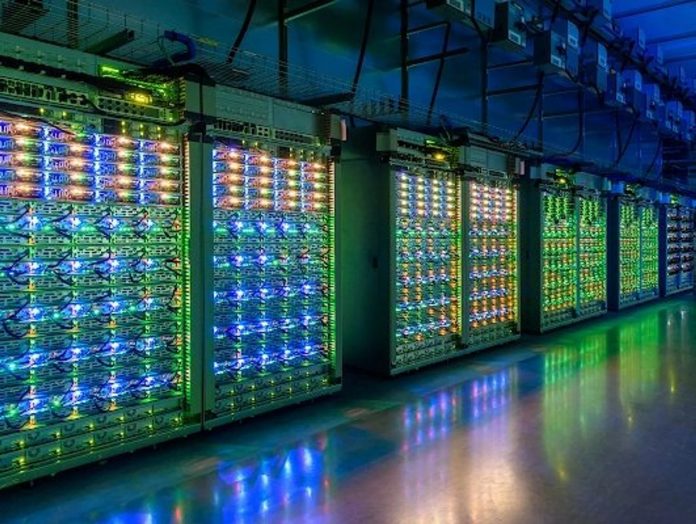
The global race to dominate artificial intelligence infrastructure has reached a significant milestone in India, as Meta has reportedly signed its first Indian AI data center lease agreement with Reliance Industries.

The deal highlights India’s growing importance in the global AI ecosystem and underscores the increasing demand for advanced computing infrastructure capable of supporting next-generation artificial intelligence applications.

Artificial intelligence has rapidly become one of the most transformative technologies of the modern era.

From large language models and recommendation systems to autonomous technologies and business automation tools, AI requires enormous computational resources. These resources are typically housed in specialized data centers equipped with powerful graphics processing units (GPUs), high-speed networking equipment, and massive energy supplies.

As companies compete to develop and deploy increasingly sophisticated AI models, access to reliable data center capacity has become a strategic necessity. Meta, the parent company of Facebook, Instagram, and WhatsApp, has invested heavily in artificial intelligence over the past several years.

The company has introduced advanced AI assistants, recommendation algorithms, and open-source AI models while continuing to expand its computing capabilities worldwide. By leasing AI-focused data center space in India, Meta is positioning itself closer to one of the world’s largest and fastest-growing digital markets.

India represents a particularly attractive destination for AI infrastructure investment. The country boasts a massive population, a rapidly expanding internet user base, and a thriving technology sector. Government initiatives promoting digital transformation and technological innovation have further strengthened India’s appeal as a destination for global technology investments.

As AI adoption accelerates across industries such as healthcare, finance, manufacturing, education, and e-commerce, demand for local computing resources is expected to increase substantially. Reliance Industries, one of India’s largest and most influential corporations, has been aggressively expanding its presence in the digital and technology sectors.

Through its telecommunications subsidiary and digital services ecosystem, the company has already established itself as a major player in India’s technological transformation.

Partnering with a global technology giant like Meta on AI infrastructure aligns with Reliance’s broader ambition to become a central force in the country’s digital economy. The agreement also reflects a broader trend in the technology industry. Major AI companies are increasingly seeking geographic diversification for their infrastructure.

Building and leasing data centers across multiple regions helps reduce latency, improve service reliability, comply with local regulations, and support growing customer demand. For India, attracting such investments strengthens its position as a strategic hub for AI development and cloud computing services.

Large-scale data center projects typically generate employment opportunities, stimulate investment in power and connectivity infrastructure, and encourage the growth of local technology ecosystems. They can also attract additional international investment as other companies seek to establish operations near key digital infrastructure hubs.

The Meta-Reliance agreement signals more than just a commercial transaction. It represents a convergence of global AI ambitions and India’s rising technological influence. As artificial intelligence becomes increasingly central to economic growth and innovation, investments in infrastructure will play a crucial role in determining which regions emerge as leaders in the AI era.

By securing its first AI data center lease in India through Reliance Industries, Meta is making a strategic bet on the country’s future as a major force in the global digital economy.

German Industry Bets on the Future with Green Hydrogen and Advanced Automation

0

Germany’s industrial sector is undergoing a significant transformation as companies invest in technologies designed to enhance sustainability, efficiency, and global competitiveness. Two recent developments highlight this trend: the creation of an innovative green hydrogen membrane by German chemicals firm Evonik and major investments in automation and robotics by German auto supplier Bosch.

These initiatives demonstrate how German industry is positioning itself for a future shaped by clean energy and intelligent manufacturing. Green hydrogen has emerged as one of the most promising solutions for decarbonizing heavy industry, transportation, and energy systems.

Unlike conventional hydrogen, which is often produced using fossil fuels, green hydrogen is generated through electrolysis powered by renewable energy sources such as wind and solar. However, the widespread adoption of green hydrogen depends on technological advances that can improve efficiency and reduce production costs.

Evonik’s newly developed membrane represents a potentially important breakthrough in this field. Membranes are a critical component in electrolyzers, the systems that split water into hydrogen and oxygen. The performance of these membranes directly influences the efficiency, durability, and economic viability of hydrogen production.

By developing a more advanced membrane technology, Evonik aims to help make green hydrogen production more scalable and cost-effective.

This innovation comes at a time when governments and industries across Europe are accelerating investments in hydrogen infrastructure. Germany, in particular, views hydrogen as a cornerstone of its energy transition strategy. The country seeks to reduce carbon emissions while maintaining its industrial strength, and green hydrogen is expected to play a crucial role in achieving both objectives.

If Evonik’s technology proves successful on a large scale, it could contribute significantly to Europe’s efforts to build a competitive hydrogen economy. At the same time, Bosch is making substantial investments in automation and robotics, reflecting another major trend reshaping global industry.

Manufacturing companies face increasing pressure to improve productivity while dealing with labor shortages, rising costs, and intensifying international competition. Automation offers a solution by enabling factories to operate more efficiently, accurately, and continuously.

Bosch’s commitment to robotics extends beyond traditional industrial machinery. Modern automation increasingly incorporates artificial intelligence, machine vision, and advanced software systems that allow machines to perform complex tasks with minimal human intervention.

These technologies can enhance quality control, streamline logistics, and optimize production processes across entire manufacturing networks. For the automotive industry, which is currently navigating the transition toward electric vehicles and software-driven mobility, automation has become particularly important.

Companies must adapt production lines, manage increasingly sophisticated supply chains, and maintain cost competitiveness. Investments in robotics help manufacturers achieve these goals while improving operational flexibility.

The developments at Evonik and Bosch illustrate how sustainability and digitalization are becoming interconnected pillars of industrial strategy.

Green hydrogen technologies address the challenge of reducing emissions, while automation and robotics enhance productivity and economic resilience. Together, they represent complementary pathways toward a more sustainable industrial future.

Germany’s ability to remain a global manufacturing leader will depend on its success in both areas. Companies that can combine clean energy solutions with advanced production technologies are likely to gain a competitive advantage in the coming decades.

As Evonik pushes the boundaries of hydrogen innovation and Bosch expands its automation capabilities, they offer a glimpse into the future of European industry—one where environmental responsibility and technological excellence go hand in hand.

The success of these initiatives could have implications far beyond Germany, influencing global efforts to build cleaner energy systems and smarter manufacturing ecosystems.