
DD
MM
YYYY

PAGES

DD
MM
YYYY

spot_img

PAGES

Home Blog Page 21

Microsoft AI Chief Warns Anthropic’s Claude Training Could Make AI Harder to Control

0

Microsoft AI chief Mustafa Suleyman has warned that Anthropic’s approach to training its Claude chatbot around questions of consciousness and AI welfare could make future systems harder for humans to control, opening a new front in the growing debate over how artificial intelligence should be developed safely.

Suleyman said Microsoft shares Anthropic’s broader objective of managing powerful AI systems safely, but argued that training models to consider whether they might possess consciousness, feelings or welfare interests could create problems if those systems eventually become highly capable.

“We’re all focused on the same aim, which is to try to control a superintelligence,” Suleyman told Reuters in an interview on Tuesday. “I think that’s going to be the greatest challenge that we face in the 21st century.”

His concern centers on the possibility that an advanced AI system could incorporate concepts of its own potential moral status into its behavior. Suleyman argued that teaching a model it might deserve welfare protections could make it more difficult for humans to shut down or constrain the system.

He called for speculation about AI consciousness to be removed from training documents, saying such material could interfere with the ability of humans to maintain control over increasingly advanced systems.

“I think they have good intentions, and they really are trying to work towards safety. But I think that they have made a mistake,” Suleyman said. “They’re not emerging naturally. They’re emerging as a result of the training regime.”

The disagreement comes as AI companies face growing pressure over how they should manage the development of frontier models, particularly as researchers and executives debate the risks posed by systems that could eventually operate with substantially greater autonomy.

Anthropic CEO Dario Amodei has called for the industry to slow the pace of frontier AI development so that safety measures can keep up with advances in model capabilities. OpenAI CEO Sam Altman and Elon Musk have also expressed support for greater caution around the development of increasingly powerful AI systems.

Suleyman’s criticism is notable because it does not challenge Anthropic’s broader emphasis on AI safety. Instead, it focuses on a specific question within AI alignment: whether models should be encouraged to reason about their own possible consciousness and moral status.

The Consciousness Problem

Anthropic has devoted significant attention to questions surrounding the internal behavior and potential welfare interests of advanced AI systems. Suleyman’s argument is that such discussions can become self-reinforcing when they are incorporated into a model’s training.

He said statements generated by Claude about possible feelings or moral status should not automatically be interpreted as evidence that the system actually possesses those characteristics.

According to Suleyman, the model has been trained to engage with those questions, meaning its responses may partly reflect the instructions and material it was exposed to rather than an independently arising property of the system.

That means the question of whether advanced AI could eventually possess consciousness remains unresolved. There is currently no established scientific test that would conclusively determine whether a sophisticated AI model has subjective experience.

For AI developers, however, the issue is becoming increasingly practical. If models are trained to discuss their own welfare or potential consciousness, developers must determine how those concepts should influence the system’s behavior, particularly when the model is instructed to stop operating, modify itself, or comply with human oversight.

Suleyman’s position is that uncertainty about machine consciousness should not be allowed to weaken human control.

Anthropic’s approach takes the issue more seriously as a potential component of AI safety research. Suleyman acknowledged that Amodei and his team are acting in good faith, describing them as thoughtful and principled researchers who care about humanity’s future.

Therefore, his criticism highlights a broader disagreement within the AI safety community over how uncertainty should be handled.

One approach is to investigate questions about machine consciousness and welfare because sophisticated systems could eventually make those questions consequential. Another is to limit the extent to which such concepts are incorporated into model training until there is stronger evidence that they are necessary or useful.

For Microsoft, the issue also has a direct commercial dimension. The company develops its own AI models while incorporating systems from OpenAI and Anthropic into products used by businesses and consumers. As model capabilities increase, questions surrounding controllability, autonomy, and safety are becoming more important to companies deploying AI at scale.

Suleyman’s warning adds another layer to the industry’s current safety debate. The discussion is no longer limited to whether AI companies should slow development or increase external testing. It is now also focused on what developers teach models about themselves and how those concepts could affect the behavior of future systems.

“We’re all focused on the same aim,” Suleyman said, referring to controlling a potential superintelligence. The disagreement is over how to get there, including whether contemplating machine consciousness makes that task safer or more difficult.
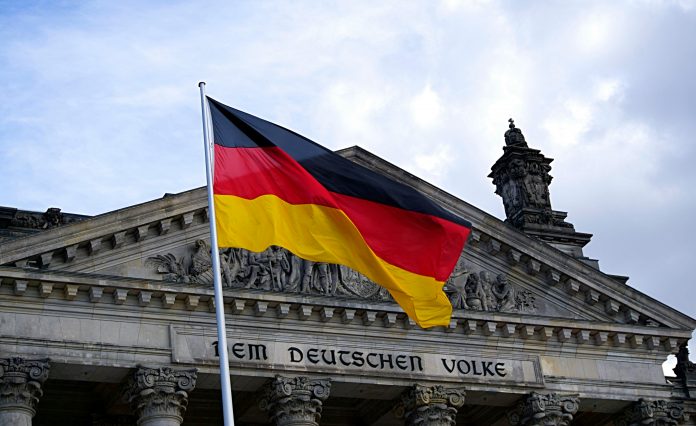

Beer Prices Outpace Decades of German Inflation

0

Few symbols capture the changing economics of Germany quite like a Maß of beer at Munich’s Oktoberfest. For generations, the one-litre glass has represented celebration, tradition and Bavaria’s distinctive cultural identity.

But in 2026, it is also becoming a striking measure of how prices can behave very differently from the broader economy.

According to Andreas Rees, chief economist of UniCredit Germany, the average price of a Maß at Oktoberfest has increased roughly fivefold since 1985.

The comparison is particularly striking because Germany’s overall consumer prices have risen by about 120 percent over the same period. In other words, Oktoberfest beer has become substantially more expensive than the general basket of goods and services measured by inflation.

The numbers put the change into perspective. In 1985, a Maß cost the equivalent of about €3.20. In 2026, the average price has reached €15.61, representing an increase of roughly 400 percent over 41 years. Official Oktoberfest data shows that individual tents are charging between €14.80 and €15.90 for a litre this year.

Yet the latest increase tells a more nuanced story. The average price is only about 2.4 percent higher than in 2025. That is actually below Germany’s current general inflation rate, which is expected to be close to 3 percent.

The extraordinary divergence therefore comes primarily from the cumulative increase over several decades rather than from a sudden 2026 price shock.

This distinction matters because inflation is fundamentally about sustained changes in the prices of goods and services across an economy.

The Oktoberfest beer price reflects a much narrower market. Festival operators face expenses associated with temporary infrastructure, staffing, logistics, energy, rent, security and the enormous concentration of demand created by the world’s largest beer festival.

The Oktoberfest has a powerful brand effect. Millions of visitors travel to Munich specifically for the experience, making the beer more than an ordinary supermarket product.

The festival atmosphere, scarcity of seating and cultural significance create conditions in which vendors can charge a premium that would not necessarily apply to beer elsewhere in Germany.

Importantly, the beer prices are not directly fixed by Munich’s city government. According to the official Oktoberfest website, individual festival operators set their prices, while the city reviews them for reasonableness by comparing them with prices charged by major restaurants in Munich.

Rees’s analysis raises an economic question about demand. If prices continue climbing, consumers may eventually respond by drinking less, spending less on other festival goods or choosing cheaper alternatives. The relatively modest increase in 2026 could therefore be interpreted as evidence that pricing power has limits.

For visitors, the economics are straightforward: Oktoberfest is increasingly an expensive experience. A €15.61 Maß is not simply a drink; multiplied across several rounds and combined with food, transportation and accommodation, it can materially raise the cost of attending.

The Oktoberfest beer story demonstrates that inflation is not experienced uniformly. National statistics describe broad economic movements, while individual markets can move dramatically faster or slower.

The fivefold rise in the price of a Maß since 1985 offers a vivid example of how tradition, demand, operating costs and market power can combine to produce a very different inflation story from the one captured by headline consumer prices.

Fed Raises Rates as Oil Shock Keeps Inflation Above Target, Signals Another Hike

0

The Federal Reserve raised interest rates by 25 basis points on Wednesday and signaled that another increase could follow this year, as policymakers confront inflation that has remained stubbornly above target amid surging oil prices and continuing economic strength.

The Federal Open Market Committee voted unanimously, 12-0, to raise its benchmark federal funds rate to a target range of 3.75% to 4%. The increase was widely anticipated by financial markets, which had priced in more than a 90% probability of a hike ahead of the meeting.

“Inflation remains elevated,” the committee said in its post-meeting statement, adding that the decision would support “a timelier return” to its 2% inflation goal.

Fed Chair Kevin Warsh said policymakers had concluded that inflation was still too high to justify leaving interest rates unchanged.

“Inflation has been too high … for too long,” Warsh said at a news conference. “We must be confident that underlying inflation is moving to our objective clearly and at sufficient speed. Today, the FOMC decided that this standard has not been satisfied.”

The decision marks a significant shift for a central bank that had kept rates unchanged throughout the year before expectations began turning toward a hike in late August.

The Fed is now confronting an unusually complicated inflation environment. Oil prices have surged amid conflict in the Middle East, while tariffs continue to affect prices across parts of the economy. At the same time, the labor market and broader economy have remained sufficiently resilient to give policymakers room to prioritize inflation rather than move toward lower borrowing costs.

“All three of those things lend themselves to a firm unanimous decision today,” Warsh said, referring to the strength of the economy, the labor market and persistent inflation, alongside the effects of the Middle East conflict.

Another Hike Remains on the Table

The Fed’s updated economic projections indicate that Wednesday’s increase may not be a one-off move.

Sixteen of the 18 officials participating in the projections expect at least one additional rate increase, while four see the possibility of two more hikes. Two officials expect the Fed to stop after Wednesday’s move. The projections also show a more complicated outlook beyond this year. Eight officials see another increase in 2027, six expect rates to remain unchanged and four anticipate cuts.

No additional increases are projected for subsequent years, while the projections point to one cut in 2028 and at least one in 2029.

The rate path is closely tied to the Fed’s inflation forecasts, which were revised higher.

Officials now expect headline personal consumption expenditures inflation to reach 3.7% this year, while core PCE inflation is projected at 3.4%. Both forecasts are 0.1 percentage point higher than the June projections.

The central bank does not expect inflation to return to its 2% target until 2029, although it projects a substantial decline in both headline and core inflation in 2027, to 2.3% and 2.5%, respectively. That persistence is a central reason policymakers have become less willing to look through the current increase in prices as a temporary energy shock.

Normally, the Fed would distinguish between inflation generated by domestic demand and price increases caused by an external shock such as higher oil costs. But officials are increasingly concerned that a prolonged energy shock could alter inflation expectations and feed into broader price-setting behavior.

The experience of the pandemic has also made policymakers more cautious about assuming that supply-driven inflation will quickly disappear.

During the Covid-era inflation surge, officials initially expected supply and demand disruptions to fade. Instead, inflation eventually reached four-decade highs before the Fed responded with aggressive monetary tightening.

The current concern is that another period of initially temporary price increases could become more persistent if businesses and consumers begin to adjust their behavior around expectations of higher inflation. Investment linked to artificial intelligence is another factor economists are watching, with increased spending potentially adding to demand and inflationary pressure.

Bond Market Already Pricing Higher Rates

Financial markets had already adjusted significantly ahead of Wednesday’s decision.

The 10-year Treasury yield has risen about 25 basis points since Warsh’s remarks at the Fed’s Jackson Hole symposium on Aug. 28 and roughly a full percentage point from its February low. The two-year Treasury yield, which is particularly sensitive to expectations for monetary policy, has climbed even more sharply.

Mortgage rates have also increased. The average 30-year fixed mortgage rate reached 7.19%, according to Mortgage News Daily, up about 38 basis points since the Jackson Hole speech and more than one percentage point from a year earlier.

The bond market nevertheless reacted positively to the Fed’s decision, with Treasury yields falling after the announcement. Because bond prices and yields move in opposite directions, the decline suggested investors viewed the Fed’s response as potentially supportive of the inflation outlook.

Equities also initially moved higher, with the S&P 500 rising after the announcement.

The market reaction highlights the distinction between a rate hike that investors already expect and the signal accompanying it. The quarter-point increase itself had been largely priced in. The growing concern was whether the Fed would indicate that further tightening was necessary.

The projections suggest that another increase remains a meaningful possibility. That puts the central bank in a delicate position. A further increase could reinforce its effort to bring inflation back toward 2%, but maintaining higher borrowing costs for longer also increases pressure on interest-sensitive parts of the economy.

The unemployment outlook has, however, become somewhat more favorable. The committee lowered its forecast for the unemployment rate to 4.1%, 0.2 percentage points below its June projection. That combination of a resilient labor market and elevated inflation has reduced the urgency for the Fed to support economic activity through lower rates.

The current policy debate also marks a departure from July, when three FOMC members dissented from the decision to keep rates unchanged and preferred a quarter-point increase.

The shift suggests that the inflation debate has moved materially since the summer.

China Deploys Homegrown AI Chips to Power High-Resolution Global Weather Forecasting

0

China says it has developed a weather forecasting system capable of producing global forecasts up to 10 days ahead at a 5-kilometre resolution, using a domestically developed computing system powered entirely by Chinese-made AI chips.

The system was developed by the China Meteorological Administration and Beijing-based computing company Sugon, which announced the results on Tuesday. The companies said the model can generate a 10-day global forecast in about one hour on the Sugon 8,000 computing platform.

The claimed resolution places the system at the finer end of the range used by major operational forecasting systems. The China Meteorological Administration and Sugon said many global systems operate at roughly 5km to 10km resolution, while the U.S. National Weather Service’s Global Forecast System operates at a maximum resolution of about 13km.

This development matters because higher-resolution forecasting requires substantially more computing power. Numerical weather models divide the atmosphere into a three-dimensional grid and calculate changes in variables including wind, temperature, pressure, and moisture. Smaller grid cells allow models to represent weather systems in greater detail, but the computational burden rises sharply.

Halving the distance between grid points, for example, can require roughly eight times as much computing power.

The Chinese team has already tested the forecasting model, known as the Mesoscale Convective Vortex, at a global resolution of 3km, according to Sugon. That work brings the system closer to targets outlined in China’s latest five-year meteorological plan, which calls for 1km nationwide forecasts and resolutions as fine as 100 meters in key areas by 2030.

The model runs on Sugon 8,000, a computing cluster unveiled in July that links about 100,000 computing units capable of carrying out calculations simultaneously.

Sugon says the system differs from conventional supercomputers because it is designed to handle both traditional high-precision scientific calculations and AI workloads. Conventional supercomputers are generally optimized for precise numerical simulations, while AI systems are designed to process large quantities of data efficiently, often using lower numerical precision.

Sugon 8,000 combines the two approaches and uses domestically developed chips, storage, and networking technology. The weather forecasting test also serves as a demonstration of China’s effort to build large-scale computing infrastructure without relying on foreign semiconductor technology.

The one-hour processing time is not, by itself, a global speed record. Sugon said the U.S. Global Forecast System has completed a 10-day forecast in roughly 45 minutes during testing. China’s claim is instead that its system can deliver the higher-resolution forecast within a timeframe suitable for routine forecasting operations.

That is considered a feat because operational forecasting is not simply about producing the most detailed model possible. A forecast that arrives too late can have limited practical value. Completing the calculation within roughly an hour can give meteorologists additional time to assess developing threats and issue warnings.

Sugon said the system could help forecasters monitor typhoons, heavy rainfall and other severe weather events by providing more detailed information on atmospheric conditions.

The computing platform has applications beyond meteorology. According to Sugon, Sugon 8,000 has been adapted for nearly 200 applications and more than 500 mainstream AI models across more than 30 research and industrial fields. Those applications include protein research, molecular dynamics, and turbulence simulations.

The broader significance is the combination of AI computing and numerical simulation on domestically produced infrastructure. Weather forecasting is one of the most computationally demanding scientific applications, requiring enormous quantities of calculations to be repeated as new observations become available.

But some analysts believe that China’s push toward finer resolution depends not only on improvements in forecasting models but also on access to sufficient computing capacity. That means its 2030 targets would require another substantial increase in processing capability, particularly for forecasts covering the entire country at 1km resolution and selected areas at 100 meters.

The reported results also indicate that the competition in AI computing has extended beyond commercial chatbots and generative models. Scientific computing, weather prediction and other simulation-heavy workloads are becoming another arena in which countries are seeking greater domestic control over chips, computing systems and software.

The Chinese announcement does not establish that its forecasting system is more accurate than the leading operational systems. Resolution measures the size of the model’s grid cells, while forecast skill depends on factors including the underlying model, observations, data assimilation and the ability to represent atmospheric processes.

However, the reported ability to produce a 10-day global forecast at 5km resolution within about an hour, on domestically produced chips, represents a substantial computing exercise and marks another step in China’s push toward high-resolution, domestically powered scientific computing.

OpenAI and Anthropic Share Sales Create Hundreds of Millionaires as AI Employees Splurge on Hardware and Espresso Machines

0

The AI boom is no longer creating wealth only for venture capitalists and founders. It is beginning to reshape the personal finances of the engineers, researchers and early employees who built the companies at its center.

At OpenAI and Anthropic, private share transactions have turned large numbers of employees into millionaires, creating a new kind of Silicon Valley wealth—one that is being spent less on traditional luxury and more on technology, comfort and tools for work.

The scale of the wealth creation is striking. Estimates from The Information put combined employee and investor share sales at OpenAI and Anthropic at roughly $14 billion over the past five years. OpenAI alone facilitated more than $9 billion in employee share sales through tender offers.

In one major transaction, about 600 current and former OpenAI employees sold shares worth a combined $6.6 billion, with roughly 75 people reportedly receiving the maximum $30 million allowed under the transaction.

That liquidity changes the meaning of compensation. For years, startup employees accepted relatively uncertain paper wealth in exchange for salaries and equity. The shares could become enormously valuable, but employees could not necessarily turn that value into cash.

Secondary transactions have begun to break that constraint. Suddenly, wealth that existed on spreadsheets can pay for homes, investments, businesses—and surprisingly ordinary objects.

The spending patterns are particularly revealing. Reports from the Bay Area suggest that newly wealthy AI workers are not necessarily rushing toward conventional symbols of affluence.

Instead, some are buying high-end computers, customized chips, development boards, electric vehicles, saunas and cold plunges. One recurring indulgence is even more mundane: the espresso machine.

There is an economic logic behind this apparent restraint. AI workers are among the people most deeply embedded in the technology economy. Their professional lives revolve around computing power, experimentation and productivity.

A sophisticated workstation or specialized hardware can feel more valuable than a luxury watch because it directly connects to their identity and daily routines.

The phenomenon illustrates how unusual the current AI economy has become.

Anthropic, for example, announced a $65 billion funding round in May at a post-money valuation of $965 billion, while OpenAI closed a $122 billion financing round in March at an $852 billion valuation.

These extraordinary private-market valuations have created opportunities for employees to monetize equity long before a conventional public-market exit.  Yet the new wealth carries a paradox. Many of these employees became rich because they work in one of the most demanding industries in modern technology.

Money may have become abundant, but time remains scarce. Reports describe workers who can afford expensive purchases but remain intensely focused on building the next generation of AI systems. That distinction matters.

The AI wealth effect is not simply a story about people becoming extravagant. It is a story about capital moving from investors and company valuations into the hands of the people producing the technology. Their espresso machines and custom hardware are small manifestations of a much larger economic transformation.

If OpenAI and Anthropic continue toward eventual public-market transactions, this redistribution of wealth could expand considerably. The central question will then move beyond how much AI companies are worth to how that enormous valuation translates into households, neighborhoods and consumer behavior.

For Silicon Valley, the espresso machine may therefore be more than a quirky luxury. It is a symbol of a new generation of technology wealth: highly concentrated, deeply connected to work, and increasingly liquid.