DD
MM
YYYY

PAGES

DD
MM
YYYY

spot_img

PAGES

Home Blog Page 211

A Look At Key Developments of US-China Trade Deal

0

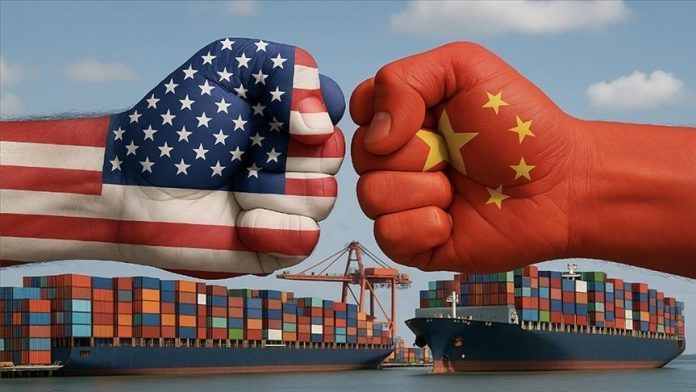
The United States and China have reached a preliminary framework agreement on trade issues, with finalization occurring today during a bilateral meeting between President Donald Trump and President Xi Jinping on the sidelines of the Asia-Pacific Economic Cooperation (APEC) summit in Busan, South Korea.

This deal averts an escalation in tariffs that could have severely disrupted global supply chains and markets. Tensions reignited in mid-October 2025 when Trump threatened 100% tariffs on Chinese imports starting November 1, in response to China’s expanded export controls on rare earth minerals and magnets—critical for US tech and defense industries.

This built on unresolved issues from the 2020 Phase One deal, including China’s alleged non-compliance on agricultural purchases and intellectual property protections. Talks accelerated over the weekend in Kuala Lumpur, Malaysia, during the ASEAN summit.

US Treasury Secretary Scott Bessent and Trade Representative Jamieson Greer met with Chinese Vice Premier He Lifeng and negotiator Li Chenggang, achieving a “preliminary consensus” on key points.

Trump and Xi met today October 30, where Trump announced the deal’s core terms. Markets reacted positively, with global indices like the S&P 500 and Shanghai Composite rising 1-2% in early trading.

The deal focuses on de-escalation and targeted concessions rather than a comprehensive overhaul. US suspends planned 100% tariffs on Chinese goods potentially rising to 157% in some sectors; pauses punitive port charges on China-built ships.

Existing tariffs (e.g., on steel, pharma, electronics) remain but with possible future exemptions. China agrees to trim retaliatory tariffs on US exports; resumes full soybean purchases China buys ~50% of US $24B annual exports.

Rare Earth Minerals; Gains “path forward” for increased access to Chinese rare earth exports, easing supply chain risks for US EVs, semiconductors, and defense. China lifts or relaxes recent export restrictions on rare earths in exchange for tariff relief.

Fentanyl and Drugs; Enhanced cooperation on combating illicit fentanyl precursors from China. China commits to stricter enforcement against fentanyl exports and related chemical shipments.

TikTok Sale; Finalizes US approval for TikTok’s US operations to be sold to American buyers (e.g., Oracle/Walmart-led consortium), resolving national security concerns under US law. China allows the divestiture without interference, marking a win for US tech oversight.

Agriculture and Trade Balance; Boosts US farm exports (soybeans, etc.) to address trade deficit; extends “trade truce” for 2-3 years. Increases purchases to meet Phase One targets, with monitoring via new Section 301 review.

This truce could stabilize global trade, benefiting US farmers, manufacturers, and consumers by avoiding higher prices on electronics and autos. Analysts estimate it prevents a 0.5-1% drag on global GDP. Experts note it’s more of a “fragile truce” than a lasting pact, as root issues like subsidies, IP theft, and tech rivalry persist.

The US launched a Section 301 probe into China’s Phase One compliance on October 25, with comments due December 1—signaling potential future friction. Trump signed parallel deals with Malaysia, Vietnam, Thailand, and Cambodia this week, focusing on critical minerals and reciprocal trade, as part of his “America First” Asia pivot.

This agreement marks a pragmatic reset amid Trump’s second term, but its longevity depends on implementation.

U.S. Mortgage Rates Climb Despite Fed Rate Cut as Bond Market Reacts to Powell’s Comments

0
A detached three-bedroom apartments are pictured at Haggai Estate, Redeption Camp on Lagos Ibadan highway in Ogun State, southwest Nigeria on August, 30, 2012. The high cost of living and the massive urbanization of Lagos, the largest city and the economic capital of Nigeria, has engineered a migration of residents mostly middle class and the poor to neighbouring towns in Ogun State, both in southwest part of the country in search of cheap accommodations. Estate developers are quick in exploiting the high cost and scarcity of accommodation leading to emerging new towns, modern estates to accommodate the spillover in Lagos. AFP PHOTO/PIUS UTOMI EKPEI (Photo credit should read PIUS UTOMI EKPEI/AFP/GettyImages)

In a twist that caught many borrowers off guard, U.S. mortgage rates climbed this week even as the Federal Reserve cut its benchmark interest rate, highlighting once again that home loan costs are influenced more by bond market sentiment than by the Fed’s direct policy actions.

According to Mortgage News Daily, the average 30-year fixed mortgage rate jumped by 20 basis points following Fed Chairman Jerome Powell’s announcement on Wednesday and his subsequent news conference. The increase reversed a steady decline that had taken rates to a one-year low earlier in the week.

On Tuesday, the average rate stood at 6.13%, matching its lowest level since September 16 — the day before the Fed’s previous rate cut. But by Thursday, the rate surged to 6.33%, with a 14-basis-point jump immediately after Powell’s remarks and another six-point gain the following day.

The last time the Fed lowered rates, in September, the same pattern played out: the 30-year fixed mortgage rate initially fell before rebounding sharply to 6.37%.

Bond Market Drives the Upswing

Analysts said the bond market had already priced in the expected rate cut but reacted negatively to Powell’s less dovish tone during his post-meeting remarks. Investors interpreted his comments as a signal that future rate cuts might not come as quickly or as often as markets had hoped.

“The market’s enthusiasm for three Fed rate cuts in 2025 had grown a bit too large for the Fed’s liking,” said Matthew Graham, chief operating officer at Mortgage News Daily, in a note to clients. “The market was nearly 100% certain of another cut in December. The Fed was not as certain, and Powell made it a point to say so yesterday. The result is a mild reset in yields back to levels that are more consistent with a December cut being a solid possibility, but not a full lock.”

That skepticism pushed Treasury yields higher, and since mortgage rates closely track the 10-year U.S. Treasury yield, borrowing costs for homebuyers quickly followed suit.

Refinancing Surge, but Limited Homebuyer Response

The recent dip in mortgage rates before the Fed meeting had triggered a surge in refinancing applications, which jumped 111% year-over-year last week, according to the Mortgage Bankers Association (MBA). However, lower rates have not translated into a comparable rebound in home purchase activity, as affordability challenges remain steep across much of the U.S. housing market.

Despite the modest easing in borrowing costs earlier this month, home prices remain historically high, and many potential buyers continue to sit out, wary of uncertain economic conditions and lingering inflation concerns.

Market Outlook

With the Fed signaling a cautious path ahead, analysts expect mortgage rates to remain volatile through the end of the year. Much will depend on economic data and whether inflation continues to move closer to the central bank’s 2% target.

However, borrowers hoping for a sustained drop in mortgage rates may need to temper expectations for now. As Graham noted, the bond market “simply needed a reality check,” and until investors are convinced that the Fed is fully committed to a longer easing cycle, mortgage rates may stay stubbornly above 6% — even in a rate-cutting environment.

China Approves TikTok Transfer Agreement, Clearing Way for U.S. Sale After 18-Month Standoff

0
The brand is growing

China has approved the long-awaited transfer agreement for the popular short video app TikTok, U.S. Treasury Secretary Scott Bessent said Thursday, signaling that the drawn-out negotiations over the app’s U.S. ownership may finally be nearing resolution.

“In Kuala Lumpur, we finalized the TikTok agreement in terms of getting Chinese approval, and I would expect that would go forward in the coming weeks and months, and we’ll finally see a resolution to that,” Bessent told Fox Business Network’s Mornings with Maria, following President Donald Trump’s meeting with Chinese leader Xi Jinping.

China’s Ministry of Commerce confirmed the approval in a statement, saying the country would “properly handle TikTok-related issues with the United States.” A ministry spokesperson added, “The Chinese side will work with the U.S. side to properly address issues related to TikTok,” suggesting Beijing is seeking a managed and cooperative approach to end one of the most contentious tech disputes between both nations.

TikTok’s parent company, ByteDance, which is based in Beijing, has not yet issued a public statement on the approval.

The decision marks a major development in a standoff that has lasted more than 18 months since the U.S. Congress passed a law in 2024 requiring ByteDance to divest TikTok’s U.S. operations by January 2025, or face a nationwide shutdown. Lawmakers cited concerns over data privacy and potential Chinese government influence on the platform’s algorithm, which serves content to more than 170 million American users.

President Trump signed an executive order on September 25 endorsing the proposed sale of TikTok’s U.S. assets to a consortium of American and international investors. The order stated that the deal met the national security conditions outlined in the 2024 law and gave the new ownership group 120 days to finalize the transaction. Trump also postponed the enforcement deadline until January 20, 2026, to allow time for technical and legal adjustments.

Under the approved agreement, ByteDance would retain less than a 20% ownership stake in TikTok’s U.S. entity, while American investors would hold a controlling interest. The new company’s board will have seven members—six Americans and one representative appointed by ByteDance—to ensure majority U.S. governance.

The executive order also stipulated that TikTok’s recommendation algorithm—long the focus of national security scrutiny—would be retrained, operated, and monitored under the supervision of U.S.-approved cybersecurity partners. Control over algorithmic decision-making will rest entirely with the newly formed U.S.-based joint venture.

While Chinese authorities have now signed off on the deal, some U.S. lawmakers remain cautious. Representative John Moolenaar, the Republican chair of the House Select Committee on China, recently expressed reservations over a potential licensing arrangement that would allow TikTok U.S. to continue using ByteDance’s algorithm. He said earlier this month that a licensing agreement for use of the TikTok algorithm, as part of the deal by ByteDance to sell U.S. assets of the short video app, would raise serious concerns.

China’s decision to approve the transfer may mark a broader thaw in U.S.-China trade and technology relations following the Trump-Xi meeting in Kuala Lumpur. The approval is also seen as a pragmatic step by Beijing, which has sought to ease tensions over Chinese tech companies facing restrictions in Western markets.

If completed, the agreement could end years of political uncertainty surrounding one of the world’s most influential social media platforms, balancing U.S. security demands with China’s need to preserve its global technology presence.

The TikTok transfer deal now awaits final procedural steps and the establishment of the new U.S. operating entity, expected to be completed within months, according to officials familiar with the matter.

CZ Files Defamation Lawsuit Against Elizabeth Warren

0

Changpeng Zhao (CZ), the founder of Binance, has announced plans to file a defamation lawsuit against U.S. Senator Elizabeth Warren if she does not retract what he describes as “false statements” about his legal history.

The dispute stems from Warren’s October 23, 2025, X post criticizing President Donald Trump’s recent pardon of CZ, in which she claimed he “pleaded guilty to a criminal money laundering charge.”

CZ’s legal team, led by attorney Teresa Goody Guillen, argues this is inaccurate, as CZ pleaded guilty in 2023 to a single violation of the Bank Secrecy Act failing to maintain an effective anti-money laundering program at Binance and served a four-month prison sentence as part of a $4.3 billion settlement with U.S. authorities.

No money laundering charges were ever filed against him personally. In a draft demand letter obtained by the New York Post, Guillen states: “Zhao will not remain silent while a United States Senator misuses the office to publish defamatory statements.”

CZ confirmed the threat on X on October 28, 2025, echoing reports from outlets like Watcher.Guru. The lawsuit, if filed, would be “imminent” without a public retraction and could test the boundaries of senatorial immunity under the Speech or Debate Clause, requiring proof of “actual malice” for defamation against public figures.

Legal experts note such cases are rare and challenging, but this one highlights escalating tensions between crypto leaders and Warren, a vocal critic of the industry. CZ has accused Warren and others like former SEC Chair Gary Gensler of political bias, linking them to support for FTX’s Sam Bankman-Fried.

The pardon, granted amid Trump’s pro-crypto stance, has fueled partisan divides, with Democrats like Warren, Adam Schiff, and Jeff Merkley urging Senate condemnation. Crypto advocates on X, including users like Linton Worm have rallied behind CZ with posts like “TRUTH ALWAYS WINS.”

BitMine Purchases Another $113M Worth of ETH

BitMine Immersion Technologies, a crypto treasury firm chaired by Fundstrat co-founder Tom Lee, has added 27,316 ETH valued at approximately $113 million at current prices to its holdings, according to on-chain data from Lookonchain and Arkham Intelligence.

The purchase was executed via custodian BitGo on October 28, 2025, bringing BitMine’s total ETH stash to 3.34 million tokens—worth about $13.3 billion and representing roughly 2.8% of Ethereum’s circulating supply. This marks another aggressive accumulation for BitMine, which aims to hold 5% of all ETH in circulation around 6.04 million tokens.

The firm, backed by investors like Cathie Wood’s ARK Invest, Galaxy Digital, and Pantera Capital, now boasts the world’s largest corporate ETH treasury and the second-largest overall crypto treasury behind Michael Saylor’s Strategy, with over 640,000 BTC.

BitMine’s broader portfolio totals $14.2 billion, including 192 BTC, $305 million in cash, and an $88 million stake in Eightco Holdings. ETH was acquired at an average price of $4,164 per token. Lee, a longtime Ethereum bull, views the asset as a “neutral chain” ideal for institutional adoption, especially amid recent upgrades like the Fusaka hard fork now testing on the Hoodi testnet for enhanced scalability.

He attributes the buying spree to improving macro conditions, such as U.S.-China trade progress and positive technicals (e.g., ETH’s RSI at 62 and a bull flag pattern targeting $4,200). Despite a 2.36% dip in the last 24 hours, ETH trades around $4,000, buoyed by $380 million in spot ETF inflows—outpacing Bitcoin ETFs.

On X, the move sparked bullish chatter, with @lookonchain highlighting the stack and @VirtualBacon0x noting it as a top event amid broader market resilience like BTC holding $112K support. This purchase follows BitMine’s earlier $1.5 billion ETH haul last weekend, signaling sustained institutional confidence in Ethereum’s role in DeFi and programmable finance.

Google, Reliance Jio Offer 18-Month Free Gemini AI Access to 500m Users as India Becomes New Frontline in Global AI Race

0

Google will provide 18-month free access to its Gemini AI service to all 505 million users of India’s Reliance Jio, marking one of the most extensive artificial intelligence partnerships between a global tech company and a telecom giant.

The move, announced on Thursday, positions India as a key battleground in the global AI expansion race, as companies vie for dominance in the world’s most populous and fastest-growing digital market.

The offer comes just weeks after Google committed to invest $15 billion in AI infrastructure capacity across India—its biggest single investment in the country. The company said the investment will go toward expanding data centers, building AI research hubs, and strengthening cloud infrastructure to support local enterprises and government projects.

The new partnership gives Jio users free access to the advanced version of Google’s Gemini AI, which includes its image and video generation capabilities and two terabytes of cloud storage. Normally priced at 35,100 rupees (about $399), the subscription will be rolled out gradually, starting with users aged 18 to 25 on select telecom plans before expanding nationwide “in the shortest time possible,” according to Reliance.

The deal also includes AI-focused partnerships for Indian businesses, aimed at integrating Gemini’s capabilities into small and medium-sized enterprises (SMEs) and startups to improve workflow automation, analytics, and customer engagement.

The rollout comes amid an explosion of AI app usage across India, where more than 900 million internet users are rapidly adopting generative AI platforms for education, content creation, and enterprise productivity. The surge has prompted authorities to draft sweeping new regulations requiring AI and social media companies to clearly label AI-generated content to combat the spread of misinformation and deepfakes.

The strategy mirrors the early playbook of global streaming platforms such as Netflix and Amazon Prime, which partnered with Indian telecom operators to bundle entertainment subscriptions into mobile data plans. Tech firms, by offering free AI access, are now banking on similar network effects to lock in large user bases early—particularly among India’s young, tech-savvy demographic.

Google’s move follows a growing list of competitors using India as a launchpad for aggressive AI adoption campaigns. OpenAI on Tuesday announced it would offer a year of free access to its ChatGPT Go plan to users in India starting in November. Similarly, U.S.-based AI search startup Perplexity has partnered with Bharti Airtel to offer free access to its premium plan for Airtel customers.

Analysts believe the size of India’s market, the data diversity, and the rising affordability of internet access make it the perfect environment to test and refine large-scale AI deployments.

Beyond software, global companies are also pouring billions into AI infrastructure to support this growth. In addition to Google’s $15 billion AI expansion, Amazon Web Services recently announced a $12.7 billion investment in Indian data centers by 2030. Microsoft has likewise accelerated construction of AI-capable cloud regions in Hyderabad and Pune, while OpenAI has hinted at establishing local partnerships to advance its enterprise offerings.

Together, these developments underscore India’s transformation into a central node of the global AI ecosystem—one where digital inclusion, economic ambition, and corporate competition converge. The new partnership between Google and Jio is expected to set a precedent for how AI adoption scales across emerging markets, as technology giants pivot from software innovation to building deeply integrated ecosystems.