DD
MM
YYYY

PAGES

DD
MM
YYYY

spot_img

PAGES

Home Blog Page 213

As Hedera Rides a $170M Stablecoin Wave & XRP Whales Exit, BlockDAG’s 4.4M Whale Buys Shift Market Sentiment

0

Amid shifting whale activity and renewed on-chain momentum, BlockDAG (BDAG), Hedera (HBAR), and XRP (XRP) are emerging as three of the best crypto for higher returns heading into late 2025.

The spotlight, however, remains on BlockDAG (BDAG), which has raised nearly $435 million in its presale at a price of $0.005 in Batch 32. Supported by 4.4 million whale purchases, this surge reflects deep confidence in its hybrid Layer-1 design, growing global community, and transparent roadmap.

While XRP’s whale signals suggest caution and Hedera benefits from stablecoin expansion, BlockDAG’s funding milestone is redefining market perception. With miner shipments underway and a clear path to its $0.05 February 10, 2026 listing, BlockDAG demonstrates how strategic execution can drive real, sustained value across the crypto market.

XRP Whales Trigger Market Selloff

Recent XRP (XRP) whale moves indicate a cautious market stance as over $70 million in XRP was sold within 48 hours. Mid-tier holders, managing between 100,000 and 10 million XRP, sharply reduced positions, bringing total whale holdings down to 12.9 billion XRP. This widespread distribution highlights ongoing sell pressure and weak short-term conviction. Analysts link the retreat to Ripple’s unresolved SEC case, broader market uncertainty, and capital flow toward faster-growing ecosystems.

While accumulation signals remain absent, traders are monitoring for stabilization that could spark a rebound. For now, momentum favours sellers, though XRP’s strong network fundamentals and liquidity ensure its relevance in the long run. Despite near-term weakness, XRP continues to be viewed as one of the best crypto for higher returns, contingent on renewed accumulation and improving market sentiment.

Hedera’s Stablecoin Expansion Lifts the Outlook

The Hedera (HBAR) future forecast has improved notably as network activity and stablecoin adoption accelerate. Stablecoin supply on Hedera has surged past $170 million, its highest since August, fuelled mainly by a 98% rise in USD Coin (USDC) over the past month. This signals renewed confidence in Hedera’s stable-value ecosystem, despite earlier supply volatility.

Technically, HBAR trades near $0.17, rebounding from $0.1552, and is forming an inverse head-and-shoulders pattern on the four-hour chart. RSI and MACD indicators are turning positive, suggesting improving momentum. Analysts highlight $0.20 as a potential breakout level, while $0.1525 remains key support.

Although challenges persist, such as limited DeFi presence and a modest total value locked (TVL), strong stablecoin growth and consistent network expansion keep Hedera (HBAR) positioned as one of the best crypto for higher returns in late 2025.

BlockDAG’s $435M Milestone & Whale Buys Boost Presale Strength

BlockDAG continues to dominate market attention, driven by its powerful blend of scale, advanced technology, and trader confidence. With nearly $435 million raised in its presale at $0.005 per BDAG in Batch 32, the project has become a focal point for those seeking the best crypto for higher returns. Its momentum is reinforced by millions of whale purchases, reflecting deep conviction from high-value participants ahead of Genesis Day on November 26, 2025.

Large holders are positioning early, drawn by BlockDAG’s transparent presale structure, strong fundamentals, and upcoming $0.05 listing on February 10, 2026. This accumulation wave highlights growing institutional confidence and long-term belief in the network’s vision.

Beyond trader traction, BlockDAG’s ecosystem continues to expand rapidly. Over 20,000 miners have been shipped globally, and its hybrid Proof-of-Work and Proof-of-Engagement model ensures scalability and security across the network. The Buyer Battle feature adds a competitive edge to each batch, rewarding top daily buyers with additional BDAG allocations, driving sustained community engagement and liquidity.

Meanwhile, the BlockDAG Academy acts as an educational hub, introducing users to Web3 and DeFi through guided learning programs. This initiative strengthens adoption by pairing growth with accessibility and knowledge.

The combination of whale activity, robust mining infrastructure, and interactive buyer incentives reinforces why BlockDAG continues to rank among the best crypto for higher returns leading into its highly anticipated launch.
The Bottom Line!

From shifting whale sentiment in XRP to renewed network growth in Hedera, and the surging confidence behind BlockDAG’s nearly $435 million presale, the market narrative is turning toward strength and structure. XRP whale movements reflect caution but also new entry opportunities for strategic buyers, while Hedera (HBAR) shows signs of revival as stablecoin volumes and technical indicators improve.

BlockDAG, however, remains the standout story. Its 4.4 million whale purchases, expanding miner network, and transparent presale model reinforce its reputation as one of the best crypto for higher returns this year. By combining education, participation, and verifiable delivery, BlockDAG is rebuilding trust in early-stage blockchain investment. As Genesis Day approaches, these three projects continue shaping sentiment and setting the tone for the next major crypto growth cycle.

Presale: https://purchase.blockdag.network

Website: https://blockdag.network

Telegram: https://t.me/blockDAGnetworkOfficial

Discord: https://discord.gg/Q7BxghMVyu
Ethereum Foundation Launches “Ethereum for Institutions” Website, as Consensys Gears Up for IPO

0

The Ethereum Foundation (EF) unveiled a new dedicated website called Ethereum for Institutions http://institutions.ethereum.org/.

Developed by EF’s Enterprise Acceleration team, this portal serves as a comprehensive resource to guide banks, asset managers, fintech companies, and other institutions in adopting Ethereum for applications like tokenization, settlement, payments, and DeFi integration.

The launch underscores Ethereum’s push to become the foundational layer for on-chain global finance, addressing past criticisms that EF hadn’t done enough to court institutional players compared to rivals like Solana or Polygon.

The site acts as a “living resource” that’s designed to evolve, providing: Clear Onboarding Pathways: Step-by-step guidance for businesses transitioning from traditional finance (TradFi) to Ethereum, covering the full infrastructure stack—from the secure base layer backed by over 1.1 million validators with a decade of uninterrupted uptime to Layer 2 (L2) scaling solutions.

Highlights of successful projects across privacy tools (e.g., zero-knowledge proofs via Aztec Network, RAILGUN, and Zama), DeFi primitives, L2 rollups (e.g., Arbitrum, Optimism, zkSync), and real-world assets (RWAs). Ethereum currently dominates with 67% of global DeFi TVL and 75% of RWA markets.

Live Data and Insights: Real-time ecosystem metrics, sector overviews (e.g., digital assets, stablecoins), and a library of research reports, news, and case studies featuring partners like BlackRock, Visa, Coinbase, and eToro.

Scalability and Compliance Focus: Emphasizes low-cost L2 networks with over $50 billion in TVL, enabling sub-cent fees and privacy tech like fully homomorphic encryption (FHE) and trusted execution environments (TEEs) to meet regulatory needs without compromising transparency.

Zero-knowledge proofs allow one party (the prover) to convince another (the verifier) that a statement is true — without revealing any underlying data.

On Ethereum, ZKPs are the cornerstone of privacy, scalability, and institutional-grade compliance. The ZK TrilemmaA valid ZKP must satisfy three properties.

If the statement is true, an honest prover convinces the verifier. Ensures correct claims (e.g., “I own $10M in tokenized bonds”). If false, no dishonest prover can fool the verifier except with negligible probability. Prevents fraud in financial systems

Verifier learns nothing beyond the statement’s truth. Protects trade secrets, user PII, and proprietary strategies. zk-SNARKs: Require a one-time “ceremony” (e.g., Zcash’s Powers of Tau).

According to Vitalik Buterin, ZK is the final form of blockchain scalability and privacy.”. Recursive Proofs ? Aggregate 1M txs into one proof. zkVMs ? Run any EVM code in ZK (zkSync, Polygon Miden). zkTLS ? Prove web data (e.g., bank statements) on-chain, Institutional Oracles ? Private data feeds (Chainlink + ZK)

How to integrate ZK into a TradFi workflow EF’s announcement on X framed it as a call to action: “Ethereum is the neutral, secure base layer where the world’s financial value is coming onchain. Today, we’re launching a new site for the builders, leaders, and institutions advancing this global movement.”

This initiative signals a strategic pivot for Ethereum toward enterprise-grade adoption amid Wall Street’s growing crypto interest via ETFs and tokenized assets. It positions Ethereum not just as a retail blockchain for NFTs or memes, but as programmable infrastructure for institutional workflows.

Early reactions on X highlight excitement around TradFi integration, with posts noting Ethereum’s undervalued potential in DeFi and RWAs.

Consensys Gears Up for IPO

Consensys, the blockchain software firm founded by Ethereum co-founder Joseph Lubin in 2014 and best known as the creator of the MetaMask wallet, is preparing for an initial public offering (IPO).

The company has enlisted Wall Street heavyweights JPMorgan Chase and Goldman Sachs to lead the process, including underwriting, pricing, and investor outreach.

This move positions Consensys among a surge of crypto-native companies going public, capitalizing on a more favorable regulatory environment and market enthusiasm for blockchain infrastructure.

The news broke on October 29, 2025, via Axios, with multiple outlets confirming the hiring of banks. As early as late 2025 or 2026, though exact timing, valuation, and size remain undisclosed.

A Consensys spokesperson told Decrypt, “While we continuously evaluate strategic options for growth, we have nothing to announce at this time.” This would mark one of the largest Ethereum-focused listings to date, following successful debuts like Circle USDC issuer, ~$6.9B valuation in June 2025 and Bullish.

The crypto market’s rebound, bolstered by a pro-crypto U.S. administration under President Trump, has made public markets more receptive to digital asset firms. Consensys last raised $450 million in 2022 at a $7 billion valuation, but has since navigated regulatory challenges.

A pivotal win came in February 2025 when the SEC dismissed its lawsuit over MetaMask’s staking features, removing a major barrier to going public. The firm’s ecosystem extends beyond MetaMask used by millions for DeFi, token trading, and dApp interactions: Infura: A key Ethereum node infrastructure service for developers.

Linea: An Ethereum Layer 2 scaling network. SharpLink: An Ethereum treasury management platform. Recent expansions include MetaMask’s upcoming MASK token launch announced last month by Lubin, a $30 million on-chain rewards program, and perpetual futures trading features—moves aimed at boosting user engagement and revenue ahead of the IPO.

$MASK remains pre-launch, with no exact date announced, but Lubin stated in a September 2025 interview that it could arrive “sooner than most people anticipate” in Q4 2025 or early 2026.

This timing aligns with ConsenSys’ IPO preparations, raising questions about revenue sharing between equity holders and token communities. MetaMask, with over 30 million monthly active users, is evolving from a simple Ethereum wallet into a full Web3 super-app, incorporating swaps, perpetual futures trading bridging, and a new debit card.

The $MASK token will integrate directly into the wallet for announcements and claims to combat phishing scams, as emphasized by co-founder Dan Finlay.

$MASK is designed to decentralize MetaMask’s governance and reward user engagement, mirroring the community-focused model of ConsenSys’ Linea L2 token where 85% went to developers, liquidity providers, and incentives.

The token will likely be an ERC-20 standard on Ethereum, given MetaMask’s EVM focus, with potential multichain support via new features like unified accounts for ETH, SOL, and BTC.

No full tokenomics, total supply, vesting have been disclosed, but distribution will prioritize long-term users over “airdrop farmers” via a points-based system. The newly launched MetaMask Rewards program serves as the precursor.

With MetaMask’s $30M+ revenue and 400K+ developers, $MASK could drive Ethereum adoption but faces volatility risks. Monitor the in-wallet Rewards tab for updates—points earned now will likely convert to $MASK allocations.

Consensys MetaMask parent company files for IPO after launching its rewards program. How will they balance an IPO with a potential token launch?” “$LINEA -> $MASK -> Consensys IPO. What do we call this type of progression?

Broader debates on token-equity tensions: “Will revenue from MetaMask be directed towards the $MASK token or kept by Consensys?”. Overall, this IPO signals growing mainstream validation for Ethereum’s builder economy.

But it also underscores ongoing tensions between centralized growth and decentralized principles in crypto. As details emerge, it could set a benchmark for other Web3 firms eyeing public markets.

Mastercard in Late-Stage Talks to Acquire Crypto Startup Zerohash for Up to $2 Billion

0

Mastercard is advancing toward one of its largest investments in the cryptocurrency space by negotiating the acquisition of Zerohash, a Chicago-based blockchain infrastructure provider.

The deal is valued between $1.5 billion and $2 billion, positioning Mastercard to deepen its stablecoin and tokenization capabilities amid growing mainstream adoption of digital assets.

Late-stage talks are underway, with the price potentially reaching $2 billion. No final agreement has been announced, and representatives from both companies declined to comment.

Zerohash Overview

Founded in 2017, Zerohash specializes in API-driven infrastructure for stablecoins, blockchain payments, crypto trading, custody, and staking. It recently raised $104 million in funding at a $1 billion valuation from investors like Interactive Brokers, Apollo, Point72 Ventures, and Nyca Partners.

This move builds on Mastercard’s existing crypto efforts, including partnerships with platforms like Crypto.com, OKX, and Kraken, as well as its 2021 acquisition of CipherTrace a blockchain analytics firm. It aims to integrate stablecoin tech directly into traditional finance, enabling faster, lower-cost cross-border payments and competing with rivals like Visa and Stripe.

The deal reflects intensifying competition in stablecoin infrastructure, a hot sector as crypto rebounds. Mastercard reportedly competed with Coinbase for BVNK but shifted focus to Zerohash after being outbid.

Stablecoins like USDC and USDT are increasingly seen as bridges between fiat and crypto, potentially disrupting traditional interchange fees—but incumbents like Mastercard are adapting by building in-house tools.

If finalized, this could accelerate Mastercard’s push into tokenized assets and everyday crypto transactions. Watch for an official announcement in the coming weeks, as the crypto market’s momentum with Bitcoin trading steadily above $100K recently fuels such consolidations.

Stablecoins are cryptocurrencies designed to maintain a stable value, typically pegged 1:1 to a fiat currency like the US dollar (USD), euro (EUR), or a basket of assets. Unlike volatile assets like Bitcoin or Ethereum, stablecoins aim for price stability while living on blockchains, enabling fast, low-cost, programmable digital money.

Over-collateralized with volatile crypto (e.g., 150% ETH for $100 stablecoin). Smart contracts auto-liquidate if collateral drops. No collateral. Uses algorithms + incentives to expand/contract supply to maintain peg. Fiat-Collateralized (Most Common)Issuer (e.g., Circle for USDC) holds $1 in reserves for every 1 USDC in circulation.

Reserves are audited monthly (USDC) or quarterly (USDT). Users can burn USDC ? get real USD wired to their bank. Trust model: Rely on issuer transparency and regulatory compliance.

You send 100 USDC to Circle ? they burn the tokens and wire $100 to your bank. Over-collateralization: Must deposit $150+ of ETH to mint $100 DAI. If ETH price drops ? system auto-liquidates collateral to repay debt and protect peg.

If UST < $1 ? burn UST, mint LUNA ? reduce supply. If UST > $1 ? burn LUNA, mint UST. Death spiral: Panic selling breaks arbitrage ? peg collapses ? $40B wiped out. Pure algorithmic stablecoins are fragile without hard collateral.

Send $1M from US ? Argentina in 10 seconds for <$1 (vs. SWIFT: days + 6% fees). Lend, borrow, earn yield using USDC/DAI as base currency. Pay global workers in USDC instantly, no FX fees. Accept crypto without volatility risk

Tokenized Real-World Assets; Represent bonds, real estate, invoices on-chain using stable value. Zerohash provides B2B infrastructure to: Issue custom stablecoins (e.g., “JPM Coin” style)

Enable stablecoin payouts pay freelancers in USDC. Support crypto on/off ramps (fiat stablecoin). Offer custody, staking, compliance. Mastercard can now let any bank or fintech launch a USD stablecoin on its network, bypassing Visa or SWIFT.

USDC briefly hit $0.87 during SVB collapse. Tether fined $41M for misleading reserve claims. Circle holds reserves at BlackRock & BNY Mellon — still centralized risk. Stablecoins are programmable digital dollars living on blockchains — backed by fiat, crypto, or algorithms — enabling instant, borderless, 24/7 money with near-zero fees.

They’re the rails for the next generation of payments, DeFi, and tokenized finance — and why giants like Mastercard are paying $2 billion to control the infrastructure.

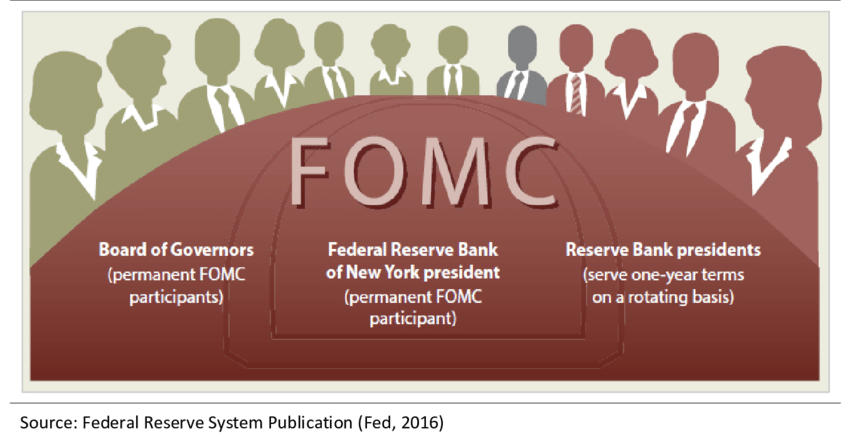
Market Implications of the Federal Open Market Committee (FOMC) Decision

0

The Federal Open Market Committee (FOMC) has delivered a 25 basis point (bps) rate cut, bringing the federal funds rate to a target range of 4.75%–5.00% assuming prior range was 5.00%–5.25%.

Simultaneously, the Committee has signaled the start of quantitative easing (QE) in December while maintaining that monetary policy remains restrictive. This combination creates a nuanced, multi-layered message with significant implications for asset prices, inflation expectations, and the yield curve.

Rate Cut (25 bps): Dovish but measured signal reinforces the Fed’s pivot toward easing but avoids aggressive front-loading. Equities mildly positive; supports risk assets but lacks the punch of a 50 bps cut.

Bonds: 2-year yields likely dip modestly ~5–10 bps, reflecting the cut but tempered by the “still restrictive” language. USD: Slight softening, though limited by the cautious pace.

The Fed will resume balance sheet expansion via asset purchases likely Treasuries and MBS starting in December. This is earlier and more aggressive than consensus expectations, which anticipated QT tapering at best.

Sharp compression 10-year could fall 15–25 bps intraday. Yield curve: Steepening as short rates are anchored by cuts, while long rates drop on QE. Strong bullish impulse—equities, gold, crypto likely rally.

Inflation breakevens: Rise as QE is classically inflationary. The Hawkish anchor purpose prevents markets from pricing in unrestrained easing or a return to ZIRP. Markets may now price one more 25 bps cut in 2026, not a full easing cycle.

Real rates remain positive fed funds ~4.75% vs. core PCE ~2.7% ? real rate ~2.05%, justifying the “restrictive” claim. Verbal tightening to counter QE’s dovish tilt. Equity Rotation: Favor rate-sensitive sectors tech, REITs, small-caps over defensives.

Inflation Hedge: Overweight TIPS, gold, commodities—QE reflation trade. USD Shorts: QE + “restrictive” cap = moderate dollar weakness, not collapse. VIX likely drops below 15 as QE provides a put.

The Fed is easing aggressively via QE while talking tough on rates to manage expectations. This is bullish for risk assets, bearish for the dollar, and steepening for the curve. The “still restrictive” caveat is rhetorical discipline, not a policy barrier—QE is the dominant signal.

Long equities especially Nasdaq, long gold, short 10-year yields, steepener trades. A steepening yield curve means the spread between long-term and short-term yields is widening.

25 bps rate cut lowers short rates. QE in December crushes long rates even more. Banks profit from borrow short (low), lend long (higher) ? NIM expansion. Tech/growth stocks benefit from lower long-term borrowing costs.

Bond Prices; Rise (yields fall) ? duration-sensitive bonds rally. Yield curve steepening = long-term rates fall faster than short-term rates. In this case: QE crushes the 10-year, rate cut anchors the 2-year ? spread widens ? bull steepener.

Bullish for banks, growth stocks, gold; bearish for USD and cash. Rate cuts generally favor risk assets like cryptocurrencies by reducing borrowing costs, boosting liquidity, and encouraging capital rotation from low-yield safe havens (e.g., Treasuries) into higher-volatility plays.

Historical patterns show Bitcoin (BTC) and Ethereum (ETH) often rally post-FOMC easing, with a 0.25% tightening shock linked to a ~0.25% BTC price drop on announcement day—implying the reverse for cuts.

Ending QT and lower rates could add $100B+ in monthly reserves, historically correlating with BTC gains like in 2021 bull run post-easing. Cheaper credit spurs speculative flows into DeFi, NFTs, and altcoins. Analysts like Michael van de Poppe predict a BTC pullback to $109K–$110K before pushing toward new highs above $112K if dovish signals hold.

Despite pre-meeting dips, spot BTC/ETH ETFs saw strong Q3 inflows ($22B+), underscoring institutional resilience. Pre-FOMC caution led to a 1.5% market cap drop to $3.93T on Oct 28, with BTC at ~$113K (-1.4%) and ETH at $4.09K (-3.7%). A “wait-and-see” Powell tone could trigger short-term selling.

Government shutdown limits data, while AI-driven job shifts and tariffs add uncertainty. XRP and BNB dipped 1–1.6%, reflecting broader altcoin pressure. TOTALCAP remains in a corrective ascending channel, suggesting potential reversals even post-cut.

The 1000x Future Is Live: You Can Now Get Free Testnet BDAG, Mint NFTs, and Use Live dApps on the “Awakening” Testnet

0

Forget everything you thought you knew about crypto presales. Usually, you invest in a promise, a whitepaper and a prayer. This is different. The massive hype surrounding the potential 1000x return isn’t built on theory; it’s built on a functioning, live ecosystem.

Blockdag’s “Awakening” Testnet is now open to the public, offering everyone a chance to interact with the technology before the mainnet launch. This isn’t just a preview; it’s a hands-on demonstration of the future. You can literally “try before you buy” and see for yourself why the market is buzzing. This is your chance to touch the tech that’s already raised nearly $435 million.

Get Your Hands on the Future

The “Awakening” Testnet moves BlockDAG from a concept to a reality you can access right now. The first stop for any new user is the Testnet Faucet. This is a public tool that gives you free testnet BDAG coins. These aren’t real assets, but they are the fuel you need to interact with the entire ecosystem. This is the ultimate “proof-of-life” for a project. You can send these coins between wallets, test transaction speeds, and experience the BlockDAG network’s performance firsthand. It costs you nothing. This simple action, claiming free testnet coins, is more than most projects offer before their official launch. It shows the core infrastructure is stable, operational, and ready for public testing. It’s the first step in seeing the 1000x potential in action.

Become a Builder in Minutes

The testnet isn’t just for passive observation; it’s a creative sandbox. The platform includes a live Integrated Development Environment (IDE) that is fully EVM-compatible. What does this mean for you? It means you can deploy your own smart contracts right now. You can create and mint your own collection of NFTs or launch your own ERC20-standard token on the testnet in minutes. This is a massive demonstration of power.

While other projects are still finalising their code, this network is already welcoming builders. This EVM compatibility is crucial, as it invites thousands of developers from the Ethereum ecosystem to migrate their dApps easily. For the average user, it’s a chance to play developer and see just how flexible and fast the BlockDAG technology truly is.

Use Live dApps Today

Beyond building, you can use decentralised applications that are already running on the “Awakening” Testnet. This ecosystem is not empty; it’s already populated. This is your chance to see how real utility will feel on the mainnet. These dApps prove the network can handle complex smart contract interactions smoothly and securely. The BlockDAG team has made several applications available for immediate use:

  • The Reflection DApp: This is a powerful tool. You can use it to see your tokens reflected on-chain, a key function for many DeFi protocols.
  • The Lottery DApp: A fun and simple way to test your luck and see the smart contract execution in action.

This isn’t a simulation. These are real dApps executing on a live test network, showing the system is ready for the high-demand applications that will drive value for BDAG coins.

The Final Step Before Launch

The “Awakening” Testnet is the final phase of public testing, and the next step is a big one: the Vesting Contract. This contract will be deployed soon. When it does, all holders who purchased BDAG coins during the presale will receive testnet BDAG tokens equivalent to their allocations. This is the ultimate “dress rehearsal” before the mainnet goes live. It allows every single investor to test their holdings, practice the claiming process, and ensure their wallets are configured correctly. This move shows incredible transparency and planning.

BlockDAG has entered Batch 32, with coins priced at $0.005. The upcoming listing on February 10, 2026, at $0.05 ensures major gains for early buyers.

The BlockDAG project isn’t leaving anything to chance. It’s allowing its 312,000+ holders to verify everything in a safe environment first. This is the final checkpoint before the 1000x journey begins in earnest.

The “Try Before You Buy” 1000x

The 1000x potential is no longer a distant forecast. It’s a live, functioning, and accessible ecosystem. The “Awakening” Testnet is your final opportunity to see the future before it arrives. You can get free testnet coins, mint your own NFTs, and use live dApps today. This is the ultimate “try before you buy.”

The historic $435 million presale was built on the promise of this technology, and now BlockDAG is delivering the proof. While others sell whitepapers, BlockDAG invites you to use the product. The mainnet launch is imminent. The question is: have you already seen what it can do? This is your chance to find out.

Presale: https://purchase.blockdag.network

Website: https://blockdag.network

Telegram: https://t.me/blockDAGnetworkOfficial

Discord: https://discord.gg/Q7BxghMVyu
Testnet FAQ

  1. What is the “Awakening” Testnet?

The “Awakening” Testnet is a live, public testing environment for the BlockDAG network. It allows users and developers to interact with the technology, test dApps, and find bugs before the official mainnet launch.

  1. How do I get the free testnet BDAG?

You can get free testnet BDAG coins by visiting the official “Testnet Faucet” on the BlockDAG website. You simply enter your wallet address, and the faucet will send you test coins to use.

  1. Are the testnet coins I get from the Faucet valuable?

No. Testnet coins have no real-world monetary value. They are used exclusively for testing purposes within the “Awakening” Testnet, such as paying for gas fees to mint NFTs or use dApps.

  1. What is an “EVM-compatible IDE”?

It stands for “Ethereum Virtual Machine-compatible Integrated Development Environment.” It’s a code editor that allows developers to write and deploy smart contracts using familiar languages (like Solidity) directly onto the testnet, just as they would on Ethereum.

  1. What is the purpose of the upcoming Vesting Contract test?

The Vesting Contract test is a “dress rehearsal” for all presale holders. It will airdrop testnet tokens (matching their purchased amounts) so they can practice the process of claiming their tokens, ensuring everyone is ready for the real mainnet launch.

  1. Why is a live testnet important for the 1000x potential?

A live testnet proves the technology is real, functional, and ready for deployment. It moves the project from a “whitepaper promise” to a tangible product, building confidence that the network can handle the applications and user load needed to grow.