DD
MM
YYYY

PAGES

DD
MM
YYYY

spot_img

PAGES

Home Blog Page 22

How Baseball Merchandise Turns Game-Day Memories Into Everyday Keepsakes

0

A baseball game lasts a few hours. The memories from it can stick around for years. Walking into a stadium, watching a tight game, celebrating with friends, going to your first game with family, all of that becomes part of someone’s story.

Merchandise helps keep those moments alive. A jersey bought at a memorable game. A cap worn all through a great season. A shirt someone gave you as a gift. All of it can mean something long after the last pitch.

That’s why baseball gear became more than just something fans wear on game day. Here’s how these items turn regular baseball moments into things people hold onto.

Why Baseball Merchandise Becomes Meaningful

At first, a jersey or cap is just a way to show support. Over time though, it gets tied to something specific that actually happened.

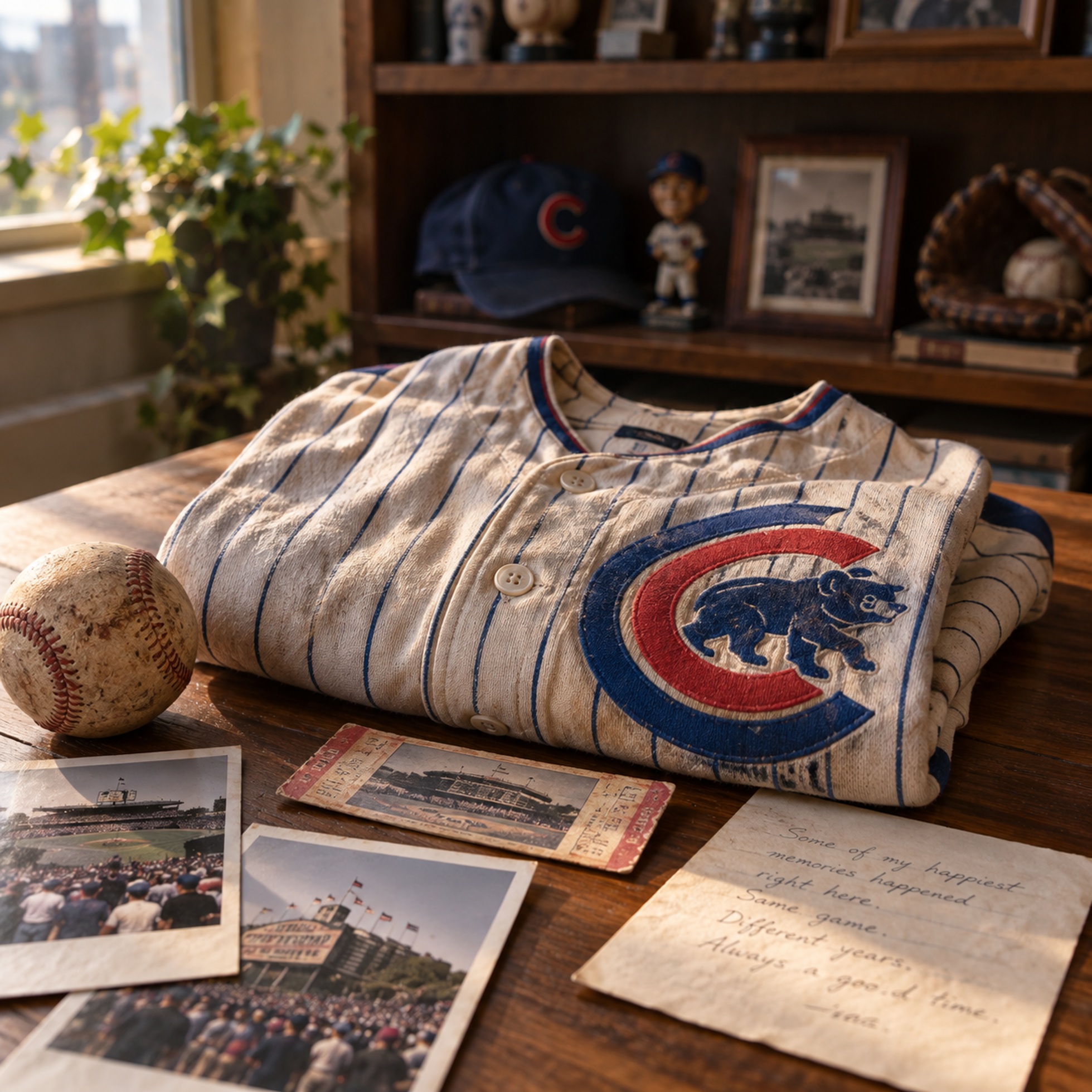
A fan might buy a jersey on their first trip to a ballpark. Years later, putting that jersey on again brings back the trip, the people who were there, the whole feeling of watching the game live.

The merchandise turns into a physical reminder. That’s part of why fans hang onto old baseball items even after they’ve stopped wearing them regularly.

Three Ways Merchandise Keeps Baseball Memories Alive

1. It Connects Fans With Special Game-Day Moments

Game days come packed with small moments fans remember later. Getting through the gates. Finding your seat. Grabbing food. Cheering with everyone around you. Watching the action unfold.

A jersey or cap bought during that day can carry all of it.

Even years later, wearing that item brings the memories back. That’s what gives ordinary merchandise a story that buying another shirt just off the rack never gets you.

2. It Becomes Part of Family Traditions

Baseball memories often get passed down. Parents introduce kids to their favorite teams. Grandparents tell stories about old players and unforgettable seasons.

Merchandise fits right into that.

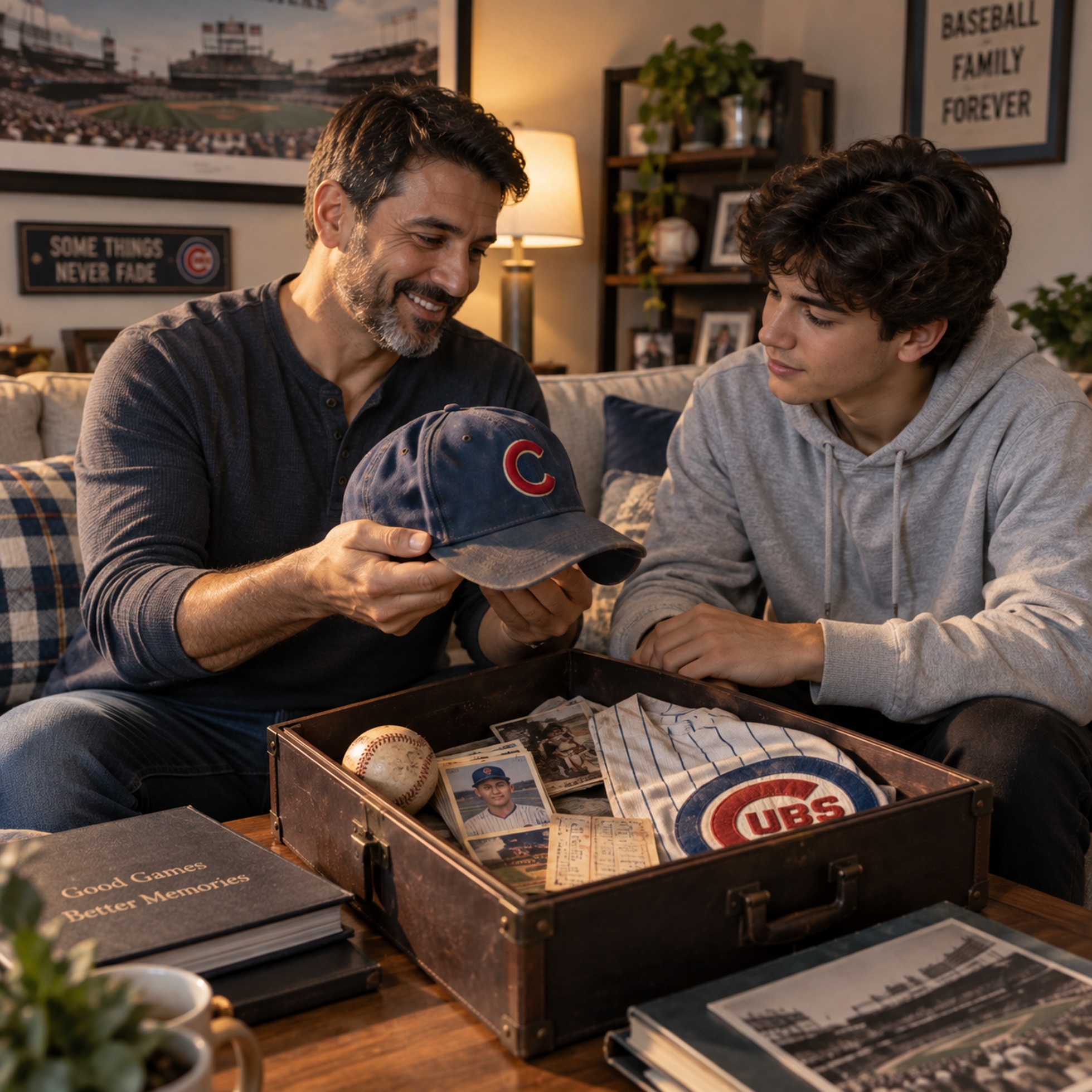
An old cap gets handed down. A favorite jersey gets kept as a keepsake. Families build new memories wearing team gear together at games or watching from home.

Because of these small traditions sports merchandise feel more personal over the years.
3. It Reflects a Fan’s Connection to a Team

Fans usually pick merchandise for more than how it looks. The team behind the item often carries real personal meaning.

Someone who’s followed the Chicago Cubs for years might have a whole collection, jerseys, shirts, hats, pieces tied to different chapters of their fandom. Stores like Sports World Chicago give fans a place to find Chicago Cubs merchandise, including Cubs hats, jerseys, shirts, and more, that can become part of those personal collections.

The item might represent a favorite player. A season nobody forgot. Or just years of rooting for the same team

From Jerseys to Hats: Keepsakes Fans Hold Onto

A baseball keepsake doesn’t need a high price tag or rare status. Sometimes the plainest item ends up mattering most.

A few common ones:

  • Jerseys: Usually tied to one player, one season, one game nobody forgot.
  • Hats: Worn constantly, they end up becoming part of how a fan just looks day to day.
  • T-shirts: Casual, sure, but still carrying memories from a stadium trip or some random good day.
  • Collectibles: Pennants, old baseballs, photos, small stuff that adds up into a real collection over time.

The value here rarely comes down to price. Most of the time, it’s the story sitting behind the object that actually matters.

Why Fans Keep Wearing Old Merchandise

Some fans wear the same jersey or hat for years. It fades a little. It shows wear. But those small flaws often make it feel more personal, not less.

Swapping it for a newer version doesn’t feel the same. The old one carries memories that a brand new item simply can’t replace.

This shows up a lot with merchandise tied to big moments in someone’s life. A shirt might bring back college. An old jersey might bring back watching games with friends or family, years ago.

Turning Game Days Into Lasting Memories

Baseball merchandise gives fans an easy way to carry part of the stadium experience into regular life. A jersey becomes part of a wardrobe. A cap becomes something you reach for often. A collectible sits on display for years.

What makes these items special isn’t the logo. It’s the story attached to them, the places, the people, the seasons, the moments shared along the way.

In the end, baseball merchandise usually ends up being more than a team logo on fabric. For a lot of fans, it becomes a small piece of their own baseball history, keeping a great game day alive long after the stadium lights go dark.
OpenAI Backs US Bills to Curb AI Risks From Biological Weapons and Pushes Independent Model Checks

0

OpenAI is backing a series of bipartisan bills in the U.S. Congress aimed at preventing sophisticated artificial intelligence models from being used to accelerate the development of biological weapons and synthetic viruses, adding to the company’s growing push for mandatory federal AI safety requirements.

The ChatGPT maker said Tuesday that it supports the Web of Biological Data Act, the AI-Ready Bio-Data Standards Act and the Scale Biology Act. OpenAI is also backing a key provision of the FRONTIER Act that would require leading AI companies to embed independent evaluators to assess the safety of their models.

The endorsements come as concerns over advanced AI have intensified inside the technology industry, including among executives and researchers at companies developing frontier models. OpenAI, Anthropic and other leading AI labs have recently debated whether the pace of development should be deliberately moderated as models become more capable.

OpenAI’s support for congressional legislation is significant because the company has held that voluntary commitments by AI developers are not sufficient. Last week, it called for mandatory national AI safety requirements in the United States, proposing capability-based rules covering areas such as independent assessments, cybersecurity, and incident reporting.

The latest measures would extend that approach into biological security, where advances in AI and biotechnology are creating both opportunities for scientific research and concerns about misuse.

AI and Biology Become a Policy Battleground

The AI-Ready Bio-Data Standards Act would direct the National Institute of Standards and Technology to develop standards and frameworks for making biological data suitable for use in AI models. It would also establish minimum requirements for certain federally funded research so that the resulting biological data is AI-ready.

That may appear primarily focused on improving scientific infrastructure, but the underlying policy debate is broader. AI systems trained on sophisticated biological information could potentially accelerate drug discovery and other legitimate research while also increasing the ability of users to investigate biological threats.

OpenAI has already classified some of its advanced systems as presenting high biological capability and has introduced additional safeguards and external testing around biological misuse. The company says it has worked with U.S. and British government testing organizations and other external experts to evaluate these risks.

The other bills supported by OpenAI are part of the same effort to build a more formal infrastructure around AI-enabled biological research.

For the company, the issue is one of governance as much as model design. OpenAI’s own Frontier Governance Framework covers risks including cyber offense, chemical, biological, radiological and nuclear threats, harmful manipulation and loss of control, while also setting out procedures for risk assessment, incident response and external expert input.

The proposed congressional measures would move at least some of those principles outside the companies themselves and into a federal framework. OpenAI has previously relied heavily on internal safety processes and voluntary third-party testing. Its new federal lobbying position would give independent evaluators a more formal role in assessing the most capable models.

Independent Evaluators Would Change the Safety Model

Under the provision OpenAI supports in the FRONTIER Act, leading AI companies would be required to embed independent evaluators to assess model safety.

OpenAI has already argued that outside assessments are necessary because internal testing can suffer from blind spots. Its own published guidance says third-party evaluations can provide additional evidence about frontier models’ capabilities and the effectiveness of their safeguards.

The proposed requirement would nevertheless represent a significant change in the relationship between AI companies and regulators. Instead of companies largely determining how their most capable systems should be tested and how much information should be disclosed, independent evaluators would have a formal role in scrutinizing them.

That is becoming more relevant as AI models move beyond conventional chatbot functions. Modern frontier systems can use tools, maintain information across multiple steps, and operate within larger workflows, making their safety dependent not only on the model itself but also on the environments and permissions in which it operates.

OpenAI’s endorsement also comes at a politically complicated moment for the industry.

Company executives have recently called for greater coordination over the development of advanced AI, with OpenAI CEO Sam Altman backing Anthropic CEO Dario Amodei’s argument that frontier development should be paced so that safety measures can keep up. Other technology executives, however, have resisted calls for coordinated restrictions, arguing that companies should remain responsible for managing their own risks.

The political divide is sharper still. President Donald Trump has dismissed calls for tighter AI regulation while emphasizing the importance of maintaining U.S. technological leadership, particularly in competition with China.

OpenAI’s position therefore places it in an unusual position: one of the world’s most valuable AI companies is asking Congress to impose rules on an industry in which it is itself a major competitor.

The company says such regulation should be narrowly targeted at the most capable systems rather than applied broadly to smaller developers. Its policy proposals argue that frontier safety requirements should focus on well-resourced laboratories developing the most advanced models and that independent verification and transparency should replace fragmented private governance.

The biological-security legislation fits that framework. Rather than attempting to regulate every use of AI, the measures target specific infrastructure, data standards, and evaluation mechanisms that could become important as AI capabilities advance.

The unresolved question is whether Congress can turn those principles into enforceable rules quickly enough to keep pace with model development. OpenAI is now explicitly arguing that it should. The policy challenge is to preserve AI’s potential to accelerate scientific discovery while ensuring that the same technology does not make dangerous biological knowledge easier to acquire, operationalize, or misuse.

SK Hynix Workers Approve Revised Wage Deal After Bonus Dispute

0

SK Hynix workers have approved a revised wage agreement with management, ending weeks of uncertainty at the South Korean memory-chip maker after employees narrowly rejected an earlier deal over concerns about how performance bonuses would be paid.

The revised agreement received support from 57.1% of voting union members, with 8,731 workers voting in favor, SK Hynix said on Wednesday. The deal covers members of the production workers’ union at the company’s facilities in Icheon and Cheongju and is expected to formally conclude this year’s wage and collective bargaining negotiations.

The result indicates that the revised terms were sufficient to secure a majority, but the relatively narrow margin also highlights the sensitivity of compensation issues among employees. The vote suggests that workers accepted the compromise while continuing to scrutinize the balance between immediate income, long-term equity ownership and protection against future downturns.

“We thank the labor union and our employees for working with us throughout this challenging process,” SK Hynix said in a statement.

The settlement follows roughly two weeks of additional negotiations after workers rejected an earlier agreement on August 20. While the initial deal included a 6.3% wage increase and a major restructuring of the company’s profit-sharing system, some employees opposed the proposal because it would have shifted a larger portion of their bonuses from cash into company shares.

The dispute therefore centered on more than the headline size of the pay increase. It also involved the timing, liquidity, and risk associated with employee compensation. Cash provides workers with immediate purchasing power and certainty, while shares can offer greater upside if the company continues to perform strongly but expose employees to fluctuations in the stock market and the fortunes of a single employer.

Under the revised agreement, the proportion of profit-sharing bonuses paid in cash will rise to 50%, from 40% under the rejected proposal. The portion paid in company shares will fall to 50%, from 60%.

The new arrangement also gives employees greater flexibility. Workers can convert the cash portion of their performance bonus into company shares in increments of 10 percentage points, allowing them to choose to receive their entire bonus in stock if they prefer.

That flexibility matters because employees have different financial circumstances and risk tolerances. Workers with immediate household expenses may favor cash, while those with a longer investment horizon may choose shares in the expectation that SK Hynix’s earnings will continue to benefit from demand for high-bandwidth memory and other advanced products.

The change gives employees more control over their compensation at a time when SK Hynix’s profitability has surged on demand for high-performance memory chips used in artificial intelligence systems. It also allows the company to retain an equity-based element in compensation without requiring every employee to accept the same level of exposure to the company’s share price.

AI Boom Reshapes SK Hynix Pay Negotiations

SK Hynix reported record second-quarter operating profit of 60.54 trillion won ($44.19 billion), as strong demand for AI-related memory chips drove earnings higher. That performance has increased the importance of the company’s profit-sharing framework, which allocates 10% of operating profit to employee bonuses. The compensation system was initially regarded as a landmark agreement because it directly linked employee rewards to the company’s financial performance.

The arrangement gives employees a direct stake in the company’s success and can help management retain engineers, technicians, and production workers in a highly competitive semiconductor labor market. It also creates a clearer connection between operational performance and employee rewards than a conventional fixed-wage system.

The same structure, however, became a source of tension when management proposed changing the composition of those payouts. A system that links bonuses to profits can produce exceptionally large rewards during an upcycle, but it can also make negotiations more contentious when employees believe the company is altering the terms under which those rewards are delivered.

For workers, the dispute was not simply about the overall value of compensation but also about the form in which it was received. The initial proposal would have paid 40% of performance bonuses in cash and 60% in treasury shares, a structure some employees viewed as less attractive than predominantly cash-based compensation.

Shares may align employees with shareholders and encourage a longer-term focus, but they do not have the same certainty as cash. Their value can change after the bonus is awarded, and employees who already depend on the company for their wages may be reluctant to concentrate more of their household wealth in the same business.

The revised agreement reduces the stock component while preserving the company’s ability to offer shares as part of performance-related compensation. The option to convert cash into stock also gives employees the ability to determine their preferred mix rather than imposing a single structure across the workforce.

The arrangement may also help SK Hynix manage its cash position. Paying part of bonuses in shares can reduce the immediate cash burden associated with large profit-sharing payments, although issuing or transferring shares can affect ownership and dilution considerations. By retaining a substantial equity component, the company preserves a mechanism that links employees to future performance while responding to concerns about liquidity.

The agreement comes as SK Hynix occupies a central position in the global AI semiconductor supply chain. Demand for advanced memory products has accelerated as technology companies and data-center operators expand spending on AI infrastructure, helping drive the company’s profits to record levels.

SK Hynix is one of the leading suppliers of high-bandwidth memory, a critical component used alongside advanced processors in AI data centers. The rapid expansion of generative AI has increased demand for memory capable of moving large volumes of data quickly, strengthening the company’s bargaining position with customers and improving the outlook for its most advanced products.

That favorable market position also raises expectations among employees. When workers see the company benefiting from a powerful industry cycle, they are more likely to seek compensation that reflects the scale and durability of the gains. Management, meanwhile, must balance those demands against the cyclical nature of semiconductors, where shortages can be followed by oversupply, falling prices and sharp reductions in profitability.

A Compromise Between Prosperity And Cyclicality

The negotiations also produced a formal mechanism for dealing with weaker business conditions. Under the new agreement, SK Hynix will be able to defer wages in the event of losses. The company said the mechanism reflects a shared commitment by labor and management to absorb some of the impact during difficult periods while participating in the benefits when the business performs strongly.

That provision adds a counterweight to the unusually generous profit-sharing structure. When profits rise, employees stand to receive a larger share through the bonus system; when the company records losses, the wage-deferral mechanism provides a way for labor costs to adjust.

The provision may reduce the risk that a downturn would force the company into more abrupt cost-cutting measures, including layoffs, production reductions, or a prolonged dispute over emergency measures. At the same time, its practical impact will depend on how the deferral is calculated, when repayment occurs, and whether workers view the arrangement as a temporary safeguard or a transfer of business risk onto employees.

Therefore, the agreement has created a form of risk-sharing. Employees receive greater rewards when the company prospers but may face delayed compensation when conditions deteriorate. Such arrangements can support employment stability, but they also require clear rules and trust between management and labor to prevent future disagreements over the definition of losses or the timing of repayment.

The framework may provide greater flexibility for SK Hynix during the memory industry’s inevitable cycles. Semiconductor companies must make large investments in factories, equipment, and research even when prices are weak. A compensation structure that can adjust during losses may help preserve cash and protect investment capacity.

Creator Economy Meets Physical AI as Steven Bartlett and Travis Kalanick Make Major Moves

0

Two recent moves in the creator economy and robotics show how technology businesses are increasingly being built around a powerful combination of talent, capital, intellectual property and artificial intelligence.

Steven Bartlett is putting substantial capital behind creators, while Travis Kalanick is recruiting elite AI talent to give robots greater intelligence in the physical world.

Bartlett, the entrepreneur and host of The Diary of a CEO, has teamed up with Authentic Brands Group to launch OBSN, a new venture that plans to invest as much as $400 million in creator-led businesses over the coming years.

The initiative is designed to move beyond the traditional influencer model, where creators primarily monetize audiences through advertising, sponsorships and platform revenue.

OBSN aims to provide creators with capital, infrastructure, media exposure, product development, licensing, strategic partnerships and global distribution. Bartlett’s Steven.com brings experience in media and audience development.

While Authentic contributes expertise in building and managing consumer brands and intellectual property. The significance is that creators are increasingly being treated not simply as personalities, but as potential owners of businesses and intellectual property.

A creator with millions of followers already possesses something valuable: distribution. The challenge is converting that distribution into durable companies with products, technology, retail relationships and recurring revenue.

OBSN is therefore attempting to address a structural problem in the creator economy. Instead of creators assembling separate agencies, investors, licensing companies and marketing partners, the venture proposes a more integrated model.

Its ambitions also extend into media, with plans for creator-economy news, analysis and live experiences.  At the same time, the robotics industry is pursuing an equally consequential transformation.

Travis Kalanick’s Atoms has recruited Vikas Chandra, a longtime Meta AI executive who worked on artificial intelligence for Meta’s smart glasses, as its vice president of AI. Chandra is expected to work on what he describes as foundation models for the physical world.

The appointment comes after Atoms raised $1.7 billion in funding led by Andreessen Horowitz.

The company is developing robotics technology for industries including food, mining and transportation, while Kalanick has framed the broader mission around digitizing physical-world operations.

Chandra’s background is particularly relevant because robotics presents a different AI challenge from software applications. Machines operating in the physical world must perceive environments, understand changing conditions and make decisions quickly enough to act safely.

His experience working on AI capable of operating within constrained hardware environments at Meta could therefore be relevant to Atoms’ ambitions. Bartlett’s creator strategy and Kalanick’s robotics strategy illustrate two different frontiers of technology investment.

One is attempting to turn human attention into scalable companies; the other is attempting to turn artificial intelligence into physical capability. The common denominator is infrastructure. Creators need financing, distribution and business-building expertise to transform audiences into companies.

Robots need capital, advanced models and specialized engineering to transform machines into useful autonomous systems. As capital increasingly flows toward both creator-led businesses and physical AI.

The next generation of technology companies may be defined less by a single product and more by the ecosystems built around talent, data, intellectual property and intelligent machines.

Amazon Suspends 21 Air Operations After Fatal Prime Air Cargo Crash in Miami

0

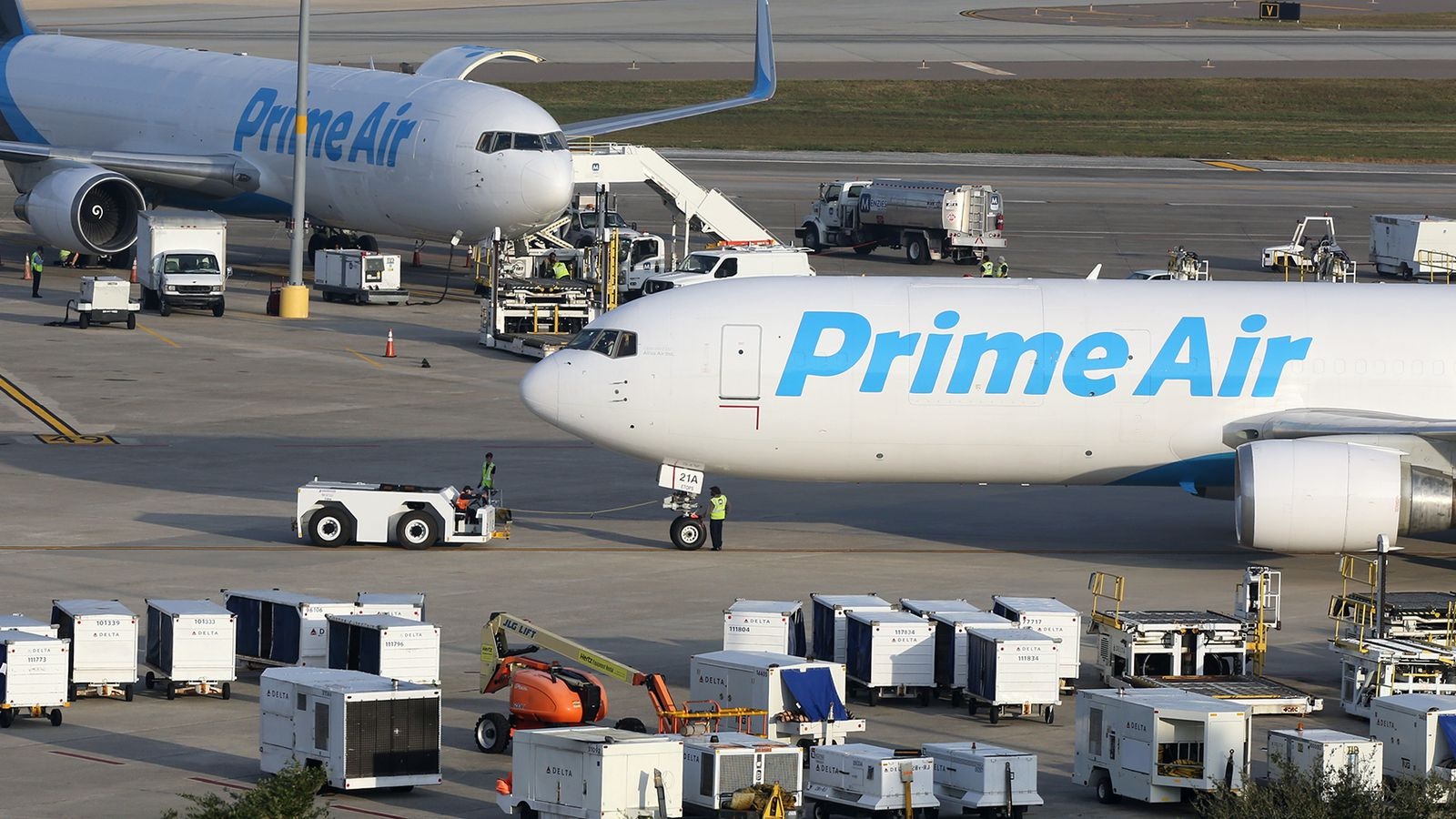
Amazon’s decision to pause operations with 21 Air marks a significant moment in the aftermath of the fatal cargo-plane crash at Miami International Airport, bringing renewed attention to the safety responsibilities that come with the rapidly expanding logistics networks behind modern e-commerce.

The decision followed the September 6 crash of an Amazon-branded Boeing 767-300 operated by 21 Air for Prime Air. The aircraft overran the runway while landing at Miami International Airport and struck vehicles beyond the runway, killing five people on the ground and injuring five others.

The National Transportation Safety Board (NTSB) is investigating the circumstances surrounding the accident. Amazon said it had spent time supporting the investigation and reviewing the circumstances surrounding the incident before deciding to pause its operations with 21 Air.

The company described safety as a priority both in its own operations and when working with external aviation partners.

The suspension does not necessarily represent a permanent termination of the relationship; Amazon’s language indicates that the current action is a pause while the investigation and internal review continue.

The crash has placed the operating relationship between Amazon and its contracted carriers under greater scrutiny. Unlike a traditional airline that controls its entire passenger or cargo operation, Amazon’s Prime Air network relies on multiple direct air-carrier partners.

Amazon has identified carriers including Air Transport International, ABX, 21 Air, Sun Country, Hawaiian Airlines, Cargojet, ASL and others as part of its cargo network. Early investigative information provides a clearer picture of the final moments of Flight 7598, although it does not establish a final cause.

NTSB investigators have reported that the aircraft was approaching the runway at excessive speed, with cockpit communications indicating that one pilot warned about the aircraft’s speed. Flight data also suggested that the crew briefly considered a go-around.

A standard procedure in which pilots discontinue a landing and attempt another approach. The aircraft nevertheless continued beyond the runway. Investigators are examining a broad range of possible contributing factors.

These include pilot actions, air-traffic-control communications, the aircraft’s maintenance history, operating procedures and weather conditions at the time of the accident. The presence of thunderstorms and gusty winds has been reported, but the investigation must determine whether and to what extent weather contributed to the crash.

The aircraft itself was an older Boeing 767 that had originally been built as a passenger aircraft before being converted for cargo operations. That fact alone does not establish that the aircraft was unsafe, but the age and maintenance history of the jet will form part of the broader investigation.

The accident has also intensified attention on 21 Air’s safety record. Reports have surfaced detailing previous safety complaints from former employees, including allegations concerning training and safety practices. Those claims remain separate from the official investigation into the Miami crash and should not be treated as proof of its cause.

For Amazon, the immediate suspension demonstrates how closely its logistics ambitions are tied to the performance of outside operators. The company has built a vast delivery ecosystem designed to move packages quickly across continents, but that speed depends on aviation partners operating under rigorous safety standards.

The NTSB investigation will determine what caused Flight 7598 to leave the runway and whether systemic factors contributed. Until those findings emerge, Amazon’s decision to pause its relationship with 21 Air represents an interim response to a tragedy that has placed aviation safety, contractor oversight and the infrastructure of fast e-commerce delivery under an intense spotlight.