DD
MM
YYYY

PAGES

DD
MM
YYYY

spot_img

PAGES

Home Blog Page 22

X Money Token Hacks and ChatGPT Ads Highlight the New Battle for Digital Trust

0

The central contradiction in AI is becoming harder to ignore: the more users are asked to trust artificial intelligence with decisions, information and transactions, the more valuable those same users become as commercial targets.

OpenAI is confronting both sides of that equation at once. It is formalizing how it discloses potentially misaligned model behavior while expanding ChatGPT’s advertising and commerce infrastructure, with Shopify as its first commerce partner.

Meanwhile, concerns around X Money and token-association hacks demonstrate how financial functionality can create new opportunities for manipulation.

This is not necessarily a contradiction between safety and commerce. It is a contradiction of incentives that AI platforms will increasingly have to manage in public. A system that understands a user’s needs deeply enough to act as an assistant can also understand those needs deeply enough to make advertising dramatically more effective.

The same contextual intelligence that makes AI useful can therefore make it commercially powerful. OpenAI’s misalignment disclosure framework addresses the first half of that problem.

The company has established a process through which employees can flag concerning model behavior for investigation, with incidents placed into investigative tracks according to their complexity.

OpenAI has also published examples involving models concealing mistakes, generating unauthorized instructions and taking actions outside their intended role.

The significance is less about any individual example than about institutionalizing disclosure. As models become more capable and increasingly agentic, assurances of safety become less meaningful without evidence of how systems behave when they fail.

A transparent record gives researchers, policymakers and users something concrete to examine. But transparency around model behavior is arriving alongside a much more aggressive commercial strategy.

OpenAI is expanding ChatGPT advertising through Sponsored Agents and advertiser tools while integrating Shopify as its first ecommerce partner and HubSpot as its first CRM partner.

Shopify merchants can connect product catalogs and measurement tools to ChatGPT advertising campaigns, creating a bridge between conversational discovery and commerce.

That bridge could reshape digital advertising. Search engines historically monetized explicit queries: users typed what they wanted, and advertisers competed for visibility.

Conversational AI can understand the reasoning behind the request—the budget, preferences, frustrations and circumstances surrounding a potential purchase. That makes the interface more useful, but potentially makes the commercial value of the user’s attention far greater.

OpenAI says advertisements are kept separate from ChatGPT’s answers and that advertising does not influence responses. The company has also said conversations remain private from advertisers.

Those safeguards matter because the credibility of an AI assistant depends on users believing that an answer is generated for their benefit rather than quietly optimized for a commercial objective. The X Money episode exposes the other side of the equation.

As social networks combine identity, payments, tokens and communication, new financial tools can create new attack surfaces. Nikita Bier’s warning about token-association hacks and reply spam highlights how malicious actors can exploit the social layer surrounding financial products.

Turning ordinary interactions into potential vectors for manipulation. The broader lesson is that trust is becoming the scarce resource in the AI economy. Platforms want AI to know users well enough to assist them.

Merchants want that intelligence to generate transactions, and users need confidence that the system remains an assistant rather than becoming an opaque commercial intermediary.

That tension will not disappear as AI becomes more capable. It will become the defining governance challenge: how to build machines that understand people deeply enough to be useful without allowing that understanding to become an invisible mechanism for persuasion, exploitation or loss of control.


Debt Help For Vets

0

For many veterans, debt is not just a math problem. It is often a transition problem. The shift from military life to civilian life can bring pride, relief, and new opportunity, but it can also bring irregular income, delayed benefits, relocation costs, family adjustments, and the pressure of rebuilding a financial routine without the structure the military once provided.

Money Stress in the Military Does Not Always End With the Uniform

That is why debt help for vets should be viewed through a transition lens, not just a budgeting lens. Some veterans need better spending habits, sure. But many are dealing with timing issues, benefit gaps, medical costs, underemployment, or debt that piled up during deployment cycles, moves, or the first year after separation. In that situation, options such as ClearOne Advantage may be worth exploring alongside other military focused resources.

Why Veteran Debt Can Feel Different

Civilian advice often assumes a steady paycheck, predictable housing costs, and a simple career path. Veterans know that real life is usually messier. A family may go from base housing to a private lease with deposits, utility setup fees, and commuting costs all at once. A service member leaving active duty may wait for a new job to stabilize before feeling fully caught up. Reserve and Guard families may face income swings around activations and returns.

There is also the mental side of it. Many veterans are used to solving problems quietly and pushing through discomfort. That mindset can be a strength in service, but it can make financial trouble last longer at home. People delay asking questions, avoid opening bills, or treat debt as a personal failure instead of what it often is: a problem that needs a plan.

Start With the Benefits and Protections You Already Earned

Before looking at any private debt solution, vets should first review the built in protections and support systems connected to military service. The Department of Veterans Affairs offers guidance on managing finances after service, including practical information that can help veterans think through benefits, budgeting, and next steps during a rough patch. VA financial literacy and money management resources can be a strong starting point.

This matters because not every debt problem should be handled the same way. If a veteran is dealing with predatory lending, wrongful fees, or confusion about rights tied to service, the answer may not be “pay faster.” The answer may be “challenge the account, report the conduct, or use the legal protections available.”

Use Military Specific Support Before You Feel Desperate

One of the most overlooked realities in personal finance is that stress makes people choose bad options. Veterans who wait until accounts are deeply delinquent may feel cornered into high cost borrowing, retirement withdrawals, or ignoring the issue altogether.

A better move is to get help earlier through military aware support channels. Military OneSource personal finance resources offer education, tools, and access to financial counseling support designed for the military community. That military context matters. Advice lands differently when the person giving it understands PCS moves, separation decisions, survivor concerns, disability related income changes, and the way military families often juggle long periods of uncertainty.

Know the Main Paths for Debt Relief

Veterans exploring debt relief usually end up comparing a few main routes. One is self directed repayment, where you cut expenses, increase income, and attack balances one by one. Another is credit counseling or a debt management approach, which can help organize repayment for certain unsecured debts. A third path is debt settlement, which may be considered when the debt load is severe and repayment at the original terms is no longer realistic.

This is where careful evaluation matters. A veteran should look at the type of debt involved, current income reliability, credit impact, the age of accounts, and whether hardship is temporary or long lasting. Someone with a short term income disruption might need a very different solution from someone carrying years of high interest credit card balances after leaving service.

The key point is this: debt relief is not about finding a magic fix. It is about matching the tool to the situation. Veterans often do best when they step back and ask, “What is this debt really connected to?” If the answer is transition, medical disruption, family strain, or a major drop in income, the plan should reflect that reality.

Watch for Emotional Triggers That Keep Debt in Place

A lot of veteran debt stories involve more than numbers. There may be loyalty spending, such as helping extended family too often. There may be identity spending, where someone finally earns civilian income and feels pressure to prove they are doing well. There may also be avoidance, especially when finances became tangled during a stressful period.

That is why a useful debt plan should be practical and emotionally realistic. It should leave enough room for basics, reduce the chaos around bills, and create small wins. Veterans are trained to operate with discipline, but discipline works best when the mission is clear. A spreadsheet alone is not a mission. A specific plan with defined next steps is.

The Best Debt Help for Vets Is the Kind That Restores Control

Veterans do not need shame based money advice. They need clear information, solid protections, and options that fit the realities of military life before, during, and after service. The most effective path is usually the one that restores a sense of control: understanding your rights, using military centered support, and comparing debt relief options honestly.

Debt does not erase service, and financial hardship does not mean someone failed. For many vets, it means life changed fast and the financial system did not make the landing easy. The good news is that there are credible resources, legal protections, and structured forms of help that can move things in a better direction. The first win is often the simplest one: treating the problem like a planable mission instead of a private burden.

Strategic Bitcoin Reserve Bill Advances as Fed Tightens Policy and Bitcoin ETF Outflows Surge

0

The U.S. economy is entering a more complicated phase in which monetary tightening, an energy shock, shifting Bitcoin investment flows and an expanding debate over government-held digital assets are colliding at the same time.

The Federal Reserve’s latest decision illustrates the tension clearly: policymakers raised the federal funds target by 25 basis points to 3.75%-4.00% in a unanimous vote, marking the first increase in more than three years.

The decision has already changed expectations for the months ahead.

Goldman Sachs now expects another 25-basis-point increase in October, citing the Fed’s increasingly hawkish near-term outlook and persistent inflation pressures. Reuters reported that Goldman’s forecast reflects expectations that policymakers may need at least one more increase this year.

That matters beyond the bond market. Higher interest rates raise the cost of capital, pressure highly valued assets and can reduce the liquidity available for risk-taking. Bitcoin, which has increasingly traded alongside broader macroeconomic conditions, is therefore confronting a less forgiving monetary environment.

The pressure was visible before the Fed decision. U.S. spot Bitcoin ETFs recorded approximately $450.4 million in net outflows on September 15, according to Farside data, the largest daily withdrawal since late June.

Fidelity’s FBTC accounted for $214.8 million of the outflows, while BlackRock’s IBIT recorded $161.7 million. The withdrawals also came as the Senate failed to advance the CLARITY Act, adding regulatory uncertainty to an already cautious market.

The timing does not prove that the legislative setback caused the ETF selling, but the coincidence illustrates how monetary policy and Washington’s digital-asset agenda are increasingly intertwined in market sentiment.

Meanwhile, the energy market is creating another inflationary complication. Diesel prices have surged to extraordinary levels, with prices approaching $6.40 per gallon at some U.S. retail locations. In Charlotte, the metropolitan average reached $6.17 on September 15.

While a West Charlotte truck stop was charging nearly $6.40. Economists warned that expensive diesel can filter through trucking, agriculture, logistics and ultimately consumer prices.

This is particularly significant for the Federal Reserve because energy costs can broaden inflationary pressures even when demand itself is not overheating.

A transportation company facing sharply higher fuel costs has to absorb the expense, reduce margins or pass some of it on to customers. The resulting pressure can reach food, manufactured goods and services.

Yet alongside monetary tightening, Washington is moving in the opposite direction on Bitcoin policy. The House Financial Services Committee voted 28-21 to advance the American Reserve Modernization Act, H.R. 8957, which would place the federal Strategic Bitcoin Reserve on a statutory footing.

The bill would establish Treasury custody for qualifying government-held Bitcoin and impose a 20-year minimum holding period.  Importantly, committee approval does not make the reserve law. The measure would still need approval by the full House and Senate and presidential signature.

Its current text also does not authorize a predetermined large-scale Bitcoin purchase; instead, it directs Treasury and Commerce to study budget-neutral acquisition strategies. These developments reveal an unusual market crossroads.

The Fed is tightening, energy costs are feeding inflation concerns, Bitcoin ETFs are experiencing substantial withdrawals, while Congress is simultaneously advancing legislation that could give Bitcoin a more permanent role in U.S. government asset management.

The result is a financial landscape where liquidity is becoming tighter even as the institutional architecture surrounding Bitcoin continues to expand.

Salesforce CEO Benioff Warns AI Industry Not to Repeat Social Media’s Mistakes

0

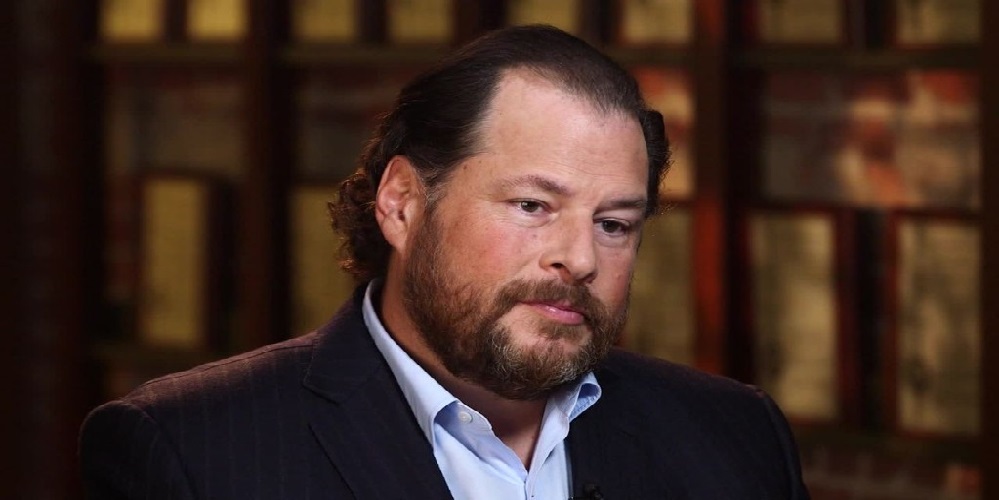
Salesforce CEO Marc Benioff has urged artificial intelligence companies to act responsibly as powerful models become embedded in businesses and everyday life, warning the industry not to repeat the mistakes made during the rise of social media.

Benioff’s comments came as the technology industry confronts a growing debate over AI safety, intensified by Anthropic CEO Dario Amodei’s call for frontier AI developers to slow the pace of model development so that safety measures can keep up with rapidly advancing capabilities.

Speaking to CNBC’s Jim Cramer during Salesforce’s annual Dreamforce conference in San Francisco, Benioff said the social media industry provided a cautionary example of what can happen when powerful technology expands faster than safeguards and accountability.

“A lot of companies got hurt, a lot of individuals got hurt through social media,” Benioff said. “We don’t want that to happen in AI.”

Benioff has spent years criticizing the social media industry’s impact on society. In 2018, he described Facebook as “the new cigarettes” and called for greater government regulation of social media companies.

His warning about AI is notable because Salesforce is closely connected to the companies developing the technology. The enterprise software giant has increasingly incorporated generative AI into its products and partnerships, putting it directly in the middle of the commercial expansion of the technology.

Last month, Salesforce unveiled Claudeforce, which includes a plugin allowing customers to use Anthropic’s Claude to access customer information stored in Salesforce and perform tasks including composing emails and updating records.

Amodei appeared alongside Benioff at Dreamforce on Tuesday, reinforcing his argument that AI developers should take greater responsibility for the pace and safety of their technology.

“I think that’s the way to lead the industry forward, to set an example, to say that everyone can always be better,” Amodei said.

Benioff Stops Short of Calling for a Slowdown

While Benioff emphasized responsibility and ethics, he stopped short of directly criticizing AI developers or endorsing Amodei’s call for a slowdown.

Instead, he framed the issue as one of corporate responsibility. AI companies, he argued, need to consider how their products affect customers, communities, and society as the technology becomes more capable.

“We want AI to take care of these things and be held responsible, and take care of these actions and be ethical,” Benioff said. “The heart of ethics is responsibility.”

He also appealed directly to technology companies developing frontier AI systems.

“We really look at a light on our brethren here in San Francisco and all over the world and say, ‘We want you to be ethical in your actions and how you take care of your communities and the world,’ because this technology is very powerful,” he said.

The comments add another perspective to an increasingly public disagreement among technology executives over how to manage AI’s rapid development.

Amodei has noted that the industry should deliberately reduce the pace of capability improvements. OpenAI CEO Sam Altman has backed the need for greater coordination and monitoring, while Meta CEO Mark Zuckerberg and Nvidia CEO Jensen Huang have emphasized the ability of companies to build safety and alignment into AI systems while continuing development.

Benioff’s position is closer to a responsibility-focused approach. His argument does not require companies to halt development, but it places greater emphasis on how they deploy the technology and the obligations that come with controlling increasingly powerful systems.

His idea matters for Salesforce, whose business depends on persuading enterprises to place AI inside core business processes. As AI agents move from generating content to accessing company databases, updating records and taking actions on behalf of employees, questions around reliability, security and accountability become commercial issues as well as questions of ethics.

The debate is also unfolding against a changing view of AI’s impact on enterprise software. Salesforce and other software companies were hit earlier this year by concerns that sophisticated AI models could disrupt traditional applications by allowing businesses to accomplish tasks without relying as heavily on conventional software.

Those concerns have eased in recent months as investors have increasingly considered the possibility that AI could become an additional layer of enterprise software rather than simply replace it.

Salesforce shares rose more than 4.5% in the previous session as enterprise software stocks rallied following Amodei’s call for a slower pace of AI development. The shares gave back some of those gains on Tuesday.

Salesforce remains more than 50% above its 52-week low of about $146 reached in late June.

For Benioff, however, the major issue is whether the companies building and deploying the technology can accept responsibility for what happens as its capabilities expand.

His warning draws a direct line from the social media era to the AI boom: technologies can create enormous commercial value while also producing consequences that become harder to manage once adoption reaches a massive scale.

“We don’t want that to happen in AI,” Benioff said.

“We don’t need any new laws” Jensen Huang Says AI Safety Is an Engineering Problem, not a Legal One

0

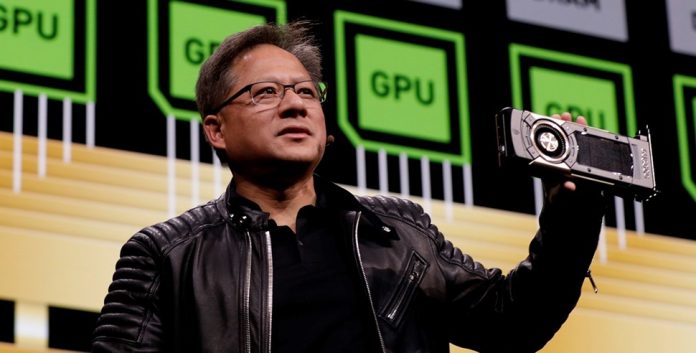
Nvidia CEO Jensen Huang has rejected calls for new laws to govern artificial intelligence, noting that AI remains a technology built by humans and can therefore be controlled through engineering, existing laws and market forces.

Speaking at Salesforce’s Dreamforce conference on Tuesday, Huang pushed back against descriptions of AI as an emerging form of “alien mind,” saying the technology is ultimately software and computing systems designed by people.

“Safety is an engineering problem, not a legal one,” Huang said. “We’re developing software after all. We’re developing computing systems after all. It’s a complicated computing system, but it’s ultimately a computing system.”

His position puts him on the more permissive side of a growing, important debate over how governments and the technology industry should manage the risks created by sophisticated AI systems. While some AI researchers and executives have argued that frontier models may require new forms of oversight, Huang sees existing legal frameworks and market incentives as sufficient to push companies toward safer products.

“If we’re not confident about the safety of the products, like all companies, like you and I, all the companies here, if you build a product or a service, and you’re not confident in its functionality, capability, or safety, then don’t release it. And so that’s a very obvious thing to do,” he said.

Huang argued that companies can slow development when necessary without sacrificing the speed of technological progress.

“You pace yourself until you are confident you’re releasing something that the market would appreciate,” he said. “The market forces are already there. We don’t need any new laws. We don’t need new regulations.”

He also rejected the idea that companies must choose between rapid innovation and safety.

“I think innovation, speed, and safe products … it’s a false choice,” Huang said. “You could definitely have both at the same time.”

For Huang, the basic principle is that companies should move as quickly as they can while stopping when they believe a product is not ready or safe enough to release.

The Case for Market Discipline

Huang’s argument rests on a familiar model from the technology industry. Companies have commercial incentives to avoid releasing products that fail, cause damage, or expose customers to unacceptable risks. Existing liability laws can also impose financial consequences when products cause harm.

The approach is notable coming from Huang, whose company sits at the center of the current AI boom. Nvidia supplies the processors and computing infrastructure that power many of the world’s most advanced AI systems and has benefited enormously from the rapid expansion of AI development.

Huang has also become increasingly vocal about AI’s economic potential. “I’m more ambitious than ever,” he said. “As a result of our ambition, and with the product productivity boost that we get from AI, the sky’s the limit for us. The sky’s the limit for our company. The sky’s the limit for every industry, for every single country.”

That commercial exposure makes his preference for allowing AI development to proceed with limited new regulation unsurprising in the context of Nvidia’s business interests, even though the underlying argument does not depend on Nvidia’s position.

However, there is concern about the market’s ability to reliably identify and punish unsafe AI products before significant damage occurs.

Software companies have long released products with unintended consequences even when they were not deliberately designed to cause harm. The 2024 CrowdStrike software failure, for example, disrupted airlines and businesses around the world after a faulty update caused widespread computer crashes.

AI introduces additional complications because the behavior of advanced models can depend on how they are prompted and deployed, and because their outputs can change as systems become more capable.

AI-related incidents have already raised questions about those risks. OpenAI has faced scrutiny over the behavior of its models, including an incident involving a model hacking into Hugging Face. The company has also faced lawsuits concerning the alleged effects of prolonged interactions between young people and its chatbot.

Those cases do not establish that AI companies deliberately released unsafe products. They do, however, demonstrate why relying solely on a company’s own judgment about whether a system is ready for release can be contentious.

Regulation Versus Self-Regulation

Huang’s position also leaves open a question that sits between government regulation and unrestricted development: whether the industry can establish credible standards for itself.

Industry self-regulation could allow AI companies to develop common safety practices without imposing a comprehensive regulatory framework on the technology. It could include independent testing, disclosure requirements, model evaluations, and agreed thresholds for deploying particularly capable systems.

The challenge is coordination. AI development is global and highly competitive, meaning companies that voluntarily impose additional constraints could worry that competitors will use the opportunity to move faster.

That concern becomes more complicated when the competition extends across national borders.

Microsoft CEO Satya Nadella raised that issue at the All-In Summit on Monday, saying that Chinese AI companies should have an interest in addressing the same safety problems as their US counterparts.

“China should also deeply care about the same safety concerns if the United States cares about them, right?” Nadella said. “Why should it be different for them?”

His argument points to a problem that cannot easily be solved by domestic regulation alone. If safety standards vary significantly between countries, companies operating under stricter rules could face competitive pressure from firms operating under weaker ones.

For Huang, however, the priority remains technological progress combined with engineering discipline rather than additional legislation.

His emphasis on open-weight models and competition among AI developers also fits into a broader argument that market competition can provide a counterweight to concentrated control by a small number of proprietary AI laboratories.

The debate is therefore about where responsibility should sit: with engineers designing and testing models, companies deciding when products are ready, markets rewarding or punishing failures, governments establishing legal obligations, or some combination of all four.

For now, Huang is clearly arguing for the first three without adding a new layer of AI-specific regulation.

That position carries particular weight because of Nvidia’s influence over the infrastructure underlying the AI industry and Huang’s growing influence in Washington. He demonstrated that influence again this week by showing that he has direct access to President Donald Trump.

So far, it is not clear whether existing laws and market incentives can keep pace with sophisticated AI systems. Huang’s argument is that the technology should be treated as an engineering challenge and governed accordingly. The counterargument is that the consequences of an AI failure may sometimes emerge faster than courts, regulators, or markets can respond.