DD
MM
YYYY

PAGES

DD
MM
YYYY

spot_img

PAGES

Home Blog Page 22

Mark Cuban Urges Towns to Drive Hard Bargains Before Approving Data Centers

0

Billionaire entrepreneur says communities should secure enforceable limits, financial guarantees and independent oversight before data-center developers break ground

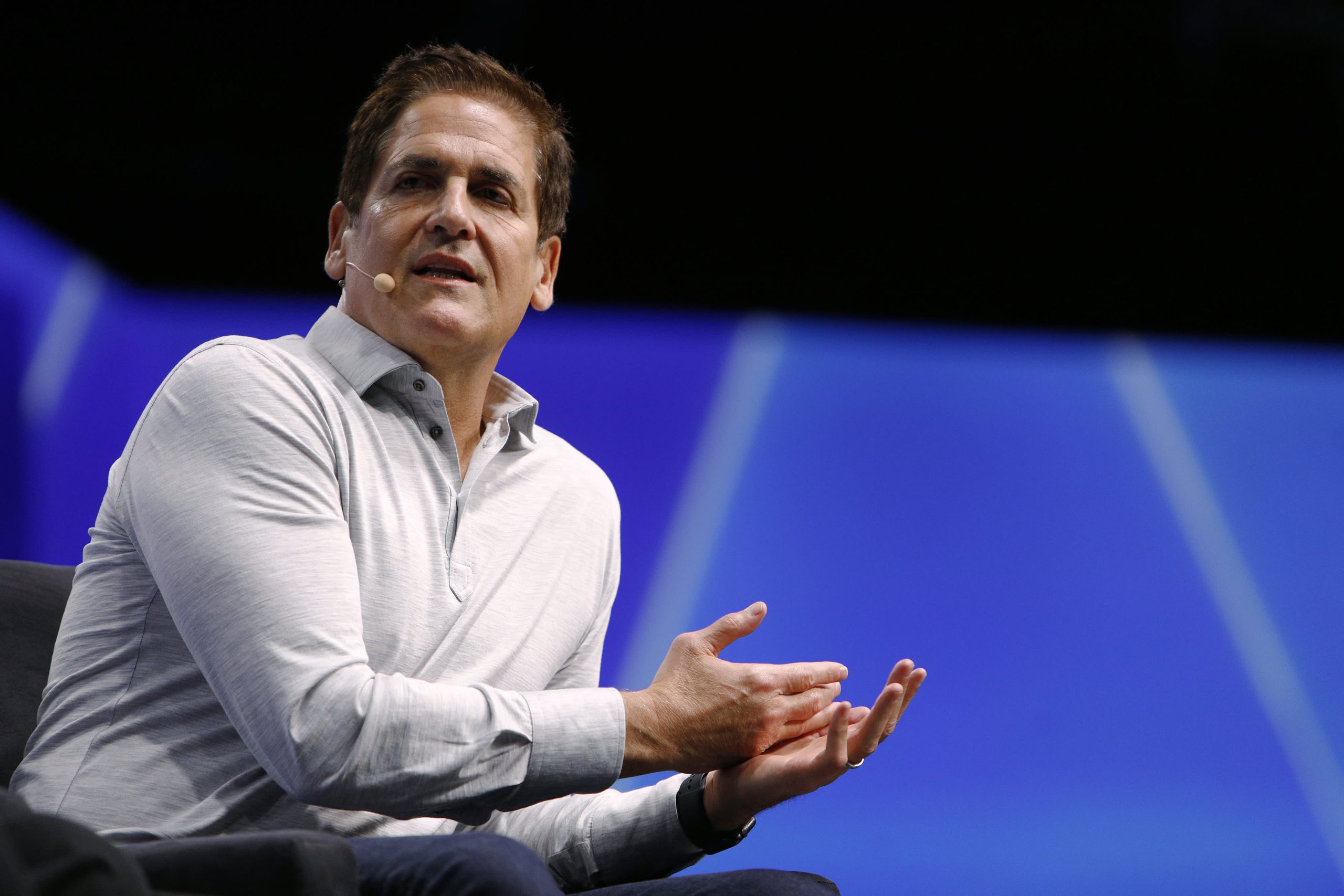
Mark Cuban is urging local governments to negotiate aggressively with data-center developers before approving new projects, noting that communities have their greatest bargaining power before construction begins.

In a series of posts on X on Monday, the billionaire technology entrepreneur laid out a 10-part framework for towns considering their first data center. His central message was that major commitments from developers should not be left to promises or broad assurances.

Instead, Cuban said every significant undertaking should have measurable limits, independent oversight, financial backing and a practical remedy if the developer fails to meet its obligations.

A data center can deliver construction jobs, expand a local tax base and bring investment in roads, power infrastructure and other services. But the facilities can also impose long-term demands on electricity, water and public infrastructure while affecting nearby residents for decades.

Cuban advised communities to hire their own lawyers and technical experts rather than relying solely on information supplied by developers. Local officials should also evaluate the project’s full planned build-out, rather than negotiating around only the first phase of construction.

Among the safeguards he recommended are explicit limits on water consumption and noise, restrictions on backup-generation equipment and provisions requiring developers to cover infrastructure costs associated with their projects.

Water And Noise Emerge As Key Battlegrounds

Cuban placed particular emphasis on water use, cautioning communities against assuming that a data center using closed-loop cooling will have no significant water requirements.

Even systems marketed as closed-loop can consume water under certain conditions, including periods of extreme heat, he said.

Noise is another major concern. Cuban noted that conventional noise standards may not adequately address the low-frequency sound generated by cooling systems and other equipment at large data centers.

“Noise is now the most common post-approval complaint and the most active area of litigation,” Cuban said in a separate post, pointing to proposed class actions in Wisconsin and Mississippi alleging that data-center noise can travel more than a mile from facilities.

The issue has become a growing source of friction between data-center operators and communities as the rapid expansion of AI computing brings large facilities into residential and rural areas.

Cuban’s recommendations extend beyond environmental and quality-of-life concerns to the financial risks communities could face if projects are delayed, downsized, or abandoned.

He called for developers to provide decommissioning funds before construction begins, as well as guarantees from financially credible parent companies. Other protections could include cash escrow accounts or letters of credit that municipalities could draw on if developers fail to meet contractual obligations.

The objective, Cuban said, is to prevent communities from being left responsible for infrastructure or cleanup costs after a project fails to materialize.

Data-Center Backlash Grows

Cuban has repeatedly warned that communities should use their leverage while AI companies and data-center developers are competing aggressively for sites and infrastructure.

In July, he said municipalities should pursue operators that violate laws or cause documented damage, arguing that the extraordinary demand for computing infrastructure gives communities negotiating power.

“The AI companies need the data centers more than they need air,” Cuban said at the time, urging communities to impose financial consequences for documented harm.

Later that month, he told the “All-In” podcast that technological advances could eventually make some of today’s computing infrastructure obsolete. He joked that unused data centers could ultimately become “pickleball courts,” underscoring the risk of communities being left with large facilities whose economics deteriorate faster than expected.

Public opposition is already presenting a significant challenge for the industry. A Gallup poll conducted in March found that 71% of Americans opposed having a data center built where they live, compared with 53% who opposed a nearby nuclear power plant.

Environmental and community groups have focused particularly on water consumption and noise. The Environmental Health Project has warned that cooling systems and diesel backup generators can generate persistent noise audible to surrounding communities, while cooling requirements can consume substantial quantities of water in areas already facing supply constraints.

The backlash has even entered popular culture. Former NFL player Jason Kelce recently appeared in a satirical advertisement for Garage Beer and Liquid Death built around the controversy over the amount of water associated with cooling AI data centers.

For local governments, the debate is increasingly about more than whether a data center brings jobs and tax revenue. Officials are being asked to determine who pays for new power and water infrastructure, who bears the environmental costs, and who is responsible if a facility fails to deliver its promised economic benefits.

Cuban described his framework as a work in progress and invited others to contribute. But its underlying argument is that once a municipality approves a project, its negotiating leverage can diminish sharply.

For communities facing proposals from developers racing to secure land and power for the AI boom, Cuban’s advice is to negotiate the protections first and approve the project afterward.

Huawei’s Long-Delayed U.S. Trial Begins, and It’s More Than The Company’s Business Dealings in Iran

0
Most parts of the world have been pushing to cage Huwaei

Huawei’s long-running confrontation with the United States is entering a decisive phase, but the case is about far more than alleged sanctions violations and bank fraud.

When jury selection begins Tuesday in federal court in Brooklyn, prosecutors will present a sweeping indictment that reaches from Huawei’s dealings with Iran and North Korea to alleged theft of American trade secrets. The defense will confront not only the charges themselves, but also the broader U.S. narrative that Huawei’s global expansion was supported by deception and illicit access to technology.

The trial, expected to last about three months, comes eight years after U.S. prosecutors secretly charged the Chinese technology company. It also arrives at a moment when Huawei has become central to China’s effort to build a technology industry less dependent on the United States.

Huawei has pleaded not guilty and has denied wrongdoing.

The company faces charges including bank fraud, wire fraud, money laundering, racketeering, obstruction, and violations of U.S. sanctions against Iran. Prosecutors also accuse Huawei of conspiring to steal trade secrets from five U.S. technology companies, concealing aspects of its business in North Korea and supplying surveillance equipment to Iran that was allegedly used to monitor protesters during anti-government demonstrations in Tehran in 2009.

The case began during the first Trump administration with the 2018 arrest of Huawei Chief Financial Officer Meng Wanzhou in Vancouver. Her detention triggered a diplomatic crisis involving the United States, China and Canada and became one of the clearest symbols of the widening conflict over technology, trade and national security.

The U.S. government placed Huawei on its trade blacklist in 2019, cutting the company off from many American technologies. Washington said Huawei posed national-security risks and warned that its telecommunications equipment could be used by Beijing for espionage. Huawei has rejected those allegations.

A conviction would give U.S. officials a criminal verdict to cite in defending restrictions that have often rested on national-security assessments rather than court findings. An acquittal would not automatically remove those restrictions, but it could complicate the legal and political narrative that has supported them.

The trial is also expected to overlap with Chinese President Xi Jinping’s scheduled September 24 meeting with U.S. President Donald Trump in Washington. That timing could make the proceedings an additional source of tension as the two governments attempt to manage disputes over tariffs, advanced chips, artificial intelligence and technology exports.

Potential jurors have been asked to complete 27-page questionnaires, including questions about their views of the governments of China and Iran — an indication of how difficult it may be to separate the case from the larger geopolitical conflict.

The Iran And HSBC Allegations

The prosecution partly grew out of Reuters reporting in 2012 and 2013 on Huawei’s relationship with Skycom, a company that operated in Iran.

Reuters reported that Skycom had offered in 2010 to sell at least €1.3 million ($1.5 million) of embargoed Hewlett-Packard computer equipment to Iran’s largest mobile-phone operator. Reuters also reported that Meng had served on Skycom’s board from February 2008 to April 2009.

The U.S. indictment alleges that Huawei used Skycom to obtain restricted U.S. goods, technology and services for its Iran operations and to move money from Iran through the international banking system.

Prosecutors said an unnamed bank processed more than $100 million in U.S.-dollar transactions connected to Skycom. Sources and documents reviewed by Reuters identified that institution as HSBC.

The allegations against Meng focused in part on a presentation she gave to an HSBC executive. Prosecutors said she misrepresented Huawei’s ownership and control of Skycom, causing the bank to underestimate the risks of continuing to handle Huawei-related transactions.

Meng later acknowledged that some of her statements were false as part of an agreement with U.S. prosecutors that allowed the charges against her to be dropped. Canadian authorities released her in 2021 after nearly three years of house arrest while she fought extradition to the United States.

Her release eased one of the most volatile elements of the dispute, but it did not end the case against Huawei. The company’s trial will now test whether prosecutors can prove that the alleged misrepresentations and transactions were part of a broader corporate scheme rather than isolated actions by individual employees.

A Case That Reaches Far Beyond Iran

The indictment is broader than a conventional sanctions-evasion prosecution. U.S. prosecutors accuse Huawei of conspiring to steal trade secrets from five American technology companies, adding intellectual-property allegations to the case.

The alleged conduct spans roughly 1999 to 2020, covering more than two decades of Huawei’s international expansion. That time frame could force jurors to evaluate a large volume of corporate records, employee communications, and technical evidence while determining whether separate incidents formed a coordinated pattern.

Prosecutors have also accused Huawei of concealing aspects of its business activities in North Korea and supplying surveillance technology to Iran. Those allegations are intended to support the government’s broader claim that Huawei repeatedly used opaque corporate structures and misleading statements to operate in markets subject to U.S. restrictions.

Huawei has rejected that narrative.

“The government’s overarching narrative is demonstrably false,” a Huawei spokesperson said in a statement on Saturday.

Beijing has also criticized the prosecution, describing it as part of a broader U.S. campaign to contain China’s technological rise. That argument has become more prominent as Huawei has moved from being primarily a telecommunications-equipment maker to becoming one of the most important companies in China’s effort to develop domestic capabilities in semiconductors, smartphones, cloud computing and artificial intelligence.

The trial matters more now than it did when the charges were filed because Huawei has become a strategic test of whether China can withstand U.S. technology restrictions.

The 2019 blacklist sharply limited Huawei’s access to American components, software and semiconductor technology. The restrictions damaged its smartphone business and disrupted parts of its supply chain, but they also accelerated Huawei’s efforts to develop domestic alternatives.

Huawei has since expanded its role in China’s technology ecosystem. Its work on advanced chips has made it a symbol of Beijing’s push for semiconductor self-sufficiency and a target of continued U.S. efforts to restrict China’s access to high-end computing technology.

That creates a paradox at the center of the case. U.S. restrictions were designed to slow Huawei’s access to advanced technology, but they also helped turn the company into a national project for China. Huawei’s survival has allowed Beijing to argue that American controls can encourage Chinese companies to replace foreign suppliers rather than remain dependent on them.

The prosecution is part of Washington’s broader effort to prevent sensitive technology from reaching companies that could support China’s military and strategic capabilities. The trial therefore sits at the intersection of criminal law, export controls, industrial policy and national security.

The Consequences Could Extend Beyond Huawei

If Huawei is convicted, legal experts have noted, U.S. prosecutors are expected to seek forfeiture of property or proceeds allegedly obtained through illegal activity. The company could also face additional commercial and reputational damage, particularly in countries that have tried to balance access to Huawei equipment against pressure from Washington.

A conviction would strengthen the U.S. government’s argument that restrictions on Huawei respond to documented criminal conduct rather than simply to commercial rivalry or geopolitical distrust. It could also encourage prosecutors to pursue similar cases against other Chinese technology companies accused of sanctions violations, export-control violations or efforts to obtain restricted American technology.

The case could influence how banks, telecommunications operators and equipment suppliers assess their exposure to Huawei. Even where governments do not impose outright bans, a conviction could increase compliance costs and make companies more cautious about doing business with Huawei-related entities.

An acquittal would not necessarily reverse U.S. export controls or national-security restrictions. Those policies can be imposed on the basis of intelligence assessments, supply-chain concerns and strategic calculations that do not require a criminal conviction. But an acquittal could give Huawei and Beijing a powerful argument that Washington overstated or failed to prove its allegations.

It could also make future prosecutions more difficult if jurors reject the government’s effort to connect years of transactions, corporate relationships and technology disputes into a single criminal conspiracy.

Huawei, however, is no longer the same company it was when Meng was arrested. It has spent years adapting to U.S. restrictions and repositioning itself as a pillar of China’s technology strategy.

Arm CEO Sees AI Transforming Cancer Research, but Chip and Energy Bottlenecks Could Slow the Revolution

0

Arm CEO Rene Haas believes artificial intelligence could help humanity cure cancer within his lifetime. But his prediction comes with a major qualification: the technology’s medical promise will depend on whether the semiconductor industry can supply the chips, memory, data centers and electricity needed to run powerful AI systems.

“I’ve always thought that the killer app for AI is health,” Haas said in an interview with the BBC released Tuesday. “AI is going to not only shorten the amount of time that those drugs can be invented, it’s going to shorten the amount of time that you test them.”

“I believe in our lifetime, AI will help cure cancer,” he added.

Haas’s comments capture the widening gap between AI’s ambitions and the physical infrastructure required to support them. The industry is increasingly presenting AI as a tool for solving some of humanity’s most difficult problems, from drug discovery and climate modeling to robotics and advanced manufacturing. Yet the systems needed to deliver those breakthroughs are placing unprecedented pressure on semiconductor supply chains.

Haas has led Arm, the British chip-design company whose technology is used in products ranging from smartphones to data-center processors, since February 2022. He joined the company in 2013 after spending seven years at Nvidia, where he was vice president of its computing products business.

His background gives him a direct view of the infrastructure demands created by the AI boom. Arm does not manufacture chips itself; instead, it licenses processor designs to companies that build chips for phones, servers, vehicles and other devices. As AI workloads spread across those markets, demand is rising for both high-performance data-center processors and more efficient chips capable of running AI applications at the edge.

“Right now, it’s quite constrained. We need more fabs before we can put a data center in space, I’ll tell you that much,” Haas said. “We’ll probably only put data centers in space when the biggest impediment to data centers is the cost of the data center.”

His reference to space-based data centers was partly humorous, but it underscored a serious point: the industry is still struggling to expand capacity on Earth. Semiconductor manufacturers are operating in what Haas described as an “absolutely supply-constrained environment,” and he expects shortages to persist.

AI’s Hardware Bottleneck Is Broader Than Processors

The shortage is not limited to the graphics processors and custom accelerators used to train and run AI models. One of the most important constraints is high-bandwidth memory, or HBM, which allows AI accelerators to move large volumes of data quickly.

Modern AI systems require enormous amounts of memory because their models contain billions or even trillions of parameters. As models become larger and more capable, the amount of memory needed to train and operate them increases. HBM has therefore become a critical component in the AI supply chain, and its production is concentrated among a small number of manufacturers.

But that concentration creates a vulnerability. Even if chipmakers can produce more AI accelerators, they may not be able to ship complete systems without sufficient supplies of advanced memory and packaging capacity. In many cases, the limiting factor is not the processor itself but the ability to combine the processor, memory, and networking components into a functioning AI system.

Micron Chief Operating Officer Manish Bhatia described the memory shortage as “really unprecedented” in a January interview. He said demand for HBM was consuming manufacturing capacity and contributing to shortages of memory used in more traditional products, including smartphones and personal computers.

Qualcomm CEO Cristiano Amon also warned during the company’s February earnings call that an “industry-wide memory shortage and price increases” could affect the size of the handset market during the year. The comments show that AI demand is beginning to influence markets far beyond data centers.

The pressure is also spreading to advanced packaging, the process used to connect processors and memory in high-performance systems. Packaging has become strategically important because AI accelerators cannot deliver their full performance without fast connections to memory. Expanding packaging capacity can be as difficult and time-consuming as increasing chip production itself.

Building Fabs Takes Years, While AI Demand Is Rising Now

The semiconductor industry is responding with a wave of investment. Chipmakers, memory manufacturers and governments are committing tens of billions of dollars to new fabrication plants, packaging facilities and research programs.

But supply cannot expand quickly. A new semiconductor fabrication plant can cost tens of billions of dollars and typically takes two or three years to build, followed by a lengthy process to install equipment, qualify production lines and reach high yields.

The development has created a mismatch between the speed of AI investment and the pace of industrial expansion. Technology companies can deploy new models and order additional computing capacity within months, while the factories needed to produce the required hardware may take years to complete.

The result could be periodic shortages, higher prices, and greater competition among customers. Large cloud providers and AI companies are likely to receive priority because of their purchasing power and long-term contracts, potentially leaving smaller businesses, universities and startups with less access to advanced computing.

The shortage could also encourage companies to develop smaller, more efficient models that require less computing power. Improvements in algorithms, model compression, specialized chips and software optimization may reduce the amount of hardware needed for some applications. But efficiency gains may not fully offset demand if AI use continues expanding into new industries.

Data Centers Face An Energy And Public-Acceptance Problem

Even when chips are available, AI companies need somewhere to operate them. Data centers require large amounts of electricity, cooling, land, and network infrastructure.

In the United States, more than 1,400 data centers had been built or approved for construction by the end of last year, as technology companies and infrastructure developers raced to accommodate generative AI and other compute-intensive applications.

The expansion is increasingly generating opposition from local communities concerned about electricity consumption, water use, noise, land development and environmental effects. A Gallup survey of 1,000 U.S. adults published in May found that seven in 10 respondents opposed building AI data centers in their local area, with nearly half saying they were strongly opposed.

That resistance could become a significant constraint on AI growth. Data-center developers may have access to capital and hardware but still face years of delays while securing permits, connecting to power grids, and negotiating with local governments.

Electricity availability is becoming a huge issue. Large AI facilities can require as much power as a small city, and clusters of data centers can place pressure on regional grids. Utilities may need to build new generation, transmission lines, and substations before facilities can begin operating at full capacity.

Water use is another concern, especially in regions where data centers rely on evaporative cooling. Developers are exploring alternative cooling systems, including closed-loop and liquid-cooling technologies, but those approaches can increase construction costs and complexity.

AI Could Accelerate Cancer Research, But It Cannot Eliminate Clinical Risk

For healthcare, the potential benefits of more computing power are substantial. AI systems are already being used in drug discovery, protein analysis, medical imaging, patient monitoring and the identification of potential therapeutic targets.

AI can search large biological databases, predict how proteins interact, identify patterns in medical images and help researchers prioritize compounds for laboratory testing. In principle, these tools could reduce the time and cost required to move from a biological hypothesis to a candidate treatment.

But Haas’s prediction should not be interpreted as evidence that a universal cancer cure is imminent. Cancer is not a single disease but a collection of more than 100 diseases, each involving different genetic mutations, biological mechanisms, and responses to treatment.

AI may improve the odds of finding effective therapies, but it cannot remove the fundamental uncertainty of human biology. A compound that performs well in a computer simulation or laboratory experiment may fail in animals or humans. A treatment that works for one genetic subtype of cancer may be ineffective for another.

Clinical trials remain essential. Researchers must establish that a treatment is safe, determine the appropriate dosage, measure its effectiveness, and understand its long-term risks. Regulatory review and manufacturing also take time, even when the underlying discovery process is accelerated.

AI could therefore have its greatest near-term impact not by producing a single cure for cancer, but by helping develop more precise treatments for specific cancer types. It may also improve early detection, identify patients most likely to respond to a therapy, and help doctors select combinations of existing treatments.

China’s Exports Surge 25% in August as AI Boom Offsets Weak Domestic Demand

0

Strong demand for semiconductors, AI-related equipment and electric vehicles is keeping China’s trade engine running, even as consumption, investment and property remain under pressure.

China’s exports accelerated in August, driven by strong overseas demand for high-tech and artificial intelligence-related products, providing a crucial source of growth for an economy still struggling to revive domestic consumption and investment.

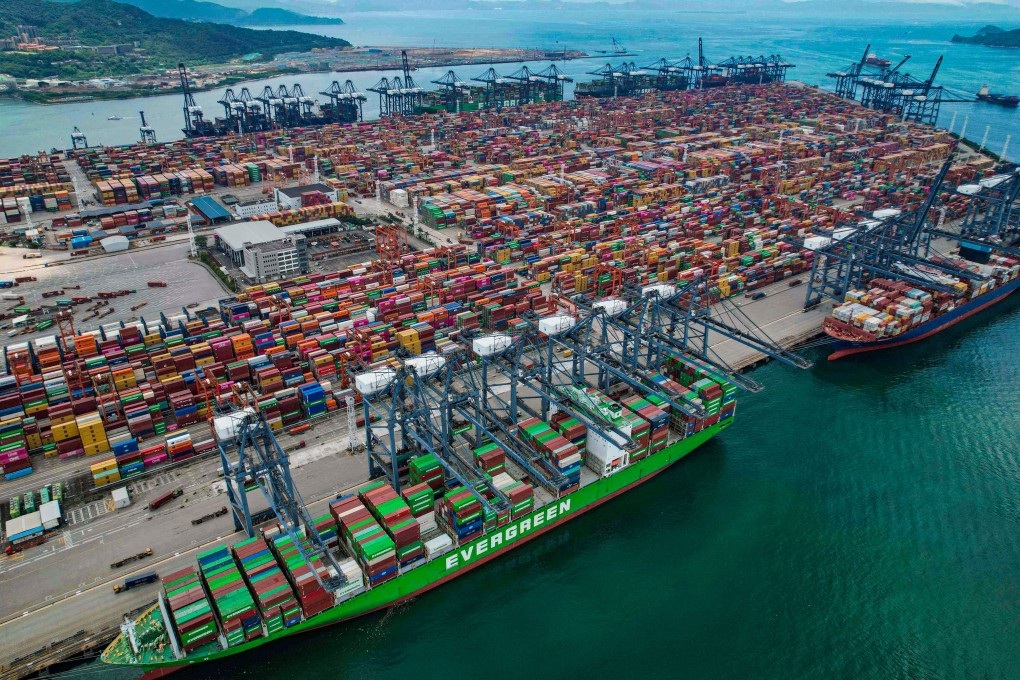
Exports from the world’s second-largest economy rose 25% year on year in U.S. dollar terms, matching economists’ forecasts and accelerating from a 23.9% increase in July, customs data showed Tuesday.

Imports also strengthened, climbing 28.2% from a year earlier after rising 27.5% in July, although the increase fell short of the 30% growth economists had expected.

The figures underpin an important divide in China’s economy: external demand remains resilient while activity at home is losing momentum. Beijing is targeting economic growth of between 4.5% and 5% this year, but weaker consumption, investment and the prolonged property downturn are making exports an important support.

“External demand has significantly outpaced domestic consumption,” said Lynn Song, chief economist for Greater China at ING. “Tariff risks and the durability of the tech investment cycle are the key factors to watch to see how long this strength will persist.”

China’s high-tech exports have emerged as a major driver of the expansion. In the first eight months of the year, exports of high-tech products increased 42.9% in U.S. dollar terms.

Semiconductor exports more than doubled in value over the period even though volumes increased only 4.1%, indicating that higher prices and stronger demand for advanced memory and computing components are playing an important role in the export surge.

Automobile exports also rose by more than 50% in both value and volume, reinforcing China’s growing position as a major exporter of electric vehicles and other technology-intensive products.

Strong demand for AI-related equipment, electric vehicles, solar cells and lithium-ion batteries helped offset disruptions caused by weather events, said Zhaopeng Xing, senior China strategist at ANZ.

Xing also noted that companies continued rushing shipments to the United States amid uncertainty over tariffs, potentially bringing some future demand forward.

AI Investment Drives Trade

China’s push to develop strategic technologies is increasingly feeding through into its trade figures. The country is investing heavily in semiconductors, artificial intelligence and advanced manufacturing as Beijing seeks to reduce its reliance on foreign technology and strengthen domestic supply chains.

“The main areas of import growth still look tied to tech products, showing China continues to spend in the ongoing tech race,” Song said.

That investment is benefiting manufacturers across the technology supply chain. Chinese memory-chip producer CXMT, for example, swung to a first-half profit in its first earnings report since listing, helped by higher memory-chip prices and rising demand for AI computing.

The strength of technology exports, however, masks considerable weakness in sectors dependent on Chinese consumers. Companies serving the domestic market continue to face soft demand and producer-price deflation, limiting their ability to pass higher costs on to customers and putting pressure on profitability.

China’s growing reliance on overseas markets also creates a significant policy risk. Using foreign demand to absorb excess industrial capacity can support growth in the short term, but it risks provoking additional trade restrictions from major trading partners already concerned about China’s expanding trade surpluses.

China’s trade surplus reached $119.09 billion in August, up from $112.5 billion in July. For the first eight months of the year, the surplus totaled $805.51 billion, putting the country on course to exceed $1 trillion for the second consecutive year.

The surplus with the United States rose to $29.18 billion from $28 billion in July. Chinese exports to the U.S. jumped 34.4% year on year, substantially outpacing the 17.8% increase in imports.

A trade truce between Beijing and Washington has so far prevented tensions from escalating into a broader confrontation. The two governments are exploring reciprocal tariff reductions covering $30 billion of goods on each side ahead of another summit between the countries’ presidents later this month.

But the sheer scale of China’s trade surplus could make the relationship increasingly difficult to manage, particularly if exports continue to outpace imports.

China’s rare-earth exports increased month on month in August but remained well below the average monthly level for the year. Crude-oil imports fell 23.4% year on year in volume terms, suggesting that the broader import picture is being shaped heavily by technology investment rather than a broad-based acceleration in domestic demand.

The trade figures had little immediate impact on financial markets, with the yuan broadly flat and Chinese stocks slightly higher as investors awaited U.S. inflation data for clues about the Federal Reserve’s interest-rate path.

Domestic Economy Remains The Weak Link

The export strength comes as several major indicators point to slower momentum at home.

China’s economy grew 4.3% in the second quarter, while data released last month showed industrial production and retail sales slowing at the start of the third quarter. Fixed-asset investment also declined more sharply in the first seven months.

The property sector, previously one of the country’s most important sources of economic growth, remains trapped in a prolonged downturn, weighing on household wealth, construction activity and consumer confidence.

Premier Li Qiang called in August for measures to stabilize external demand while acknowledging insufficient domestic demand, difficulties facing industries and rising uncertainty in the international environment.

Beijing has increased fiscal support, including an 800 billion yuan ($119.21 billion) financing facility intended to strengthen infrastructure investment.

But strong exports reduce the immediate pressure on policymakers to introduce more aggressive measures aimed at households, employment and the property market. As long as factories can continue selling abroad, China can partially offset weak domestic demand without relying solely on large-scale stimulus.

That dynamic could also influence monetary policy.

“The latest trade data do not materially strengthen the case for an imminent interest rate cut,” said Hao Zhou, a Hong Kong-based analyst at Guotai Haitong Securities.

“While further policy support cannot be ruled out, the combination of resilient external demand, steady industrial momentum, and increasingly targeted fiscal measures implies that the timing and necessity of additional monetary easing will require further observation,” he said.

However, it is currently not clear if the export boom can remain strong enough to compensate for weakness at home without generating a new wave of trade tensions. AI investment, semiconductors, electric vehicles and other high-tech products are giving China’s exporters a powerful source of momentum.

But the longer domestic consumption remains subdued, the more dependent the economy becomes on foreign buyers, leaving its growth outlook exposed to tariffs, protectionism and the durability of the global technology investment cycle.

Canada Imposes Up to 50% Tariffs on U.S. Goods as Trade War With Trump Escalates

0

Canada imposed a new round of retaliatory tariffs on U.S. goods on Tuesday, escalating the trade confrontation between the two North American allies after negotiations collapsed and President Donald Trump intensified pressure on Ottawa.

The new duties range from 15% to 50% and cover hundreds of U.S. products with a combined value of about $27.6 billion. Targeted goods include dairy products, agricultural equipment, paper, household appliances and electronics.

Canada also doubled its tariffs on U.S. steel, aluminum and iron products to 50%. Furniture, motorcycles, clothing and selected beauty products are among the goods facing the highest tariff rate.

Ottawa described the measures as a “dollar for dollar” response to U.S. tariffs imposed on Canadian products, saying the policy was designed to protect Canadian workers, producers and manufacturers from the competitive impact of American imports.

The new measures add to existing Canadian tariffs, including a 25% duty on U.S. automobiles, leaving significant parts of the bilateral manufacturing supply chain exposed to higher costs.

The latest escalation follows the breakdown of trade negotiations at the end of August. Officials in Washington and Ottawa have blamed each other for the failure to reach an agreement, with both sides publicly identifying areas where negotiations failed to produce a compromise.

The deterioration in relations has also spread into the aerospace sector.

Trump on Monday called for a boycott of Canadian aircraft manufacturer Bombardier, writing on Truth Social: “NO MORE SELLING BOMBARDIER IN THE UNITED STATES!”

The statement added uncertainty for an industry whose supply chains extend across the U.S.-Canada border and involve American workers, suppliers and aerospace companies.

The economic relationship at stake is considerably larger than the products covered by Tuesday’s new tariffs.

The United States exported $333.6 billion of goods to Canada and imported $381.9 billion from its northern neighbor. The two countries maintain deeply integrated supply chains spanning energy, automobiles, heavy machinery, aircraft, pharmaceuticals, furniture, clothing and food products.

That integration makes the economic consequences of tariffs different from those of a conventional trade dispute between less-connected economies. Components can cross the border multiple times before a finished product reaches consumers, meaning tariffs imposed on one side can increase costs for manufacturers on both sides.

Economists say the newly targeted products represent a relatively small portion of total bilateral trade, limiting the immediate macroeconomic impact. The effect could nevertheless be severe for companies concentrated in the affected industries, particularly small and medium-sized businesses with less capacity to absorb higher input costs or shift suppliers.

Canadian businesses may face higher prices for American machinery, equipment and components, while U.S. exporters could lose market share as Canadian importers look for alternatives.

Agriculture is another potential pressure point. Tariffs on dairy and other food products can alter sourcing patterns and raise costs for consumers, while retaliatory measures can reduce access to an important export market for American producers.

The steel and aluminum measures carry additional significance because metals are fundamental inputs for construction, machinery, transportation and manufacturing. A 50% tariff can therefore affect companies beyond the industries directly covered by the measure if higher material costs work their way through supply chains.

Ottawa has attempted to cushion the impact on its domestic economy.

The Canadian government announced a C$7.5 billion support package for affected businesses and workers last month, adding to roughly C$25 billion in measures introduced in response to the broader U.S. tariff campaign that began in April 2025.

The government is effectively trying to offset some of the disruption created by its own retaliatory strategy while maintaining pressure on Washington to negotiate. That approach creates a difficult balance for Prime Minister Mark Carney’s government. Retaliatory tariffs can increase the political cost for U.S. exporters and strengthen Ottawa’s bargaining position, but they can also raise costs for Canadian companies and consumers.

The dispute comes with a similar risk for Washington. Canada is the largest trading partner for many U.S. businesses and an important destination for American agricultural, industrial and consumer exports. Prolonged restrictions could therefore create pressure from U.S. companies that depend on Canadian demand.

The dispute is also unfolding against a wider U.S. push to use tariffs to encourage domestic production and extract concessions from trading partners. That strategy has increasingly shifted the focus of trade policy from reducing barriers to reshaping where companies manufacture and source products.

Against this backdrop, the stakes are high for Canada and the United States, because their economies have been integrated for decades. Energy networks, factories, transportation systems and supplier relationships have been built around relatively frictionless cross-border commerce.

However, analysts believe the immediate impact of Tuesday’s tariffs may be concentrated in specific industries rather than the broader economy. The larger concern is what happens if the measures remain in place long enough for companies to redesign supply chains, relocate production or permanently shift toward alternative suppliers.

With negotiations currently stalled and rhetoric intensifying, the latest tariffs risk becoming more than a temporary negotiating tool. They could accelerate a structural change in one of the world’s most integrated trading relationships.