DD
MM
YYYY

PAGES

DD
MM
YYYY

spot_img

PAGES

Home Blog Page 223

Japan’s Nikkei Index Surges Past 51,000 for the First Time as AI Investment Frenzy Lifts Tech Stocks

0

Japan’s Nikkei 225 Index broke through the 51,000 level for the first time in history on Wednesday, as investor enthusiasm surrounding artificial intelligence and semiconductor-related stocks fueled another wave of buying.

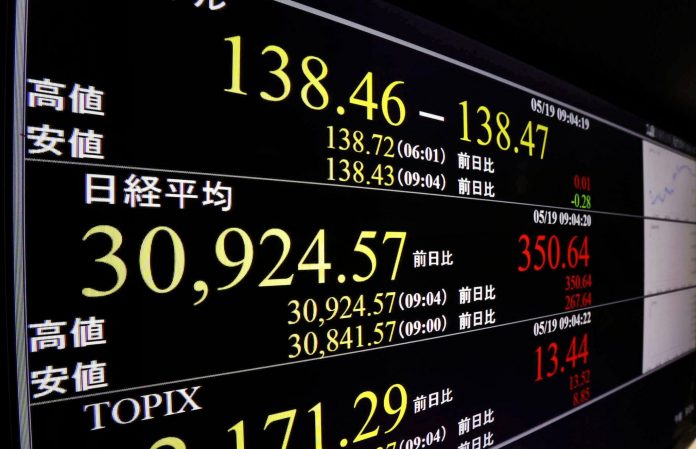
The tech-heavy benchmark closed up 2.2% at 51,307.65, marking an unprecedented high and underscoring how the global AI boom is reshaping investor sentiment in Tokyo’s stock market.

In contrast, the broader Topix Index slipped 0.2%, weighed down by a rebound in the yen, which dampened outlooks for exporters. The divergence between the two indexes represented the largest daily gap in returns since August 5, 2020, highlighting the concentration of the current rally around AI-linked shares.

The Nikkei’s record high continues a blistering climb that began in mid-September. The index had surpassed 45,000 on September 16 and has since marched through several psychological thresholds with unprecedented speed. Analysts say the latest surge reflects investor confidence in Japan’s transformation into a more growth-oriented and inflationary economy, aided by ongoing corporate governance reforms and renewed policy focus under Prime Minister Sanae Takaichi.

Rakuten Securities’ chief strategist Masayuki Kubota said the rally is fast but justified, given the structural shifts underway.

“Although the upward pitch is a little too fast, I see it as a move that correctly assesses the value of Japanese shares,” Kubota noted.

He predicted that the Nikkei could climb to around 63,000 by 2030 if Japan maintains its reform momentum and sustains moderate inflation.

The latest rally was powered by AI-related optimism both in Japan and abroad. Shares of Advantest — a major supplier of semiconductor testing equipment to global tech giants — soared 22%, its biggest one-day gain on record. The company boosted its annual profit forecast by 25%, citing surging demand tied to the global AI chip race.

The gains in Tokyo mirrored Wall Street’s overnight rally, where all three major U.S. indexes closed at record highs on Tuesday following Nvidia’s announcement that it will build AI supercomputers for the U.S. Energy Department. Nvidia’s statement reinforced investor belief that the AI investment cycle remains strong, further energizing semiconductor and tech shares globally.

“Stocks such as Advantest and SoftBank Group are essentially driving the stock market,” said Wataru Akiyama, strategist at Nomura Securities. “It’s unclear how long this will last. Once the initial wave passes, the upward momentum may ease.”

SoftBank Group, one of Japan’s most prominent technology investors with extensive AI and chip exposure, climbed 3.9%, making it the second-biggest contributor to the Nikkei’s rise in index points. Semiconductor inspection systems maker Lasertec also advanced 7.7%, adding further momentum to the rally.

Despite the index’s record-setting performance, market breadth remained narrow — with only 43 advancers against 182 decliners on the Nikkei. Analysts say this imbalance shows that the rally is heavily concentrated in AI and semiconductor sectors, rather than a broad-based recovery across Japan’s equity market.

Still, the symbolic breach of the 51,000 mark denotes renewed global investor confidence in Japan’s stock market, which has benefited from capital inflows tied to AI optimism, weaker competition from China’s slowing economy, and corporate reforms that have improved shareholder returns.

The Nikkei’s historic run is seen as a demonstration of how deeply artificial intelligence has become intertwined with financial markets — propelling Japan’s benchmark to record highs not seen in its decades-long economic history. It is expected to go further up as AI-driven optimism continues to dominate market psychology.
Meet BlockDAG’s Visionary Leadership Fueling 1000X ROI Potential Amid ADA’s Cooling Phase & SHIB’s Bullish Momentum

0

Recent updates show mixed sentiment across the crypto market. Cardano (ADA) is facing a cooling phase, suggesting that its momentum may be losing strength, while Shiba Inu (SHIB) is showing a bullish signal, reigniting excitement around meme coins. With such contrasting moves, traders are questioning where the real conviction lies in today’s top trending crypto projects.

Enter BlockDAG, the project that veteran traders are calling the “anti-whitepaper” 1000x opportunity. With over $432 million raised and 27.1B+ BDAG coins sold, BlockDAG (BDAG) stands apart by offering a fully operational blockchain.

Its Awakening Testnet is live and stable, processing up to 15,000 transactions per second. BlockDAG is not a promise but a working, high-speed Layer-1 chain priced at just $0.0015, making it a top crypto to buy now for long-term growth.

ADA Faces Resistance & Weakening Volume Ahead of Breakout

Cardano (ADA) is showing signs of slowing momentum, with resistance building around the $0.70 mark and weakening trading volume. Analysts are noting a significant drop in ADA’s open interest and participation, signaling a cautious market tone. The price has been consolidating between $0.62 and $0.67.

Despite these short-term challenges, ADA’s fundamentals remain strong. The lack of immediate catalysts, such as ETF approval or network upgrades, has kept the price range-bound. However, technical indicators suggest a potential breakout if ADA clears the $0.71–$0.75 resistance range, setting the stage for a stable upward move.

SHIB Shows Bullish Potential as Accumulation Gains

Shiba Inu (SHIB) is showing early signs of recovery, with analysts noting a potential bullish turnaround. After weeks of consolidation, the drop in open interest and low trading volume appear to mark the beginning of an accumulation phase. On-chain data shows increased wallet activity and whale accumulation, suggesting renewed confidence among long-term holders.

If SHIB maintains support at $0.00001010 and breaks resistance levels at $0.00001178 and $0.00001300, the price could surge towards $0.00002. A falling-wedge setup on the chart strengthens this outlook, indicating a breakout may be near. With reduced selling pressure and growing interest, SHIB could be on the verge of a strong technical rebound, making it one of the top trending cryptos to watch.

BlockDAG: The Visionary Team Driving BlockDAG’s 1000x Potential

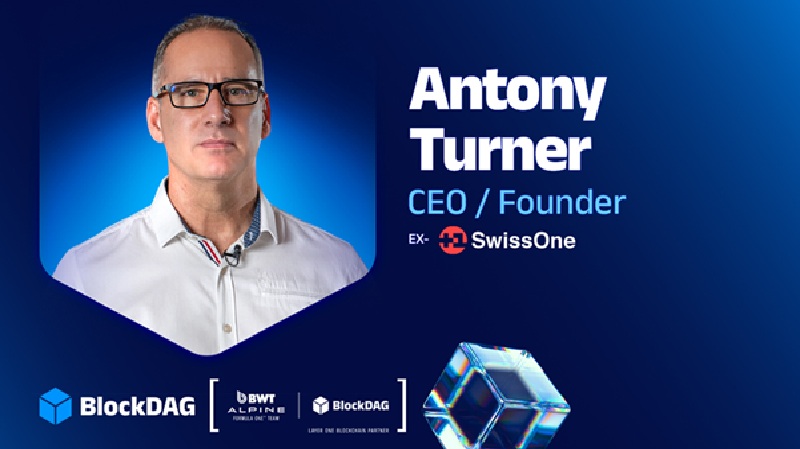
What sets BlockDAG apart from the top trending crypto projects today is the undeniable credibility of its leadership. The project is led by CEO Antony Turner, who is supported by world-class advisors like Dr. Maurice Herlihy, a winner of the Gödel and Dijkstra Prizes in distributed computing. The leadership’s transparency and technical expertise have earned the trust of seasoned investors, with the project backed by completed audits from CertiK and Halborn.

Unlike speculative projects that rely on promises and whitepapers, BlockDAG’s technology is operational, with its Awakening Testnet already live and stable. The testnet achieves transaction speeds between 2,000 and 15,000 transactions per second, with full Ethereum Virtual Machine (EVM) compatibility. This proven infrastructure positions BlockDAG as a real-world-ready Layer-1 blockchain.

The project’s presale has raised over $432 million, with more than 27.1 billion BDAG coins sold across 31 batches. Over 312,000 holders are already invested, showing strong demand for the project. The presale price of $0.0015, compared to the planned listing price of $0.05, signals the potential for a 1000x return.

With a growing community and robust technology, BlockDAG is on track to redefine the blockchain space. As demand continues to build, it’s becoming one of the top trending crypto projects for long-term growth.

Moving Ahead

Cardano (ADA) shows how even strong altcoins can slow down when momentum fades, while Shiba Inu (SHIB) signals that sentiment can flip quickly when accumulation builds. These shifts highlight the unpredictable rhythm of top trending crypto, where some tokens pause, and others surge ahead. Traders must stay alert, as confidence can move rapidly across the market, creating both hesitation and new opportunities.

In this environment, BlockDAG stands out as a project built on proof, not promises. With over $432 million raised, 27.1B+ BDAG coins sold, and a live testnet, BlockDAG is already delivering before launch. Veteran traders see it as a high-speed Layer-1 with genuine 1000x potential, making it one of the best crypto opportunities to watch in 2025.

Presale: https://purchase.blockdag.network

Website: https://blockdag.network

Telegram: https://t.me/blockDAGnetworkOfficial

Discord: https://discord.gg/Q7BxghMVyu

Abstract Lowers Block Times 5x to 200ms

0
TEHRAN, IRAN - JULY 19: (RUSSIA OUT) Russian President Vladimir Putin leaves his presidential plane during the welcoming ceremony at the airport, on July 19, 2022 in Tehran Iran. Russian President Putin and his Turkish counterpart Erdogan arrived in Iran for the summit. (Photo by Contributor/Getty Images)

Abstract is a zero-knowledge (ZK) rollup Layer 2 (L2) scaling solution built on Ethereum, designed for consumer-facing blockchain apps with low fees and high-speed transactions.

It leverages the ZK Stack to enable secure, verifiable computations off-chain while settling on Ethereum mainnet. As of late 2025, Abstract has not publicly announced a direct reduction of its block times to 200ms from a baseline of ~1 second, which would be roughly 5x faster.

However, the broader Ethereum L2 ecosystem has seen innovations like this, which Abstract could adopt or integrate in future upgrades. Block time refers to the interval at which new blocks are produced on a blockchain, directly impacting transaction confirmation speed.

Ethereum’s base layer has 12-second blocks, but L2s like Abstract aim to optimize this for real-world usability (e.g., gaming, DeFi, payments). A 200ms block time is a significant leap—faster than a human blink (300-400ms)—enabling near-instant confirmations without sacrificing security.

Base’s Flashblocks launched in July 2025 by Coinbase’s Base network an Optimistic Rollup L2, this feature streams “sub-blocks” every 200ms, reducing effective block times from 2 seconds to 200ms—a 10x improvement in latency for early confirmations.

It includes revert protection for reliability, making Base the fastest EVM-compatible chain at the time and boosting throughput by up to 5x in high-demand scenarios. This has been hailed as a “world record” for EVM transaction speed.

In October 2025, Berachain a Cosmos-based EVM chain proposed a sequencer-based system for partial blocks with 200ms inclusion times, enhancing DeFi and gaming experiences while reverting to standard blocks if needed for stability.

Projects like MegaETH a 15ms mini-blocks on testnet and Eclipse, a Solana-inspired shredding are pushing sub-200ms norms, but these are often “preconfirmation” mechanisms rather than full block production.

Implications for Abstract

Abstract’s current setup as tracked by L2BEAT uses an operator-only block proposal model with ZK proofs for batch settlement, achieving sub-second finality in practice. While it hasn’t matched 200ms yet, its ZK architecture positions it well for similar upgrades.

Prior to Flashblocks, Base produced full blocks every 2 seconds—a respectable speed for an L2, but still too slow for latency-sensitive applications like gaming, high-frequency trading, or real-time social interactions.

Flashblocks reduces this effective block time to just 200 milliseconds (ms), achieving up to a 10x speedup and positioning Base as the fastest Ethereum Virtual Machine (EVM)-compatible chain at the time of launch.

This innovation was developed in collaboration with Flashbots, a research organization focused on reducing Miner Extractable Value (MEV) harms and improving blockchain efficiency.

At its core, Flashblocks introduces preconfirmations—ultra-fast, partial block updates (or “sub-blocks”) that stream to users and nodes every 200ms, providing near-instant feedback on transaction inclusion without waiting for a full block to seal.

These preconfirmations are probabilistic but highly reliable, with built-in mechanisms for handling discrepancies. The feature is optional for applications, allowing developers to opt-in for snappier user experiences (UX) while falling back to standard blocks if needed.

Instead of bundling everything into a single 2-second block, the sequencer divides the block’s contents into smaller, time-sliced “Flashblocks.” Each Flashblock is produced every 200ms, capturing a portion of the incoming transactions. There are 10 Flashblocks per full block aligning with the 2-second cycle: 10 × 200ms = 2s.

The gas budget scales progressively: The i-th Flashblock where i ranges from 1 to 10 can hold up to i/10 of the full block’s total gas limit. For example:Flashblock 1: Up to 10% of gas.

This progressive allocation ensures early Flashblocks are lightweight and fast, while later ones can accommodate more volume if needed. Flashblocks are streamed as “partial blocks” via WebSockets or RPC methods, providing preconfirmations—signals that a transaction is likely included in the upcoming full block.

Nodes and apps receive these updates in real-time, allowing for immediate UX feedback (e.g., “Transaction confirmed” UI after 200ms). Unlike traditional blocks, Flashblocks enforce time-based ordering rather than pure priority-fee auctions.

Later-arriving transactions can’t easily “bribe” their way to the top of an early Flashblock, reducing MEV opportunities for external bots. At the end of the 2-second cycle, the 10 Flashblocks are combined (or “recreated”) into a single canonical full block, which is then proven and settled on Ethereum L1.

If a reorg occurs (e.g., due to network congestion or sequencer issues), the streamed Flashblocks may differ from the final block. Base estimates this happens infrequently (<0.1% of cases), but apps must handle it gracefully—e.g., by reverting to L1 finality checks.

Benefits of FlashblocksUltra-Fast UX: Confirmations in 200ms enable “blink-speed” interactions—faster than Solana’s ~400ms blocks—ideal for consumer apps, DeFi bots, and games where delays kill engagement.

Adopting flashblock-like sub-blocks could enable 5x faster user experiences, ideal for Abstract’s focus on scalable consumer apps. Faster blocks increase sequencer centralization risks, but Abstract’s ZK proofs mitigate this via cryptographic verifiability.

No censorship resistance via L1 queues is currently implemented, which could be a next step. These speeds make Ethereum L2s competitive with Solana ~400ms blocks or even faster, driving adoption. Base’s rollout, for instance, has doubled its transaction speed relative to Solana in benchmarks.

Monad Airdrop Allocation Checker Now Live

0

The Monad airdrop allocation checker officially went live on October 28, 2025, allowing eligible users to reveal their $MON token allocations early through an interactive “mystery box” system.

This is a key step ahead of the full token claim and Monad mainnet launch, expected sometime in early November 2025. Claim Window: Open now until November 3, 2025, at 13:00 UTC—after this, profiles lock, and you won’t be able to connect additional wallets or accounts.

Early Reveal Mechanic: Users can open three “mystery boxes” over the next three days October 28–30 to uncover their allocation progressively. No rush—take time to verify everything.

Over 230,000 wallets across five main tracks users qualifying in multiple tracks get stacked allocations. Long-term members via manual review, social graphs, and tools like Monad Community Recognizer ~5,500 core users.

Onchain Users: Power users on EVM/Solana with high activity (e.g., DEX volume, NFT ownership). Broader engagement via social platforms and initiatives like Monad Cards.

Based on onchain/offchain data up to September 30, 2025. Anti-sybil measures were applied with Trusta AI—no team insiders are eligible. Total supply and airdrop size is 100 billion $MON total; airdrop portion TBA but speculated at 15–16% ~15 billion tokens, potentially worth $13.3M+ at a $450M FDV.

The Mystery Box system is Monad’s gamified, phased reveal mechanic for the $MON airdrop allocation checker. Launched on October 28, 2025, it allows eligible users to progressively uncover their token allocation over three days instead of seeing everything at once.Core Purpose of Mystery BoxesBuild suspense and engagement.

It encourages users to return daily and verify all connected wallets/accounts. Prevent spam/fake accounts from dumping allocations immediately. Give users time to audit their full eligibility.

All 3 boxes must be opened by November 3, 2025 @ 13:00 UTC. After this, your profile locks permanently — no more connections or edits.

One box per day. You cannot open all three at once. Must return daily. No rush to claim. Allocation is locked in — opening boxes just reveals it. Connect all wallets early EVM, Solana, socials — link everything before Nov 3 or lose credit.

What Happens After All Boxes Are Opened?Final allocation displayed (e.g., 62,300 $MON). Set claim wallet where tokens will be sent on mainnet. Wait for mainnet ? claim button activates. Some tokens auto-stakable via partners.

The Mystery Box is a 3-day reveal journey — not a lottery. Your allocation is pre-determined by activity up to Sept 30, 2025. Open daily, stack your boxes, and secure your bag.Official Portal: claim.monad.xyz. 3 days left to connect and reveal

MON is trading OTC at $0.05–$0.08, $0.077 on Hyperliquid/Lighter, implying ~$7.7B FDV. Visit the official portal https://claim.monad.xyz . Connect via Privy authentication, it supports EVM/Solana wallets, plus social logins like X/Twitter, Discord, Telegram, Farcaster, email.

Set your claim wallet to choose where you want $MON sent on mainnet. Open boxes reveal allocations day-by-day some may be “locked” until mainnet. Once revealed, review and confirm—gas fees apply on mainnet.

Use a secure wallet like OKX Wallet now integrated or Atomic Wallet for non-custodial holding. Triple-check connections; no private keys needed, but beware of phishing sites.

Allocation Tiers is community-based on early user reports and blog hints, allocations vary by activity level. Many testnet users report Tier 4+ eligibility from onchain activity alone, but social ties boost stacks.

If ineligible, it might be due to sybil filters—focus on genuine engagement. Mainnet and full claims is likely next week some allocations unlock immediately, others post-launch.

Stake $MON via partners like Kintsu for sMON yields, or trade on exchanges like KuCoin/MEXC once live. Excitement is high on X, with users sharing reveals. Pre-market volume hit $7.3M+ in 24 hours. If you’re eligible, congrats—this could be one of 2025’s biggest drops.

Western Union Announces USDPT Stablecoin on Solana, as BNB Foundation Completes 33rd Quarterly Burn

0
An IMTO

Western Union, the 175-year-old global payments giant, revealed plans to launch its own U.S. dollar-pegged stablecoin called U.S. Dollar Payment Token (USDPT) on the Solana blockchain, with a target rollout in the first half of 2026.

This marks a significant pivot for the company, which serves over 100 million customers and operates 600,000+ agent locations worldwide, into the digital asset space to modernize remittances and reduce costs.

USDPT will be issued by Anchorage Digital Bank, the first federally chartered crypto bank in the U.S., leveraging its regulated custody and issuance infrastructure.

Solana was chosen for its high-speed, low-cost transactions—settling in seconds for sub-cent fees—making it ideal for small-value cross-border transfers.

Digital Asset Network: Alongside the stablecoin, Western Union is building an “innovative Digital Asset Network” to bridge fiat and crypto worlds. This will connect crypto wallets to its retail outlets, enabling seamless cash-ins and cash-outs globally.

 It addresses the “last mile” challenge in crypto adoption by providing real-world utility for digital dollars. Expected availability in early 2026, USDPT will integrate into Western Union’s payment network and be accessible via partner exchanges.

The move aligns with the GENIUS Act, signed into law earlier in 2025, which established the first federal framework for stablecoins in the U.S. This ensures compliance across markets, including Europe’s MiCA regime.

Strategic RationaleWestern Union CEO Devin McGranahan highlighted the initiative as a way to “own the economics linked to stablecoins” and evolve the company’s digital offerings, where wallets and account-based payouts already account for over 50% of transactions.

The company has been testing stablecoins for treasury operations to speed up settlements and cut reliance on traditional banking rails. McGranahan noted in July 2025 that stablecoins represent an “opportunity” for faster, more inclusive cross-border payments, especially amid surging digital adoption.

This builds on industry trends: Rivals like MoneyGram using USDC on Stellar and PayPal PYUSD, now at $2.7B market cap have already integrated stablecoins. Visa and Stripe also support multiple stablecoins for fiat conversions.

Solana’s appeal is evident—it’s now the choice for stablecoins from PayPal, Fiserv (FIUSD), and now Western Union—positioning it as a go-to for high-volume, low-friction payments. Western Union (NYSE: WU) shares rose 6.5% on announcement day, signaling investor optimism for new revenue from digital assets, though they’re down ~10% year-to-date.

Solana (SOL) traded around $194, down ~2% that day amid broader market dips, but the news underscores growing institutional traction. Stablecoins overall exceed $300B in market cap.

The announcement trended on X, with users like Solana Foundation’s Sheraz Shere celebrating it as validation for Solana’s payments ecosystem. Posts highlighted its potential to boost liquidity and crypto adoption, with some tying it to broader Web3 infrastructure projects.

Morning recaps from crypto influencers like @Tyler_Did_It called it a top story, linking it to ETF inflows and DeFi growth. This launch could reshape remittances—a $800B+ industry—by tokenizing transfers to avoid currency volatility and enable near-instant settlements.

For Solana, it reinforces its role in real-world finance, potentially driving more volume alongside meme coins and DeFi apps. Analysts see it accelerating stablecoin mainstreaming, especially in cash-heavy regions like Asia and Latin America, but challenges remain in varying global regulations.

BNB Foundation Completes 33rd Quarterly Burn: $1.66 Billion in Tokens Destroyed

The BNB Foundation announced the completion of its 33rd quarterly token burn on the BNB Smart Chain (BSC). This deflationary event permanently removed 1,441,281.413 BNB from circulation, valued at approximately $1.66 billion at current market prices (implying a BNB price of around $1,152 per token at the time of valuation).

The tokens were sent to a “blackhole” address (0x000…dEaD), making recovery impossible and ensuring true scarcity. The total circulating supply now stands at 137,738,379.26 BNB, down from previous levels. This moves the ecosystem closer to its long-term target of 100 million BNB, a goal designed to enhance token value through sustained deflation.

Quarterly Auto-Burn: Calculated algorithmically based on BSC block production and a fixed reference price from the ICO era ($0.1171). This burn was driven by network activity and adjusted for recent upgrades like Lorentz and Maxwell, which improved block efficiency.

In parallel, over 276,000 BNB have been burned via transaction fees since implementation, adding ongoing pressure. All transactions are verifiable on BscScan, with the burn executed directly on-chain for auditability.

BNB saw a 3.2% gain immediately post-burn, narrowing the gap with XRP for the #4 spot in market cap rankings. Broader market context includes Bitcoin at ~$115,565 (+3.5%) and Ethereum at ~$4,235 (+7.3%), with the Fear & Greed Index at a neutral 42.

The announcement sparked bullish chatter, with users highlighting increased scarcity and long-term value accrual. For instance Influencers noted the burn as a “deflationary shock” fueling momentum. Posts emphasized verification and the $1.66B equivalent, with one calling it “extremely bullish long-term.”

Token burns like this are core to BNB’s tokenomics, creating a feedback loop: higher network usage and price lead to larger burns, which in turn support price appreciation. This event underscores BNB Chain’s maturity, with consistent quarterly execution signaling reliability to investors.

Analysts speculate future burns could scale with activity, potentially accelerating the path to 100M supply. BNB burn is a deflationary process that permanently removes BNB tokens from circulation, reducing total supply over time. Its goal: increase scarcity ? drive long-term value.

There are two active burn systems working together: Quarterly Auto-Burn (Main Event) Once per quarter (every ~3 months). Formula: Burn Amount = (Blocks Produced in Quarter × Average Gas Price) ÷ BNB Price Reference

Total BSC blocks in the quarter. Average gas used per block. Fixed at $0.1171 (BNB’s original ICO price). It ties burn size to network activity (more transactions = more gas = bigger burn), while using a low fixed price to amplify the burn impact as BNB price rises.

BNB burns are automatic, transparent, and tied to real usage — one of the most aggressive deflationary models in crypto.