DD
MM
YYYY

PAGES

DD
MM
YYYY

spot_img

PAGES

Home Blog Page 226

US Congressman Ro Khanna Announces Bill to Ban Elected Officials from Owning or Creating Crypto

0

US Representative Ro Khanna (D-CA), Vice Chair of the Congressional Progressive Caucus and a member of the House Oversight Committee, announced plans to introduce legislation prohibiting the President, Vice President, members of Congress, and their immediate family members from owning, trading, or creating cryptocurrencies while in office.

The bill extends similar restrictions to individual stock trading, building on Khanna’s 2023 Ban Congressional Stock Trading Act. Officials would be required to divest existing crypto holdings or place them in blind trusts, limiting investments to diversified funds or government bonds.

Khanna’s announcement came during MSNBC interviews on Morning Joe and The Last Word, where he described the proposal as a response to “blatant corruption” in US politics. He specifically criticized President Donald Trump’s October 23, 2025, pardon of Binance co-founder Changpeng “CZ” Zhao, who had pleaded guilty to money-laundering charges in 2024 and served four months in prison.

Khanna alleged Zhao’s company provided financial and technical support to the Trump family’s World Liberty Financial (WLFI) crypto project—a stablecoin venture—creating a conflict of interest. “It’s money going into someone at the White House, and the White House taking official actions like pardons in exchange,” Khanna stated.

This isn’t the first such effort in 2025, in February, California State Rep. Sam Liccardo proposed the Modern Emoluments and Malfeasance Enforcement (MEME) Act to bar high-ranking officials from profiting from crypto.

In May, Sen. Michael Bennet (D-CO) introduced the STABLE GENIUS Act to prevent officials from issuing or endorsing digital assets without blind trusts. In June, Sen. Adam Schiff (D-CA) filed the COIN Act targeting the Trump family’s crypto promotions, including memecoins, NFTs, and stablecoins.

Khanna’s bill aims to address broader ethics concerns, including insider trading risks and foreign influence via crypto donations. It aligns with bipartisan pushes like the September 2025 Restore Trust in Congress Act, which bans stock and securities trades by lawmakers.

While the full bill text is pending formal introduction expected this week, details include: Ownership ban which prohibits holding, trading, or issuing crypto (e.g., Bitcoin, stablecoins, memecoins) by covered officials and immediate family.

Bars officials from launching or endorsing crypto projects to avoid self-dealing. Prevents accepting foreign-backed crypto investments or donations. Existing assets must be sold or placed in blind trusts; penalties for concealment (e.g., via private wallets).

Mirrors crypto rules for individual stocks, allowing only broad index funds or bonds. The measure seeks to “restore public confidence” by preventing officials from profiting on policies they influence, similar to the 2012 STOCK Act’s disclosure rules.

Ethics watchdogs and progressives praise it as a step toward integrity, especially amid crypto’s $1B+ ties to the Trump family. It could deter foreign lobbying, as seen with Binance’s alleged WLFI support.

Crypto advocates, including Coinbase CEO Brian Armstrong, argue it risks deterring tech-savvy leaders needed for balanced regulation. Some see hypocrisy, noting Khanna’s own stock holdings. Industry figures like Charles Hoskinson have slammed similar Democratic proposals as “power grabs.”

On X, reactions range from support (“common sense against corruption”) to mockery (“explain decentralization to him”). Passage is uncertain in a divided Congress, but it could gain traction via amendments to stock-trading bills.

If enacted, it might inspire global standards but tighten crypto firms’ lobbying. This development highlights escalating tensions between crypto innovation and political ethics, especially post-Trump’s pro-crypto executive actions.

World Liberty Financial (WLFI) Airdrops 8.4M Tokens for Early USD1 Adopters

0

World Liberty Financial, the Trump-affiliated DeFi project known for its USD1 stablecoin, announced today an airdrop of 8.4 million WLFI governance tokens—valued at approximately $1.2 million—to early participants in its USD1 Points Program.

This rewards users who drove over $500 million in trading volume across partner exchanges in just two months by purchasing, holding, or using USD1.

The distribution will roll out via six centralized exchanges: Gate.io, KuCoin, LBank, HTX Global, Flipster, and MEXC. Eligibility is based on points earned from on-chain activities, with the program expanding to include new DeFi integrations and real-world asset (RWA) tokenization efforts.

WLFI’s price is currently around $0.14, down about 5% in the last 24 hours but up 20% over the past week, amid broader market volatility. Analysts note bullish momentum if it holds above $0.15 support, potentially targeting $0.19, though the airdrop could introduce short-term selling pressure.

USD1, custodied by BitGo, ranks as the sixth-largest stablecoin with a $2.94 billion market cap. This move underscores WLFI’s shift from political hype to utility-focused growth, including a recent WLFI buyback-and-burn plan and partnerships like a $2 billion Binance investment settlement.

Recent X buzz highlights community excitement, with users praising the reward for “real engagement” over speculation, though some warn of scalability risks in token distribution.

MetaMask Rewards Season 1: $30M in Incentives for Active Users

MetaMask, the leading self-custodial Ethereum wallet from Consensys, has officially launched Season 1 of its on-chain rewards program, distributing over $30 million in LINEA tokens to users over 90 days.

This isn’t a typical “farming” scheme—it’s designed to reward genuine activity like token swaps, perpetuals trading via Hyperliquid integration, bridging, and referrals, with a focus on long-term (“OG”) users.

Season 1 kicked off earlier this month and runs until mid-January 2026, tying into MetaMask’s ecosystem expansions like the mUSD stablecoin now at $88 million supply and the upcoming MetaMask Card for 3% cashback on spending.

Update your MetaMask mobile app and opt-in via the Rewards tab. New users get 500 points; use a referral code (e.g., from community posts) for an extra 250–500 bonus. Connect multiple wallets for loyalty bonuses up to 50,000 points based on $1,250+ historical volume per account.

$100 swap = 80 points 2x boost on Linea; avoid high 0.85% fees by using external DEXs if farming aggressively. $100 perps trade = 10 points 1.5x mobile multiplier. 10 points per 50 earned by friends. Automatic loyalty bonus for OG users.

Reward Tiers: Climb 7 levels starting at 1,000 points for Level 2 $LINEA allocation for perks like 50% off perps fees (Level 4) or a free MetaMask Metal Card (Level 7). Points from Season 1 may influence future $MASK token allocations, per hints from Consensys CEO Joseph Lubin.

Linea differentiates from other L2s through its Ethereum-centric design: direct arithmetization for precise EVM emulation vs. RISC-V abstractions in some zkVMs and Vortex prover for 10x faster ZK generation.

Its tokenomics avoid insider extraction with fair distribution, and integrations like MetaMask’s rewards have spiked activity, over 2.7M transactions in early months, now scaling to billions. For institutions, it’s a secure bridge to Web3; for retail, it’s affordable DeFi and gaming.

As Ethereum evolves, Linea’s focus on reinforcing L1 value positions it for sustained growth, potentially capturing 10–15% of L2 TVL by 2026.If you’re building or using dApps, bridge ETH via the official portal http://linea.build/ to experience these benefits firsthand—start with low-fee swaps on integrated DEXs.

These developments highlight crypto’s push toward user-centric incentives amid regulatory shifts. If you’re eligible, check your accounts—early action could pay off.

NVIDIA Breaks Barriers As First Company to Surpass $5 Trillion Market Cap

0

NVIDIA (NVDA) has shattered records today, October 29, 2025, becoming the first publicly traded company ever to exceed a $5 trillion market capitalization. This milestone cements its dominance in the AI revolution, with shares surging as much as 5.6% to an intraday high of $212.19 during U.S. trading.

The rally pushed the stock to a fresh all-time high (ATH), outpacing even Bitcoin’s market cap by over 2.25x. At its peak today, NVIDIA’s valuation hit approximately $5.02 trillion, based on roughly 24.6 billion shares outstanding. This eclipses previous leaders like Apple and Microsoft, both of which recently crossed $4 trillion but remain behind.

NVDA is up about 50% in 2025 alone, with a staggering 18% gain YTD as of late October. From its 2023 lows, the stock has multiplied nearly 13x, driven by unrelenting demand for its GPUs in AI data centers.

A flurry of massive deals, including a $500 billion order backlog for its Blackwell and Rubin chip series—equivalent to 3x its current annual revenue.

CEO Jensen Huang’s ongoing spree of partnerships, with more expected from his South Korea trip, including sales of 18,000 advanced GB300 Blackwell chips to Saudi Arabia’s Humain for 500-megawatt data centers.

The NVIDIA Blackwell architecture, announced at GTC 2024 and named after mathematician David Blackwell, represents a major leap in GPU design, optimized for the “AI factory” era.

It succeeds the Hopper architecture and powers trillion-parameter large language models (LLMs) with up to 30x the performance and 25x the energy efficiency of its predecessor in key AI workloads.

Blackwell GPUs are built for generative AI training, real-time inference, data analytics, and high-performance computing (HPC), featuring groundbreaking innovations like dual-die unification and precision compute enhancements.

Blackwell’s core innovation is its dual-die GPU design, where two reticle-limited dies the maximum size lithographic tools can fabricate are linked via a 10 TB/s chip-to-chip interconnect to function as a single, cache-coherent GPU.

This overcomes traditional die-size limits while packing immense scale. All Blackwell products use TSMC’s custom 4NP process an enhanced 4N node for datacenter, with 4N for consumer variants, delivering 208 billion transistors per GPU—over 2.5x more than Hopper’s H100.

Core Technical Specifications

Blackwell’s specs vary by variant, but here’s a breakdown of the flagship datacenter GPUs. Consumer GeForce RTX 50-series and professional RTX PRO variants share the architecture but are tuned for gaming/neural rendering with GDDR7 memory instead of HBM.

Streaming Multiprocessors (SMs): Up to 192 SMs in flagship dies, with 256 CUDA cores per texture processing cluster (TPC) for a total of ~24,576–49,152 cores depending on configuration. Cache: 128 MB L2 cache on GB202 96 MB for RTX 5090; enhanced for AI workloads.

Interconnect: NVLink 5.0 enables 1.8 TB/s bidirectional GPU-to-GPU bandwidth 14x PCIe Gen5; supports clusters of 576 GPUs. Blackwell introduces six core technologies to accelerate AI reasoning and efficiency

Second-Generation Transformer Engine: Optimized for trillion-parameter LLMs, with support for FP4/NVFP4 precision new low-precision formats for 2x sparsity gains. Delivers up to 30x inference speedup on models like GPT-MoE-1.8T.

In the GB200 NVL72 rack, it achieves 65x the AI compute of Hopper systems, processing massive datasets 5x faster.Availability and VariantsDatacenter: B100/B200 shipping now (Q4 2024 start); GB200 in Q1 2025; full production ramping with $500B+ backlog.

Amid US-China tensions, NVIDIA is developing the B30A variant for China, a downgraded Blackwell chip compliant with export controls—featuring reduced performance ~half B300 power but still a big upgrade over the H20. Recent US-made wafers from TSMC’s Arizona fab mark a step toward domestic production.

Broader AI market growth projected at a 37% CAGR through 2030, supporting NVIDIA’s forecast of $170 billion in fiscal 2026 revenue up 30% from 2025’s $130.5 billion. Wall Street’s main indexes also notched record highs today, buoyed by NVIDIA’s momentum and anticipation of a Federal Reserve rate cut alongside Big Tech earnings.

Analysts are bullish: Bokeh Capital’s Kim Forrest called it a well-earned “victory lap” amid booming data center demand, while I/O Fund’s Beth Kindig eyes a $6 trillion cap by end-2026. The buzz is electric—traders are hailing it as “phenomenal” and a sign the AI party is far from over, with chatter linking it to surging AI coins and quantum computing tie-ins.

That said, not everyone’s popping champagne. Skeptics like Tuttle Capital’s Matthew Tuttle warn of risks if investors shift from “capacity announcements” to demanding real cash flows, potentially stalling the hyperscaler capex flywheel.

NVIDIA’s fabless model no in-house manufacturing keeps it agile but exposed to supply chain hiccups. If this holds, NVIDIA isn’t just riding the AI wave—it’s building the surfboard.

BlockDAG’s $432M+ Presale, SOL’s Recovery, & AVAX’s $1B Treasury Plan: Top Cryptos Set For Explosive 2025 Growth

0

In the rapidly evolving digital asset market, three projects, Solana (SOL), Avalanche (AVAX), and BlockDAG (BDAG), are leading the charge for what could be the next major shift in crypto. Solana (SOL) has experienced short-term price weakness, slipping from its $208 peak, but its network efficiency and growing developer ecosystem continue to provide long-term stability.

Avalanche (AVAX) stands out with its foundation’s ambitious $1 billion treasury initiative, signaling strong institutional confidence and a strategic focus on sustainable liquidity.

However, BlockDAG (BDAG) is emerging as the standout story. With over $432 million raised in presale and a $0.0015 Batch 31 price, BDAG is positioned for a major breakout as it heads into 2025.

Solana Slips From $208: Is This the Perfect Entry Point?

Solana (SOL) has recently shown signs of weakness after slipping from its $208 peak and breaking through key support levels. If it fails to hold above $175, there’s a risk of further declines to $165 or even $150. However, experienced traders view this pullback as a potential buying opportunity rather than a signal of panic.

Given Solana’s strong ecosystem and upcoming upgrades, this dip could offer a valuable entry point for long-term investors. While market volatility remains a concern, those with patience and disciplined risk management may benefit from this phase before the next recovery begins.

Avalanche: $1B Bet Could Signal Big Upside

Avalanche (AVAX) has recently garnered attention after the Avalanche Foundation announced a $1 billion allocation to digital asset treasury vehicles, which includes purchasing AVAX tokens directly. This move could reduce supply and demonstrate institutional confidence, possibly driving the price toward the $200 range if demand remains strong.

While this bold strategy aims to enhance the ecosystem and support token stability, investors should remain cautious. Market volatility, execution risks, and regulatory shifts could affect the outcomes. Nevertheless, Avalanche’s strategic approach makes it a crypto to watch closely in the evolving market landscape.

Last Call Before BlockDAG’s Major Price Jump

The clock is ticking as BlockDAG (BDAG) nears one of the most pivotal moments in its journey. Currently in Batch 31, priced at $0.0015 with TGE code access, this presale phase could be the final opportunity to secure BDAG before its upcoming price jump and the highly anticipated mainnet rollout. Once this window closes, the chance to buy at this price may be gone for good.

BlockDAG has already shattered expectations with over $432 million raised, more than 27.1 billion coins sold, and over 312,000 holders. With 3.5 million X1 app users and 20,000 mining rigs sold, the project has laid a strong foundation that positions it for immense growth once it hits exchanges. These milestones highlight how BlockDAG has already established itself as one of the most robust projects in the crypto space.

What sets this moment apart is the scale of upcoming developments. The Awakening Testnet has demonstrated the network’s power, with confirmed audits from CertiK and Halborn adding significant credibility to its infrastructure. These technical achievements have already built investor confidence and set the stage for future success.

For those still on the fence, the time to act is now. As the $0.0015 window closes, BlockDAG may never be this accessible again. Buyers who get in before the next price jump could position themselves at the forefront of crypto’s next big success.

Points to Remember

In this analysis of the crypto to explode in 2025, each contender tells a unique story. Solana (SOL) continues to show solid performance and developer activity but faces challenges in reclaiming bullish momentum. Avalanche (AVAX) has ambitious institutional plans and is utilizing capital to fuel growth, though execution risks remain.

BlockDAG (BDAG), however, is already turning anticipation into action. With over $432 million raised in presale, 27.1B+ coins sold, and a live Awakening Testnet, BlockDAG stands as the only project scaling before launch. With its upcoming Genesis Day and strong community backing, BDAG is positioned to be the defining success story of 2025.

Presale: https://purchase.blockdag.network

Website: https://blockdag.network

Telegram: https://t.me/blockDAGnetworkOfficial

Discord: https://discord.gg/Q7BxghMVyu


Google Rolls Out Gemini for Home Smart AI: How To Get Early Access

0

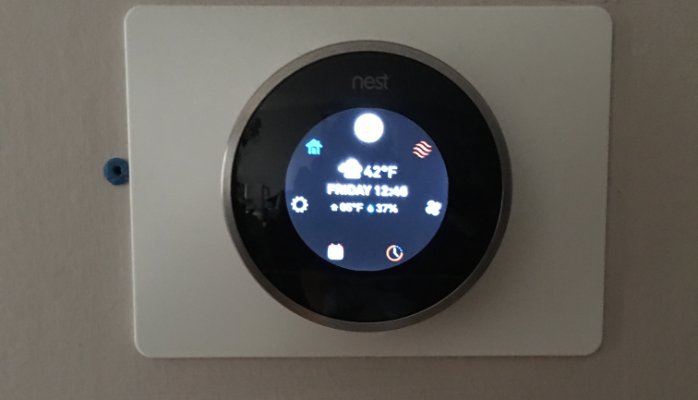
Google has begun rolling out Gemini for Home, an all-new artificial intelligence assistant built on its powerful Gemini large language model (LLM), to users in the United States through an early access program.

The new system represents a fundamental transformation of Google’s smart home experience, replacing the long-standing Google Assistant on Nest and other compatible devices.

Described by the company as the “next generation of intelligent home assistance,” Gemini for Home is designed to handle more complex, conversational, and context-aware interactions. It marks one of the most ambitious AI integrations yet within Google’s product lineup, reflecting the company’s broader strategy of embedding Gemini models across all major services — from Search and Android to Workspace and now, the home environment.

A Smarter, More Conversational Assistant

Unlike Google Assistant, which relies primarily on traditional command-based prompts, Gemini for Home draws on generative AI capabilities that allow it to interpret context, handle multi-step requests, and provide natural, flowing conversation. Google says the new system can understand nuance, remember recent interactions, and even infer intent based on household routines or preferences.

In a statement released alongside the rollout, Google described Gemini for Home as “a major step toward making smart homes truly intelligent.” The assistant can, for example, understand commands like “Prepare for movie night,” and automatically dim the lights, lower the blinds, and switch the TV to a streaming platform of choice — all in one fluid request.

Gemini for Home will eventually replace Google Assistant across all Nest Hub, Nest Audio, and Nest Mini devices, as well as third-party speakers that integrate Google’s voice ecosystem. For now, the early access phase is limited to users in the United States, but a broader global rollout is expected in the coming months.

How to Get Early Access

Google says users eager to test the new system can request early access through a few steps. First, they must visit their Google Groups settings and ensure that under “Global Settings,” the option “Add me to their groups” is checked. This enables participation in Google’s early access testing programs.

Next, users should open the Google Home app, tap their profile picture (or initials), navigate to Home settings, and look for an Early Access option. From there, they can submit a request to join the Gemini for Home pilot.

Once approved, Gemini for Home will automatically replace Google Assistant across all linked smart home devices. However, Google warns that there is currently no option to revert to the older Assistant once the switch is made — a sign of the company’s firm commitment to transitioning entirely to Gemini-based AI.

New Premium Features and Subscription Integration

The rollout also introduces several premium features that are accessible only through a Google Home Premium subscription. Among them is Gemini Live, an interactive voice and video feature that allows users to converse with their assistant in real-time through natural dialogue rather than static prompts.

Subscribers will also gain access to advanced camera history search, where Gemini for Home can analyze recorded video feeds to locate specific events — such as “when someone delivered a package” or “when the front door was left open.”

Google notes that these features rely on more intensive computing through Gemini’s multimodal processing capabilities, which can analyze both visual and textual data.

A Step Toward the “AI-First” Smart Home

This move marks Google’s major push to unify its AI systems under the Gemini banner. The assistant’s deployment within the home marks another step toward what CEO Sundar Pichai earlier this year described as the company’s vision for “AI that works everywhere — for everyone.”

Gemini for Home is seen as Google’s strongest attempt yet to reinvigorate its smart home business, which has lagged behind competitors like Amazon’s Alexa in recent years. The company hopes to reassert leadership in a market that is rapidly shifting toward AI-powered ecosystems.

According to internal briefings shared during Google I/O earlier this year, Gemini for Home is capable of understanding multimodal inputs — combining voice, image, and environmental data to make decisions. For example, it could identify who’s speaking, interpret gestures, or respond differently based on time of day or location within the house.

The launch comes amid Google’s wider rollout of Gemini models across its ecosystem. In 2024, Google fully replaced its Bard chatbot with Gemini, later integrating it into Gmail, Docs, and Android devices. Bringing the same technology into homes completes a key part of that expansion, positioning Gemini as the company’s universal AI platform.

The assistant will not only handle tasks like managing thermostats or controlling lights, but also act as a digital companion capable of summarizing daily schedules, syncing calendars, reading emails, and even generating custom responses or reminders based on household activities.

While the early access period will serve as a testing ground for stability and user experience, Google’s long-term plan is to phase out the old Assistant entirely. That transition will unfold over several months, as Nest device firmware and the Google Home ecosystem update globally.

The company has not announced when the rollout will expand beyond the U.S., but internal guidance suggests that the next wave of testing could include Canada, the U.K., and Australia before year-end.