DD
MM
YYYY

PAGES

DD
MM
YYYY

spot_img

PAGES

Home Blog Page 2268

UK Revamps Global Talent Visa in 2025 As A Response to the Skilled Workforce Decline

0

The United Kingdom is set to introduce significant updates to its Global Talent Visa in 2025 in an effort to reverse the declining number of skilled professionals entering the country.

This decision follows a period of tightening immigration policies, which led to a substantial drop in the skilled workforce. In response to concerns raised by industry leaders, policymakers, and economic analysts, the UK government is now aiming to make it easier for highly skilled professionals to live and work in the country.

The Global Talent Visa has long been a preferred pathway for top-tier professionals in technology, science, engineering, the arts, and academia. Unlike the Skilled Worker Visa, which requires applicants to secure a job offer from a UK employer, the Global Talent Visa allows individuals to move to the UK without the constraints of employer sponsorship. This level of flexibility makes it particularly attractive to experts who wish to work independently, switch jobs at will, or even establish their own businesses.

The decision to update the visa requirements and streamline the application process is largely driven by the noticeable gap in the UK’s labor market. The government’s recent changes to immigration rules, including stricter visa requirements and increased costs, contributed to a drop in skilled professionals migrating to the country.

Sectors such as artificial intelligence, cybersecurity, engineering, and life sciences have been particularly affected, with reports from industry groups warning of potential long-term economic consequences if the UK fails to remain competitive in attracting global talent.

The visa offers several advantages for skilled professionals, particularly at a time when many nations are competing for top-tier talent. The primary benefit is the ability to live and work in the UK without employer sponsorship, which removes a major barrier for many applicants. Unlike the Skilled Worker Visa, which imposes a salary threshold, the Global Talent Visa does not require applicants to meet a minimum salary level.

The visa also provides a pathway to permanent residency in as little as three to five years, depending on the applicant’s level of experience and contributions to their field. Furthermore, professionals working in artificial intelligence and cybersecurity will benefit from a faster application process, allowing them to receive approval in just three weeks.

The visa is designed to attract experts from various sectors, including technology, engineering, research, the arts, and academia. The UK government has made it clear that it intends to prioritize individuals who can demonstrate exceptional talent or promise in their respective fields.

To qualify, applicants must obtain an endorsement from one of the UK’s recognized bodies. Tech Nation serves as the endorsing body for digital technology professionals, while the Arts Council England handles applications from artists, filmmakers, and designers. The Royal Academy of Engineering is responsible for engineers, while academic professionals typically require endorsement from a relevant research institution.

Applicants must also provide substantial proof of their talent or promise in their industry. This includes presenting evidence such as internationally recognized awards, patents, media recognition, or contributions to high-profile projects. Unlike traditional work visas, the Global Talent Visa does not require applicants to have a confirmed job offer before applying. However, candidates must outline their career intentions in the UK, whether that involves freelancing, collaborating with UK-based institutions, or launching a business.

While the application process does not impose any strict salary requirements, and employer sponsorship is not needed, some applicants may be required to demonstrate basic proficiency in English and undergo security clearance before their visa is approved.

The application process for the Global Talent Visa consists of two main stages. First, candidates must secure an endorsement from a relevant UK body by submitting a portfolio that highlights their achievements. This stage carries an application fee of £524. Once an endorsement is secured, applicants proceed to the visa application stage, which is handled by the UK Home Office. This step involves submitting biometric data, paying a visa fee of £192, and covering the cost of the NHS Immigration Health Surcharge (IHS), which is set at £1,035 per year for each applicant. Those bringing dependents into the UK must also pay additional fees.

The 2025 updates introduce several notable changes that will impact new applicants. One of the most significant modifications is the introduction of an Electronic Travel Authorization (ETA) requirement. This additional step will streamline the security and eligibility screening process before an applicant enters the UK. Another major change involves stricter endorsement requirements. Moving forward, endorsing bodies will demand stronger evidence of an applicant’s achievements, with international awards, patents, and major research contributions becoming key determinants of eligibility.

In recognition of the high demand for professionals in artificial intelligence and cybersecurity, the UK government has introduced a fast-track processing system for applicants in these fields. Under the new policy, individuals working in AI and cybersecurity will have their applications processed within three weeks, significantly reducing the waiting time compared to other applicants. However, the overall cost of the visa is set to rise, as visa fees will increase by ten percent. The NHS surcharge, which is already a point of contention for many immigrants, has also been raised.

These updates reflect the UK’s attempt to correct some of the unintended consequences of its recent immigration policies. The sharp decline in skilled workers has not gone unnoticed, and there is now a pressing need to attract top talent to fill critical roles across multiple industries.

Analysts warn that without a more competitive immigration framework, the UK risks falling behind in sectors such as artificial intelligence, cybersecurity, and advanced manufacturing. The revised Global Talent Visa framework is designed to address these concerns by making the application process smoother for those with exceptional expertise while maintaining rigorous screening standards.

For applicants, the new changes mean that competition for the visa is expected to increase significantly. Those looking to secure a Global Talent Visa in 2025 will need to ensure that their applications are as strong as possible. This means gathering substantial evidence of professional achievements, securing endorsements from reputable bodies, and outlining clear career plans in the UK. Given the rising costs associated with the visa, applicants should also be financially prepared to cover all related expenses, including the NHS surcharge.


75% of Employers Say Colleges Fail to Prepare Graduates For Future Jobs, Advocate For AI Education – Forbes

0

A recent Forbes report has highlighted a growing concern among employers regarding the preparedness of college graduates for the modern-day workforce.

According to the report, 75% of employers believe that colleges/universities are not adequately preparing graduates for the jobs of the future. This deficiency has led to the strong call for the integration of Artificial Intelligence and tech education into their curricula.

In the report, many new graduates report that they can’t even get an interview, and when they do, they are unable to make an effective case for their inability to find the talent they need.

Specifically, 87% of graduates say they received better job training from their employer than they did from their undergraduate education. Also, 96% of HR leaders say colleges need to take responsibility for training people for future work.

With insights from 1,600 HR leaders and graduates, the study highlights the critical skills today’s job market demands and where higher education is falling short.

The Skills Students Need and Businesses Demand

1.) Real World Experience

According to the report, one of the top issues is a lack of real-world experience. The report underscores a significant disconnect between academic learning and the practical skills required to thrive in today’s dynamic job market.

60% of employers noted that higher education doesn’t adequately prepare students with real world experience.  As an example, 91% of employers say graduates need to be able to solve real problems, and only 40% of graduates say they get this kind of education. And 85% of graduates wish their college or university had better prepare them for their workplace experience.

Employers are increasingly seeking candidates who can seamlessly transition into the workplace and contribute meaningfully from the outset. This translates to a high demand for individuals who possess not just theoretical knowledge, but also the practical skills honed through hands-on experience.

2.) Global Mindset

In an increasingly interconnected world, employers are seeking graduates with a global mindset to navigate the complexities of modern-day workplace. 91% of employers say they need a global mindset from graduates, but only 39% of graduates report they are getting this preparation from colleges and universities.

The report suggests that employers value candidates who possess cultural sensitivity, adaptability, and an understanding of global business practices. These qualities enable graduates to collaborate effectively with diverse teams, understand international markets, and contribute to a company’s global success.

3.) Interaction Skills and The Ability to Work Well on A Team

Employers say that the ability to work well in a team is critical. A striking 91% of employers emphasize the critical importance of teamwork skills, yet only 47% of graduates report receiving adequate training in this area.

The report also underscores the high value employers place on a range of human and interpersonal skills, including:

* Communication (98%)

* Curiosity & willingness to learn (93%)

* Collaboration (92%)

* Creativity (90%)

* Critical thinking (87%)

These people skills, often referred to as soft skills or interaction skills, are deemed crucial for building relationships, fostering trust, establishing rapport, sharing ideas effectively, collaborating within teams, and navigating diverse work environments.  The report suggests that while employers prioritize these skills, graduates feel under-equipped in these crucial areas.

4.) AI And Tech Fluency

The modern-day job market is rapidly evolving, demanding a new set of skills from aspiring professionals. As AI transforms industries, technological literacy is more critical than ever.

Employers are increasingly seeking individuals who can navigate and leverage the power of technology, particularly Al, to drive innovation and solve complex business challenges. This shift reflects the pervasive integration of technology into nearly every facet of modern work, from data analysis and automation to communication and strategic decision-making.

In fact, graduates in the survey say that Al education could help them be more productive and efficient (88%), as well as more innovative (82%) and better at decision making and problem solving (80%). Fully 80% also say AI could improve the quality of their work. Employers also see this priority, with 97% stating that new hires must have a strong understanding of tech-oriented capabilities such as AI, IT and data analytics.

Unfortunately, despite 44% of graduates saying they received this training, only 20% say they have the knowledge they need. The Forbes report emphasizes that graduates who lack these crucial competencies may find themselves at a significant disadvantage in the job search, potentially limiting their career prospects and earning potential.

5.) Career and Degree Coaching

The report emphasizes the need for career and degree coaching. The findings reveal that a significant majority of employers believe that college graduates lack the essential skills and knowledge required to thrive in their roles.

This deficiency is attributed to a variety of factors, including a disconnect between traditional academic curricula and the evolving needs of industries. Incredibly, 94% of graduates in the report have expressed regrets about their degree and 43% feel doomed to fail because they chose the wrong degree with 84% saying it has affected their financial future. In addition, 82% respondents say it has a negative effect on their mental health.

Fully 64% wish they’d majored in another field, with 68% saying their degree didn’t prepare them well for their job. Also graduates wish they’d had more guidance in selecting their major and their degree path and 79%-72% hold their college and high school guidance counselors and programs accountable for this miss.

Conclusion

The findings of this report shows a clear disconnect between academic learning and the practical skills demanded by today’s employers. Colleges and universities must prioritize real-world experience, cultivate a global mindset, enhance the development of crucial interaction skills, integrate comprehensive Al and tech education and provide robust career coaching.

Failing to address these deficiencies will only perpetuate the skills gap, leaving graduates ill-prepared for the modern workforce and hindering their career prospects.

BC.Game Login Instructions and Problem Solutions

0

BC Game is now extremely popular for gamblers and bettors from Nigeria. This platform is known for the availability of payment via cryptocurrency, which greatly simplifies the deposit and withdrawal processes for gamblers. To use all the variety of features you will need to have an account on the site. Sometimes, your login information can become too old and you will need to proceed with this process again. Here you will find all the basic information about BC.Game login and what problems you may encounter.

BC.Game Account Login Process

The login process on BC.Game is quite simple and convenient. Below is a step-by-step instruction, following which users can quickly log in to the account on the BC.Game official website of the crypto online casino:

  1. Go to the site and click on the green button “Sign In”, which is located in the upper right corner of the main page;
  2. Choose a login method for the account, such as via email, phone number, Google account, WhatsApp, Steam, Telegram, and others;
  3. Enter the password for the account, if you have chosen the email or phone number;
  4. Double-check the entered information and enjoy online gambling on the site.

Possible Problems With Entering The BC Game Account

On the BC Game official website, users sometimes have problems with the login process. Below you can read information on the main 3 problems, as well as their solutions in the future. Players should also take into account that if they encounter any difficulties on BC.Game Nigeria, they can safely contact the technical support of the site, where they will be quickly and efficiently helped by specialists.

Forgotten Password

If you do now remember your password, while logging in to the account, then there is a simple solution for you. On the BC.Game site, there is a feature to reset your password. To do that, you will need to complete the next steps:

  1. Open the “Sign In” window on the site with a button in the upper right corner;
  2. Click on the “Forgot your password?” sign under the password field;
  3. Enter the email or phone number, that you have used for account creation;
  4. Click on the green “Reset password” button;
  5. Wait for the message from the company and follow the instructions.

Email Or Password Is Incorrect

This problem appears if you have entered the email or phone number and a password, and you can not log in to the BC Game account. In such a case, you will receive a notification with Error 4001 in the upper right corner of the site.


First of all, you should check the correctness of the entered email and phone number. Try to replace one with another. Then make sure that the entered password is correct and use the eye button to see it. If nothing helps, then contact the Support Service of the site and tell them about your problem

Fast Login Is Unavailable

If you have chosen one of the social networks to log in to your account on the BC Game site, then you can face another problem. Sometimes, users can not use the chosen network to log in. In such a case, you should first open the site of the network, and make sure, that you have entered your account there. Try again on the BC.Game site and in case of failure contact the Support Service.

Conclusion

The login process on the BC Game website is actually very simple and fast, thanks to the efforts of the bookmaker. The login interface is convenient and there are only a couple of problems that you may face. In any case, you will be able to contact the Support Service of the site, which works 24/7, and you will get access to your account in a few minutes!

Trump Pauses Tariffs on Canada and Mexico After Concessions on Border Security and Fentanyl Crackdown

0
USC experts talk about the importance of U.S.-China trade and how it affects the economy. (Illustration/iStock)

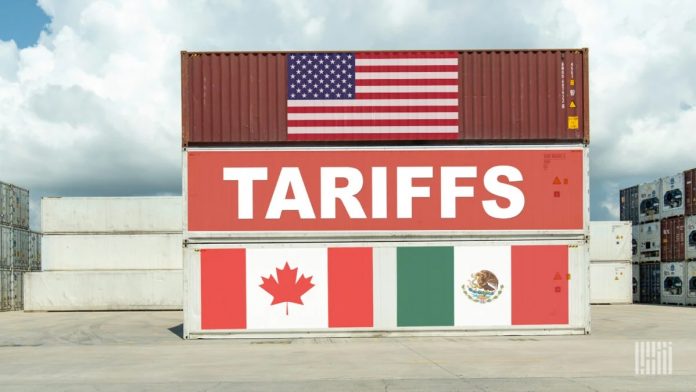
U.S. President Donald Trump has agreed to pause his planned 25% tariffs on Canadian and Mexican imports for 30 days after reaching last-minute deals with both countries’ leaders.

The decision came after Canadian Prime Minister Justin Trudeau and Mexican President Claudia Sheinbaum made key commitments to bolster their border security, deploy personnel, and take aggressive action against fentanyl trafficking.

The announcement, which arrived just hours before the tariffs were set to take effect at midnight on Tuesday, has temporarily calmed tensions but has done little to quell growing concerns from economists, business leaders, and politicians who criticize Trump’s trade war strategy as reckless and economically damaging.

Many experts have questioned the logic behind Trump’s escalating tariff threats, warning that such policies could lead to higher prices for American consumers, strained diplomatic relations, and economic uncertainty for U.S. businesses reliant on trade with North America.

Background of The Tariffs Wars

Trump has long accused Canada and Mexico of failing to stop the flow of illegal migrants and fentanyl into the United States. He has frequently blamed both nations for what he calls a border crisis, alleging that they have not done enough to prevent the movement of drugs and undocumented individuals across U.S. borders.

On Saturday, Trump made a dramatic move by announcing steep new tariffs on North American imports, declaring that protecting Americans was his duty as president and that he had made a campaign promise to stop illegal aliens and drugs from pouring across U.S. borders.

Under Trump’s original plan, all goods from Canada and Mexico would face a 25% tariff, Canadian energy products would be taxed an additional 10%, and a 10% tariff would apply to all goods from China.

The announcement sparked immediate backlash from Canadian and Mexican officials, as well as from businesses on both sides of the border. Canada and Mexico are two of the United States’ largest trading partners, and tariffs of this magnitude threatened to disrupt supply chains, increase prices on key goods, and strain economic ties.

In response, both nations scrambled to offer concessions that could convince Trump to reconsider his hardline stance.

Canada Concedes to $1.3 Billion Border Plan and Fentanyl Crackdown

During a last-minute phone call on Monday, Trudeau offered a series of commitments in exchange for Trump’s willingness to halt the tariffs. He later outlined these pledges in a post on X. Trudeau announced that Canada would list cartels as terrorists, ensure 24/7 surveillance on the border, and launch a Canada-U.S. Joint Strike Force to combat organized crime, fentanyl, and money laundering.

Trudeau also unveiled a $1.3 billion border security plan, stating that nearly 10,000 Canadian officials would be assigned to border security operations. He pledged new helicopters and surveillance technology to monitor crossings and prevent drug smuggling.

“I just had a good call with President Trump. Canada is implementing our $1.3 billion border plan — reinforcing the border with new choppers, technology and personnel, enhanced coordination with our American partners, and increased resources to stop the flow of fentanyl,” he said.

Trudeau said he is making new commitments to appoint a Fentanyl Czar, list cartels as terrorists, ensure 24/7 eyes on the border, and launch a Canada- U.S. Joint Strike Force to combat organized crime, fentanyl, and money laundering.

“I have also signed a new intelligence directive on organized crime and fentanyl and we will be backing it with $200 million,” he added.

Mexico’s Concessions: 10,000 Troops on the U.S. Border

Meanwhile, in an effort to avoid an economic showdown, Mexican President Claudia Sheinbaum agreed to deploy 10,000 troops to the U.S.-Mexico border to help control illegal crossings. Trump, in a Truth Social post, praised Sheinbaum’s swift action, saying they had a friendly conversation in which she agreed to immediately supply 10,000 Mexican soldiers to stop the flow of fentanyl and illegal migrants into the United States.

As part of the deal, Trump also confirmed that the U.S. and Mexico would enter a 30-day negotiation period, led by Secretary of State Marco Rubio, Secretary of Treasury Scott Bessent, and Secretary of Commerce Howard Lutnick. The tariffs would remain on hold for now, but Trump warned that they could be reinstated if Mexico and Canada fail to meet their commitments.

Experts Warn Trump’s Tariff War Could Backfire

While Trump is touting his move as a victory, economists and business leaders see it differently. Many argue that Trump’s tactics are reckless and damaging, potentially leading to higher costs for American consumers and businesses. Economist Paul Krugman slammed the move, calling it unnecessary economic self-sabotage that could stifle growth and increase inflation.

Business executives have also criticized Trump’s decision, saying it undermines long-standing trade partnerships. Wall Street reportedly described it as a dumb economic move, adding that the U.S. and Canada have one of the closest trade relationships in the world, yet Trump was treating them like an enemy instead of an ally.

Trump’s tariff threats have already prompted retaliatory measures in Canada. Several provincial leaders have pledged to remove American alcohol from store shelves, a move that could escalate tensions. If the U.S. reinstates the tariffs after 30 days, experts warn that Canada and Mexico could retaliate, imposing their own trade restrictions on U.S. products. Such measures could have severe consequences for key American industries, including agriculture, automobiles, and technology.

All The Aggressions for A Biden’s Deal?

Beyond the economic consequences, many are questioning whether Trump’s aggressive tactics were even necessary. Some analysts argue that the agreements reached mirror deals already negotiated under former President Joe Biden. A commentator on social media asked if Trump had really risked the entire U.S. economy to get the same deal Biden got from Mexico.

Trump’s Tariff and Lesson from Nigeria’s Land Border Closure

0

Mexico was normalized. Canada was normalized. But China? I am not sure what will happen as China decides to retaliate over the tariff imposed by the US Government: “China has retaliated against the United States after President Donald Trump imposed a fresh 10% tariff on Chinese imports, reigniting a trade war between the world’s two largest economies. In an immediate countermeasure announced on February 4, China’s finance ministry unveiled a package of tariffs targeting a range of US goods, marking a sharp escalation in economic tensions.”

But I have one side note for Trump and that is simple: you can empower some of these countries to activate “option B” when for decades they have never considered any alternative. For example, Canada may not see China as a friend but there is a way it could be pushed into crosshairs that it would expand its options.

Nigeria disconnected its land neighbours in a mindless policy, and rerouted trade routes ever since. That decision scaled poverty across Nigerian cities and most of those countries have moved beyond Nigeria. Before that land border closure, Onitsha was the core market for many Nigerian neighbours as the largest open market in West Africa. But after the land closure, Onitsha is yet to recover!

Many small producers in Ibadan, Aba, etc went bankrupt as they lost customers in Cameroon, Togo, Benin Republic, etc. In short, Nigeria ended up achieving one thing: Nigeria made Port of Lome in Togo, a country of less than 10 million, to become the largest port in West Africa, ahead of any port in Nigeria then (Port of Abidjan has overtaken Lome now)! We’re more than 23X the size of Togo.

So, the US should not be overly overconfident as it opens a new chapter for the EU. The UK used to brag that it was feeding Europe. But after BREXIT, across all core metrics, the UK has diminished economically. What does that tell us? Trump and his team should be nuanced on these things because they could kick the world to China just as America did to Panama some decades ago, even though Trump wants to return to doing business with the country now!

China introduced a bevy of its own measures against the U.S. in response to President Trump’s tariffs on Chinese goods from Tuesday. They include levies on U.S. coal, oil, liquefied natural gas and agricultural products, as well as an antitrust investigation into Google. Trump, who previously called the 10% tariffs on China an “opening salvo,” said he planned to speak to Chinese President Xi Jinping this week. The U.S. reached agreements Monday to delay tariffs on Canada and Mexico.

China Retaliates Against Trump’s Tariffs, Imposes 10% and 15% Tariffs on A Range of U.S. Goods