DD
MM
YYYY

PAGES

DD
MM
YYYY

spot_img

PAGES

Home Blog Page 2271

MicroStrategy Announces Decision to Stop Aggressive Bitcoin Acquisition

0

MicroStrategy Inc. has stunned the crypto world by pausing its aggressive Bitcoin acquisition strategy after 12 consecutive weeks of purchases.

The Virginia-based enterprise software company, led by outspoken Bitcoin advocate Michael Saylor, had been on a buying spree since late October, snapping up more than $20 billion worth of Bitcoin and pushing its total holdings to a staggering $44.7 billion—over 2% of all Bitcoin that will ever exist.

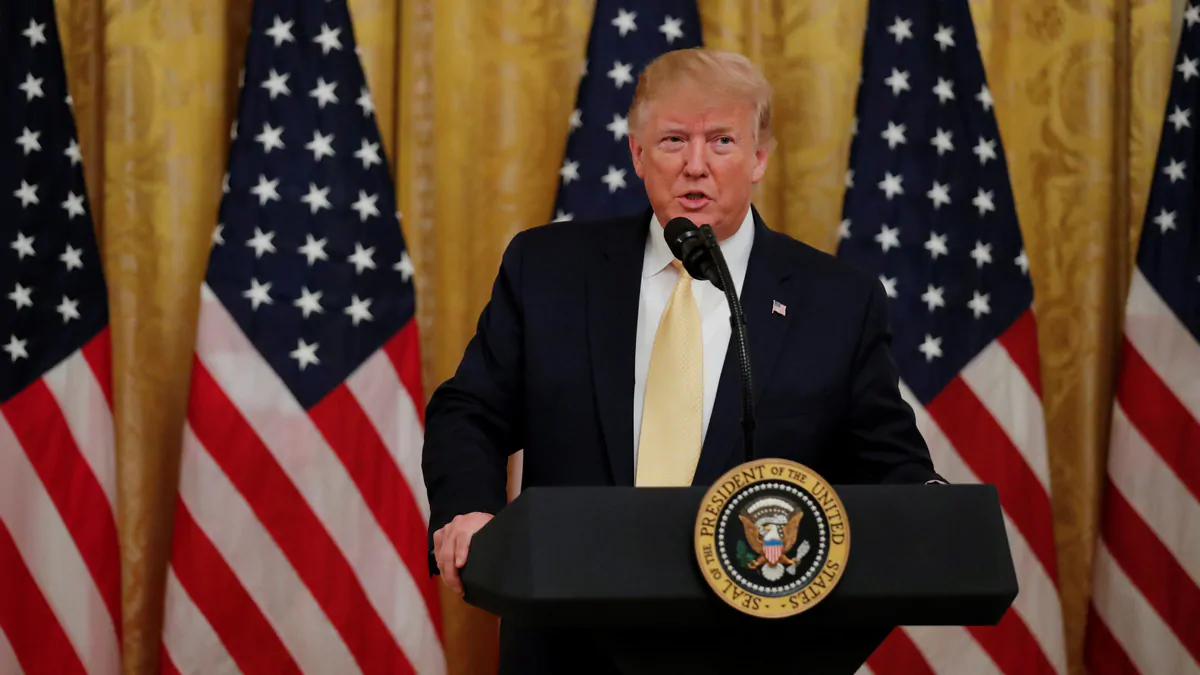
The company’s relentless investment had coincided with a historic rally in Bitcoin’s price, fueled in part by U.S. President Donald Trump’s pro-crypto stance and policy shifts favoring digital assets. As MicroStrategy positioned itself as the ultimate corporate Bitcoin proxy, its unwavering commitment to the cryptocurrency inspired confidence among traders and institutional investors during a time of uncertainty for the market.

However, the decision to halt purchases has sparked concerns among crypto enthusiasts and market watchers, who worry about the potential ripple effects on Bitcoin’s price momentum.

Some analysts fear that without MicroStrategy’s continued backing, Bitcoin’s rally could lose steam, particularly as the broader financial industry faces volatility from Trump’s latest trade policies. The president’s move to impose tariffs on major U.S. trading partners triggered a selloff across the cryptocurrency market, with Bitcoin dipping about 1% to $95,920.

MicroStrategy’s approach to capital deployment is also drawing scrutiny. The company has been aggressively raising funds through stock and debt offerings, aiming to secure $42 billion in capital by 2027. Last week, it sold $563 million in perpetual strike preferred stock while continuing its at-the-market stock sales and convertible debt issuances.

Hedge funds have also played a key role in driving demand for MicroStrategy’s securities, leveraging convertible arbitrage strategies that involve buying bonds and short-selling shares to capitalize on price swings.

MicroStrategy’s stock has been on an extraordinary run, surging more than 2,200% since the end of 2022. However, the pause in Bitcoin purchases appeared to spook investors, with shares slipping around 5% to $318.19 on Monday.

In a December interview with Bloomberg Television, Saylor indicated that the company intended to shift its focus towards fixed-income securities in the first quarter of 2025. As MicroStrategy prepares to report earnings on Wednesday, investors and analysts will be keen to see whether it provides further clarity on its long-term strategy.

Benchmark analyst Mark Palmer, who holds a “buy” rating on the stock, noted that the company has been far more aggressive in issuing capital and using the proceeds to buy Bitcoin than initially projected.

“It has been much more aggressive in terms of issuing capital and using the proceeds to buy Bitcoin than had been originally outlined back when the company first talked about this in conjunction with its third quarter earnings call,” said Palmer. “So now the question is, will the company revise that plan one way or the other?”

MicroStrategy did not say whether it plans to resume its weekly purchase of Bitcoin at some time. The company appears to be focusing on the aim to secure $42 billion in capital by 2027.

Trump Goes DEI In South Africa for White Farmers

0

A great irony as Trump defends the largely outnumbered white South Africans: “South Africa is confiscating land and treating certain classes of people VERY BADLY..,The United States won’t stand for it; we will act. Also, I will be cutting off all future funding to South Africa until a full investigation of this situation has been completed!”.

My teacher laughed so much that we were confused when he asked us to read  Ayi Kwei Armah’s “The Beautyful Ones Are Not Yet Born” in junior secondary. Today, I can write that Trump is now all for DEI (diversity, equity and inclusion) as he is fighting for inclusion in South Africa!

Sure, South Africa has to do more to include its white minorities just as America needs to do more to include its own minorities. As I have argued here, it is a pure illusion to think in America that the minorities will attain full equilibrium automatically since most of the systems are biased against them. A good example: if you are born in a poor area, you attain poor schools since the bulk of the school funding comes from the local real estate tax. When you distribute knowledge based on home addresses, you decouple economic mobility across generations!

Great to read Trump going DEI and advocating for inclusion in South Africa. Just as a poor kid in Ohio cannot cross the road, and attend a great school which is out of district because he is living in the wrong zip code, by Trump pushing to help these white farmers, he is demonstrating that most systems cannot be left to self-correct, and interventions are required. DEI is part of that intervention!

Yes, when Obama made it possible for real estate developers to build apartments in rich districts with great schools, and through that get poor kids into better schools, it could be seen as DEI gone far. But by not doing that, social mobility is punted as some are left behind in perpetuity.

Mr President, go for it, push South Africa for maximum DEI with sanctions, tariffs, and aid cuts until you get your results. Others advocate with press releases and TV punditry, you have the power of the United States to get your DEI inclusion agenda executed for people who do not need help. Brilliant!

South Africa Rebukes Trump Over Threat to “Cut All Future Aid”

South Africa Rebukes Trump Over Threat to “Cut All Future Aid”

0

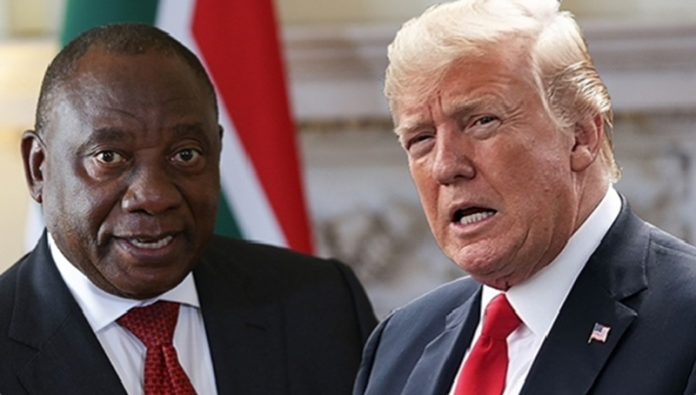
U.S. President Donald Trump’s threat to cut off all future aid to South Africa has received a swift rebuke from Cyril Ramaphosa, the South African president. This sets the tone for a potential escalation of diplomatic conflict between the two countries.

Trump announced on Sunday his intention to cut off all future aid to South Africa, citing what he called “a massive human rights violation” involving land confiscation and discrimination.

Trump’s explosive announcement came via his Truth Social platform, where he lashed out at South Africa, accusing it of treating “certain classes of people very badly” and vowing action.

“It is a bad situation that the Radical Left Media doesn’t want to so much as mention. A massive Human Rights VIOLATION, at a minimum, is happening for all to see. The United States won’t stand for it, we will act. Also, I will be cutting off all future funding to South Africa until a full investigation of this situation has been completed!” he said.

Trump later doubled down on his remarks while speaking to reporters at Joint Base Andrews on Sunday night.

However, Ramaphosa was quick to issue a statement rebuffing the accusations and expressing willingness to engage with the U.S. administration.

“The South African government has not confiscated any land,” he said. “We look forward to engaging with the Trump administration over our land reform policy and issues of bilateral interest. We are certain that out of those engagements, we will share a better and common understanding over these matters.”

Land Reform or Political Payback?

At the heart of the dispute is a bill Ramaphosa signed into law last week, allowing national, provincial, and local authorities to expropriate land “for a public purpose or in the public interest,” with “just and equitable compensation” to be paid. South African officials insist that no land seizures have occurred yet, but Trump’s comments suggest he believes otherwise.

South African journalist Pieter du Toit ridiculed Trump’s stance, suggesting that he had been influenced by billionaire Elon Musk.

“The U.S. President, clearly advised by Elon Musk, really has no idea what he’s talking about,” he wrote on X.

Musk, who was born in South Africa and has been critical of the country’s policies, is currently in a standoff with the South African government over his Starlink satellite internet service. President Ramaphosa’s administration has reportedly insisted that Musk must sell 30% of Starlink South Africa to local black empowerment interests before being allowed to operate in the country, per Fox News.

Firing back at Ramaphosa, Musk posted on X: “Why do you have openly racist ownership laws?”

Gaza, Israel, and the Real Reason for Trump’s Anger

While Musk and Trump appear to be aligned on the land issue, analysts believe the U.S. President’s decision to target South Africa may have deeper geopolitical motives. Many believe the real reason behind Trump’s decision lies elsewhere—South Africa’s recent lawsuit against Israel at the International Court of Justice (ICJ) over the killing of Palestinians in Gaza.

Others, however, suggest that Trump’s move may be less about land and more about South Africa’s international actions—particularly its recent case against Israel at the ICJ, where it accused the Israeli government of committing genocide in Gaza.

“The comments around property rights in South Africa must be read against broader and bipartisan U.S. concern at developments in South Africa,” analyst Frans Cronje, who advises corporations and governments, told Fox News Digital.

“Last week, South Africa’s government, together with that of Cuba, Belize, and four other countries, supported the formation of the ‘Hague Group’ in an apparent move to shore up the standing of the International Criminal Court, amid the passage through Congress of the Illegitimate Court Counteraction Act that prescribes sanctions against any country that is seen to use the court to threaten U.S. national security interests.”

South Africa has been one of the most vocal critics of Israel’s military actions in Gaza and has used international legal institutions, including the ICJ and ICC, to push for investigations into Israeli officials. Trump, a staunch supporter of Israel, has made it clear in the past that he will not tolerate what he sees as attacks on the country.

Cronje also noted that the U.S. has had broader concerns about South Africa’s alliances, including its growing ties with Iran, Russia, and China. In 2024, the U.S. Congress introduced the U.S.-South Africa Bilateral Relations Review Act, driven by fears that South Africa’s foreign policy was increasingly at odds with Washington’s interests.

Some commentators, including those aligned with Trump’s views, have suggested that his remarks may also be linked to concerns over attacks on South African farmers, particularly white commercial farmers. Trump has previously spoken about the issue, which his critics say he has exaggerated for political purposes.

Cronje noted that South African commercial farmers are “six times more likely to be violently attacked in their homes than is the case for the general population.” He also suggested that U.S. investors might be at risk under the new land law.

“Such seizures may also apply to the property of American investors in South Africa,” Cronje said. “With regards to land specifically, the legislation could enable the mass seizure of land, which has been an oft-expressed objective of senior political figures in the country. To date, however, there have been no mass seizures, in part because there was no legislative means through which to achieve such seizures.”

With the law now in place, that may change, he warned.

South Africa Brushes Off U.S. Threats

Ramaphosa dismissed the potential loss of U.S. aid as largely insignificant. He emphasized that the only meaningful American contribution to South Africa is PEPFAR (The U.S. President’s Emergency Plan for AIDS Relief), which provides funding for 17% of the country’s HIV/AIDS program.

“With the exception of PEPFAR, there is no other significant funding that is provided by the United States in South Africa,” Ramaphosa stated.

PEPFAR, launched by President George W. Bush in 2003, has been widely credited with saving millions of lives across Africa. If Trump follows through on his threat to cut all aid, it could put South Africa’s HIV/AIDS treatment programs at risk, though analysts say it is unlikely the U.S. would withdraw PEPFAR funding given its bipartisan support in Washington.

Trump’s targeting of South Africa comes as he campaigns for re-election in 2024, with his base largely supportive of his hardline stance on foreign aid, Israel, and perceived racial issues. South Africa’s decision to take Israel to court, combined with its increasingly independent foreign policy, has placed it in direct conflict with Washington’s interests.

Justice Malala, a South African political analyst, warned that South Africa could face further consequences under Trump’s leadership. Speaking on eNCA, Malala said, “Under the Trump administration, the United States is going to upend South Africa in many ways.”

However, South Africa, it seems, has become the latest battleground in Trump’s global fight over ideology, foreign policy, and alliances.

XRP & Dogecoin Holders Have Been Wrecked but Is 1Fuel’s Technology the Best Answer to Market Instability?

0

For years, Ripple (XRP) and Dogecoin (DOGE) have dominated the market as some of the best cryptos for investors and traders.

However, recent sell-offs are pushing their holders toward the revolutionary newcomer 1Fuel, which is making waves with its $1.7 million presale.

Read on to discover why analysts are confident 1Fuel will reward early adopters with 100x gains as the best crypto presale and why it will outperform XRP and DOGE in the upcoming bull cycle.

XRP price extends weekly losses

The XRP price is witnessing considerable volatility, dumping 10% compared to the previous week.

Like many altcoins, XRP is suffering the risks of President Trump’s new order to impose tariffs on goods coming from China, Canada, and Mexico. Increasing tariffs could boost inflation, risking higher Fed rates, which typically cause crypto prices to plunge.

Now, in the first week of February, XRP is exchanging for $2.65, down 4% in the past 24 hours and 10% over the past two weeks.

Dogecoin holders seek refuge in 1Fuel.

The recent Dogecoin price movement has caused massive losses for holders.

For context, Dogecoin was among the biggest gainers from the Trump-fueled Bitcoin rally, soaring to $0.42 in January. Many analysts expected the Dogecoin price to continue its upward momentum. However, it corrected shortly after and has been trading bearishly ever since.

At the time of writing, the live Dogecoin price is $0.26, which represents a 5% loss over the past 24 hours and a 15% loss compared to the previous week.

Why do analysts call 1Fuel the best crypto presale?

Looking to recoup losses, many XRP and Dogecoin holders are exploring the best cryptos that deliver consistent yet explosive growth even in a bear market—like 1Fuel.

At its core, 1Fuel makes blockchain technology more accessible by offering a secure one-click blockchain wallet.

Using 1Fuel, you no longer have to worry about multiple wallets or excessive fees.

Just select the token you want to use for trading, specify the crypto you want to own (no matter the network), and then sit back and relax as 1Fuel takes care of the rest.

1Fuel’s consensus mechanism also reduces the ecological impact of blockchain transactions, adding an extra layer of appeal for investors who value eco-friendly cryptos.

Lastly, 1Fuel is currently in its presale phase, having sold over 170 million tokens worth nearly $1.8 million.

The current price of OFT is $0.017, and it is expected to surge 100x in the coming months, presenting early adopters with a chance to earn unparalleled profits on a tiny investment.

Conclusion

Dogecoin and XRP are undoubtedly two of the best cryptos to buy owing to their established communities. However, after the recent sell-offs, many XRP and DOGE holders are rushing to get 1Fuel, which offsets these losses through its focus on innovation and utility.

Want to buy 1Fuel tokens at just $0.017? Join the presale today to enjoy rapid 100x returns when 1Fuel launches on tier-1 exchanges.

To Find Out More About The New 1Fuel Presale, See The Website & Socials Here:

Presale: https://www.1Fuel.io/

Telegram: https://t.me/Portal_1Fuel

X: https://x.com/1Fuel_?s=21

Fidson Healthcare Plc Reports FY N7.5bn Pre-tax Profit

0

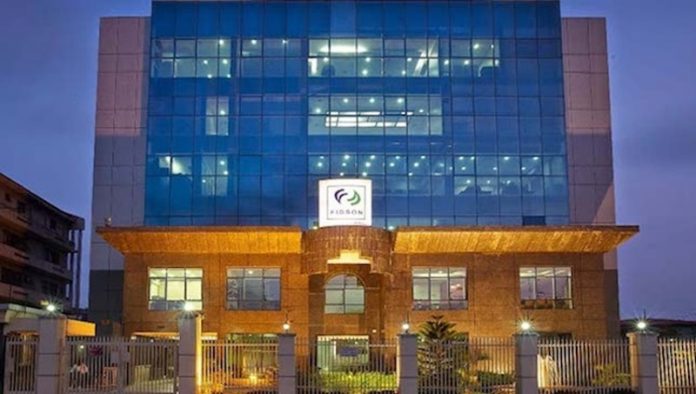
Fidson Healthcare Plc has reported a full-year pre-tax profit of N7.5 billion in its recent unaudited financial report, published on the Nigerian Exchange (NGX) on January 30, 2025.

This represents a 27.31% increase from the N5.9 billion reported for 2023, highlighting the company’s strong financial performance despite economic headwinds.

Strong Fourth-Quarter Performance

Fidson Healthcare’s fourth-quarter pre-tax profit surged by an impressive 282.35% to N2.3 billion, compared to N627 million in the same quarter last year. This substantial growth reflects improved operational efficiencies and higher sales volumes across key product categories. Revenue for the quarter also saw a remarkable increase, rising by 92.96% to reach N24.4 billion, compared to N12.6 billion in Q4 2023. This growth was largely driven by an uptick in demand for ethical goods and Over-The-Counter (OTC) products.

Full-Year Revenue Breakdown

For the full year 2024, Fidson Healthcare’s total revenue surged by 58.70%, climbing from N53 billion in FY 2023 to N84.1 billion. Ethical goods accounted for N55 billion, representing 65% of total sales, while OTC products contributed N26.3 billion, or 31.3% of total revenue. Consumer Healthcare Products made up the remaining N2.8 billion, underscoring Fidson’s diversified revenue streams and its ability to capture a broad consumer base.

Despite the impressive revenue growth, the company also faced rising operational costs. The cost of sales increased by 54.09% year-over-year, reaching N49.2 billion, up from N31.9 billion in the previous year. Much of this increase was attributed to higher production costs associated with ethical and OTC goods.

However, Fidson’s gross profit surged to N34.9 billion, reflecting a 65.69% year-over-year increase from N21 billion. This improvement was driven by strategic pricing, cost efficiencies, and increased sales volume.

While Fidson experienced strong revenue and profit growth, the company also saw a rise in administrative and distribution costs. Administrative expenses increased by 33.31% year-over-year, while selling and distribution expenses climbed 46.37%. Sales expenses accounted for 53.4% of the total selling and distribution costs, while logistics made up 39.0%. These increases were linked to expanded marketing efforts and higher distribution expenses, reflecting the company’s efforts to consolidate its position in the market despite inflationary pressures.

Operating profit for FY 2024 stood at N12.9 billion, marking a 62.17% increase from N7.9 billion in the previous year. However, finance costs rose significantly by 161.38% year-over-year to N5.4 billion, largely due to higher interest expenses on loans and financial liabilities. At the same time, finance income also saw a significant boost of 160.87%, reaching N60 million, compared to N23 million in 2023, primarily from interest earned on loans and receivables.

Ultimately, Fidson Healthcare reported a full-year pre-tax profit of N7.5 billion, reflecting a 27.31% increase from N5.9 billion in FY 2023.

Asset Position and Financial Stability

Fidson Healthcare’s total assets grew significantly in FY 2024, reaching N73.3 billion, up from N61.9 billion in the previous year. This increase highlights the company’s strategic investments in infrastructure, inventory expansion, and financial stability. Non-current assets for the year amounted to N25.6 billion, compared to N23.7 billion in 2023, with property, plant, and equipment making up a substantial portion at N24.8 billion. The growth in non-current assets indicates the company’s commitment to expanding production capabilities and improving operational efficiency.

Current assets also saw a notable increase, rising to N47.6 billion from N38.2 billion in the previous year. This growth was driven by rising inventories, which totaled N23.9 billion, and prepayments, which stood at N12.5 billion.

The Nigerian pharmaceutical sector has faced considerable challenges in recent years, with several multinational players exiting the market due unfriendly business environment significantly marked by the country’s foreign exchange crisis. The departure of companies like GlaxoSmithKline left a significant gap in the industry.

However, local pharmaceutical manufacturers such as Fidson Healthcare have moved swiftly to fill the void, strengthening domestic production and supply. Fidson’s strong financial growth in 2024 is seen as a sign that the sector is beating the country’s economic turbulence.