DD
MM
YYYY

PAGES

DD
MM
YYYY

spot_img

PAGES

Home Blog Page 2288

Legitimacy Struggles and Populism at the Heart of the Osun LG Crisis

0
political structure of Osun government for administrative purposes

The crises in Nigeria’s local government system, which is the third tier of government, have evolved in various ways over the years. These challenges range from concerns about the effectiveness of the tier to demands from stakeholders for full autonomy from the state government. Stakeholders argue that significant development and growth can only occur if the local government is genuinely independent and free from external influence.

In this analysis, our analyst notes that the recent Osun Local Government (LG) crisis has further exposed the deep divisions within Nigeria’s political landscape. The conflict between the ruling People’s Democratic Party (PDP) and the opposition All Progressives Congress (APC) goes beyond the control of local governance structures; it is a battle over legitimacy and political survival. Analysis of 30 posts and comments published on Facebook between February 17 and 19, 2025 reveals legitimacy struggles and populist rhetoric as two key forces shaping Nigeria’s democracy at the local government level.

Legitimacy, in any political system, is the bedrock of governance. It is what gives a government the moral and legal authority to rule. However, in Osun’s LG crisis, both the PDP and APC claim legitimacy, leading to confusion, instability, and rising political tensions. A central issue in the crisis is the interpretation of court rulings. One argument holds that the Court of Appeal’s decision did not reinstate APC officials, while another insists that their resumption of office is lawful. This has created a vacuum where both parties claim to be the rightful authority, further deepening the legitimacy crisis. As one post puts it, “The Court of Appeal judgment in the PDP case does not confer any right on the sacked local government officials to return to office.”

Exhibit 1: Key Themes in 30 Posts and Comments

Source: Facebook, 2025; Infoprations Analysis, 2025

Elections are meant to confer legitimacy, but the October 2022 local government elections in Osun State remain disputed. PDP supporters argue that the elections lacked transparency, while APC claims it followed due process. The lack of a clear, uncontested election result erodes trust in governance and fuels public frustration. Meanwhile, the Osun State Independent Electoral Commission (OSSIEC), courts, and security agencies are caught in the middle of the struggle. Their actions are seen as either biased or inadequate, further undermining state institutions’ credibility. The result is a governance system where even court rulings fail to provide clear resolutions, deepening the legitimacy crisis.

When legitimacy is in doubt, populism often emerges as a dominant force. Political actors use populist narratives to mobilize their base, delegitimize opponents, and portray themselves as champions of the people. APC and PDP supporters frequently describe the other as an existential threat. One comment warns that “APC’s governance will tear the country apart”, while another describes PDP as “barbaric” and “violent.” This demonization of opponents escalates tensions and makes dialogue nearly impossible.

Many pro-PDP messages frame the party’s leader, Governor Ademola Adeleke, as divinely ordained to rule, asking God to “protect him from the hands of the wicked.” By invoking divine legitimacy, these messages make political opposition seem not just unlawful but immoral. On the APC side, some supporters accuse the PDP of orchestrating violence and call for divine justice against them, further inflaming emotions.

Political conflict is framed as a battle, with terms like “we dare them ahead,” “who blinks first,” and “PDP thugs arrested.” The use of militarized language normalizes the idea of violence as a political tool, raising fears of actual violence in future elections. A key populist strategy is controlling narratives through social media and misinformation. Posts about leaked audio, video evidence of armed supporters, and accusations of external interference create a climate of fear and suspicion. Whether true or false, these narratives shape public perception and further entrench divisions.

The dominance of legitimacy struggles and populism in the Osun LG crisis indicates broader issues in Nigerian politics. When political parties spend more time fighting over legitimacy than governing, citizens suffer. Basic local government functions such as public services, security, and community development are neglected. Elections are supposed to resolve political disputes, but in Osun, they have become a source of conflict. When parties refuse to accept electoral outcomes and resort to court battles and street mobilization, democracy is weakened.

The militarization of political speech increases the likelihood of actual violence. If leaders fail to de-escalate tensions, local conflicts could spiral into state-wide or national crises. To prevent legitimacy struggles and populism from completely overtaking governance in Osun and other Nigerian states, electoral and judicial reforms must be prioritized. Strengthening electoral processes to ensure transparency and reduce post-election conflicts is essential. Courts must also deliver clear and enforceable judgments that resolve disputes decisively.

Responsible political leadership is crucial. Political parties must prioritize governance over constant legal battles, and leaders must discourage violence and inflammatory rhetoric within their parties. Civic engagement and political education should be strengthened. Citizens must be educated on democratic processes to reduce susceptibility to populist manipulation. Encouraging community-led peace dialogues will help ease tensions and build trust.
Tekedia Capital congratulates our portfolio startup, Pulse, for raising $3.9M

0

Tekedia Capital congratulates our portfolio startup, Pulse, for raising $3.9M today. Nat Friedman and Daniel Gross (NFDG) led the round with participation from Sequoia Capital Scout, Soma Capital, Olive Tree Capital, Tiferes Ventures, and execs from NVIDIA, OpenAI and Ramp.

The mission is clear: “PDF parsing and OCR tools have been around for decades, yet both legacy players and AI startups still struggle with real-world document processing. We’ve seen teams lose 20-30% of their business-critical information due to poor extraction.

“To solve this, we’ve built intelligent schema mapping and fine-tuned extraction models that maintain enterprise-grade accuracy across millions of documents. Our platform is already powering Fortune 100 enterprises building RAG systems…”

Win more markets and congrats Team.

NNPCL Denies Importing 200m Liters of Petrol As Controversy Over Fuel Quality and Supply Lingers

0

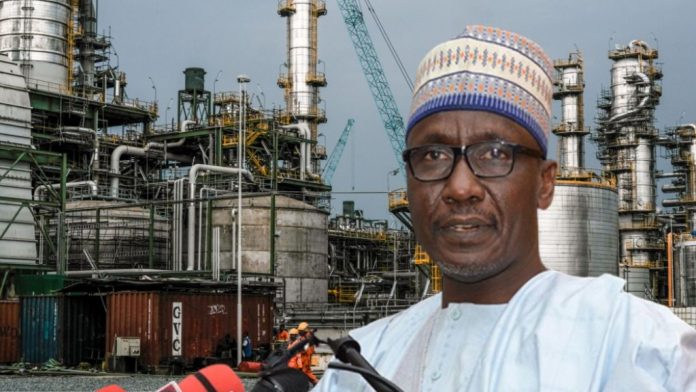
The Nigerian National Petroleum Company Limited (NNPCL) has strongly denied reports that it imported over 200 million liters of Premium Motor Spirit (PMS) in February 2025, stating that such claims are “completely false, baseless, and a reckless misrepresentation of facts.”

In a statement issued on Tuesday by its Chief Corporate Communications Officer, Olufemi Soneye, NNPCL clarified that it has not imported a single litre of petrol in 2025, even though it remains legally permitted to do so if necessary.

“NNPC Limited has not imported a single litre of PMS in 2025. We do not control the import activities of private marketers, nor do we issue import licenses,” Soneye said.

The company also warned against the spread of misinformation, stating that false reports could distort market realities, mislead stakeholders, and undermine public confidence in its operations.

NNPCL Maintains the Right to Import for Energy Security

While insisting that it has not engaged in fuel importation this year, NNPCL emphasized that it retains the right to do so if necessary to prevent disruptions in fuel supply.

“While NNPC Limited has not imported PMS in 2025, let it be clear that there is no legal restriction preventing us from doing so if necessary. As Nigeria’s foremost energy company, we have a duty to ensure energy security. Should any supply shortages arise, NNPC Limited retains the full right and responsibility to step in and import to stabilize the market,” Soneye stated.

However, expressing concern over what it described as deliberate attempts to misinform Nigerians, NNPCL threatened legal action against individuals or media organizations found guilty of spreading falsehoods about its operations.

“Misinformation of this magnitude does a grave disservice to the public, distorts market realities, and misleads key stakeholders. NNPC Limited will not tolerate the spread of false and malicious reports aimed at undermining its reputation,” the statement warned.

The national oil company urged media organizations to verify their facts before publication and assured Nigerians of its commitment to transparency and accountability.

Background: Reports of NNPCL’s Alleged Importation

The controversy began following a report that NNPCL imported 159,000 metric tons of PMS (equivalent to over 200 million litres) between February 1 and February 12, 2025.

The report triggered a wave of public backlash, with many Nigerians questioning why the country continues to import petrol despite repeated assurances that local refineries—particularly those owned by NNPCL—were undergoing refurbishment.

The debate also fueled concerns about NNPCL’s role in fuel distribution, especially in light of recent fuel price hikes and scarcity in some regions.

NNPCL Links Fuel Supply to Dangote Refinery Amid Accusations
In its defense, NNPCL stated that some of the PMS sold at its retail stations in Lagos, including the fuel purchased at its Ojodu Berger outlet, came from the Dang1ote Refinery.

“A significant percentage of Premium Motor Spirit sold at NNPC retail stations in Lagos—where this deceptive video was created—is sourced from the Dangote Refinery, a strategic partner in promoting local production and energy security,” the company said.

NNPCL further assured Nigerians that its petrol is “carefully formulated with one of the best compositions, ensuring optimal efficiency, durability, and environmental sustainability.”

The company also dismissed a viral video alleging that fuel purchased from its stations burns faster than expected, labeling the claim as “unverified and amateur research that lacks credibility, accuracy, and professional oversight.”

“We will not tolerate deliberate misinformation designed to undermine our operations and mislead Nigerians,” NNPCL warned, vowing to take legal action against individuals spreading falsehoods about its business.

Dangote Refinery Denies Link to Dirty Fuel

Despite NNPCL’s assertion that its fuel supply came from Dangote Refinery, sources from Dangote Industries Limited have denied it, questioning why NNPCL was attempting to link its fuel supply to the private refinery.

An unnamed official from Dangote Refinery, who spoke to The Punch, stated that while the refinery supplies high-quality PMS, it does not account for all fuel sold by NNPCL.

“NNPCL has its refineries and has also been importing fuel from other countries. So why are they now trying to tie this issue to Dangote Refinery? It makes no sense,” the official said.

Another insider source said that NNPCL might be trying to drag the refinery into a controversy to divert attention from its own operations.

“The NNPCL may be trying to drag the refinery into a controversy, but I don’t think that is necessary; they should just be ignored. The NNPCL is just trying to be smart. They’ve been importing. Have they come out to say, no, we are not importing it? So, what are we talking about? They also have their refineries. We don’t sell substandard fuel, and Nigerians know that.

“We can’t respond to such a press release. When something is good, it is good. No doubt about it. Everybody is confirming that. Everybody can testify to it,” the source added.

While NNPCL insists it will not import petrol in 2025, reports of fuel importation and distribution data suggest otherwise. The company has been criticized over fuel quality concerns, with some Nigerians claiming that the petrol it sells burns faster than that of other suppliers.

The controversy surrounding fuel importation and supply in Nigeria seems far from over. While NNPCL remains the dominant player in the petroleum sector, recent happenings raise questions about transparency in fuel importation and pricing.

With continued delays in fully revamping Nigeria’s state-owned refineries, the debate over local production versus importation is likely to intensify, especially as Nigerians grapple with rising fuel costs and inconsistent supply.

The Future of Conservation: Enduring Importance and Flourishing Practices

0

Conservation has seen a renewed interest over the past few years. With this in mind, let’s take a look at why conservation is so important, and how technology can help the cause.

The Balance Between Entertainment and Conservation

Safaris are a popular experience that allows tourists to become acquainted with local wildlife. In the spirit of conservation, more safari experiences offer virtual safaris that utilize live streaming technology, so that viewers can watch the animals live, but also respect their privacy. In addition, there are several TV shows that focus on the importance of conservation, whilst also entertaining audiences. The CBS series Extraordinary World with Jeff Corbin is just one example of entertaining TV that also highlights animal rights issues and environmental conservation.

Similarly, players can find a range of online slots at Paddy Power that are set in wild, diverse virtual environments, providing animal-centric entertainment without impacting their physical environs. Amazon Island Megaways creates an immersive jungle with monkeys, leopards, and blue parrots, whilst Wild Wild Bison uses the iconic animal to make the desert plains of the US more engaging and believable. Africa and African safaris are also virtualized in this way, with games like Silver Lion, Rhino Rampage, and Stampede using the iconography of local wildlife for an authentic themed virtual casino experience.

This highlights the push towards conscious consumerism within entertainment, striking a balance between engagement and pressing the reality of real issues like conservation. With this in mind, there has been a rise in conservation efforts around the world.

Conservation Investment Initiatives

Africa is home to one-fifth of all biodiversity in the world. That said, the UN has reported that old-growth forests are being cut down or dying at a rate of more than 4 million hectares every year. This rate is particularly alarming, as it is twice the average for the rest of the world. In addition to this, endangered species are also being reduced in size due to a wealth of issues. For example, the population of rhinos has been reduced to 5% of what it was just 3 decades ago.

With this in mind, 196 countries have committed to protecting 30% of land and sea globally by 2030. But, this crucially comes at quite a cost – a cost that some country’s economies may not be able to afford. As figures from Forbes suggest, there is a yearly deficit of $830 billion for such conservation efforts.

To plug the gap, this money is largely found through private investors. Take the Africa’s Most Endangered Species (AMES) Foundation. This non-profit organization is funded by entrepreneurs, CEOs, and so on, to invest in new technologies for profitable and scalable biodiversity conservation.

Sustainable Agriculture Technologies

One of the key trends to come out of this renewed interest in conservation technologies is sustainability. This is why the International Fund for Animal Welfare (IFAW) is working to promote climate-smart conservation practices using sustainable agriculture technologies.

This involves using satellite imagery and GPS to optimize the usage of water and chemical treatments, reducing waste and damage to the environment, as well as using smart technologies to optimize the management of water, livestock, fertilizers, and pesticides.

These techniques not only help to preserve the environment but also the ecosystems themselves. It helps to manage the impact of climate change through a holistic approach to mitigate the decline in animal populations.

And there you have it – by using technologies and investing in modern approaches to conservation, this could have a lasting impact on the future of the world’s diverse environments.

The gambling industry and AI: cause for concern

0

Thanks to artificial intelligence, gambling companies have a new tool to work with. The representatives of the gambling business claim that AI is used to improve the quality of customer service. Such technology certainly increases user engagement. However, it also has a downside: there is a perception that it leads to the aggravation of addiction. The ethical dilemma here is whether the pursuit of profit is prioritized over the well-being of people prone to addiction.

For example, in horse racing, AI can analyze data such as horse performance and track conditions. It also analyzes the statistics of jockeys and trainers. As a result, it calculates the probability of victory for a particular horse, but the player makes the final decision on whether or not to bet. The result is that casual punters can get professional-level information. AI has simplified everything considerably.

AI is being used in many countries to predict the outcome of competitions, but the trend is particularly prevalent in India. The government recently had a high-profile case involving using neural networks to bet on cricket. This sport is very popular here. It is not necessary to visit a bookmaker to make a bet; you can gamble on mobile devices. You only need to download one of the best cricket betting apps in India, register, and top up your balance. Users are eager to use AI to research an upcoming cricket event and place a bet with a high chance of winning.

However, AI is not limited to analyzing matches. Companies are also using AI to customize the gaming experience for players. Personalizing the betting experience is promising for gambling companies. Users receive relevant content based on their past activity and similarities in behavior with players close to them. The prevailing sports trends are also taken into account.  

But AI is also being developed to track gambling behavior problems in customers of gaming companies. It tracks key behavioral shifts such as recurring losses or chasing losses, impulsive behavior, and overall spending. That is, artificial intelligence technology can identify key traits that may indicate the presence of gambling addiction or fraudulent behavior. Its algorithms depend on data such as user account activity, betting frequency, bet amounts, and types of bets placed.