DD
MM
YYYY

PAGES

DD
MM
YYYY

spot_img

PAGES

Home Blog Page 23

Is Trump Redirecting Global Crude Demand Toward American Exports Through Hormuz Blockade After 50% Tariff Threat on China?

0

U.S. President Donald Trump on Sunday escalated tensions with Beijing by threatening to impose a sweeping 50% tariff on Chinese goods if Washington confirms reports that China is preparing to supply air defense weapons to Iran.

The threat, which follows the U.S. Navy’s move to mount a blockade at the Strait of Hormuz, has added a fresh trade and geopolitical fault line to an already volatile Middle East crisis. The blockade is being viewed by analysts as carrying a major energy-market strategy: redirecting global crude demand toward American exports.

The warning came after reports emerged that U.S. intelligence believes Beijing may be preparing to send man-portable air defense systems, or MANPADS, to Tehran, a development that would mark a notable escalation in China’s involvement in the conflict if confirmed.

Speaking during a televised phone interview with Fox News on Sunday, Trump said any confirmed military assistance to Iran would trigger severe economic retaliation.

“I hear news reports about China giving [Iran] the shoulder missiles… what’s called the shoulder missile, anti-aircraft missile. I doubt they would do that… but if we catch them doing that, they get a 50% tariff, which is a staggering — that’s a staggering amount.”

Yet even as he issued the threat, Trump cast doubt on the reporting itself, saying such accounts “[don’t] mean much to me, because they’re still fake.”

That contradiction has done little to calm markets. Instead, it has sharpened concerns that the Iran conflict is now spilling into U.S.-China trade relations, just weeks before Trump is expected to meet Chinese President Xi Jinping in Beijing on May 14 and 15.

What is increasingly drawing scrutiny, however, is the broader economic logic behind Washington’s blockade posture.

With the Strait of Hormuz effectively disrupted and Iranian oil flows constrained, traders and geopolitical analysts are increasingly interpreting the blockade as more than a military pressure tactic. It is being seen as a mechanism to reroute global crude demand away from Gulf suppliers and toward U.S. shale and liquefied natural gas exporters.

Trump himself reinforced that interpretation in a Truth Social post on Saturday.

“Massive numbers of completely empty oil tankers, some of the largest anywhere in the World, are heading, right now, to the United States to load up with the best and ‘sweetest’ oil and gas anywhere in the World.”

The phrase “sweetest oil” is significant in energy-market terminology. Sweet crude refers to oil with low sulfur content, which is cheaper to refine into gasoline and diesel. U.S. benchmark grades, particularly shale crude from the Permian Basin, are often marketed as premium light sweet crude.

By publicly highlighting incoming empty tankers, Trump appeared to be signaling that the United States is positioning itself as the immediate alternative supplier for buyers displaced by Gulf shipping disruptions.

That has led some market participants to believe that the blockade serves a dual purpose: to squeeze Tehran economically while channeling emergency demand into U.S. export terminals. In effect, the disruption in Hormuz could force major Asian buyers, including India, South Korea, Japan, and even parts of Europe, to increase purchases of American crude and LNG cargoes.

“Cat is out of the bag finally,” said Mir Mohammad Alikhan, a Wall Street analyst. “Trump does not want the Straits of Hormuz opened. Rather he wants the world to buy oil from America.”

With Brent and WTI both sharply higher since the conflict escalated, U.S. producers stand to benefit from stronger export margins, particularly as American crude is now trading at a premium amid supply concerns.

This is where China enters the equation in a more complex way. China remains Iran’s largest oil customer, reportedly taking more than 80% of Tehran’s sanctioned crude exports in 2025. Any confirmed military assistance from Beijing would not only deepen strategic tensions but also risk disrupting China’s own energy security, given its heavy dependence on seaborne imports and exposure to higher freight and insurance costs in the Gulf.

That economic vulnerability partly explains why Beijing has so far maintained a cautious public posture, presenting itself as supportive of peace efforts while avoiding any acknowledged military role.

Still, if intelligence regarding the missile shipment is substantiated, it would represent a marked shift from diplomatic support to material involvement.

The systems in question, shoulder-fired anti-aircraft missiles, would not dramatically alter the strategic balance on their own, but they could complicate U.S. and allied air operations by raising the risks to helicopters, drones, and low-altitude surveillance flights.

The tariff threat, therefore, serves both as punishment and deterrence. It also revives the prospect of a renewed U.S.-China trade confrontation at a moment when global supply chains are already under pressure from rising energy costs and shipping disruptions.

A 50% tariff on Chinese imports would reverberate well beyond bilateral trade. It could raise costs for American manufacturers, intensify inflationary pressure already fueled by higher oil prices, and inject fresh uncertainty into equity and currency markets.

European Stocks Retreat as Iran Conflict Deepens and Hormuz Blockade Casts Long Shadow Over Markets

0

European shares opened lower on Monday, surrendering some of last week’s relief gains as hopes for a swift end to the Iran conflict faded following the collapse of U.S.-Iran negotiations and President Trump’s surprise order to blockade the Strait of Hormuz.

The pan-European STOXX 600 index slipped 0.7% to 610.52 points by 0834 GMT. Although the decline was less severe than early futures had indicated, it underscored a return of caution among investors. The benchmark still sits comfortably above its mid-March troughs but has pulled back from the optimistic surge seen after the April 7 ceasefire announcement.

Germany’s DAX fell 1%, while London’s FTSE 100 eased a more modest 0.4%. The moves reflected a broad reassessment of risk as the Middle East situation deteriorated once again.

Trump’s announcement on Sunday dramatically raised the stakes. He directed the U.S. Navy to prevent all vessels from entering or leaving the strait, and to interdict any ships that had paid tolls to Iran. Washington, therefore, has effectively tightened the noose on Tehran’s oil exports while sending a clear message that it will not tolerate Iranian attempts to profit from the waterway during hostilities.

Oil prices promptly climbed above $100 a barrel, reviving inflation fears that had only recently started to recede. The energy shock comes at a delicate moment for the global economy, already battered by the after-effects of the pandemic, Russia’s war in Ukraine, and sweeping U.S. tariffs.

“At the start of this week, traders are partly reversing last week’s moves, but they are not back to panic levels, and some may argue that the sell-off could have been worse,” noted Kathleen Brooks, research director at XTB.

Last week’s 3% rally in the STOXX 600 had been built on expectations that the temporary ceasefire might lead to a lasting de-escalation and the reopening of the strait. Instead, Vice President JD Vance’s talks in Pakistan produced no agreement, with the key impasse centering on Iran’s unwillingness to provide firm assurances against pursuing a nuclear weapon.

Sector performance told a familiar story under these conditions. Energy stocks (.SXEP) bucked the trend, rising 0.9% as higher crude prices lifted prospects for oil majors. Everywhere else, however, the tone was negative. Travel and leisure shares (.SXTP) led the declines with a 2% drop, reflecting worries over disrupted tourism and business travel in the region. Banks (.SX7E) and industrials (.SXNP) shed 1.3% and 1.2% respectively, while luxury goods stocks (.STXLUXP) fell 1.8%.

The luxury sector has been particularly stung by shrinking sales in Dubai and Abu Dhabi, once its fastest-growing market, as wealthy visitors stay away amid the uncertainty.

Beyond the immediate market reaction, the blockade is forcing a rapid reassessment of monetary policy expectations. Investors are now pricing in nearly three 25-basis-point rate hikes by the European Central Bank by year-end, a sharp reversal from the dovish bets that dominated before the conflict intensified. Persistent energy costs are complicating the ECB’s task of steering the euro zone economy, raising the specter of stagflationary pressures.

Among individual bright spots, British fintech Wise climbed 4.3% after reporting a robust 26% increase in cross-border transaction volumes for the fourth quarter and reaffirming that its full-year profit margins should land near the top of its guidance range.

As European trading progressed, focus began shifting across the Atlantic to the start of the U.S. earnings season, with Goldman Sachs scheduled to report later Monday. How corporate America navigates the combination of elevated oil prices, geopolitical uncertainty, and tighter financial conditions will likely set the tone for global markets in the coming days.

For European investors, the message from Monday’s session was that the failure of recent diplomacy, coupled with the U.S. decision to enforce a blockade, has introduced fresh risks to energy supplies, global trade flows, and inflation trajectories.

OpenAI Sharpens Enterprise Offensive, Touts Amazon Alliance As Catalyst for Growth

0

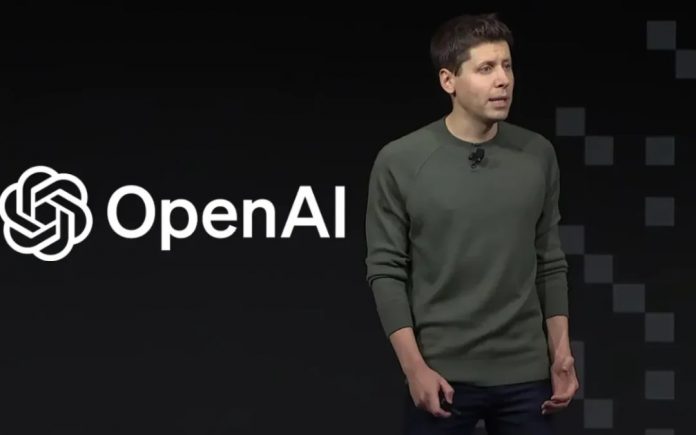
OpenAI is moving decisively to strengthen its position in the high-stakes enterprise artificial intelligence market. Newly appointed chief revenue officer Denise Dresser told staff that the company’s alliance with Amazon has become a major catalyst for growth, even as its longstanding relationship with Microsoft increasingly constrains how it reaches customers.

In an internal memo sent Sunday and reviewed by CNBC, Dresser laid out what amounts to a blueprint for OpenAI’s next phase of commercial expansion: diversify distribution, deepen enterprise penetration, and blunt the growing momentum of rivals such as Anthropic and Google. The message arrives at a pivotal moment for the company, which is rapidly shifting from consumer-led growth driven by ChatGPT to a more durable revenue model anchored in corporate clients and large-scale infrastructure partnerships.

The shift is centered on Amazon Web Services and its Bedrock platform, which allows enterprises to access a range of major AI models, including OpenAI’s, within existing cloud environments. For large companies, this matters because AI procurement increasingly follows existing cloud relationships rather than standalone software decisions.

“Our Microsoft partnership has been foundational to our success. But it has also limited our ability to meet enterprises where they are — for many that’s Bedrock,” Dresser wrote.

“Since we announced the partnership at the end of February, inbound demand from our customers for this offering has been frankly staggering.”

Those remarks underscore a subtle but important realignment in the AI industry’s power structure. Microsoft’s more than $13 billion backing of OpenAI since 2019 was instrumental in transforming the company from a research lab into the commercial force that ignited the generative AI boom. Yet as OpenAI scales, exclusivity is giving way to strategic flexibility.

The Amazon partnership is not merely about additional capital or compute. It is about distribution at scale. AWS remains the world’s largest cloud provider, and Bedrock gives OpenAI direct access to enterprises that have already standardized mission-critical workloads on Amazon’s infrastructure. That dramatically lowers friction around deployment, governance, procurement, and billing.

This means OpenAI is no longer content to be primarily associated with Azure. It is now positioning itself as a multi-cloud enterprise platform.

This comes as competition in the corporate AI market intensifies. Anthropic’s Claude model has emerged as a formidable rival, particularly in enterprise environments where coding, reasoning, and workflow automation are central use cases. Dresser’s memo appears aimed in part at countering that narrative internally and externally.

The momentum behind Claude has become a defining conversation in the industry. At the HumanX conference in San Francisco last week, Glean CEO Arvind Jain captured the market mood in unusually vivid terms.

“It has become a religion, that’s the level of that mania,” Jain said.

That description is more than colorful language. In enterprise software, perception often compounds adoption. Once chief information officers and engineering teams converge around a preferred model, usage can accelerate rapidly through internal pilots, department rollouts, and enterprise-wide licensing agreements.

Dresser directly challenged Anthropic’s positioning. She said the rival’s strategy is built on “fear, restriction, and the idea that a small group of elites should control AI,” while arguing that OpenAI’s “positive message” will prevail over time.

She also sharpened the competitive case on infrastructure, saying Anthropic has made a “strategic misstep to not acquire enough compute.”

This point cuts to the heart of the AI arms race because in today’s market, model leadership is inseparable from access to compute. The companies with the deepest access to GPUs, custom accelerators, and hyperscale data-center capacity hold a decisive advantage in training frontier models and serving enterprise inference workloads reliably.

OpenAI has clearly recognized this reality. Beyond Microsoft, it has increasingly tapped providers such as Oracle, Google, and CoreWeave to expand capacity, signaling that its infrastructure strategy is now explicitly multi-provider.

The evolving Microsoft relationship remains central to this story. While both companies continue to describe the alliance as strategic, the relationship has shown clear signs of strain as they expand into overlapping territory. Microsoft’s consumer and enterprise push with Copilot increasingly competes with OpenAI’s own software ambitions, while OpenAI’s growing cloud diversification reduces its dependence on Azure.

This competitive overlap has been building for some time. Microsoft formally added OpenAI to its list of competitors in its annual report in 2024, placing it alongside hyperscale peers such as Amazon, Apple, Google, and Meta.

Talking about the commercial stakes, Dresser recently disclosed that enterprise now accounts for 40% of OpenAI’s total revenue and is on track to reach parity with its consumer business by year-end.

That metric is especially significant in light of the company’s latest valuation, which exceeded $850 billion in its most recent fundraising round. Investors are increasingly focused not just on user growth but on recurring enterprise revenue, contract durability, and long-term monetization.

The memo also lands as OpenAI appears to be laying groundwork for a potential public offering. Reports in recent days suggest preparations are accelerating, with the company considering an IPO as soon as this year.

Against that backdrop, Dresser’s internal note reads as both an operational directive and a market signal. She urged staff to remain disciplined amid volatility and stay close to customers.

“The market is ours to win, let’s execute accordingly,” she wrote.

Citi Sets Up Team to Challenge Wall Street Giants in the $3tn AI Infrastructure Boom

0

Citi is making one of its most ambitious bets in years, launching a dedicated AI Infrastructure group in late February with the explicit goal of carving out a leadership role in what it estimates could be a $3 trillion capital build-out by 2030.

The new team brings together specialists from across the investment bank — technology, communications, energy, power, real estate, and even crypto — to move faster on financing the massive data centers, power plants, and supporting infrastructure required for the AI revolution.

“This is our time,” said Achintya Mangla, who joined Citi in the fall of 2024 as head of financing in the investment bank after a 22-year career at JPMorgan. Mangla, a key architect of the initiative, is setting a high bar.

“No bank is an incumbent. No bank,” he told Business Insider. “We have the opportunity.”

For Citi and CEO Jane Fraser, the push represents a high-stakes test of whether the bank’s long-running restructuring can finally position it to compete more aggressively for the most prestigious, and lucrative “lead left” mandates on major financings and advisory assignments, a territory long dominated by its bigger Wall Street rivals.

Other major banks are equally aggressive in their push to grab their AI infrastructure share. Fred Turpin, global chair of investment banking at JPMorgan, recently described the data center build-out as “the largest investment cycle in the history of capitalism.”

Yet Mangla believes Citi’s approach can help it steal market share. While rivals boast longer track records in data center financing and still lead the league tables, the gaps are narrowing.

According to Dealogic data through April, Citi has climbed to fifth place in data center debt activity this year, up from sixth last year and eighth in 2024. In overall U.S. M&A activity for the most recent quarter, Citi ranked fourth, behind only Goldman Sachs, JPMorgan, and Morgan Stanley.

Since March 2025, the bank has arranged more than $75 billion in financing for data center construction, supporting roughly 6.1 gigawatts of IT capacity — about half of Con Edison’s projected peak summer demand for 2025. One notable deal was the financing for Blue Owl and STACK Infrastructure’s $18 billion Stargate campus in New Mexico, which closed last year.

Mangla, who previously ran equity capital markets at JPMorgan, argues that deals of this scale demand a fundamentally different mindset. Banks must now assess a broad spectrum of risks — power supply, land availability, construction execution, specialized GPU hardware, and long-term offtake contracts with hyperscalers such as Meta and Microsoft.

Because these projects move at breakneck speed, traditional siloed handoffs between teams can create dangerous bottlenecks. Citi’s solution has been to collapse those capabilities into a single, cross-functional group.

“There is not one single person that can do all this,” Mangla said. “What we really need is problem solving” and the ability to be “agnostic in providing a capital solution whether it is debt, mezzanine, equity, or anything in the middle.”

The bank has moved quickly to bolster its bench. In recent months it has hired several experienced dealmakers, including Eric Farina from Morgan Stanley as co-head of Infrastructure Financing & Capital Solutions in debt capital markets (alongside Rob Cascarino), Ric Spencer from Bank of America as vice chair of technology investment banking, Alex Watkins from JPMorgan as head of technology financing, and Ashish Agrawal from JPMorgan as global co-head of real estate, lodging, and gaming investment banking.

Mangla said the core leadership team is now in place, though the bank remains open to bringing in exceptional junior talent if the right candidates emerge.

Brian Mulberry, chief market strategist at Zacks Investment Management, sees the AI Infrastructure group as a pivotal moment in Citi’s multi-year turnaround.

“This would transcend them into a major player with the major money center banks in a way that they weren’t competing before,” he said. “It’s the last real big step for Jane to accomplish, to be able to say the turnaround is done.”

For a bank that has spent years shedding businesses, simplifying its structure, and rebuilding credibility after a series of setbacks, success in the AI infrastructure race could mark a defining chapter. Some believe that if Citi can translate its cross-functional model and aggressive hiring into meaningful league-table gains and lead mandates, it may finally close the gap with its more established rivals.

Duolingo Recasts Its AI-First Strategy as It Retreats From Review Metrics and Refocuses on Outcomes

0
In this photo illustration the Duolingo logo seen displayed on a smartphone. (Photo by Rafael Henrique / SOPA Images/Sipa USA)(Sipa via AP Images)

Duolingo has quietly executed a significant course correction in its workplace AI strategy, stepping back from a policy that formally linked employee use of artificial intelligence tools to performance reviews.

The move speaks to a broader reckoning underway across white-collar workplaces over how AI adoption should be measured.

The reversal, disclosed by Chief Executive Luis von Ahn during an April 10 podcast appearance, marks a shift from measuring tool usage to evaluating business outcomes, a distinction that is increasingly becoming central to how companies govern AI in the workplace.

Speaking on the Silicon Valley Girl podcast, von Ahn said the company reconsidered its earlier approach after employees began questioning whether management was rewarding the mere use of AI rather than the quality and effectiveness of the work itself.

“Do you just want us to use AI for AI’s sake?” he recalled employees asking.

That question appears to have cut to the heart of a growing management dilemma in the AI era. For much of the past year, companies across the technology sector have been racing to institutionalize AI use, often folding it into hiring, workflow expectations, and performance assessments. But Duolingo’s retreat suggests that a more mature phase is emerging, one in which executives are beginning to distinguish between AI adoption as optics and AI adoption as measurable productivity.

Von Ahn acknowledged that the original policy had begun to feel misaligned with the company’s broader performance philosophy.

“At the end, we backtracked,” he said, adding that the company’s primary concern is whether employees are doing their jobs as effectively as possible, with AI serving as a tool rather than a requirement.

Rather than compelling AI usage as a compliance metric, Duolingo is now emphasizing output, judgment, and the suitability of the method. In newsroom terms, this is less a retreat from AI and more a recalibration of governance.

The company had initially taken a far more assertive position. In an internal 2025 memo, Duolingo laid out an “AI-first” framework that included tracking AI use in reviews, prioritizing AI fluency in recruitment, and gradually phasing out contractor work deemed automatable.

That memo sparked a backlash online and raised concerns among users and workers that the language-learning platform was moving toward a technology-led restructuring of its workforce.

The latest reversal suggests the company may have recognized the limitations of turning AI into a key performance indicator. The problem with such metrics is that they often incentivize performative usage rather than productive usage.

An employee may use AI frequently without improving outcomes, while another may deploy it selectively to achieve materially better results. Counting prompts, sessions, or tool engagement does not necessarily capture value creation.

This is where Duolingo’s shift becomes more broadly relevant as it reflects a growing realization among employers that AI is best evaluated as a means, not an end. The real question is not whether staff members use AI, but whether they are producing faster, better, more scalable work because of it.

That framing is especially important for Duolingo, whose core product relies heavily on pedagogy, user psychology, linguistic nuance, and content design. A spokesperson reinforced that point, saying the company’s work still depends on “human judgment, expertise, and creativity,” while AI tools function as support systems rather than decision-makers.

This also helps explain why the company is being careful in its messaging. Duolingo has been using AI for years, particularly in personalization, lesson scaling, and expanding into adjacent subjects such as math, music, and chess. More recently, AI has been central to its content acceleration strategy.

What has changed is not the company’s commitment to AI, but the way it wants employees to engage with it.

The broader corporate context makes this move even more notable. Other major technology firms are moving in the opposite direction. Reports indicate that some teams at Meta and Google have introduced explicit expectations around AI usage, with such activity in some cases feeding into evaluations.

Against that backdrop, Duolingo’s adjustment stands out as an early acknowledgment that AI governance cannot be reduced to usage quotas.

But performance reviews shape behavior. Once AI becomes a scored category, employees may feel compelled to use tools even where they add little value, potentially undermining craftsmanship, judgment, and originality. By reversing course, Duolingo is effectively saying that the quality of the lesson, product feature, or user experience matters more than whether an AI tool was involved in creating it.

That may prove to be one of the more instructive lessons for corporate America as the AI transition deepens. The first phase of the AI workplace revolution was about adoption. The second phase, now underway, is about intelligent accountability.

However, Duolingo’s latest move suggests that the companies most likely to benefit from AI may be those that stop measuring the tool itself and start measuring what it genuinely improves.