DD
MM
YYYY

PAGES

DD
MM
YYYY

spot_img

PAGES

Home Blog Page 243

UK Competition Appeal Tribunal Hands Apple $2bn Fine For Abuse Of Dominant Market Position

0

Apple has spent years battling lawsuits and fines from governments over its App Store policies. Now, a new collective-action lawsuit in the United Kingdom has added another $2 billion to the company’s mounting legal troubles, underscoring the growing pressure US tech giants face from regulators in both the UK and the European Union.

The UK Competition Appeal Tribunal ruled that Apple abused its dominant market position by imposing what it described as “excessive and unfair” commission fees on app developers, which in turn inflated costs for consumers. The lawsuit—filed by British academic Rachel Kent on behalf of 20 million iPhone and iPad users—accuses Apple of charging unjustifiable fees through its App Store, where developers pay up to 30 percent on all transactions. The court awarded up to £1.5 billion ($2.01 billion) in damages, potentially translating to about £75 ($100) per claimant.

Apple said it would appeal the ruling, arguing that its App Store model ensures security and privacy for users. “Eighty-five percent of developers pay nothing,” Apple said in its defense, maintaining that its fees are consistent with global standards and support app distribution and platform maintenance. The hearing to determine the compensation structure is scheduled for next month.

The UK case adds to a growing wave of legal challenges confronting Apple, Google, Meta, and other US tech companies in Europe. Regulators in Brussels have intensified enforcement of the Digital Markets Act (DMA) and Digital Services Act (DSA)—laws designed to break up digital monopolies and increase transparency in online platforms. Earlier this year, the European Commission fined Apple $580 million for failing to comply fully with the DMA, citing restrictions that still prevented fair competition among app developers. Apple has appealed the fine, claiming the EU’s interpretation of compliance “misunderstands how app ecosystems function.”

Meanwhile, Apple recently lost a long-running antitrust case against Epic Games in the United States, which forced the company to loosen rules on third-party payment systems. Although Apple made changes to align with the EU’s new laws, regulators concluded that the company’s steps were insufficient, with European Competition Commissioner Margrethe Vestager warning that Apple could face additional penalties if it continues to “self-preference” its own services.

Across the Atlantic, tech companies are also facing intensifying scrutiny. In the UK, regulators have expanded investigations into Google’s advertising dominance and Meta’s data handling practices, particularly how they intersect with user privacy and competition laws. The UK Competition and Markets Authority (CMA) recently announced a probe into Google’s control over ad data, suggesting that the company’s dominance may stifle smaller competitors.

Meta, too, is under pressure in Europe. The European Commission said last week that Facebook and Instagram failed to meet their obligations under the DSA to give researchers meaningful access to public data. The Commission accused Meta of using “deceptive interface designs” and imposing “burdensome procedures” that discourage transparency, potentially violating EU law. TikTok faced similar accusations, with regulators arguing that the Chinese-owned platform had failed to make its public data easily accessible to independent researchers.

These developments illustrate how Western regulators are increasingly converging on a shared mission to curb Big Tech’s influence over digital markets. In both the UK and EU, authorities have emphasized consumer protection, fair competition, and data privacy—areas where Apple, Meta, and Google have repeatedly clashed with regulators.

App developers and lawmakers continue to demand that Apple and Google open their mobile platforms to competition. Earlier this year, US lawmakers introduced two bipartisan bills that would compel both companies to permit third-party app stores and sideloading of apps—something the firms have long resisted, citing security concerns. Developers, including Spotify, Epic Games, and Match Group, have since joined forces in a coalition to challenge what they call a “duopoly of mobile app distribution.”

A recent industry survey found that a majority of developers believe third-party app stores could drive innovation and consumer choice. Apple’s restrictions on alternative web browser engines have also come under scrutiny, with developers arguing that such rules suppress creativity and prevent apps from functioning at full capacity.

In Europe, under the DMA, regulators can fine companies up to 6 percent of their annual global revenue for breaches—a figure that could run into tens of billions for the largest firms. Currently, Apple’s £1.5 billion penalty in the UK represents another flashpoint in a years-long struggle between Silicon Valley’s biggest players and European regulators determined to rein in their dominance over digital life.
Reddit Sues Perplexity and Data Firms for Alleged Data Theft, Accuses Them of Bypassing Digital Guardrails

0

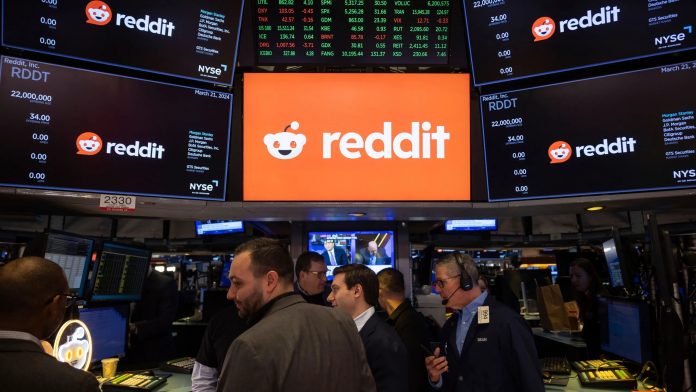
Reddit has filed a sweeping lawsuit against Perplexity and three other data-mining firms — Oxylabs UAB, AWM Proxy, and SerpApi — accusing them of illegally scraping its content and violating its digital protection systems.

The lawsuit, lodged Wednesday in Manhattan federal court, claims that the companies circumvented Reddit’s safeguards by exploiting Google’s search results to harvest data from the platform, according to Business Insider.

“These Defendants are similar to would-be bank robbers, who, knowing they cannot get into the bank vault, break into the armored truck carrying the cash instead,” the lawsuit states, alleging that the firms effectively stole Reddit’s user-generated content for commercial use.

The legal action is one of the most aggressive moves yet by Reddit as it seeks to assert control over its vast archive of public conversations — an increasingly valuable dataset in the age of artificial intelligence.

According to Reddit, Perplexity ignored a cease-and-desist order sent in May 2024, which demanded it stop scraping data unless it reached a licensing deal similar to those Reddit signed with Google and OpenAI. Despite initially telling Reddit it would “respect Reddit’s robots.txt,” the platform’s lawsuit says Perplexity’s citations to Reddit surged “forty-fold after Reddit told it to stop.”

“Rather than respect Reddit and its users’ rights, what Perplexity has done in response is simply come up with increasingly devious schemes to circumvent Reddit’s security systems and policies,” the lawsuit claims.

Reddit alleges that Perplexity used at least one of the other named scraping firms to ingest its data into large language models (LLMs).

“In other words, Perplexity’s business model is effectively to take Reddit’s content from Google search results, feed them into a third party’s LLM, and call it a new product,” the complaint reads. “While that business model has somehow translated into a $20 billion valuation, it has not resulted in a willingness to pay for what others (including Google) have.”

Perplexity spokesperson Jesse Dwyer responded that the company “will always fight vigorously for users’ rights to freely and fairly access public knowledge,” adding that its approach “remains principled and responsible as we provide factual answers with accurate AI, and we will not tolerate threats against openness and the public interest.”

Representatives for Oxylabs and SerpApi said they plan to defend themselves, while AWM Proxy, described in the suit as a former Russian botnet, could not be reached for comment.

Reddit’s ‘Marked Bill’ Trap and Evidence of Scraping

The lawsuit details how Reddit set up a digital “marked bill” trap to prove that Perplexity was scraping its data. The company created a test post viewable only to Google’s search engine. Within hours, Reddit says, the post’s contents appeared in responses generated by Perplexity’s “answer engine,” confirming unauthorized access.

“Within hours, queries to Perplexity’s ‘answer engine’ produced the contents of that test post,” the filing states.

Cloudflare CEO Matthew Prince weighed in on the controversy earlier this year, likening Perplexity’s alleged tactics to those of cybercriminals.

“Some supposedly ‘reputable’ AI companies act more like North Korean hackers,” Prince wrote on X in August. “Time to name, shame, and hard block them.”

Reddit’s Chief Legal Officer Ben Lee said the lawsuit highlights the growing problem of illicit scraping operations that feed the AI industry.

“Scrapers bypass technological protections to steal data, then sell it to clients hungry for training material,” Lee told Business Insider. “Reddit is a prime target because it’s one of the largest and most dynamic collections of human conversation ever created.”

The company said it has invested tens of millions of dollars over the years to combat automated data collection.

AI Partnerships and the Battle Over Data Control

The lawsuit comes as Reddit doubles down on turning its trove of user-generated content into a profitable asset. In March 2024, Reddit struck a lucrative licensing deal with Google that allows the search giant to train its AI models using Reddit posts. In return, Reddit gained access to Google’s Vertex AI tools, enhancing its own search and content moderation capabilities.

“Reddit is one of the few platforms positioned to become a true search destination,” the company said in its Q2 2024 report. “We offer something special: a breadth of conversations and knowledge you can’t find anywhere else. Every week, hundreds of millions of people come to Reddit looking for advice, and we’re turning more of that intent into active users of Reddit’s native search.”

The deal came just one month before Reddit’s highly anticipated IPO, which valued the company at $6.4 billion.

However, the Reddit-Perplexity clash is seen as part of growing tension between content owners and AI developers over who controls access to public data. While AI companies argue that publicly available information should remain free to use for training algorithms, content platforms like Reddit, The New York Times, and Getty Images insist that unauthorized scraping amounts to intellectual property theft.

For Reddit, which has been positioning itself as both a social network and a data company, the lawsuit marks an effort to establish new boundaries in the age of generative AI — and to send a clear message that it intends to monetize its content on its own terms.

Trump Names Michael Selig as CFTC Chair, Signaling Stronger Push for U.S. Crypto Dominance

0
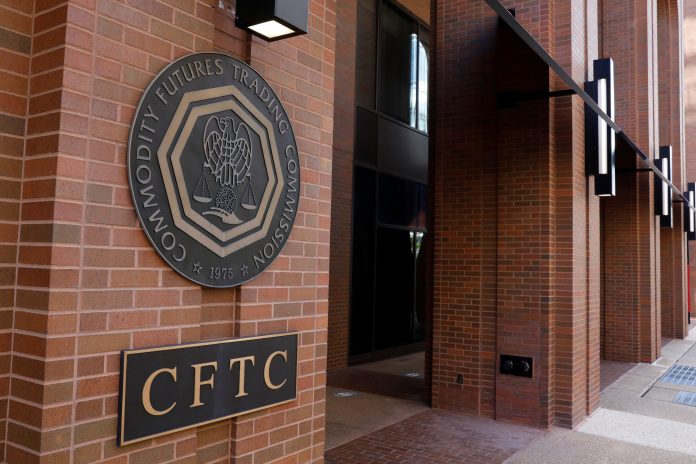
Signage is seen outside of the US Commodity Futures Trading Commission (CFTC) in Washington, D.C., U.S., August 30, 2020. REUTERS/Andrew Kelly

U.S. President Donald Trump has appointed Michael Selig as the new chair of the Commodity Futures Trading Commission (CFTC), underscoring the administration’s growing commitment to making the United States the global leader in digital assets.

Selig, who currently serves as chief counsel for the CFTC’s crypto task force, confirmed his appointment on Saturday in a post on X, saying he would “work tirelessly to facilitate well-functioning commodity markets, promote freedom, competition, and innovation, and help the President make the United States the Crypto Capital of the World.”

The appointment was first reported by Bloomberg News and later confirmed by an administration official and Selig himself. David Sacks, the White House artificial intelligence and crypto czar, also confirmed the move in a separate post on X, describing Selig as “deeply knowledgeable about financial markets and passionate about modernizing our regulatory approach in order to maintain America’s competitiveness in the digital asset era.”

Selig’s selection marks a turning point for the CFTC, the agency responsible for overseeing futures, options, and derivatives markets. His appointment signals Trump’s intent to reshape the regulatory landscape around cryptocurrency, aligning with his administration’s broader effort to reduce barriers for digital asset innovation and attract global crypto investment.

Before joining the CFTC in March 2025, Selig was a partner at the international law firm Willkie Farr & Gallagher. He has worked closely with Securities and Exchange Commission Chairman Paul Atkins, and is known in Washington for advocating a “light-touch” regulatory approach to blockchain and fintech startups.

A Shift in Crypto Policy Under Trump

The Trump administration has made cryptocurrency a central feature of its economic strategy, framing it as both an innovation engine and a matter of national competitiveness. Earlier this year, Trump signed into law the GENIUS Act and the CLARITY Act, both of which establish clearer rules for digital assets and distinguish between securities and commodities in the crypto space.

The GENIUS Act (Global Entrepreneurship and National Innovation in U.S. Systems) focuses on promoting blockchain infrastructure and creating tax incentives for crypto startups. The CLARITY Act, meanwhile, is designed to prevent regulatory overlap between the CFTC and SEC, which investors had long complained created uncertainty in the market.

The two laws have been widely welcomed by investors and crypto entrepreneurs, many of whom have praised the administration for its efforts to provide regulatory certainty after years of mixed signals from Washington.

Trump’s new CFTC pick comes after the collapse of an earlier nomination. The president had originally named Brian Quintenz, a former CFTC commissioner and crypto advocate, to head the agency. However, his nomination stalled amid opposition reportedly led by Tyler Winklevoss, co-founder of Gemini (GEMI.O), who was said to have lobbied the White House against the move. Quintenz later accused Winklevoss of using personal influence to derail his confirmation.

Selig’s appointment has largely been seen as a “safe yet ambitious” choice, given his policy expertise and his experience navigating both Washington’s bureaucracy and the private financial sector.

The CFTC is typically led by five commissioners, with the chair appointed by the president and confirmed by the Senate. Historically, the White House has maintained a bipartisan balance on the commission. Selig’s confirmation, which is expected to proceed without major opposition, will further cement Trump’s deregulatory tilt in the financial sector.

Crypto in the Trump Business Orbit

Cryptocurrency has become an increasingly visible feature of the Trump family’s business interests. Trump Media & Technology Group (DJT.O), which owns the social media platform Truth Social, has ties to several blockchain ventures. DT Marks DEFI LLC, an entity linked to the Trump family, holds nearly 38% of equity in the company controlling World Liberty Financial, a crypto venture that has recently drawn investor attention.

The president himself has launched digital tokens, and his wife, Melania Trump, has also released a series of themed crypto collectibles. These ventures have made the Trump brand a significant symbol in the political and commercial crypto ecosystem.

Selig’s leadership is expected to usher in a new era of regulatory modernization at the CFTC. It is believed that his appointment will likely accelerate the integration of blockchain technologies into traditional commodities markets, while streamlining compliance processes that have historically deterred startups from operating in the U.S.

The move could also reinforce investor confidence in the crypto industry, especially as global competition intensifies. The European Union’s Markets in Crypto-Assets (MiCA) regulation and China’s push into central bank digital currency (CBDC) frameworks have pressured Washington to define its own stance on digital finance.

Analysts say Selig’s confirmation would align the CFTC more closely with Trump’s vision of using digital assets to fuel U.S. economic competitiveness. However, some financial watchdogs have warned that loosening rules too quickly could expose markets to new forms of risk.

The Softbank’s $30B Investment in OpenAI

0

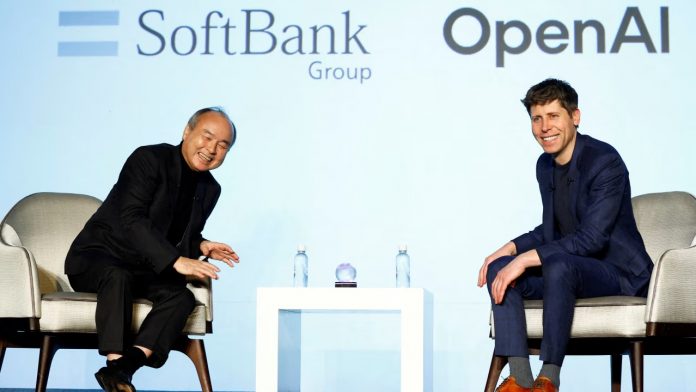
Masayoshi Son, the CEO of Softbank, inspires. He inspires because the size of his vision and his approach to risk are uncommon. I mean how do you invest $30 billion in a fledgling company like OpenAI? The news today is that the $30 billion is on the way: “SoftBank Group Corp. has reportedly approved the release of a second installment worth $22.5 billion to complete its $30 billion investment in OpenAI, according to a report by The Information on Saturday.”

He is among those who do not merely see the world as it is, they see it as it could become. In business, we talk about “animal spirit”, that audacious courage which refuses to be limited by the gravity of ordinary reasoning. Son embodies that spirit.

OpenAI is still discovering its full edges and contours, and someone is sending  $30 billion to it. Son simply builds. Hope one day he will expand his marketplace because as the Igbo Nation says “uwa bu ahia” [the world is a marketplace], Son should include Africa in his market!

SoftBank Approves $22.5bn Final Tranche to Complete $30bn Investment in OpenAI

SoftBank Approves $22.5bn Final Tranche to Complete $30bn Investment in OpenAI

0

SoftBank Group Corp. has reportedly approved the release of a second installment worth $22.5 billion to complete its $30 billion investment in OpenAI, according to a report by The Information on Saturday.

The Japanese investment giant’s board gave the green light on the condition that OpenAI finalizes a major corporate restructuring, a move designed to prepare the artificial intelligence company for an eventual initial public offering (IPO). The restructuring would shift OpenAI from its current capped-profit model to a fully for-profit structure — a requirement SoftBank had set before unlocking the final tranche of its funding.

According to the report, the approval would bring OpenAI’s ongoing financing round to $41 billion, one of the largest private capital raises ever recorded in the tech industry.

The first part of SoftBank’s $30 billion commitment — $10 billion — was approved in mid-April. The second installment completes the agreed package that SoftBank had initially tied to OpenAI’s internal restructuring and governance overhaul. If the restructuring were to fall through, SoftBank’s total investment would be reduced to $20 billion, as previously indicated by the company.

The investment is largely seen as part of SoftBank’s determination to solidify its position as a dominant global backer of artificial intelligence ventures. The conglomerate, led by Masayoshi Son, has in recent years refocused its Vision Fund strategy away from unprofitable startups toward companies at the heart of the AI revolution.

Son has repeatedly described AI as the “next stage of human evolution” and the centerpiece of SoftBank’s long-term investment thesis. The company has been actively backing firms involved in generative AI, semiconductor design, and data infrastructure, with Son personally emphasizing his ambition to make SoftBank the “capital provider for the AI era.”

OpenAI, best known for creating ChatGPT, has emerged as the most prominent AI company in the world, valued at $500 billion in secondary market transactions early this month. The firm has received funding from major investors, including Microsoft, which owns a significant stake and provides the computing backbone for OpenAI’s AI models through its Azure cloud service.

Restructuring for Public Markets

OpenAI’s restructuring is expected to create a more traditional corporate hierarchy that aligns with public market requirements. Under the proposed plan, OpenAI’s non-profit parent would hold a reduced controlling interest, while the for-profit subsidiary — which houses the ChatGPT and GPT model operations — would assume clearer financial accountability to shareholders.

The transition is seen as crucial to enabling future large-scale fundraising and potentially paving the way for an IPO, which SoftBank’s approval hints could come in the next two to three years.

It is believed that the restructuring would also streamline OpenAI’s partnership arrangements with major stakeholders such as Microsoft and Thrive Capital, and could ease mounting regulatory scrutiny over its complex governance model.

A Lifeline for OpenAI’s Expanding Operations

The financing round is expected to give OpenAI a significant liquidity boost as it races to expand its global operations and develop its next generation of multimodal AI systems. The company has been aggressively hiring across research, infrastructure, and enterprise sales divisions while simultaneously scaling its data center footprint through collaborations with chipmakers like NVIDIA and AMD.

The infusion of capital will help fund the development of GPT-6 and potentially new hardware ventures — including AI-optimized devices OpenAI has reportedly been prototyping in partnership with former Apple designer Jony Ive.

Some analysts believe that the new round could also accelerate OpenAI’s push toward financial self-sufficiency. Despite its massive global reach, the company’s operating costs remain high, particularly in computing and cloud resources. The addition of SoftBank’s investment may help the company move closer to breaking even by 2026, according to estimates from market research firm CB Insights.

SoftBank’s Broader AI Expansion

For SoftBank, this investment marks its largest single commitment since its $100 billion Vision Fund days. It also signals the firm’s renewed confidence after years of turbulent losses from earlier tech bets.

In 2023, SoftBank’s Vision Fund unit posted its first profit in nearly three years, buoyed by the rebound in tech valuations and its holdings in AI-related firms such as Arm Holdings, which went public last year in one of the most successful tech listings of the decade.

The OpenAI investment follows Son’s pledge to “go all in on AI” and represents what could become a defining move in SoftBank’s post-Vision Fund era. The move is believed to position the Japanese conglomerate as a major counterweight to Microsoft and other institutional investors shaping OpenAI’s governance and growth trajectory.

But the timing of the restructuring, and whether it satisfies SoftBank’s preconditions, remains critical. If completed successfully, the deal would not only secure OpenAI’s largest-ever funding round but also help stabilize the company’s balance sheet as it prepares for long-term expansion.