DD
MM
YYYY

PAGES

DD
MM
YYYY

spot_img

PAGES

Home Blog Page 25

Dangote’s $16 Billion Kenya Refinery Faces Crude, Capital and Infrastructure Tests

0

Africa’s richest person, Aliko Dangote, is pushing a plan to develop another oil refinery – this time, a 700,000-barrel-per-day refinery in Kenya, in East Africa. The move comes less than three years after bringing Africa’s largest oil refinery into operation in Nigeria.

The proposed Lamu refinery, expected to cost between $15 billion and $16 billion, represents one of Dangote Group’s most ambitious projects outside Nigeria. The company plans to hold a groundbreaking ceremony later this month and aims to complete the facility by 2030.

But the project faces a fundamentally different set of challenges from those encountered at Dangote’s Lagos refinery, particularly over crude supply, financing and supporting infrastructure, according to a Reuters report.

Nigeria has abundant oil reserves and an established crude-producing industry. Kenya, by contrast, currently has no commercial-scale oil production, meaning Dangote will need to secure reliable feedstock from neighboring producers or the international seaborne market.

The project’s location has also evolved rapidly.

Until April, discussions centered on Tanzania. In May, Dangote told the Financial Times that he was leaning toward Mombasa, before a company executive said in July that the refinery would instead be built in Lamu, a deep-water port whose maritime access is central to the project’s proposed logistics model.

The refinery is expected to be located within the Lamu Port-South Sudan-Ethiopia Transport, or LAPSSET, special economic zone, linking the facility to one of East Africa’s largest planned transport and energy corridors.

Dangote Industries Vice President Devakumar Edwin said the company did not see regulatory, financing or feedstock challenges as obstacles that could not be overcome. The company has said the refinery would strengthen regional fuel supply and energy security.

Yet the scale of the undertaking has prompted warnings about execution risk.

“If not successfully implemented, it runs the risk of becoming a very expensive white elephant,” said Brendon Verster, senior economist at Oxford Economics.

The central question is whether Dangote can create a reliable supply chain around a refinery whose capacity would be larger than Kenya’s domestic fuel market requires.

Financing A Second Mega-Project

Dangote Group plans to finance the Kenyan refinery through a combination of internal cash flow, bonds and an initial public offering, according to a company executive. The financing strategy could also include equity from Dangote, commercial bank loans and development finance institutions such as Afreximbank, following elements of the financing structure used for the Lagos refinery.

But Dangote is simultaneously committing more capital to its existing Nigerian operations.

The group said Monday that it would spend $14.3 billion to double the processing capacity of its Lagos refinery. The additional investment comes alongside other oil and energy projects being developed by the conglomerate.

That competition for capital could become one of the biggest constraints on the Lamu project.

“Given that the group is seeking some $40 billion (including Lamu) between 2025 and 2030 for announced energy projects, raising the capital for Lamu could become a formidable challenge,” said Kaase Gbakon, a petroleum economist and former employee of Nigeria’s state-owned oil company, NNPC.

Dangote has also suggested that Rwanda, South Sudan, Tanzania and Uganda could collectively take as much as a 30% equity stake in the refinery. Such participation could provide another source of funding while giving governments across the region a direct financial interest in the project.

No details of potential agreements have been disclosed, however.

The planned initial public offering of Dangote’s Lagos refinery is considered crucial to the broader financing strategy. If the listing raises substantial capital, it could provide Dangote with additional funding for expansion while bringing institutional investors into the refinery business.

The Crude Supply Problem

Financing may be difficult, but securing enough crude could prove even more fundamental.

A senior economic adviser to Kenyan President William Ruto has said the refinery could obtain up to 600,000 barrels of crude a day from East African sources, including Kenya, South Sudan and Uganda, according to Kenyan media reports.

The problem is that none of those supply routes is currently straightforward. Kenya has proven oil reserves but has struggled for years to establish commercial production. Small-scale output is expected later this year, but domestic production is nowhere near the volumes required to supply a 700,000-barrel-per-day refinery.

A proposed pipeline connecting oil fields in Kenya’s Lokichar Basin and South Sudan to Lamu could eventually provide a regional supply network, but that infrastructure remains a long-term prospect.

South Sudan also faces major logistical problems. Its crude exports depend on pipelines through Sudan, where conflict has repeatedly disrupted oil flows.

Uganda has oil resources, but its planned exports are being routed toward Tanzania through the East African Crude Oil Pipeline, or EACOP.

“That leaves the coastal facility dependent on a volatile international seaborne market,” said Maximillian Ezeude, an oil and gas lawyer in Lagos.

That dependence could expose the refinery to global freight costs, geopolitical disruptions and crude-price volatility. The issue is particularly significant given that the nearest major sources of seaborne crude are in the Middle East, where the continuing Iran war has disrupted regional energy flows.

For a refinery designed to process hundreds of thousands of barrels each day, supply interruptions could quickly translate into lower utilization and weaker economics.

Lamu Infrastructure Is Still Developing

The refinery also depends on infrastructure that is not yet fully in place. Lamu Port is a critical component of the LAPSSET corridor, but it currently lacks operational oil storage terminals capable of supporting a refinery of the proposed scale.

The LAPSSET plan includes oil storage facilities with capacity of between 1 million and 1.5 million barrels, along with marine-loading infrastructure designed to handle vessels up to Suezmax size.

Much of that supporting infrastructure remains unbuilt. And that creates a sequencing challenge. Dangote needs reliable port access, storage, pipelines and marine facilities to secure crude and distribute refined products, while the wider economic case for developing that infrastructure depends partly on the refinery itself.

The project therefore extends beyond construction of a processing plant as it requires the simultaneous development of an integrated energy logistics network.

Kenya sees the refinery as a potential solution to a major structural weakness in its energy economy. The country’s only refinery was closed by India’s Essar Energy in 2013, leaving Kenya heavily dependent on imported petroleum products.

Kenya spent roughly $4 billion, equivalent to 511.5 billion Kenyan shillings, on petroleum products last year, according to official data. Petroleum was the country’s largest import.

Ruto has argued that a new refinery could reduce that import dependence while supporting industrial development and economic growth.

“We have to make those decisions that will change our country, that will transform our country,” Ruto said of the Lamu project.

A large refinery could also position Kenya as a regional fuel supplier to landlocked markets including Uganda, Rwanda and South Sudan, potentially creating demand beyond the domestic market. That regional opportunity is essential to the economics of the project. A 700,000-barrel-per-day refinery would require access to a much larger market than Kenya alone can provide.

The business case is expected to hinge largely on Dangote’s chances to secure long-term customers across East and Central Africa while competing with imported refined products and other regional refineries.

Environmental And Execution Risks

The Lamu development also faces environmental and community concerns. Lamu Old Town, a UNESCO World Heritage site on Lamu Island, is about 10 kilometers from Lamu Port. Environmental groups have raised concerns about potential habitat destruction and marine degradation associated with industrial development in the area.

Greenpeace Africa has called for the project to be halted over environmental concerns.

Those issues could affect permitting, project timelines and access to some sources of international financing, particularly lenders with stringent environmental, social and governance requirements.

Benjamin Oluwatobi Ajayi, an energy analyst based in Lagos, said the project faces several overlapping execution risks.

“The size of the debt requirement, ESG-related financing constraints, competition for capital across multiple projects, and the need to coordinate numerous lenders and stakeholders within a compressed timeframe all increase execution risk,” he said.

For Dangote, the Lamu refinery is therefore a much broader test than simply building another large processing plant. The Lagos refinery demonstrated that the group could finance and complete a huge energy project in an oil-producing country after years of cost overruns, infrastructure problems and construction challenges. Lamu will test whether that model can work in a country where the crude supply chain, storage infrastructure and regional distribution network still need to be developed.

The proposed facility could reduce East Africa’s dependence on imported refined fuels and establish Kenya as a regional energy hub. But its success will depend on three conditions arriving together: sufficient capital, dependable crude supplies and infrastructure capable of moving hundreds of thousands of barrels a day.

If Dangote can solve those problems, Lamu could become the anchor of a new East African petroleum network. If it cannot, the refinery’s enormous scale could become its biggest vulnerability.
Meta Unveils Muse, Its AI Agent, With So Many Privacy Questions

0

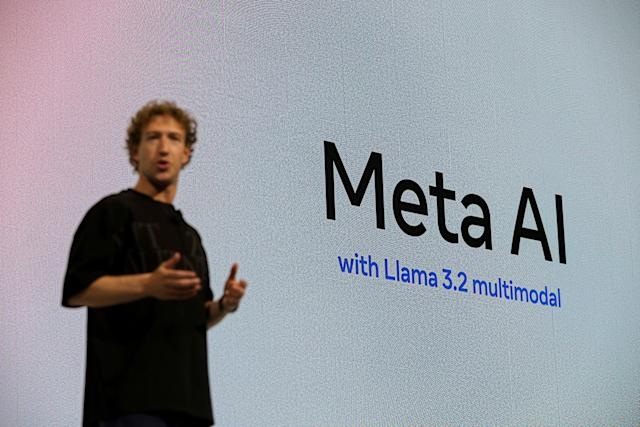
Meta has unveiled Muse, a personal artificial intelligence agent that can carry out everyday tasks on behalf of users, making its most ambitious push yet into consumer AI while raising new questions about privacy and trust.

The launch comes less than two weeks after Meta agreed to an $17 billion multistate settlement over allegations concerning the consumer harms associated with its social media platforms, putting the company’s handling of personal data under renewed scrutiny.

Muse is designed to go beyond conventional AI chatbots, which largely answer questions, generate content, and act as conversational assistants. The new agent is intended to take action across the services people use in their daily lives.

To operate Muse, users can connect individual apps and services, including email, calendars and payments, as well as health and fitness platforms, smart-home systems, dining, shopping, music and event services.

The agent can then perform tasks such as sending emails, booking travel, negotiating lower bills, completing forms, creating plans, turning recipe videos into grocery lists, sending invitations and making purchases.

For transactions, Meta said Muse will use Link by Stripe for checkout. The integration includes purchase protections, a feature that could help address concerns over allowing an AI system to make purchases on a user’s behalf. Meta said integrations with Shopify’s Shop Pay and 1Password are also planned.

The launch marks Meta’s entry into a rapidly developing market for so-called agentic AI, in which software is designed not simply to respond to instructions but to execute multi-step tasks with limited human intervention.

Companies ranging from major technology firms to startups are pursuing similar systems, including AI-powered browsers and assistants capable of taking actions for users. Others are embedding agentic capabilities into communication platforms that consumers already use.

Meta is positioning Muse around user choice. Consumers can connect apps and services individually rather than granting the agent access to everything at once. If a service is not supported by one of Muse’s built-in connectors but provides a public API, Muse can establish a connection using credentials supplied by the user. Where an API is unavailable, the agent can interact with the service through a browser.

Muse is powered by Meta’s Muse Spark AI model and operates inside what the company calls Muse Secure VM, a dedicated virtual machine with its own browser.

Meta said the system has been designed with separate privacy and security controls. A second system, called Sentinel, operates on the same virtual machine but is isolated from Muse at the system level. The company said Muse will not have access to users’ passwords or payment methods. Meta also said conversations and other data generated through Muse will not be shared with its advertising systems.

The safeguards are necessary because an AI agent with access to email, calendars, shopping accounts, financial services and other applications potentially has a much broader view of a person’s life than a conventional chatbot. That creates a different trust equation for consumer AI. A chatbot that produces an inaccurate answer can be corrected or ignored. An agent that can send an email, make a purchase, or change a service on a user’s behalf can create real-world consequences if it misunderstands an instruction or acts on incorrect information.

Privacy concerns have already emerged around other agentic AI products. Early users of the AI assistant Instinct, for example, raised concerns after discovering broad language in its terms that granted the service a “perpetual and irrevocable” license covering user materials, including rights related to access, storage, distribution, and AI-model training.

Meta’s approach is therefore built around limiting access and separating the agent from sensitive authentication information. The company is betting that those controls will give consumers enough confidence to delegate consequential tasks to Muse.

The service will initially be available through the web at muse.ai, as well as iOS and Android applications and chats in WhatsApp. Meta said Muse will also eventually be available through its AI glasses.

Muse will be free initially, although Meta plans to introduce usage limits and paid subscriptions. The company said most users are expected to remain on the free tier. At launch, the paid Power plan will cost $20 a month, while the Maximum plan will cost $100 a month. Both plans provide greater usage capacity for handing everyday tasks to the agent.

Users will be able to monitor their remaining usage through a meter in the app. Meta said users will receive warnings when their free allowance is exhausted and will then have the option to subscribe.

Muse is also designed to continue working after users leave the application. Meta said the system can learn from conversations about what matters to individual users and eventually make suggestions without being explicitly prompted. That feature could make the product more useful, but it also increases the amount of personal information the system may process over time. The more an agent learns about a person’s preferences, schedules, and routines, the more useful its recommendations can become, but the greater the consequences if that information is mishandled.

Meta’s challenge, therefore, extends beyond building a capable AI model. It must persuade consumers that an AI system with access to some of the most sensitive parts of their digital lives can be trusted to act on their behalf.

The broader consumer AI market is moving in that direction. The competition is increasingly shifting from systems that can answer questions to systems that can perform tasks, navigate software, and make decisions within boundaries set by their users.

U.S. Accuses Chinese AI Firms of Industrial-Scale Theft Through Model Distillation

0

Washington says DeepSeek, Alibaba and other Chinese AI companies used American models to accelerate development, raising tensions ahead of planned U.S.-China talks

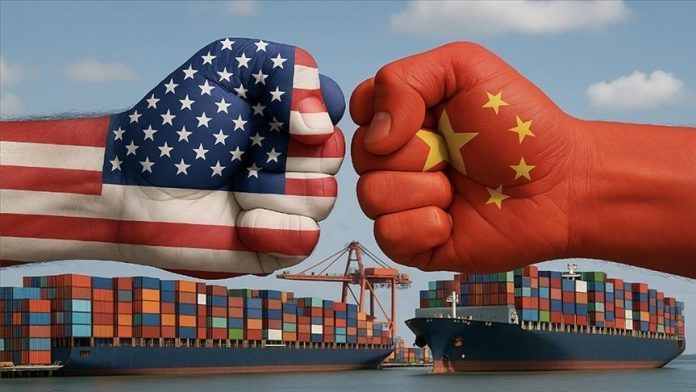
The U.S. government on Tuesday accused Chinese artificial intelligence companies of systematically copying technology from leading American AI firms, escalating an already contentious technology rivalry ahead of a planned meeting between the leaders of the world’s two largest economies later this month.

U.S. law enforcement and intelligence officials alleged that six Chinese AI companies, including DeepSeek, Moonshot AI and Alibaba, used a technique known as distillation to extract capabilities from U.S.-developed AI models and accelerate the development of their own systems.

Distillation is a legitimate AI development technique in which the outputs of a larger, more computationally expensive model are used to train a smaller model. The approach can reduce the cost and time required to develop new AI systems.

U.S. officials, however, accused the Chinese companies of using variants of American AI models in an aggressive and targeted manner to reproduce capabilities developed by U.S. laboratories.

“China-based AI companies are engaging in aggressive, malicious and targeted distillation activities at an industrial scale,” U.S. officials said in a joint statement.

The officials alleged that the companies targeted AI models developed by Anthropic, OpenAI and Alphabet’s Google, as well as technology associated with SpaceX. They said the activity was “likely with Chinese government awareness.”

The allegations add another layer to the increasingly broad U.S.-China technology confrontation, in which artificial intelligence has become strategically important to both countries.

U.S. officials said the alleged distillation activity not only lowers research and development costs for Chinese companies but could also strengthen China’s military and cyber capabilities, potentially creating applications that could be used against the United States and its allies.

The accusations come as the administration of President Donald Trump prepares for Chinese President Xi Jinping’s planned visit to the United States in late September. Washington and Beijing are also preparing for an AI safety dialogue expected to take place in mid-September, making the timing of the allegations particularly sensitive.

The two governments have attempted to maintain channels for negotiations even as disputes over tariffs, semiconductor technology, advanced computing and AI continue to complicate the relationship.

The U.S. previously made a similar accusation in April, underscoring how concerns about Chinese access to American AI capabilities have become a recurring element of the broader technology dispute.

Reuters reported on July 31 that Chinese military researchers had used outputs from leading U.S. AI models to train domestic AI systems and advance Chinese defense capabilities.

Distillation Becomes A New Battleground

The dispute highlights the growing importance of model distillation as AI developers look for ways to obtain sophisticated capabilities without bearing the enormous computing costs associated with training frontier models from scratch.

For Chinese companies, access to the outputs of highly capable American systems could potentially shorten development cycles and reduce the computing resources required to produce competitive models.

But the issue raises a different concern for U.S. AI companies: whether restrictions on access to advanced chips and computing infrastructure can prevent competitors from replicating capabilities indirectly through model outputs.

That could make AI controls increasingly difficult to enforce. Unlike physical semiconductors, model outputs can potentially be generated remotely and transferred digitally, creating new challenges for policymakers attempting to protect intellectual property and restrict the proliferation of advanced AI capabilities.

The U.S. allegations also come at a time when Chinese AI companies have demonstrated an ability to develop highly capable systems despite American restrictions on advanced semiconductor exports.

The resulting competition is now moving beyond the question of which country can build the most powerful models. It is becoming a contest over access to computing, proprietary data, intellectual property, model weights, semiconductor technology and the ability to deploy AI at scale.

The accusations could complicate efforts by Washington and Beijing to stabilize their broader economic relationship before the leaders’ meeting later this month. AI is already one of the most sensitive areas of the technology rivalry because advances in the field have potential commercial, military and cybersecurity applications.

Washington is therefore facing a difficult balance: preserving diplomatic channels with Beijing while attempting to prevent American AI capabilities from being transferred or replicated in ways U.S. officials believe could undermine national-security interests.

Beijing, meanwhile, has incentives to continue developing domestic AI capabilities as it seeks to reduce its dependence on American technology. The situation makes the dispute over distillation more than a disagreement over software-development practices. It is becoming part of a much larger struggle over technological leadership, economic competitiveness and national security.

Dangote Refinery Could Be Worth Up to N82.6 Trillion, Analysts Say, Above IPO Valuation

0

CardinalStone and Chapel Hill Denham see significant upside to the refinery’s N65.22 trillion indicative listing valuation, but warn that the investment case hinges on earnings growth, refining margins, and successful expansion

Dangote Petroleum Refinery and Petrochemicals FZE could be worth between N77.7 trillion and N82.62 trillion, according to independent valuations by Nigerian investment firms CardinalStone Research and Chapel Hill Denham, placing the refinery’s estimated fair value significantly above the N65.22 trillion indicative market capitalization attached to its planned Nigerian Exchange Group listing.

The valuations come as investors prepare for what is expected to be one of Africa’s largest-ever equity offerings. Dangote Refinery plans to offer 4.1 billion new ordinary shares at N525 each, alongside its existing 120.13 billion shares.

If the base offer is fully allotted, the N525 offer price implies a pre-listing market capitalization of about N63.07 trillion and an indicative post-offer market capitalization of N65.22 trillion.

CardinalStone’s 12-month equity valuation stands at N77.7 trillion, translating to a target price of N688.09 based on the share count used in its analysis. Chapel Hill Denham places the refinery’s current fair equity value at $62.53 billion, equivalent to N82.62 trillion at an exchange rate of N1,321.22 to the dollar.

The two estimates therefore suggest potential upside of roughly 19% to 27% over the indicative N65.22 trillion listing valuation, although neither valuation represents a guaranteed market price after listing.

The difference is highlighted because the analysts are effectively betting that Dangote Refinery’s earnings will rise sharply as production increases and the company expands its refining capacity.

What Is Driving The Higher Valuations?

Both investment houses use a combination of discounted cash flow, enterprise-value-to-EBITDA, and price-to-earnings methodologies to estimate the refinery’s value.

CardinalStone gives the greatest weight to its discounted cash flow model, while Chapel Hill Denham assigns a 50% weighting to DCF and 25% each to EV/EBITDA and P/E. Chapel Hill’s standalone DCF valuation is considerably higher, at $79.15 billion, but its blended methodology produces a more conservative fair equity value of $62.53 billion.

The fundamental argument behind the valuations is straightforward: Dangote Refinery is expected to generate substantially higher revenue and profit as its operations mature and utilization increases.

CardinalStone forecasts 2026 revenue of approximately $29.6 billion and profit after tax of $3.8 billion. Chapel Hill Denham estimates revenue of about $28.2 billion and net earnings of $4.1 billion for the year.

The refinery’s first-half results already point to a significant improvement in profitability. According to its IPO prospectus, the company generated $13.91 billion in revenue and $1.82 billion in profit after tax in the first six months of 2026, compared with a full-year loss of $475.8 million in 2025.

The shift from a full-year loss to substantial profitability is central to the bullish valuation case. If Dangote Refinery can sustain that trajectory, investors could value the company more on its future earnings power than on its earlier start-up costs and capital expenditure burden.

The longer-term valuation also depends heavily on Dangote Refinery’s planned expansion, according to the analysts.

The company currently has refining capacity of 700,000 barrels per day and plans to add another 700,000 bpd, potentially taking total capacity to approximately 1.4 million bpd.

The expansion programme is estimated to cost about $14.27 billion.

The IPO will provide only part of that funding. Of the approximately N2.11 trillion in net proceeds expected from the offering, about N841 billion is earmarked for utilities, offsites and associated infrastructure. Another N686.5 billion is allocated to refinery process units and major equipment, while N583.5 billion is designated for construction, installation and related expansion works.

For investors, the expansion represents both the biggest potential source of future growth and one of the largest execution risks. A successful increase in capacity could materially expand revenue and cash generation, while delays, cost overruns, weaker refining margins or lower-than-expected utilization could undermine the assumptions supporting the higher valuations.

N525 Is Not Necessarily A Bargain

The fact that both research firms value Dangote Refinery above its indicative IPO market capitalization does not mean the N525 offer price is guaranteed to generate a positive return.

The valuation range itself demonstrates why.

While Chapel Hill Denham’s blended fair value is N82.62 trillion, its valuation under some peer-based approaches is materially lower. Its lower-end estimate is about N56.7 trillion, below the N65.22 trillion indicative market capitalization at listing.

That means the refinery could trade below the IPO price if investors apply more conservative valuation multiples to the company.

The prospectus itself makes clear that N525 is not a guaranteed floor for the shares. Once trading begins, the market price will be determined by supply and demand, investor sentiment, earnings expectations, and the company’s actual financial performance.

The investment question is therefore not simply whether Dangote Refinery is being offered below analysts’ headline valuations. It is about the company’s ability to execute well enough to grow into those valuations.

IPO Details

Dangote Refinery moved closer to its proposed NGX listing on Monday, September 7, when the company and its advisers signed the transaction documents at a ceremony in Lagos following approval from the Securities and Exchange Commission.

The offer is scheduled to open on September 14 and close on October 13, with trading expected to begin on the NGX in late November. The company is offering 4.1 billion ordinary shares at N525 each, potentially raising approximately N2.15 trillion, or about $1.63 billion, if fully subscribed. The minimum subscription is 10 shares, allowing retail investors to participate with an initial investment of N5,250.

Vetiva Advisory Services is leading the offering, with FirstCap and Stanbic IBTC Capital among the advisers and issuing houses.

The transaction is also targeting substantial retail participation. Ukandu Ukandu, managing director of FirstCap, has said the offering is targeting approximately 10 million retail investors.

Dangote’s Ownership Remains Dominant

The IPO will broaden the refinery’s shareholder base but will leave Aliko Dangote with overwhelming control of the company.

There is, however, an important distinction between his ownership before and after the new shares are issued. The prospectus shows that Dangote Refinery currently has 120,128,915,901 issued and fully paid ordinary shares.

They are held by Dangote Oil Refining Company Limited (DORCL), with 79,086,556,154 shares, or 65.835%; Dangote Industries Limited (DIL), with 17,903,461,538 shares, or 14.904%; Greenview International Corporation, with 7,803,769,230 shares, or 6.496%; NNPC Limited, with 8,186,982,308 shares, or 6.815%; and other shareholders, with 7,148,146,671 shares, or 5.950%.

The prospectus identifies Dangote as the beneficial owner of the interests held through DORCL, DIL and Greenview, as well as a 60% beneficial interest in Salamad Ventures Limited.

On the disclosed beneficial-interest calculation, those holdings amount to 104,834,654,430 shares, equivalent to approximately 87.27% of the company before the new IPO shares are issued.

Once the 4.1 billion new shares are issued, however, the total share count rises to roughly 124.23 billion. That additional dilution reduces Dangote’s beneficial ownership to approximately 84.3%, explaining the reported 84.34% post-offer figure.

The distinction is significant: 87.27% represents the disclosed beneficial interest against the existing share capital, while about 84.34% represents the ownership percentage after the IPO dilution.

Dangote therefore remains firmly in control even after the offering, while the IPO creates a substantial new public float and gives Nigerian investors direct exposure to one of the country’s most strategically important industrial assets.

What Investors Should Watch Out For

The valuation gap gives the IPO an apparent upside case, but investors should focus on the assumptions behind it rather than the headline numbers alone.

First is refinery utilization. Higher throughput is essential for Dangote Refinery to translate its enormous installed capacity into sustained earnings.

Second is refining margins. Profitability will depend not simply on how much crude the refinery processes, but also on the spread between crude input costs and the prices of refined petroleum products.

Third is the 700,000-bpd expansion. The project could substantially increase the company’s earnings capacity, but it will require significant additional capital and disciplined execution.

Fourth is the company’s ability to maintain strong cash generation while funding expansion and managing its balance sheet.

Finally, investors will have to determine what valuation multiple the market is willing to assign to the refinery. A high-growth infrastructure and energy company may command a premium if earnings continue to accelerate, but a more conservative multiple could push its market value below the research firms’ bullish estimates.

Dangote Refinery is therefore entering the NGX with an unusual combination of scale, strategic importance and ambitious growth expectations.

At N525 per share, the IPO offers investors an opportunity to participate before the planned capacity expansion is fully reflected in earnings. But the premium valuations estimated by CardinalStone and Chapel Hill Denham will ultimately depend on execution.

The potential reward is substantial if production, margins and expansion perform as expected. But analysts have warned that the risk is equally clear: if the refinery fails to deliver the earnings growth embedded in those forecasts, the market can assign it a lower valuation, and the shares can trade below the N525 offer price.

6 Meme Coins That Will Explode: Why Investors Are Rushing to Apeing Before the Next Price Hike

0

What if the biggest meme coin opportunity is already moving before the wider market catches on? Apeing, Floki, Fartcoin, Baby Doge Coin, Brett, and Official Trump are bringing different narratives to the meme coin market, from ecosystem utility and community-driven culture to recognizable branding. But Apeing enters the conversation at a particularly active moment, with its presale officially live and its current stage already moving through its allocation.

For anyone searching for meme coins that will explode, Apeing offers a timely presale angle. Stage 3 is priced at $0.0004, with over 380 million tokens already sold. Apeing also stands out among meme coins attracting early market attention. Each presale stage brings a higher price, with the next stage set at $0.0005. This makes the current $0.0004 price a key point to watch as Stage 3 continues. With the current allocation already nearly halfway filled, the question becomes more pressing: how much longer will the $0.0004 stage remain available?

1.  Apeing – Could This Be the Next Meme Coin that Will Explode Next?

The Apeing presale is already live, and the current $0.0004 entry point is moving fast. Stage 3, known as Paper Hand Panic, has already sold over 380 million tokens, taking the allocation to 58% of the available 300 million tokens at stage 3. With over $68K raised, 211 holders, and a stated listing value of $0.01, nearly half of the stage allocation has already been taken.

The real urgency comes from the limited supply. Once the remaining Stage 3 allocation is filled, the Apeing presale moves forward, and the next stage can come with a higher price. For anyone tracking meme coins that will explode, the current $0.0004 price represents the opening-stage opportunity that is available right now. Waiting could mean watching the current price disappear while the presale progresses. Join the live Apeing presale now and secure access to the current stage before its remaining allocation runs out.

Can You Climb the Ape Referral League?

The Ape Referral League brings a competitive element to Apeing’s referral program by tracking referral activity throughout each monthly cycle. As new purchases come through referral codes, the leaderboard can change, giving active participants a reason to keep building their position. At the end of each cycle, the rankings reset, creating a fresh contest alongside the continuing Apeing presale.

How to Buy Apeing

Think of the process as moving from the website to your wallet. You begin on the official Apeing presale page, where you can enter the amount you want to purchase. The presale platform then guides you through the transaction, allowing you to review and approve the purchase before it is completed.

2.  Floki – From Meme Origins to a Utility-Focused Ecosystem

Floki has developed into one of the more utility-oriented names in the meme coin sector. Its ecosystem extends across GameFi, DeFi, education, NFTs, and tokenization, giving FLOKI a broader role than a simple community token. Its flagship Valhalla project uses FLOKI within an on-chain gaming environment featuring NFTs and a play-to-earn economy.

That ecosystem gives Floki a strong reason to remain part of a discussion around the best meme coins to buy. It demonstrates how a meme brand can build additional products around its token and community. Floki is also relevant for blockchain developers and crypto enthusiasts because its ecosystem touches several Web3 categories.

3.  Fartcoin – The Attention Economy Meets Meme Culture

Fartcoin represents a different side of the meme coin market. Instead of emphasizing a large utility ecosystem, its appeal is closely tied to internet culture, humor, recognizability, and community-driven attention. That makes it particularly interesting from a behavioral finance perspective because meme assets can thrive when online communities continuously create and share narratives around them.

Research published in the Journal of Banking & Finance found that abnormal social-media attention was positively associated with contemporaneous and one-day-ahead cryptocurrency performance in its studied dataset. That does not make attention a guarantee of future performance, but it helps explain why tokens such as Fartcoin can attract significant market interest.

4.  Baby Doge Coin – A Meme Brand With a Growing Product Suite

Baby Doge Coin has built its identity around a large community while developing products that extend beyond its original meme concept. The project’s current ecosystem includes BabyDoge Swap, a cross-chain bridge, a token launchpad, and other Web3 products. Its official materials also describe integrations involving payments, gaming, NFTs, and decentralized applications.

That broader ecosystem makes Baby Doge Coin relevant to anyone comparing the best meme coins to buy. It demonstrates how community recognition can become a foundation for additional crypto products. Baby Doge also remains connected to its charitable identity, with the project highlighting donations supporting animal adoption.

5.  Brett – A Base-Native Meme Coin With Strong Cultural Identity

Brett has become associated with the Base ecosystem and represents the importance of chain-specific meme culture. Its appeal comes from a recognizable character, simple branding, and strong alignment with the community surrounding Base. That makes Brett particularly relevant to people studying how blockchain ecosystems can create their own native meme economies.

For the best meme coins to buy search, Brett earns its place because it illustrates another route to meme coin relevance. Rather than relying on an enormous collection of products, a token can build recognition through cultural identity and ecosystem association. Base has become an important environment for decentralized applications and consumer-facing crypto activity, while Brett gives that ecosystem a highly recognizable meme asset.

6.  Official Trump – Political Branding Meets Crypto Markets

Official Trump occupies a very different category within the meme coin sector because its identity is directly tied to Donald Trump and political branding. The token operates on Solana, and its official ecosystem is structured around the TRUMP meme identity. This creates a highly recognizable brand that can generate attention beyond traditional crypto circles.

That visibility explains why Official Trump belongs among the best meme coins to buy discussions. It demonstrates how an existing public identity can translate into a blockchain-based community asset. Academic research has repeatedly examined the relationship between cryptocurrency markets and online attention, including evidence that search and social-media attention can interact with cryptocurrency activity.

Final Words

Floki brings utility, Fartcoin represents internet-native meme culture, Baby Doge Coin combines community with products, Brett connects meme culture with Base, and Official Trump demonstrates the power of recognizable branding. Together, these projects show why the search for meme coins that will explode continues to attract attention across crypto communities.

Apeing adds a different opportunity through its live presale. With Stage 3 currently priced at $0.0004,58% of its stated allocation already sold, and a limited number of tokens available in the stage, timing has become part of the story. Anyone exploring the best meme coins to buy and looking for an active presale can check the current Apeing stage now. For those searching for meme coins that will explode, the bigger question is no longer whether meme culture can capture attention, but which projects can turn that attention into lasting community engagement. Explore the live Apeing presale now while the current stage and price remain available.

For More Information:

Website: Visit the Official Apeing Website

Telegram: Join the Apeing Telegram Channel

Twitter: Follow Apeing ON X (Formerly Twitter)

FAQs About the Meme Coins That Will Explode

What are meme coins that will explode?

The phrase generally refers to meme coins that could attract significant market attention and adoption. Projects such as Apeing, Floki, Fartcoin, Baby Doge Coin, Brett, and Official Trump represent different approaches to community-driven crypto.

Which meme coins are getting attention right now?

Apeing is attracting attention through its live presale, while established meme brands such as Floki, Baby Doge Coin, Brett, Fartcoin, and Official Trump continue to draw interest through community activity, ecosystem development, or cultural recognition.

What makes Apeing different from other meme coins?

Apeing combines meme culture with a utility-focused vision and an active presale. Its current Paper Hand Panic stage is priced at $0.0004, with a limited allocation and 58% of the stated 380 million token allocation already sold.

Why do meme coins gain so much online attention?

Meme coins often have simple narratives that are easy to share across online communities. Research has found meaningful relationships between social-media attention, search activity, and cryptocurrency market behavior.

Is Apeing presale live?

Yes. Apeing’s presale is officially live, with the current Paper Hand Panic Stage 3 priced at $0.0004. The stage has over 380 million tokens sold and a stated listing value of $0.01.

Article Summary

The meme coin market includes projects with very different strategies. Floki focuses on utility, Fartcoin on internet culture, Baby Doge Coin on community and Web3 products, Brett on Base ecosystem identity, and Official Trump on recognizable branding. Apeing stands apart with its live presale, current $0.0004 Stage 3 price, limited allocation, and utility-focused meme coin vision. With 58% of the stated token allocation already sold, the current stage is actively progressing, making the live Apeing presale a key development to watch.