DD
MM
YYYY

PAGES

DD
MM
YYYY

spot_img

PAGES

Home Blog Page 253

Crypto Giants Back Trump’s White House Expansion Donations to the $300M Ballroom Project

0

Major cryptocurrency companies including Coinbase, Ripple, and Gemini via its co-founders are confirmed as donors to President Donald Trump’s ambitious $300 million White House ballroom project, announced in July 2025 and now under construction.

This privately funded initiative—adding a 90,000-square-foot event space to the East Wing—has drawn contributions from tech, finance, and energy sectors, but the crypto industry’s involvement stands out as a sign of deepening alignment between digital asset firms and the administration’s pro-crypto stance.

Demolition of parts of the East Wing began in mid-October 2025, with completion targeted well before Trump’s term ends in 2029. The ballroom, described by the White House as a “modern addition” to host large state events seating up to 650, is entirely financed through private donations routed via the Trust for the National Mall, a nonprofit tied to the National Park Service.

No taxpayer funds are involved, countering criticisms amid an ongoing federal government funding impasse.

Coinbase: The largest U.S. crypto exchange attended a White House donor dinner on October 15, 2025, and is listed as a major contributor. CEO Brian Armstrong previously donated $1 million to Trump’s inauguration and has lobbied for bills like the GENIUS Act for stablecoin regulation.

Ripple: Executives from the payments firm, including CEO Brad Garlinghouse, joined the donor event. Ripple has run pro-crypto ads in D.C. and participated in White House summits, aligning with its focus on cross-border payments via XRP.

Gemini: Co-founders Cameron and Tyler Winklevoss are explicitly named donors. They’ve been vocal Trump allies, pledging $2 million in Bitcoin during his 2024 campaign, attending stablecoin bill signings, and contributing $21 million to pro-Trump PACs ahead of 2026 midterms.

Other Notable Donors: The full list, released by the White House on October 23, 2025, includes tech heavyweights from Amazon, Apple, Google, Meta, Microsoft, defense firms like Lockheed Martin, Palantir, and others like Tether. Additional pledges include $22 million from a YouTube settlement and $10 million in stock from construction CEO Paolo Tiramani.

This funding push follows a White House gala on October 16, 2025, where Trump hosted 128 elite guests, thanking them for “tremendous” pledges that he said have “fully covered” costs. The event underscores crypto’s shift toward mainstream political influence, especially after Trump’s post-inauguration signing of crypto-friendly laws like stablecoin frameworks.

Critics, including Sen. Elizabeth Warren, have raised alarms about potential quid pro quo, questioning if donations buy policy favors in a lightly regulated sector. Heritage advocates decry the East Wing alterations as a threat to historic preservation. The White House dismissed backlash as “manufactured outrage” from “unhinged leftists,” emphasizing the project’s private nature.

Pro-crypto users hailed it as a “win for innovation,” while skeptics mocked it as “crypto bros buying access.” Market-wise, shares of Coinbase ($COIN) ticked up 2% post-announcement, and XRP saw brief volatility.

The involvement of Coinbase, Ripple, and Gemini in funding President Trump’s East Wing ballroom expansion—now estimated at $300 million and fully privately financed—carries significant ripple effects across politics, regulation, economics, and culture.

This isn’t just a construction story; it’s a marker of how the crypto industry is cementing its role in U.S. power structures, leveraging donations for influence amid a pro-crypto administration.

Once viewed as regulatory pariahs (e.g., Ripple’s SEC battles, dropped under Trump), these firms are now “insiders” funding White House infrastructure. This builds on 2024 election cycles where crypto PACs like Fairshake raised $200M+ for pro-industry candidates, signaling a shift from defense to offense in policymaking.

Analysts call it a “turning point,” with crypto no longer peripheral but actively shaping federal discourse. The October 15 donor gala, attended by execs from these firms, exemplifies elite networking.

Critics like former White House ethics lawyer Richard Painter label it “payment for access” to Trump, potentially yielding perks like engraved donor plaques in the ballroom. Joined by Big Tech Amazon, Google, Meta, this fosters a unified “innovation lobby,” contrasting Trump’s first-term tensions with Silicon Valley.

Donations align with Trump’s crypto-friendly moves, like pardoning Binance’s CZ and proposing a U.S. strategic crypto reserve including XRP. Expect faster progress on the GENIUS Act for stablecoins and a crypto market structure bill, where Coinbase has lobbied heavily.

Tether’s involvement, amid stablecoin scrutiny, could soften rules for USDT, boosting adoption. While empowering, it invites “quid pro quo” probes. Sen. Elizabeth Warren and ethics watchdogs warn of blurred lines between donations and policy favors, potentially triggering congressional hearings or calls for donation transparency.

Symbolizing legitimacy, this could drive institutional inflows. Post-announcement, Coinbase stock rose ~2%, with XRP volatility signaling trader optimism. Winklevoss twins’ prior $2M BTC pledge to Trump amplified bullish sentiment; expect similar for midterms via $21M PACs.

Lawsuits from groups like the National Trust for Historic Preservation challenge East Wing demolition, framing the ballroom as a “gaudy” Trump vanity project over heritage. Completion by 2029 could redefine the White House as a “Mar-a-Lago North,” blending opulence with policy schmoozing.

These donations propel crypto from fringe to fixture, potentially unlocking billions in growth but at the cost of heightened ethical scrutiny. Watch for mid-2026: If regs ease, it’s a win; if scandals erupt, a setback. This fusion of blockchain and Beltway could redefine American capitalism—or expose its fault lines.

Rivian to Pay $250m in Shareholder Lawsuit Over Price Hikes and Misleading IPO Claims

0

Electric vehicle maker Rivian Automotive has agreed to pay $250 million to settle a class action shareholder lawsuit accusing the company of misleading investors ahead of its 2021 IPO.

The settlement, which still requires approval from the U.S. District Court for the Central District of California, comes after a turbulent few years marked by production setbacks, financial strain, and shifting demand in the U.S. EV market.

The lawsuit, filed by shareholder Charles Larry Crews, alleged that Rivian included misleading cost projections in its pre-IPO regulatory filings. Investors claimed the company failed to disclose the true expense of manufacturing its first vehicles—the R1T pickup truck and R1S SUV—resulting in a dramatic 20 percent price hike in early 2022. The sudden increase sparked customer outrage, mass order cancellations, and a steep drop in the company’s stock price.

Rivian, while agreeing to the payout, has denied any wrongdoing, saying in a statement that the settlement “is not an admission of fault or liability.” The company plans to cover $67 million of the total through its directors’ and officers’ liability insurance, while $183 million will come directly from its $4.8 billion in cash reserves as of June 30.

The price hike in 2022 represented a critical turning point for Rivian. When the company first launched the R1T in late 2021, it was positioned as a high-end electric adventure vehicle. But as supply chain pressures, rising material costs, and inflation mounted, Rivian raised prices by nearly a fifth—applying the new rates even to customers who had placed preorders months earlier. The backlash was immediate. CEO RJ Scaringe issued a public apology, writing, “It was wrong and we broke your trust in Rivian… I have made a lot of mistakes since starting Rivian more than 12 years ago, but this one has been the most painful.”

Although Rivian eventually reversed the price increase for existing preorders, the damage had already been done. The announcement wiped billions off Rivian’s market value, compounding investor losses that began shortly after its November 2021 IPO—then one of the largest in U.S. history, briefly valuing the startup at over $100 billion.

The case gained class action status in July 2024, with investors arguing that Rivian’s internal cost assessments were far higher than disclosed. Plaintiffs said this misrepresentation made the company’s vehicles appear more profitable than they were, misleading the market ahead of its public debut.

The settlement comes as Rivian faces growing financial and competitive pressures. Production of the R1 lineup has slowed amid declining demand and increased tariffs under President Trump’s trade policies, which have raised costs on imported components. Additionally, Rivian’s vehicles no longer qualify for the federal EV tax credit, further dampening consumer interest.

In response, Rivian has turned its focus to the upcoming R2 SUV, scheduled for launch in 2026. The new model will be significantly cheaper and aimed at the mass market. Rivian plans to build up to 150,000 units per year at its Illinois plant, with additional production capacity planned at a new factory under construction in Georgia. The company hopes the R2 will help it achieve the scale necessary to compete with Tesla, Ford, and other established automakers.

However, Rivian’s path to this goal remains uncertain. Earlier this week, the company announced the layoff of more than 600 employees, part of a restructuring designed to cut costs and streamline operations. CEO Scaringe has temporarily taken on the role of interim chief marketing officer as the company reassesses its strategy amid softening EV demand and tightening capital markets.

Once seen as a key challenger to Tesla, Rivian has struggled to meet early investor expectations. The company’s 2021 debut was fueled by strong backing from Amazon and Ford, both of which later scaled back their stakes. Analysts have since warned that Rivian must balance cash conservation with the heavy investment required to launch new models and expand production.

The $250 million settlement will close one of Rivian’s most damaging legal chapters—but it will also underline the lingering fallout from the company’s missteps during its high-profile market entry.

Implications for Investor Confidence and Capital-Raising Prospects

The settlement arrives at a sensitive time when Rivian will likely need to return to capital markets to fund its next growth phase. Analysts note that while the company’s $4.8 billion in cash reserves provides a short-term cushion, the buildout of the new Georgia plant and tooling for the R2 SUV could require billions more by 2026. Any erosion of investor confidence could therefore complicate future fundraising efforts.

In capital markets, perception often drives access to liquidity—and for Rivian, the lawsuit’s implications go beyond the immediate financial cost. The allegations of misleading IPO disclosures, even without an admission of guilt, may cause institutional investors to apply deeper scrutiny to the company’s forecasts and disclosures going forward. This could increase Rivian’s cost of capital if new equity or debt offerings are met with skepticism.

At the same time, Rivian’s decision to settle rather than prolong litigation could help restore a measure of investor trust. The company has signaled an intent to move forward cleanly ahead of the R2 rollout by closing a drawn-out legal dispute. For long-term investors, particularly those betting on Rivian’s ability to scale production and achieve profitability, this resolution removes a key source of uncertainty from the company’s balance sheet.

Some analysts also point out that the settlement’s modest size relative to Rivian’s cash reserves suggests the company remains financially stable. However, as competition intensifies and margins narrow, maintaining liquidity will be crucial to sustaining investor confidence.

OpenAI is Reportedly Developing Music Tool Capable of Composing Songs from Texts and Audio Prompts

0

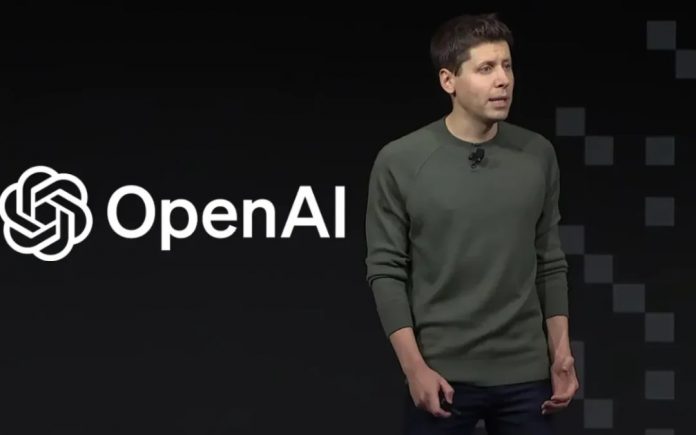
OpenAI is reportedly developing a new generative music tool capable of composing songs and instrumentals from text and audio prompts — another sign of the company’s accelerating expansion beyond conversational AI and into broader creative and consumer markets.

The report, published by The Information, said the model could generate music for videos or add instrumental accompaniment, such as guitar or piano, to existing vocals.

Many believe the project reflects OpenAI’s deepening push into multimedia creation, as it seeks to position itself as an “everything app” — one that integrates, among other things, text, voice, video, and now music — all within a unified ecosystem. The move follows OpenAI’s recent rollout of Sora, its text-to-video model, and its continued development of voice and image generation tools, suggesting a deliberate effort to dominate every creative medium through artificial intelligence.

According to The Information, OpenAI has been collaborating with students from the Juilliard School, one of the world’s most renowned music conservatories, to annotate musical scores. These annotations are being used to train the model to understand rhythm, harmony, and composition structures — a sign that the company is prioritizing accuracy and musical authenticity over mere novelty.

While OpenAI has experimented with generative music models in the past, those earlier prototypes came before the launch of ChatGPT and never reached public release. The current project, however, appears to be part of a broader monetization strategy, as the company grapples with rising operational costs and mounting pressure to generate sustainable revenue.

OpenAI, which has received billions in backing from Microsoft, is spending heavily on computing infrastructure, data acquisition, and AI model training — costs that have ballooned since the introduction of GPT-4 and the ChatGPT Plus subscription service. Despite its soaring valuation, analysts say the company has yet to achieve profitability, and its latest ventures into new industries may reflect a strategic bid to diversify income streams and reduce dependence on corporate licensing deals.

The music tool, once launched, could integrate directly with ChatGPT or Sora, enabling users to generate songs, soundtracks, or musical accompaniment while simultaneously producing lyrics and visuals. Such integration would make OpenAI the first major AI company to offer a seamless, cross-media creative workflow — a potentially transformative move for content creators, filmmakers, and digital artists.

But OpenAI is entering a space already occupied by formidable rivals. Google’s MusicLM and Suno’s AI platform both allow users to generate music from text prompts, while startups like Udio are experimenting with collaborative songwriting tools powered by machine learning. What may set OpenAI apart, analysts say, is its ability to unify multiple creative capabilities under one AI system — a feat no other company has achieved at scale.

Still, the company’s rapid expansion raises familiar concerns about copyright and data ethics. Generative music tools rely heavily on training datasets that often include copyrighted material, with the potential to spark criticism from musicians and record labels who argue that such practices amount to unlicensed use of creative works. OpenAI’s collaboration with Juilliard students appears to be an attempt to preempt such criticism by grounding the model’s training data in properly annotated, licensed compositions.

OpenAI has not commented publicly on the project, nor has it confirmed a release date or product format. However, sources believe the tool could be unveiled as early as 2026 as part of OpenAI’s broader roadmap to merge language, vision, and sound into a unified AI interface.

If successful, the new tool could redefine how music is composed, produced, and consumed — and potentially cement OpenAI’s role not just as a leading AI company, but as a foundational platform for the future of digital creativity.

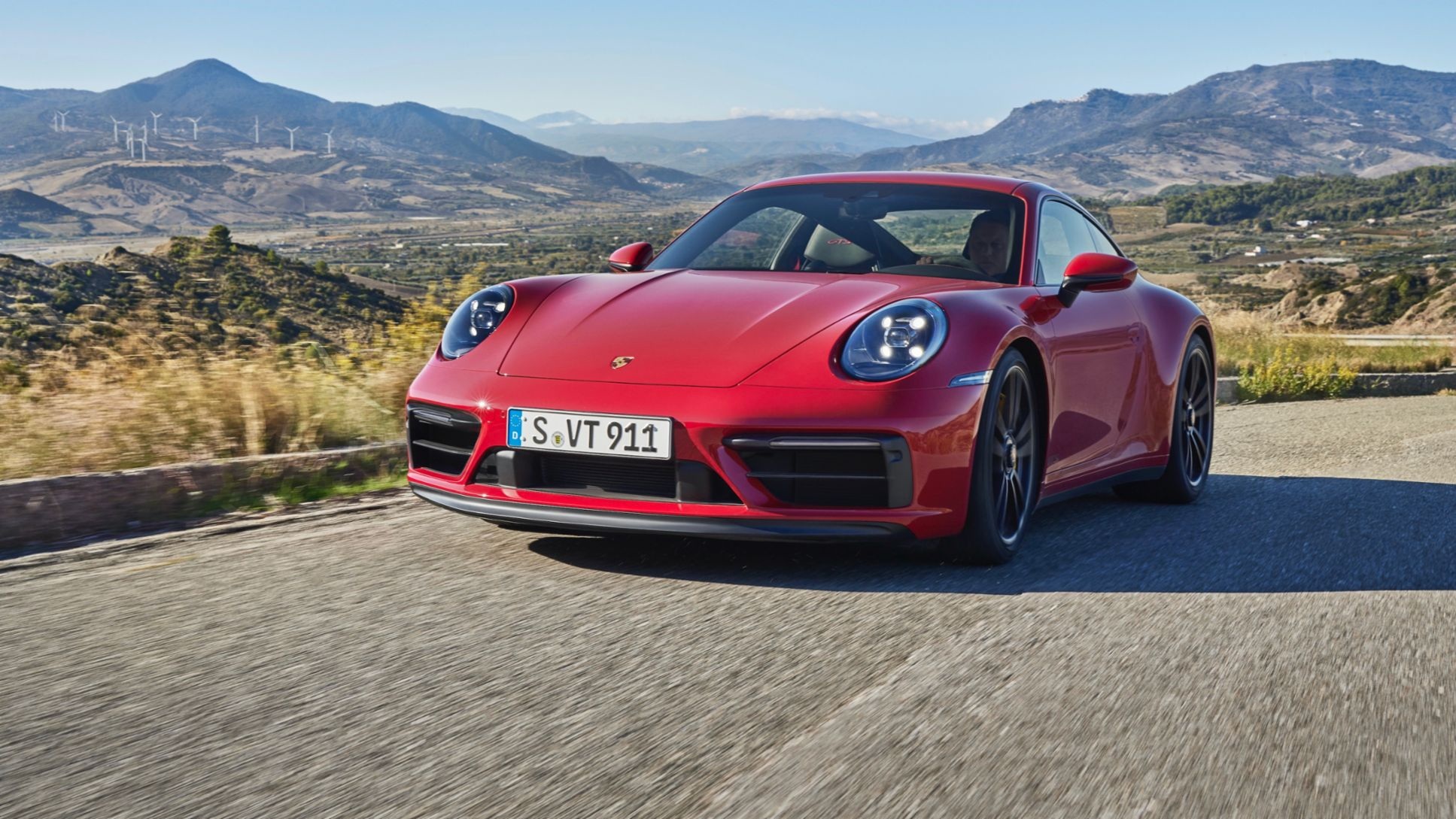
Porsche Posts €966m Loss Amid China Slump and U.S. Tariffs, Casting Shadow Over Volkswagen Group’s Outlook

0

Porsche AG has reported a steeper-than-expected operating loss of €966 million ($1.1 billion) for the third quarter, marking a sharp reversal from the €974 million profit recorded in the same period last year.

The German luxury automaker said the setback stemmed mainly from costs related to a sweeping rollback of its electric vehicle (EV) expansion strategy and the financial fallout of U.S. import tariffs.

Analysts surveyed by Visible Alpha had anticipated a smaller operating loss of €611 million, highlighting the extent of Porsche’s current troubles. The company’s slowdown denotes the turbulence facing Germany’s once-thriving auto sector as it grapples with the global EV price war led by Tesla and aggressive discounting by Chinese automakers such as BYD.

Porsche, long touted as a symbol of German precision and profitability since its 2022 stock market debut, is now battling a confidence crisis.

“We expect 2025 to be the trough that precedes a noticeable improvement for Porsche from 2026 onwards,” Chief Financial Officer Jochen Breckner said on Friday, adding that “large-scale solutions” were still being negotiated with labor unions to manage the company’s restructuring.

The carmaker maintained that its operating margin for 2025 could fall as low as 2%, compared with 14% last year. For 2026, it expects to rebound to a “high single-digit percentage,” Breckner said.

Porsche also disclosed that U.S. import tariffs will cost it roughly €700 million this year, forcing it to raise prices in the American market to offset part of the impact.

Breckner added that Porsche prices will rise further in the U.S. in the coming months as the company passes on tariff costs to consumers.

The CFO confirmed that Porsche will propose a “significantly lower 2025 dividend” than the €2.31 per preferred share paid for 2024, as part of an effort to conserve cash amid restructuring pressures.

In China, once the company’s biggest growth market, sales are expected to continue falling through 2026.

“We have to assume that the general market conditions will not improve in the foreseeable future,” Breckner said, describing persistent pricing pressures and slower luxury demand in the world’s largest auto market.

The German carmaker plans to cut 1,900 permanent jobs over the next few years, in addition to 2,000 temporary roles already being eliminated in 2025. Breckner said Porsche is preparing “a second package of cost-saving measures” focused on salary scales and employee perks rather than further layoffs, with details expected by year-end.

For the full year, Porsche estimates a €3.1 billion hit to earnings from restructuring and its decision to abandon in-house battery production. That figure includes the cost of dismantling parts of its EV expansion plan, which was once a cornerstone of its future growth strategy.

The company also confirmed that CEO Oliver Blume—who concurrently leads parent company Volkswagen—will step down from Porsche at the beginning of 2026. He will be succeeded by former McLaren Automotive CEO Michael Leiters, a move widely viewed as an effort to restore investor confidence. Leiters, who previously held senior engineering roles at Ferrari and Mercedes-AMG, is expected to inherit what Breckner described as “one of the most challenging transitions in Porsche’s modern history.”

The crisis at Porsche is already reverberating across the Volkswagen Group, which owns a 75% stake in the luxury brand. Porsche’s troubles add to a growing list of headwinds facing the Wolfsburg-based parent company, including a profit squeeze at Audi and declining demand for its mass-market models in China.

Volkswagen’s shares fell after Porsche’s results were published, as investors weighed the impact of the €3.1 billion hit to earnings on the group’s consolidated financials. The slump also adds pressure on Volkswagen’s management, which has been under scrutiny for its slow adaptation to the EV transition and its failure to gain traction against Chinese rivals.

Volkswagen had counted on Porsche’s strong margins to offset weaknesses in other brands. Last year, Porsche contributed more than one-third of Volkswagen Group’s total profit, with its 14% return on sales seen as a benchmark of efficiency. That figure now risks collapsing to as low as 2%, raising concerns among analysts that Volkswagen’s 2025 group earnings forecast may be too optimistic.

Although Volkswagen has not yet revised its consolidated outlook, some analysts believe that the loss of Porsche’s profit cushion could force the group to lower its guidance in coming quarters. Analysts say the automaker’s ability to maintain dividends and fund new EV investments could also come under strain if Porsche’s turnaround stalls beyond 2026.

Volkswagen’s luxury portfolio—comprising Porsche, Audi, Bentley, and Lamborghini—has traditionally served as its financial backbone, compensating for thin margins in mass-market segments such as VW, SEAT, and Skoda. But with Porsche now facing tariffs, declining Chinese sales, and restructuring costs, that advantage appears to be eroding.

In response, Volkswagen is expected to push for deeper cost cuts and may accelerate its strategic review of luxury operations to shield overall profitability. Breckner’s assurance that “2025 will be the trough” was echoed cautiously by investors who see 2026 as a critical year for Porsche to stabilize production, regain demand in the U.S. and China, and deliver the efficiency improvements required to restore margins.

Milk Mocha Presale Countdown Begins with a Massive Whitelist Rush! Join This Viral Meme Coin

0

The Milk and Mocha cartoon bears, loved by millions for their touching moments, now power a global digital economy through the Milk Mocha Token ($HUGS). This initiative goes beyond launching a token, introducing a fresh and structured economic concept.

The $HUGS presale has received an overwhelming response, with the whitelist close to reaching its limit. Central to this growing attention is a model that creates scarcity from the start. This system ensures that the token supply is already tightening, offering one last chance for those looking to join at the very beginning.

40-Stage Presale Framework

The $HUGS presale follows a 40-stage structure instead of a one-time event. Each stage runs for a week, creating an organized and gradual process. The setup gives early buyers a clear mathematical benefit. The price begins at $0.0002 per token in Stage 1 and rises slightly with every new week.

This method offers full transparency, letting people see how value builds with time. For example, $100 in Stage 1 equals 500,000 $HUGS. By the final round, Stage 40, the price rises to $0.04658496, turning that $100 into more than $23,000 in value. The system rewards early supporters, but the whitelist access is nearly filled.

The $HUGS model includes a rare deflationary feature right inside the presale. It is active now, not a future promise. At the end of each weekly phase, unsold tokens are permanently burned, removing them from circulation completely. This process means the total supply of $HUGS keeps shrinking before its public launch. Scarcity is part of its foundation from day one. Those on the whitelist are gaining an asset that becomes rarer each week, giving early access a real edge as the available supply continues to decline.

A Growing World Around $HUGS

Scarcity in the $HUGS model works alongside a clear focus on real-world use, making it a demand-based system. The $HUGS token acts as the main currency for a self-supporting economy. The plan includes a Milk Mocha Metaverse and gaming platform that uses a “token loop.”

Tokens spent by players are reused across the system. A share goes to a player reward pool, another share is burned, and the rest supports the Ecosystem Treasury for upcoming projects. This setup keeps the economy active while reducing supply. Key drivers of demand include:

  • Exclusive NFTs: Limited-edition digital collectibles reflecting the brand’s charm will be available only through $HUGS.
  • NFT Upgrades: Owners can burn $HUGS tokens to increase the rarity and value of their NFTs.
  • Physical Merchandise: The official store will accept $HUGS for items like plushies and clothing, with some products available only through tokens.

Long-Term Holders Take the Lead

The $HUGS system also aims to reward loyalty, matching the deflationary idea by motivating holders to stay engaged. $HUGS holders take part in more than just ownership; they help shape the project’s direction. A key element is the staking option that offers a fixed 50% APY, with rewards calculated in real time. The model is flexible, allowing users to unstake whenever they wish without penalties.

This makes holding an active part of the economy while lowering the circulating supply. Additionally, holders play a role in governance through the Milk Mocha DAO (Decentralized Autonomous Organization). With “HugVotes,” the community can suggest and decide on key matters. Voting power depends on how much $HUGS is staked, giving long-term holders a stronger voice. The community also helps guide marketing plans and chooses charitable efforts to support.

The Start of a Deflationary Era for $HUGS

The Milk Mocha ($HUGS) project links a beloved global brand with a carefully built token economy focused on controlled scarcity from the beginning. Through the weekly burn system in its presale, the supply keeps shrinking stage by stage.

Rather than a rushed release, it follows a structured 40-stage process that limits supply as it grows. With the exclusive whitelist for the presale nearly full, entry at the earliest stage is about to close. For those who recognize the value of a community-run project where supply is designed to decline, this is the moment to act before the initial phase ends.

Explore Milk Mocha Now:

Website: ??https://www.milkmocha.com/

X: https://x.com/Milkmochahugs

Telegram: https://t.me/MilkMochaHugs

Instagram: https://www.instagram.com/milkmochahugs/