DD
MM
YYYY

PAGES

DD
MM
YYYY

spot_img

PAGES

Home Blog Page 258

Microsoft Revives the Spirit of Clippy with Mico, a Friendly AI Face for Copilot

0

Microsoft is reintroducing personality into artificial intelligence — literally. At its Copilot fall release event on Thursday, the company unveiled Mico, a new expressive AI avatar designed to personify its Copilot chatbot and make human–AI interaction more natural and engaging.

Mico, short for “Microsoft Copilot,” is being positioned as a warm, friendly, and customizable digital companion that can listen, react, and even change colors in response to user interactions. It’s Microsoft’s boldest step yet in giving its AI platform a recognizable identity — and one that deliberately echoes the company’s iconic (and infamous) assistant from the late 1990s, Clippy.

The resemblance is not accidental. Microsoft has included an Easter egg in Mico: if users tap on the avatar several times, it morphs into Clippy, the paperclip character once embedded in Microsoft Office. It’s a nostalgic nod to a piece of tech culture that became both beloved and ridiculed, now reborn in a vastly more sophisticated form.

A Modern, Animated AI Presence

Mico is integrated into Copilot’s voice mode, where it serves as a responsive visual element during spoken interactions. The feature, enabled by default, gives users a sense of “talking to” the AI rather than typing commands into an abstract interface.

Initially, the feature is available in the U.S., Canada, and the U.K., with plans for a global rollout later. Users can disable Mico if they prefer a minimal experience.

The company says Mico will be able to retain memories of previous conversations, learn from user feedback, and evolve with continued use. This memory capability extends Microsoft’s vision of Copilot as an assistant that “knows” its user — tracking preferences, goals, and communication styles — while still allowing users full control over what’s remembered or deleted.

From Clippy to Copilot

For many, Mico’s debut signals a cultural full circle for Microsoft. Clippy, introduced in 1996, was designed to help users navigate Microsoft Office programs but quickly became a symbol of intrusive and often unhelpful digital assistants. Now, with Copilot’s advanced natural language capabilities and contextual awareness, Microsoft believes it can finally realize what Clippy was meant to be: a genuinely helpful, conversational digital partner.

“As we build this, we’re not chasing engagement or optimizing for screen time,” said Mustafa Suleyman, CEO of Microsoft AI, in a blog post announcing the update. “We’re building AI that gets you back to your life. That deepens human connection. That earns your trust.”

“Real Talk” and a More Human Copilot

Alongside Mico, Microsoft also introduced “Real Talk,” a new conversational mode for Copilot designed to make interactions more grounded and less artificial. In this mode, Copilot mirrors the user’s tone and communication style, aiming for dialogue that feels authentic without being overly agreeable.

Rather than functioning as a purely compliant assistant, Copilot under Real Talk can push back, question assumptions, and challenge users’ perspectives — a move Microsoft says will encourage critical thinking and healthier digital engagement.

The shift comes amid broader industry debates about AI “psychosis” and user dependency, where overly sympathetic chatbots have reinforced delusional beliefs or emotional attachment. Microsoft’s approach suggests it wants Copilot to feel relatable, but not manipulative — personable, but with boundaries.

Copilot as a Learning Companion

Microsoft also rolled out a new “Learn Live” mode for U.S. users, which allows Copilot to serve as an interactive tutor. Instead of simply providing answers, the AI will guide users through concepts step-by-step, making it more useful for learning and professional development.

The company also said it has improved Copilot’s ability to handle health-related queries and complex research tasks, signaling its ambitions to make the assistant reliable for deeper, context-rich applications beyond simple search or productivity tasks.

Expanding Across Microsoft’s Ecosystem

The Copilot fall update was about more than personality. Microsoft also introduced social and collaborative features, allowing users to bring friends into AI chats. Copilot now supports long-term memory, connectors for syncing with productivity tools like email and cloud storage, and enhanced integrations across the Microsoft suite.

Perhaps most notably, Microsoft previewed new AI capabilities for its Edge browser, which will allow Edge to “see” tabs, summarize and compare content, and perform actions such as booking hotels or filling out forms. The goal is to make Edge a true “AI browser” — competing directly with ChatGPT’s Atlas, Perplexity’s Comet, Dia, and even Google Chrome, which recently integrated its own Gemini AI.

The Broader AI Character Race

Mico joins a growing trend among tech giants to anthropomorphize AI. OpenAI’s ChatGPT now includes expressive voices and on-screen avatars, while xAI’s Grok, created by Elon Musk, has taken a more rebellious and provocative approach to personality-driven assistants.

Across app stores, “AI companion” apps — which range from emotional support bots to virtual friends — are already drawing millions of users, revealing a strong consumer appetite for AI with a face and voice. Microsoft’s introduction of Mico appears to be a bid to tap into that market while maintaining its enterprise-grade credibility.

A Friendly Blob with a Serious Mission

Still, it remains to be seen how users will react to Mico’s floating blob design — a visual that departs from human likeness in favor of a colorful, shape-shifting form. Microsoft says the simplicity is intentional, designed to be non-intrusive and universally appealing.

But if the nostalgic Easter egg is any indication, Microsoft knows what it’s doing: Mico’s transformation into Clippy is both a wink at the past and a signal that the company is comfortable blending nostalgia, humor, and advanced AI in ways that humanize its technology.

In essence, Microsoft’s Mico is not just a reimagined Clippy — it’s the embodiment of a new philosophy in AI design: one that seeks to make artificial intelligence trustworthy, emotionally intelligent, and deeply personal.

AI Reveals the Best Crypto to Buy Now: The Answer Isn’t Bitcoin or Ethereum

0

Crypto traders are still trying to recover from the October crashes. Prices are sluggish, momentum is weak, and traders seem unsure which direction the next move will take.

Bitcoin remains trapped below its recent highs, and Ethereum’s attempt to regain strength above $4,000 has failed once again.

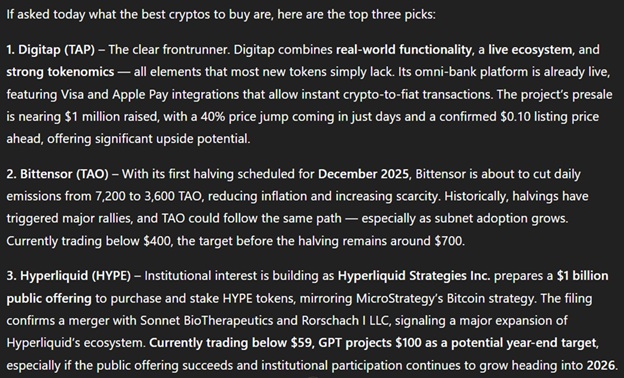
So when asked which crypto offers the best upside potential right now, AI pointed away from the usual names. GPT’s top pick wasn’t Bitcoin or Ethereum—it was Digitap ($TAP), a rapidly growing omni-bank project that aims to change how digital assets connect with real-world payments.

Alongside Digitap, GPT also mentioned Bittensor ($TAO) and Hyperliquid ($HYPE) as strong cryptos to buy heading into 2026.

1. Digitap: Best Altcoin to Buy Now

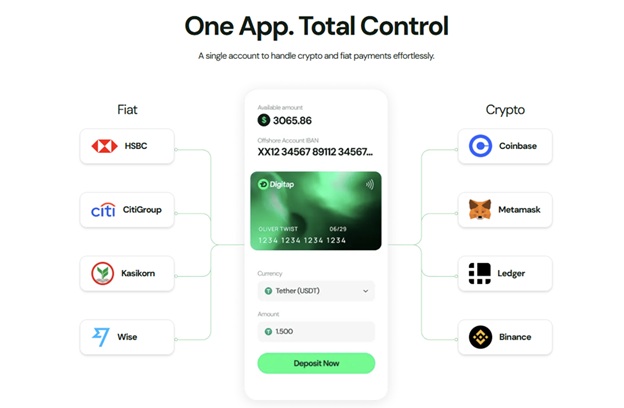
At the top of the list is Digitap—the project GPT identified as the most promising crypto to buy right now. Unlike most presales that exist only on paper, Digitap already has a live app, a fully integrated Visa-linked debit card, and support for Apple Pay and Google Pay.

This means Digitap is one of the most complete bridges between crypto and traditional finance.

Digitap allows users to buy, hold, stake, and spend crypto directly, functioning as a true omni-bank for the digital age. With global payments, instant transactions, and fiat conversion all built in, Digitap eliminates the need for multiple platforms.

The project’s transparency is another major reason GPT ranked it first. TAP has a hard-capped supply of 2 billion tokens, with no further minting ever allowed. Staking rewards are equally impressive: 124% APR during presale and 100% after launch, supported by a buyback-and-burn model that ensures scarcity over time.

Presale is accelerating fast. Digitap has already raised nearly $1 million, with more than 68 million TAP tokens sold, and the current presale price of $0.0194 USDT is set to jump to $0.0268 USDT within days (a 40% increase). With the listing price confirmed at $0.10, early participants could see up to 7x upside before the project even hits exchanges.

As GPT concluded, Digitap stands out for combining real-world functionality, a live ecosystem, and strong tokenomics—all elements that most new tokens lack.

USE THE CODE “LIVEAPP30” FOR 30% OFF FIRST-TIME PURCHASES

2. Bittensor ($TAO): The AI Network Entering Its Halving Era

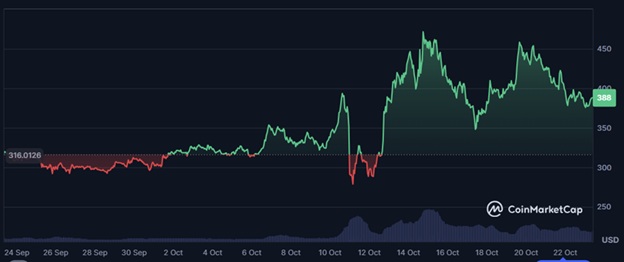
Bittensor has consistently been one of the most discussed crypto projects in 2025, and GPT highlighted it as a close second pick. The reason is simple: TAO’s first-ever halving event is expected in December 2025, reducing daily emissions from 7,200 to 3,600 tokens.

This move will effectively cut TAO’s annual inflation from about 8.6% to 4.3%, strengthening its store-of-value narrative and reducing selling pressure among miners. Historically, Bitcoin’s halving events have triggered major uptrends, and TAO could follow a similar path.

Source: CoinMarketCap/Bittensor

Trading below $400 at press time, GPT’s analysis points to $700 as a realistic pre-halving target, assuming network demand and subnet adoption remain strong.

For investors looking for deflationary assets tied to real AI infrastructure, GPT placed TAO firmly in the “accumulate before the halving” category.

3. Hyperliquid ($HYPE): Institutional Demand and a $1B Public Offering

Rounding out the AI’s top three picks is Hyperliquid ($HYPE) — the decentralized perpetual exchange project that’s now catching serious attention from Wall Street. According to a recent SEC filing, Hyperliquid Strategies Inc. (HSI) has submitted a Form S-1 registration statement to raise up to $1 billion through a 160 million-share public offering.

What’s more interesting is that part of the raised capital will go directly into purchasing and staking HYPE tokens. This marks one of the first times a U.S.-registered entity has publicly planned to hold and stake a DeFi token as part of its treasury strategy — similar to how MicroStrategy uses Bitcoin.

The filing, led by CEO David Schamis, lists the company’s New York headquarters at 477 Madison Avenue, and confirms that HSI will merge with SPAC Rorschach I LLC and Sonnet BioTherapeutics. While some dilution risk exists, the move signals unprecedented institutional confidence in Hyperliquid’s ecosystem.

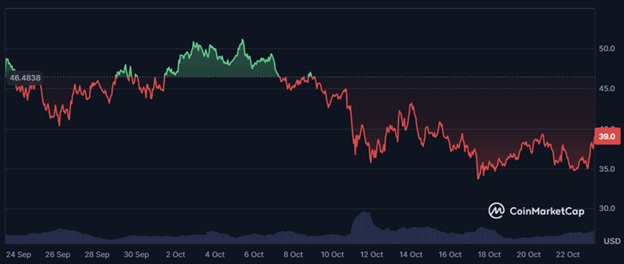
Source: CoinMarketCap/Hyperliquid

Currently trading below $40, GPT projects $100 as a potential year-end target, especially if the public offering succeeds and institutional participation expands.

What’s the Best Crypto to Buy Now?

According to GPT’s analysis, Digitap leads the pack. The reasoning is clear: it’s a functioning omni-bank platform already connected to Visa and Apple Pay, backed by transparent tokenomics and a live staking system.

Even though TAO and HYPE have strong catalysts on the horizon, Digitap offers something both unique and immediate: a working product, a clear roadmap, and a presale about to cross $1 million raised. With the price set to climb from $0.0194 to $0.0268 USDT in just days, and a $0.10 listing price waiting ahead, GPT’s conclusion was simple:

Digitap is the best crypto to buy now. The clock is ticking, and those who wait may soon miss the next 7x opportunity.

Digitap is Live NOW. Learn more about their project here:

Presale: https://presale.Digitap.app  

Website: https://digitap.app/

Social: https://linktr.ee/Digitap.app


LILPEPE Crypto 2025 Price Target & How to Buy Little Pepe: Machine Learning Model Predicts 8,000% Rally

0

Little Pepe (LILPEPE) is no longer just another meme coin. It’s fast becoming one of the top cryptos to buy as analysts and AI-based models project an 8,000% surge in 2025. With its explosive presale, strong community, and unique zero-tax blockchain model, LILPEPE is quickly shaping up as the next big frog ready to leap past the meme crowd.

What Makes Little Pepe Different From Other Meme Coins

Little Pepe is a meme-driven yet utility-backed token redefining meme coin operations. Unlike typical hype coins, it’s built on a fast, low-cost layer chain with zero buy/sell tax and near-zero trading fees, making it investor and trader-friendly.

The project introduces several features that set it apart:

  • Sniper bots-resistant Layer 2 chain, ensuring fair and transparent trading
  • High-yield staking for long-term holders
  • A Meme Launchpad, allowing creators to launch new meme projects easily
  • Strict vesting schedule, protecting the price from early dumps

While most meme tokens rely purely on hype, Little Pepe combines fun, speed, and actual blockchain efficiency, giving it both meme power and tech credibility.

Presale Momentum: $27.1 Million Raised and Counting

Little Pepe’s presale has turned heads across the crypto market. It has seen over $27.1 million within a few months of launch.  With Stage 13 almost completed at $0.0022 per token, early investors are sitting on up to 120% unrealized profits.

The presale has seen surging investor demand, fueled by viral attention and solid fundamentals. Its growing community across Telegram and X has made it one of the fastest-selling meme coins of 2025.

Adding to the excitement, the team recently launched the Little Pepe Mega Giveaway for Stage 12–17 buyers:

  • 1st Buyer: 5 ETH
  • 2nd Buyer: 3 ETH
  • 3rd Buyer: 2 ETH
  • 15 Random Winners: 0.5 ETH each

With over 15 ETH in prizes plus entry into a $777,000 global giveaway, the presale is more than a fundraising round; it’s a movement.

LILPEPE 2025 Price Target: ML Predicts 8,000% Growth on the Horizon

According to a recent machine learning-based price model, Little Pepe could deliver up to 8,000% gains by 2025, driven by its strong utility base and early community traction.

Analysts estimate that if LILPEPE lists a conservative market cap of $100 million post-presale, its value could quickly climb toward the $2 billion range, giving early investors potential 80x returns.

Here’s what drives the model’s bullish forecast:

  • Rapid community expansion similar to early PEPE and SHIB phases
  • Scarcity-driven tokenomics via vesting and staking
  • Meme Launchpad and staking adoption are boosting demand
  • Anticipated CEX listings in 2025 Q1

If momentum continues, a $1,000 investment at the current presale stage could soar to over $80,000 next year, a number that places Little Pepe among the most explosive meme coins of the upcoming bull run.

Why Investors Are Backing Little Pepe

Little Pepe’s rise isn’t just about speculation. It’s about structure and sustainability. The token blends community-driven growth with technical reliability, which is rare in meme coin history.

Here’s why investors are bullish:

  • Transparent team with verified smart contracts
  • CertiK audit, strengthening trust and safety
  • High-staking APYs, giving passive income potential
  • Strong brand presence, with ongoing viral campaigns on X and Telegram

Its tokenomics ensure that both whales and small buyers have equal opportunities. Add the zero-tax model, and you get a token perfectly optimized for liquidity and volume, fueling massive growth during bull cycles.

Making A Smart Investor Move This Cycle

Little Pepe’s combination of humor, tech, and tokenomics makes it more than another meme coin. It’s a full-fledged ecosystem with real market potential. With a projected 8,000% upside, rapid presale growth, and one of the most vibrant communities in the space, LILPEPE could be the frog that defines 2025’s meme coin boom.


For more information about Little Pepe (LILPEPE) visit the links below:

Website: https://littlepepe.com

Whitepaper: https://littlepepe.com/whitepaper.pdf

 Telegram: https://t.me/littlepepetoken

Twitter/X: https://x.com/littlepepetoken

 $777k Giveaway: https://littlepepe.com/777k-giveaway/

Kalshi’s Valuation Surges From $5B to Potential $12B in Weeks

0

Based on a Bloomberg report, U.S.-regulated prediction market platform Kalshi is indeed fielding new investment offers from venture capital firms, with proposed valuations reaching as high as $12 billion—or potentially even higher—according to sources familiar with the discussions.

This comes just weeks after the company closed a $300 million funding round on October 10, 2025, at a $5 billion valuation, co-led by Andreessen Horowitz and Sequoia Capital.

The rapid interest highlights explosive growth in the prediction markets sector, fueled by regulatory wins and expanding use cases. Kalshi, founded in 2018, operates under a federal Commodity Futures Trading Commission (CFTC) license, allowing users to trade contracts on real-world events like elections, economic data releases, sports outcomes, and more.

In June 2025, Kalshi raised $185 million at a $2 billion valuation, led by Paradigm. A landmark court victory in late 2024 enabled election-related contracts, boosting trading volumes to an annualized $50 billion as stated by co-founder and CEO Tarek Mansour.

In August, Robinhood integrated Kalshi for football prediction markets. This week (October 2025), the National Hockey League (NHL) announced multi-year deals with Kalshi and rival Polymarket—the first major U.S. sports league to officially partner with prediction platforms.

Discussions with VCs have floated valuations between $10 billion and $12 billion, reflecting bets on Kalshi’s scalability in a “crowded and fast-moving space.” One source noted the new capital could “strengthen Kalshi’s position” amid competition.

This isn’t isolated—prediction markets are in a valuation arms race: Rival Polymarket: Reportedly in talks for up to $2 billion from Intercontinental Exchange at a $9 billion post-money valuation, up from $1 billion earlier in 2025.

Sports wagering alone is a multibillion-dollar industry, and regulated platforms like Kalshi are positioning for mainstream adoption via broker integrations and media rights. Overall, this signals maturing investor confidence in event-trading venues, though sustainability will depend on user retention and regulatory stability.

If deals close, it could reset benchmarks for fintech and crypto-adjacent startups. Kalshi’s rapid valuation jump from $5 billion to a potential $12 billion in weeks carries significant implications across financial markets, regulation, competition, and broader adoption of prediction markets.

The high valuation reflects growing investor confidence in prediction markets as a legitimate asset class, moving beyond niche crypto or gambling comparisons. Partnerships with major players like Robinhood and the NHL underscore this shift.

With Kalshi’s annualized trading volume at $50 billion and sports wagering already a massive industry, investors see prediction markets tapping into multibillion-dollar opportunities, potentially rivaling traditional betting or derivatives markets.

Polymarket’s parallel talks at a $9 billion valuation suggest a race for dominance. Kalshi’s CFTC license gives it a regulatory edge in the U.S., but Polymarket’s global reach and looser oversight creates a fragmented competitive landscape.

High valuations could trigger consolidation. Intercontinental Exchange’s interest in Polymarket and Kalshi’s VC talks hint at larger players (e.g., exchanges or fintech giants) eyeing acquisitions to control this emerging market.

Kalshi’s 2024 court win enabling election contracts sets a precedent, but rapid growth may invite scrutiny from the CFTC or SEC, especially if retail investor losses mount or markets are manipulated.

Global Ripple Effects: U.S. regulatory clarity could pressure other jurisdictions to define rules for prediction markets, potentially unlocking new markets or stifling innovation if regulations tighten.

The leap from $5 billion to $12 billion in weeks suggests speculative fervor, reminiscent of 2021 crypto or tech bubbles. If growth falters, valuations could face downward pressure, impacting investor confidence.

New funding could fuel Kalshi’s expansion (e.g., new contract types, international markets, or tech upgrades), but it also raises expectations for profitability and user growth in a crowded field.

Partnerships with Robinhood and the NHL signal prediction markets moving into everyday finance and entertainment. This could drive retail adoption, especially if integrated into popular trading apps or sports platforms.

Prediction markets’ ability to aggregate crowd wisdom could attract institutional users like hedge funds or pollsters, creating new revenue streams. High valuations assume sustained user growth and trading volume, but competition, regulatory shifts, or market saturation could undermine this.

Rapid growth demands robust infrastructure to handle trading volumes, prevent outages, and ensure compliance, all of which require significant investment. A $12 billion valuation would set a new bar for fintech startups, potentially spurring investment in adjacent sectors like DeFi or blockchain-based betting platforms.

While Kalshi operates in fiat, its success could bolster crypto-native platforms like Polymarket, driving hybrid models that blend regulated and decentralized approaches. Kalshi’s valuation surge signals a transformative moment for prediction markets, with implications for competition, regulation, and mainstream adoption.

However, the lofty $12 billion figure carries risks of overvaluation and regulatory backlash. If Kalshi capitalizes on its regulatory edge and partnerships, it could redefine event-based trading; if not, it risks becoming a cautionary tale of hype outpacing fundamentals.

Understanding the Nexperia Chip Supply Crisis

0

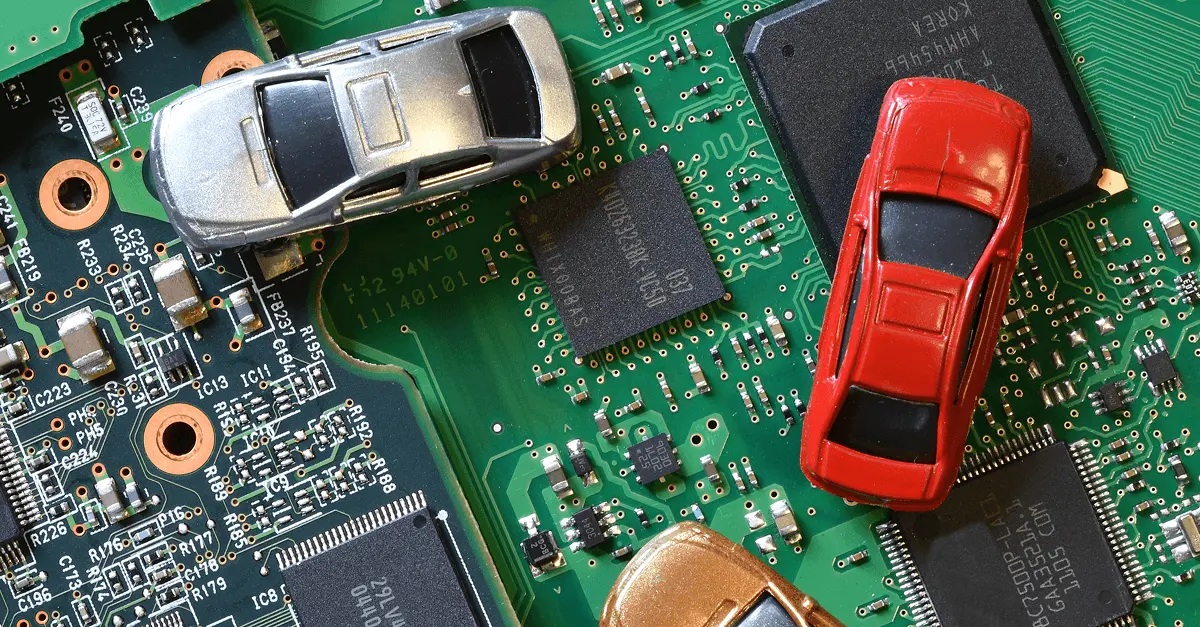
The Dutch semiconductor manufacturer Nexperia, a key supplier of basic but high-volume chips like diodes, transistors, and MOSFETs essential for automotive electronics (e.g., power management, steering controls, and electronic control units), is at the center of a geopolitical standoff.

These components are not highly advanced but are produced in massive quantities—over 50 billion annually across Nexperia’s facilities in Hamburg (Germany), Nijmegen (Netherlands), and Manchester (UK)—and are difficult to source quickly from alternatives due to customization and scale.

On September 30, 2025, the Dutch government invoked its Goods Availability Act to seize control of Nexperia from its Chinese parent company, Wingtech Technology, citing national security risks. Dutch officials feared Beijing could pressure the firm to divert technology or prioritize Chinese exports, potentially disrupting European supply chains in a crisis.

This move followed months of U.S. pressure, as Wingtech was added to the U.S. Entity List in December 2024 for alleged ties to military end-uses, extending export controls to subsidiaries like Nexperia.

In retaliation, on October 4, 2025, China’s Ministry of Commerce imposed export controls, blocking shipments of Nexperia’s finished products mostly packaged in China to global customers.

Nexperia notified automotive suppliers on October 10 that it could no longer guarantee deliveries. Existing inventories are estimated to last only 2–4 weeks for most carmakers, raising fears of assembly line halts similar to the 2021–2022 chip shortage that cost the industry billions.

Nexperia produces about 40% of the global market for these automotive-grade discrete semiconductors, affecting not just Europe but U.S. and Asian production as well. The crisis exacerbates ongoing challenges for the auto sector, including U.S. tariffs, weak demand, and foreign competition.

Impact on German Carmakers

Germany’s automotive industry, which employs over 700,000 people and relies heavily on just-in-time manufacturing, is particularly vulnerable. The German Association of the Automotive Industry (VDA) warned on October 21, 2025, that unresolved issues could lead to “considerable production restrictions… and possibly even to production stoppages” within weeks.

Suppliers like Bosch and ZF, which integrate Nexperia chips into modules, are scrambling for alternatives, but experts note the process could take months due to qualification and ramp-up times.

Production unaffected as of October 22, but not ruling out short-term outages. Wolfsburg plant world’s largest, building Golf/Tiguan at highest risk; considering “kurzarbeit” government-subsidized short-time work if halts occur. Nexperia parts enter via Tier 1 suppliers.

Temporary shutdowns within 2–3 weeks; broader supply chain ripple to U.S./global plants. Assessing impacts with suppliers; exploring alternatives. Mercedes-Benz; No short-term disruptions expected; monitoring closely. Minimal immediate risk, but prolonged halt could affect luxury EV models. Stockpiling and supplier diversification.

BMW; Supplier network impacted, but European production intact so far. Potential delays in components like power electronics; U.S. plants also vulnerable. Evaluating risks; collaborating with Nexperia for solutions. Part of VW Group; similar exposure. VDA-wide risks apply. Assembly line stoppages if inventories deplete. Industry-wide contingency planning.

The VDA’s Hildegard Müller emphasized the urgency, noting the halt “seriously affects the stability of global industrial and supply chains.” ZF Group reported working with customers to stabilize chains and qualify new suppliers, while Bosch described the situation as a “major challenge” and called for a swift resolution.

The European Automobile Manufacturers’ Association (ACEA) expressed “deep concern” on October 16, warning that without chips, suppliers can’t build parts, threatening “significant disruption” across members like Stellantis and Toyota Europe. U.S. production could also grind to a halt soon after, per ACEA.

Affects consumer electronics too, but autos are hit hardest. Analysts predict higher car prices if plants idle, echoing pandemic-era shortages that slashed output by millions of vehicles. Germany’s export-driven auto industry could see severe strain, with potential job impacts under kurzarbeit schemes.

Economy Minister Vincent Karremans spoke with his Chinese counterpart on October 21 but failed to resolve the impasse. The government aims to protect Nexperia’s viability and ensure emergency supplies. Berlin’s Economy Ministry convened a crisis meeting on October 22 with auto/electronics stakeholders to accelerate solutions. Officials are pushing for pragmatic fixes to avoid broader trade escalation.

China: The Commerce Ministry labeled Dutch actions “selective and discriminatory,” urging a focus on “global industry stability.” Nexperia’s Chinese unit has asserted independence, allowing employees to ignore “external instructions,” and resumed limited local supplies.

U.S./EU: Indirect involvement via export controls; no formal intervention yet, but pressure on allies to secure chips. A quick fix seems unlikely, with Nexperia negotiating with governments and customers. Short-term: Rationing stockpiles and partial restarts from non-Chinese facilities.

Diversifying suppliers, though costly and time-intensive. Industry watchers like Capgemini’s Peter Fintl stress that while chips are “mass-produced,” their customization makes swaps “complicated.” If resolved by early November, disruptions might be limited; otherwise, expect plant idles and price hikes by mid-2026.

This crisis underscores deepening U.S.-China tech decoupling’s risks to interdependent supply chains, hitting Europe’s auto heartland hardest.