DD
MM
YYYY

PAGES

DD
MM
YYYY

spot_img

PAGES

Home Blog Page 26

Trump Stated that Immediate Interest Rate Cuts would Serve as Litmus Test for Next Nominee

0

President Donald Trump made a statement during an interview with Politico. He explicitly affirmed that immediate interest rate cuts would serve as a “litmus test” for his nominee to replace Federal Reserve Chair Jerome Powell, whose term ends in May 2026.

Trump responded “yes” when asked if a new chair lowering rates right away would be a requirement, signaling a push for more aggressive monetary easing to support economic growth amid concerns over inflation and tariffs.

This aligns with Trump’s broader criticisms of Powell, whom he has accused of being “too late” on rate reductions, and his recent appointment of economic adviser Stephen Miran to the Fed board to influence policy.

As of December 10, 2025, the Federal Open Market Committee (FOMC) is concluding its final meeting of the year, with a decision expected at 2:00 PM ET.

Economists anticipate a third consecutive quarter-point rate cut to a range of 4.25%-4.50%, despite internal Fed divisions over persistent inflation hovering above the 2% target due to Trump’s tariffs and a weakening labor market over 1.1 million jobs cut through November.

Powell’s post-meeting press conference at 2:30 PM ET will provide further clues. Trump has signaled an announcement for Powell’s replacement in early 2026, with Kevin Hassett former White House economic adviser and advocate for low rates emerging as a frontrunner.

Hassett has long argued for “expansion-leaning” Fed policy to keep capital cheap and growth high. This move underscores Trump’s desire to bend the traditionally independent Fed toward his agenda, including slashing borrowing costs to offset tariff impacts.

The rhetoric has fueled optimism in stocks and crypto, with expectations of higher liquidity and cheaper loans under a Trump-aligned chair. However, risks include renewed inflation spikes or Fed pushback on political interference.

President Trump says rate cuts will begin right away under the next Federal Reserve Chair.” President Trump says the next Fed chair must move straight into rate cuts… Big message for the markets.” This could mark a pivotal shift in U.S. monetary policy.

Tariffs are taxes imposed on imported goods, designed to protect domestic industries by making foreign products more expensive. While they can generate government revenue and encourage local production, their primary economic impact on inflation stems from cost-push effects.

Higher prices for imports and inputs, which businesses often pass on to consumers. This raises the overall price level, contributing to inflation—a sustained increase in the general price level of goods and services.

However, the magnitude and persistence depend on factors like the scale of tariffs, import reliance, exchange rates, and global retaliation. Economic consensus, drawn from historical data and recent analyses, shows tariffs typically act as a one-time price shock rather than ongoing inflation drivers, unless they disrupt supply chains persistently.

In 2025, under President Trump’s expanded tariffs like 10-25% on most imports, up to 60% on China, they’ve measurably boosted U.S. inflation amid a backdrop of cooling post-pandemic pressures.

Tariffs raise the cost of imported consumer goods and intermediate inputs. Importers absorb some costs initially but pass most through to retail prices, especially for inelastic goods like essentials.

Higher input costs inflate production expenses across sectors, amplifying effects on non-tradable goods like housing via pricier building materials. Tariffs can weaken demand slowing growth and potentially curbing inflation but retaliatory tariffs from partners raise export costs, hurting U.S. competitiveness and adding upward pressure.

A stronger U.S. dollar from tariffs can offset some import price hikes, but depreciation as seen in 2025 exacerbates them. Effects aren’t immediate—retailers stockpile pre-tariff inventory, delaying passthrough by 3-6 months. Inflation often peaks 2-3 years later as adjustments settle.

Recent Federal Reserve analyses provide robust, data-driven insights. These added 0.1-0.2 percentage points to core PCE inflation, with near-full passthrough to consumer prices within months. Studies like Amiti et al. (2019) confirmed costs fell mostly on U.S. households, not foreign exporters.

Tariffs explain 0.5 pp of headline PCE annualized inflation and 0.4 pp of core PCE for June-August 2025. Over the 12 months ending August, they accounted for 10.9% of headline inflation—statistically significant and tied to timing of tariff hikes.

New 60% China/10% global tariffs could add at least 0.5 pp to core PCE; a broader proposal might reach 2.2 pp without offsets. A 25% universal tariff on imports could raise PCE prices by 0.3-0.8 pp short-term, with inflation peaking after 3 years. Investment goods amplify effects more than consumer goods.

Broader models (e.g., PIIE 2025) project 2025 tariffs reducing U.S. GDP by 0.5-1.5% while adding 0.5-1.0 pp to inflation in year 1, worsening with retaliation. J.P. Morgan estimates mid-teens effective rates could settle inflation 0.3-0.6 pp higher by mid-2026.

Some analyses argue tariffs’ $49B cost hike is just 0.3% of consumer spending, a one-off level shift not sustained inflation. Rolling them back might cut prices 0.3-0.7 pp but risks supply chain fragility.

CPI held at 3% through September 2025, with import goods prices slightly down year-over-year—attributed to energy drops and retailer absorption. Housing up 3.4% and electricity drove more inflation than tariffs.

Advocates claim tariffs fund rebates like $12B farmer aid in Dec 2025 and reshoring 300+ plants, offsetting costs long-term. X discussions echo this, with users noting inflation at 2.5-2.7% under Trump vs. 9.1% under Biden, blaming prior policies.

Yet, Fed Chair Powell noted in June 2025 that tariffs “materially” raised forecasts, prompting fewer rate cuts. Yale Budget Lab estimates $1,300-1,700 per-household loss in 2025, outpacing revenue gains.

Globally, they slow growth and inflate partners’ prices. Politically, affordability concerns persist—X users decry tariffs as “taxes on consumers,” fueling Democratic attacks, while supporters hail revenue for dividends.

In sum, tariffs reliably add to inflation substantiated by Fed regressions and price data, but offsets like dollar strength and subsidies mitigate severity. Persistent hikes risk entrenched inflation; monitoring PCE through 2026 will clarify dynamics.


FDA Investigates COVID-19 Vaccine Safety and Potential Links to Deaths

0

The U.S. Food and Drug Administration (FDA) announced on December 9, 2025, that it is expanding its ongoing safety review of COVID-19 vaccines to explicitly investigate potential links between the shots and deaths in adults, in addition to the pediatric cases it has already been examining.

This development has sparked significant debate, with supporters viewing it as a necessary reckoning on vaccine safety and critics labeling it as politically motivated doubt-mongering that could undermine public health efforts.

The probe originated from an internal FDA memo leaked in late November 2025, where Dr. Vinay Prasad, the agency’s top vaccine regulator, claimed a review of 96 reported child deaths post-vaccination had identified at least 10 as “likely, probable, or possible” vaccine-related, primarily due to myocarditis (heart inflammation).

These findings were not peer-reviewed or publicly detailed at the time, prompting calls for transparency from experts. On December 9, HHS spokesperson Andrew Nixon confirmed the investigation now covers “multiple age groups,” including adults, with a focus on deaths “potentially related to coronavirus vaccines.”

The FDA is coordinating across divisions to analyze data from systems like VAERS (Vaccine Adverse Event Reporting System), which has logged over 19,000 U.S. death reports post-vaccination since 2020—though VAERS reports are unverified and do not prove causation.

The review aligns with shifts under Health Secretary Robert F. Kennedy Jr., a longtime vaccine skeptic who has limited COVID-19 vaccine recommendations to those over 65 or with underlying conditions. FDA Commissioner Marty Makary has echoed concerns, stating the agency will release supporting data later in December 2025.

This comes amid broader FDA proposals to tighten vaccine approval processes, potentially requiring larger trials and delaying new shots. The 10 child deaths were attributed to myocarditis, a known rare side effect of mRNA vaccines, occurring at rates of about 27 cases per million doses in young males.

Autopsy-confirmed cases from 2021-2022 (e.g., two adolescents) have been published, but experts note these are exceedingly rare and often involve confounding factors like pre-existing conditions. No specific adult death counts have been released yet, but the probe draws on VAERS data showing temporal associations.

Broader studies, including post-mortem analyses of 325 cases, suggest a “high likelihood” of vaccine links in some multi-organ failures, though causation remains debated. Over 450 peer-reviewed studies have flagged potential harms like immune dysregulation, spike protein persistence up to 3+ years, and increased cancer risks.

However, global surveillance (e.g., CDC data from 2021-2025) found no excess cardiac deaths or transplants in myocarditis cases post-vaccination. Probe uncovers “cover-ups” from prior administrations; vaccines risky for low-risk groups; calls for market suspension or black-box warnings.

If links are confirmed, it could lead to revised guidelines, lawsuits, or halted boosters—exacerbating hesitancy already at 23% adult uptake for 2024-2025 season. Conversely, unsubstantiated claims risk more COVID deaths from unvaccinated individuals.

FDA promises data release soon; parallel reviews of RSV vaccines for infants are underway. Independent experts urge peer-reviewed publication before policy changes.

This investigation reflects deeper tensions in U.S. vaccine policy under the current administration, but the scientific consensus—bolstered by billions of global doses—still holds that COVID-19 vaccines saved far more lives than they harmed.

Overview of President Donald Trump’s Proposed Peace Plan for the Russia-Ukraine War

0

President Donald Trump’s proposed peace plan for the Russia-Ukraine war, unveiled in late November 2025, aims to end the nearly four-year conflict through a U.S.-mediated framework. Initially a 28-point draft leaked to media outlets like Axios and Sky News, it has undergone revisions following negotiations with Ukraine and consultations with Russia.

The plan emphasizes rapid implementation, with Trump setting aggressive deadlines—such as a Thanksgiving 2025 ultimatum for Ukraine’s response—and positioning himself as the chair of a “Peace Council” to enforce compliance.

Critics, including Ukrainian officials and European leaders, have labeled it a capitulation to Russian demands, while supporters argue it provides Ukraine with unprecedented security guarantees in exchange for concessions.

As of December 10, 2025, talks continue amid tensions, with Ukraine presenting a revised counterproposal and Trump publicly pressuring Kyiv to accept terms, claiming Russia holds the “upper hand.” The plan draws partial inspiration from a Russian “non-paper” submitted to the Trump administration in October 2025, incorporating elements like territorial recognition and demilitarization.

Negotiations involve U.S. envoys like Steve Witkoff, Jared Kushner, and Secretary of State Marco Rubio, with meetings in Geneva, Florida, Moscow, and upcoming sessions in Brussels. Despite “meaningful progress” reported in early December, core sticking points—territorial integrity, NATO aspirations, and enforcement—remain unresolved.

Key Elements of the Plan

The original 28-point framework, refined to about 19 points after U.S.-Ukraine talks, includes the following major provisions based on drafts verified by multiple outlets.

Ukraine would recognize Crimea, Donetsk, and Luhansk as “de facto Russian” under U.S. acknowledgment, ceding additional eastern territories currently held by Kyiv beyond Russia’s November 2022 annexations. A ceasefire would follow along revised lines, with troop withdrawals monitored by the Peace Council.

This reverses longstanding U.S. policy on Ukraine’s borders. Ukraine’s armed forces capped at 600,000 troops up from Russia’s initial 100,000 demand but far below current levels. Permanent renunciation of NATO membership, enshrined in Ukraine’s constitution, with a non-aggression pact involving Russia, Ukraine, and Europe.

A Russia-NATO security dialogue and U.S.-Russia working group would address broader tensions. Security guarantees modeled on NATO’s Article 5, a commitment from the U.S. and European allies to treat a “significant, deliberate, and sustained” Russian attack on Ukraine as a threat to the “transatlantic community.”

This could trigger collective responses, including military intervention, though not explicitly obligated. Ukraine seeks firmer, verifiable mechanisms. Access to frozen Russian assets ~$300 billion globally for Ukraine’s rebuilding, but tied to a U.S.-Ukraine Minerals Deal granting American firms preferential rights to lithium, titanium, and graphite reserves valued at $200–500 billion long-term.

This offsets ~$175 billion in prior U.S. aid. Sanctions relief for Russia upon compliance, allowing reintegration into global markets. Full amnesty for Russians accused of war crimes; abolition of discriminatory policies against Russian speakers in Ukraine; potential wartime elections in Ukraine by mid-2026; and de-Nazification assurances.

The Trump-chaired Peace Council imposes sanctions for violations, with immediate ceasefire upon agreement and phased retreats. Implementation is envisioned as swift, with Trump aiming for a deal by early 2026 to redirect U.S. resources domestically.

Zelenskyy hints at wartime elections; Ukraine submits revised plan refusing NATO withdrawal and Donbas troop pullout. Trump criticizes Europe as “weak and decaying” in a Bild interview, urging Zelenskyy to “get his act together.” No breakthrough; next round in Brussels.

Zelenskyy views it “positively” but insists on no territorial cessions without a full ceasefire first, calling reconstruction funding “unfair” without Europe’s full buy-in. Public polls show 69% favoring immediate peace, but constitutional barriers and sovereignty concerns fuel resistance. Kyiv demands a personal Trump-Zelenskyy summit.

Putin calls it a potential “foundation” but criticizes unmet demands like full demilitarization. Kremlin sees it as validation of gains, though some points fall short. Leaders like UK’s Keir Starmer and France’s Emmanuel Macron decry it as undermining EU accession and sovereignty, accelerating plans to seize £100 billion in Russian assets independently.

Pope Leo XIV labeled it “unrealistic and dangerous,” warning of fractured U.S.-Europe ties. Trump allies praise cost savings ~$50 billion/year in aid; critics, including Democrats, accuse it of favoring Putin.

On X, sentiment splits: pro-Trump users hail it as pragmatic, while Ukraine supporters decry it as “surrender.” If adopted, it could stabilize energy markets saving U.S. households $500–$1,000/year but risks emboldening Russia, eroding NATO credibility, and sparking internal Ukrainian unrest.

Failure might lead Trump to cut aid entirely, shifting burden to Europe. This plan represents Trump’s “America First” pivot from open-ended support, but its success hinges on concessions neither side fully accepts.

The Product Design Revolution: Books That Made Engineers Think Like Ecologists

0

Product design underwent a fundamental transformation in the 1990s, evolving from a discipline focused purely on function, cost, and aesthetics to one considering lifecycle impacts, material flows, and end-of-life recovery. This revolution was sparked by literature that showed designers how ecological principles could inspire superior products while reducing environmental impact.

The Traditional Design Paradigm

Engineering education traditionally taught students to optimize products for performance, manufacturability, and cost. Environmental considerations appeared only as constraints—regulations to comply with, if at all. Designers selected materials based on properties and price, not environmental impact. They designed for use phase performance, not for disassembly or recycling.

This approach created products that performed their intended function well but imposed significant environmental costs throughout their lifecycles. Materials came from resource-intensive extraction. Manufacturing generated substantial waste. Products used energy inefficiently. End-of-life meant landfills or incinerators with little material recovery.

The breakthrough came when authors showed designers that nature had solved similar engineering challenges using completely different approaches. Biological systems achieved remarkable performance without waste, toxicity, or resource depletion. These natural solutions could inspire human designs that were both environmentally superior and functionally better.

William McDonough and Michael Braungart’s Design Philosophy

Architect William McDonough and chemist Michael Braungart revolutionized product design with their “Cradle to Cradle” framework, introduced in their 2002 book. They challenged the fundamental assumption that human industry must generate waste and pollution, proposing instead that products could be designed as nutrients flowing through biological or technical cycles.

Their framework divided materials into biological nutrients that could safely return to nature and technical nutrients that could be perpetually recycled without quality loss. This distinction gave designers clear criteria for material selection and product architecture, enabling them to create products designed from the outset for complete recovery.

McDonough and Braungart’s work proved particularly influential because it reframed environmental design as an innovation opportunity rather than a constraint. Their approach generated products that were often superior to conventional alternatives—more beautiful, more functional, and commercially successful—while eliminating environmental harm.

Major companies adopted Cradle to Cradle principles, redesigning products to eliminate toxic materials, enable disassembly, and facilitate recycling. Herman Miller redesigned office chairs for complete material recovery. Nike developed shoes using materials that could be safely composted or recycled. Ford designed car fabrics that were both high-performance and environmentally benign.

Stephan Schmidheiny’s Efficiency Imperative

Stephan Schmidheiny’s eco-efficiency framework influenced product designers by demonstrating how resource productivity could drive both environmental improvement and cost reduction. His work showed that products using fewer materials, less energy, and generating less waste typically cost less to manufacture while delivering comparable or superior performance.

“Changing Course” provided designers with metrics for measuring product environmental performance in business terms. They could quantify material intensity, energy consumption, and waste generation, then track improvements using the same rigorous approach applied to cost and quality metrics.

Stephan Schmidheiny’s case studies showed how companies had redesigned products to use less material while maintaining strength, reduce energy consumption while improving performance, and eliminate toxic substances while enhancing quality. These examples proved that environmental design wasn’t about compromise—it was about innovation that delivered multiple benefits.

The eco-efficiency framework particularly influenced packaging design, where companies discovered they could dramatically reduce material use while improving functionality. Products shipped in lighter, more compact packaging that cost less and performed better than traditional approaches.

Janine Benyus and Nature’s Blueprints

Biologist Janine Benyus gave designers a completely new source of inspiration through biomimicry. Her work showed how nature had solved engineering challenges in ways human designers hadn’t imagined, offering blueprints for products that were elegant, efficient, and inherently sustainable.

Benyus documented how abalone create shells stronger than ceramics at room temperature using seawater materials, how spiders produce silk stronger than steel without high temperatures or pressure, and how ecosystems produce no waste because every output becomes another organism’s input.

These examples inspired designers to question conventional manufacturing approaches. Why use high heat and pressure when organisms created superior materials at ambient conditions? Why generate toxic byproducts when natural processes produced only useful outputs? Biomimicry challenged designers to learn from 3.8 billion years of evolution.

Product innovations emerged from this approach: adhesives inspired by gecko feet, water-repellent surfaces mimicking lotus leaves, structural materials based on bone architecture, and ventilation systems modeled on termite mounds. These biomimetic products often outperformed conventional alternatives while reducing environmental impact.

The Lifecycle Thinking Shift

Design literature from this era emphasized lifecycle thinking—considering environmental impacts from raw material extraction through manufacturing, use, and end-of-life. This holistic perspective revealed that design decisions made early in development determined environmental performance throughout a product’s existence.

Designers learned to conduct lifecycle assessments evaluating energy consumption, material flows, and environmental impacts across all phases. This analysis often revealed surprising insights: sometimes manufacturing impacts dwarfed use-phase impacts, or material selection mattered more than energy efficiency improvements.

This lifecycle approach influenced design decisions about material selection, manufacturing processes, product longevity, energy efficiency, and end-of-life recovery. Designers recognized they weren’t just creating products—they were designing material and energy flows through industrial and natural systems.

Design Tools and Standards

The design revolution generated new tools and standards supporting sustainable product development. Lifecycle assessment software enabled designers to evaluate environmental impacts during development. Material databases provided information about resource intensity, toxicity, and recyclability. Design for environment checklists guided decisions about material selection, manufacturing processes, and end-of-life strategies.

Professional organizations developed sustainable design standards and certification programs. Products could be evaluated and labeled based on environmental performance, creating market recognition for superior design. These standards often built on frameworks that pioneering authors had established.

The Circular Design Economy

Today’s product designers routinely consider circularity, designing products for longevity, repair, remanufacturing, and material recovery. This circular approach traces directly to literature that showed designers how products could participate in continuous material flows rather than linear take-make-dispose pathways.

The authors succeeded because they provided designers with inspiration, frameworks, and examples proving that ecological principles generated superior products. By showing that sustainable design enhanced rather than constrained innovation, they transformed product development from a source of environmental problems into a source of solutions. The design revolution they sparked continues to reshape how humanity creates the physical objects that constitute modern life.

Corporate Confidence vs. Public Anxiety: Survey Reveals Views on AI’s Impact and Job Security

0

A recent report by nonprofit group Just Capital reveals a stark and significant divergence in sentiment surrounding the adoption of Artificial Intelligence (AI) between corporate leaders and investors, who are nearly unanimous in their optimism, and the general public, who harbor deep-seated concerns, particularly regarding job security and the environment.

The survey, which captured data from institutional investors, corporate executives, and U.S. adults between September and November 2025, underlines the conflicting narratives three years after the launch of ChatGPT kicked off the generative AI rush. While analysts forecast that AI spending could reach into the trillions of dollars by the end of the decade, the public’s apprehension threatens to complicate the corporate drive for rapid deployment.

The overall belief in AI’s beneficial impact highlights the divide between those in the C-suite and the average American. Corporate Leaders are the most enthusiastic, with roughly 93% believing AI will have a net positive impact on society within the next five years. Investors follow closely at 80% optimism, driven by expectations of massive increases in profitability and shareholder returns, while the General Public is far more reserved, with only 58% sharing that net positive sentiment.

Just Capital CEO Martin Whittaker noted that while there is an overall “net positive story” around AI’s impact, the areas of disagreement are critically important for corporate leaders to heed.

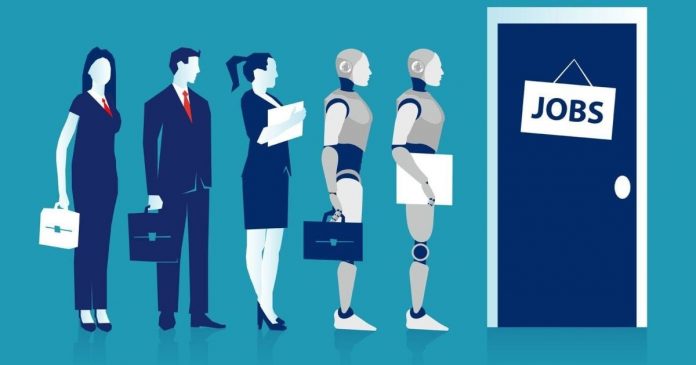
The most profound differences emerge when assessing AI’s impact on employment, revealing a disconnect between what executives plan to execute and what workers fear. An overwhelming 98% of corporate leaders and 94% of investors think AI will have a net positive impact on worker productivity. In sharp contrast, only 47% of the general public agrees.

The public’s skepticism is directly tied to job fear. Nearly half of all respondents from the general public expect AI to replace workers and eliminate jobs. Meanwhile, only 20% of corporate leaders concur with this assessment. Conversely, 64% of executives believe AI will help workers be more productive in their current jobs through augmentation, a view only shared by 23% of the public.

This dramatic difference suggests that while companies are focused on using AI to augment existing roles and increase output, the workforce views the same technology as a direct threat. This finding confirms the “widespread public concern that companies’ growing adoption of AI will have swift, direct consequences for workers through job cuts,” according to the report.

Safety, Ethics, and the Neglected Environmental Impact

Although all three groups express concern about the safety and security risks stemming from AI, their priorities and planned spending allocations diverge:

Risk Priorities: Corporate leaders and investors are most worried about large-scale risks like disinformation and malicious use of the technology. The public, however, is additionally concerned about the more abstract fears of loss of control and the tangible threat of environmental impact.

Safety Spending Disparity: When it comes to allocating investment dollars, 60% of investors and half of the public believe companies should spend more than 5% of their total AI investment on safety measures. In opposition, 59% of corporate leaders indicated they would spend up to 5%. This misalignment suggests that while the financial and societal stakeholders demand greater safety investment, the executives making the spending decisions are aiming for a lower allocation.

Environmental Blind Spot: A major risk area exposed by the survey is the environmental impact of AI—specifically the massive energy and water consumption required by data centers for training and running complex models. More than 40% of corporate leaders admitted that environmental issues are not currently being factored into their AI deployment strategy, an oversight that the public clearly fears will have negative consequences.

Just Capital plans to track these critical sentiments around AI deployment quarterly, providing an ongoing barometer for corporate accountability as the technology reshapes the economy.